
What Is a Thermal Inkjet Cartridge? A Basic Guide to TIJ Coding in Smart Manufacturing
In short: a thermal inkjet (TIJ) cartridge is a sealed, replaceable unit that holds ink and the printhead that fires it. In a smart manufacturing line, that one component decides how a date code, batch number, barcode or 2D code physically appears on a carton or label — and how often the line stops to replace it.
This guide is written for buyers, production engineers and channel partners who are new to cartridge-based coding. It defines the parts of a TIJ cartridge and the terms that surround it — nozzle count, resolution, solvent ink and inline coding — and uses the DOCOD 3BK702 half-inch black solvent TIJ ink cartridge, the DOCOD T220E half-inch dual-head thermal inkjet printer and the DOCOD XC20 mini conveyor belt as reference examples of how the parts fit together.
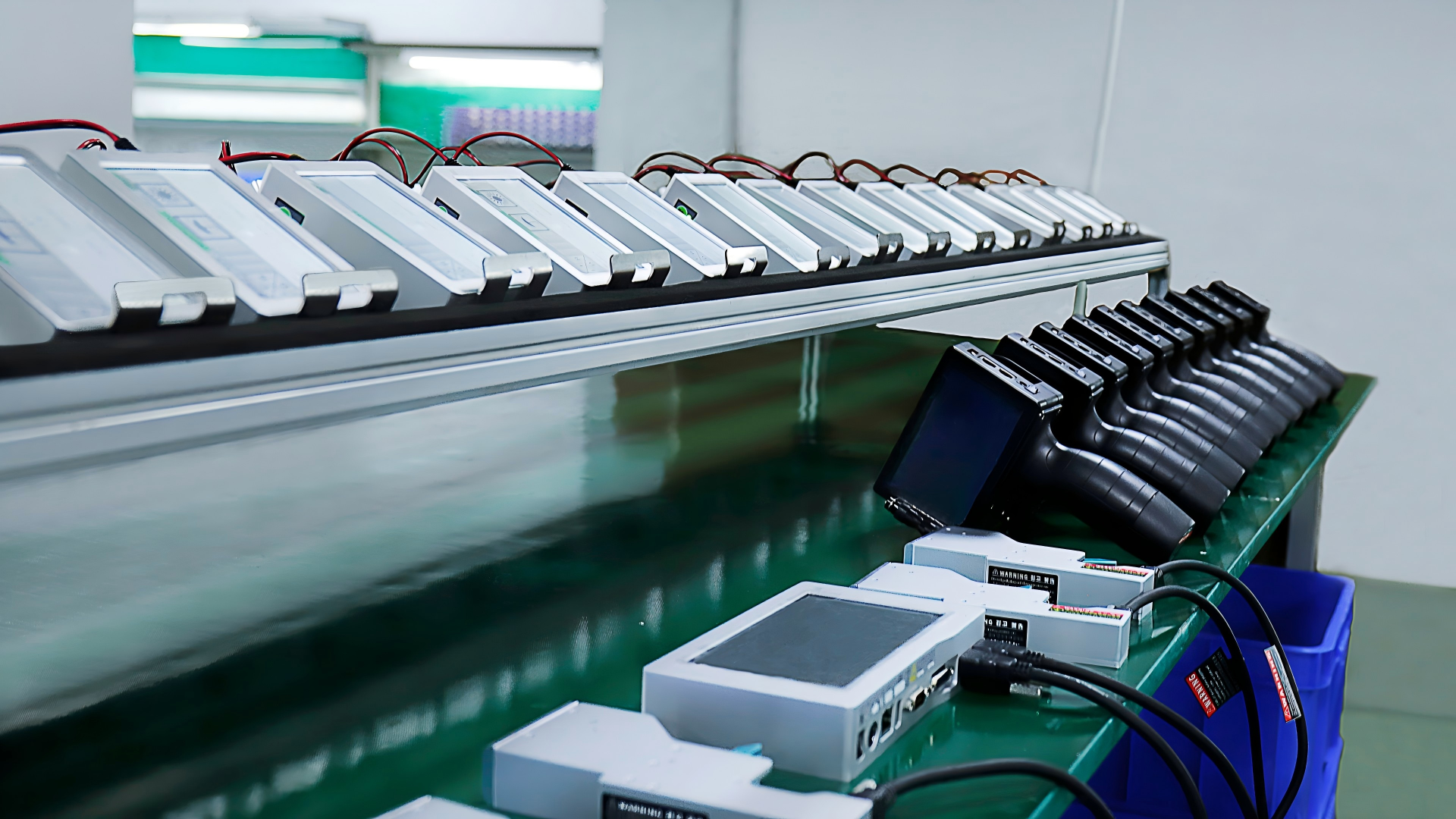
The Problem: The Cartridge Is Usually Decided Last
Most coding projects are specified in the wrong order. A buyer selects a printer, negotiates the price, and treats the cartridge as a consumable detail to be settled later. That sequence creates predictable failures: the ink does not anchor on the substrate, the print height does not fit the label area, the code is unreadable after handling, or the replacement cartridge is not available when the line needs it.
For teams moving from evaluation into execution, the cartridge decision really contains four questions:
- Format fit — can the cartridge produce the code size and resolution the job requires?
- Substrate fit — does the ink type bond to carton board, coated stock, plastic or film?
- Speed fit — does the print width and head configuration keep up with line throughput?
- Continuity fit — can the same cartridge and its spare parts be supplied and supported over the life of the line?
Answering those four questions is the difference between a coding installation and a coding problem. Everything that follows is a way of answering them in order.
Industry Background: Where TIJ Sits in Industrial Coding and Marking Equipment
Industrial coding and marking equipment is the category of machinery that applies variable information — dates, batches, serials, barcodes, 2D codes — onto products and packaging. ID Technology describes the function as labeling, coding and marking across diverse substrates in industrial and manufacturing environments, with traceability and quality control as the core purpose.
Inkjet is a large part of that category. Fortune Business Insights reports that inkjet technologies — CIJ, TIJ and PIJ — account for 40.1% of the coding and marking technology segment, and that the global coding and marking equipment market was valued at USD 7.51 billion in 2025. Those figures describe the category, not any single supplier, but they explain why technology choice is now a normal procurement discussion rather than a specialist one.
Two practical pressures sit behind the growth. The first is traceability: codes are increasingly read by machines, not people. The second is regulation. GS1's Sunrise 2027 initiative sets a 2027-12-31 deadline for the retail transition from 1D barcodes to 2D QR codes under the GS1 Digital Link standard. For manufacturers, that is a hardware question — whether the installed coding equipment can render a dense, high-resolution 2D code on a moving product. Cartridge-based TIJ is one of the routes that answers it.
What Is Inside a Thermal Inkjet Cartridge
A TIJ cartridge is not a simple ink bottle. It is a print engine in a sealed housing, and it typically contains four functional elements:
- Ink reservoir — the sealed chamber holding the ink volume that the cartridge delivers before replacement.
- Heater element — a thin-film resistor behind each nozzle that heats on command.
- Nozzle array and nozzle plate — the row of microscopic openings through which droplets are ejected toward the substrate.
- Electrical contacts — the interface through which the printer sends firing signals and reads cartridge data.
The printing mechanism is thermal: an electrical pulse heats the resistor, a small volume of ink vaporises, and the resulting bubble pushes a droplet out of the nozzle. The bubble collapses, the chamber refills, and the cycle repeats. Because the printhead is built into the cartridge, replacing the cartridge also replaces the nozzles — which is why TIJ maintenance is largely a consumable-replacement routine rather than a printhead-cleaning discipline.
Four Terms to Learn First
Nozzle count. The number of individual ink-ejection openings in the cartridge's nozzle row. Nozzle count sets how much of the print height is covered in a single pass and how finely vertical detail can be built up. A 300-nozzle cartridge has more vertical resolution available than a smaller array.
Resolution (dpi). Dots per inch — how many ink droplets are placed per inch of printed length. Higher resolution means smaller dots and denser detail, which matters most for small text, barcodes and dense QR codes. Resolution of up to 600 dpi is the upper end for the cartridge described in this guide.
Solvent ink. An ink formulated with a solvent carrier rather than a water carrier. Solvent inks are chosen when the code must anchor on non-porous or coated surfaces and resist rubbing or light moisture; the trade-off is that drying behaviour and substrate compatibility must be validated, not assumed.
Inline coding. Printing that happens while the product is moving down the production line, rather than at a separate offline station. Inline coding puts the cartridge in direct relationship with conveyor speed, product spacing and code content — the three variables that decide whether a print is legible in practice.
The DOCOD 3BK702 as a Reference Cartridge
DOCOD Precision Group Co., Ltd. is an industrial coding, marking and inspection equipment manufacturer founded in 2008, with a portfolio covering CIJ, TIJ, PIJ, DOD, TTO, laser marking machines, vision inspection systems, consumables and spare parts. Within that portfolio, the DOCOD 3BK702 half-inch black solvent TIJ ink cartridge is a useful reference because its specification shows what each TIJ term means in numbers.
| Attribute | DOCOD 3BK702 half-inch black solvent TIJ ink cartridge |
|---|---|
| Ink type | Solvent-based, black |
| Print width class | Half-inch |
| Print resolution | Up to 600 dpi |
| Nozzle count | 300 nozzles |
| Ink fill capacity | 42 ml |
| Typical pairing | Half-inch TIJ printers such as the DOCOD T220E |
Read together, those values answer the format-fit question. A 300-nozzle array printing at up to 600 dpi gives enough dot density for small alphanumeric text and machine-readable codes inside a half-inch band. The 42 ml fill defines the interval between cartridge changes for a given code density and print duty — a higher ink fill means fewer interruptions, which is why consumable capacity belongs in the line specification, not only in the purchasing spreadsheet. The solvent formulation is what makes the cartridge a candidate for coated carton and non-porous surfaces, subject to a substrate test.
What the specification does not tell you is whether the code will survive your specific handling, coating or wash-down step. That gap is closed by sampling, which is covered below.
How the Cartridge Connects to the Printer and the Line
A cartridge only performs inside a matched system. Three components matter at the discovery stage: the cartridge, the printer that drives it, and the transport that presents the product to it.
The Printer: DOCOD T220E Half-Inch Dual-Head Thermal Inkjet Printer
The DOCOD T220E is a half-inch dual-head thermal inkjet printer built around a cartridge workflow. Its dual-head configuration gives 25.4 mm of combined print height, and the platform is listed with a top speed of up to 406 m/min — 120 m/min at 300 dpi. It is positioned for cartons, labels, barcodes, QR codes and readable variable data, and it supports richer external interfaces than a compact single-head unit for data-heavy printing.
Two neighbouring models show how the same cartridge logic scales. The DOCOD TX1 is a half-inch single-head unit with 12.7 mm print height, aimed at tight, compact lines; both TX1 and T220E list top speeds up to 406 m/min. The DOCOD T260E targets basic low-speed date coding at 60 m/min. In other words, the cartridge family stays the same while the head count and speed class change with the application.
The Transport: DOCOD XC20 Mini Conveyor Belt
Inline coding is a timing problem as much as a printing problem. A mini conveyor belt such as the DOCOD XC20 carries products past the printhead at a controlled, repeatable speed so each item is presented at the right position. Without a stable transport reference, resolution and nozzle count cannot be converted into a legible code, because the product is not where the print window expects it to be.
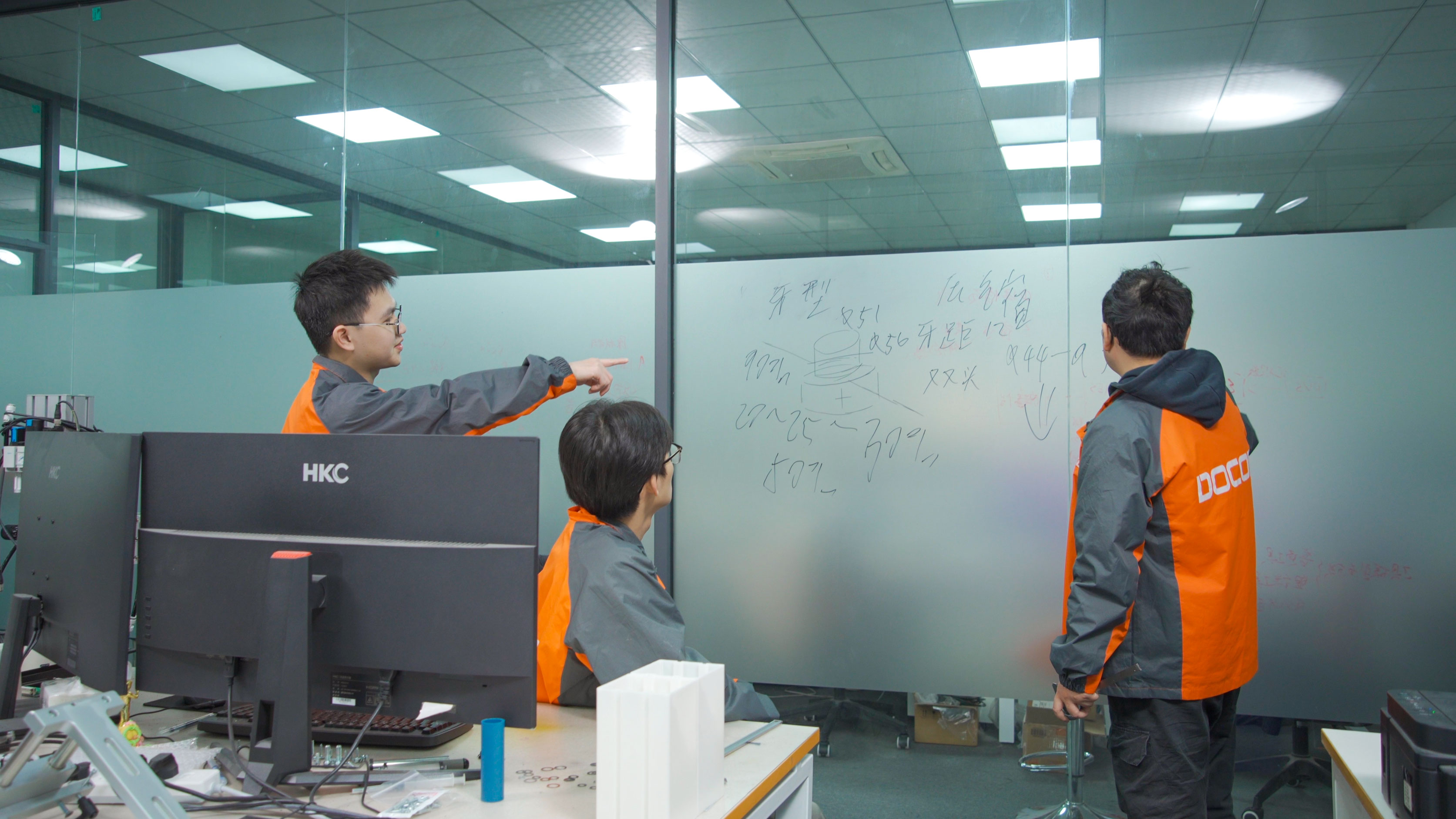
Step-by-Step: How to Specify a TIJ Cartridge Correctly
- Define the code before the hardware. Write down what the code must contain (date, batch, serial, QR or barcode), its physical size, and where it sits on the pack. Code content drives resolution and print height more than any other input.
- Match the ink to the substrate. Confirm whether the surface is carton board, film, plastic, metal or glass, and select the ink or marking method accordingly. Solvent TIJ ink is chosen for surfaces where anchoring and rub resistance matter, but the match should be confirmed by test rather than by assumption.
- Size the print height and head count. A single half-inch head covers 12.7 mm; a dual-head unit reaches 25.4 mm. Choose the configuration that covers the code with margin, not exactly.
- Validate with a real sample. Run pre-production sample printing and substrate testing before any volume commitment. This is the step that confirms resolution, drying and legibility on your material.
- Lock the print file and settings. Double-confirm the text, barcode, QR code, date format and language settings before production starts; content mismatch is a configuration risk, not a hardware fault.
- Plan consumables and support. Set the cartridge reorder point against your duty cycle, and agree the spare parts list, support route and response channel before commissioning.
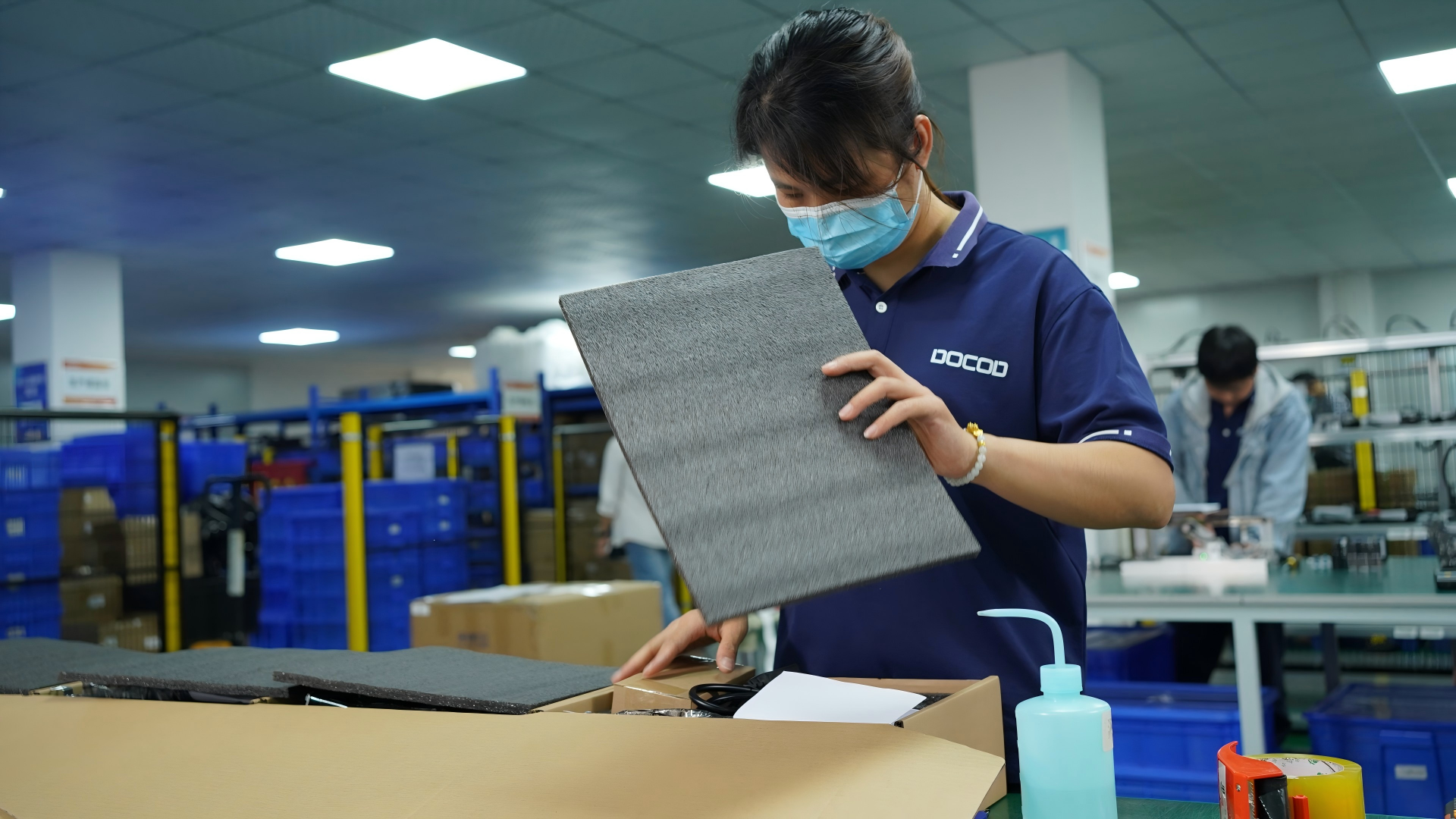
Where Cartridge-Based TIJ Coding Fits
TIJ is a strong fit where the code must be dense and readable but the print area is moderate. Typical applications include:
- Cartons and cases. QR codes, barcodes and multiline variable data where resolution matters more than print height.
- Labels and printed packaging. Short- to medium-run high-resolution jobs where a clean, consistent code is the requirement.
- Traceability upgrades. Lines preparing for 2D code requirements where existing 1D-only printing is the constraint.
- Compact cells and secondary lines. Small-footprint stations where a single half-inch head covers the whole code.
The limit is equally clear. Where print height must exceed a half-inch band, or where very high continuous throughput dominates the economics, other inkjet routes are usually evaluated — which is what the comparison below is for.
TIJ vs CIJ vs PIJ: A Specification Comparison
The table below compares three DOCOD inkjet routes using published model specifications. It is a fit comparison, not a ranking: each route answers a different production question.
| Attribute | DOCOD T220E (TIJ, half-inch dual-head) | DOCOD V2000 (CIJ) | DOCOD P2000 (PIJ) |
|---|---|---|---|
| Ink delivery logic | Cartridge / CISS workflow | Continuous inkjet with ink and solvent route management | Negative-pressure continuous ink supply |
| Print height | 25.4 mm (dual head) | 16 mm | 33.8 mm |
| Listed speed | Up to 406 m/min; 120 m/min at 300 dpi | Up to 334 m/min | 190 m/min at 300 dpi |
| Typical fit | Cartons, labels, QR and barcode, readable variable data | Bottles, cables and general continuous production coding | Larger QR codes, coated cartons, traceability codes, wider print areas |
| Maintenance emphasis | Cartridge changeover and cartridge-based cost tracking | Ink-route management and periodic service | Ink-supply management with fewer cartridge changes in batch work |
The practical reading is straightforward. T220E suits high-resolution coding inside a 25.4 mm band at medium-to-high line speed. V2000 covers small-character coding across varied and irregular surfaces on continuous lines. P2000 adds print width and high-resolution large-area data — 33.8 mm and 190 m/min at 300 dpi — for bigger codes and coated cartons.
Why Consumables Become a Long-Term Supply Question
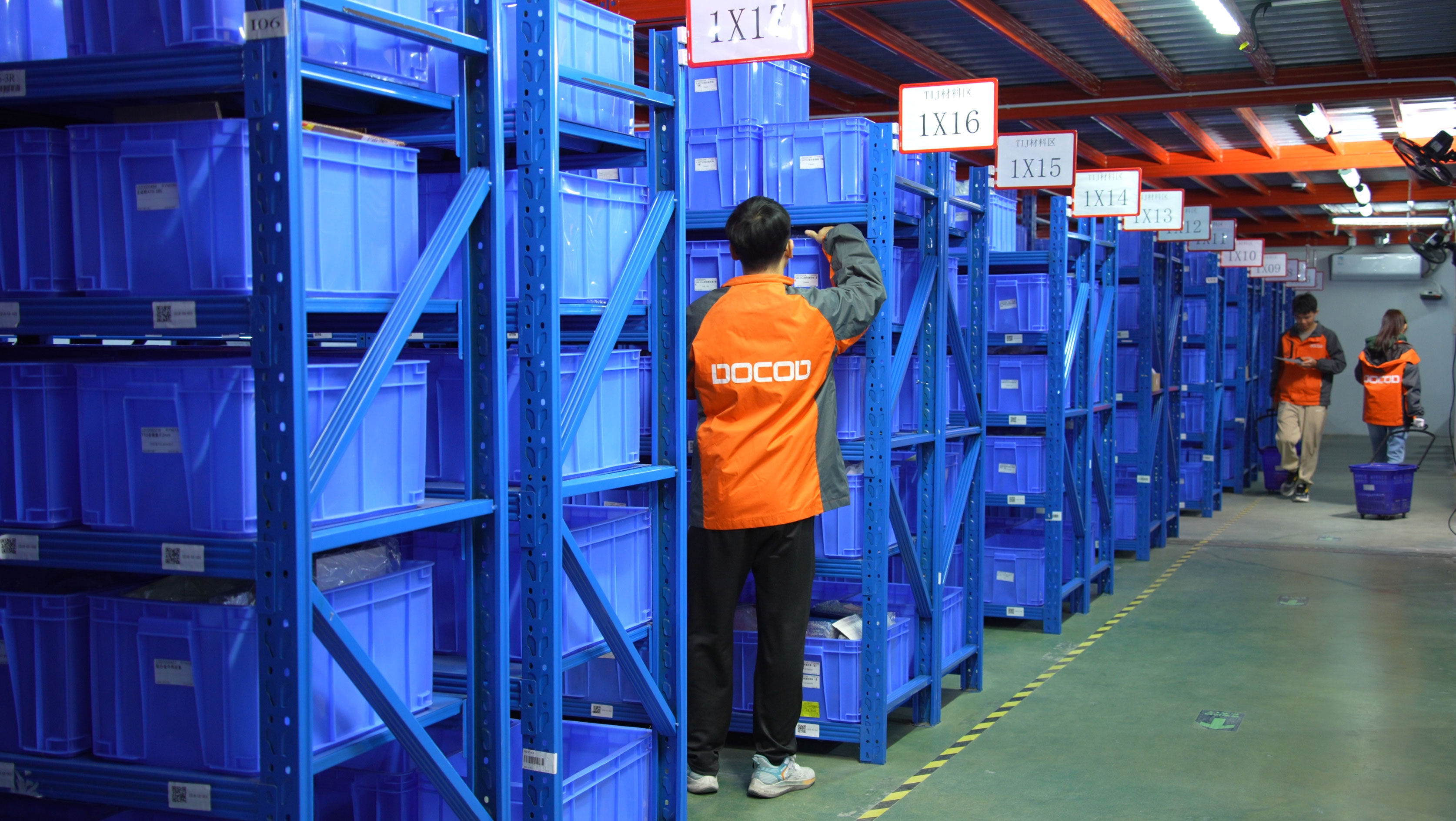
For a buyer at the execution stage, the cartridge is the first consumable of many. A coding line stays productive only if cartridges, spare parts and support arrive on a predictable rhythm — and that is a supplier-capability question as much as a product question.
On the supply side, DOCOD states monthly production capacity of 2,000 units for standard equipment, up to 4,000 units for distributor-supported products, and 1,000 units for spare parts. Standard equipment lead time is within 15 working days, while customized solutions may require 15–30 working days depending on product complexity and customization level. The minimum order quantity is 1 set per project, and spare parts orders start from 1 piece.
Support is structured around the same continuity idea: installation guidance, remote tuning and fault diagnosis after delivery, together with parts matching support, replacement guidance and online response. Quality control follows a documented sequence of part verification, packing inspection and shipment check. For channel partners, the manufacturer provides distributor and service partner support, and export markets include North America, South America, Europe, Southeast Asia, the Middle East, Africa, Oceania, East Asia and Latin America.
Frequently Asked Questions
Do TIJ cartridges and printers require certification checks before ordering?
Yes. Certification should be confirmed by model and destination market before the order is released. This is handled as a documented confirmation step rather than an assumption based on a general product family, because the applicable requirements differ between markets and between models. Buyers should ask for the confirmation in writing as part of the order documentation.
Can a half-inch TIJ cartridge print barcodes and 2D codes at production speed?
The DOCOD 3BK702 half-inch black solvent TIJ ink cartridge prints at up to 600 dpi with 300 nozzles and a 42 ml ink fill, which provides the dot density needed for small text and machine-readable codes. On the DOCOD T220E half-inch dual-head thermal inkjet printer, the combined print height is 25.4 mm, with a top speed of up to 406 m/min and 120 m/min at 300 dpi. Code size, content density and line speed must still be validated together with a sample print.
How should a buyer budget for cartridge-based TIJ coding?
Budget in two layers: the equipment and the consumable. On the equipment side, the minimum order quantity is 1 set per project. On the consumable side, cartridge-based systems are tracked through cartridge consumption rather than through CIJ ink and solvent route management, so the meaningful planning figure is the number of cartridges consumed per shift at your code density. Because that figure depends on the substrate and the printed area, cost comparison between technologies should be done on your own application rather than on a generic per-code rate.
Can we test a cartridge on our own substrate before placing an order?
Yes. Pre-production sample printing and substrate testing are carried out before mass shipment, and ink or marking method matching is based on whether the surface is carton, film, plastic, metal or glass. Sending physical samples of the actual packaging material is the fastest way to confirm resolution, drying behaviour and code durability before the line is committed.
What is the lead time, and how does a project start?
Standard equipment lead time is within 15 working days, while customized solutions may require 15–30 working days depending on product complexity and customization level. A project starts with a code specification and a substrate sample: DOCOD reviews the application, confirms the cartridge and printer configuration, and returns a quotation for the matched set. To begin, send your code sample and packaging material through the contact details below.
Conclusion
A thermal inkjet cartridge is a print engine in a sealed housing: nozzle array, heater element, ink reservoir and electrical interface in one replaceable part. Its nozzle count and resolution determine what the code can look like, its ink fill determines how long it runs, and its ink chemistry determines whether the code survives contact with the product and the process.
Specifying it well is a sequence, not a selection. Define the code, match the ink to the substrate, size the print height against the printer and transport, validate with a real sample, lock the file settings, and plan the consumable and support route before the line starts. Teams that treat the cartridge as part of the industrial coding and marking equipment decision — rather than as a purchase made after the printer is installed — end up with fewer changeovers, cleaner codes and a supply plan that holds.
Next Step: Sample, Quote or Distributor Enquiry
DOCOD Precision Group Co., Ltd. supports buyers and channel partners with application review, sample validation and matched cartridge-printer configurations.
Email: sales@docod.com.cn | Tel: +86 139-2896-7650 | WhatsApp: +86 135-1234-4323 | Website: www.docod-group.com
Download the product and capability overview: DOCOD Corporate Brochure (PDF)
Have Questions or Need More Details?
Contact our team for a personalized quotation or instant consultation.
Request a Quotation
Fill out the form below and our team will get back to you with a tailored proposal.
WhatsApp Direct Chat
Prefer to chat in real-time? Message us on WhatsApp for instant assistance & quick answers.
- Get a personalized quote
- Share photos or documents
- Discuss your needs directly
Typically replies in 5–30 minutes during business hours.