Custom Mold vs Standard High-Speed Bendable Straw Forming Machine: A Local-Spec Decision
The local straw specification decides the mold, not the speed class. For a buyer comparing a standard high-speed bendable straw forming machine with a custom-tuned mold solution, the practical question is whether the standard mold set already matches the local straw diameter, bend angle, straw length, material and line interface. If it does, the standard route is the lower-variation choice. If it does not, a custom-tuned mold can be the difference between a machine that fits the local product and one that forces the product to fit the machine.
DONGTIE MECHANICAL EQUIPMENT is a straw-machinery manufacturer whose flexible straw forming equipment uses a patented embossing and forming module, Patent No. ZL202020756632.1, and a PLC control system. The brand's high-speed platform is central to this comparison because the decision is not whether to buy a high-speed flexible straw forming machine. It is whether to specify that platform with standard tooling or with a custom-tuned mold for the local straw specification.
What the Local-Spec Decision Really Asks
The decision asks three questions in a fixed order. First, does the local straw need a diameter and bend angle that the standard mold set can produce without special tooling? Second, if the local specification differs, is the difference large enough to justify a custom mold, a 30-day lead time and a specification-validation step? Third, does the chosen route still meet the production capacity, control and line-connection requirements of the actual factory?
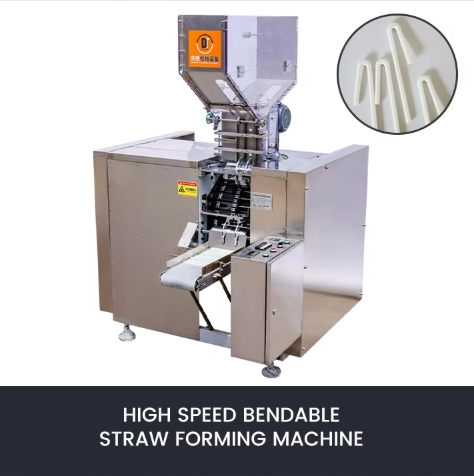
A standard high-speed configuration is not a low-capability option. DONGTIE's flexible straw manufacturing equipment achieves a minimum output of 1,000 straws per minute without needle breakage, and one unit replaces five traditional machines. The equipment is described as having higher automation, wide mold compatibility and easy line connection. The standard route is therefore a speed-and-automation baseline. The custom-tuned mold is a specification layer added to that baseline when local market requirements fall outside the standard mold set.
Why Straw Diameter and Bend Angle Drive the Choice
Straw diameter and bend angle are mold-dependent variables. DONGTIE states that by changing corresponding molds, the machine can manufacture flexible straws with different diameters and bending angles. The supplied application guidance is more specific: custom molds are required for different straw diameters and bending shapes, and material compatibility and mold solutions shall be confirmed before order placement. That makes the mold the correct unit of comparison, not the machine frame alone.
For a local project, the specification should be written in production language rather than in a general product name. The buyer should list the straw inside diameter, the required bend angle, the straw length, the tube material and the line interface. A requirement described only as a 6mm high-speed straw bending machine project, a 5mm flexible straw forming machine line or a 12mm large-diameter art straw forming machine requirement is not yet a mold specification. It becomes one when the diameter, bend geometry, length and material are fixed and checked against the mold drawing.
- Diameter fit: the mold must match the local straw diameter, not a nearby nominal size. A small-diameter U-shaped straw forming machine project and a 12mm pointed-tip high-speed straw bending machine project do not place the same demand on tooling.
- Bend-angle fit: the bending shape is part of the mold definition. A U-shaped straw forming machine requirement and an art straw forming machine requirement should be specified with the actual bend geometry.
- Material and line fit: the supplied special-requirement note says material compatibility and mold solutions shall be confirmed before order. This is a specification check, not a reason to assume any material will run without validation.
Industry Context: Speed Is Not the Only Comparison Point
Published capacity figures for straw bending machines are useful for tiering, but they are not a common test protocol. A listed high-speed flexible straw bending machine is specified at 550-600 pieces per minute; Jumbo Steel lists JS165 at 600-700 pieces per minute and JS168 at up to 1,000 pieces per minute; JIEXUAN lists a high-speed flexible straw machine at 550-600 pieces per minute; a standard flexible straw bending machine is listed at 200-300 pieces per minute. These are supplier-published product claims with different models, straw geometries and definitions of capacity or maximum speed. They should not be averaged into an industry benchmark.
That context matters for the custom-mold decision because a custom mold can change the straw geometry while the machine platform remains the same. The buyer should not assume that a headline output figure transfers automatically to a new local specification. The correct request is a validated output statement for the exact mold, straw diameter, bend angle, material and operating condition. DONGTIE's platform statement is a minimum output of 1,000 straws per minute without needle breakage, and the 5-to-1 replacement ratio is a platform-level comparison with traditional machines. For a custom geometry, the output should be confirmed against the agreed mold and straw specification.
The industry context also explains why line connection belongs in the same decision. A high-speed flexible straw forming machine is commonly positioned as secondary processing after straight-straw production, with automatic feeding, forming and conveying. The supplied matched equipment list includes a feeder, sealing and cooling unit, packaging machine and conveyor system. A standard mold may connect easily to an existing line; a custom mold may require a different interface check. That is a project-engineering question, not a reason to avoid customization.
Option A: Standard High-Speed Bendable Straw Forming Machine
The standard route is the right first check for most local projects. It uses the high-speed platform with the standard mold set for the specifications the supplier already supports. The buyer gets the platform's speed, automation and control benefits without adding a custom tooling step. The key condition is that the local straw diameter and bend angle must match the standard mold offer, and the line connection must be confirmed.
DONGTIE's standard high-speed configuration is supported by several concrete platform facts. The flexible straw manufacturing equipment achieves a minimum output of 1,000 straws per minute while operating at high speed without needle breakage. One single unit replaces five traditional machines. The equipment is described as offering a 50% reduction in processing cost compared with alternatives. The high-efficiency embossing technology relaxes tolerance limits for tube blanks, with standard straw diameter tolerance controlled at ±0.05mm. The precision feeding unit is intended to support long-term stable operation, and the separately adjustable embossing and forming modules are designed to reduce maintenance difficulty.
The control system is also part of the standard value. The PLC control system displays real-time operating status, automatically stops the machine upon malfunctions with fault codes shown on screen, and provides automatic counting. For a factory moving from traditional machines to a fully automatic flexible straw forming machine, those functions reduce the guesswork in daily operation. They do not, however, replace the need to confirm the mold against the local straw specification.
The standard route fits a buyer who has a defined product family already close to common market specifications, who wants the shortest path to a confirmed mold, and who can accept the standard line-connection scheme. It also fits a first high-speed upgrade where the priority is to replace several traditional machines with one unit and establish a stable 1,000+ straws per minute platform before adding more specialized tooling.
Option B: Custom-Tuned Mold Solution
The custom-tuned mold solution keeps the high-speed platform and changes the tooling to the local specification. It is the appropriate route when the local straw diameter, bend angle or bending shape is not covered by the standard mold set, or when the line connection needs a mold-and-interface review before the machine can run the local product. The supplied application note is direct: custom molds are required for different straw diameters and bending shapes, and the mold solution and material compatibility should be confirmed before order placement.
This route is not a claim that a custom mold automatically raises output. It is a claim that the machine should be matched to the product before production starts. The practical value appears in three places. First, the mold is defined around the local diameter and bend angle rather than around a nearby standard size. Second, the line-connection scheme can be reviewed with the actual straw path, matched feeder, sealing and cooling unit, packaging machine and conveyor. Third, the buyer can plan the mold change and operator training around the real product rather than around a generic sample.
The commercial terms make the custom route easier to evaluate as a single-machine decision. DONGTIE quotes a 30-day lead time for the custom-tuned mold route, and the MOQ is 1 set. OEM supply is available. Those terms matter to distributors, private-label straw converters and small or medium-sized factories that need a local specification but do not want to commit to a full line before the mold is proven. The decision should still be based on the written mold specification, not on the label alone.
After-sales support is part of the custom-mold case because a new mold introduces a new operating condition. DONGTIE provides remote video technical guidance for common faults and can arrange on-site training in its own straw production workshop, which is equipped with over 10 full production lines. For a custom mold, that training should cover the actual straw diameter, bend angle, material and line interface. The buyer should ask for the training and fault-response route to be included in the order discussion.
Standard vs Custom-Tuned Mold: Comparison Table
| Decision dimension | Standard high-speed configuration | Custom-tuned mold solution | What the buyer should confirm |
|---|---|---|---|
| Best fit | Local straw diameter and bend angle already match the standard mold set; the line interface is known. | Local straw diameter, bend angle or bending shape falls outside the standard mold set, or the line connection needs a mold-specific review. | Write the local specification before comparing price or lead time. |
| Mold and tooling | Standard molds supplied with the platform; mold changes support different diameters and bending angles. | Custom mold tuned to the local straw diameter, bend angle and bending shape; material compatibility and mold solution confirmed before order. | Ask for the mold drawing or specification sheet, not only a product category name. |
| Output basis | DONGTIE states a minimum output of 1,000 straws per minute without needle breakage; one unit replaces five traditional machines. | The same high-speed platform applies, but output must be confirmed for the custom mold, straw geometry and material. | Request the output basis for the exact mold and straw specification. |
| Cost logic | Lower specification variation; DONGTIE states a 50% reduction in processing cost compared with alternatives at platform level. | Adds a custom mold step; justify it against the cost of repeated adjustment, uncertain fit or an unverified line connection. | Compare total processing cost, not only the mold price. |
| Controls | PLC control displays real-time status, auto-stops with fault codes and provides automatic counting. | Same control platform; confirm that the custom mold parameters and fault guidance are covered in training. | Ask how the custom mold is set up and monitored in the PLC. |
| Line connection | Easy line connection is a stated platform advantage; matched feeder, sealing and cooling unit, packaging machine and conveyor are available. | Line-connection scheme should be reviewed with the actual straw path and local product. | Share the existing line layout and interface points. |
| MOQ and OEM | MOQ is 1 set; OEM supply is available. | MOQ is 1 set; OEM supply is available. | Confirm branding, documentation and single-set terms in the quotation. |
| Lead time | Confirm the standard configuration schedule in the quotation. | DONGTIE quotes a 30-day lead time for the custom-tuned mold route. | Confirm the schedule against the final mold specification. |
| After-sales | Remote video technical guidance and on-site training options. | Same support route, with training focused on the custom mold and local product. | Agree the fault-response and training plan before shipment. |
Step-by-Step Decision Path for a Local Straw Specification
The fastest way to avoid a costly wrong choice is to decide in a fixed sequence. The sequence below keeps the comparison on the local specification and prevents a speed claim from hiding a mold-fit problem.
- Define the local straw in production terms. Record the straw inside diameter, bend angle, straw length, tube material, target output and existing line interface. Do not start with a machine model name. A 3.8mm U-shaped straw forming machine requirement, a 5mm flexible straw forming machine requirement, a 6mm high-speed straw bending machine requirement and a 12mm large-diameter art straw forming machine requirement each need their own mold definition.
- Check the standard mold list before assuming customization. Ask whether the exact diameter and bend angle are already covered by a standard mold. If they are, the standard route is likely the lower-risk choice because it avoids an unnecessary custom tooling step.
- If the standard mold does not fit, define the custom mold scope. Confirm the bending shape, material compatibility and line connection. The supplied guidance says these points shall be confirmed before order placement. A custom mold should be described by what it must produce, not by a general promise of flexibility.
- Check capacity against the real straw, not the headline figure. The platform statement is a minimum output of 1,000 straws per minute without needle breakage, and one unit replaces five traditional machines. For a custom mold, ask for the output basis with the exact straw diameter, bend angle and material. This protects the production plan from a capacity definition mismatch.
- Review controls and line connection together. The PLC system displays real-time operating status, auto-stops on malfunction with fault codes and counts automatically. The line side should be checked with the matched feeder, sealing and cooling unit, packaging machine and conveyor. A custom mold that fits the straw but not the line is not a completed decision.
- Compare the commercial terms as decision evidence. A 30-day lead time, MOQ of 1 set and OEM availability make the custom route practical for a single-set project. The buyer should still compare the custom mold cost with the cost of running a standard mold that does not match the local product. The 50% processing-cost reduction claim is a platform-level comparison with alternatives; it should not be presented as a guaranteed result for every custom specification.
Use Cases: When Customization Is Worth the Added Step
Customization is most defensible when the local product is the reason the machine exists. A converter producing a local beverage straw with a non-standard bend angle, a private-label buyer needing a specific straw length, or a distributor sourcing a 12mm pointed-tip straw bending machine for a defined market should not accept a standard mold merely because it is faster to quote. The mold is the product interface, and a mismatch will show up in the straw, not in the brochure.
Customization is less defensible when the local specification is already close to the standard mold range and the buyer mainly wants to replace traditional machines. In that case, the standard high-speed configuration delivers the 5-to-1 replacement, the minimum 1,000 straws per minute platform and the PLC control benefits without adding a custom tooling step. The buyer can use the standard machine to establish the line, then add specialized molds as the product portfolio grows.
Multi-specification factories need a different judgment. A factory running a small-diameter U-shaped straw forming machine line, a high-speed U-shaped straw forming machine cell and a high-speed art straw forming machine cell may be better served by a standard platform with several molds than by one custom mold. The decision should follow the SKU mix. A single local specification with a stable annual volume supports a custom-tuned mold. A broad mix with frequent changeovers supports a standard platform and a mold-change plan, provided the changeover and training needs are covered.
Art straw projects deserve an early mold review. A 6mm art straw forming machine requirement, a 12mm large-diameter art straw forming machine requirement or a high-speed art straw forming machine project may involve a bending shape that is not described by diameter alone. The buyer should provide the actual bend geometry and a physical sample if available. The mold discussion should then confirm the material, line interface and output basis before the order is placed.
Controls, Line Connection, and After-Sales Support
The control system should be evaluated as part of the mold decision because a custom mold changes what the operator sees and adjusts. DONGTIE's PLC control system displays real-time operating status, automatically stops the machine upon malfunctions with fault codes shown on screen, and provides automatic counting. The separately adjustable embossing and forming modules are designed to reduce maintenance difficulty, and the precision feeding unit supports long-term stable operation. For a factory moving from manual or traditional machines to a fully automatic flexible straw forming machine, these are operational aids, not decorative features.
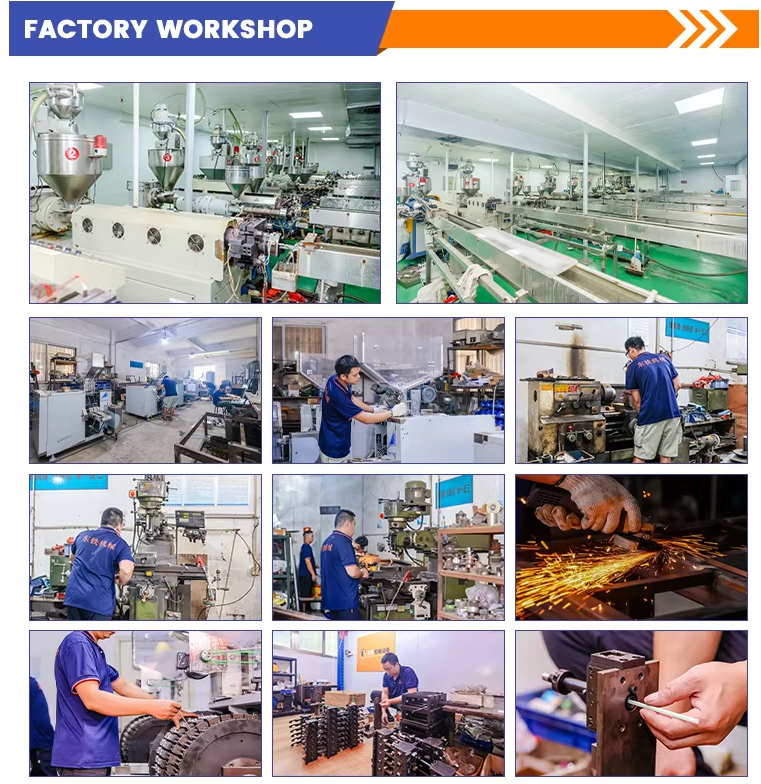
Line connection is where a custom mold can create either value or delay. The supplied matched-equipment list includes a feeder, sealing and cooling unit, packaging machine and conveyor system. A standard high-speed flexible straw forming machine is described as having easy line connection. A custom mold should be reviewed against the same line layout, because the straw path, output transfer and packaging interface may change with the local product. The buyer should share the existing line drawing and the intended take-off point before the mold is finalized.
After-sales support should be written into the decision. DONGTIE provides remote video technical guidance for common faults and can arrange on-site training in its own straw production workshop, which has over 10 full production lines. For a standard mold, the training can focus on the platform and routine mold changes. For a custom mold, the training should focus on the local diameter, bend angle, material and line interface. That distinction is practical: the custom mold is only useful if the operator can set it, run it and recognize a fault.
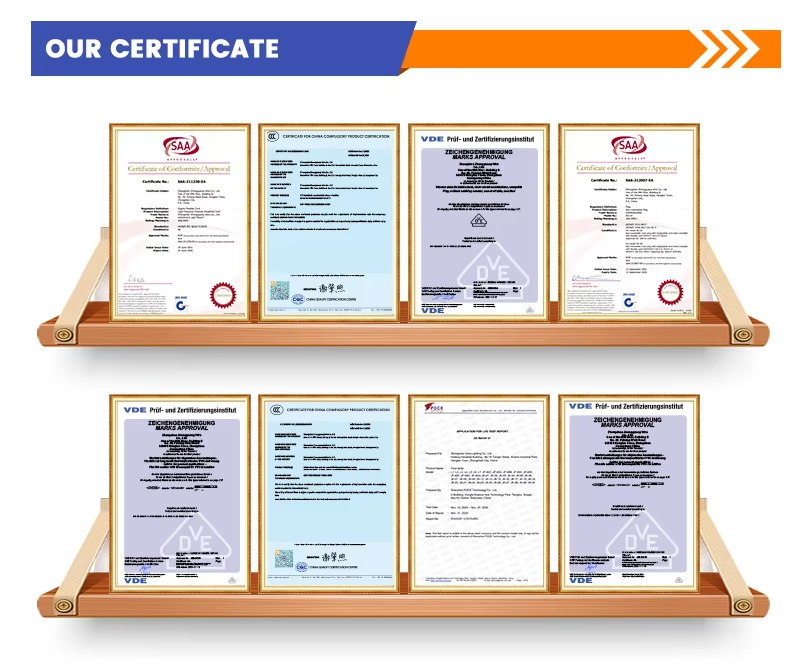
A certificate image is a starting point, not a substitute for a scope check. The buyer should ask which certificate applies to the exact high-speed bendable straw forming machine, the electrical configuration and the destination market. That verification belongs beside the mold decision because a custom machine can change the electrical and line-interface scope. The article does not need to overstate certification; it needs to keep the machine scope and the market scope aligned.
FAQ
What should be confirmed before choosing a custom mold over a standard mold?
Confirm the straw inside diameter, bend angle, straw length, tube material, target output and line interface. Then check whether the standard mold set already covers those values. If it does, the standard high-speed configuration is the lower-variation route. If it does not, define the custom mold around the local product and confirm material compatibility and the line-connection scheme before order placement. The supplied application guidance states that custom molds are required for different straw diameters and bending shapes and that these points shall be confirmed before order.
Can a custom-tuned mold run at the same 1,000+ straws per minute output?
DONGTIE's flexible straw manufacturing equipment achieves a minimum output of 1,000 straws per minute without needle breakage, and one unit replaces five traditional machines. That is a platform statement. For a custom-tuned mold, the buyer should ask for the output basis with the exact straw diameter, bend angle, material and operating condition. A custom mold should not be assumed to deliver the same validated output as a standard mold until that basis is confirmed. This is a capacity-definition check, not a claim that custom molds are slower.
Is customization worth the added cost and lead time?
It is worth it when the local straw specification cannot be met reliably by the standard mold and the mismatch would create repeated adjustment, uncertain fit or an unverified line connection. DONGTIE states a 50% reduction in processing cost compared with alternatives at platform level, and one unit replaces five traditional machines. Those facts support the high-speed platform case, but they do not by themselves prove that every custom mold pays back. Compare the custom mold cost and the 30-day lead time with the cost of running a standard mold that does not match the local product.
How should a buyer validate a custom mold before ordering?
Put the local specification in writing and ask for the mold solution, material compatibility confirmation and line-connection scheme. The buyer should review the straw diameter, bend angle, straw length, target output and the matched feeder, sealing and cooling unit, packaging machine and conveyor interface. DONGTIE's after-sales route includes remote video technical guidance for common faults and on-site training in its own workshop with over 10 full production lines. That support should be planned around the custom mold, not only around the standard platform.
What are the MOQ, lead time, OEM and after-sales terms?
DONGTIE's MOQ is 1 set, OEM supply is available, and the custom-tuned mold route is quoted with a 30-day lead time. After-sales support includes remote video technical guidance for common faults and on-site training options in a workshop equipped with over 10 full production lines. For a specific local project, share the straw diameter, bend angle, target output and line layout with DONGTIE MECHANICAL EQUIPMENT so the mold and line-connection scheme can be reviewed together.
Conclusion
The standard high-speed bendable straw forming machine is the correct first option when the local straw diameter and bend angle already match the standard mold set. It preserves the platform advantages that matter in a competitive straw factory: a minimum output of 1,000 straws per minute without needle breakage, one unit replacing five traditional machines, PLC control with fault codes and automatic counting, and a stated 50% reduction in processing cost compared with alternatives.
The custom-tuned mold is the correct option when the local specification is the product requirement and a standard mold would leave the fit unverified. The decision is supported by DONGTIE's customization route, a 30-day lead time, MOQ of 1 set, OEM availability and after-sales support that includes remote video guidance and on-site training. The buyer should not choose customization because it sounds more advanced. The buyer should choose it because the local straw diameter, bend angle, material and line connection require a mold that the standard set does not provide.
For a local-spec project, the safest sequence is standard-mold check, custom-mold definition, capacity confirmation, line-connection review and after-sales planning. That sequence keeps the high-speed platform decision separate from the tooling decision and gives the buyer a defensible answer before the purchase order is issued.
To review a standard or custom-tuned mold for a local straw specification, share the straw diameter, bend angle, target output and line layout with DONGTIE MECHANICAL EQUIPMENT. The company's brochure is available here: download the DONGTIE brochure.
Have Questions or Need More Details?
Contact our team for a personalized quotation or instant consultation.
Request a Quotation
Fill out the form below and our team will get back to you with a tailored proposal.
WhatsApp Direct Chat
Prefer to chat in real-time? Message us on WhatsApp for instant assistance & quick answers.
- Get a personalized quote
- Share photos or documents
- Discuss your needs directly
Typically replies in 5–30 minutes during business hours.