
Deploying High-Speed Flexible Straw Forming Machines Across Southeast Asia, the Middle East, and China
An application guide for straw factories in Malaysia, the Gulf, and domestic China
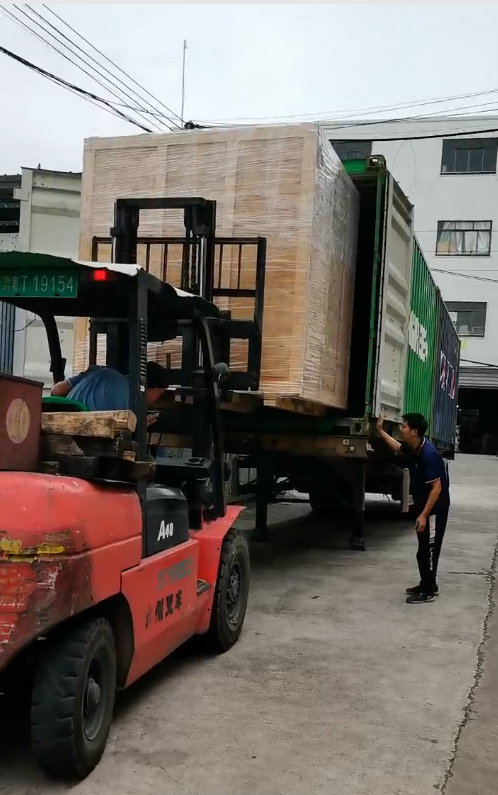
Container loading site for Southeast Asian shipments of high-speed flexible straw forming machines.
Short answer: the same high-speed flexible straw forming machine is deployed differently in Southeast Asia, the Middle East, and China because the real differences sit in the mold set, the tube-blank specification, the supporting equipment, and the sequence in which the line is commissioned — not in the machine model itself. Over a three-year deployment program, 60 sets were installed across multiple straw production facilities, with documented clients including straw factories in Southeast Asia, straw factories in the Middle East, and domestic Chinese straw manufacturers.
This guide is written for the people who have to make that machine run: production managers, project engineers, and equipment buyers at straw factories and packaging enterprises who are past the discovery stage and are now evaluating how a specific high-speed flexible straw forming machine will behave on their own floor. It follows one machine platform — the DT-1200 high-speed flexible straw forming machine from Dongtie Mechanical Equipment — through three regional deployment patterns, and it separates what is documented from what still has to be confirmed with the manufacturer before an order is placed.
Problem Definition: Why Regional Fit, Not Machine Speed, Decides Line Performance
A flexible straw line in Southeast Asia and a flexible straw line in the Middle East can run the identical machine model and still fail at different points, because the machine does not operate alone. It consumes locally sourced tube blanks, it sits inside a workshop environment with its own power conditions and labor profile, and it feeds a downstream sequence that may be manual in one factory and fully automated in another. The documented application scenario for this equipment assumes a normal-temperature workshop environment with a stable power supply, raw-material feeding, and production line connection, suitable for continuous mass production. Every deviation from that picture is a deviation that shows up later as downtime.
The technical constraint that drives most regional differences is mold configuration. This application requires custom molds for different straw diameters and bending shapes, plus specific standards for raw material specifications and surface treatment. Material compatibility and mold solutions must be confirmed before order placement. A straw factory that orders a machine before that confirmation is complete will receive a machine that cannot run its own straw specification on arrival, no matter how well the machine performs elsewhere.
Deployment projects also start from different points. The documented project types for this equipment are new production line construction, single machine procurement, production line capacity expansion, and equipment replacement. Each type changes what must be prepared in advance: a greenfield line needs utility and material-flow planning, a replacement project needs removal scheduling and old-line decommissioning, and a capacity expansion needs downstream packing to absorb the extra output.
Industry Background: Where Regional Straw Demand Is Heading
Straw machinery demand is being reshaped by both volume growth and material substitution. Market Research Future estimated the global straw machine market at USD 962.55 million in 2024 and projected it to reach USD 1,793.41 million by 2035, a CAGR of 5.82%. On the material side, Grand View Research valued the global paper straw market at USD 2.6 billion in 2024 and projected paper straw machines to grow at a CAGR of 15.6% between 2025 and 2030, driven by plastic bans.
Regional behavior is uneven, and that unevenness is exactly what makes an application guide necessary. Market Research Future notes that plastic straw machines still hold significant market share in regions such as Asia-Pacific and Africa despite bans in the EU, while Mordor Intelligence reports that the U-shaped straw machine segment is growing specifically for the aseptic packaging industry, such as milk cartons. Dataintelo projected that industrial end-users would account for 40.1% of straw machine market share as of 2025 projections, and high-speed straw machines are referenced at outputs of 80,000 to 200,000+ pieces per hour for industrial-scale operations.
The supply side is concentrated. China accounts for over 66% of the global export value of flexible straw bending machinery, based on 2023 Zauba and US customs data, and China's GACC data lists HS code 84778090 as the primary customs classification for drinking straw machines. For buyers in Southeast Asia and the Middle East, that concentration is why machine selection and regional configuration are usually the same conversation.
A useful baseline for evaluation: industry engineering specifications for automatic straw bending machines typically quote production speeds of 200–300 pieces per minute. That figure is the reference point against which any high-speed flexible straw forming machine claim should be measured in a buyer's own target market.
Detailed Solution: The Machine Platform Regional Deployments Are Built On
Zhongshan Dongtie Machinery Co., Ltd., trading as Dongtie Mechanical Equipment, is a Chinese manufacturer of straw forming equipment based in Xiaolan Town, Zhongshan City. The company has focused on straw machinery manufacturing since 2010 and builds flexible straw forming machines, small-diameter U-shaped straw forming machines, and decorative straw forming machines, with equipment exported to Southeast Asia, the Middle East, Europe, and other global markets. Its company website is www.zsdtjx.com.
Forming technology that regional deployments depend on
The core forming components use self-developed patented technology, Patent No. ZL202020756632.1. Four features of that design matter when a machine is commissioned outside the manufacturer's home market:
- Tolerance absorption. The high-efficiency embossing technology relaxes tolerance limits for tube blanks, with standard straw diameter tolerance controlled at ±0.05 mm. In markets where tube blanks are sourced from more than one supplier, this reduces blank sorting and rejects.
- Reliability of the bending needle. The patented forming approach addresses the chronic high-speed needle breakage problem in tube bending forming; key wearing parts such as forming needles and molds are reinforced and designed for a service life over one year.
- Fault transparency. A PLC control system displays real-time operating status, the machine auto-stops on malfunction with fault codes shown on screen, and an automatic counting function supports production tracking. This reduces dependence on a senior technician being present on every shift.
- Serviceable modules. The embossing and forming modules are separately adjustable, which lowers maintenance difficulty and shortens the changeover window between different straw calibers and bending angles.
DT-1200 high-speed flexible straw forming machine at a glance
| Parameter | Documented value |
|---|---|
| Model | DT-1200 |
| Machine type | High-speed flexible straw forming machine |
| Power | 5.5–6.5 kW |
| Output (specification range) | 3,000–5,500 pcs/min |
| Documented sustained field output | No less than 1,000 straws per minute, at high speed without needle breakage |
| Replacement ratio (documented) | 1 high-speed flexible straw forming machine replaces 5 traditional machines |
| Working pressure | 1.500–6.000 MPa |
| Working temperature | 100–200 °C |
| Protection grade | IP55 |
| Material | Stainless steel |
| Operation mode | Fully automatic continuous operation; standalone unit or connected to a production line |
The specification range describes the machine's rated capability, while the sustained field figure of at least 1,000 straws per minute describes what the 60-set deployment program confirmed in continuous production. Buyers should treat the two numbers as different things: one is a catalog rating, the other is a documented operating floor.
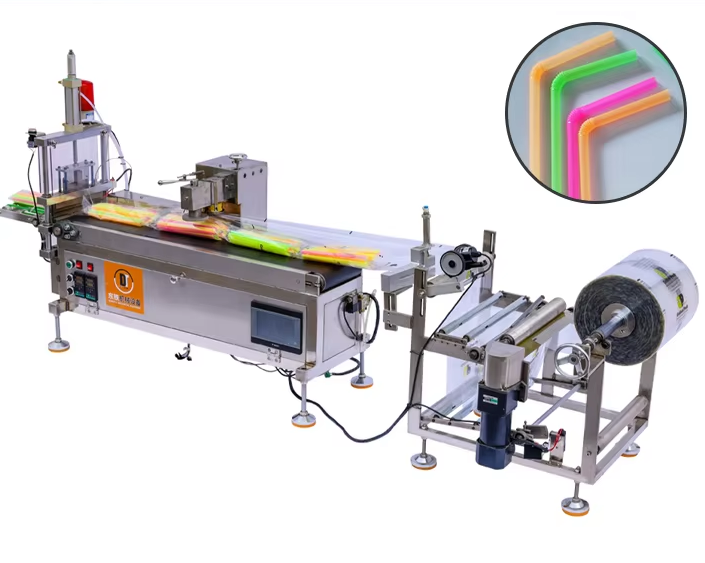
Downstream expansion: an automated packaging system matched to the forming machine to build an integrated straw production line.
Range coverage and line expansion
Regional buyers rarely run a single straw size. The documented product range covers high-speed flexible straw forming machines, small-diameter U-shaped straw forming machines, and decorative straw forming machines, with referenced configurations including a 3.8 mm U-shaped straw machine, a 5 mm flexible straw machine, 6 mm and 12 mm decorative straw machines, and 6 mm and 12 mm pointed-tip high-speed tube bending machines. Because molds are changed rather than the machine being replaced, one platform can follow a factory through several order profiles.
Expansion runs downstream rather than inside the forming unit. Matching optional modules include a fixed-quantity packaging system and an automatic stacking unit, which allow a standalone machine to be developed into an integrated full production line. Auxiliary equipment that must be coordinated for continuous operation includes a feeder, a sealing and cooling unit, a packaging machine, and a conveyor system.
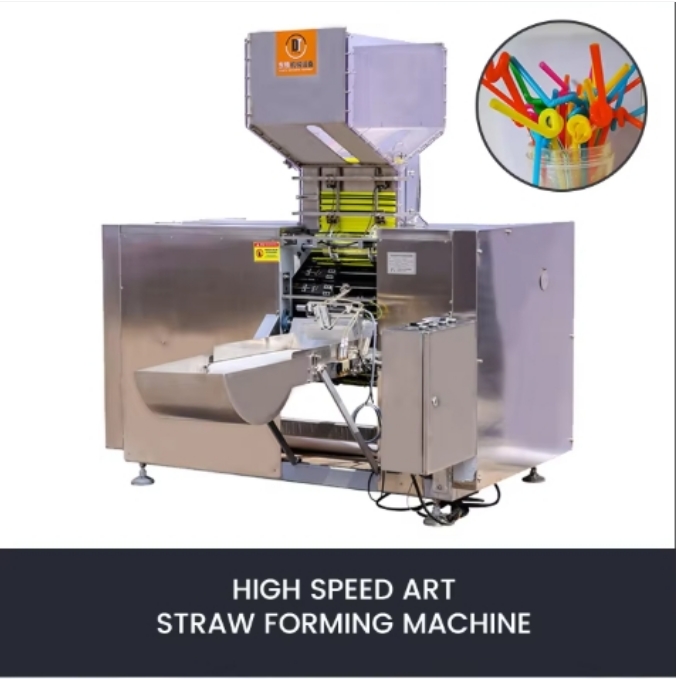
Decorative straw forming machine: the same platform family used for large-diameter art straw orders in the Middle East.
Service model built for cross-border installation
Services include installation and commissioning, remote technical support, and spare parts supply. Remote video technical guidance is available for common faults, and on-site training can be arranged in Dongtie's own straw production workshop, which is equipped with over 10 full production lines. Production-side terms are documented as follows: monthly capacity of 20 sets, a lead time of 30 days, and a minimum order quantity of 1 set. Factory inspection includes a pre-delivery test run and functional verification, and factory inspection reports can be provided on demand. Warranty terms and response times are recommended to be confirmed before purchase.
Step-by-Step Breakdown: Six Stages of a Regional Deployment
Step 1 — Audit the local straw specification
Start with the finished straw, not the machine. Record the straw diameter, bend angle, wall thickness, and surface treatment expected by the factory's own customers. This is the input that determines the mold order. Documented applications in this product class span flexible straws for beverage use, 3.8 mm U-shaped straws for domestic dairy supply, and 10 mm decorative straws supplied to Middle East clients.
Step 2 — Confirm material compatibility and mold design before order placement
Custom molds are required for different straw diameters and bending shapes, and specific standards apply to raw material specifications and surface treatment. Material compatibility and the final mold solution must be confirmed before order placement. Treat this step as a hard gate rather than a paperwork step: it is the single point where a deployment schedule is most likely to slip.
Step 3 — Lock the forming, bending, and counting configuration
Configure the machine for the target diameter and bend angle, then verify the automatic counting function and the PLC fault-code display so that shift supervisors can read machine status without a programmer. The embossing and forming modules are separately adjustable, so parameter adjustments remain possible on site after commissioning.
Step 4 — Prepare the site: environment, power, and material flow
The documented working condition is a normal-temperature workshop environment with a stable power supply, raw-material feeding, and production line connection, suitable for continuous mass production. Plan electrical capacity for a 5.5–6.5 kW machine, working pressure in the 1.500–6.000 MPa range, and a working temperature band of 100–200 °C. The machine carries an IP55 protection grade and is built in stainless steel.
Step 5 — Sequence the supporting equipment
A forming machine that outruns its own material handling creates a bottleneck, not an upgrade. Coordinate the feeder, sealing and cooling unit, packaging machine, and conveyor system before the forming machine is commissioned, or commit to a standalone start with manual packing and plan the line integration as a second phase. Both routes are documented as valid operating modes.
Step 6 — Commission, verify output, and set the maintenance rhythm
Run the pre-delivery test run and functional verification, then verify sustained output on the buyer's own tube blanks rather than on sample material. Set the lubrication, cleaning, and troubleshooting routine around the accessible service points, and confirm the spare-parts plan for forming needles and molds, which are designed for a service life over one year. Where sites are remote, agree in advance how remote technical support and, if needed, on-site training will be scheduled.
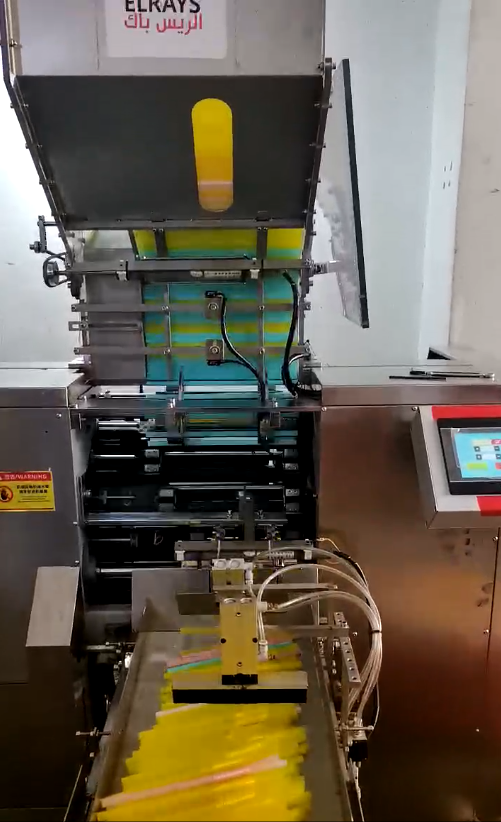
Middle East deployment output: 10 mm decorative straws produced on the decorative straw forming machine platform.
Use Cases: Three Regional Deployment Patterns in Practice
Southeast Asia — Malaysia flexible straw production
The Southeast Asian pattern in this program is a straw factory moving from manual or semi-automatic bending to automated mass production of flexible straws. The deployment used a custom-tuned mold solution matched to local straw specifications, sustained long-term continuous-run performance, and full-set after-sales technical support for an overseas site. The documented result is that one high-speed flexible straw forming machine replaces five traditional machines, running at high speed without needle breakage and delivering at least 1,000 straws per minute with consistent finished-product quality. A Malaysia case represents the Southeast Asian deployment in this program.
Middle East — 10 mm decorative straw production
The Middle East pattern leans toward decorative (art) straw formats rather than standard beverage diameters. The documented output in this region is 10 mm decorative straws for Middle East clients, produced on the decorative straw forming machine platform. Because art straw orders change shape and caliber more often than beverage straw orders, the mold-change efficiency of the modular design matters more here than raw line speed alone.
China — 3.8 mm U-shaped straws for dairy and catering supply
The domestic Chinese pattern is built around high-volume, standardized beverage and dairy supply. The documented case is a domestic dairy factory application using 3.8 mm U-shaped straws. This is also the market where the application scenario is most established, covering new production line construction, single machine procurement, capacity expansion, and equipment replacement, across the straw manufacturing, catering supplies, disposable tableware, and packaging machinery industries. Chinese customs data lists HS code 84778090 as the primary classification for drinking straw machines, which is the code buyers and forwarders normally work with on domestic equipment documentation.
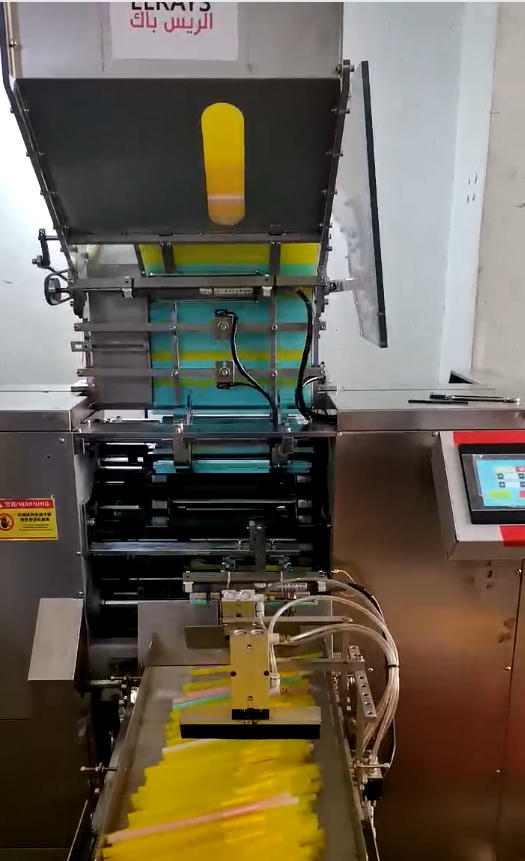
Middle East customer cases: regional straw formats drive the mold and line configuration, not the machine model.
Comparison Table: Regional Deployment Profiles and Capability Benchmarks
The first table compares how the same machine platform is configured and commissioned in the three regions documented in this program. The second table places the DT-1200 specification against published third-party benchmarks so that buyers can judge speed claims against an external reference rather than against marketing language.
| Deployment factor | Southeast Asia (Malaysia case) | Middle East | Domestic China |
|---|---|---|---|
| Documented client type | Straw factory upgrading from manual or semi-automatic bending | Straw factory producing decorative straws; 10 mm decorative straw output documented | Domestic straw manufacturer; 3.8 mm U-shaped straw output documented for dairy supply |
| First configuration change | Custom-tuned mold solution for local straw specifications | Mold set for larger-diameter decorative profiles | Mold set for small-diameter U-shaped straw |
| Supporting equipment to coordinate | Feeder, sealing & cooling unit, packaging machine, conveyor system | Same auxiliary set; manual or semi-automatic packing common at start | Same auxiliary set, typically connected into a full production line |
| Typical installation pattern | Standalone unit, later line integration | Standalone unit with downstream packing | Full-process manufacturing inside an existing line |
| Site conditions required | Normal-temperature workshop, stable power supply, raw-material feeding, line connection | Same documented working condition | Same documented working condition |
| Documentation to prepare | Pre-delivery test-run record, functional verification, factory inspection report on request | Pre-delivery test-run record, functional verification, factory inspection report on request | Same records; HS code 84778090 is the primary classification for drinking straw machines under China GACC data |
| Documented outcome | 1 high-speed machine replaces 5 traditional machines; at least 1,000 straws per minute without needle breakage | Decorative straw output consistent with custom mold specification | Automation upgrade from manual or semi-automatic processes in mass production |
| Metric | DT-1200 high-speed flexible straw forming machine | Typical automatic straw bending machine (third party) | Industrial-scale high-speed reference (third party) |
|---|---|---|---|
| Output | 3,000–5,500 pcs/min (specification range) | 200–300 pcs/min (Industry Engineering Specs, KEZHI) | 80,000–200,000+ pcs/hr (Dataintelo, 2025) |
| Documented sustained field output | At least 1,000 straws per minute, without needle breakage | Not stated | Not stated |
| Replacement ratio | 1 machine replaces 5 traditional machines | Not stated | Not stated |
| Power | 5.5–6.5 kW | Not stated | Not stated |
| Working pressure / temperature | 1.500–6.000 MPa / 100–200 °C | Not stated | Not stated |
| Protection grade and material | IP55, stainless steel | Not stated | Not stated |
| Straw diameter tolerance | ±0.05 mm standard | Not stated | Not stated |
| Core forming technology | Patented embossing & forming module, Patent No. ZL202020756632.1 | Not stated | Not stated |
Frequently Asked Questions
What must be confirmed before a flexible straw forming machine is ordered for a specific region?
Three things must be confirmed before order placement: material compatibility, the mold solution for the target straw diameter and bending shape, and the raw-material specification including surface treatment standards. Custom molds are required for different straw diameters and bending shapes, so the mold decision cannot be deferred to installation. Buyers whose finished straws are exported to the EU should also verify equipment documentation against the EU Machinery Directive 2006/42/EC and the CE mark, the machinery safety standard EN ISO 12100, and food-contact requirements under Regulation (EC) No 1935/2004.
How many high-speed flexible straw forming machines are already running in these regions?
60 sets have been installed across multiple straw production facilities over a three-year deployment program. The documented client base covers straw factories in Southeast Asia, straw factories in the Middle East, and domestic Chinese straw manufacturers, with a Malaysia case representing the Southeast Asian deployment. In that program, one high-speed flexible straw forming machine replaced five traditional machines and ran at high speed without needle breakage, delivering at least 1,000 straws per minute with consistent finished-product quality.
Can one machine cover different straw diameters and bending angles, or does each size need its own machine?
One machine covers multiple diameters and bending angles by changing the corresponding molds, which is why the modular mold-change design matters for factories running mixed order books. The documented range covers flexible straw machines, small-diameter U-shaped straw machines, and decorative straw machines, including 3.8 mm U-shaped, 5 mm flexible, and 6 mm and 12 mm decorative and pointed-tip configurations. Factories should confirm their exact diameter, bend angle, and raw material with the manufacturer before finalizing molds.
What are the minimum order quantity and the delivery time?
The documented minimum order quantity is 1 set, and the documented lead time is 30 days, with a monthly production capacity of 20 sets. A purchase can start as a single machine and later be expanded with optional downstream modules such as a fixed-quantity packaging system and an automatic stacking unit, which is how a standalone machine becomes an integrated straw production line. Commercial terms including warranty coverage and response times are recommended to be confirmed before purchase, since they are not fixed by the standard specification.
How should a factory validate a machine before committing to a full regional rollout?
Validation runs on three documented checkpoints: a pre-delivery test run and functional verification at the factory, a factory inspection report available on demand, and a trial on the buyer's own tube blanks at commissioning rather than on sample material. Where overseas sites cannot send staff, on-site training can be arranged in Dongtie's own straw production workshop, which operates over 10 full production lines, and remote video technical guidance is available for common faults. Buyers who want to verify mold feasibility for their own straw specification before ordering can request a technical consultation and a mold assessment through Dongtie Mechanical Equipment at WhatsApp +8613680252932 or by email at 843681276@qq.com.
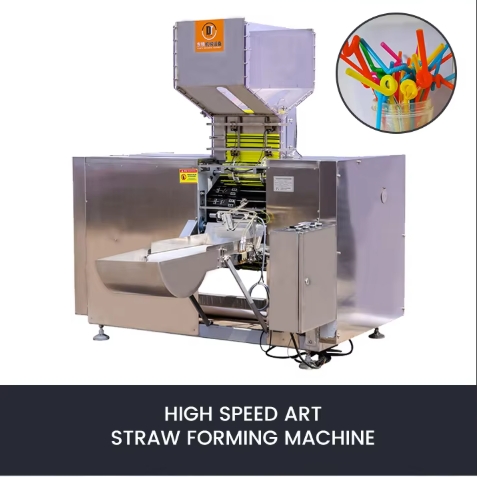
Mold validation comes first: the forming and bending configuration is confirmed against the buyer's straw specification before the machine ships.
Conclusion: Configure for the Region, Then Scale
Regional deployment of a high-speed flexible straw forming machine is a configuration exercise, not a model selection exercise. The machine that runs 10 mm decorative straws for Middle East clients and the machine that runs 3.8 mm U-shaped straws for domestic dairy supply share a platform, a patented embossing and forming module, a ±0.05 mm diameter tolerance standard, and a PLC control system with fault codes and automatic counting. What differs is the mold set, the tube-blank compatibility check, the supporting equipment sequence, and the point at which the line is connected.
The three-year, 60-set deployment record across Southeast Asia, the Middle East, and China shows what that configuration work delivers in practice: one high-speed flexible straw forming machine replacing five traditional machines, running without needle breakage at no less than 1,000 straws per minute, with custom-tuned mold solutions and full-set after-sales technical support for overseas sites.
Next Step
If you are planning a new straw line, an expansion, or a replacement project, the fastest way to a reliable deployment plan is to send your straw diameter, bend angle, raw material, and target output to the manufacturer and confirm the mold solution before order placement.
Dongtie Mechanical Equipment — Zhongshan Dongtie Machinery Co., Ltd.
Website: www.zsdtjx.com | Blog: blog.zsdtjx.com
Contact: Quanhe Wu | Email: 843681276@qq.com | Tel / WhatsApp: +8613680252932
Address: 23-3/F, Xicheng Road, West District, Xiaolan Town, Zhongshan City
Download the equipment catalog and full specification sheet: Dongtie Mechanical Equipment brochure (PDF)
Third-party market and benchmark figures cited in this guide are attributed to their original publishers: Market Research Future, Grand View Research, Mordor Intelligence, Dataintelo, China GACC, Zauba/US customs data, European Commission, ISO/CEN, Industry Engineering Specs (KEZHI), and MarkNtel Advisors. Machine specifications, deployment records, and service terms are stated as documented by the manufacturer.