Evaluating a High-Speed Flexible Straw Forming Machine Supplier: Capability Checks Beyond the Brochure
Short answer: a supplier's real capability in high-speed flexible straw forming machines rests on four things a buyer can verify — the engineers who design the machine, the plant that builds it, the patent that protects the design, and the support that reaches the buyer after the container is loaded. Brochures describe all four with adjectives; only documents, numbers and test runs prove them. This guide sets out the checks, the evidence each one should produce, and the points where supplier claims usually break down.
Why Capability Claims Outlive Their Evidence
A straw forming machine is bought to run for years. That means supplier capability is not really tested on the day of purchase; it is tested in year two and year three, when a mold has to be re-tuned, a fault code appears on the control screen, or a new straw diameter enters the order book.
Brochure language survives because it is written to be unfalsifiable. "High-speed", "advanced", "fully automatic" and "customizable" carry no unit of measure and no reference condition, which is exactly why the same wording can sit on a supplier page for years without ever being wrong.
Three failure patterns recur in straw line procurement:
- Capacity that exists only in the quotation. A delivery date is offered that the plant's real monthly build rate cannot support once other orders are already committed.
- A patent that covers the wrong thing. The supplier owns a genuine registration, but the certificate names a different model, or a component that is not used on the machine being quoted.
- Support that ends at the port. Installation is promised, but there is no defined route for remote fault diagnosis, spare parts, or operator training in a language the buyer's team can work in.
The five checks below are the ones that decide whether a line is still producing in year three. Each one has a piece of evidence attached to it, and each is illustrated with what a verifiable answer actually looks like.
What the Straw Machinery Market Looks Like Right Now
The global straw machine market was estimated at USD 962.55 million in 2024 and is projected to reach USD 1,793.41 million by 2035, a CAGR of 5.82% (Market Research Future). The paper straw segment — a different material profile, but the same demand for forming machinery — was valued at USD 2.6 billion in 2024, with paper straw machines forecast to grow at a CAGR of 15.6% between 2025 and 2030 (Grand View Research). Industrial end-users, the group that buys production equipment rather than finished straws, were projected to hold 40.1% of straw machine market share as of 2025 (Dataintelo).
Manufacturing capacity is concentrated. China accounts for over 66% of the global export value of flexible straw bending machinery (Zauba, based on customs data), and China's GACC classifies drinking straw machines primarily under HS code 84778090. For most buyers this narrows the search to Chinese manufacturers — and the differences between those manufacturers are rarely visible on a home page.
The supplier base has a mature end. Jumbo Steel Machinery in Taiwan has built flexible straw machines since 1986, and Jiexuan Machinery, established in 2009, is a recognised name in high-speed straw extrusion and bending equipment in China. Company age is not a capability check, though: it only shows that the supplier has survived. It does not prove that the specific machine you are buying was designed, built, protected and supported by the same organisation.
Regulation adds a second layer of documents. Equipment placed on the EU market must comply with the Machinery Directive 2006/42/EC and carry the CE mark; machinery safety is generally assessed against EN ISO 12100; and food-contact requirements are governed by Regulation (EC) No 1935/2004. These are separate document sets. A patent certificate does not cover them, and they do not cover a patent.
The practical consequence is simple: the buyer's task is no longer to find a supplier. It is to decide which supplier's claims can be verified.
Five Capability Checks That Go Beyond the Brochure
Check 1 — R&D Depth: Count the Engineers, Not the Years
R&D depth is measurable in three ways: how many engineers work on machine design, how many years of real straw production experience sit behind them, and whether the supplier can run a machine on actual product rather than on a test bench.
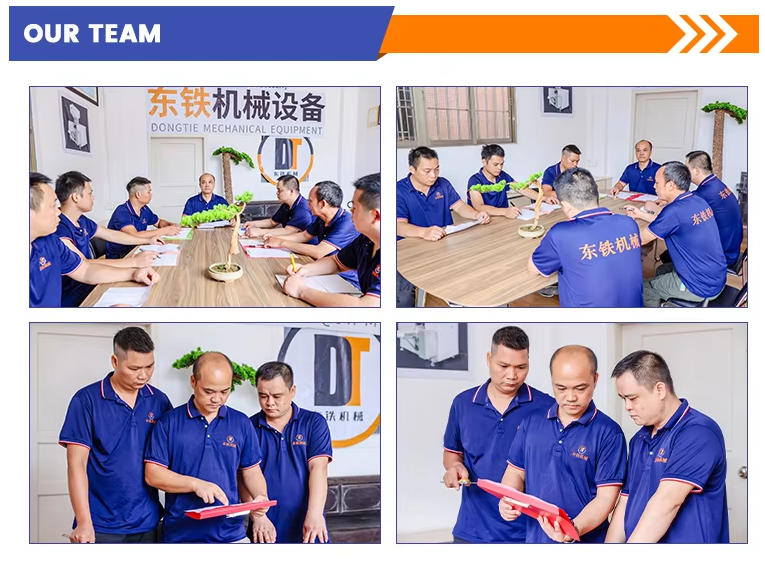
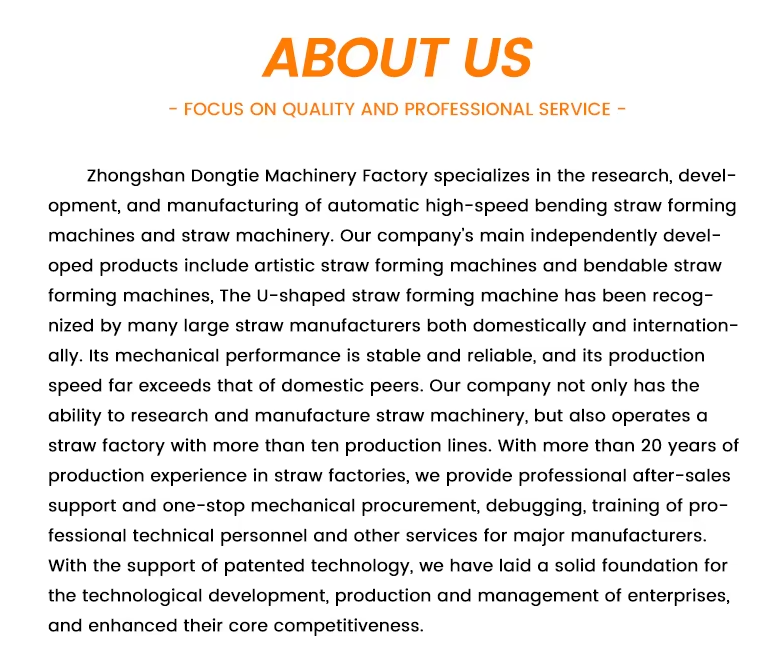
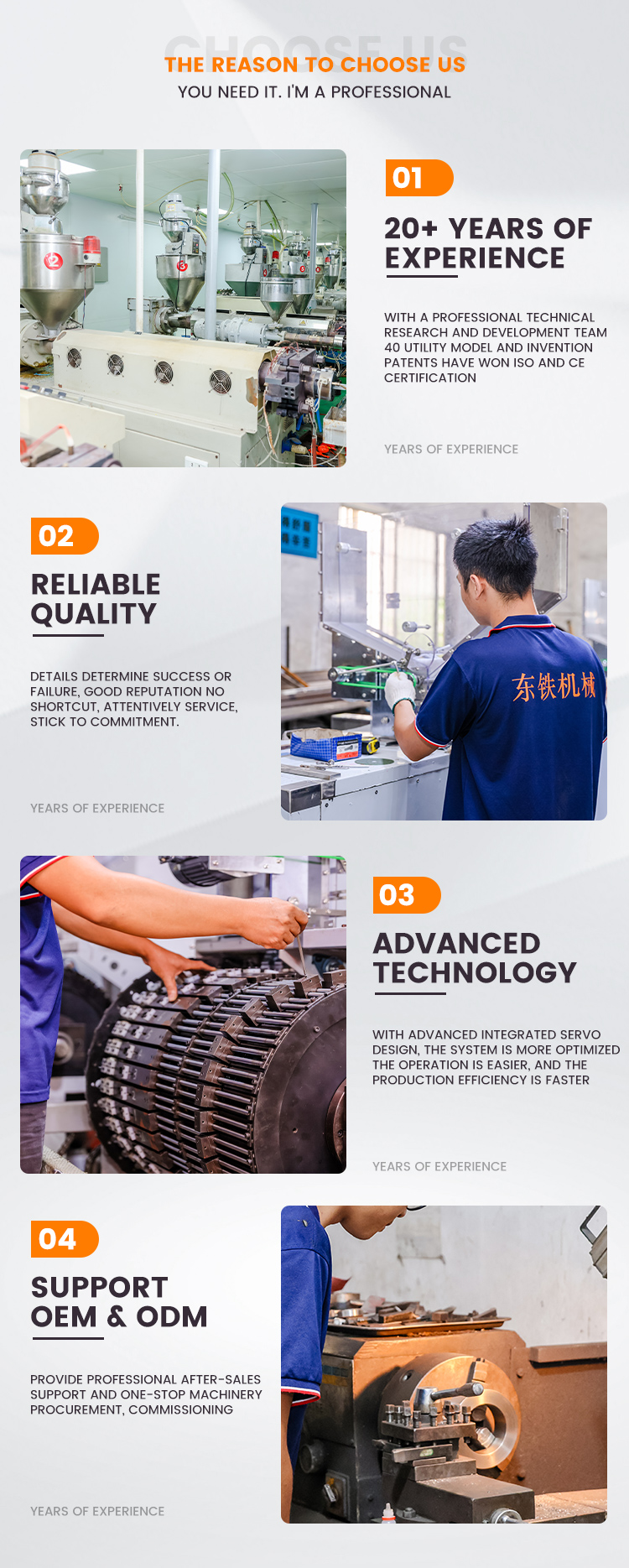
Zhongshan Dongtie Machinery Co., Ltd. is a straw machinery manufacturer based in Xiaolan Town, Zhongshan City, China, focused on straw machinery manufacturing since 2010 (www.zsdtjx.com). Its published capability statement lists an R&D team of more than 10 professional technicians, plus 5 technical support staff, within a technical team carrying 25 years of straw production experience.
The split matters more than the total. Design engineers and technical support staff do different work: one group develops machine optimisation and new product lines, the other answers fault calls and supports installed equipment. A supplier that can name both groups is describing a capability structure. A supplier that offers a single number is describing a headcount.
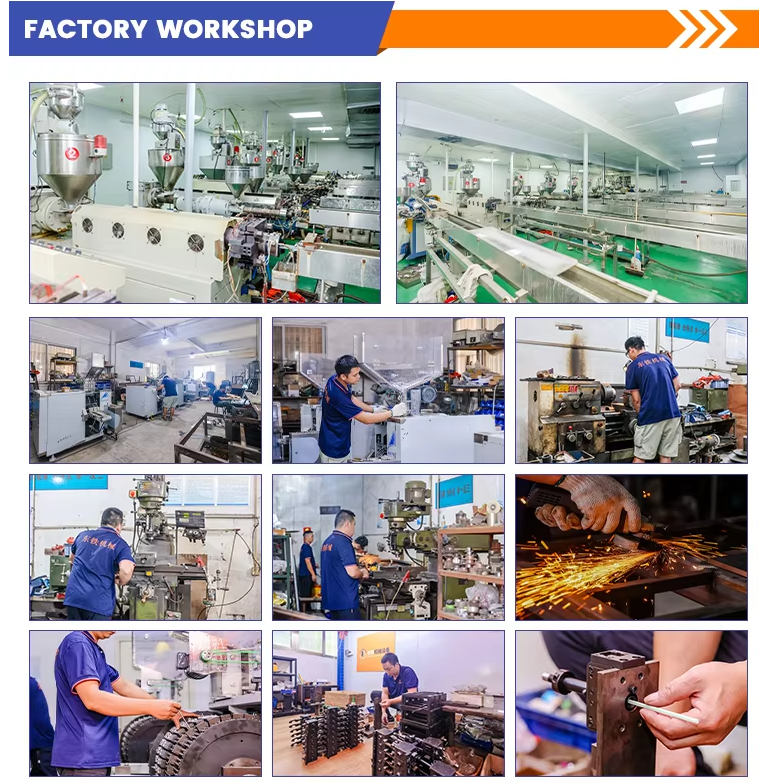
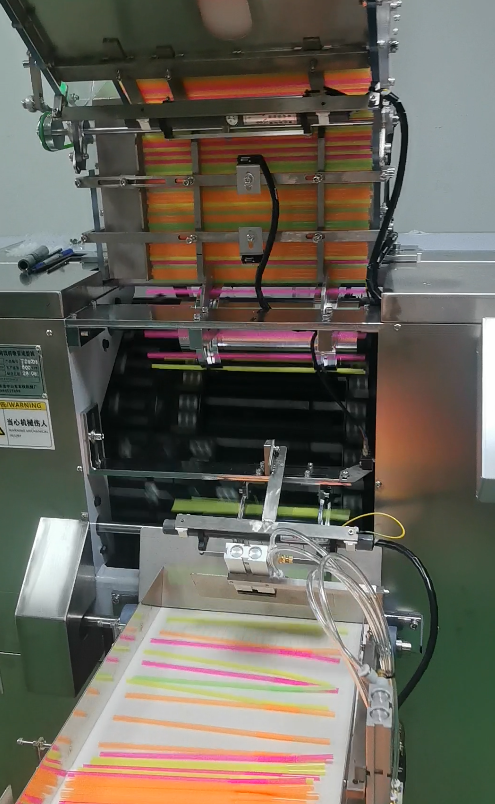
The second half of this check is where the machines are tested. Dongtie arranges on-site training in its own straw production workshop, which is equipped with more than 10 full production lines. For a buyer, that is the difference between a machine that has been run on product and a machine that has been assembled and shipped. Ask to see the workshop, live or on video, with a line running.
Check 2 — Manufacturing Scale: Does the Plant Support the Promise?
A capacity claim is only useful when it can be matched against staffing and floor area. Dongtie's published figures are a 2,000 m² facility, about 20 staff, an annual output of 200 sets and a monthly capacity of 20 sets.
Those numbers should be read as a set, not individually. Ask how roughly 20 staff are distributed between machine assembly, mold making, commissioning and after-sales, because in straw forming equipment the mold workshop is frequently the real constraint. A monthly capacity figure means little if the same small team is also building molds for eight different straw diameters.
The consistency test is straightforward: monthly capacity, lead time and outstanding order volume should agree with each other. Dongtie publishes a 30-day lead time and a minimum order quantity of 1 set; the sensible follow-up question is how many units are already committed for the month you need.
Ask as well whether molds are produced in-house. That single answer determines how quickly a new straw dimension or bend angle can be introduced after the machine is installed.
Check 3 — Patent Ownership: Read the Certificate, Not the Badge
"Patented technology" appears on almost every straw machine page. The certificate behind it is either specific or it is not.
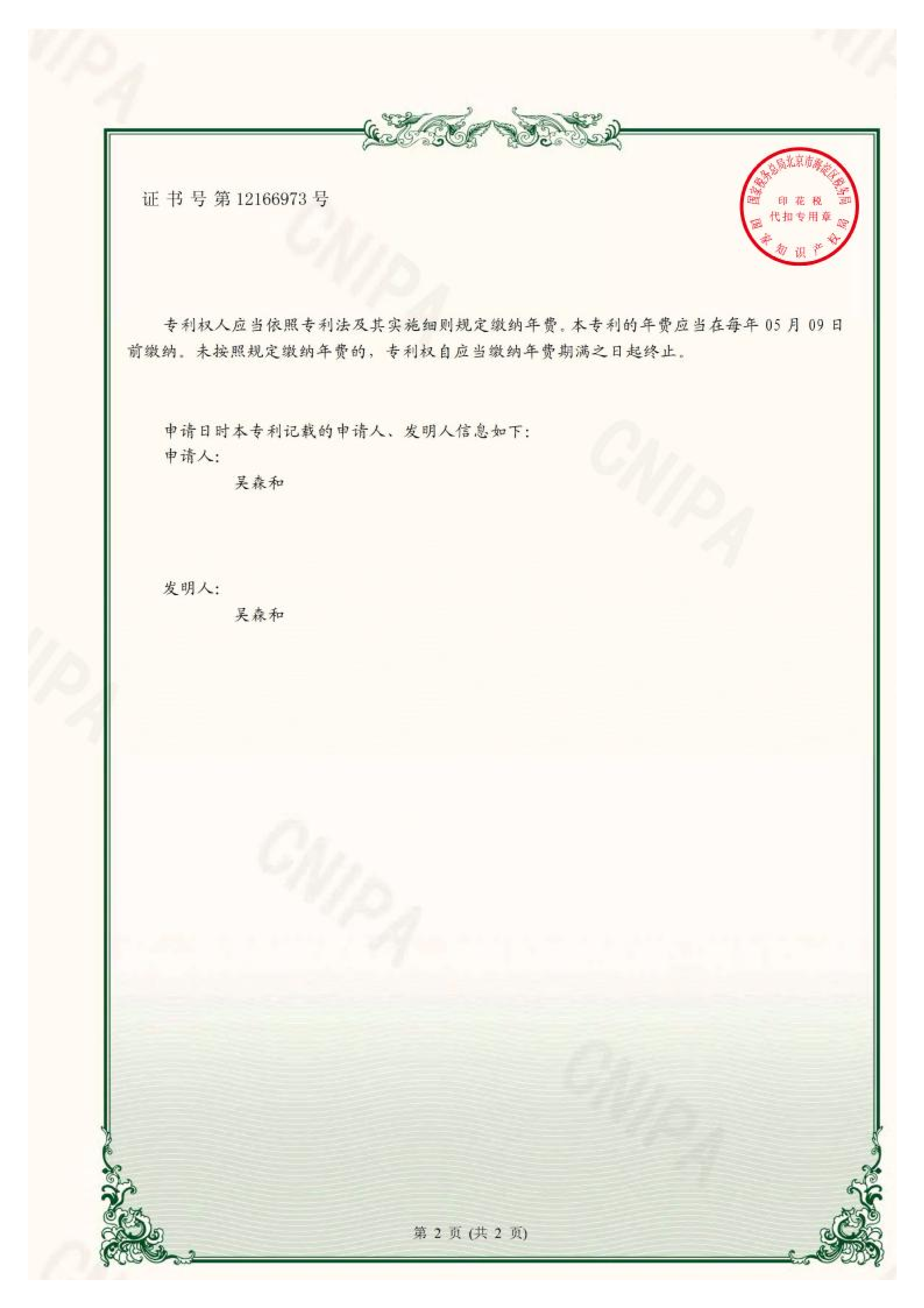
Dongtie's equipment applies self-developed domestic patented technology, Patent No. ZL202020756632.1, registered as Certificate of Utility Model Patent No. 12166973 by the China National Intellectual Property Administration on 2020-12-18, valid to 2030-05-09, with the recorded scope naming the High-Speed Flexible Straw Forming Machine (Model DT-1200).
Three details settle whether a certificate is relevant: the issuing authority and certificate number; the validity window, since a registration with three years left is a different commercial asset from one with nine; and the model named in the scope. A certificate naming a different model says nothing about the machine you are buying — Dongtie's names the DT-1200, the model in question.
A utility model patent protects a structural configuration, so it is worth reading what the claims actually describe. In this case they describe machine behaviour: an independent embossing and forming module that boosts production output; high-efficiency embossing technology that relaxes the tolerance limits for tube blanks, with standard straw diameter tolerance controlled at ±0.05 mm; a precision feeding unit that supports long-term stable operation; and separately adjustable embossing and forming modules that reduce maintenance difficulty.
One boundary should be stated plainly. This is a Chinese utility model patent, mainly valid in China, and its registration does not by itself place a machine on the EU market. Market-access documents — CE marking under Machinery Directive 2006/42/EC, EN ISO 12100 for machinery safety, and Regulation (EC) No 1935/2004 for food contact — must be requested as separate files. Buyers who accept a patent certificate as a compliance document are checking the wrong folder.
Check 4 — Output and Tolerance: What the Speed Number Measures
Speed is the most quoted and least defined specification in straw machinery. Published third-party specifications for automatic straw bending machines commonly cite 200–300 pieces per minute, while supplier datasheets for high-speed flexible lines quote figures in the thousands. That gap is usually definitional rather than technical: gross forming speed versus net saleable output after rejects, single-lane versus multi-lane configuration, and whether the count includes formed pieces or counted and packed pieces.
Dongtie's DT-1200 is rated at 3,000–5,500 pcs/min, with 5.5–6.5 kW power, working pressure of 1.500–6.000 MPa, working temperature of 100–200 °C, protection grade IP55 and a stainless steel build. Before comparing that figure against another supplier's number, ask four questions: is it gross speed or net saleable output; at which straw diameter and material; is it peak or sustained across a full shift; and how accurate is the automatic counting function that produces it.
Tolerance is the harder capability to fake. Under Dongtie's patented embossing technology the standard straw diameter tolerance is controlled at ±0.05 mm, and the embossing process relaxes the tolerance requirement on incoming tube blanks. The commercial meaning goes beyond quality: it changes how much tube blank scrap the line can absorb, which is a raw material cost question as much as a technical one.
The failure mode worth asking about is needle breakage. Dongtie's project record describes machines running at high speed without needle breakage, with the delivered configuration producing at least 1,000 straws per minute. Convert that into a maintenance question: what is the expected needle and wear-part consumption, and how are those spares supplied?
Check 5 — After-Sales Reach: The Capability That Travels
Support capability can be verified the same way as production capability: by named markets, named service modes and spare parts logistics. Dongtie exports to Southeast Asia, the Middle East, Europe and other global markets, with an export ratio of 50%, and its published service scope covers installation and commissioning, remote technical support and spare parts supply.
Two details make that claim concrete. First, remote video technical guidance is available for common faults — a specific, checkable service rather than a general promise of support. Second, on-site training can be arranged in the supplier's own workshop with more than 10 full production lines, which means operators can be trained on running equipment instead of during a commissioning window that has already been paid for.
The control system supports the same logic. The DT-1200 uses a PLC control system that displays real-time operating status, stops the machine automatically on malfunction with a fault code shown on screen, and counts output. In practice, a displayed fault code is the difference between a remote video call that resolves an issue in twenty minutes and one that ends with a technician booking a flight.
Two terms are usually not published online and should be fixed before purchase: the warranty period and the after-sales response time. Dongtie's own guidance is that both are confirmed before purchase. Treat that as a normal request rather than a warning sign — but do not sign without the answer in writing.
The Eight-Step Capability Audit
- Define your specification envelope first. Straw diameter range, bend angle, material, target net output per shift, and how the machine will connect to existing upstream and downstream equipment. Different straw diameters and bending shapes require custom molds, so your specification list is also your mold list.
- Request the document set before the quotation. Patent number, certificate number, issuing authority, validity dates, and the model named in the scope. Ask separately whether factory inspection reports can be provided.
- Check capacity against staffing. Floor area, staff count, monthly and annual capacity, and whether molds are produced in-house.
- Redefine every speed figure. Ask what the number measures, at which diameter and material, and whether it is sustained or peak.
- Ask for the tolerance value, not a quality adjective. Dongtie publishes ±0.05 mm as the standard straw diameter tolerance applied under its patented embossing technology.
- Map the customization boundary. Dongtie customizes molds, production capacity specifications, control systems and line connection schemes, and states that OEM services are available; the full customizable scope is confirmed with the sales team. Put the agreed boundary in writing — the boundary matters more than the promise.
- Agree the acceptance procedure. Factory inspection includes a pre-delivery test run and functional verification. On-site or third-party inspection is recommended, covering the pre-delivery factory test run and finished sample verification, with acceptance criteria written into the contract.
- Fix commercial and service terms. Minimum order quantity is 1 set; delivery is by sea freight or land transportation, with the exact shipping method and freight cost negotiated and specified in the sales contract; payment options include deposit plus balance before shipment and letter of credit. Add the installation, remote support and spare parts scope to the same document.
What These Checks Look Like in Real Projects
Dongtie's project record covers around 60 sets delivered to Southeast Asian straw factories, Middle Eastern straw factories and domestic Chinese straw manufacturers over a three-year period, mainly to replace manual or semi-automatic forming processes with automated production.
- Southeast Asian straw factory — capacity replacement. One high-speed flexible straw forming machine replaced five traditional machines, running at high speed without needle breakage and delivering at least 1,000 straws per minute, with more consistent finished product quality. A custom-tuned mold solution matched local straw specifications.
- Middle Eastern straw factory — specification adaptation. The same machine family adapted through molds to different diameters and bending angles, with full-set after-sales technical support arranged for the overseas site.
- Domestic Chinese manufacturer — small-diameter work. Small-diameter U-shaped profiles and 3.8 mm straw production, where tolerance stability matters more than the headline speed figure.
- OEM and ODM brand owners — customization. Molds, control systems, production capacity specifications and line connection schemes configured to the buyer's product range, under the manufacturer's stated OEM services.
- Line integrators — connection to existing equipment. The machine can run standalone or be connected to a line, with matched upstream and downstream equipment including a feeder, sealing & cooling unit, packaging machine and conveyor system. Operation is fully automatic and continuous under manual monitoring and regular maintenance.
Capability Verification Table: Claim, Evidence and Documented Position
| Capability area | Typical brochure claim | Evidence that settles it | Documented position (Dongtie) |
|---|---|---|---|
| R&D depth | "Experienced R&D team" | Engineer headcount, a separate support function, and a workshop available for test runs | More than 10 professional technicians in R&D, plus 5 technical support staff; technical team with 25 years of straw production experience; training workshop with more than 10 full production lines |
| Manufacturing scale | "Large modern factory" | Floor area, staff count, monthly and annual build rate, in-house mold production | 2,000 m² facility; about 20 staff; annual output 200 sets; monthly capacity 20 sets; lead time 30 days |
| Patent ownership | "Patented technology" | Certificate number, issuing authority, validity window, model named in scope | Patent No. ZL202020756632.1; Certificate of Utility Model Patent No. 12166973 issued by CNIPA on 2020-12-18, valid to 2030-05-09; scope names the DT-1200 |
| Output performance | "High speed" | Definition of the figure, diameter and material, peak versus sustained, counting method | DT-1200 rated 3,000–5,500 pcs/min; project record describes at least 1,000 straws per minute with no needle breakage in the delivered configuration |
| Dimensional stability | "Consistent quality" | Published tolerance value and the tolerance accepted on incoming tube blanks | Standard straw diameter tolerance controlled at ±0.05 mm; embossing technology relaxes the tolerance limits for tube blanks |
| Customization and OEM | "Fully customizable" | Which parameters can change, and who confirms the final scope | Molds, production capacity specifications, control systems and line connection schemes customizable; OEM services available; full scope confirmed with the sales team |
| Commercial terms | "Fast delivery" | MOQ, lead time, capacity, delivery and payment routes | MOQ 1 set; 30-day lead time; sea freight or land transportation; deposit plus balance before shipment or letter of credit |
| After-sales reach | "Global service" | Named export markets, defined service modes, spare parts route, warranty terms | Exports to Southeast Asia, the Middle East, Europe and other global markets; installation and commissioning, remote technical support, spare parts supply; remote video guidance; warranty and response time confirmed before purchase |
Published Specifications: High-Speed Flexible Straw Forming Machine (DT-1200)
| Parameter | Published value |
|---|---|
| Model | DT-1200 |
| Material | Stainless steel |
| Power | 5.5–6.5 kW |
| Output | 3,000–5,500 pcs/min |
| Working pressure | 1.500–6.000 MPa |
| Working temperature | 100–200 °C |
| Protection grade | IP55 |
| Control | PLC control system with real-time status display, automatic stop with fault codes, and automatic counting |
| Customization | Molds, production capacity specifications, control systems and line connection schemes |
| Applicable industries | Disposable straw manufacturing, catering utensil production, plastic/paper tube and packaging industry, OEM and ODM straw processing factories |
FAQ: Verifying a High-Speed Flexible Straw Forming Machine Supplier
Does the supplier's patent certificate actually cover the machine I am buying?
Not automatically — the certificate has to be read. Dongtie's equipment applies self-developed patented technology, Patent No. ZL202020756632.1, registered as Certificate of Utility Model Patent No. 12166973 by the China National Intellectual Property Administration on 2020-12-18 and valid to 2030-05-09, with the recorded scope naming the High-Speed Flexible Straw Forming Machine (Model DT-1200). Three details confirm relevance: the issuing authority and certificate number, the validity window, and the model named in the scope. The patent is mainly valid in China and does not by itself authorise placing equipment on the EU market; CE marking under Machinery Directive 2006/42/EC, EN ISO 12100 machinery safety, and Regulation (EC) No 1935/2004 food-contact compliance are separate document sets to request.
How do I verify real R&D and customization depth instead of accepting a marketing claim?
Count the engineers and check where the machines are tested. Dongtie publishes an R&D team of more than 10 professional technicians, plus 5 technical support staff, within a technical team carrying 25 years of straw production experience. On customization, molds, production capacity specifications, control systems and line connection schemes can be customized, and OEM services are available, with the full customizable scope confirmed with the sales team. Test capability is equally checkable: on-site training can be arranged in Dongtie's own straw production workshop, which is equipped with more than 10 full production lines.
What commercial terms should be fixed before any payment is made?
The minimum order quantity is 1 set. Delivery can be arranged by sea freight or land transportation, with the exact shipping method and freight cost negotiated by both parties and specified in the sales contract; packaging and export customs clearance support can be confirmed separately. Payment options include deposit plus balance before shipment and letter of credit, with the exact method and credit terms agreed with the sales team. Because different straw diameters and bending shapes require custom molds, the number of specifications you intend to produce should be defined before prices are compared.
Can output and quality be validated before shipment?
Yes. Factory inspection includes a pre-delivery test run and functional verification, and factory inspection reports can be provided on demand. On-site or third-party inspection is recommended and should cover the pre-delivery factory test run and finished sample verification. Diameter accuracy can be checked on the finished samples against the standard straw diameter tolerance of ±0.05 mm applied under the patented embossing technology. Acceptance criteria are not published online and must be stated clearly in the contract.
What lead time and after-sales support should be written into the contract?
Dongtie publishes a 30-day lead time, a monthly capacity of 20 sets and an annual output of 200 sets, which gives a buyer a basis for judging whether a quoted delivery date is realistic. The published after-sales scope covers installation and commissioning, remote technical support and spare parts supply, with remote video technical guidance for common faults and on-site training in a workshop equipped with more than 10 full production lines. Warranty terms and the after-sales response time are recommended to be confirmed before purchase. To run these checks against your own specification, download the brochure or send your straw diameter, bend angle and target output to the Dongtie sales team.
Conclusion: Four Questions Worth More Than a Brochure
A high-speed flexible straw forming machine is a long-life asset, and the supplier behind it is part of that asset. Capability that cannot be checked is not capability — it is positioning. The four questions that separate the two are short enough to ask in a single email: how many engineers design the machine and where is it tested; how many units does the plant build per month and who builds the molds; what model does the patent certificate actually name; and who answers when a fault code appears on the screen after installation.
Dongtie's published answers are specific: an R&D team of more than 10 professional technicians plus 5 technical support staff, a 2,000 m² facility with about 20 staff and a monthly capacity of 20 sets against an annual output of 200 sets, a self-developed patent registered under Certificate No. 12166973 and valid to 2030, and a service scope covering installation and commissioning, remote technical support and spare parts supply across Southeast Asia, the Middle East and Europe. Buyers can test those answers against the same document set any supplier should be able to produce — certificate, capacity figures, acceptance procedure and service terms.
Next Step: Check the Documents, Then the Machine
Send your straw diameter, bend angle, target output and tube blank specification to the Dongtie team. The relevant patent certificate, published capacity figures, acceptance procedure and customization scope can be provided for your evaluation before any commitment.
Download the product brochure (PDF)Visit zsdtjx.com
Zhongshan Dongtie Machinery Co., Ltd.
Address: 23-3/F, Xicheng Road, West District, Xiaolan Town, Zhongshan City, China
Contact: Quanhe Wu
Email: 843681276@qq.com
Tel / WhatsApp: +8613680252932