High-Speed Bendable Straw Forming Machine Comparison: Automation Factors That Decide the Upgrade
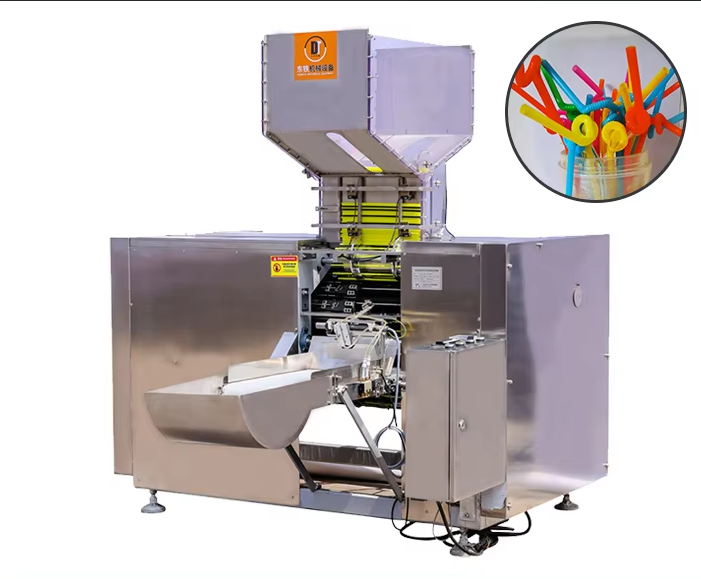
Upgrading a straw plant to a high-speed bendable straw forming machine is a capital decision, but it is also an automation decision. The comparison is no longer only about maximum speed. Buyers need to compare output under continuous operation, quality consistency, needle breakage risk, and the long-term stability of the forming process. This guide gives manufacturers a practical framework for comparing a fully automatic flexible straw forming machine with traditional or semi-automatic straw bending lines.
One reference point is the DT-1200 high-speed flexible straw forming machine from DONGTIE MECHANICAL EQUIPMENT, operating as Zhongshan Dongtie Machinery Factory. According to Dongtie comparison data, one DT-1200 replaces five traditional straw forming machines while maintaining a minimum output of 1,000 straws per minute. The machine platform has also been installed as 60 sets across Southeast Asia, the Middle East, and China. Those numbers create a concrete baseline for the decision factors discussed below.
The Problem: Traditional Straw Lines Struggle When Volume Increases
Straw bending is a thermo-mechanical process that becomes harder to control as speed increases. In many workshops, traditional automatic or semi-automatic bending equipment is still adequate for low-volume orders, but it creates bottlenecks when a customer requests millions of bendable straws per day.
One widely used industry equipment specification lists common automatic straw bending machines at 200-300 pieces per minute. To match a production target of 1,200 or more straws per minute, a plant must therefore run several traditional units at the same time. More units usually mean more operators, more floor space, more changeover time, and more opportunities for mechanical variation. This is the gap that a high-speed flexible straw forming machine is intended to close.
Industry Background: Automated Straw Production Is No Longer a Niche
The global straw machine market was estimated at USD 962.55 million in 2024 and is projected to reach USD 1,793.41 million by 2035, according to Market Research Future. The market is growing at a projected CAGR of 5.82%. Much of that growth is linked to industrial users who need repeatable output rather than small-batch flexibility.
China accounts for more than 66% of the global export value of flexible straw bending machinery, according to trade data reported through Zauba and US Customs Data. This means many buyers evaluating high-speed bendable straw forming machine manufacturers will be comparing equipment from Chinese suppliers. The practical question is not which country the machine comes from; the question is whether the machine design can deliver consistent high-speed operation without excessive downtime.
Another relevant trend is the growth of U-shaped straw demand in aseptic packaging such as milk cartons. That application requires small-diameter U-shaped straws produced to tight tolerances and in very large volumes, making automation a priority for dairy suppliers and packaging converters.
High-Speed Flexible Straw Forming Machine: What to Put on the Comparison List
When comparing a high-speed bendable straw forming machine with traditional equipment, buyers should examine the machine as a complete production platform, not just as a bending station.
Zhongshan Dongtie Machinery Factory manufactures the DT-1200 high-speed flexible straw forming machine. It is intended for disposable straw manufacturing, catering utensil production, plastic and paper tube manufacturing, packaging, and OEM/ODM straw processing factories. The machine is powered by a 5.5-6.5 kW system, has a protection grade of IP55, and is built with stainless steel. It can run in fully automatic continuous operation, either as a standalone unit or connected to a production line.
The DT-1200 is only one model in a broader family that includes small-diameter U-shaped straw forming machines, U-shaped straw forming machines, art straw forming machines, high-speed straw bending machines, fully automatic flexible straw forming machines, high-speed U-shaped straw forming machines, and large-diameter decorative straw forming machines. Buyers with different end products may compare models matched to 3.8 mm U-shaped dairy straws, 5 mm flexible straws, 6 mm art straws, 10 mm decorative straws, or 12 mm large-diameter formats.
Automation Level: Fully Automatic Operation vs. Manual Monitoring
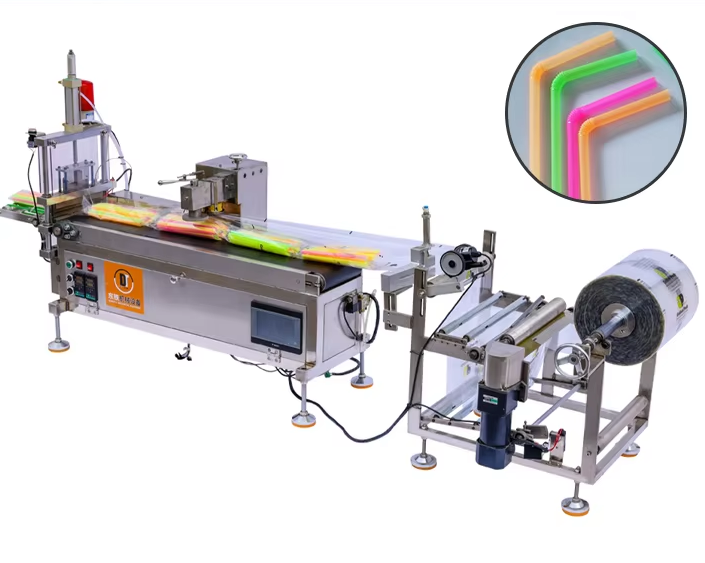
A fully automatic flexible straw forming machine should reduce manual handling between feeding, forming, and downstream packaging. In Dongtie's DT-1200, the PLC control system displays real-time operating status, stops the machine when a malfunction occurs, shows fault codes on the screen, and includes an automatic counting function. This type of control makes it easier for operators to identify problems without stopping every unit on the floor.
Traditional semi-automatic lines often depend on operators to monitor bending quality, remove defective straws, and adjust machine settings by hand. The labour burden increases when a plant uses multiple slower machines to reach the same output. By comparison, a high-speed machine centralizes the process in one controlled unit and can be connected to downstream modules such as automatic stacking or fixed-quantity packaging systems.
Output Consistency: Tolerance and Online Detection Matter
Speed is useful only when the machine can maintain a uniform result. Dongtie uses high-efficiency embossing technology together with self-developed patented technology under Patent No. ZL202020756632.1. According to the company, this approach relaxes tolerance limits for tube blanks and controls standard straw diameter tolerance at ±0.05 mm.
The DT-1200 also comes with multiple online detectors for material shortage, defective forming, and length deviation. The machine automatically rejects unqualified products in real time. For buyers, this reduces raw material waste and the need for manual inspection after the straws leave the forming station. If a plant supplies bendable straws to beverage, dairy, or food-service brands, consistency is often as important as total output.
Needle Breakage Risk: Why It Deserves Separate Attention
Needle breakage is a chronic failure mode in high-speed straw bending. When forming needles break, production stops, and maintenance time rises sharply. This is one reason many plants hesitate to push traditional machines past their rated speed.
Dongtie says its independently developed embossing and forming module was designed to address this industry-wide issue. The forming needles and molds receive special material treatment and craftsmanship, with a designed service life of more than one year for key wearing parts. This does not mean maintenance disappears, but it can reduce the frequency of spare-part replacement and unplanned downtime.
Several features support stable operation: a precision feeding unit keeps material movement controlled, and separately adjustable embossing and forming modules reduce the difficulty of maintenance. When comparing high-speed bendable straw forming machine suppliers, buyers should ask directly how the forming needle is cooled, guided, replaced, and protected under sustained high-speed operation.
Long-Term Running Stability and Maintenance Strategy
Stable operation over multiple shifts depends on machine design and after-sales support. The DT-1200 uses a humanized layout for lubrication, cleaning, and troubleshooting. Parameters are easier to adjust because the separate forming and embossing modules do not force operators to re-align the complete machine each time the specification changes.
Dongtie also provides remote video technical guidance for common faults, which is useful for plants that do not have an in-house specialist. On-site training can be arranged in Dongtie's own straw production workshop, which is equipped with more than ten full production lines. This kind of process-level support helps buyers verify that operators are trained before the machine enters regular production.
Step-by-Step: How to Compare Machines for an Automation Upgrade
Use the following sequence when you evaluate a high-speed flexible straw forming machine against your current traditional or semi-automatic setup.
- Define the minimum line speed you need in continuous work. For a high-speed model such as the DT-1200, use a minimum of 1,000 straws per minute as the design baseline, not the theoretical peak output.
- Map the number of machines needed. Ask the supplier how many traditional machines one fully automatic flexible straw forming machine can replace. Dongtie's comparison data says one DT-1200 replaces five traditional units.
- Check the forming module. Confirm how the machine handles needle wear, mould alignment, and diameter tolerance. Look for ±0.05 mm tolerance control if you supply dairy or beverage brands.
- Review monitoring and error handling. A useful machine should have PLC control, automatic counting, fault-code display, and if possible online detection of defective forming and length deviation.
- Assess mould changeover for multiple specifications. Many flexible straw makers run different diameters and bending angles on one line. Confirm that mould replacement is modular and does not require re-commissioning of the whole machine.
- Evaluate long-term support. Check whether the manufacturer offers remote video guidance, on-site training, and a production workshop where operators can practice before installation.
Use Cases: 60 Installed Sets Across Southeast Asia, the Middle East, and China
The high-speed forming platform from Dongtie has been installed as 60 sets in three regions: Southeast Asia, the Middle East, and China. These regions represent different demand patterns. In Southeast Asia, straw plants often need high output for beverage export and food-service markets. In the Middle East, captured production examples include 10 mm decorative straws used by hospitality customers. In China, dairy-related applications include 3.8 mm U-shaped straws for small drinking portions and aseptic packaging.
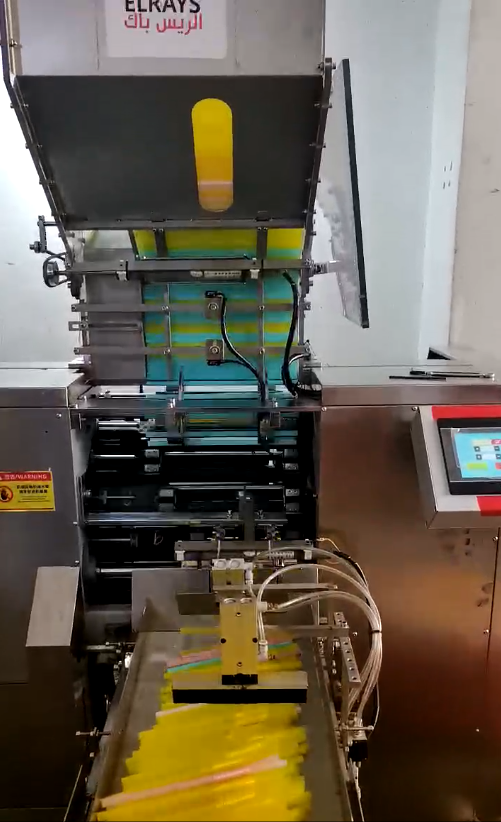
These installations also illustrate the range of line configurations. A high-speed flexible straw forming machine can be used for small-diameter U-shaped straws, standard bendable beverage straws, and large-diameter decorative straws when the corresponding moulds are installed. Buyers who need several straw styles can consolidate production on one platform instead of operating separate traditional lines for each diameter.
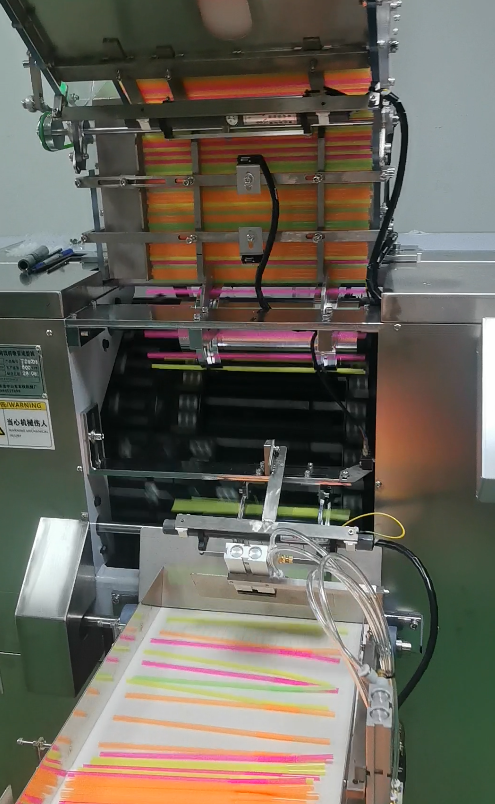
Comparison Table: High-Speed Bendable Straw Forming Machine vs. Traditional / Semi-Automatic Setup
| Decision factor | High-speed flexible straw forming machine example: DT-1200 | Traditional or semi-automatic line observation |
|---|---|---|
| Automation level | PLC control; real-time operation status; auto-stop with fault codes; automatic counting; can run standalone or connect to a line | Manual or semi-automatic monitoring is more common; output counting and error detection depend on operator attention |
| Number of machines for comparable output | One DT-1200 is designed to replace five traditional machines | Multiple slower units are often needed to match one high-speed machine |
| Stable output | Minimum production speed of at least 1,000 straws per minute | Common automatic straw bending machines are often listed at 200-300 pieces per minute in industry specifications |
| Needle breakage risk | Addressed by patented forming module design; forming needles and molds designed for a service life of more than one year | Higher dependence on mechanical adjustment and frequent intervention at sustained high speed |
| Diameter tolerance | Standard straw diameter tolerance controlled at ±0.05 mm | Consistency depends heavily on blank quality and operator skill |
| Quality inspection | Multiple online detectors for material shortage, defective forming, and length deviation; automatic rejection of unqualified products | Manual inspection is more common, especially on semi-automatic equipment |
| Mould and specification flexibility | Mould change allows different diameters and bending angles; modular design shortens changeover time | Changing between diameters and bending shapes may require longer mechanical adjustment |
| Maintenance and training | Separately adjustable modules; accessible lubrication and cleaning; remote video guidance; on-site training in workshop with more than ten production lines | Maintenance workload is often shared across multiple machines, making scheduling harder |
Frequently Asked Questions
What should I compare when choosing between high-speed bendable straw forming machine manufacturers?
Compare forming module design, needle breakage risk, minimum stable output, diameter tolerance, PLC and fault-diagnosis functions, mould-change flexibility, and the manufacturer's installed base. For one data point, DONGTIE MECHANICAL EQUIPMENT says its DT-1200 can replace five traditional machines and produce at least 1,000 straws per minute. Dongtie also reports an installed base of 60 sets in Southeast Asia, the Middle East, and China.
Can one high-speed flexible straw forming machine replace several traditional straw machines?
Yes. In Dongtie's comparison guidance, one DT-1200 high-speed flexible straw forming machine can replace five traditional machines. This reduces the number of units that need monitoring, maintenance, and floor space while maintaining a minimum output of 1,000 straws per minute.
Can this machine produce straws of different diameters and bending angles?
Yes. By changing the corresponding moulds, the high-speed flexible straw forming machine can produce flexible straws with different diameters and bending angles. Dongtie's product range covers small-diameter U-shaped straws, decorative straws, and larger-diameter formats, and buyers can request moulds matched to their required straw specification.
How do high-speed machines reduce needle breakage risk during straw bending?
Dongtie uses self-developed patented technology under Patent No. ZL202020756632.1 for independent embossing and forming. Forming needles and molds are reinforced with special materials and craftsmanship, with a designed service life of more than one year. This is intended to reduce the frequency of high-speed needle breakage and associated downtime.
What after-sales and process support should I expect from a straw machinery supplier?
Buyers should expect remote video technical guidance for common faults and on-site training where possible. Dongtie can arrange training in its own straw production workshop, which contains more than ten full production lines. For a current machine quote, sample run, or specification review, contact Dongtie by email at 843681276@qq.com or via WhatsApp at +8613680252932.
Conclusion
An automation upgrade on a flexible straw line should be measured by output consistency, uptime, changeover flexibility, and maintenance cost, not only by the machine's headline speed. Traditional and semi-automatic machines can still serve small-scale production, but plants planning higher volumes should evaluate whether a single high-speed machine can replace several older units with lower risk of needle breakage and better quality control.
The DT-1200 from Zhongshan Dongtie Machinery Factory is one example of a high-speed flexible straw forming machine that uses patented forming technology, PLC monitoring, online inspection, and modular mould design. With 60 installed sets across Southeast Asia, the Middle East, and China, it provides a practical reference point for manufacturers making the shift to automated straw forming.
Next step: Download the Dongtie machinery brochure to review the full machine family and line configurations. For application-specific recommendations, contact Quanhe Wu at WhatsApp +8613680252932 or email 843681276@qq.com.
Sources used in this article include Market Research Future straw machine market data and Dongtie product and application information available through www.zsdtjx.com. More technical content is published at blog.zsdtjx.com.