High-Speed Bendable Straw Forming Machine: Compliance Guide for Southeast Asia, Middle East & Europe
High-Speed Bendable Straw Forming Machine: Compliance Guide for Southeast Asia, Middle East & Europe
Short answer: when a high-speed bendable straw forming machine is exported to Southeast Asia, the Middle East or Europe, compliance is not one certificate. It is a chain of evidence a buyer can check before the balance payment leaves the bank: a real and in-scope patent document, a recorded pre-delivery test run with functional verification, inspection reports released on request, and written confirmation of installation, commissioning, remote technical support and spare parts supply. With DONGTIE MECHANICAL EQUIPMENT, that chain begins with Utility Model Patent No. ZL202020756632.1 (Certificate No. 12166973), issued by the China National Intellectual Property Administration on 18 December 2020 and valid to 9 May 2030, covering the High-Speed Flexible Straw Forming Machine model DT-1200.
The Real Compliance Problem: Three Questions a Brochure Cannot Answer
DONGTIE MECHANICAL EQUIPMENT (Zhongshan Dongtie Machinery Co., Ltd.) is a straw machinery manufacturer based in Xiaolan Town, Zhongshan City, China, producing flexible straw forming machines, U-shaped straw forming machines, decorative straw forming machines and straw production lines. Its export activity covers Southeast Asia, the Middle East, Europe and other global markets.
Buyers evaluating a high-speed flexible straw forming machine in these regions usually reach the same three questions, and none of them are answered by a specification sheet:
- Is the claimed capability in scope of a document I can read? A patent number printed somewhere on a website proves nothing unless the certificate names the model, the technology and a valid date range.
- Was the actual machine I am paying for tested before it left the factory? Output figures describe a design target. A pre-delivery test run with functional verification describes a specific unit.
- Which regional requirements apply in my destination market, and who confirms them? A supplier cannot self-declare a buyer's local obligations, and a buyer should not assume a regional mark exists because a supplier is experienced in export.
These three questions separate a normal equipment purchase from a compliance-driven one. The remainder of this guide deals with them in order, using only documents and capabilities that the manufacturer states it can provide.
Industry Background: Why Destination Market Rules Now Shape the Purchase
The machinery itself is a mature product category, but the purchase decision is increasingly driven by regulation at the destination. Market Research Future estimates the global straw machine market at USD 962.55 million in 2024, with a projected value of USD 1,793.41 million by 2035 at a CAGR of 5.82%. Growth at that level is not generated by capacity expansion alone; it is generated by replacement cycles triggered by material and safety rules in importing countries.
Three reference points matter when a buyer is planning an export purchase:
- China is the dominant supply source. Third-party trade data cited for 2023 indicates that China accounts for over 66% of the global export value of flexible straw bending machinery. In practice, this means a buyer in Southeast Asia, the Middle East or Europe is most likely negotiating inside Chinese export documentation conventions, whether or not the supplier explains them.
- Europe applies a defined machinery framework. Straw machines sold in the European Union must comply with the Machinery Directive 2006/42/EC and carry the CE mark, and EN ISO 12100 is the primary harmonized standard for machinery safety. EU Regulation (EC) No 1935/2004 additionally requires that machinery must not transfer constituents to food in quantities that endanger health.
- Southeast Asia and the Middle East do not share one harmonized regime. For these markets, the practical route is confirmation with the importer, the local authority or a nominated inspection body — not an assumption carried over from a European file.
The Document Set DONGTIE MECHANICAL EQUIPMENT Can Actually Provide
What a buyer can verify is narrower, and more useful, than what a buyer can be told. For this machine, the verifiable starting set consists of four items.
1. The utility model patent certificate
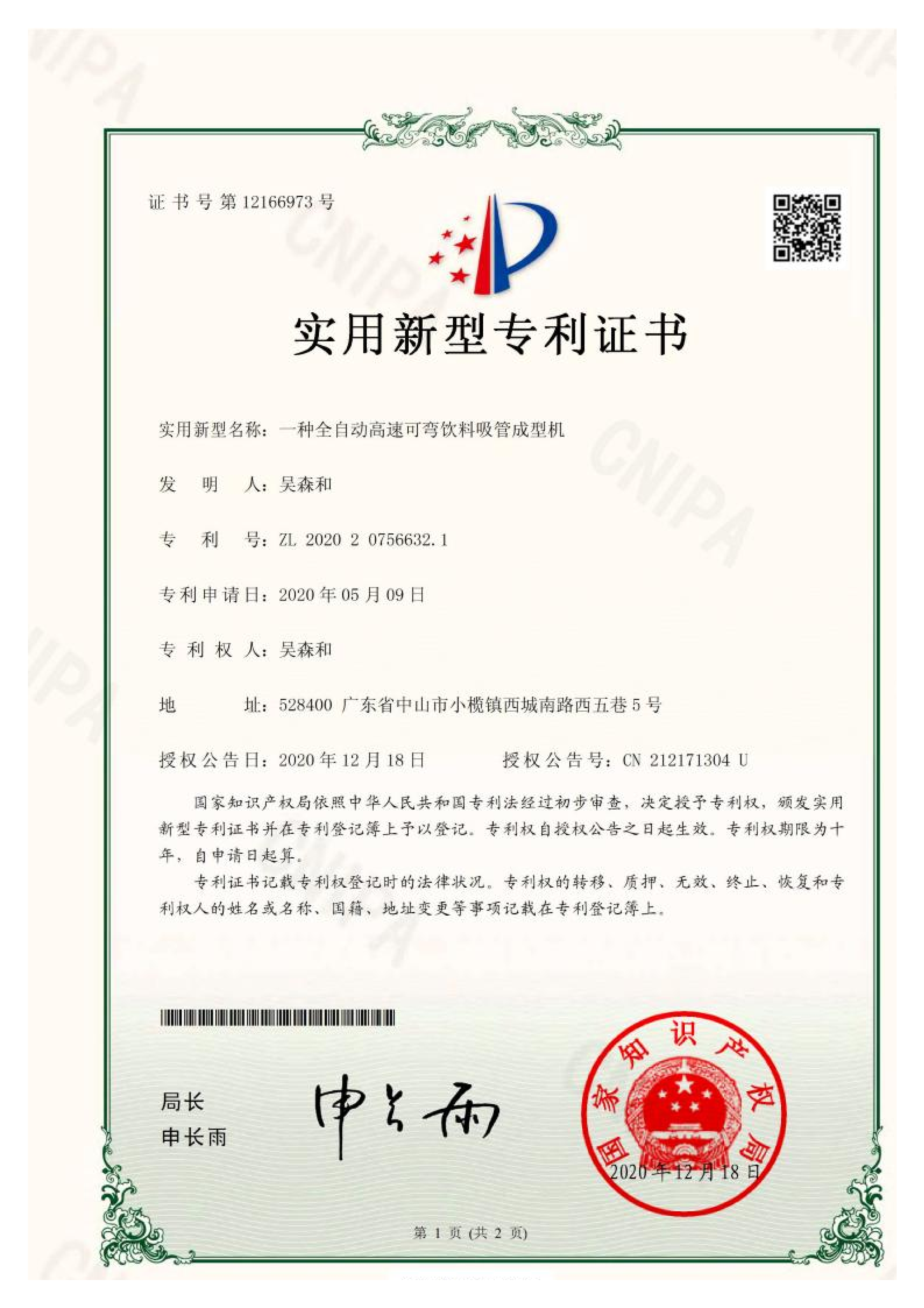
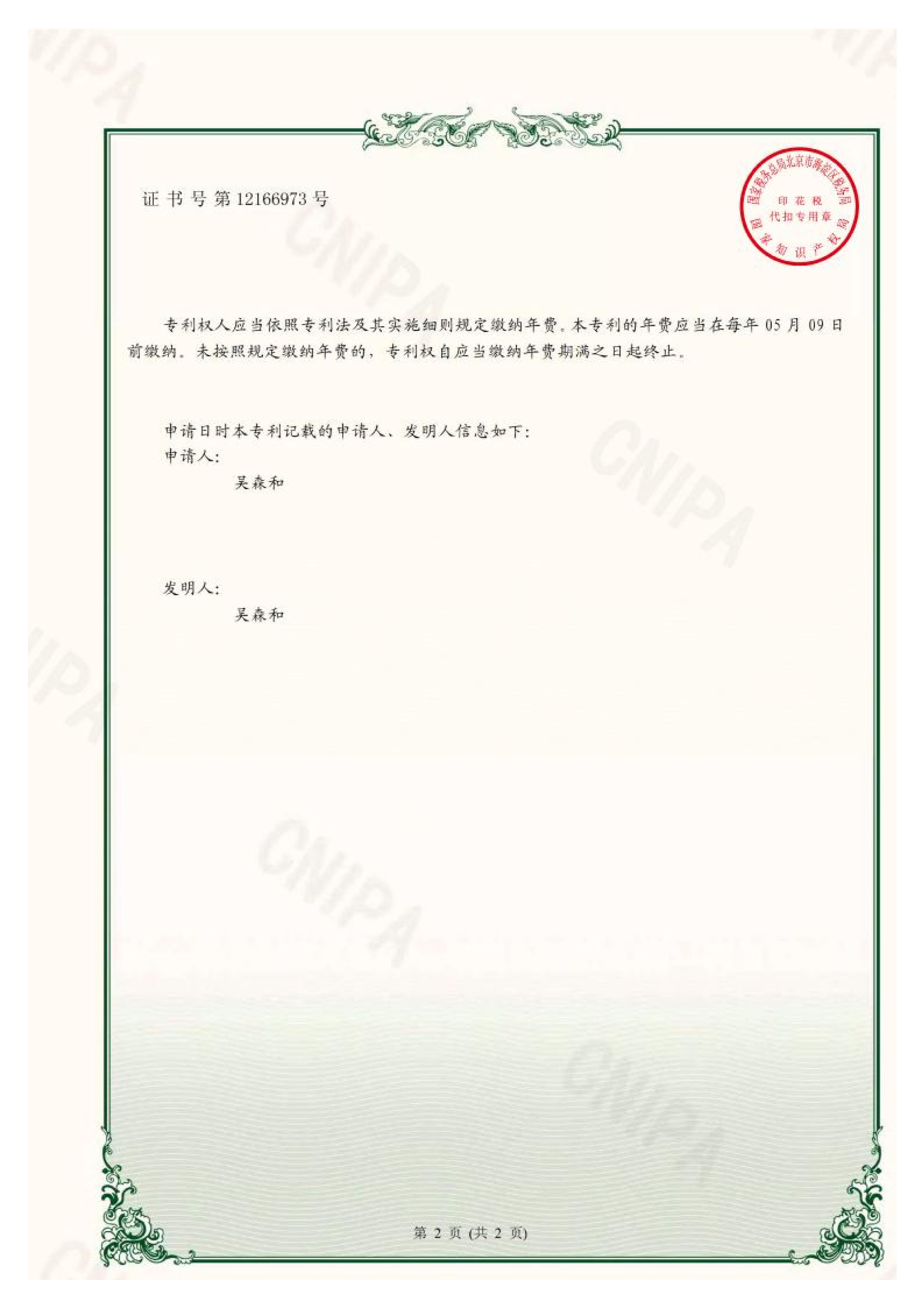
The certificate identifies Patent No. ZL202020756632.1, Certificate No. 12166973, issued by the China National Intellectual Property Administration on 18 December 2020 and valid to 9 May 2030. Its stated scope is the High-Speed Flexible Straw Forming Machine, model DT-1200. The patent is mainly valid in China, and products applying the technology can be sold worldwide. For an overseas buyer this is the key distinction: the certificate evidences an owned technology, not a destination-market product approval.
The patented technology is described in six parts, each of which is a claim a buyer can test during acceptance:
- An independent embossing and forming module that boosts production output.
- High-efficiency embossing that relaxes tolerance limits for tube blanks, with standard straw diameter tolerance controlled at ±0.05 mm.
- A precision feeding unit supporting long-term stable operation.
- Separately adjustable embossing and forming modules that reduce maintenance difficulty.
- A PLC control system showing real-time operating status, with automatic stop on malfunction, fault codes on screen and automatic counting.
- A humanised layout for smoother operation and easier parameter adjustment.
2. Pre-delivery test run and functional verification
Factory inspection includes a pre-delivery test run and functional verification. This is the item that converts a specification into unit-level evidence: the machine is run before shipment and its functions are checked, so the buyer's question moves from "what is the design output" to "what did this unit do, and who recorded it".
3. Factory inspection reports on request
Factory inspection reports can be provided on demand. For buyers in Europe, the Middle East and Southeast Asia who purchase through a trading company, a bank or a third-party inspection agency, this is normally the first document requested after the proforma invoice, because it links the delivered unit to the test run.
4. Written acceptance criteria
On-site or third-party inspection is recommended, covering the pre-delivery factory test run and finished sample verification. Standard acceptance procedures are not listed online and must be clearly stated in the contract. That sentence is a warning as much as a description: if the acceptance clause is silent, the buyer has no reference point when the container arrives.
Matching Documented Capability to Physical Machine Capability
Compliance documentation is only meaningful if it describes the same machine the buyer is commissioning. The capability set that a compliance file should align with is as follows.
- Production mode: equipment manufacturing and customisation, covering single machine production and full line integration.
- Customisation scope: moulds, production capacity specifications, control systems and line connection schemes can be customised to client requirements, with the full scope confirmed with the sales team.
- Capacity and lead time: monthly capacity of 20 sets; lead time of 30 days; minimum order quantity of 1 set.
- Documented field performance: one high-speed flexible straw forming machine replaces five traditional machines, runs at high speed without needle breakage, and outputs at least 1,000 straws per minute.
Diameter and bend geometry are configuration decisions, not machine limitations: by changing the corresponding moulds, the machine can produce flexible straws with different diameters and bending angles. This is why the mould specification in the contract and the diameter range in the patent documentation must be checked against each other before the purchase order — including the small-diameter and large-diameter variants used in U-shaped and decorative straw production, such as 3.8 mm, 5 mm, 6 mm and 12 mm configurations.
Output claims deserve particular attention during verification. Public industry references for automatic straw bending machines describe typical production speeds in the region of 200–300 pieces per minute. A machine specified at 1,000 straws per minute or more is therefore roughly three to five times that reference, which is exactly the kind of claim that should be witnessed rather than accepted — and the pre-delivery test run is the mechanism for witnessing it.
Step-by-Step: Verifying a High-Speed Bendable Straw Forming Machine Before It Ships
The following sequence reflects the order in which the documents are actually issued, so each step produces an artefact the next step depends on.
Step 1 — Fix the configuration in writing
Confirm straw diameter range, bend angle, mould set, control system, line connection scheme and required capacity. Customisation of moulds, capacity specifications, control systems and line connection schemes is available, but the full scope must be confirmed with the sales team before it can be contracted.
Step 2 — Request and read the patent document
Ask for the Certificate of Utility Model Patent No. 12166973 and check three things: the model named in the scope (DT-1200), the validity window (18 December 2020 to 9 May 2030), and the technology description. If the certified scope and the quoted configuration diverge, resolve it before paying a deposit.
Step 3 — Agree the acceptance clause
Write the acceptance criteria into the contract: pre-delivery factory test run, functional verification and finished sample verification, carried out on site or by a third party. Standard acceptance procedures are not published online, so an unspecified clause is an unenforceable one.
Step 4 — Attend or delegate the test run
During the pre-delivery test run, record the items that the patent claims make measurable: output per minute, straw diameter against the ±0.05 mm standard tolerance, needle breakage behaviour during continuous running, fault-code display on the PLC, and automatic counting. Where travel is impractical, remote video technical guidance is available for common faults, and the same channel can be used to observe commissioning.
Step 5 — Obtain the factory inspection report
Request the factory inspection report for the specific unit. Because reports are provided on demand, the request should be made early rather than after the balance payment, so the report number and the shipped serial can be matched.
Step 6 — Confirm the commercial and logistics terms
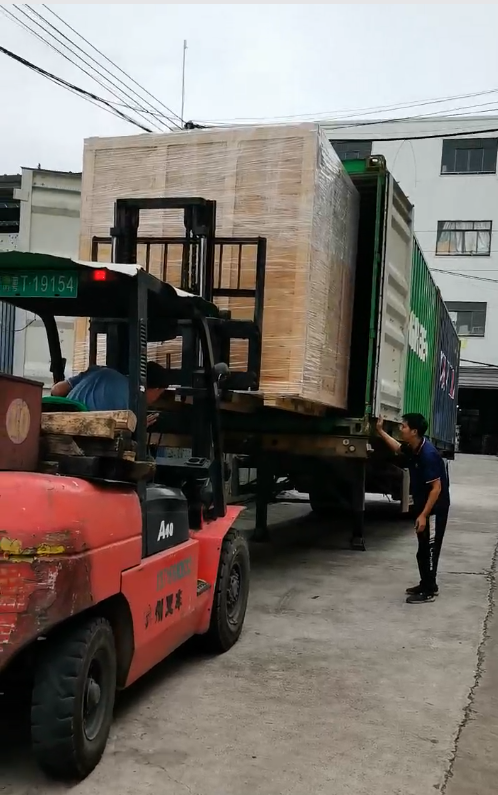
Payment terms available include deposit plus balance before shipment, letter of credit and other options, with the exact method and credit terms negotiated with the sales team. Delivery can be by sea freight or land transportation, with the shipping method and freight cost specified in the sales contract; packaging and export customs clearance support can be confirmed separately. For customs classification, China's General Administration of Customs data indicates HS code 84778090 as the primary classification for drinking straw machines, which is the reference point to check with the freight forwarder.
Step 7 — Lock the post-arrival plan
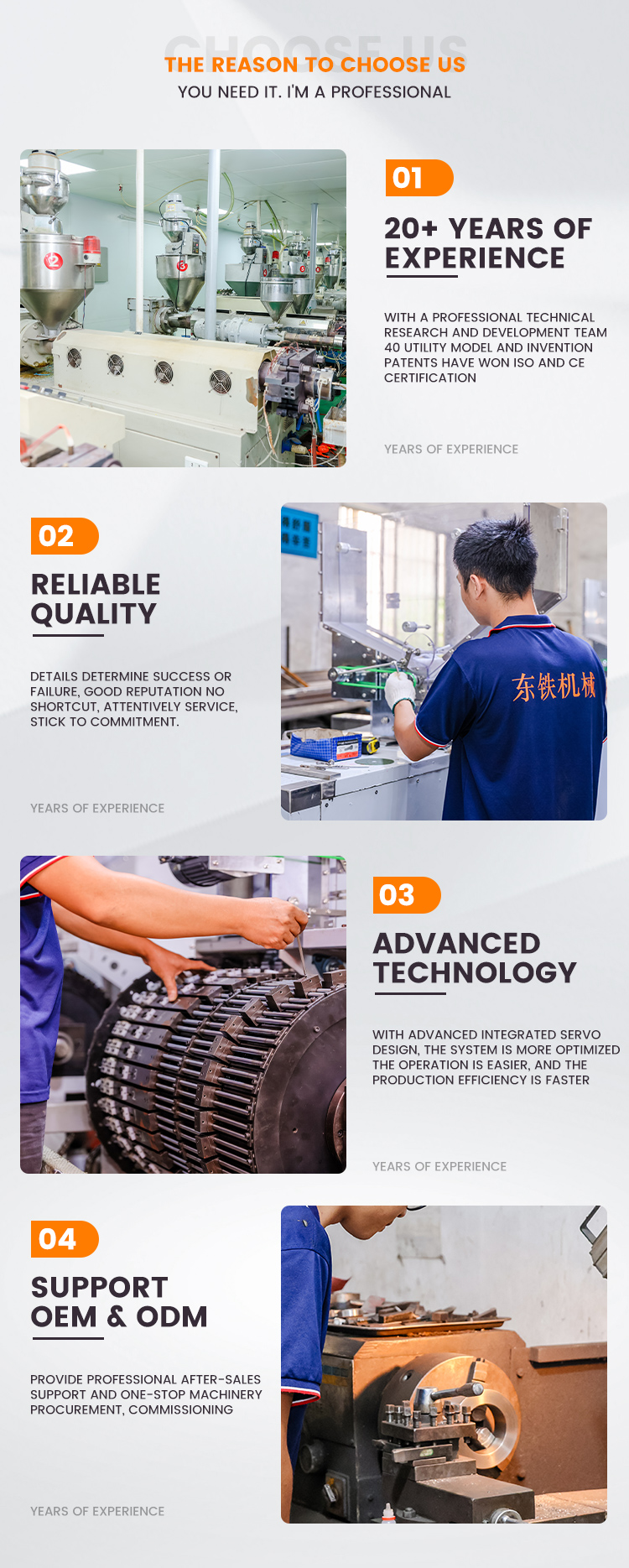
After-sales services include installation and commissioning, remote technical support and spare parts supply. Warranty terms and response time are recommended to be confirmed before purchase, in writing. Buyers who want operator training can arrange on-site training in the manufacturer's own straw production workshop, which is equipped with more than 10 full production lines — a practical way to see the machine running in continuous production before signing off.
Use Cases: What the 60-Set Installation Base Shows
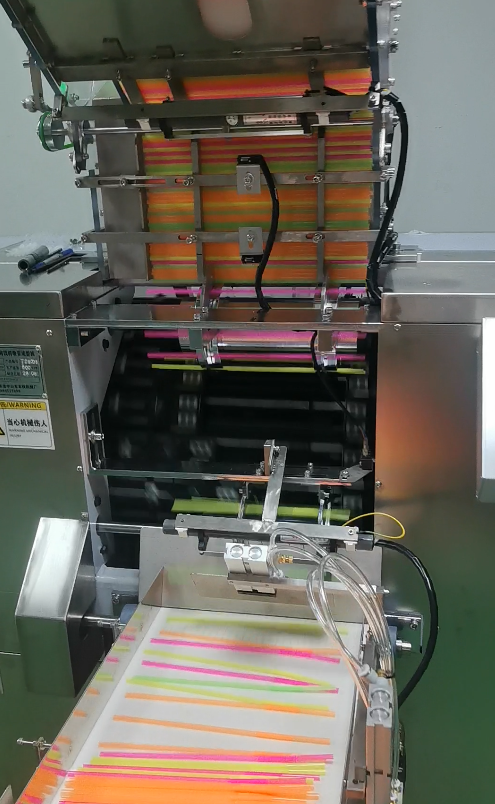
The manufacturer reports 60 sets installed across Southeast Asian straw factories, Middle Eastern straw factories and domestic Chinese straw manufacturers, over a period of roughly three years. The stated application is mass production of flexible straws, replacing manual or semi-automatic processes to raise automation level.
For a compliance-focused buyer, three details in that installation base are more relevant than the volume:
- Local specification adaptation. The reported highlight is a custom-tuned mould solution matched to local straw specifications. In practice, this is where a compliance file and a physical machine can drift apart, so the mould specification should appear in both the contract and the acceptance record.
- Continuous-run behaviour. Long-term stable continuous-run performance is cited as a highlight, and the reported result is high-speed operation without needle breakage. Needle integrity is a wear item, not a marketing point, and buyers should confirm the spare parts supply arrangement that supports it.
- Overseas site support. Full-set after-sales technical support for the overseas site is reported. For a first installation in a new market, the practical question is who responds, and how quickly — which is why warranty terms and response time should be settled before purchase rather than after arrival.
Comparison Tables: Compliance Evidence and Regional Checks
The two tables below separate what is documented from what the buyer must confirm. Neither table assumes a regional certificate that is not stated in the supplier's published material.
Table 1 — Evidence map for a high-speed bendable straw forming machine purchase
| Evidence item | What it establishes | Status with DONGTIE MECHANICAL EQUIPMENT | Buyer action |
|---|---|---|---|
| Utility Model Patent Certificate No. 12166973 | Owned embossing and forming technology; named model scope DT-1200; validity 18 Dec 2020 – 9 May 2030 | Available; issued by the China National Intellectual Property Administration | Verify model scope and validity dates against the quoted configuration |
| Pre-delivery test run and functional verification | That the specific unit was run and its functions checked before shipment | Included in factory inspection | Attend, delegate an inspector, or observe by remote video |
| Factory inspection report | Record linking inspection results to the shipped unit | Provided on demand | Request before balance payment; match report to serial number |
| Finished sample verification | Actual straw diameter, bend geometry and finish | Part of recommended acceptance, on site or by third party | Write the criteria into the contract; standard procedures are not published online |
| Installation, commissioning, remote support, spare parts | Execution capability after arrival | Stated service scope; warranty terms and response time to be confirmed before purchase | Fix warranty period, response time and spare parts list in the contract |
| Customs classification | Import classification reference | HS code 84778090 indicated by China GACC data for drinking straw machines | Confirm classification with the freight forwarder in the destination country |
| EU machinery safety and food-contact references | Applicable EU framework: Machinery Directive 2006/42/EC and CE mark; EN ISO 12100; Regulation (EC) No 1935/2004 | Not part of the published document set described here | Request any regional documentation in writing; do not assume it exists |
Table 2 — Regional check sequence
| Destination market | Reference point for the buyer | What to confirm before shipment |
|---|---|---|
| European Union | Machinery Directive 2006/42/EC and CE mark; EN ISO 12100 as the primary harmonized machinery safety standard; Regulation (EC) No 1935/2004 on food-contact transfer | Which documents the supplier can issue for this unit, and whether a notified body or importer must be involved |
| Southeast Asia | No single harmonized machinery regime is described in the available references; market demand and application rules vary by country | Local importer requirements, permitted straw specifications and any national registration, confirmed with the importer or authority |
| Middle East | No single harmonized machinery regime is described in the available references; requirements follow the importing country and the buyer's own quality system | Importer documentation list, inspection body requirements and product specifications for the local market |
| China (domestic reference) | Patent ZL202020756632.1 is mainly valid in China; products applying the technology can be sold worldwide | Nothing additional for export purposes; use as the technology baseline |
Frequently Asked Questions
1. Which compliance documents can an overseas buyer actually verify before shipment?
Three document types are stated as available. First, the Certificate of Utility Model Patent No. 12166973 for Patent No. ZL202020756632.1, issued 18 December 2020 by the China National Intellectual Property Administration, valid to 9 May 2030, with scope covering the High-Speed Flexible Straw Forming Machine model DT-1200. Second, factory inspection, which includes a pre-delivery test run and functional verification of the unit. Third, factory inspection reports, which can be provided on demand. On-site or third-party inspection is also recommended, covering the pre-delivery factory test run and finished sample verification, but standard acceptance procedures are not listed online and must be stated in the contract. Regional certificates are a separate matter: the patent is mainly valid in China, and any additional regional documentation should be requested in writing rather than assumed.
2. Is DONGTIE MECHANICAL EQUIPMENT an OEM high-speed bendable straw forming machine manufacturer?
Yes. OEM services are available for clients seeking original equipment manufacturing. Customisation covers moulds, production capacity specifications, control systems and line connection schemes, with the full customisable scope confirmed with the sales team. The company manufactures straw machinery in Zhongshan City, China, states a monthly capacity of 20 sets and a minimum order quantity of 1 set, and exports to Southeast Asia, the Middle East, Europe and other global markets. Because mould sets define the straw diameter and bend angle, the OEM discussion should begin with the finished straw specification rather than with the machine model.
3. What are the minimum order quantity, payment terms and lead time?
The minimum order quantity is 1 set, so a single-machine entry is possible before committing to line integration. Lead time is 30 days, with monthly capacity of 20 sets. Available payment terms include deposit plus balance before shipment, letter of credit and other options; the exact payment method and credit terms are negotiated with the sales team. Delivery terms allow sea freight or land transportation, with the shipping method and freight cost agreed by both parties and specified in the sales contract. Packaging and export customs clearance support can be confirmed separately.
4. Can we verify a finished straw sample before shipment instead of relying on specifications?
Yes, and it is the recommended route. Acceptance should cover the pre-delivery factory test run and finished sample verification, either on site or through a third party. During that verification, check the items that the documented technology makes measurable: straw diameter against the standard tolerance of ±0.05 mm, bend angle produced by the installed mould set, continuous running behaviour without needle breakage, and PLC fault-code and automatic counting functions. Where the buyer cannot travel, remote video technical guidance is available for common faults and can be used to observe the run.
5. What is the support plan after the machine arrives, and how are spare parts handled?
After-sales services include installation and commissioning, remote technical support and spare parts supply. Warranty terms and response time are recommended to be confirmed before purchase, so they appear in the contract rather than in an email. Common faults can be addressed through remote video technical guidance, and on-site training can be arranged in the manufacturer's own straw production workshop, which runs more than 10 full production lines.
Conclusion: Build the File Before You Build the Line
For a high-speed bendable straw forming machine bound for Southeast Asia, the Middle East or Europe, the compliance question has a workable answer: verify what exists, contract what is promised, and confirm what depends on the destination market. The patent document is checkable, the pre-delivery test run is witnessable, the inspection report is requestable, and the support scope is negotiable — but only in that order, and only before payment.
Next step — request the document set and a quotation. Buyers evaluating a machine for a named destination market can request the patent certificate for model DT-1200, the factory inspection report, the mould specification for their straw diameter, and a written quotation covering lead time, payment terms and after-sales scope. Contact DONGTIE MECHANICAL EQUIPMENT — Zhongshan Dongtie Machinery Co., Ltd., 23-3/F, Xicheng Road, West District, Xiaolan Town, Zhongshan City, China. Email: 843681276@qq.com · Tel / WhatsApp: +8613680252932 · Website: www.zsdtjx.com
The product brochure, including machine specifications and configuration options, can be downloaded here: DONGTIE MECHANICAL EQUIPMENT brochure (PDF).
Have Questions or Need More Details?
Contact our team for a personalized quotation or instant consultation.
Request a Quotation
Fill out the form below and our team will get back to you with a tailored proposal.
WhatsApp Direct Chat
Prefer to chat in real-time? Message us on WhatsApp for instant assistance & quick answers.
- Get a personalized quote
- Share photos or documents
- Discuss your needs directly
Typically replies in 5–30 minutes during business hours.