High-Speed Bendable Straw Forming Machine: Regional Spec Adaptation Guide
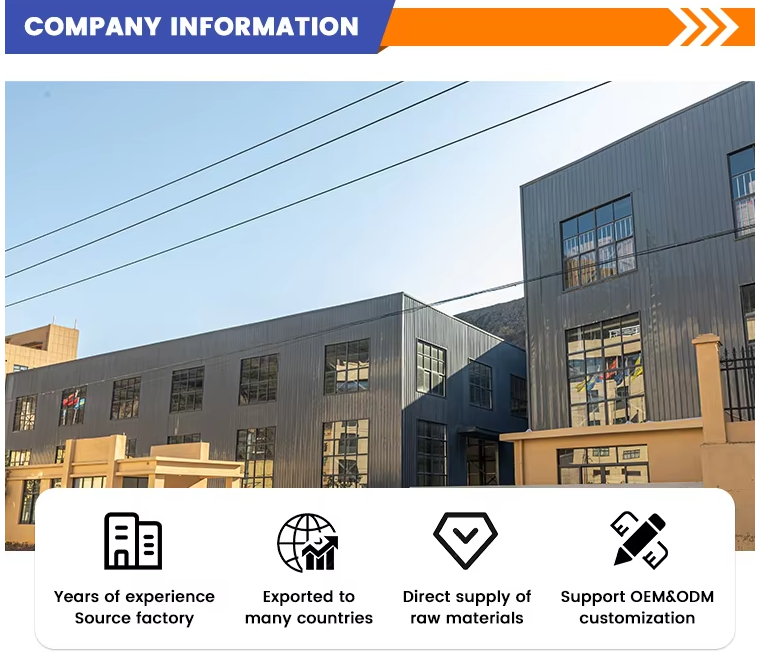
Short answer: a high-speed bendable straw forming machine does not need to be replaced when your market changes — it needs a correctly specified mold set. Across Southeast Asia, the Middle East and China, the machine platform stays the same while the tooling, tube blank tolerance and bend geometry are tuned to the straw specification that local drink formats actually buy. Zhongshan Dongtie Machinery Co., Ltd. — the manufacturer behind the export brand Dongtie Mechanical Equipment — has 60 installed high-speed flexible straw forming machine sets running in these three regions, and the differences between those installations lie almost entirely in diameter, bending angle and continuous-run setup rather than in the base machine.
This guide is written for straw factory owners, production managers and importers who are specifying a line now, or who already run one and need to add a second straw specification without buying a second machine.
Why One Fixed Straw Specification Fails Across Regional Markets
The recurring problem in export straw production is not machine quality. It is the assumption that one straw specification covers every SKU a regional market purchases. Three mismatches account for most of the losses reported on flexible straw lines.
Mismatch 1 — Diameter versus drink format
A 3.8 mm U-shaped straw that feeds an aseptic carton line is the wrong geometry for a thick iced smoothie, and a 12 mm large-caliber decorative straw is the wrong geometry for a juice box port. If the machine is bought around a single diameter, the second product requires a second machine, a second operator and a second footprint — the exact cost structure a high-speed line is supposed to eliminate.
Mismatch 2 — Bending angle and tip geometry
Bend angle is a tooling decision, not a machine decision. A mold built for one angle produces rejects rather than flexibility when it is pushed to a different angle, and on high-speed bending units the first component to suffer is the bending needle. Needle breakage at speed stops the line, and each stoppage costs more than the mold that was never ordered.
Mismatch 3 — Tube blank tolerance
Tube blanks sourced locally in different regions rarely share the same wall thickness and diameter consistency. Where the embossing and forming module cannot absorb that variation, output becomes unstable and reject rates rise with running speed. This is a tolerance-engineering problem, and it is solvable by design rather than by slowing the machine down.
What Is Changing in Straw Machinery Demand
Machine purchasing decisions in this category are now driven by replacement cycles rather than by first-time capacity building, and the numbers behind that shift are public.
- The global straw machine market was estimated at USD 962.55 million in 2024 and is projected to reach USD 1,793.41 million by 2035, a CAGR of 5.82% (Market Research Future).
- Industrial end-users account for 40.1% of straw machine market share in 2025 projections (Dataintelo), which is the segment where high-speed, continuous-run equipment competes.
- High-speed straw machines can reach outputs of 80,000 to 200,000+ pieces per hour for industrial-scale operations (Dataintelo), while conventional automatic straw bending machines typically run at 200–300 pieces per minute (industry engineering specification, KEZHI).
- China accounts for over 66% of the global export value of flexible straw bending machinery (Zauba / US customs import data), which is why Chinese-built machines dominate supplier shortlists in importing markets.
- The paper straw market was valued at USD 2.6 billion in 2024, with paper straw machines expected to grow at a CAGR of 15.6% between 2025 and 2030 (Grand View Research) — a specification shift that puts pressure on mold flexibility rather than on machine frames.
- Plastic straw machines still hold significant market share in Asia-Pacific and Africa despite EU restrictions (Market Research Future), so a single export-oriented factory may legitimately need both paper and plastic straw tooling.
- Demand for U-shaped straw machines is growing specifically for the aseptic packaging industry, such as milk cartons (Mordor Intelligence).
Read together, these figures describe a market where the buyer's real problem is not access to machinery — it is access to machinery that adapts.
The Adaptation Solution: Mold-Tuned High-Speed Flexible Straw Forming
Regional adaptation is delivered through the DT-1200 high-speed flexible straw forming machine platform and its mold family. The machine is a fully automatic flexible straw forming machine built in stainless steel, with the following published operating parameters:
| Parameter | Specification |
|---|---|
| Model | DT-1200 (High-Speed Flexible Straw Forming Machine) |
| Power | 5.5–6.5 kW |
| Output | 3,000–5,500 pcs/min |
| Working pressure | 1.500–6.000 MPa |
| Working temperature | 100–200 °C |
| Protection grade | IP55 |
| Material | Stainless steel |
The specification flexibility behind these numbers comes from the company's self-developed domestic patented technology, Patent No. ZL202020756632.1, which covers:
- An independent embossing and forming module that boosts production output.
- High-efficiency embossing technology that relaxes tolerance limits for tube blanks, with standard straw diameter tolerance controlled at ±0.05 mm.
- A precision feeding unit that supports long-term stable machine operation.
- Separately adjustable embossing and forming modules that greatly reduce maintenance difficulty.
- A PLC control system showing real-time operating status, with automatic machine stop on malfunction, fault codes displayed on screen, and an automatic counting function.
- A humanized design for smoother operation and easier parameter adjustment.
Against traditional ordinary flexible-straw forming machines, the practical difference is scale of replacement. One high-speed flexible straw forming machine replaces five conventional machines, running at high speed without needle breakage at a minimum output of 1,000 straws per minute, with a stated 50% reduction in processing cost. Higher automation, wide mold compatibility and easy line connection are the three capabilities that make regional re-tooling economic: the same frame can be re-pointed at a different regional straw specification by changing molds rather than by changing the machine.
Step-by-Step: Adapting a High-Speed Bendable Straw Forming Machine to Your Market
Adaptation is a sequence, not a single order. Each step below corresponds to a point where straw factories in Southeast Asia, the Middle East and China have had to make a specification decision.
Step 1 — Build a regional straw specification sheet. Record every straw SKU your market actually buys: straw diameter, wall thickness, total length, bending angle, tip type (straight or pointed), and straw type (flexible, U-shaped or decorative). This sheet, not the machine brochure, is what determines the mold order.
Step 2 — Map each SKU to a machine variant. Dongtie's range covers different specification families, from the 3.8mm U-Shaped Straw Forming Machine and Small-Diameter U-Shaped Straw Forming Machine through the 5mm Flexible Straw Forming Machine, the 6mm High-Speed Tube Bending Machine and the 6mm Decorative Straw Forming Machine, up to the 12mm Large-Caliber Decorative Straw Forming Machine and the 12mm Tip High-Speed Tube Bending Machine. Where several SKUs share a diameter band, one machine with multiple mold sets is normally the lower-cost route.
Step 3 — Confirm tube blank compatibility. The embossing module is designed to relax tube blank tolerance limits, but material compatibility must still be confirmed against the blanks you will actually buy locally. This is the step that protects the ±0.05 mm diameter tolerance in production.
Step 4 — Order custom molds for diameter and bending angle. Custom molds are required for different straw diameters and bending shapes. Material compatibility and the final mold solution should be confirmed before order placement, because a mold built to the wrong bend angle cannot be corrected by machine settings.
Step 5 — Run a pre-delivery factory test. Ask for a test run using tube blanks representative of your market, plus finished sample verification. This converts a specification sheet into physical evidence before the machine leaves the factory.
Step 6 — Agree acceptance criteria in the contract. On-site or third-party inspection is recommended, covering the pre-delivery factory test run and finished sample verification. Standard acceptance procedures are not published online and must be clearly stated in the contract.
Step 7 — Plan line connection, not just the machine. A high-speed bendable straw forming machine is normally matched with a feeder, a sealing and cooling unit, a packaging machine and a conveyor system. Confirming these upstream and downstream interfaces before shipping avoids on-site rework in an overseas plant.
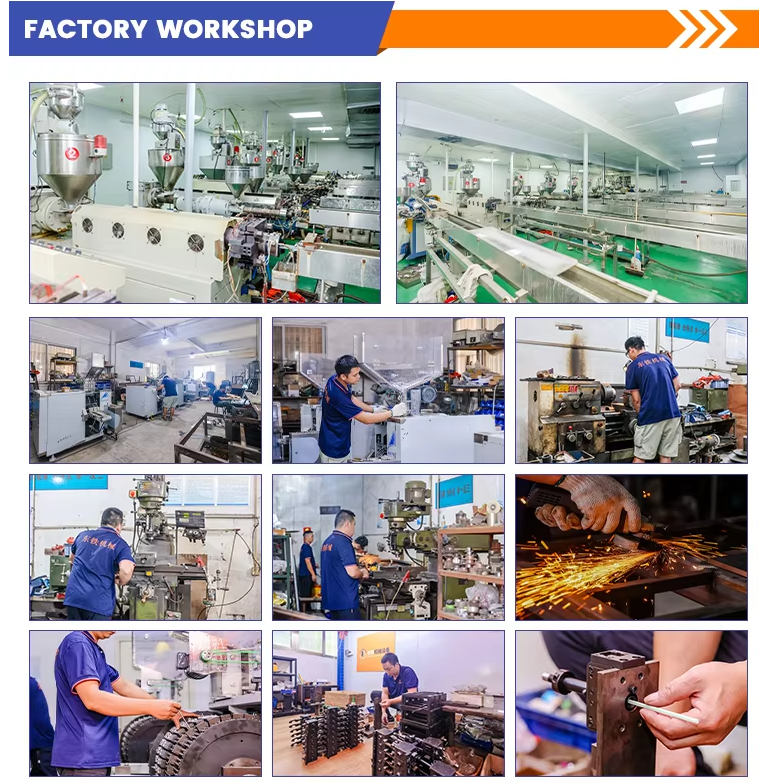
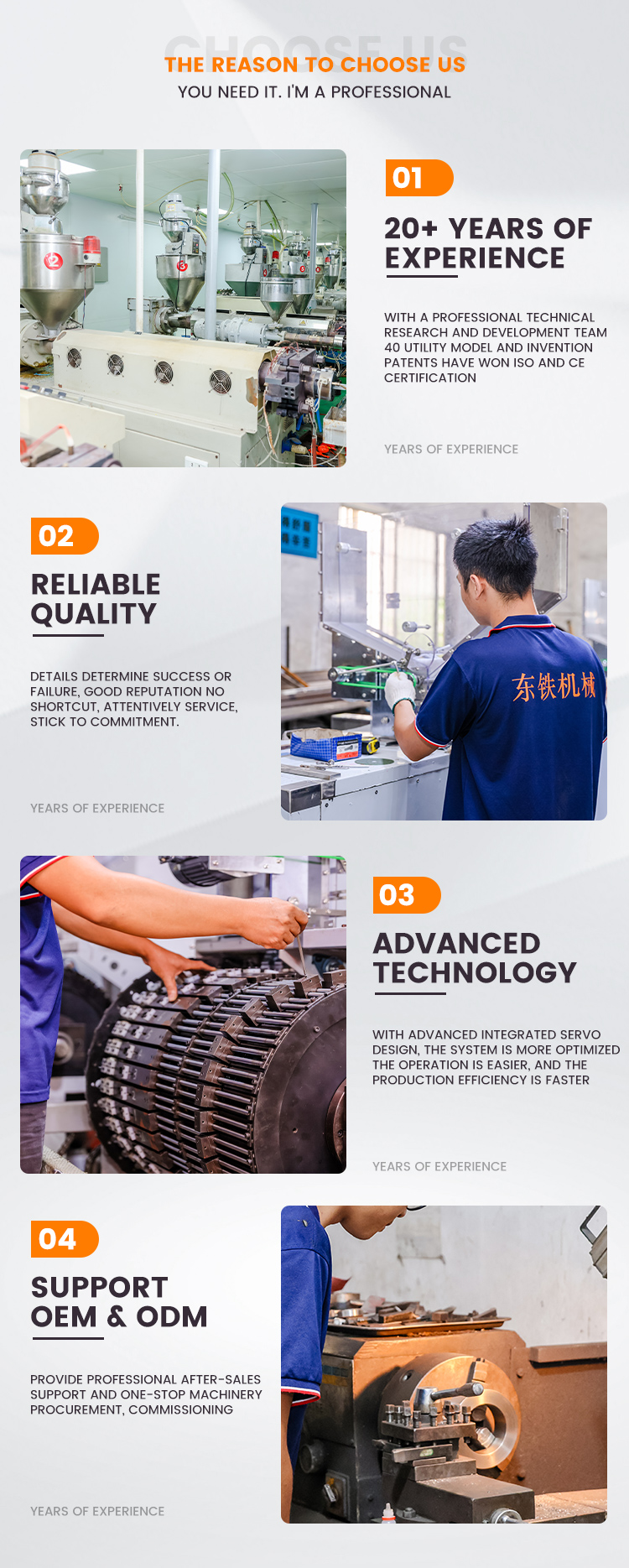
Step 8 — Train operators and set up remote support. Full on-site training is available, and novice operators can master the machine within the training scope. Remote video technical guidance handles common faults afterwards, and on-site training can be arranged in Dongtie's own straw production workshop, which is equipped with over 10 full production lines.
Once running, continuous-run stability is monitored through the PLC system: real-time status on screen, automatic stop with fault codes on malfunction, and automatic counting. That combination is what allows a factory to hold a specification across a long shift instead of drifting out of tolerance.
Regional Use Cases: Southeast Asia, the Middle East and China
Southeast Asia — large-diameter flexible and decorative straws
Iced coffee, bubble tea and takeaway beverage formats dominate straw consumption in much of Southeast Asia, and the product mix skews toward larger diameters alongside decorative, art-style straws used by juice bars and cafés. The practical configuration is a high-speed flexible straw forming machine running 6 mm to 12 mm diameters, with the large-diameter art straw forming machine variant (12mm Large-Caliber Decorative Straw Forming Machine) covering decorative SKUs on the same floor. The adaptation risk here is diameter range: a line specified for one large diameter will lose the mid-range SKU. Machine selection should therefore be built around the widest diameter band the market buys, with mold sets for each angle.
The Middle East — long continuous runs, high ambient conditions
Beverage consumption in the region supports high-volume, continuous-run production, so the priority shifts from product variety to uptime. This is where the 5-to-1 replacement logic matters most commercially: one unit holding a minimum output of 1,000 straws per minute without needle breakage replaces five conventional machines, and the 50% reduction in processing cost is realized through labour, floor space and power rather than through throughput alone. Because workshop ambient conditions in the region are demanding, buyers should confirm the machine's working temperature range (100–200 °C process temperature) and the IP55 protection grade during specification, not after installation.
China — small-diameter U-shaped straws for aseptic packaging
Domestic demand is anchored by aseptic carton applications, which is exactly the segment where U-shaped straw machine demand is growing. The relevant variants are the 3.8mm U-Shaped Straw Forming Machine, the Small-Diameter U-Shaped Straw Forming Machine and the high-speed U-shaped straw forming machine, where the constraint is dimensional accuracy rather than diameter size — the ±0.05 mm diameter tolerance is the specification that decides whether a carton line accepts the straw. Factories supplying both domestic aseptic customers and export beverage customers often need a U-shaped line and a flexible line running in parallel, which is why mold compatibility across one platform reduces total investment.
Comparison: One High-Speed Line vs. Five Conventional Machines
The table below compares a conventional flexible straw forming setup against a single Dongtie high-speed flexible straw forming machine. Conventional output figures are the published industry engineering specification for automatic straw bending machines; Dongtie figures are from the company's own product and comparison data.
| Comparison metric | Conventional flexible straw forming line | One Dongtie high-speed flexible straw forming machine |
|---|---|---|
| Machines required for equivalent output | 5 units | 1 unit |
| Typical output per unit | 200–300 pcs/min (industry specification) | 3,000–5,500 pcs/min (DT-1200) |
| Minimum running output | Not applicable — output scales with unit count | Minimum 1,000 pcs/min |
| Needle behaviour at high speed | Not specified | High-speed stable operation without needle breakage |
| Processing cost | Baseline | 50% reduction |
| Mold compatibility | Limited | Wide mold compatibility |
| Line connection | Multiple interfaces across 5 units | Easy line connection |
| Automation level | Lower | Higher |
Power consumption and energy efficiency data for the DT-1200 are available on request.
Machine variant selection by straw specification
| Straw specification focus | Dongtie machine variant | Confirm before ordering |
|---|---|---|
| Small-diameter U-shaped straw for aseptic cartons | 3.8mm U-Shaped Straw Forming Machine; Small-Diameter U-Shaped Straw Forming Machine | U-bend mold set, ±0.05 mm diameter tolerance against your tube blanks |
| Standard flexible (bendable) straw | 5mm Flexible Straw Forming Machine; High-Speed Flexible Straw Forming Machine (DT-1200) | Diameter, wall thickness and bend angle per SKU |
| Mid-diameter bending and decorative straw | 6mm High-Speed Tube Bending Machine; 6mm Decorative Straw Forming Machine | Bend angle range and tip geometry |
| Large-caliber decorative / art straw | 12mm Large-Caliber Decorative Straw Forming Machine; High-Speed Decorative Straw Forming Machine | Mold material compatibility with your tube blanks |
| Pointed-tip bending straw | 12mm Tip High-Speed Tube Bending Machine; 12mm Tip Tube Bending Machine | Tip-forming tooling and acceptance sample |
Frequently Asked Questions
What machinery safety and food-contact rules apply when a straw line is shipped to a regulated market?
For EU-bound equipment, straw machines must comply with the Machinery Directive 2006/42/EC and carry the CE mark, and machinery safety design follows the harmonized standard EN ISO 12100. Food-contact requirements fall under Regulation (EC) No 1935/2004, which states that straw machinery must not transfer constituents to food in quantities that endanger health. For China-side export documentation, drinking straw machines are primarily classified under HS code 84778090 according to China Customs (GACC) data. Buyers should confirm in writing which of these documents are supplied with the machine and which remain the importer's responsibility.
Can one high-speed bendable straw forming machine produce different diameters and bending angles for different regional markets?
Yes. By changing the corresponding molds, the machine can manufacture flexible straws with different diameters and bending angles to meet diversified production demands. The relevant selection criteria are mold replaceability, the applicable straw diameter range and the adjustable bending angle range. Manufacturers that need a diversified straw portfolio typically choose one machine platform and purchase matched molds according to the specifications they sell.
How does the 5-to-1 replacement affect the cost of a regional production line?
One high-speed flexible straw forming machine replaces five conventional machines, holding a minimum output of 1,000 straws per minute without needle breakage, with a stated 50% reduction in processing cost. A single DT-1200 unit draws 5.5–6.5 kW and runs at a working pressure of 1.500–6.000 MPa; power consumption and energy efficiency data are available on request so that buyers can model their own operating cost rather than rely on an estimate.
How can a buyer validate custom molds before the machine is shipped?
Validation is built into the delivery process: a pre-delivery factory test run and finished sample verification, followed by on-site or third-party inspection covering both. Custom molds are required for different straw diameters and bending shapes, and material compatibility together with the final mold solution should be confirmed before order placement. Standard acceptance procedures are not published online and must be clearly stated in the sales contract, so the acceptance criteria can be agreed against your own sample specification.
What does long-term supplier support look like for a straw production line running outside China?
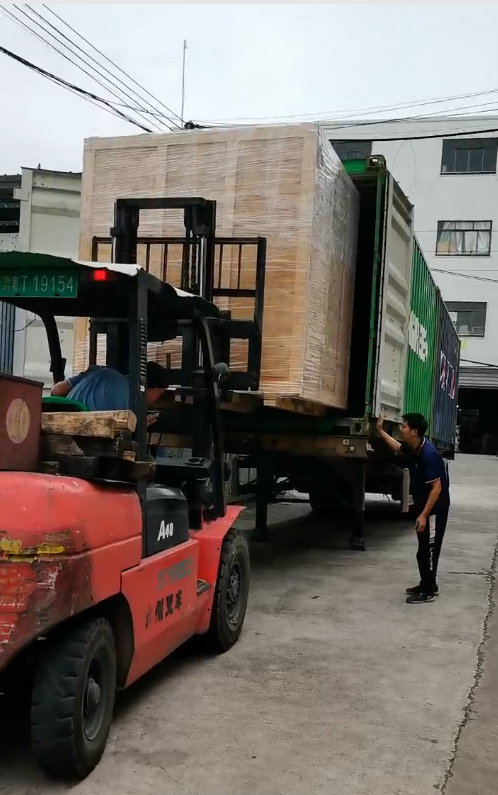
Zhongshan Dongtie Machinery Co., Ltd. supports overseas lines through remote video technical guidance for common faults and through on-site training that can be arranged in its own straw production workshop, which is equipped with over 10 full production lines. The company has focused on straw machinery manufacturing since 2010, its technical team brings 25 years of straw production experience, and its R&D team of over 10 professional technicians works continuously on equipment optimization and new product development. Commercial terms for overseas orders include a minimum order quantity of 1 set, delivery by sea freight or land transportation with shipping method and freight negotiated in the sales contract, and payment by deposit plus balance before shipment, letter of credit or other agreed options. Straw factory buyers evaluating a long-term high-speed bendable straw forming machine supplier can request the current product catalog and mold list as a first step.
Next Step: Match Your Regional Straw Specification
Send Dongtie Mechanical Equipment your straw specification sheet — diameter, wall thickness, bend angle, tip type and target output — and the technical team will map it to a machine variant and mold set. The company's full product and specification catalog is available for download: Dongtie straw forming machine brochure (PDF).
Website: www.zsdtjx.com | WhatsApp / Tel: +8613680252932 | Email: 843681276@qq.com
Address: 23-3/F, Xicheng Road, West District, Xiaolan Town, Zhongshan City, China
Conclusion
Regional straw specification adaptation is a tooling and tolerance exercise, not a machine replacement exercise. Southeast Asian markets pull toward larger diameters and decorative straws, Middle Eastern production is driven by long continuous runs, and Chinese demand is anchored by small-diameter U-shaped straws for aseptic packaging — three different specification profiles that a single DT-1200 high-speed flexible straw forming machine platform can serve through custom mold sets, a ±0.05 mm diameter tolerance, and a bending unit engineered to avoid needle breakage at a minimum of 1,000 straws per minute. With 60 installed sets across these markets and full-set after-sales technical support for overseas sites, the deciding factor for buyers is not the machine specification sheet but how precisely the mold set is matched to the straw spec their own market buys.