
How a High-Speed Bendable Straw Forming Machine Bends Tube: Core Modules
Answer first: a high-speed bendable straw forming machine converts a straight tube blank into a flexible straw by embossing and forming a short corrugated zone — the bend — into the tube wall, then cutting and discharging the finished straw in one continuous automated cycle. The quality of that single operation decides whether the straw bends smoothly, holds its angle and resists collapsing in a drink. Everything else on the machine — feeding, inspection, counting, downstream handling — exists to keep that forming step running without interruption.
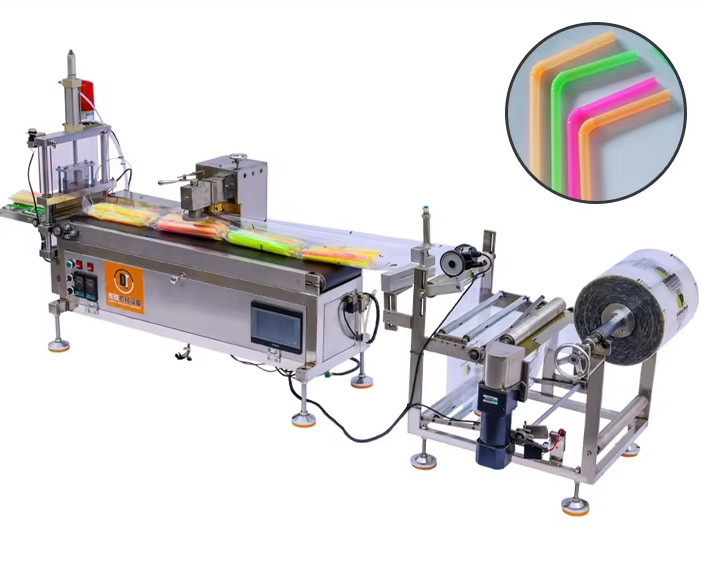
DONGTIE MECHANICAL EQUIPMENT (Zhongshan Dongtie Machinery Factory) is a straw-machinery manufacturer established in 2016 that has concentrated on straw machinery since 2010. Its DT-1200 high-speed flexible straw forming machine is the reference model in this article; the core forming components use self-developed patented technology, Patent No. ZL202020756632.1, and the machine is rated at no less than 1,000 straws per minute. This guide walks through the modules, the tube-to-straw sequence, and the mold decisions that determine which diameters and bend angles one machine can cover.
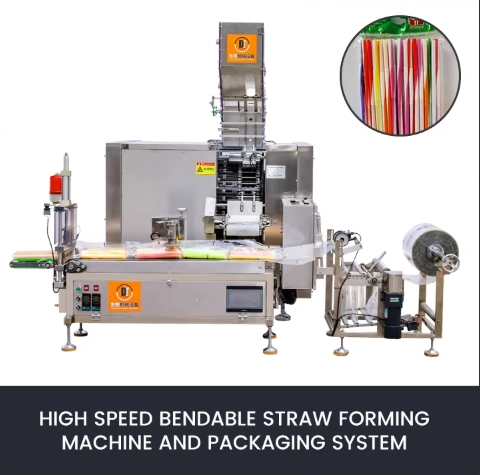
What a Bendable Straw Actually Is — and What the Machine Must Do
"Bendable" is a geometric property, not a material one. A flexible straw is a straight tube with a narrow corrugated section formed near one end. That corrugation acts as a bellows: it lets the upper part of the straw swing through an angle while the wall stays sealed, so liquid flows without leaking at the joint. The corrugation must be deep enough to bend, shallow enough not to tear, and consistent enough that the straw returns to shape after being flexed.
Three commercial categories are frequently grouped under "flexible straw", and they are formed differently:
- Bendable / flexible straws — a straight tube plus an articulated corrugated zone that the user bends to a chosen angle. Common in foodservice, retail and dairy packs supplied with a flexible drinking straw.
- U-shaped straws — pre-set into a U so the straw sits permanently in a carton, typically aseptic dairy packaging. The bend is fixed during forming, not adjusted by the consumer.
- Decorative / art straws — shaped for appearance as well as function, including large-caliber formats used in beverages and gifting. These place more demand on mold design and on diameter consistency.
For the machine, the difficulty concentrates in one place: the forming needle and mold work inside and around a thin-wall tube at high cycle rates. At production speed the needle repeats its stroke thousands of times an hour, which is why needle integrity — not motor power — is usually the real constraint on uptime.
Industry Background: Why Forming Speed and Changeover Both Matter
Straw consumption is tied to foodservice, dairy cartons and retail beverage packaging, and the machinery side is a measurable market in its own right. Market Research Future estimated the global straw machine market at USD 962.55 million in 2024, while Grand View Research valued the global paper straw market at USD 2.6 billion in 2024 — different scopes, so the two figures should not be added together or compared directly. Regulatory pressure is part of the context: MarkNtel Advisors estimated plastic straws at about 4% of marine plastic waste by piece, which keeps replacement and retooling demand active in many markets.
For a converter, this translates into two commercial requirements that pull in opposite directions. Volume orders reward raw speed: a machine rated at no less than 1,000 straws per minute produces far more units per shift than slower equipment. At the same time, buyers increasingly order mixed specifications — a 5mm flexible straw for one customer, a 6mm bend for another, a 12mm large-caliber decorative straw for a third — so a machine that cannot change molds quickly pays for its speed in downtime. A forming platform has to satisfy both, which is what the module architecture is designed around.
The Core Modules of a High-Speed Bendable Straw Forming Machine
DONGTIE's patented architecture, Patent No. ZL202020756632.1, separates functions that conventional designs tend to bundle together. The separation is the substance of the patent claim, so it is worth understanding module by module.
1. Precision feeding unit
The feeding unit meters tube blanks into the forming station at a constant pitch. Its job sounds simple, but any variation in feed position shows up downstream as an inconsistent bend position or a length deviation. The patent describes a precision feeding unit intended to keep the machine stable over long production runs, which matters more on a machine running continuously than on one that is stopped and restarted frequently.
2. Independent embossing and forming module
This is the module that converts a tube into a bendable straw. Embossing pre-forms the corrugation zone in the tube wall; the forming stage then sets the bend geometry with a needle and matched mold. Making the embossing and forming stages independent — rather than one combined station — is what the patent identifies as the output advantage, because each stage can be set for its own task instead of compromising between them.
3. High-efficiency embossing technology
Embossing quality determines how much variation in the incoming tube the process can absorb. DONGTIE's high-efficiency embossing approach is stated to relax the tolerance limits required of tube blanks, with standard straw diameter tolerance controlled at ±0.05mm. In procurement terms that is a raw-material acceptance question: a process that tolerates wider blank variation gives the buyer more room in tube sourcing and less scrap at the infeed.
4. Bending needle and mold set
The needle forms the internal profile of the bend while the mold supports the outside. At high cycle rates the needle is the most heavily loaded small component on the machine, which is why high-speed needle breakage has been a chronic industry problem. DONGTIE's patented core forming components are presented as resolving that problem, and key wearing parts such as forming needles and molds are reinforced with special materials and processes, with a designed service life over 1 year. Buyers should treat both statements as items to confirm on a sample run rather than as abstract specifications.
5. Control, inspection and counting
The DT-1200 uses a PLC control system that displays real-time operating status, stops the machine automatically on a fault with a fault code shown on screen, and counts output. Multiple on-line detectors monitor material shortage, defective forming and length deviation, and reject non-conforming product in real time. This module is what makes high speed usable: at more than 1,000 straws per minute, manual inspection cannot keep up, so defect detection has to happen inside the machine cycle.
6. Discharge and optional downstream modules
Finished straws leave the forming section and can be handled by optional downstream equipment, including a fixed-quantity packaging system and an automatic stacking unit, to build an integrated line. These are options rather than part of the base forming function, and should be specified against the packing format the buyer actually sells.
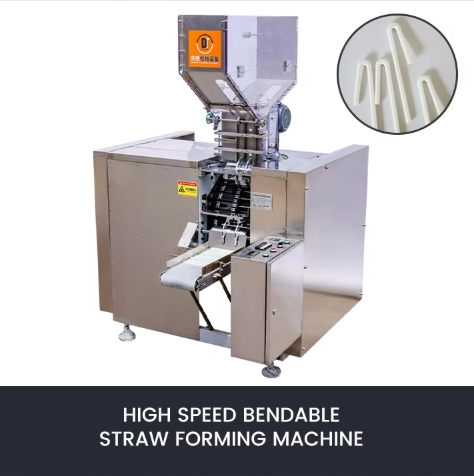
Tube to Flexible Straw: The Step-by-Step Sequence
- Tube blank loading. Blanks are loaded for continuous feed. Material specification and surface condition are agreed before order because they affect formability.
- Metered feeding. The precision feeding unit advances each blank to a fixed position, setting where the bend will sit along the straw.
- Embossing the bend zone. The corrugation pattern is pre-formed into the tube wall. Consistency here decides whether the finished straw bends at the intended angle.
- Forming with needle and mold. The needle sets the internal profile while the mold closes the outer geometry, producing either an articulated flexible bend or a fixed U shape depending on the tooling.
- Cutting to length. The straw is separated at the specified length; length deviation is one of the parameters monitored in-line.
- Inspection and rejection. Detectors flag material shortage, defective forming and length deviation, and unqualified pieces are rejected during the cycle.
- Counting and discharge. The counter records output for production management, and straws pass to collection or to optional packaging and stacking modules.
Read as a chain, embossing and forming are the value-adding operations; the rest protect them. When a line underperforms, the cause is more often feed stability, blank tolerance or needle condition than the nominal speed rating.
Mold Tuning: Diameters, Bend Angles and the Limits of One Machine
A single forming platform covers multiple specifications only through its molds. DONGTIE states that by changing the corresponding molds, the machine can manufacture flexible straws with different diameters and bending angles. The practical scope of that statement is defined by the mold set a buyer orders, and the company's product range indicates the formats involved: 3.8mm U-shaped straws, 5mm flexible straws, 6mm high-speed and decorative formats, and 12mm large-caliber and pointed-tip decorative straws.
Custom tuning is a tooling exercise, not a settings change. For each specification the mold set has to match the tube outside diameter, the required bend angle or U geometry, the corrugation depth and pitch, and the cut length. Because the embossing and forming modules are separately adjustable, each can be dialed in for a given specification without disturbing the other — the patent lists reduced maintenance difficulty as one result. Two conditions are stated by the manufacturer and should be settled before an order is placed: custom molds are required for different straw diameters and bending shapes, and material compatibility together with the mold solution must be confirmed in advance.
The commercial implication is straightforward. A buyer running one diameter at high volume should optimize for that specification and treat others as secondary. A buyer running mixed orders should cost the mold sets as part of the investment and plan changeover time into the schedule — the machine's flexibility is real, but it is delivered through tooling, not through a dial.
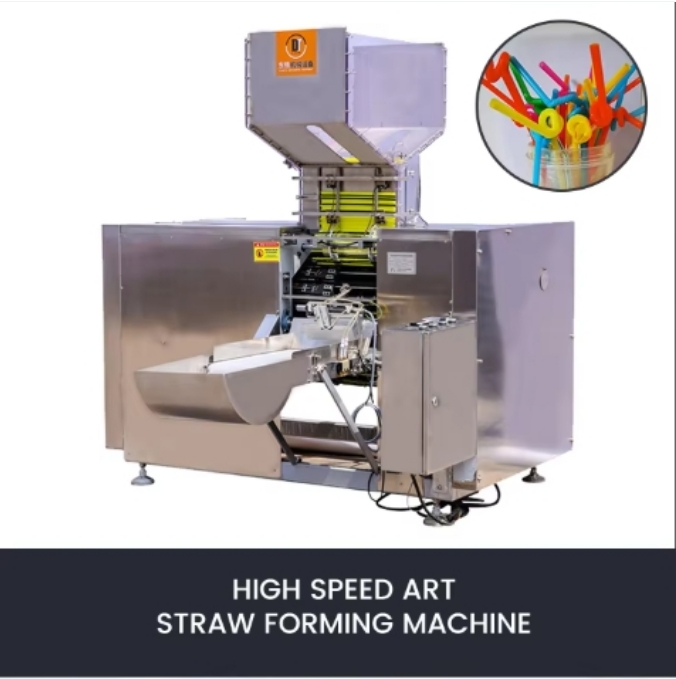
Why Stable Continuous Output Matters More Than a Peak Number
The DT-1200 is rated at no less than 1,000 straws per minute. For context, a third-party machinery listing (KEZHI, 2024) cites 200–300 pieces per minute as typical for automatic straw bending machines; figures of this kind vary by machine, straw specification and how output is measured, so they should be read as an order-of-magnitude reference rather than a benchmark. The more useful question for a buyer is not the peak figure but how much of the shift the machine actually spends producing.
Three factors determine that. First, needle integrity: a broken needle stops the machine and generates scrap while it is reset, so a design that addresses high-speed needle breakage protects the output number directly. Second, in-line inspection: detecting defective forming inside the cycle prevents defective straws from consuming material and downstream packing capacity. Third, changeover: separately adjustable embossing and forming modules and a modular mold approach shorten the time between specifications. DONGTIE reports 60 sets installed, which is the kind of installed base a buyer can ask to reference when validating any of these claims.
The machine's other operating parameters belong in the same evaluation. The DT-1200 is built in stainless steel with a 5.5–6.5 kW power range, working pressure of 1.500–6.000 MPa, working temperature of 100–200 °C and IP55 protection. It runs automatically in a normal-temperature workshop with a stable power supply, either standalone or connected to a production line, and requires manual monitoring and regular maintenance.
| Parameter | DT-1200 high-speed flexible straw forming machine |
|---|---|
| Forming principle | Patented independent embossing and forming modules, Patent No. ZL202020756632.1 |
| Output | No less than 1,000 straws per minute |
| Straw diameter tolerance | ±0.05mm standard |
| Power | 5.5–6.5 kW |
| Working pressure | 1.500–6.000 MPa |
| Working temperature | 100–200 °C |
| Protection grade | IP55 |
| Material | Stainless steel |
| Control | PLC with real-time status display, fault codes and automatic counting |
| Wearing parts | Reinforced needles and molds, designed service life over 1 year |
Where These Machines Fit: Application Patterns
Flexible straw forming equipment serves disposable straw manufacturing, catering utensil production, the plastic and paper tube and packaging industry, and OEM and ODM straw processing factories. Within that, the forming configuration follows the end product.
- Dairy and aseptic cartons. U-shaped straws in small diameters — 3.8mm formats are part of DONGTIE's range — are pre-bent for carton attachment. The U geometry has to be repeatable because the straw is applied by the filler's equipment, not by hand.
- Foodservice and retail. 5mm and 6mm flexible straws with a consumer-adjustable bend are the volume category; here throughput and bend consistency dominate the buying decision.
- Decorative and large-caliber straws. 10mm and 12mm decorative formats, including pointed-tip variants, are shape-led products for hospitality, gifting and specialty beverages. They justify dedicated molds and a more careful setup routine.
- OEM and ODM processing. Converters producing straws for other brands need multi-specification capability and documented output, which makes mold inventory and changeover planning part of the commercial model.
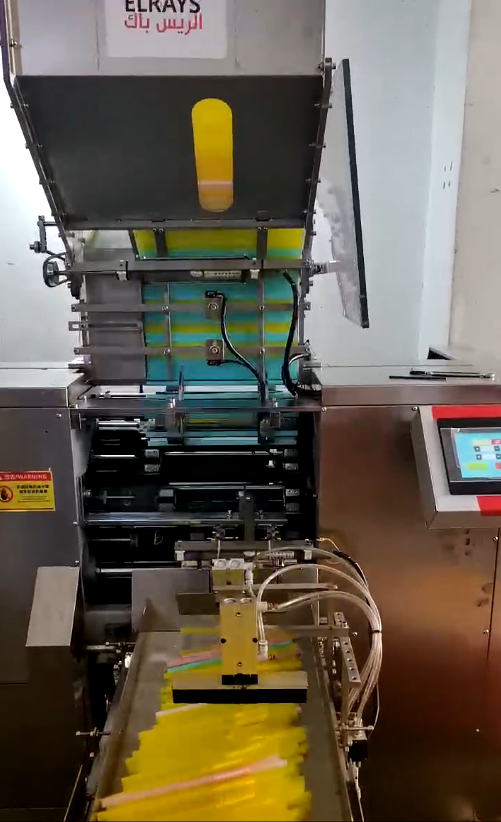
Comparing Straw Categories Before Choosing Molds
Because the machine is configured by tooling, the first purchasing decision is which straw category the business will actually sell. The table below sets out the categories named in DONGTIE's product range against their forming characteristics and application.
| Category | Formats in the DONGTIE range | Forming characteristic | Typical application |
|---|---|---|---|
| Flexible / bendable straw | 5mm, 6mm | Articulated corrugated bend the user adjusts | Foodservice, retail beverage, general disposable straw supply |
| U-shaped straw | 3.8mm | Fixed U bend set during forming | Aseptic dairy cartons and similar packaging lines |
| Decorative / art straw | 6mm, 12mm large-caliber, pointed-tip variants | Shape-led forming with dedicated molds | Hospitality, gifting, specialty drinks, creative packaging |
| High-speed tube bending | 6mm, 12mm pointed-tip | Bending at high cycle rates with reinforced needles | Volume straw production where output per shift is decisive |
The table is a scoping tool, not a ranking: the right category depends on the end customer's packaging and drinking format, and the machine's real limit is the mold set a buyer orders and validates.
What to Verify Before Ordering
Because the forming step is where quality is created, verification should focus there rather than on brochure output figures. Four checks carry most of the weight:
- Sample run on your specification. Ask for straws formed on the exact diameter, bend angle and material you intend to use, then flex the bend repeatedly and check for wall cracking, angle memory and dimensional consistency.
- Needle and mold life evidence. The designed service life over 1 year for key wearing parts is a design statement; ask what the replacement interval looks like in practice on comparable specifications.
- Mold scope and changeover. Confirm which molds are included, which are extra, and how long a specification change takes with the separately adjustable embossing and forming modules.
- Service route. DONGTIE provides installation and commissioning support, remote video technical guidance for common faults, and on-site training in its own straw production workshop, which is equipped with more than 10 full production lines. Confirm what applies to your region before signing.
DONGTIE's manufacturing base covers 2,000 m² with approximately 20 staff and an annual production capacity of 200 sets; exports account for 50% of sales, with customers among processing manufacturers and packaging enterprises buying straw forming equipment. Those figures describe a focused, mid-sized specialist rather than a mass-market supplier, which is relevant when judging how much customization attention a mold project will receive.
FAQ
What does a high-speed bendable straw forming machine do?
It converts straight tube blanks into flexible drinking straws in a continuous automated cycle: feeding the blank, embossing the bend zone, forming the corrugation with a needle and matched mold, cutting to length, inspecting and discharging. On the DONGTIE DT-1200 the rated output is no less than 1,000 straws per minute, and the core forming components use patented technology under Patent No. ZL202020756632.1.
Can one machine produce different straw diameters and bend angles?
Yes, through molds. DONGTIE states that by changing the corresponding molds the machine can manufacture flexible straws with different diameters and bending angles. Custom molds are required for each diameter and bending shape, and material compatibility together with the mold solution is confirmed before an order is placed. The product range covers 3.8mm U-shaped, 5mm flexible, 6mm high-speed and decorative, and 12mm large-caliber and pointed-tip decorative formats.
How should I compare high-speed bendable straw forming machine manufacturers?
Compare on forming evidence rather than headline speed: whether the embossing and forming stages are independently adjustable, how the design addresses high-speed needle breakage, the stated life of needles and molds, the tolerance the process accepts on tube blanks (DONGTIE states ±0.05mm standard straw diameter tolerance), what in-line inspection is included, and how many machines of the type are actually in service — DONGTIE reports 60 sets installed. Then ask each supplier for a sample run on your own specification.
What can be confirmed from a sample before committing to a mold set?
A sample run shows whether the bend geometry suits your application, whether the straw holds its angle after repeated flexing, and whether the diameter stays inside tolerance on your tube supply. Because custom molds are specification-specific, the sample is also the practical way to confirm the mold design before the full tooling order.
What support is available after the machine is installed?
DONGTIE provides installation and commissioning support, technical process guidance and long-term technical backup, with remote video guidance for common faults and on-site training available in its own workshop, which runs more than 10 full production lines. Buyers who want to review the machine range and specifications first can download the DONGTIE MECHANICAL EQUIPMENT brochure, or raise a specific diameter or bend angle with Zhongshan Dongtie Machinery Factory.
Conclusion
The tube-to-straw transition happens in two operations: embossing the bend zone and forming it with a needle and matched mold. Everything a buyer evaluates about a high-speed bendable straw forming machine — output, needle life, tolerance, changeover time, inspection — either protects those two operations or extends their reach. DONGTIE's patented module architecture, Patent No. ZL202020756632.1, is built around keeping embossing and forming independently adjustable, which is what allows one platform to run no less than 1,000 straws per minute on a volume specification and still switch to a different diameter or bend angle through tooling.
For a buyer at the research stage, the practical next step is to define the specification first — diameter, bend type, material, packing format — and then evaluate machines against it with a sample in hand. That sequence turns a comparison of brochure figures into a decision about which mold set and forming platform will actually run your product.
Have Questions or Need More Details?
Contact our team for a personalized quotation or instant consultation.
Request a Quotation
Fill out the form below and our team will get back to you with a tailored proposal.
WhatsApp Direct Chat
Prefer to chat in real-time? Message us on WhatsApp for instant assistance & quick answers.
- Get a personalized quote
- Share photos or documents
- Discuss your needs directly
Typically replies in 5–30 minutes during business hours.