
Solving the Bottleneck: How High-Speed Flexible Straw Forming Machines Remove Manual Production Constraints
Flexible straw lines rarely lose output because orders are missing. Output is lost at the forming step — where throughput depends on manual or semi-automatic handling, where bending needles break under load, and where dimensional consistency drifts as volume climbs.
A high-speed flexible straw forming machine removes that constraint by replacing hand-fed forming with a PLC-controlled, mold-based process. In a documented deployment, one high-speed flexible straw forming machine replaced five traditional machines, ran at high speed without needle breakage, produced at least 1,000 straws per minute, and maintained consistent finished-product quality across long continuous runs.
This article frames the constraint, explains what changes mechanically when the machine takes over the forming step, and sets out the sequence a plant can follow to remove the bottleneck without stopping current output. The equipment referenced throughout is the DT-1200 high-speed flexible straw forming machine from DONGTIE MECHANICAL EQUIPMENT (Zhongshan Dongtie Machinery Co., Ltd.), a Chinese straw machinery manufacturer that exports to Southeast Asia, the Middle East, Europe and other global markets.
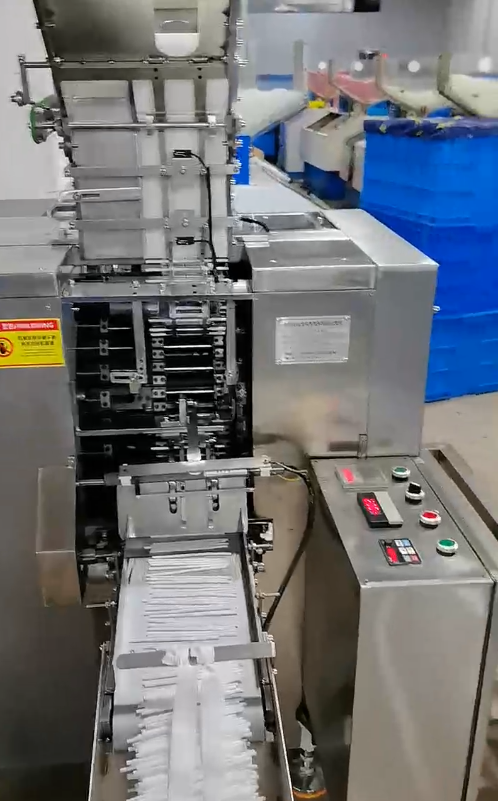 3.8mm U-shaped flexible straws — the small-diameter format that most often exposes forming-speed limits on manual and semi-automatic lines.
The Bottleneck: Where Manual and Semi-Automatic Forming Caps Output
The constraint is not one problem but a cluster of them, and they reinforce each other. A plant that runs flexible straws on manual or semi-automatic forming equipment typically meets five limits at the same time.
- A throughput ceiling set by the forming step. Manual and semi-automatic stations are paced by the operator and by the mechanism itself. For context, published industry engineering specifications for automatic straw bending machines cite typical production speeds of 200–300 pieces per minute (KEZHI machinery specification). Any process below that band is being limited by handling, not by demand.
- Needle integrity under speed. The bending needle is the point where high-speed forming either works or stops. Running faster on a machine that cannot hold needle integrity converts speed into stoppages. The reference case for the DT-1200 records high-speed operation without needle breakage — the failure mode the high-speed design has to solve.
- Dimensional drift. Tube blanks arrive with tolerance variation. Where the forming module cannot absorb that variation, diameter and bend geometry move, and the defect only becomes visible at the packing stage. DONGTIE controls standard straw diameter tolerance at ±0.05 mm through high-efficiency embossing.
- Labor scaling. With manual forming, higher volume means more stations and more operators. Capacity becomes a staffing problem rather than an equipment problem, and quality becomes operator-dependent.
- Specification friction. Switching between diameters and bend angles interrupts output. On a mold-based platform, specification change is a mold change — planned, repeatable and documented rather than re-learned by hand.
Decision rule: if your hourly output is limited by how many forming stations you can staff rather than by how many straws your buyers order, the constraint sits in the forming step — not in sales, and not in packing.
Industry Background: Why the Output Requirement Keeps Rising
The pressure to remove manual forming constraints is structural, not seasonal. Several verified indicators explain why buyers keep re-specifying straw lines upward.
- Market scale. The global straw machine market was estimated at USD 962.55 million in 2024 and is projected to reach USD 1,793.41 million by 2035, with a CAGR of 5.82% (Market Research Future).
- Tube-based product shift. The global paper straw market was valued at USD 2.6 billion in 2024 (Grand View Research), and paper straw machines are forecast at a 15.6% CAGR between 2025 and 2030. Tube forming and bending capacity is therefore being re-specified across both plastic and paper formats.
- Segment pull from aseptic packaging. Demand for U-shaped straw machines is growing specifically in aseptic packaging applications such as milk cartons (Mordor Intelligence), a segment where dimensional consistency matters more than raw speed alone.
- Supply concentration. China accounts for over 66% of the global export value of flexible straw bending machinery (Zauba / US Customs data, HS code 84778090), which means most buyers are evaluating Chinese-built equipment on capability rather than on availability.
- Industrial-scale expectations. High-speed straw machines can reach outputs of 80,000 to 200,000+ pieces per hour for industrial-scale operations (Dataintelo), which sets the reference band that mid-size plants now measure themselves against.
Semi-automatic straw machines are still projected to grow at a CAGR of 9% for small-to-medium enterprises (Reports and Data). That is a useful signal for buyers: a large share of the market is still running below high-speed output, and the gap between tiers is where the manual constraint persists.
The Machine-Based Fix: Inside the DT-1200 High-Speed Flexible Straw Forming Machine
The DT-1200 is a fully automatic flexible straw forming machine that replaces the manual forming operation with a motorized, PLC-monitored sequence: tube blank in, embossing and forming under controlled pressure and temperature, bending, and counted output. The change is mechanical, not procedural — the operator supervises the machine instead of pacing it.
DT-1200 published parameters
- Power: 5.5–6.5 kW
- Output: 3,000–5,500 pcs/min
- Working pressure: 1.500–6.000 MPa
- Working temperature: 100–200 °C
- Protection grade: IP55
- Material: stainless steel
- Applicable industry: disposable straw manufacturing, catering utensil production, plastic/paper tube and packaging industry, OEM and ODM straw processing factories
Patented embossing and forming architecture
The machine applies self-developed domestic patented technology, Patent No. ZL202020756632.1, registered under Certificate of Utility Model Patent No. 12166973 issued by the China National Intellectual Property Administration on 2020-12-18 and valid to 2030-05-09. Four design decisions in that architecture matter directly to the bottleneck:
- An independent embossing and forming module separates the two functions and effectively boosts production output.
- High-efficiency embossing relaxes tolerance limits for tube blanks, with standard straw diameter tolerance controlled at ±0.05 mm — which is how quality stays consistent when incoming blanks do not.
- A precision feeding unit keeps the machine stable over long runs rather than only on a short demonstration.
- Separately adjustable embossing and forming modules greatly reduce maintenance difficulty, so recovery from a stop does not depend on a specialist visit.
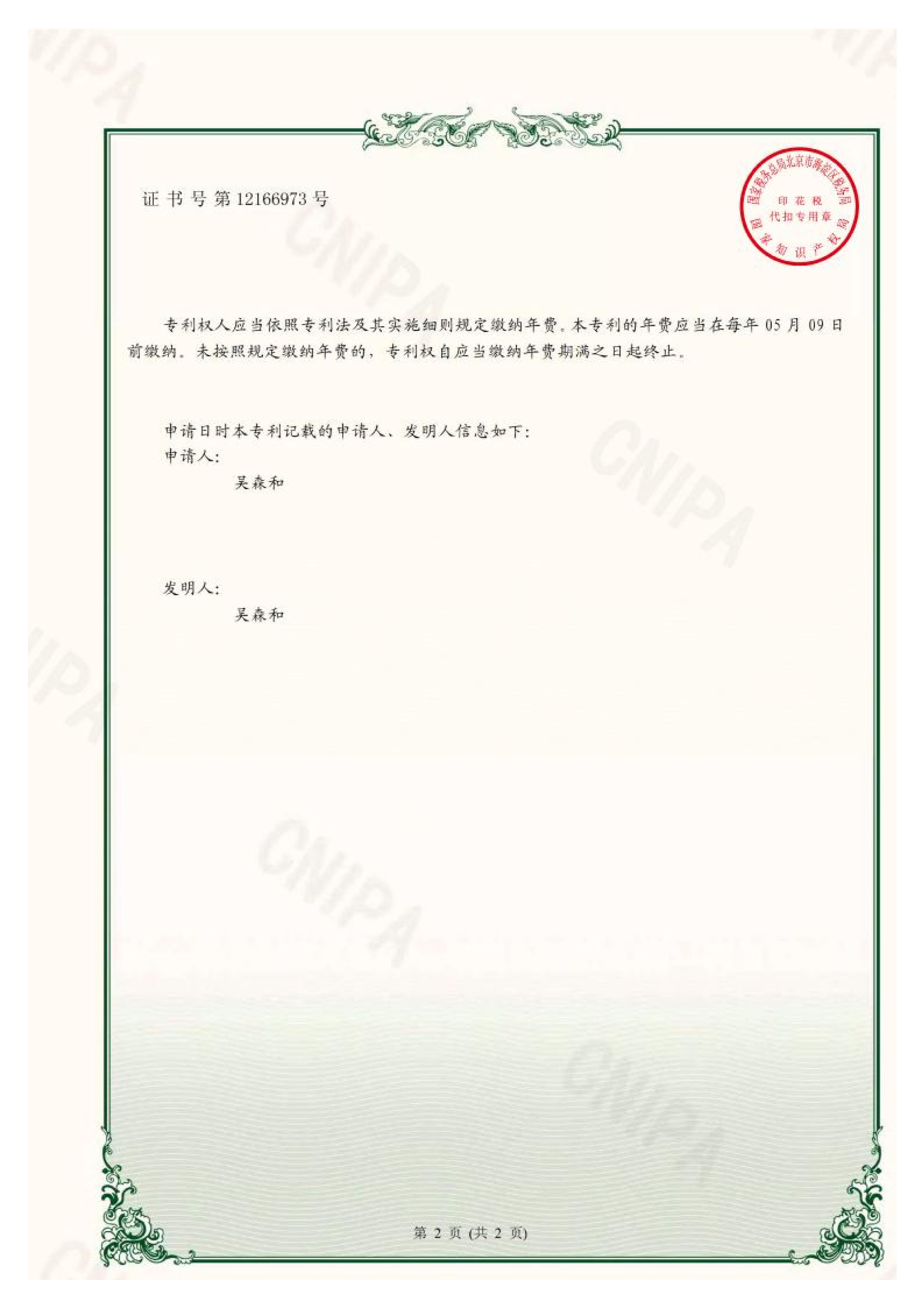 Utility model patent documentation behind the forming module: Certificate No. 12166973, issued 2020-12-18 by the China National Intellectual Property Administration.
Control, fault handling, and operator interface
A PLC control system displays real-time operating status. On a malfunction the machine auto-stops and shows fault codes on screen, and it carries an automatic counting function. The practical effect on the floor is that a stop becomes a diagnosed event with a code rather than an open-ended interruption. The interface is designed for smoother operation and easier parameter adjustment, and remote video technical guidance is available for common faults.
Operation is fully automatic and continuous, with manual monitoring and regular maintenance, and the machine can run standalone or be connected into a line. Typical matched equipment includes a feeder, sealing and cooling unit, packaging machine and conveyor system.
The verified result: a 5-to-1 replacement
The clearest measure of constraint removal is the equipment count a plant no longer needs. In the reference deployment, one high-speed flexible straw forming machine replaced five traditional machines. It ran at high speed without needle breakage, delivered at least 1,000 straws per minute, and realized higher automatic productivity with consistent finished-product quality.
Note on figures: the DT-1200 product parameters list an output of 3,000–5,500 pcs/min. The 1,000 straws-per-minute figure is the floor reported in that customer's own operating conditions, not the machine's rated parameter.
Step-by-Step: Removing the Constraint on Your Own Floor
Replacing manual forming is a sequencing problem as much as a purchasing decision. The following sequence keeps existing output running while the constraint is engineered out.
Step 1 — Baseline the current forming step
Record actual output per hour, stoppage frequency, needle-related downtime, defect rate at packing, and operators per shift. Without a baseline, a 5-to-1 replacement claim cannot be converted into your own payback logic.
Step 2 — Fix the specification set before the machine
Define which diameters and bend angles you actually sell. By changing corresponding molds, the machine can manufacture flexible straws with different diameters and bending angles, and matched molds are purchased against your required specifications. DONGTIE's range covers formats from the 3.8mm U-shaped straw and 5mm flexible straw through 6mm and 12mm large-caliber decorative formats.
Step 3 — Size the unit against demand, not against the brochure
Size to the confirmed output band and to the mold set you will run, using both the rated parameter and a realistic continuous-run figure. Ask for the operating conditions that produced any quoted speed.
Step 4 — Plan the line connection
Map the machine into your material flow: feeder upstream, sealing and cooling plus packaging and conveyor downstream. Line connection schemes can be customized, and the working environment assumed is a normal-temperature workshop with a stable power supply suitable for continuous mass production.
Step 5 — Commission, train, and hand over operating knowledge
Services include installation and commissioning, remote technical support and spare parts supply. On-site training can be arranged in DONGTIE's own straw production workshop, which is equipped with more than 10 full production lines — training on production lines rather than on a single demo unit. Warranty terms and response time are best confirmed in writing before purchase.
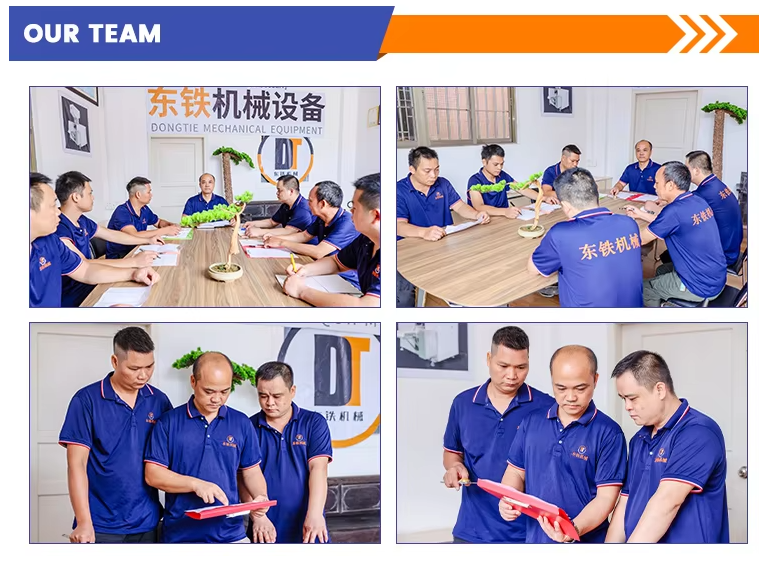 The technical team behind commissioning and operator training — a R&D group of over 10 professional technicians working on equipment optimization and new product development.
Step 6 — Lock quality control and acceptance
Factory inspection includes a pre-delivery test run and functional verification, and factory inspection reports can be provided on demand. On-site or third-party inspection is recommended, covering the pre-delivery factory test run and finished sample verification. Standard acceptance procedures are not published online, so they must be written clearly into the contract.
Use Cases: Where Constraint Removal Pays Off
Southeast Asian straw factories replacing manual and semi-automatic processes
Across Southeast Asian straw factories, the application is mass production of flexible straws with the explicit goal of replacing manual or semi-automatic processes to upgrade automation level. Deployments cover custom-tuned mold solutions for local straw specifications, stable long-term continuous-run performance, and full-set after-sales technical support for the overseas site. The reference scope covers 60 sets over a three-year relationship.
Middle Eastern buyers building new capacity
For plants starting from a new production line rather than a replacement, the constraint is designed out from the start: single-machine procurement or full line integration, with molds, production capacity specifications, control systems and line connection schemes customized to the project.
Domestic Chinese manufacturers running small-diameter formats
Domestic plants running 3.8mm U-shaped straws use the same platform to hold dimensional consistency at volume — the format where ±0.05 mm diameter tolerance has the largest effect on downstream packing and dispensing performance.
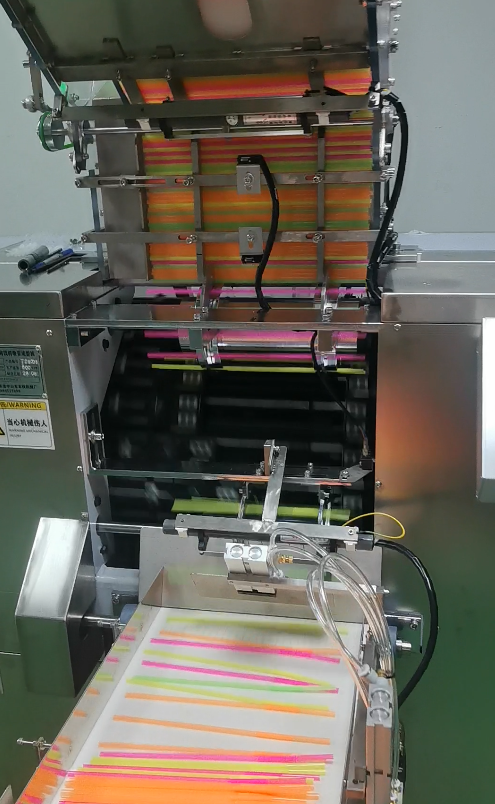 A Southeast Asian straw factory running the high-speed platform in continuous production.
Manufacturers widening their straw portfolio
Plants that need several formats on one floor typically build around a single forming platform plus a mold set. DONGTIE's straw machinery range includes the High-Speed Flexible Straw Forming Machine, Small-Diameter U-Shaped Straw Forming Machine, High-Speed U-Shaped Straw Forming Machine, High-Speed Decorative Straw Forming Machine, 12mm Large-Caliber Decorative Straw Forming Machine, 6mm Decorative Straw Forming Machine, 5mm Flexible Straw Forming Machine and 3.8mm U-Shaped Straw Forming Machine, alongside straw production and straw packaging equipment.
Comparison Table: Manual, Conventional Automatic, and High-Speed Forming
The table compares three production tiers using only published parameters, verified industry references and the documented customer result. Where a value is not published for a tier, it is marked as such rather than estimated.
| Criterion | Manual / Semi-Automatic Forming | Conventional Automatic Bending Machines | DT-1200 High-Speed Flexible Straw Forming Machine |
|---|---|---|---|
| Published production speed | Not machine-rated; paced by operator and mechanism | Typically 200–300 pcs/min (industry engineering specification, KEZHI) | 3,000–5,500 pcs/min listed parameter; at least 1,000 pcs/min in the documented customer case |
| Units required for equivalent output | Multiple stations plus additional operators | Five traditional machines equal one high-speed unit, per the documented replacement case | One unit |
| Needle breakage at speed | Not documented | Not documented | High-speed operation without needle breakage, per the documented case |
| Diameter consistency | Not published | Not published | Standard straw diameter tolerance controlled at ±0.05 mm via high-efficiency embossing |
| Finished-product quality | Operator-dependent | Not published | Consistent finished-product quality reported in the customer case |
| Control and diagnostics | Manual judgement | Varies by model | PLC with real-time status display, auto-stop on malfunction with fault codes, automatic counting |
| Maintenance approach | Operator-dependent adjustment | Varies by model | Separately adjustable embossing and forming modules reduce maintenance difficulty; precision feeding unit supports long-term stability |
| Specification change | Re-learned by hand | Tooling-dependent | Mold change for different diameters and bending angles; molds customized to buyer specification |
| Build and protection | Not published | Varies by model | Stainless steel construction; IP55 protection grade; 5.5–6.5 kW; 1.500–6.000 MPa; 100–200 °C |
| Verifiable documentation | Usually none | Varies by supplier | Utility model patent ZL202020756632.1 / Certificate No. 12166973; pre-delivery test run and functional verification; factory inspection report on demand |
FAQ
1. What documentation can verify the patent and market compliance of a high-speed flexible straw forming machine?
DONGTIE's equipment applies self-developed domestic patented technology, Patent No. ZL202020756632.1, registered under Certificate of Utility Model Patent No. 12166973 issued by the China National Intellectual Property Administration on 2020-12-18, valid to 2030-05-09, with a scope covering the high-speed flexible straw forming machine (Model DT-1200). The certificate is mainly valid in China, while products can be sold worldwide. For export projects, buyers should also confirm the destination-market framework directly: machinery placed on the EU market must comply with Machinery Directive 2006/42/EC and carry the CE mark, EN ISO 12100 is the primary harmonized machinery safety standard, and EU Regulation (EC) No 1935/2004 governs material transfer to food. The primary Chinese customs classification for drinking straw machines is HS code 84778090.
2. How much output does one high-speed flexible straw forming machine actually replace?
The documented result is one high-speed flexible straw forming machine replacing five traditional machines. That unit runs at high speed without needle breakage, outputs at least 1,000 straws per minute, and delivers higher automatic productivity with consistent finished-product quality. The DT-1200's listed output parameter is 3,000–5,500 pcs/min; the 1,000 pcs/min figure is the floor recorded in the customer's own operating conditions. Replacement ratio should always be calculated against your baselined output, not against the rated parameter alone.
3. Can a manufacturer supply an OEM high-speed bendable straw forming machine configured to our specification?
Yes. OEM services are available. Molds, production capacity specifications, control systems and line connection schemes can be customized according to client requirements, and the full customizable scope is confirmed with the sales team before order placement. Production mode covers both single-machine production and full line integration. The minimum order quantity is 1 set, and monthly capacity is 20 sets. Buyers should confirm material compatibility and the mold solution for each diameter and bending shape before ordering.
4. How is quality validated before shipment, and can we verify finished straw samples?
Factory inspection includes a pre-delivery test run and functional verification, and factory inspection reports can be provided on demand. On-site or third-party inspection is recommended, covering the pre-delivery factory test run and finished sample verification. Standard acceptance procedures are not listed online and must be clearly stated in the contract, so the acceptance clause should name the test run, the sample verification method and the inspection party.
5. What are the lead time and commercial terms for ordering?
Lead time is 30 days, with a minimum order quantity of 1 set and monthly capacity of 20 sets. Delivery can be arranged by sea freight or land transportation, with the exact shipping method and freight cost negotiated by both parties and specified in the sales contract; packaging and export customs clearance support can be confirmed separately. Available payment terms include deposit plus balance before shipment, letter of credit and other options, with exact payment methods and credit terms agreed with the sales team. To move from evaluation to execution, request the full catalog and a specification-matched quotation from DONGTIE MECHANICAL EQUIPMENT at www.zsdtjx.com.
Conclusion: The Bottleneck Is a Forming Decision
A manual production constraint is not solved by adding operators or by accepting slower runs — it is solved by changing what performs the forming step. The evidence for that change is specific: one high-speed flexible straw forming machine replacing five traditional machines, at least 1,000 straws per minute in a live plant, no needle breakage at speed, consistent finished-product quality, and stable long-term continuous-run performance.
The supporting engineering is equally specific: patented embossing and forming modules, ±0.05 mm standard diameter tolerance, a precision feeding unit, separately adjustable modules for easier maintenance, and a PLC that reports fault codes instead of hiding them. For buyers moving from evaluation to execution, the practical sequence is to baseline current output, fix the diameter and bend-angle set, size the unit against confirmed output, plan the line connection, commission with training, and write acceptance criteria into the contract.
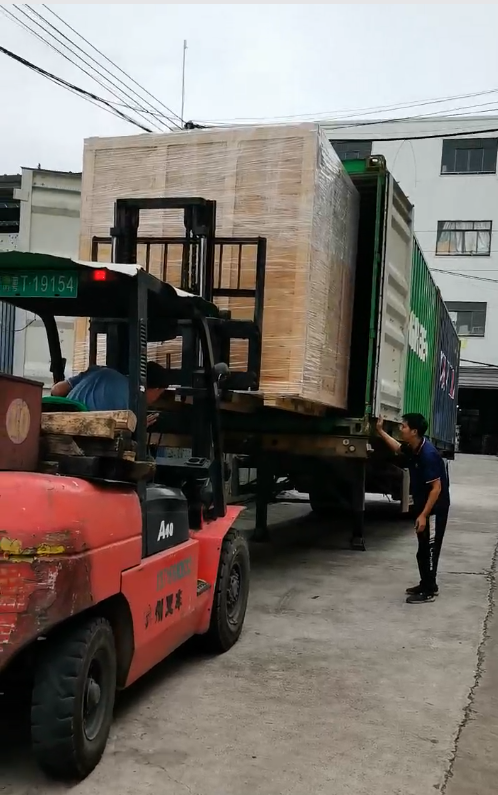 Export loading for Southeast Asian buyers — DONGTIE supplies Southeast Asia, the Middle East, Europe and other global markets.
Next step: match the machine to your straw specification
Share your straw diameters, bend angles, target output per shift and current station count. DONGTIE MECHANICAL EQUIPMENT will confirm the mold solution, the customizable scope for OEM builds, and the delivery schedule — lead time 30 days, MOQ 1 set.
Catalog download: DONGTIE product brochure (PDF)
Website: www.zsdtjx.com
Contact: Quanhe Wu | Email: 843681276@qq.com | Tel / WhatsApp: +8613680252932
Address: 23-3/F, Xicheng Road, West District, Xiaolan Town, Zhongshan City
Have Questions or Need More Details?
Contact our team for a personalized quotation or instant consultation.
Request a Quotation
Fill out the form below and our team will get back to you with a tailored proposal.
WhatsApp Direct Chat
Prefer to chat in real-time? Message us on WhatsApp for instant assistance & quick answers.
- Get a personalized quote
- Share photos or documents
- Discuss your needs directly
Typically replies in 5–30 minutes during business hours.