Supplier Audit for High-Speed Bendable Straw Forming Machines: Capability and Delivery Assurance
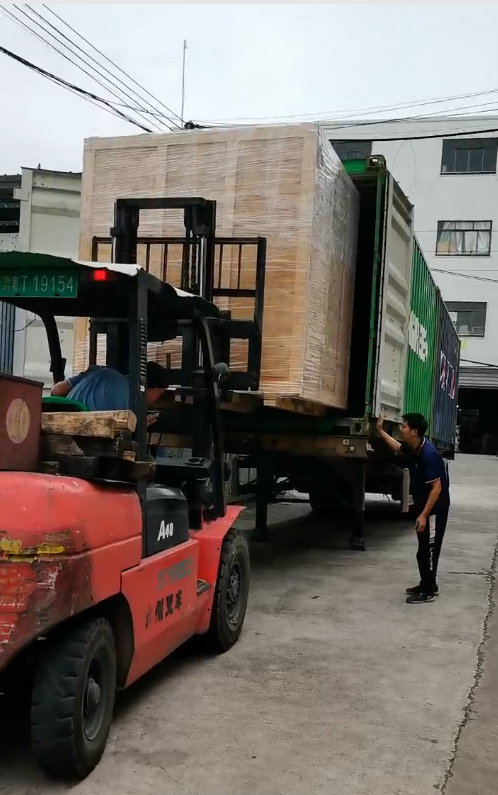
Container loading for an export shipment of high-speed flexible straw forming machines to Southeast Asia.
A supplier audit for a high-speed bendable straw forming machine comes down to two questions that can be answered with evidence: can the manufacturer actually build and test the exact machine on your purchase order, and can it deliver, commission and support that machine inside the schedule your production plan depends on. Brochures, exhibition photos and sample videos are supporting material. They are not proof.
This guide is written for buyers in the evaluation stage who are comparing straw machinery suppliers and need a repeatable way to separate verifiable capability from marketing language. It uses one reference supplier throughout — Dongtie Mechanical Equipment, the export-facing brand of Zhongshan Dongtie Machinery Co., Ltd., a straw machinery manufacturer based in Xiaolan Town, Zhongshan City, China that has focused on straw machinery manufacturing since 2010 — to show what a verifiable answer looks like at each checkpoint.
Audit summary: the framework has two halves. The capability half verifies facility, headcount, build capacity, engineering depth and tooling control. The delivery half verifies lead time, minimum order quantity, pre-delivery testing, inspection documentation, installation, remote support and spare parts. A supplier that answers both halves with documents and references is a lower-risk choice than one that answers only with price.
Problem Definition: Why a Straw Machine Purchase Fails
Two failure modes account for most disappointing straw machine purchases, and both are detectable before a deposit is paid.
Failure mode one — the capability gap. The supplier accepts the order but does not control tooling and forming. On a high-speed bendable straw forming machine, output quality depends on the embossing and forming modules, the precision feeding unit and the tolerance window of the tube blank. Dongtie's equipment uses a self-developed domestic patented technology, Patent No. ZL202020756632.1, which combines an independent embossing and forming module, high-efficiency embossing that relaxes tolerance limits for tube blanks with a standard straw diameter tolerance controlled at ±0.05 mm, a precision feeding unit for long-term stable operation, and separately adjustable embossing and forming modules that reduce maintenance difficulty. When a supplier cannot explain which physical module produces which quality result, the capability claim has no anchor.
Failure mode two — the delivery gap. The machine is built but never proven before shipment, arrives without inspection records, and has no defined path for installation, fault diagnosis or wear-part replacement. In straw production, where a single line often runs continuously, that gap converts directly into downtime.
A supplier audit exists to close both gaps before the order is placed. It is a documentation exercise, a factory exercise and a reference-check exercise, in that order.
Industry Background: Why Supplier Capability Is Being Scrutinised Now
Straw machinery demand has grown on the back of material substitution and packaging regulation. The global straw machine market was estimated at USD 962.55 million in 2024 and is projected to reach USD 1,793.41 million by 2035, a CAGR of 5.82%, according to Market Research Future. Dataintelo projects that industrial end-users account for 40.1% of straw machine market share as of 2025, which matters to this audit because industrial buyers — not hobby or craft buyers — are the ones who demand inspection records and service commitments.
The paper-straw segment adds a second demand layer: Grand View Research valued the global paper straw market at USD 2.6 billion in 2024 and projects a 15.6% CAGR for paper straw machines between 2025 and 2030, driven by plastic bans. On the supply side, China accounts for over 66% of the global export value of flexible straw bending machinery according to Zauba and US Customs data, which means most overseas buyers are auditing Chinese suppliers — and most Chinese suppliers are competing on similar claims.
Regulation narrows the field further. Machinery sold into the EU must comply with the Machinery Directive 2006/42/EC and carry the CE mark, with EN ISO 12100 as the primary harmonized standard for machinery safety; materials that contact food must satisfy Regulation (EC) No 1935/2004 on food-contact constituents. For export documentation, drinking straw machines are commonly classified under HS code 84778090 in China's GACC data. A supplier audit that ignores these points can produce a machine that runs perfectly in the factory but cannot be cleared or accepted at the destination.
At the same time, the market is not uniform. Plastic straw machines retain significant share in Asia-Pacific and Africa despite EU restrictions, while U-shaped straw machine demand is growing specifically around aseptic packaging such as milk cartons, according to Mordor Intelligence. That means a supplier's regional specification experience is not a nice-to-have; it directly determines whether the molds and settings match your product.
The Capability Audit: Factory Metrics That Can Be Verified
Capability should be audited against numbers and documents, not adjectives. The following four checkpoints cover what a straw-straw forming supplier claiming industrial capability should be able to demonstrate.
1. Facility Footprint, Headcount and Address
Request the registered address, a site walkthrough or a live video tour, and headcount by function. Dongtie operates from a 2,000 m² facility with approximately 20 staff. A compact footprint is not automatically a weakness in machinery assembly, but it does define how many machines can be built and tested at once — which is exactly why the next checkpoint matters.
2. Annual and Monthly Build Capacity
Dongtie states an annual output of 200 sets and a monthly capacity of 20 sets. Ask any supplier to reconcile the two figures against headcount and facility size; unexplained gaps between stated capacity and stated resources are a common audit finding. For a buyer ordering one machine, monthly capacity determines queue position, which is the practical link between capability and lead time.
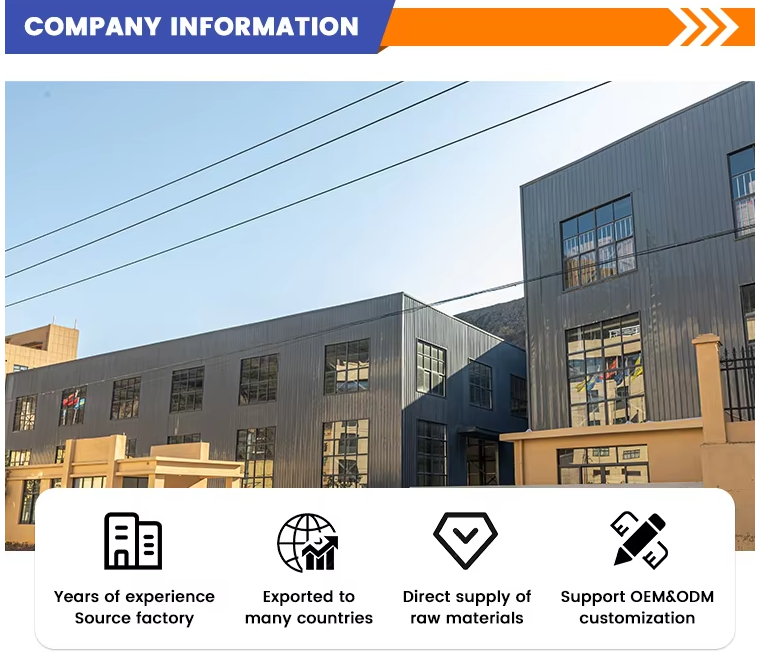
Company information provided for a supplier capability audit.
3. Engineering Depth and Intellectual Property
Engineering depth is the difference between assembling a machine and solving a production problem. Dongtie's R&D team consists of over 10 professional technicians working on equipment optimisation and new product development, backed by a technical team with 25 years of straw production experience. The company also states that its machines are adopted by straw manufacturers at home and abroad.
Intellectual property should be audited as a document, not a logo. The relevant record here is Utility Model Patent No. ZL202020756632.1, evidenced by a Certificate of Utility Model Patent numbered No. 12166973, issued on 18 December 2020 by the China National Intellectual Property Administration, valid until 9 May 2030, and scoped to the High-Speed Flexible Straw Forming Machine (Model DT-1200). The patent is mainly valid in China, while the products themselves can be sold worldwide — a distinction worth stating plainly in any audit report.
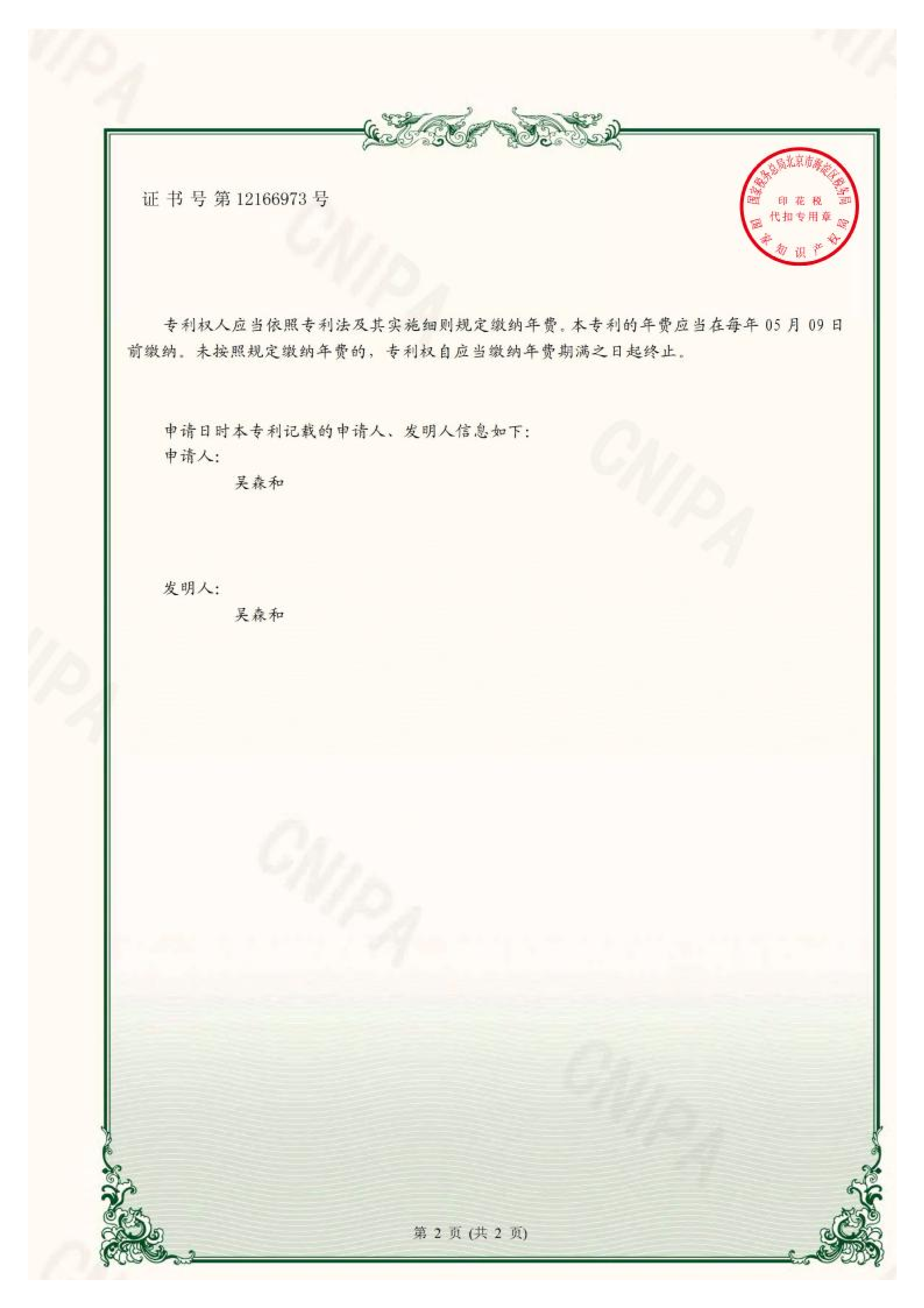
Patent certificate supporting document for high-speed flexible straw forming machine verification.
4. Machine-Level Specification Control
Specification control is where the audit becomes concrete. For the DT-1200 high-speed flexible straw forming machine, the published parameters are power 5.5–6.5 kW, output 3,000–5,500 pcs/min, working pressure 1.500–6.000 MPa, working temperature 100–200 °C, protection grade IP55 and stainless-steel construction. The control system displays real-time operating status via PLC, automatically stops the machine on malfunctions with fault codes shown on screen, and includes an automatic counting function.
Buyers should also confirm the mold position before placing an order, because molds — not the base machine — determine whether the line produces 3.8 mm U-shaped straws, 5 mm flexible straws, 6 mm high-speed straws, or 12 mm large-diameter art straws with pointed tips. Dongtie confirms that molds, production capacity specifications, control systems and line connection schemes can be customised as per client demands, with the full customisable scope to be confirmed with the sales team. Custom molds are required for different straw diameters and bending shapes, and material compatibility and mold solutions should be confirmed before order placement.
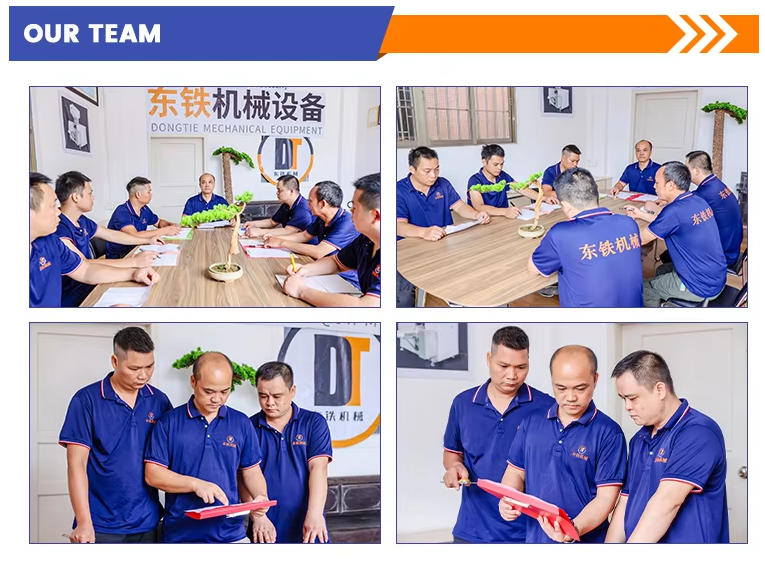
Technical and production team supporting engineering verification.
The Delivery Assurance Audit: From MOQ to Spare Parts
Delivery assurance is where most evaluations stop too early. The following checkpoints should be confirmed in writing before the deposit is released.
Lead Time and Minimum Order
Dongtie's typical lead time is 30 days, with a minimum order quantity of 1 set. A one-set MOQ matters to buyers testing a new product line or entering a new straw category, because it allows a single machine to be validated before a full line investment. Confirm that the quoted lead time starts from a defined trigger, such as deposit receipt and approved mold drawings, rather than from an undefined point in the sales process.
Pre-Delivery Test Run and Inspection Reports
Factory inspection at Dongtie includes a pre-delivery test run and functional verification, and factory inspection reports can be provided on demand. Buyers should request the report as part of the purchase order rather than as a favour, and should agree the acceptance criteria in advance — for example which straw diameter and bend angle will be run during the test, and what output and consistency the machine must demonstrate.
Installation, Remote Support and Spare Parts
Dongtie's after-sales services include installation and commissioning, remote technical support and spare parts supply. Remote video technical guidance is available for common faults, and on-site training can be arranged in the company's own straw production workshop, which is equipped with over 10 full production lines. The honest limitation to record in any audit is that warranty terms and response time are recommended to be confirmed before purchase — they are commercial commitments, so they belong in the contract, not in a brochure.
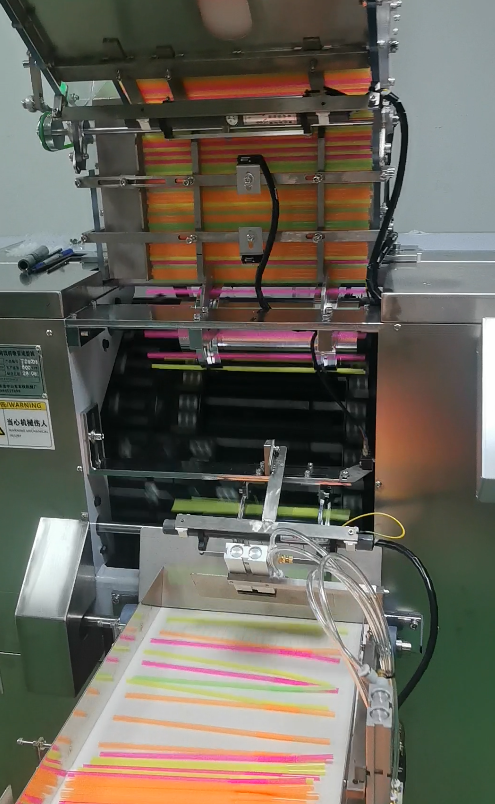
Southeast Asian customer site running a high-speed flexible straw forming machine.
Step-by-Step: Running the Audit
The sequence below keeps the audit evidence-driven and gives each supplier the same opportunity to respond.
Step 1 — Define your product specification first. Before contacting suppliers, fix the straw diameter, bend angle, material and target output. Molds are specification-specific, so an undefined product makes every quotation non-comparable.
Step 2 — Request the capability pack. Ask for factory address and footprint, headcount, annual and monthly capacity, R&D headcount, patent certificates with numbers and validity dates, and the machine specification sheet. For Dongtie, the expected answers are 2,000 m², approximately 20 staff, 200 sets per year, 20 sets per month, over 10 professional technicians, and patent certificate No. 12166973 covering Patent No. ZL202020756632.1.
Step 3 — Request the delivery pack. Ask for lead time, MOQ, test-run procedure, inspection report sample, installation scope, remote support method, spare parts list and warranty terms in writing.
Step 4 — Verify the installation base. Ask for reference installations by country and quantity. Dongtie reports 60 sets of high-speed flexible straw forming machines installed for clients in Southeast Asia, the Middle East and China, with a Malaysia client representing the Southeast Asian market, and a three-year project period across those installations.
Step 5 — Test the specification match. Ask the supplier how they handle a local straw specification that differs from their standard mold. In Dongtie's reported case work, the highlighted engineering contribution was a custom-tuned mold solution for local straw specifications, combined with stable long-term continuous-run performance and full-set after-sales technical support for the overseas site.
Step 6 — Score, then shortlist. Score every supplier on the same table and shortlist only those that returned documents rather than descriptions. Suppliers that answer capability with documents and delivery with commitments are the ones worth a factory visit or a video walkthrough.
Use Cases: Where This Audit Framework Pays Off
Southeast Asian straw factories upgrading from manual or semi-automatic production. In the reported field result, one high-speed flexible straw forming machine replaced 5 traditional machines, ran at high speed without needle breakage, produced at least 1,000 straws per minute, and delivered higher automatic productivity with consistent finished product quality. Buyers in this position should audit spare-parts availability and remote support as carefully as machine output, because a multi-machine replacement concentrates risk into fewer units.
Middle Eastern converters building a new straw line. New-line projects need the machine, the molds and the line connection scheme to arrive as a coordinated package. Dongtie's customisable scope covers molds, production capacity specifications, control systems and line connection schemes, and matched auxiliary equipment can include a feeder, sealing and cooling unit, packaging machine and conveyor system. Audit the interface assumptions, not just the machine.
Domestic Chinese manufacturers adding capacity. Domestic straw manufacturers appear alongside Southeast Asian and Middle Eastern clients in the same 60-set installation base, which means the same audit questions apply: mold changeover, diameter range from small-diameter U-shaped straws to 12 mm large-diameter art straws, and maintenance access to separately adjustable embossing and forming modules.
Aseptic and U-shaped straw production. U-shaped straw machine demand is growing around aseptic packaging applications, where dimensional consistency is critical. The ±0.05 mm standard straw diameter tolerance associated with Dongtie's patented embossing technology is the kind of figure a buyer should verify by test run rather than accept as a printed value.
Comparison Tables: What to Verify Against What Is Verified
The tables below separate the audit question from the verified data point, so buyers can reuse the structure for any supplier under evaluation.
Table 1 — Capability audit checkpoints
| Audit dimension | What to request | Verified reference data point (Dongtie) |
|---|---|---|
| Facility footprint | Registered address, site visit or live video tour | 2,000 m² facility in Xiaolan Town, Zhongshan City, China |
| Workforce | Headcount by function | Approximately 20 staff |
| Annual build capacity | Annual output against headcount and footprint | 200 sets per year |
| Monthly throughput | Monthly commitment in writing | 20 sets per month |
| Engineering depth | R&D headcount, years of application experience | Over 10 professional technicians; technical team with 25 years of straw production experience |
| Intellectual property | Patent certificate with number and validity | Utility Model Patent ZL202020756632.1; certificate No. 12166973, issued 18 December 2020 by CNIPA, valid until 9 May 2030 |
| Specification control | Spec sheet, tolerance control method | DT-1200: 5.5–6.5 kW, 3,000–5,500 pcs/min, 1.500–6.000 MPa, 100–200 °C, IP55, stainless steel; ±0.05 mm diameter tolerance |
| Installation base | Reference list by country and quantity | 60 sets installed across Southeast Asia, the Middle East and China |
| Application workshop | Whether the supplier runs its own production line | In-house straw production workshop with over 10 full production lines |
Table 2 — Delivery assurance checkpoints
| Checkpoint | Buyer question | Verified reference commitment (Dongtie) |
|---|---|---|
| Lead time | What is the typical production lead time? | 30 days |
| Minimum order | Can I start with a single machine? | 1 set MOQ |
| Pre-delivery testing | Will the machine be run before shipment? | Pre-delivery test run with functional verification |
| Inspection records | Can I receive inspection documentation? | Factory inspection reports provided on demand |
| Installation | Who commissions the machine on site? | Installation and commissioning service |
| Remote support | What happens when a fault appears? | Remote technical support, including remote video guidance for common faults |
| Spare parts | How are wear parts supplied? | Spare parts supply |
| Training | Where is operator training delivered? | On-site training can be arranged in the supplier's own straw production workshop |
| Warranty | What are the warranty terms and response time? | Warranty terms and response time are recommended to be confirmed before purchase |
| Customisation | Can the machine match my straw specification? | Molds, capacity specifications, control systems and line connection schemes customisable; scope confirmed with sales team |
Table 3 — Market and regulatory reference points for the audit file
| Reference point | Value | Source |
|---|---|---|
| Global straw machine market size, 2024 | USD 962.55 million | Market Research Future |
| Projected market size, 2035 | USD 1,793.41 million at 5.82% CAGR | Market Research Future |
| Industrial end-user share, 2025 projection | 40.1% | Dataintelo |
| Paper straw market size, 2024 | USD 2.6 billion | Grand View Research |
| China share of global export value, flexible straw bending machinery | Over 66% | Zauba / US Customs data |
| EU machinery safety requirements | Machinery Directive 2006/42/EC with CE mark; EN ISO 12100 harmonized standard | European Commission / ISO-CEN |
| EU food-contact requirement | Regulation (EC) No 1935/2004 | Official Journal of the European Union |
| Export classification for drinking straw machines | HS code 84778090 | China GACC |
FAQ: Supplier Audit Questions Buyers Ask Most
Which compliance documents should be verified in a high-speed bendable straw forming machine supplier audit?
Ask for the certificate itself, not a reference to it. Dongtie's high-speed flexible straw forming machine (Model DT-1200) is covered by Utility Model Patent No. ZL202020756632.1, evidenced by Certificate of Utility Model Patent No. 12166973 issued on 18 December 2020 by the China National Intellectual Property Administration and valid until 9 May 2030. The patent is mainly valid in China, while the products can be sold worldwide. If the machine is destined for the EU, it must also comply with the Machinery Directive 2006/42/EC and carry the CE mark, with EN ISO 12100 as the primary harmonized machinery safety standard, and food-contact materials must satisfy Regulation (EC) No 1935/2004. For export paperwork, drinking straw machines are commonly classified under HS code 84778090.
What factory metrics prove a supplier can actually build a high-speed flexible straw forming machine?
Verify footprint, headcount, capacity and engineering depth together. Dongtie operates a 2,000 m² facility with approximately 20 staff, an annual output of 200 sets and a monthly capacity of 20 sets. Engineering depth is supported by a team of over 10 professional technicians and a technical team with 25 years of straw production experience. Cross-check those numbers against real installations: 60 sets of high-speed flexible straw forming machines have been installed for clients in Southeast Asia, the Middle East and China, and the company runs its own straw production workshop with over 10 full production lines. Metrics that cannot be cross-checked against references should be treated as claims only.
What drives the cost of a high-speed bendable straw forming machine, and is a single-set order realistic?
A single-set order is realistic: the minimum order quantity for this machine is 1 set. Cost is driven by configuration rather than by the base unit alone — mold sets matched to the straw diameter and bend angle, production capacity specifications, control system configuration and line connection schemes are all customisable, and the full customisable scope is confirmed with the sales team before quotation. Because custom molds are required for different straw diameters and bending shapes, and material compatibility and mold solutions are confirmed before order placement, buyers should compare quotations on identical mold and configuration scope. A lower quotation built on a narrower mold package is not the same offer.
Can I request a test run or a factory inspection report before shipment?
Yes. Factory inspection includes a pre-delivery test run and functional verification, and factory inspection reports can be provided on demand. Buyers should define the acceptance test in the purchase order — for example the straw diameter and bend angle to be run, and the output and consistency the machine must show — rather than relying on a general statement. Operator training can be arranged in the supplier's own straw production workshop, which is equipped with over 10 full production lines, and remote video technical guidance is available for common faults after commissioning.
Which manufacturers appear most often on buyer shortlists for high-speed bendable straw forming machines, and how long does delivery take?
Shortlists for flexible straw machinery typically combine long-established Taiwanese suppliers with Chinese manufacturers. Published industry listings describe Jumbo Steel Machinery in Taiwan, founded in 1986, as one of the oldest established manufacturers of flexible straw machines, while Jiexuan Machinery, established in 2009, is listed among top-ranked Chinese manufacturers of high-speed straw extrusion and bending equipment in a published machinery report. Dongtie Mechanical Equipment is identified in industry manufacturer listings as a major Chinese manufacturer of high-speed artistic straw forming machines. For delivery, Dongtie's typical lead time is 30 days with a 1-set MOQ, supported by 60 sets installed for clients in Southeast Asia, the Middle East and China. Buyers who want to move from shortlist to evaluation can check the current machine range and request a quotation through www.zsdtjx.com or the brochure linked below.
Conclusion: Audit Capability and Delivery, Then Decide
A high-speed bendable straw forming machine is only as reliable as the factory that builds it and the service structure behind it. Capability is verifiable: 2,000 m² of manufacturing space, approximately 20 staff, 200 sets of annual capacity, 20 sets of monthly capacity, over 10 professional technicians and a patent record under ZL202020756632.1 with certificate No. 12166973 valid to 9 May 2030. Delivery assurance is also verifiable: a 30-day typical lead time, a 1-set MOQ, a pre-delivery test run with functional verification, inspection reports on demand, installation and commissioning, remote technical support, spare parts supply, and 60 sets of installed base across Southeast Asia, the Middle East and China.
The audit method matters more than any single supplier. Fix your straw specification first, request documents instead of descriptions, cross-check capacity against references, and confirm warranty terms and response time in the contract before purchase. Suppliers that answer all of it with evidence belong on the shortlist.
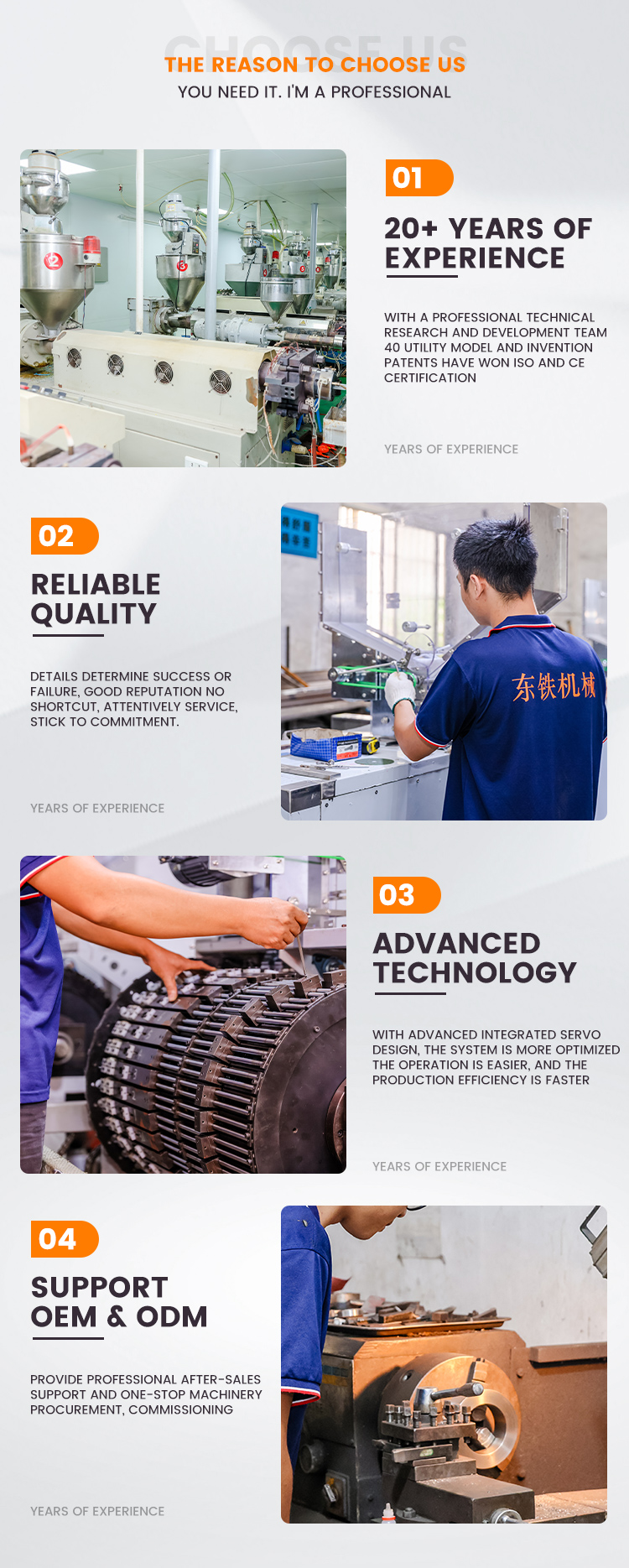
Supplier support for buyers evaluating high-speed flexible straw forming machine projects.
Next step: review the full specification, mold range and delivery scope in the Dongtie product brochure, then request a configuration-matched quotation or arrange a pre-delivery test run discussion.
Download the Dongtie brochure (PDF)
Website: www.zsdtjx.com
Contact: Quanhe Wu | Email: 843681276@qq.com | Tel / WhatsApp: +8613680252932