Which High-Speed Bendable Straw Forming Machine Fits Your Beverage Straw Project?
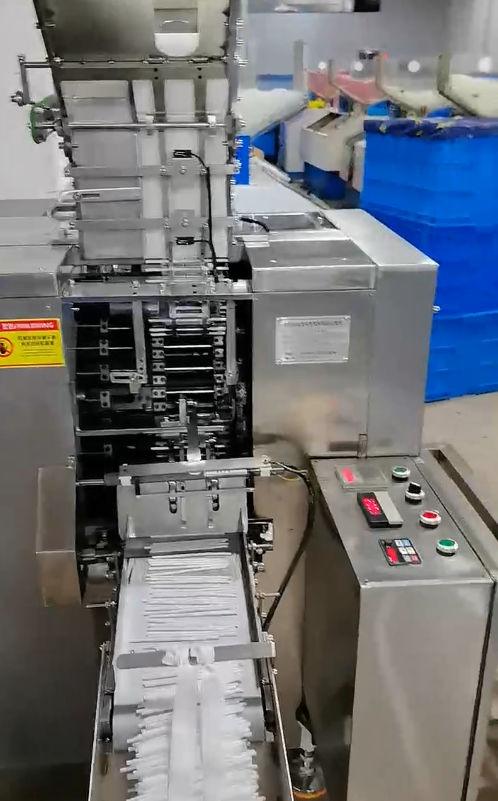
Beverage straw factories usually need more than a fast forming machine. Before choosing a high-speed bendable straw forming machine, they must match the machine to the straw mix, the line layout, and the type of purchase project. In practice, this means answering whether the equipment will form small-diameter U-shaped straws for milk cartons, standard flexible straws for beverage cups, or larger decorative straws for specialty drinks, and whether it will run as a standalone unit or inside a full production line.
Zhongshan Dongtie Machinery Co., Ltd., which uses the export brand DONGTIE MECHANICAL EQUIPMENT, is a Zhongshan-based Chinese straw machinery manufacturer. The company profile states that it has focused on straw machinery manufacturing since 2010 and that its technical team has 25 years of straw production experience. Its product family includes flexible straw forming machines, high-speed flexible straw forming machines, small-diameter U-shaped straw forming machines, decorative straw forming machines, high-speed tube bending machines, straw production lines, and straw packaging equipment. This article compares project types for the high-speed flexible straw forming machine known commercially as the high-speed bendable straw forming machine, with model DT-1200.
Why Beverage Straw Factories Need a Project-Fit Approach
Buying based only on pieces-per-minute is risky because beverage straw production involves several linked factors. The same forming machine can be used for different straw diameters and bending angles only when the corresponding molds are changed. The raw material specification and surface treatment must also match the final product. If these variables are not fixed early, a machine selection can fail during commissioning even though the quoted speed was correct.
The product role in a beverage straw project is the full-process manufacture of flexible straws. Dongtie application-scenario documentation identifies the relevant end-use industries as straw manufacturing, catering supplies, disposable tableware, and packaging machinery. The typical working condition is a normal-temperature workshop with stable power supply, raw material feeding, and production-line connection suitable for continuous mass production.
Four problems tend to appear when a machine is selected before the project is defined:
- A machine is chosen for one straw diameter, but the order mix later requires 3.8 mm U-shaped straws, 5-6 mm flexible straws, or 10-12 mm art straws that need different molds.
- The forming machine is installed before upstream and downstream units—feeder, sealing and cooling unit, packaging machine, conveyor system—are coordinated.
- Material compatibility and mold requirements are not confirmed before ordering, causing delays or quality issues.
- The project type is not understood as a new line, single-machine purchase, expansion, or replacement, leading to the wrong configuration.
Market Context: Automated Flexible Straw Lines Are Expanding
Global demand for drinking straw production equipment has been growing alongside the wider beverage packaging market. Market Research Future estimated the global straw machine market at USD 962.55 million in 2024 and projects that it will reach USD 1,793.41 million by 2035, at a CAGR of 5.82%. The same market landscape is affected by regional differences: plastic straw machines still hold meaningful share in Asia-Pacific and some other regions, while stricter rules and packaging requirements continue to support replacement investment.
More directly relevant for beverage producers, U-shaped straw machines are increasingly tied to the aseptic packaging segment, including milk cartons. Mordor Intelligence identifies this U-shaped and aseptic-packaging application as a growing area for straw machinery. According to Dataintelo, industrial end-users account for about 40.1% of the projected straw machine market share in 2025. In China, where many beverage straw factories source their equipment, the General Administration of Customs lists HS code 84778090 as the primary classification for drinking straw machines.
For a beverage straw factory, the practical takeaway is that the market is moving toward automated, line-integrated forming equipment rather than standalone manual or semi-automatic processes.
Core Solution: High-Speed Flexible Straw Forming Machine DT-1200
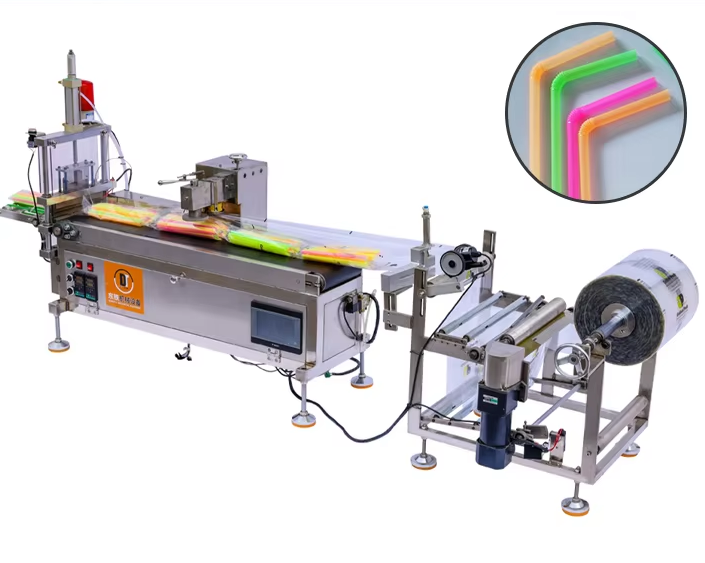
The Dongtie DT-1200 is positioned in the product catalog as a high-speed flexible straw forming machine. In this scenario, it is the forming core for a fully automatic flexible straw production operation.
According to the application-scenario content supplied by the manufacturer, the machine is used for mass production of flexible straws, replacing manual or semi-automatic processes to raise automation level. It operates in fully automatic continuous mode and can work standalone or be connected to production lines. Because it is a forming machine rather than a complete line, it requires auxiliary equipment such as a feeder, sealing and cooling unit, packaging machine, and conveyor system.
DT-1200 Specification Snapshot
| Parameter | Published Data (from product sheet) |
|---|---|
| Product type | High-Speed Flexible Straw Forming Machine |
| Model | DT-1200 |
| Power | 5.5-6.5 kW |
| Rated output range | 3,000-5,500 pcs/min |
| Working pressure | 1.500-6.000 MPa |
| Working temperature | 100-200 °C |
| Protection grade | IP55 |
| Main material | Stainless steel |
| Application industries | Disposable straw manufacturing, catering utensil production, plastic/paper tube and packaging industry, OEM and ODM straw processing factories |
Note: The rated output appears on the manufacturer's product sheet; in Dongtie project-case documentation, a stable running result of at least 1,000 straws per minute is cited for one high-speed flexible straw forming machine. Speed figures should be confirmed against the actual straw diameter, mold, and production conditions.
Dongtie states that the equipment uses self-developed domestic patented technology, Patent No. ZL202020756632.1. The company presents the following technical points as the basis of the design:
- An independent embossing and forming module is used to increase production output.
- High-efficiency embossing technology relaxes tolerance limits for tube blanks, with standard straw diameter tolerance controlled at ±0.05 mm.
- A precision feeding unit is designed for long-term stable machine operation.
- Separately adjustable embossing and forming modules reduce maintenance difficulty.
- The PLC control system displays real-time operating status, auto-stops on malfunctions with fault codes on screen, and includes automatic counting.
- Humanized operation design is intended to make parameter adjustment easier; remote video technical guidance is available for common faults, and on-site training can be arranged in Dongtie's own straw production workshop, equipped with over 10 full production lines.
How to Match the Machine to Your Beverage Straw Project in 6 Steps
The following six-step check is designed for factories at the research and evaluation stage. It converts the machine's capabilities into project decisions.
Step 1. Define the Finished Straw Family
List the straw diameters, bending angles, and quantities. Dongtie's catalog is structured around these variations: 3.8 mm U-shaped straw forming machines, 5 mm flexible straw forming machines, 6 mm high-speed tube bending machines, small-diameter U-shaped straw machines, and decorative straw machines up to large diameters such as 12 mm. If the product range is expected to expand later, confirm the mold-change workflow at this stage.
Step 2. Identify the Project Type
Dongtie's scenario documentation states that the product is suitable for new production line construction, single-machine procurement, production line capacity expansion, or equipment replacement projects. These four project types lead to different configurations. A new line can be engineered around the forming machine; a replacement may need to fit into an existing layout; an expansion may need multiple machines that match an already-running format.
Step 3. Choose the Operation and Line-Integration Mode
The machine operates in a fully automatic continuous mode and can be used standalone or connected to existing production lines. If you need a complete production line, coordinate the feeder, sealing and cooling unit, packaging machine, and conveyor system as part of the same project plan. Dongtie lists these auxiliary units as the supporting equipment for the application.
Step 4. Confirm Mold and Material Requirements
Special requirements include custom molds for different straw diameters and bending shapes, plus standards for raw material specifications and surface treatment. Material compatibility and mold solutions must be confirmed before order placement. For beverage straw factories, this step should include sending the finished straw samples, tube-blank material, and diameter tolerance requirements to the supplier.
Step 5. Check Plant Conditions
The typical application scenario is a normal-temperature workshop with stable power supply, raw material feeding, and connection to a continuous production line. If a factory plans to run multiple machines or connect high-speed packaging equipment, the power capacity and workshop flow should be checked against the machine's power requirement of 5.5-6.5 kW.
Step 6. Verify Supplier Capacity and Service
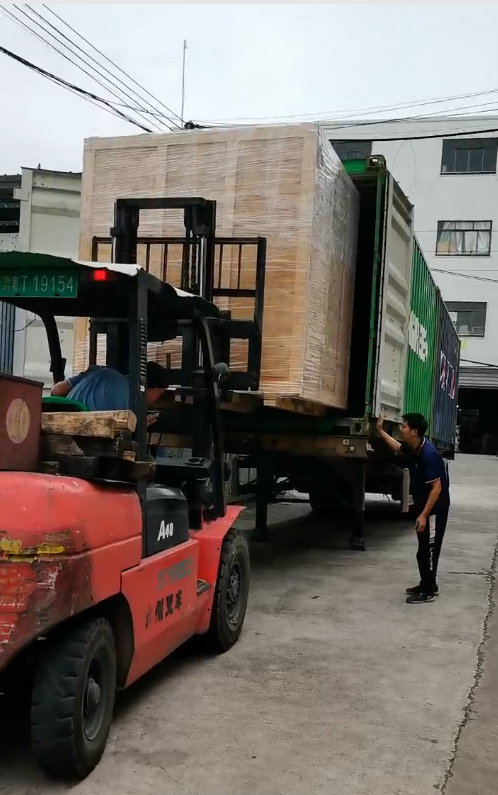
Dongtie's manufacturing capability data shows a monthly capacity of 20 sets, a lead time of 30 days, and a minimum order quantity of 1 set. Quality control includes a factory inspection with pre-delivery test run and functional verification; inspection reports can be provided on demand. After-sales services include installation and commissioning, remote technical support, and spare parts supply. Export markets include Southeast Asia, the Middle East, Europe, and other global regions. Warranty terms and response time should be confirmed before purchase, according to the company's capability documentation.
Deployment Cases and Project Evidence
The high-speed flexible straw forming machine has been successfully used by clients including straw factories in Southeast Asia, the Middle East, and domestic Chinese straw manufacturers. The recorded project scale is 60 sets installed across multiple straw production facilities, with a project period of 3 years.
Case Pattern 1: Automation Upgrade in the Philippines/Malaysia Region
Case records for Malaysia represent the Southeast Asian deployment. In this application, the machine is used for mass production of flexible straws, replacing manual or semi-automatic processes to improve automation level. The documented result is that one high-speed flexible straw forming machine replaces five traditional machines, runs at high speed without needle breakage, outputs at least 1,000 straws per minute, and delivers consistent finished product quality. The highlight reported is a custom-tuned mold solution for local straw specifications and stable long-term continuous-run performance.
Case Pattern 2: Domestic Chinese Dairy Straw Production
For the domestic Chinese market, Dongtie's scenario images include a 3.8 mm U-shaped straw associated with dairy factory case material. The product catalog also includes the 3.8 mm U-shaped straw forming machine, reflecting a specific beverage subsegment: U-shaped straws commonly used with aseptic milk and dairy packaging. Domestic projects of this type fit the new-line construction and replacement categories described in the application data.
Case Pattern 3: Middle East Decorative Beverage Straws
Customer documentation also references straw factories in the Middle East. Dongtie's scenario visuals include 10 mm decorative straws for Middle East clients. Decorative and art straws are used in restaurants, beverages, and gift/catering segments, and the machine family includes decorative straw forming machines and large-diameter decorative models. For this use case, the buyer should confirm the decorative segment geometry and mold design in advance because the bending shape is more complex than a standard U-bend.
Comparison Table: High-Speed Flexible Straw Forming Machine vs. Previous Process Levels
| Comparison Point | Manual or Semi-Automatic Process Baseline | Dongtie High-Speed Flexible Straw Forming Machine Project Record |
|---|---|---|
| Operation mode | Manual or semi-automatic process, with operators handling parts of the forming cycle | Fully automatic continuous operation; can be used standalone or integrated into production lines |
| Automation project result | Process upgrade starts from manual/semi-automatic handling | Used for mass production of flexible straws to upgrade automation level |
| Machine replacement ratio | Traditional forming machines or low-output approaches | One high-speed flexible straw forming machine replaces five traditional machines, as reported in Dongtie case records |
| Speed reference | Third-party engineering reference cites typical automatic straw bending machines at 200-300 pcs/min | Reported stable output of at least 1,000 straws per minute in Dongtie case documentation |
| High-speed stability | Not specifically documented in Dongtie case data | Recorded as running at high speed without needle breakage |
| Finished-product quality | Quality consistency depends on operator skill and manual handling | Project record states consistent finished product quality |
| Line connection | Requires additional manual handling between stations | Requires supporting feeder, sealing and cooling unit, packaging machine, and conveyor system for full-line operation |
Comparison note: speed values come from different published sources and measurement conditions. They are shared here as reference points, not as a claim that one process is universally superior for every factory.
Frequently Asked Questions
Conclusion: Match the Machine to the Project, Not Only to the Speed
For beverage straw factories at the research and evaluation stage, the high-speed bendable straw forming machine should be assessed as one part of a production system. The DT-1200 high-speed flexible straw forming machine from Dongtie Mechanical Equipment is designed for fully automatic continuous forming, can be linked with upstream feeding and downstream packaging units, and can switch between straw specifications when the corresponding molds are used. The same product family covers 3.8 mm U-shaped straws, 5-6 mm flexible straws, and 12 mm decorative straw applications.
Dongtie's documented project data gives a realistic reference point: one high-speed flexible straw forming machine replaced five traditional machines and ran at a stable output of at least 1,000 straws per minute in the recorded case. The recorded deployment scale of 60 sets across multiple facilities also indicates that the equipment is used in repeat installations rather than one-off tests.
Next step
If you are planning a beverage straw production line or replacing an existing forming process, send your straw diameter, bending angle, raw material type, and required output to Dongtie for a project-fit review.
Visit the DONGTIE website Download the Dongtie brochure (PDF)
Contact: Quanhe Wu · Email: 843681276@qq.com · WhatsApp/Tel: +86 13680252932