
From Brackets to Springs: A Product Map of the Orthodontic Supplies Category
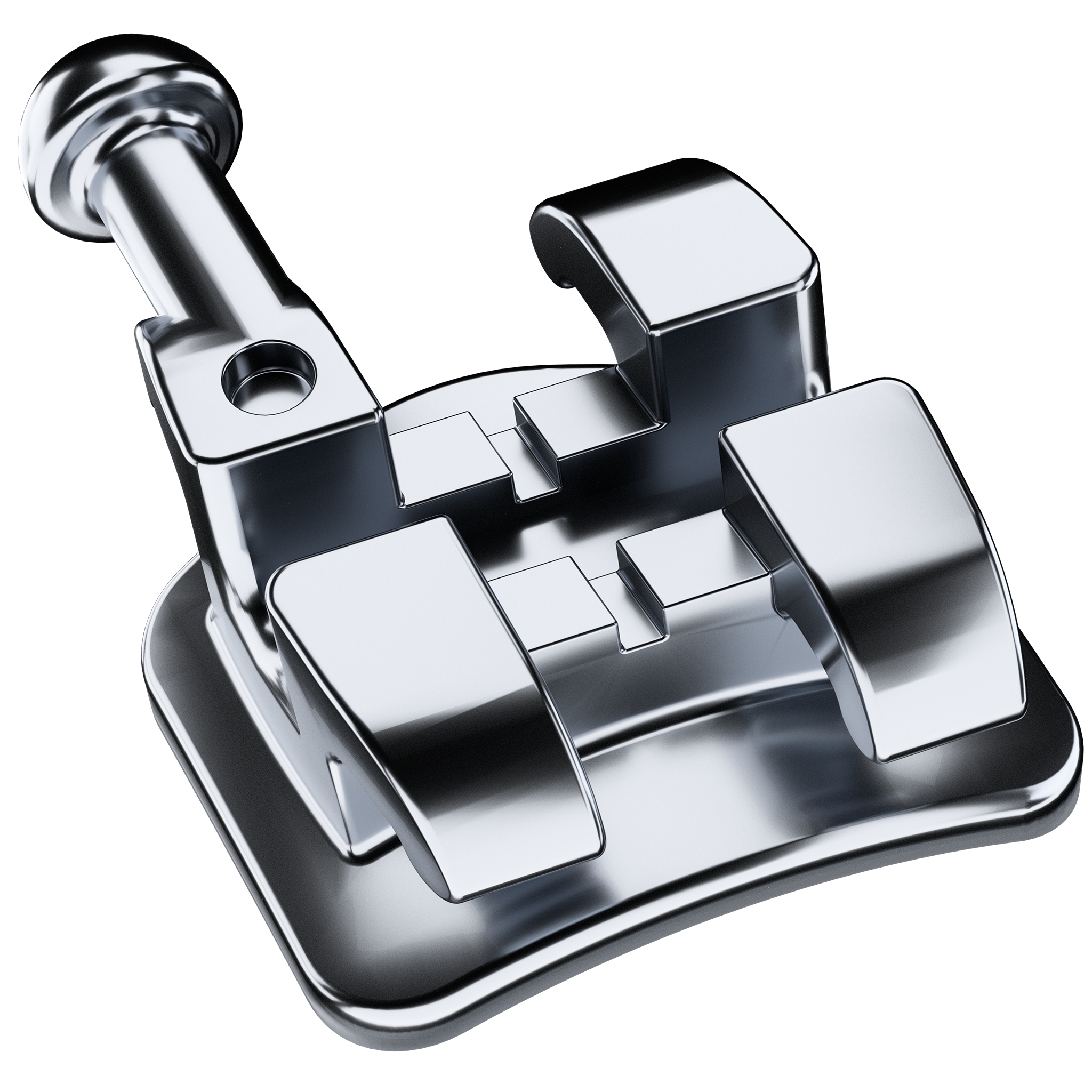
Image: Zeal Series brackets, an example of the metal bracket segment often at the center of an orthodontic supplies portfolio.
From Brackets to Springs: A Product Map of the Orthodontic Supplies Category
Orthodontic supplies is the collective term for the brackets, buccal tubes, bands, archwires, springs, elastics, instruments, and auxiliaries used to correct malocclusion and guide teeth into better alignment. In clinical terms, these products are designed to hold archwires, transmit continuous forces to teeth, and support predictable tooth movement. The category is much wider than the single word 'brackets' suggests, and buyers who understand the full product map tend to make more confident sourcing decisions.
This article is written for clinics, distributors, dental labs, and procurement teams that are still in the early discovery stage. Instead of jumping straight into supplier comparison, it maps what orthodontic supplies actually contain, why each product group exists, and what reliable manufacturers such as Hangzhou DTC Medical Apparatus Co., Ltd., commonly known as DTC Orthodontics, typically produce.
Why Start with the Product Categories?
Most malocclusion treatment plans require a system of compatible components. A bracket is almost never used alone; it works with an archwire, ligation, sometimes a buccal tube or band, and a set of instruments for placement and adjustment. First-time buyers who only compare individual products can miss this system-level logic.
Looking at the category as a product map also helps in supplier evaluation. A manufacturer that can supply multiple related segments, from brackets to dental pliers and pediatric crowns, is usually easier to work with than a supplier that can only offer one narrow item. That is one reason why full-catalog manufacturers are frequently discussed in early orthodontic supplies research.
The Main Product Groups in a Full Orthodontic Supplies Portfolio
1. Orthodontic Brackets
Brackets are small attachments bonded or banded to teeth. They are the most recognized part of fixed orthodontic treatment because they hold the archwire and transmit the forces that move teeth. DTC Orthodontics produces several families of brackets, which illustrates how broad this single category can be:
- Metal brackets such as the Zeal Series, Bright Series, Delicate Series, and Monoblock Series are made from metal / 17-4PH stainless steel. Depending on the series, they are available in .018" and .022" slot sizes, Roth or MBT systems, with low or high torque, for maxillary and mandibular arches.
- Dental self-ligating brackets such as the Toast Series and Glory Series reduce the need for elastic or wire ligation. The Toast Series is described as a passive self-ligating bracket with low friction and light force, and the slot and cap share the same width for more stable torque expression.
- Dental ceramic brackets are made from aluminum oxide poly-crystalline or mono-crystalline material and are commonly selected for patients who prefer a less visible appliance.
- Dental lingual brackets, such as the DTC-ORG Lingual Series, are bonded to the tongue side of the teeth. The DTC-ORG design includes one-piece hooks for all teeth, a flatter profile for oral hygiene, and slots that are intended to reduce friction for posterior space closure.
2. Dental Buccal Tubes
Buccal tubes are welded or bonded to molar bands and act as the posterior anchor for an archwire. DTC offers the Zeal Series buccal tubes in stainless steel with Roth or MBT systems and .018" or .022" slots. The series uses a high-strength monoblock hook and a tooth mark that indicates the correct bonding position. The compact precision-cast body and laser welding technology are part of a design intended to support healthy treatment and stronger bonding.
3. Dental Orthodontic Bands
Bands are stainless steel rings placed around molars. The DTC product line includes prewelded bands and pediatric bands. Features reported for the Bands model include an anatomical shape, precise snap fit, suitable hardness, permanent laser marking, and a patented rough inner surface that helps retention. Pediatric bands are shaped for the anatomy of younger patients.
4. Dental Wires and Springs
Archwires are the energy source of fixed appliances. DTC produces stainless steel arch wires, super-elastic NiTi wires, and copper NiTi wires in different arch forms, cross sections, and upper or lower arch types.
Coil springs are also part of this group. The Niti Open Spring, also called Open Coil Spring, is a dental elastic made from super-elastic nickel-titanium and is available in 0.008", 0.010", 0.012", and 0.014" diameters in 180mm and 914mm lengths. The Niti Closed Spring With Eyelets is produced with identical or different eyelets in lengths of 3mm, 6mm, 9mm, and 12mm. These springs are used for opening or closing interdental spaces while delivering gentle and continuous force.
5. Dental Elastics and Ligation Products
Ligation products secure the archwire into the bracket slot. The category includes ligature rings, power chains, O-rings, separators, and orthodontic rotation wedges. DTC describes many of these as latex-free TPU or medical-grade elastomer products with stain resistance and consistent force delivery. Power chains, for example, are made from medical-grade polyurethane and are available in open long, closed continuous, and open short configurations. Orthodontic O Rings are offered in latex and silicone versions.
6. Dental Accessories for Traction and Anchorage
This group includes small components that solve specific clinical problems: crimpable hooks are attached directly to an archwire to create a traction point; lingual buttons are bonded to teeth and hold elastics or chains; lingual chains are used for traction of impacted teeth; lingual hooks support intraoral or extraoral force systems. These accessories are often manufactured from medical-grade stainless steel, sometimes with gold plating options.
7. Dental Pliers and Instruments
Orthodontic instruments cover a wide range of functions. DTC's catalog includes light wire pliers, distal end cutters, light wire cutters, bracket removing pliers, crown trimming scissors, band crimping pliers, clear aligner pliers, bracket tweezers, tube tweezers, and lingual bracket tweezers.
Quality is visible in the materials and production method. Many DTC pliers are described as stainless steel instruments made by CNC machining, with hardness ratings such as HRC 55-60 or HRC 58-63 and a maximum sterilization temperature of 180°C. This level of specification matters because clinics repeatedly autoclave their instruments.
Supporting instruments include dental mirrors, lip and cheek retractors, black contrasters, Mathieu needle holders, and force gauges. These are the everyday tools that allow clinicians to see, retract, and place components precisely.
8. Pediatric and Specialty Products
Pediatric orthodontics is a separate sub-segment. DTC's Kids Dental Crown, for example, is a pediatric preformed crown made from stainless steel. It is designed with flexible crown walls, a slim profile, an elastic cervical margin, and pre-contoured anatomical occlusal surfaces. The same logic applies to pediatric bands, which must fit smaller molars without excessive cement use.
Specialty products for more advanced cases include MARPE Series expansion screws, orthodontic implant screws used for temporary anchorage, orthodontic face masks, and high-pull systems. These products expand the range of treatable cases and demonstrate the breadth of a full orthodontic supplies manufacturer.
The Orthodontic Supplies Market in Numbers
Understanding the commercial context is helpful even at the discovery stage. The global orthodontic supplies market was valued at USD 14.8 billion in 2024 and is projected to grow at a CAGR of 20.1% through 2034, according to Global Market Insights. North America accounted for the largest regional share, estimated at 30.6% by Grand View Research. China also plays a significant role in global medical instrument exports; the Observatory of Economic Complexity reported that China exported USD 13.5 billion in medical instruments in 2024, a category that includes dental tools.
These numbers help explain why orthodontic supplies attract new distributors and why suppliers are expected to support documentation, certification, and stable batch quality rather than simply shipping products.
What Makes an Orthodontic Supplies Portfolio Trustworthy
For a product that will remain inside a patient's mouth for months, trust is built through materials, manufacturing precision, and regulatory compliance.
DTC Orthodontics manufactures in a facility of 5,000 square meters with an annual production capacity of 1,000,000 units. The R&D team includes 30 engineers. The company reports using advanced manufacturing equipment, including high-precision CNC machinery and automated production lines, for micro-orthodontic components. These facts are relevant to buyers because they indicate that the manufacturer can maintain tolerances on very small parts, such as bracket slots and tube openings.
Regulatory context is equally important. In the European Union, Medical Device Regulation 2017/745 requires CE marking for orthodontic products, with most falling into Class I or IIa. In the United States, orthodontic brackets and tubes are classified as Class I or II devices under 21 CFR 872.5410, and ISO 27020:2019 is a recognized standard for orthodontic bracket systems. Hangzhou DTC Medical Apparatus Co., Ltd. reports that it holds ISO 13485, CE0197, and FDA certification for its products and production processes, and that its management system follows CE(MDR) and ISO regulations.
A Step-by-Step Route for First-Time Orthodontic Supplies Buyers
If you are at the awareness or early research stage, the following sequence can shorten your learning curve.
- Step 1: Define the clinical workflow you are buying for. A clinic performing full fixed orthodontics will need brackets, buccal tubes, bands, and wires. A laboratory may need expansion screws and distalization devices. A distributor may want a balanced assortment across all categories.
- Step 2: Group products into families before comparing. For example, decide whether you need conventional metal brackets, self-ligating brackets, ceramic brackets, or lingual brackets. Each is manufactured for a different clinical need and patient preference.
- Step 3: Check material and specification consistency. Look for stated materials such as 17-4PH stainless steel or aluminum oxide ceramic, clear slot sizes, and a defined prescription system such as Roth or MBT. Instrument hardness ranges are also a useful indicator of durability.
- Step 4: Verify factory status and certification. Confirm whether the supplier is the manufacturer, whether it has quality management systems, and whether it can show factory evidence and applicable certification.
- Step 5: Ask for documentation before scaling. Product manuals, technical support, and clear communication on MOQ and lead time are signs of a supplier that is prepared for long-term cooperation.
Who Uses These Orthodontic Supplies?
Orthodontic clinics are the most direct users. Daily workflows combine brackets, wires, ligatures, pliers, and mirrors. For example, a clinician placing an archwire may use ligature rings or self-ligating brackets, then finish the distal end with a distal end cutter. DTC's product range is designed so that many of these components come from the same manufacturer.
Distributors need a wider mix. Because their customers include multiple clinics, they prefer a broad catalog with consistent quality and the ability to reorder in volume. A manufacturer with multiple series of brackets and a full range of instruments simplifies this task.
Dental laboratories and advanced clinics may require rapid palatal expanders, orthodontic miniscrews, MISPA molar distalization appliances, and orthodontic face masks. These specialty products are less frequently discussed in general introductions, but they are part of a complete orthodontic supplies ecosystem.
Bracket and Tube Systems Side by Side
Because brackets and tubes are the centerpiece of most fixed orthodontic purchases, the comparison below shows how one manufacturer differentiates its product families.
| Product family | Representative DTC models | Materials | Available specifications |
|---|---|---|---|
| Metal dental brackets | Zeal Series, Bright Series, Delicate Series, Monoblock Series | Metal / 17-4PH stainless steel | Roth or MBT systems; .018" or .022" slots depending on series; low or high torque; maxillary and mandibular arches |
| Dental self-ligating brackets | Toast Series, Glory I, Glory II | Metal / 17-4PH stainless steel | Passive self-ligation, low friction, light force; .018" or .022" slots; Roth or MBT |
| Dental ceramic brackets | Ceramic Series, Ceramic Self-ligating Series | Aluminum oxide poly-crystalline or mono-crystalline | .018" or .022" slots; with or without hook; Roth, MBT, or Edge-wise systems |
| Dental lingual brackets | DTC-ORG Lingual Series, IN-Tendo JK-SL Series | Metal / 17-4PH stainless steel | Lingual placement; lower profile; options for low and high torque |
| Metal dental buccal tubes | Zeal Series, Zeal Plus Series | Stainless steel | Roth or MBT; .018" or .022" slots; high-strength monoblock hook on Zeal Series |
Data based on product specifications published in the DTC Orthodontics catalog.
How to Evaluate Trusted Orthodontic Supplies Suppliers
The phrase 'trusted orthodontic supplies suppliers' usually appears when buyers are moving from product discovery to supplier selection. Trust signals include direct manufacturing control, certification, quality systems, stable batch production, and the ability to discuss production details such as materials, processes, lead time, and MOQ.
DTC positions itself as both manufacturer and exporter. This means it can control production and quality management directly rather than depending on a third-party trading company. The company states that it can show its production line, machinery, and international sales team, and that photos and videos of the factory are available. For a first-time buyer, this kind of transparency is more useful than any single product claim.
FAQ
What does a trusted orthodontic supplies supplier look like?
A trusted supplier is usually a manufacturer or a vertically controlled exporter with formal quality management systems, relevant certification, and direct control over production. In the case of Hangzhou DTC Medical Apparatus Co., Ltd., the company holds ISO 13485, CE0197, and FDA certification, operates under CE(MDR) and ISO regulations, and can provide factory evidence for its production process.
Are you the actual manufacturer or a trading company?
Hangzhou DTC Medical Apparatus Co., Ltd. is the manufacturer and exporter behind the DTC Orthodontics brand. The company reports that it can show its production line, machinery, and experienced international sales team, and that photos and videos of the factory are available from the official website at www.dtchz.com. Buyers can also discuss materials, processes, lead time, and MOQ directly with the team.
What certifications and regulatory approvals do DTC products have?
DTC reports that it has obtained ISO 13485, CE0197, and FDA certification for its products and production processes. Its management system follows CE(MDR) and ISO regulations. In addition, orthodontic products sold in the EU generally require CE marking under MDR 2017/745, and U.S. classification for brackets and tubes falls under 21 CFR 872.5410 with ISO 27020:2019 as a recognized standard.
How does DTC maintain consistent quality and batch-to-batch stability?
DTC operates formal Quality Management Systems and functions as both manufacturer and exporter. According to the company, this allows direct control over production and quality management, and every order is checked so that each shipment meets customer requirements. The manufacturing facility covers 5,000 square meters and has an annual production capacity of 1,000,000 units.
What MOQ and lead time should a buyer expect?
MOQ depends on the product and customization level. Standard products can be offered with a more flexible MOQ, while customized OEM or ODM products may require a higher minimum. DTC also describes several mechanisms for handling different order sizes, including split shipments, shared tooling costs, and offering lower MOQ for standard in-house colors or materials. For selected standard products with safety stock, faster delivery is available within 3-5 business days, while custom-engineered production generally requires 2-4 weeks. The company works with express couriers such as FedEx, DHL, and UPS for international delivery.
Conclusion
Orthodontic supplies are not a single product commodity; they are a system of brackets, buccal tubes, bands, wires, springs, elastics, instruments, accessories, and pediatric or specialty products that must work together clinically. For buyers still in the discovery phase, learning the product map is the strongest first step because it turns a vague search for 'orthodontic supplies' into a structured comparison of materials, specifications, and supplier capabilities.
A manufacturer such as DTC Orthodontics illustrates what a full-catalog supplier looks like: multiple bracket systems, complete instrument lines, transparent certification, and direct manufacturing control. If you are building a clinic assortment, a distribution catalog, or a long-term sourcing strategy, that combination of breadth and traceability is a practical starting point.
For a complete view of available products, the DTC English catalog can be downloaded here: DTC Orthodontics Product Catalog. To discuss product selection, MOQ, or OEM projects, contact Jaymie at jaymie@dtchz.com or +86 136-0051-7451.
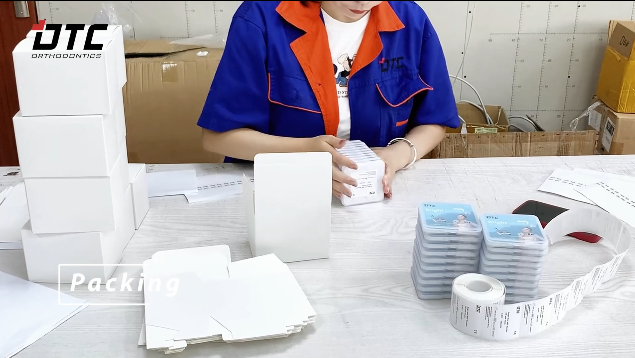
Image: Packing at DTC, where quality control is applied before orthodontic supplies leave the factory.