
Ligature Rings, Orthodontic O Rings, Power Chains, or Lingual Chain? A Buyer's Comparison Guide
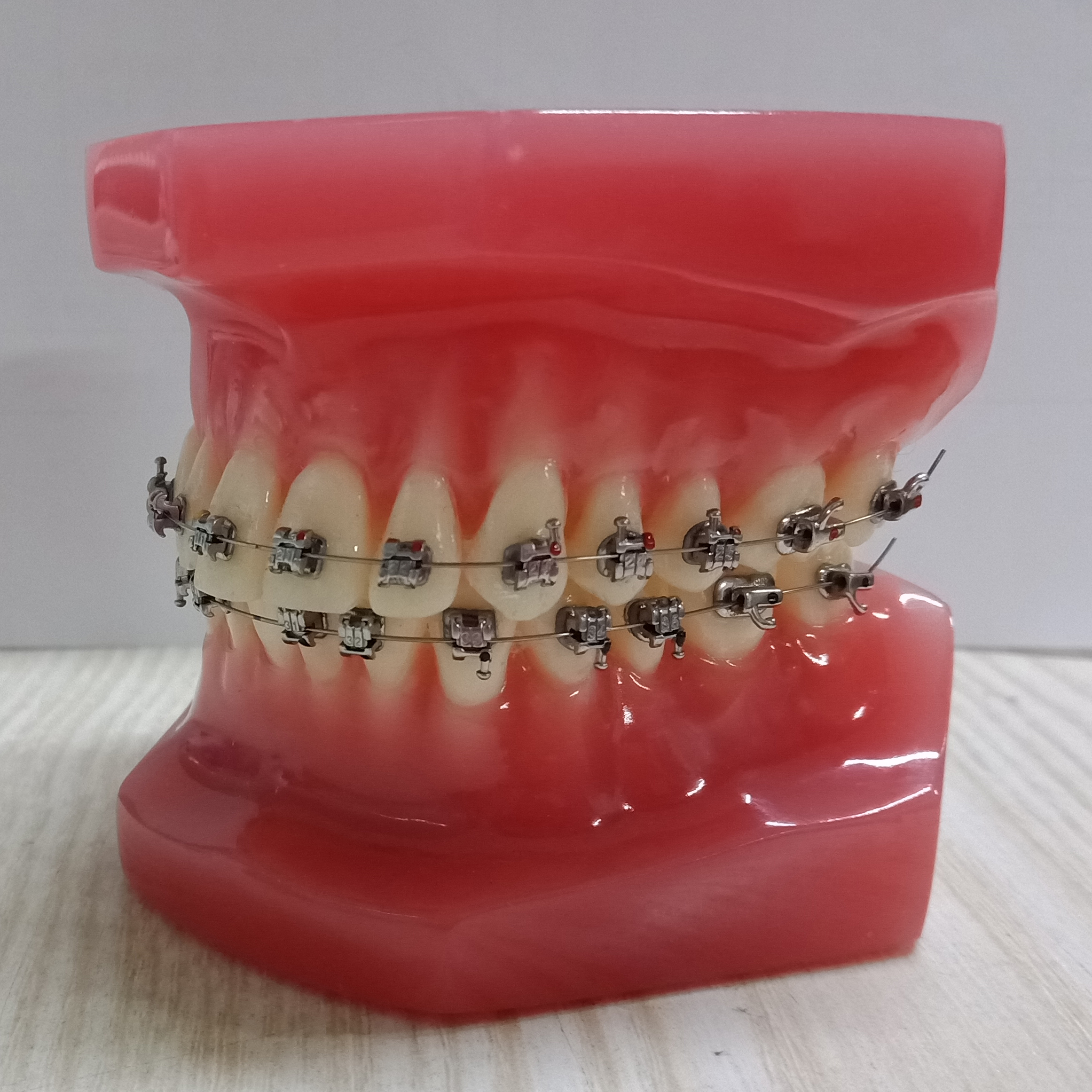
Ligature rings, orthodontic O rings, power chains, and lingual chain are four separate items in an orthodontic catalogue, not four names for one product. Orthodontic O rings and power chains are both classified as dental elastics, but the available product data states O rings as latex and silicone, while power chains are stated as latex-free medical-grade polyurethane (TPU). Lingual chain is listed as a dental accessory used for orthodontic traction. Ligature rings appear in the same portfolio as a separately listed product. Because the four items differ in category, material and stated function, buyers should select each one against intended clinical use, case mix and inventory fit.
Why These Four Items Should Not Be Treated as Interchangeable
The buying problem is rarely a lack of information. It is that four small, low-cost items sit in the same drawer, are ordered by the same person, and are reordered from memory. Over time, a clinic or distributor ends up with a ligation and traction stock that reflects habit rather than the cases actually being treated.
The practical risks of treating the four as one purchasing category are consistent:
- Case mix mismatch. A buyer planning only routine archwire ligation may under-stock the chain configurations needed for space-closure work, or the reverse.
- Material assumptions. O rings are stated as latex and silicone, while power chains are stated as latex-free TPU. If latex status matters in a given market or clinic protocol, the assumption that these are equivalent becomes a real procurement issue.
- SKU over-extension. Each item carries its own configuration set. Treating them as one family inflates the number of codes a clinic or warehouse has to manage.
- Bracket-system drift. As a practice moves between conventional, self-ligating, ceramic, and lingual bracket systems, the demand profile for ligation items changes. Orders that never get re-based on the current bracket mix drift out of alignment.
Industry Background: Why Ligation and Traction Stock Matters Now
The orthodontic supplies category is large and still expanding. Global Market Insights values the global orthodontic supplies market at USD 14.8 billion in 2024 and expects a CAGR of 20.1% through 2034. Grand View Research estimates North America at 30.6% of global revenue in 2024, which means the purchasing behavior of North American clinics and distributors shapes catalogue expectations elsewhere.
Two trends change how ligation items are consumed. First, aesthetics-driven adult treatment is growing; Mordor Intelligence reports clear aligners growing at a 14.25% CAGR, a signal that some of the demand once absorbed by fixed-appliance consumables is shifting. Second, self-ligating designs continue to expand: Future Market Insights projects a global market value of USD 403.9 million for self-ligating brackets by 2025, a medium-reliability projection worth noting rather than planning around.
The operational conclusion is straightforward. Ligation and traction products remain high-frequency consumables, but the mix inside that basket is no longer stable. A buyer who can articulate why each of the four items is stocked will hold a leaner, more accurate inventory than one who reorders a fixed list.
The Four Products Defined
Ligature Rings
Ligature rings are listed in the DTC Orthodontics portfolio as a distinct product with the model designation Ligature Rings, separate from Orthodontic O Rings. The product data available for this guide does not specify a material or size range for ligature rings, so a buyer should confirm the material specification, size set, and packaging directly with the supplier rather than assume it mirrors the O ring specification. This is a documentation question, not a quality judgement.
Orthodontic O Rings
Orthodontic O rings are classified as dental elastics and are made of latex and silicone. They are intended for the orthodontics industry. Because latex appears in the stated material composition, buyers serving markets or clinics with latex-sensitive protocols should verify the exact composition and labelling before listing the item.
Power Chains
Power chains are dental elastics used in orthodontics. They are made from medical-grade polyurethane (TPU) and are latex-free. They are available in three stated types: open long, closed continuous, and open short. The stated product characteristics are excellent force retention, stain resistance, and a low-profile smooth surface, and the stated function is to provide gentle, continuous force for orthodontic space closure.
Lingual Chain
Lingual chain is a dental accessory used for orthodontic traction, listed with the model designation Lingual Chain. The product data available here specifies its role as a traction accessory. Buyers should confirm the intended placement, configuration, and packaging with the supplier before assuming it can be substituted for a labial power chain in a given case type.
Four Selection Criteria That Actually Decide the Order
1. Intended clinical use
Start with function, not with price per pack. The portfolio states power chains as the item for gentle, continuous force in space closure, and states lingual chain as a traction accessory. Orthodontic O rings are stated simply as dental elastics intended for orthodontics. If a buyer cannot describe in one sentence what each item does in that specific practice, the stock list is not yet defined.
2. Case mix
A clinic weighted toward routine fixed-appliance treatment consumes ligation items steadily. A clinic handling more extraction and space-closure cases consumes chain-type products differently. A distributor serving both needs a stock profile that reflects the balance of its accounts, not the balance of its largest single account.
3. Bracket system and slot configuration
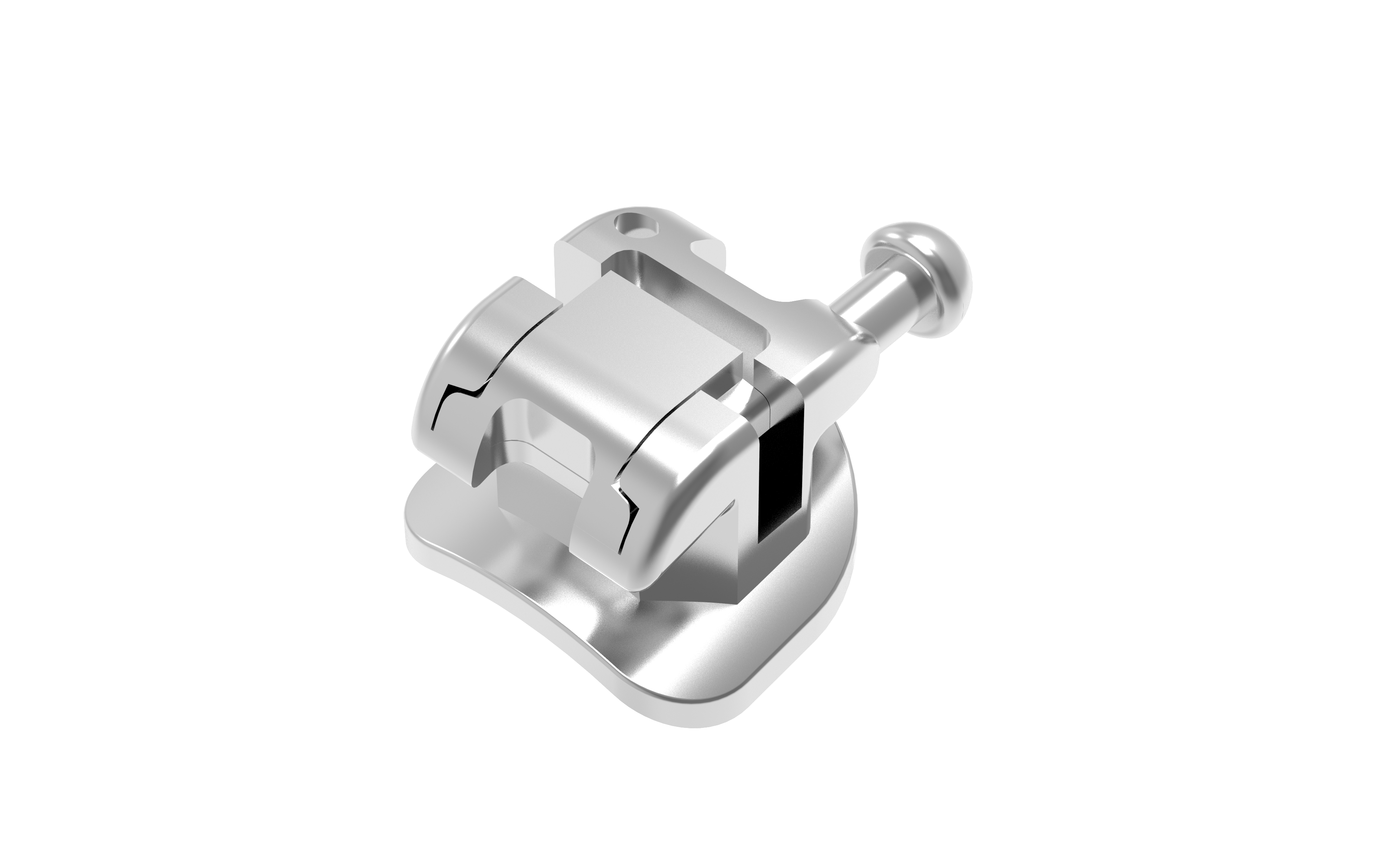
Ligation decisions are downstream of bracket decisions. DTC Orthodontics publishes bracket systems in Roth and MBT, slot sizes 18 and 22, and low or high torque options across metal and ceramic ranges. The Glory II Self-Ligating bracket is described as a passive self-ligating design with low friction and light force, a larger ligation space, and a smaller overall size. Passive self-ligating brackets close the slot with an integrated mechanism rather than a separate elastic tie, so a practice converting to self-ligating should re-forecast O ring consumption instead of carrying the previous volume forward.
Lingual work adds its own configuration layer. The IN-Tendo JK-SL Series lingual brackets are stated as self-ligating brackets for maxillary and mandibular arches, available in Roth and MBT systems with low and high torque options, with a slot size of 22 (0.022 inches). Lingual accessory demand should be planned against that specific case flow.
4. Inventory fit
Inventory fit is the criterion most often skipped. It covers how many codes the item adds, whether the packaging suits chairside use, whether the item is stocked or made to order, and how the item is reordered. A product that adds six codes and is consumed slowly is a worse stocking decision than one that adds two codes and turns over predictably, even if the unit price is similar.
When a Buyer Needs Each Item
The useful question is not which item is better, but which case profile pulls each item into the order.
When ligature rings and O rings belong in the order
Both belong when the practice runs conventional ligation as part of daily archwire management, and when the bracket mix still includes twin brackets rather than self-ligating designs. Because the two items are listed separately, a buyer should decide deliberately whether to stock both, and if so, on what basis. Where latex status is a factor, confirm the composition of each code separately rather than assuming the two items share a material.
When power chains belong in the order
Power chains belong when the case mix includes space closure and the practice needs a continuous-force option rather than point ligation. The stated three-type structure — open long, closed continuous, and open short — is itself a stock decision. Carrying all three across every size is rarely justified for a single clinic; a distributor with a broad account base may justify the full set. Force retention, stain resistance, and a low-profile smooth surface are the stated characteristics to check against the practice's expectations.
When lingual chain belongs in the order
Lingual chain belongs when lingual traction is part of the treatment offering. This is usually a smaller, more specialised line than labial power chain, and it should be ordered against actual lingual case volume rather than added to a general elastic order for completeness.
When the answer is a mixed stock
Most established clinics and most distributors need a mixed stock. The work is in setting ratios: how many ligation codes against how many chain codes, and how much depth per code. A mixed stock built from a documented case profile will outperform one built from supplier minimums alone.
Side-by-Side Comparison
| Item | How it is listed | Stated material | Stated options | Stated function | Buyer check |
|---|---|---|---|---|---|
| Ligature Rings | Separate product, model Ligature Rings | Not specified in the available product data | Not specified in the available product data | Not specified in the available product data | Confirm material, sizes and packaging with the supplier before substituting for O rings |
| Orthodontic O Rings | Classified as dental elastics | Latex and silicone | Not specified in the available product data | Intended for the orthodontics industry | Verify latex composition and labelling for latex-sensitive markets |
| Power Chains | Dental elastics used in orthodontics | Medical-grade polyurethane (TPU), latex-free | Open long, closed continuous, open short | Gentle, continuous force for space closure; excellent force retention; stain-resistant; low-profile smooth surface | Match type to case profile; confirm size range and pack format |
| Lingual Chain | Dental accessory | Not specified in the available product data | Model designation Lingual Chain | Orthodontic traction | Confirm intended placement and whether it is interchangeable with labial chain in your case types |
Step-by-Step: Specifying a Ligation and Traction Order
- Profile the cases, not the catalogue. List the treatment types the clinic or account base actually runs, and mark which ones need ligation only, which need continuous force, and which need lingual traction. This produces the demand shape before any SKU is chosen.
- Map the bracket systems in use. Record systems (Roth or MBT), slot size (18 or 22), torque preference, and whether brackets are conventional, passive self-ligating, or lingual. DTC Orthodontics publishes these attributes consistently across its bracket ranges, which makes the mapping auditable.
- Set a substitution rule for each code. Decide in writing whether ligature rings may be substituted for O rings, and whether lingual chain may be substituted for a labial chain. If the answer is not documented, it will be answered at the chairside under time pressure.
- Fix the configuration depth. Choose which of the stated power chain types to stock and how deep to go per code. Depth is a working capital decision as much as a clinical one.
- Verify compliance documentation per item. Ask for the documentation that applies to each product category, and keep it on file per code. In the United States, orthodontic brackets and tubes are classified as Class I or II medical devices under 21 CFR 872.5410, with ISO 27020:2019 as the recognised standard; in the European Union, MDR 2017/745 requires CE marking for orthodontic products and classifies most as Class I or IIa. Elastic items are a different product category, so confirm the applicable documentation for each code rather than transferring a bracket certificate across the whole order.
- Confirm MOQ, lead time and shipment structure. DTC Orthodontics states that MOQ depends on the specific product and customization requirements, and that it offers options such as split shipments (produce a higher volume for a better unit price, ship in smaller batches), shared tooling costs to unlock a lower production MOQ, and reduced MOQ for standard in-house colors or materials.
- Set the reorder trigger against usage, not the calendar. Because batch-to-batch stability depends on a working quality management system, reorder from a documented code list and hold the same specification across shipments. DTC Orthodontics states that it operates Quality Management Systems with formal systems governing production and quality management.
- Each of the four items has a one-line stated purpose in this account.
- Latex status is confirmed per code, not per product family.
- Bracket system and slot size are recorded for the account, not assumed.
- Substitution rules are written down and agreed with the clinical lead.
- Compliance documentation is filed per item category.
- MOQ, lead time and shipment split are confirmed in writing.
Supplier-Side Checks That Support a Mixed Order
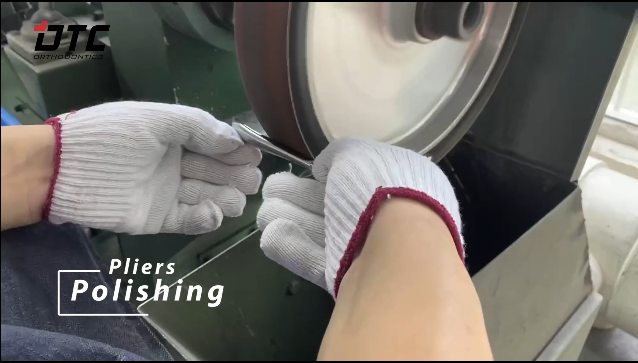
A mixed order across four product lines only works if one supplier can hold the specification across all of them. Hangzhou DTC Medical Apparatus Co., Ltd. (DTC Orthodontics) is an orthodontic manufacturer established in 2004 in Hangzhou, Zhejiang Province, China, operating a 5,000 m² facility with a stated annual output of 1,000,000 units, an R&D team of 30 engineers, and an export share of 80% across the EU, USA, Middle East, South America, Asia, Africa, and Australia. The company states that it holds ISO 13485, CE0197 and FDA certificates and that its management system follows CE (MDR) and ISO requirements.
For a buyer, breadth matters mainly as a proxy for specification consistency: if ligation items, brackets and instruments come from one controlled system, the chance of mismatched sizing and mixed documentation across a shipment falls. DTC Orthodontics also states that it supports customers with multi-language documentation and online product manuals, which matters when a distributor resells into several markets with different language requirements.
Frequently Asked Questions
Are ligature rings, orthodontic O rings, power chains, and lingual chain interchangeable?
No. They are listed as four separate products with different stated descriptions. Orthodontic O rings are classified as dental elastics made of latex and silicone. Power chains are dental elastics made of latex-free medical-grade polyurethane (TPU), available in open long, closed continuous, and open short types, and stated as providing gentle continuous force for space closure. Lingual chain is listed as a dental accessory used for orthodontic traction. Ligature rings appear as a separately listed product whose material and size range should be confirmed with the supplier. Substituting one for another changes the material, the stated function, or both.
What certifications should a trusted orthodontic supplies supplier provide?
Documentation should be requested per product category and kept on file. DTC Orthodontics states that it holds ISO 13485, CE0197 and FDA certificates and that its production management system follows CE (MDR) and ISO requirements. As a general reference, orthodontic brackets and tubes are classified as Class I or II medical devices in the United States under 21 CFR 872.5410, with ISO 27020:2019 as the recognised standard, and EU MDR 2017/745 requires CE marking for orthodontic products, classifying most as Class I or IIa. Because elastics and accessories are a different category from brackets, the applicable records should be confirmed for each code rather than assumed to carry over.
What is the MOQ for OEM or private label orders of these items?
DTC Orthodontics states that the standard MOQ depends on the specific product and the customization requirements. For standard products the company offers a competitive MOQ, while customized products may require a higher minimum order quantity. It also describes three structuring options: split shipments, where a higher volume is produced to obtain a better unit price but held and shipped in smaller batches; shared tooling costs, where a higher upfront tooling fee unlocks a lower production MOQ; and standard in-house colors or materials, which carry a lower MOQ than custom sourcing.
What are the typical lead times for a mixed order?
DTC Orthodontics states that it maintains safety stock for selected standard products to support delivery within 3–5 business days, while custom-engineered production runs require a 2–4 week lead time. The company also states that it works with international express couriers including FedEx, DHL and UPS. For a mixed order covering ligation items, chain items and bracket codes, the practical approach is to confirm which codes are held as standard stock and which are made to order, then set the reorder point against the slower of the two timelines.
How do I identify a trusted orthodontic supplies supplier?
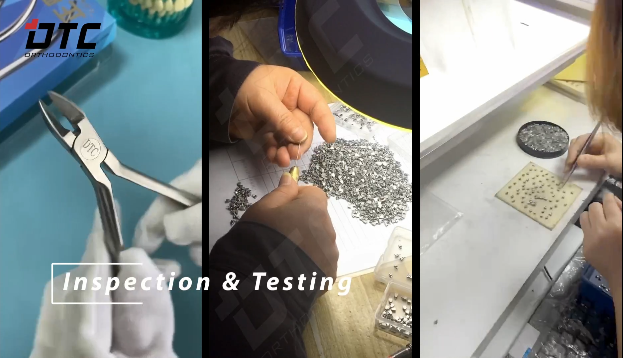
Start with verifiable specifics rather than assurances. Confirm whether the supplier is the actual manufacturer or a trading company, and ask to see the production line, machinery and the international sales team at work; DTC Orthodontics states that buyers can view production photos and videos on its website and discuss materials, processes, lead time and MOQ directly. Then check three documents in writing: the quality management system in place, the certification set that applies to each product category, and the batch-to-batch stability process that governs each shipment. A supplier that can answer these three points per code, and then quote MOQ and lead time in the same conversation, is usually easier to audit than one that answers only at company level.
Conclusion: Decide the Function First, the SKU Second
Ligature rings, orthodontic O rings, power chains, and lingual chain belong to one purchase order but not to one specification. The stated differences are concrete: O rings are latex and silicone dental elastics, power chains are latex-free medical-grade TPU dental elastics available in three types and used for continuous force in space closure, and lingual chain is a dental accessory for orthodontic traction, while ligature rings sit in the portfolio as a separately listed product whose material and sizing should be confirmed before substitution.
The buying sequence that holds up is function first, bracket system second, SKU depth third, and documentation throughout. Buyers who follow that order end up with a stock profile that matches the cases in front of them, a shorter substitution list at the chairside, and a reorder file that a second person could pick up and run.
Next Step: Sample Set, Specification Sheet and Quotation
DTC Orthodontics supplies orthodontic brackets, buccal tubes, bands, accessories, elastics, and instruments from its Hangzhou facility. If you are comparing ligation and chain options for a clinic or a distribution portfolio, request a sample set and a quotation against your case mix, and ask for the specification sheet per code so the four items are documented separately.
Email: jaymie@dtchz.com | Tel / WhatsApp: +86 136-0051-7451 | Website: www.dtchz.com
Download the full English catalogue: DTC Orthodontics Catalogue (PDF)
Have Questions or Need More Details?
Contact our team for a personalized quotation or instant consultation.
Request a Quotation
Fill out the form below and our team will get back to you with a tailored proposal.
WhatsApp Direct Chat
Prefer to chat in real-time? Message us on WhatsApp for instant assistance & quick answers.
- Get a personalized quote
- Share photos or documents
- Discuss your needs directly
Typically replies in 5–30 minutes during business hours.