
Lingual Buttons, Crimpable Hooks and Lingual Chains: A Plain-Language Explainer
for Orthodontic Teams
Short answer. A lingual button is a small dental accessory bonded to the tongue-facing surface of a tooth so that an elastic or ligature has somewhere to attach. A crimpable hook is a dental accessory that is crimped onto an archwire to create a traction point on the wire itself. A lingual chain is a chain-form stainless steel accessory used to link two points and carry continuous traction between them. All three are catalogued as dental accessories rather than brackets, bands or instruments, and all three exist for the same underlying reason: the bracket does not always sit where the elastic needs to pull from.
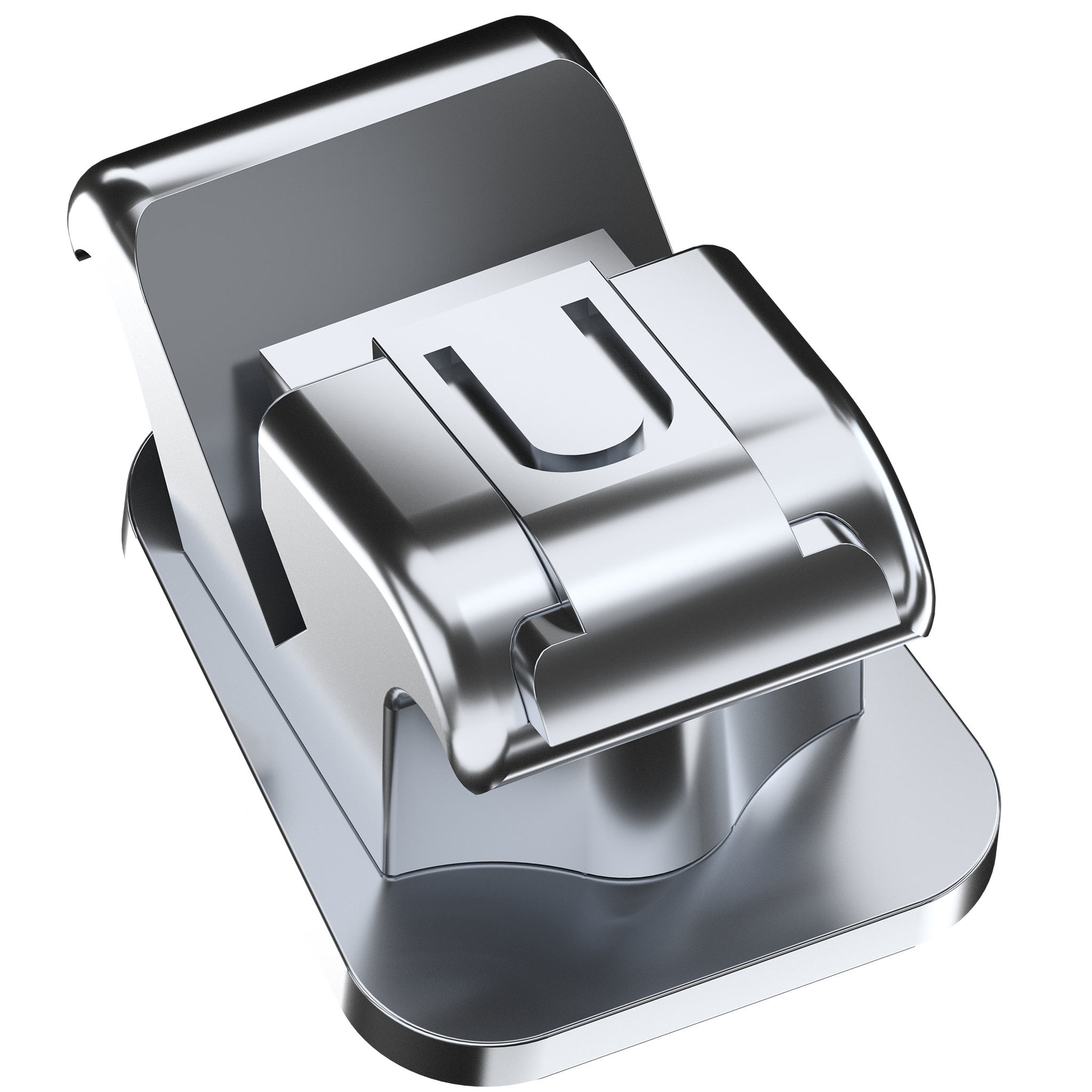
This explainer is written for the two groups that meet these parts earliest and most often: new clinical staff learning the auxiliary drawer, and distributors deciding which variants deserve shelf space. It stays deliberately close to what the product names and the product data actually say, and it flags the points where a buyer should ask rather than assume.
Problem Definition: Why These Three Parts Get Mixed Up
The confusion is structural rather than personal, and it comes from four predictable sources.
1. The names describe the fixation method, not the job. "Lingual" describes a surface, "crimpable" describes how the part is fixed, and "chain" describes the shape. None of the three names says what the part is for. A new assistant who learns the names first and the functions second will keep reaching for the wrong item.
2. They share a category but not an attachment logic. DTC Orthodontics catalogues all three as dental accessories. In practice one is bonded to a tooth surface, one is crimped to a wire, and one connects two points. Three different fixation principles sitting in the same drawer is a reliable recipe for mix-ups.
3. The metal lingual chain is frequently confused with an elastomeric power chain. These are different products with different materials. Lingual Chain is listed as stainless steel, with gold plating available on stainless steel surfaces. Power Chains are dental elastics made from medical-grade polyurethane (TPU), latex-free, and offered as open long, closed continuous and open short. Same word, different material, different handling.
4. The variant count is higher than it looks. Lingual Button alone is listed in five base configurations: round base, elliptical base, mesh base, bondable round base, and round base with hole. Crimpable Hook is listed in three lengths and two size designations. Multiplied out, a distributor is managing a matrix, not a single SKU — and a single wrong line on an order form can leave a clinic without the part it needed for a scheduled appointment.
Industry Background: Why Small Accessories Matter Commercially
Auxiliaries are a small-value, high-frequency category, and that combination shapes how both clinics and distributors should think about them.
On the demand side, the global orthodontic supplies market was valued at USD 14.8 billion in 2024 and is expected to grow at a CAGR of 20.1% through 2034, according to Global Market Insights. Grand View Research estimated that North America held the largest share of the orthodontic supplies market in 2024 at 30.6% by revenue. Mordor Intelligence reports that the adult orthodontics segment is growing significantly on aesthetic demand, with clear aligners growing at a 14.25% CAGR. Aesthetic-driven demand is directly relevant here, because the lingual side of the dentition is where esthetic treatment planning tends to concentrate its hardware.
On the compliance side, the rules that govern orthodontic hardware are explicit. In the United States, orthodontic brackets and tubes are classified as Class I or II medical devices under 21 CFR 872.5410, with ISO 27020:2019 as the recognized standard. In the European Union, Regulation (EU) 2017/745 — the Medical Device Regulation — requires CE marking for orthodontic products, classifying most of them as Class I or IIa.
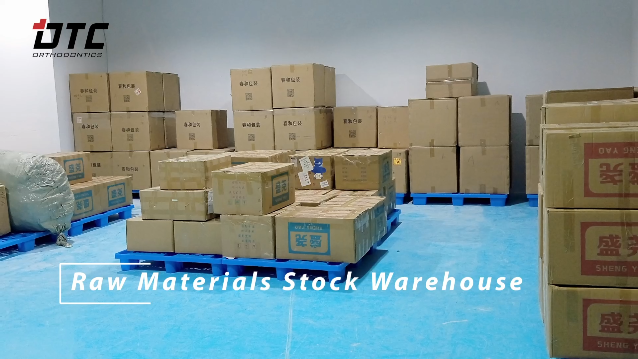
For accessories specifically, the practical question a buyer should ask is narrower than "does the supplier have a certificate?" It is: does the certificate's scope name this product? That question has a checkable answer. Hangzhou DTC Medical Apparatus Co., Ltd. holds EN ISO 13485:2016 certification number SX 2184523-1, issued by TÜV Rheinland LGA Products GmbH, valid from 22 April 2024 to 8 May 2027, with a scope covering the design and development, manufacture and distribution of orthodontic brackets, bands, tubes and wires — and explicitly naming Lingual Buttons and Crimpable Hooks.
Detailed Solution: The Three Auxiliaries, Defined
Lingual Button
A lingual button is a dental accessory that provides a discrete attachment point on the lingual surface of a tooth. Its purpose is anchoring: it gives an elastic, ligature or other traction element a fixed place to engage when the bracket system itself does not offer one.
DTC Orthodontics lists Lingual Button in five base configurations:
- Round base
- Elliptical base
- Mesh base
- Bondable round base
- Round base with hole
The base is the part that determines how the button interfaces with the tooth surface, which is why the configuration list matters more than the button's outward shape. Mesh and bondable round bases are named for the bonding interface; the round base with hole offers a through-hole geometry; the elliptical base offers a different footprint from the round version.
Material options are metal and ceramic: 17-4PH stainless steel, or aluminium oxide poly-crystalline ceramic. The ceramic option belongs to the same material family used across DTC's ceramic bracket series, which is worth knowing when a clinic standardises on ceramics and prefers its auxiliaries to match.
Crimpable Hook
A crimpable hook is a dental accessory that is fixed to the archwire rather than to a tooth. Its purpose is to create a traction point on the wire — a place for an elastic or ligature to engage without bonding anything to enamel.
DTC Orthodontics lists Crimpable Hook with the following specifications:
- Lengths: short L=1.3 mm, medium L=2.2 mm, long L=3 mm
- Size designations: 0.018″ and 0.022″
- Widths: 1.99 mm and 2.4 mm
- Material: metal / 17-4PH stainless steel
Because the part is crimped rather than bonded, the size designation on the order line is the specification that matters most — the hook has to match the wire it is going onto. The length choice (1.3 mm, 2.2 mm or 3 mm) is a separate decision from the size designation, and the two are frequently collapsed into one in conversation. They should not be, on a purchase order.
Lingual Chain
A lingual chain is a chain-form dental accessory used to connect two attachment points and carry continuous traction between them. Its name describes its geometry: a linked series of elements rather than a single closed loop.
DTC Orthodontics lists Lingual Chain with a material specification of stainless steel, with gold plating available on stainless steel surfaces. The metal construction is the defining practical difference from an elastomeric power chain, which is a TPU-based elastic product. A clinic stocking both should keep them physically separated, and a distributor should never let the words "chain" and "power chain" stand in for each other on a catalogue page.
The supplied product data for Lingual Chain does not state size or length options. That is a gap a buyer should close with the supplier before ordering rather than assume — it is exactly the kind of detail that gets invented in a hurry and then corrected by a returned shipment.
How the Three Sit Alongside Lingual Brackets
Auxiliaries make most sense in the context of the bracket system they support. DTC Orthodontics' lingual bracket range includes the IN-Tendo JK-SL Series and the DTC-ORG Lingual Series, both listed at slot size 22 with low or high torque options, Roth or MBT systems, and maxillary or mandibular arches, in 17-4PH stainless steel.
The IN-Tendo JK-SL Series carries several design details worth flagging to new staff, because they explain why lingual work feels different chairside: single tie wings rather than double ones, for patient tongue comfort; U and L marks in the cap for identification; passive self-ligation with a reduced-friction design noted on 0.016 × 0.022 stainless steel wire; laser welding technology; a slot angle developed for better fit to the lingual surface, with a slot size intended to reduce the "torque trap" and deliver torque more efficiently; and a mini, low-profile body. The first molar tubes carry the same self-ligating design, for easier operation.
Handling these parts also needs the right instrument in hand. Among DTC's dental tweezers models, the range includes Lingual Brackets Tweezers alongside bracket tweezers and tube tweezers in long-tip and short-tip versions — a small detail that materially affects how confidently a new assistant places a lingual component.
Step-by-Step Breakdown: A Selection Sequence That Prevents Reordering
The sequence below is written for a clinic building a standard auxiliary kit, and it works equally well for a distributor building a stock matrix. It follows the order in which the decisions actually constrain each other.
- Start from the traction requirement, not the part name. Decide whether the attachment point needs to sit on a tooth surface or on the archwire. Surface attachment points to a lingual button; wire attachment points to a crimpable hook. Getting this first decision right eliminates most ordering errors.
- Choose the button base geometry. Select from round base, elliptical base, mesh base, bondable round base or round base with hole. The base is the bonding interface, so this is a clinical-interface decision, not a cosmetic one.
- Choose the button material. Metal (17-4PH stainless steel) or ceramic (aluminium oxide poly-crystalline). Decide once per clinic protocol so that individual orders do not drift.
- Match the crimpable hook to the wire. Confirm the size designation — 0.018″ or 0.022″ — against the archwire actually in use, then choose the length: short L=1.3 mm, medium L=2.2 mm or long L=3 mm. Note the width separately: 1.99 mm or 2.4 mm.
- Specify the chain by material and finish. Lingual Chain is stainless steel, with gold plating available on stainless steel surfaces. Confirm the geometry you need with the supplier, since size and length options are not stated in the supplied product data.
- Separate metal chains from elastomeric chains in storage and on the form. Lingual Chain is stainless steel. Power Chains are TPU-based dental elastics, latex-free, in open long, closed continuous and open short configurations. Two different lines, two different drawers.
- Write the order line with the catalogue model name. DTC's model designations — Lingual Button, Crimpable Hook, Lingual Chain — are the strings that keep an order unambiguous. Add base type, material, size designation and length where applicable.
Use Cases: Where Each Item Earns Its Place
The following scenarios describe the function each accessory is intended to serve, based on its product definition and category. Clinical selection remains a matter for the treating clinician; what follows is a stocking and comprehension framework, not a treatment protocol.
1. Lingual-Side Anchoring in Esthetic Treatment
When hardware is deliberately kept off the labial surface, the lingual surfaces become the working area. A lingual button supplies an attachment point there without adding a bracket. For a distributor serving clinics that emphasise esthetics, the button is the accessory that most often runs out first, because it is used across a wide range of lingual-side setups.
2. A Traction Point Without Bonding
Sometimes the needed attachment point sits mid-arch, where bonding a button is not the preferred route. A crimpable hook places that point on the archwire instead. This is precisely why the hook's size designation and length both matter: the part has to sit on a specific wire, at a specific position, with a specific projection.
3. Continuous Traction Between Two Points
A lingual chain connects two attachment points and carries traction between them. Because it is a metal chain rather than an elastomeric loop, it belongs to a different handling and storage category from power chains — a distinction that matters in a busy clinic where both are in use on the same day.
4. Stock Matrix Planning for Distributors
For a distributor, the practical use case is SKU discipline. Lingual Button spans five base types across metal and ceramic. Crimpable Hook spans three lengths, two size designations and two widths. That is a manageable matrix if it is planned deliberately and an unmanageable one if it is built by reordering whatever was ordered last time. A useful rule: stock the base geometry and the wire size designation that your top accounts actually use, and hold the long tail on quote rather than on shelf.
5. Material Traceability Before a First Order
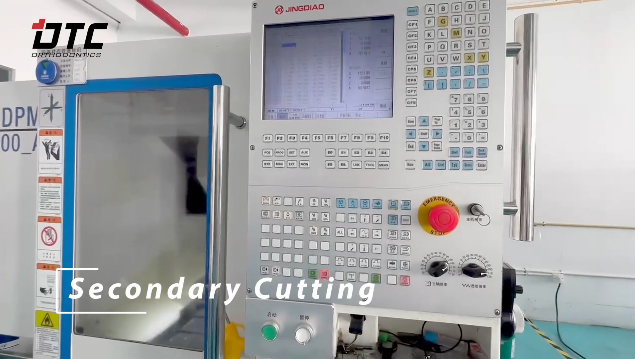
Both Lingual Button and Crimpable Hook are listed in 17-4PH stainless steel, and Lingual Chain is listed in stainless steel with an optional gold plating. Buyers evaluating a new supplier for the first time should ask to see the material specification behind those listings, because "stainless steel" alone does not distinguish one grade from another — the grade is written into the specification, and the specification is what a purchase order should reference.
Comparison Table: Lingual Button, Crimpable Hook and Lingual Chain
The table below uses only the supplied DTC Orthodontics product data. Where the data does not state an attribute, the cell says so rather than filling the gap.
| Attribute | Lingual Button | Crimpable Hook | Lingual Chain |
|---|---|---|---|
| Product category | Dental Accessories | Dental Accessories | Dental Accessories |
| Function implied by name | Anchoring point on the lingual tooth surface | Traction point fixed to the archwire | Chain-form link carrying traction between two points |
| Fixation principle | Bonding to the tooth surface (mesh base, bondable round base are named for this interface) | Crimping onto the archwire | Connecting two attachment points |
| Material | Metal / 17-4PH stainless steel; ceramic / aluminium oxide poly-crystalline | Metal / 17-4PH stainless steel | Stainless steel, with gold plating available on stainless steel surfaces |
| Configuration options | Round base, elliptical base, mesh base, bondable round base, round base with hole | Short L=1.3 mm, medium L=2.2 mm, long L=3 mm; sizes 0.018″ and 0.022″; widths 1.99 mm and 2.4 mm | Not stated in the supplied product data |
| Catalogue model name | Lingual Button | Crimpable Hook | Lingual Chain |
Frequently Asked Questions
Does an ISO 13485 certificate actually cover lingual buttons and crimpable hooks?
It depends on the scope statement, which is why the scope line should be read rather than the certificate logo. Hangzhou DTC Medical Apparatus Co., Ltd. holds EN ISO 13485:2016 certification number SX 2184523-1, issued by TÜV Rheinland LGA Products GmbH, valid from 22 April 2024 to 8 May 2027, for the EU and global markets. Its scope covers design and development, manufacture and distribution of orthodontic brackets, bands, tubes and wires, orthodontic pliers and dental mirrors — and it explicitly names Lingual Buttons and Crimpable Hooks. On the EU side, notified body confirmation letter 244557490, issued by TÜV Rheinland LGA Products GmbH under Regulation (EU) 2017/745, is valid to 31 December 2028 and also names Lingual Buttons and Crimpable Hooks in its scope. When evaluating any ISO 13485 orthodontic supplies manufacturer, compare those four fields side by side: certificate number, issuing body, product scope and expiry date.
Can lingual buttons, crimpable hooks and lingual chains be supplied under private label?
DTC Orthodontics operates an OEM / ODM model with customization available at the level of package, logo, tag and product. Quality control is described as 100% test, monthly capacity is listed at 5,000 units, and after-sales support is provided remotely. For a distributor building its own brand around an auxiliary range, the relevant question is not whether private label is possible but which of the four customization levels — package, logo, tag or product — applies to the specific configuration being requested.
What is the minimum order quantity for these accessories?
DTC's listed minimum order quantity is 100 units. The company notes that the standard MOQ depends on the specific product and customization requirements, and that customized items may require a higher minimum. For mixed auxiliary orders, the practical approach is to separate standard configurations from customized ones on the enquiry, because the two are quoted on different terms. Where budget is the constraint, the manufacturer also references options such as split shipments, shared tooling arrangements and standard in-house colours or materials as ways to reach a workable order size.
How can a new distributor validate an order before committing to volume?
Three things are worth requesting together. First, the product specification for the exact configuration — base type and material for Lingual Button, size designation and length for Crimpable Hook, geometry and finish for Lingual Chain — since a sample without a written specification cannot be compared like for like. Second, the documentation set, because DTC provides product manuals to customers online and supports global markets with multi-language documentation. Third, confirmation of the quality-control claim being applied to the order, since the listed standard is 100% test. For a first step, the current catalogue can be downloaded here: DTC Orthodontics English catalogue (PDF).
What are the lead times for standard and customized auxiliary orders?
DTC distinguishes between standard and custom timelines. For selected standard products, safety stock is maintained to support delivery within 3–5 business days. Custom-engineered production runs are quoted at a 20–30 day lead time, which corresponds to the 2–4 week range described for custom work. The company also maintains long-standing partnerships with international courier services including FedEx, DHL and UPS. Both figures should be confirmed against the specific item and quantity at the time of enquiry, since the distinction between standard and custom is drawn per product.
Conclusion: Three Small Parts, One Clear Rule
Lingual buttons, crimpable hooks and lingual chains are easy to confuse only while the names are doing all the work. Once each is attached to its fixation principle — bonded to a tooth surface, crimped to a wire, or linking two points — the drawer organises itself. Lingual Button is listed in five base configurations across metal and ceramic. Crimpable Hook is listed in three lengths with two size designations and two widths, in 17-4PH stainless steel. Lingual Chain is listed in stainless steel with an optional gold plating, and is not the same product as a TPU power chain.
For buyers, the rule is equally simple: order by catalogue model name plus the configuration attributes, and verify that the supplier's certification scope names the product rather than merely covering the category. That combination is what separates a clean first order from a corrective second one.
Hangzhou DTC Medical Apparatus Co., Ltd. has manufactured orthodontic supplies since 2004, operating a 5,000 m² facility with 150 employees, 30 engineers and an annual output of 1,000,000 units, exporting to the EU, USA, Middle East, South America, Asia, Africa and Australia. The company also specialises in pediatric dentistry and dental laboratory products alongside its orthodontic range.
Have Questions or Need More Details?
Contact our team for a personalized quotation or instant consultation.
Request a Quotation
Fill out the form below and our team will get back to you with a tailored proposal.
WhatsApp Direct Chat
Prefer to chat in real-time? Message us on WhatsApp for instant assistance & quick answers.
- Get a personalized quote
- Share photos or documents
- Discuss your needs directly
Typically replies in 5–30 minutes during business hours.