
Long-Term Orthodontic Supplies Partnerships: A Reorder FAQ
A long-term orthodontic supplies partnership is proven after the first shipment, not at the quotation stage. What distributors and clinic groups actually test in year two is narrower and more operational: whether the repeat order for O rings and separators arrives before the chairside drawer empties, whether the bracket bought in March has the same slot and torque as the one bought in November, and who takes responsibility when a plier or a buccal tube needs review.
DTC Orthodontics — the trading name of Hangzhou DTC Medical Apparatus Co., Ltd., an orthodontic manufacturer established in Hangzhou, Zhejiang Province, in 2004 — produces brackets, buccal tubes, bands, wires, springs, elastics, pliers and dental laboratory products, with approximately 80% of output exported and customers in more than 100 countries and regions. This article is written as a buyer-facing FAQ for the phase that follows the first order, and it uses that product range as the reference for what continuity actually looks like across a full clinical list.
Problem Definition: The Five Questions That Decide Whether a Supplier Survives Year Two
Most sourcing effort is spent before the first purchase order. The failures that end supplier relationships usually appear afterwards, and they cluster into five recurring problems.
- Reorder lists built from memory. Low-cost, high-turnover items — O rings, separators, chewies, power chains, ligature rings — run out first because they are ordered last. Expensive items sit in the warehouse while the auxiliary drawer empties.
- Specification drift between batches. A bracket order that does not restate slot size, torque, prescription system and arch can arrive clinically unusable even when the part name is identical.
- Mixed-category purchase orders. Brackets, instruments, archwires and elastics ship under one PO but move through different production and packing steps, so grouping rules matter as much as price.
- Unclear after-sales ownership. When a plier loses alignment or a tube fails to seat, the buyer needs a defined review path rather than a general support inbox.
- Documentation gaps. Regulatory checks at the distributor or clinic level require manuals, declarations and language versions that should arrive with the goods, not months later.
Each of these is an execution problem rather than a product problem, which is why the questions buyers ask about a long-term orthodontic supplies relationship are rarely about catalogue breadth.
Industry Background: Why Reorder Reliability Became a Supply-Chain Question
The orthodontic supplies category is large enough that continuity decisions now carry real inventory risk. Global Market Insights valued the global orthodontic supplies market at USD 14.8 billion in 2024 and projected growth at a CAGR of 20.1% through 2034. Grand View Research estimated that North America held the largest regional share in 2024 at 30.6% of revenue. Research houses define the category differently — some count consumables only, others count devices — so absolute figures diverge substantially between publishers and should be read as a direction of travel rather than a planning number.
Two structural factors make the reorder question more important than the market-size headline suggests. First, material dependency: Mordor Intelligence identifies supply-chain risk for nickel-titanium archwires arising from heavy reliance on Chinese raw materials, which means a long-term partner needs a raw-material and production plan, not only a price list. Second, export scale: the Observatory of Economic Complexity recorded China exporting USD 13.5 billion in medical instruments (a category that includes dental tools) in 2024, to markets including the USA, Japan and Germany — a volume that reflects deep manufacturing capacity but also wide variance in supplier quality.
Regulation reinforces the point. In the European Union, MDR 2017/745 requires CE marking and classifies most orthodontic products as Class I or IIa. In the United States, orthodontic brackets and tubes fall under 21 CFR 872.5410, with ISO 27020:2019 as the recognized standard. A repeat order is therefore a regulatory event as well as a commercial one: the product delivered in month twelve must be traceable to the same declarations as the product delivered in month one.
Detailed Solution: How a Long-Term Supplies Relationship Is Structured
Production control sits with one entity
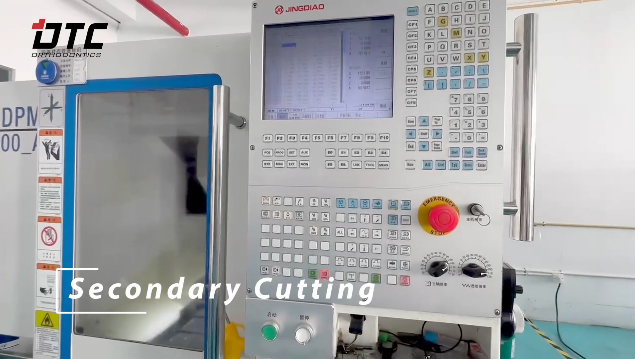
Continuity begins with who actually makes the product. Hangzhou DTC Medical Apparatus Co., Ltd. operates manufacturing directly rather than reselling third-party output. The company reports a 5,000 m² factory, approximately 150 employees including a 30-engineer R&D team, and annual output of 1,000,000 units. Because production and quality management are under direct control, the manufacturer can govern each order delivery and confirm that a shipment meets the agreed requirement — the specific mechanism behind batch-to-batch stability. The company states that it holds ISO 13485, CE0197 and FDA certification, with its management system following CE (MDR) and ISO requirements.
The range itself reduces how many suppliers a buyer has to manage
Every additional supplier in an orthodontic supply chain adds a reorder calendar, a specification sheet and a review process. DTC's portfolio spans three categories — orthodontics, pediatric dentistry and dental laboratory products — which is what makes a single long-term relationship workable for a distributor serving mixed accounts.
- Brackets: Delicate Series in 17-4PH stainless steel with a contoured, sandblasted mesh base, laser welding and an accurate smooth slot; Zeal, Bright and Monoblock series; Toast and Glory I / Glory II self-ligating brackets; Ceramic and Ceramic Self-ligating series in aluminium oxide poly-crystalline or mono-crystalline form; lingual options in the IN-Tendo JK-SL and DTC-ORG Lingual series.
- Buccal tubes: Zeal and Zeal Plus series in stainless steel, produced with laser welding technology and precision casting, with a tooth mark that applies force during bonding and an integrated high-strength monoblock hook.
- Springs: Niti Closed Spring With Eyelets, offered in 0.008", 0.010", 0.012" and 0.014" diameters and 3 mm, 6 mm, 9 mm and 12 mm lengths, in identical or different eyelet types; and Niti Open Spring in 180 mm and 914 mm lengths.
- Wires and auxiliaries: Super-elastic Niti archwires, stainless steel archwires and CuNITI archwires; crimpable hooks with a rounded ball end; lingual buttons with a mushroom-shaped head; lingual chains with a textured and micro-etched mesh base; O rings in latex or silicone; power chains in open long, closed continuous and open short types; separators in blue TPU; orthodontic chewies in six flavours; ligature rings and rotation wedges.
- Instruments and laboratory items: Distal End Cutter, Light Wire Cutter, Light Wire and Bracket Removing pliers, Mathieu needle holders, bracket and tube tweezers, intraoral mirrors, plus rapid palatal expanders with compatible miniscrews and MISPA molar distalization appliances.
Stock policy separates fast movers from engineered items
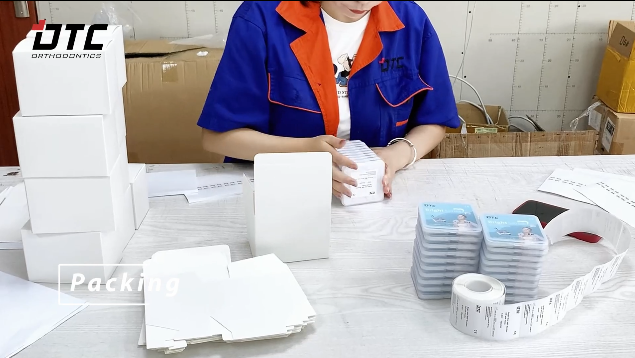
Lead time is the most misunderstood part of a repeat order, because it is not one number. DTC maintains safety stock for selected standard products to support delivery within 3–5 business days, while custom-engineered production runs require a 2–4 week lead time. Shipments move through long-standing partnerships with international courier services including FedEx, DHL and UPS. The practical consequence for a buyer is that the reorder list should be split into stock lines and engineered lines before the purchase order is written, since only one of those groups behaves like a catalogue item.
Documentation and technical support ship with the product
Product manuals are provided online, and documentation is prepared in multiple languages for global markets with adherence to industry compliance standards. For a distributor, this is not an administrative extra: multi-language instructions and a searchable manual library are what allow a sub-distributor or clinic to answer a specification question without routing it back to the factory.
After-sales has a defined entry point
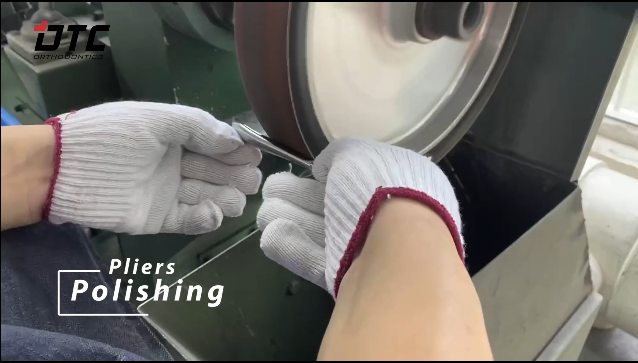
When a product needs review, the entry point is the same sales contact that handled the order, and the review is handled against the specification that was agreed at ordering. Pliers sold by DTC carry a 3-year warranty, and the manufacturer rates plier service life at five years or more — a figure that matters because instrument replacement, not bracket consumption, is usually the largest unplanned line in a clinic's supply budget.
Step-by-Step Breakdown: Running a Repeat Order Without Drift
The workflow below is designed for a distributor or clinic group placing a second, third or tenth order against an existing account.
Step 1 — Segment the reorder list by turnover rate
Fast-moving lines are predictable: O rings in latex or silicone, separators in blue TPU, orthodontic chewies, power chains in open long, closed continuous and open short types, ligature rings and rotation wedges. Slow-moving lines are durable: pliers, tweezers, mirrors, buccal tubes, brackets and preformed bands. Segmenting the list first prevents the common failure of over-ordering instruments while under-ordering the auxiliaries that generate daily chairside demand.
Step 2 — Restate the specification, not just the part name
Every reorder should carry the same specification fields as the original order. For brackets that means slot size (18 or 22), torque (low or high), system (Roth or MBT) and arch (maxillary or mandibular). For buccal tubes it means system, torque and slot size. For Niti Closed Spring With Eyelets it means diameter, length and eyelet type; for Niti Open Spring, the 180 mm or 914 mm length. For archwires it means arch form, cross-sectional shape and upper or lower. For pliers it means tip size and hardness class, since cutter hardness sits at HRC 58–63 and loop-bending pliers at HRC 55–60, with a maximum sterilization temperature of 180°C across the instrument range.
Step 3 — Group the mixed-category order
A single purchase order may combine injection-moulded elastics, machined instruments and welded bracket assemblies. Where a buyer wants a better unit price without absorbing the full volume at once, split shipments allow higher-volume production that is held and released in smaller batches. Shared tooling costs let a buyer pay a higher upfront tooling fee to unlock a lower production MOQ, and standard in-house colours or materials carry a lower MOQ than custom sourcing. Grouping the order this way keeps a reorder commercially efficient without inflating the warehouse.
Step 4 — Fix the commercial and acceptance terms in writing
DTC's standard purchasing terms are an MOQ of 50 pcs, FOB or CIF delivery terms and T/T payment, with pre-shipment testing used as the acceptance criterion. Writing these onto the repeat order — rather than assuming they carry over from the first order — avoids renegotiation delays later in the relationship.
Step 5 — Confirm the documentation pack before dispatch
Confirm which language versions, manuals and declarations are required for the destination market, and confirm that the pack matches the batch being shipped. Because documentation is prepared in multiple languages and manuals are hosted online, this step is a confirmation task rather than a translation project.
Step 6 — Agree the review path in advance
Before the order ships, agree what happens if an item needs review: who inspects, what evidence is required, and what replacement or credit logic applies. For pliers, the 3-year warranty and the five-year-plus rated service life give a clear baseline. For brackets, tubes and springs, the baseline is the specification agreed at Step 2.
Use Cases: What Continuity Looks Like in Practice
Distributor restocking a fast-moving auxiliary line
An orthodontic distributor selling into clinics typically runs out of O rings, separators and power chains first. Holding those lines on safety stock with a 3–5 business day delivery window, while placing the bracket and instrument lines on a longer cycle, keeps the warehouse balanced. The relevant question is not whether the distributor can buy everything at once, but which lines are stock-supported and which are engineered.
Clinic group standardising one self-ligating system
A multi-chair group that standardises on a single self-ligating bracket — Glory II with its larger ligation space and mini low-profile design, or Glory I in a 0.022 slot, or Toast in 0.018 or 0.022 with Roth or MBT prescriptions — needs the same slot and torque on every reorder. Where the bracket carries tooth numbers laser-marked on the mesh base, identification at chairside removes one source of ordering error entirely.
Managing arch progression across a full wire and spring sequence
A practice moving patients through successive archwires also consumes Niti Closed Spring With Eyelets and Niti Open Spring in step with that sequence. Ordering arch forms, cross-sections and spring lengths as one grouped line, rather than as separate experiments, keeps the progression stocked without holding excessive inventory of any single size.
Adding pediatric and laboratory lines to an existing account
Once a relationship is running, adding pediatric preformed crowns, prewelded and pediatric bands, or laboratory items such as rapid palatal expanders with compatible miniscrews and MISPA molar distalization appliances extends the same specification-and-review process rather than creating a second supplier relationship.
Continuity Comparison: What to Restate by Product Group
The table below maps the specification fields that should be confirmed on every repeat order, using the product families in the DTC Orthodontics range as the reference.
| Product group | Examples in the range | Specification to restate on each reorder | Why it matters for continuity |
|---|---|---|---|
| Metal brackets | Delicate, Zeal, Bright, Monoblock, Toast, Glory I, Glory II | Slot 18 or 22; low or high torque; Roth or MBT; maxillary or mandibular | Slot and cap geometry govern torque expression and archwire fit; a mismatch invalidates the case plan |
| Ceramic brackets | Ceramic Series, Ceramic Self-ligating Series | Slot size; hook with or without; Roth, MBT or Edge-wise; arch | Aesthetic cases usually hold fewer spare units, so a specification error is harder to absorb chairside |
| Buccal tubes | Zeal, Zeal Plus | System; torque; slot 18 or 22 | Molar anchorage and archwire insertion depend on the welded or cast tube geometry staying constant |
| Niti springs | Niti Closed Spring With Eyelets, Niti Open Spring | Diameter; length; closed eyelet type as identical or different | Spring force delivery is length- and diameter-specific, so substitution changes the mechanics |
| Archwires | Super-elastic Niti, stainless steel, CuNITI | Arch form; cross-sectional shape; upper or lower | Wire sequence is progressive; an out-of-sequence delivery stalls the next appointment |
| Pliers and instruments | Distal End Cutter, Light Wire Cutter, Light Wire and Bracket Removing pliers, needle holders, tweezers | Tip size; hardness class; maximum sterilization temperature of 180°C | Reprocessing tolerance and grip precision decide usable instrument life, not the purchase date |
| Elastics and auxiliaries | O rings, power chains, separators, chewies, ligature rings, rotation wedges | Material; type; colour or flavour where relevant | These are the highest-turnover lines, so consistency of supply matters more than unit-price movement |
FAQ: Reorders, Support and After-Sales
What certifications and documentation should a distributor expect from a long-term orthodontic supplies manufacturer?
DTC Orthodontics states that it holds ISO 13485, CE0197 and FDA certification for its products and production process, with its management system following CE (MDR) and ISO requirements. Product manuals are provided online, and documentation is prepared in multiple languages for global markets with adherence to industry compliance standards. Buyers should also track the regulatory basis of what they resell: in the EU, MDR 2017/745 requires CE marking and classifies most orthodontic products as Class I or IIa, while in the United States brackets and tubes fall under 21 CFR 872.5410, with ISO 27020:2019 as the recognized standard.
Can a manufacturer keep specifications and quality stable across repeat orders?
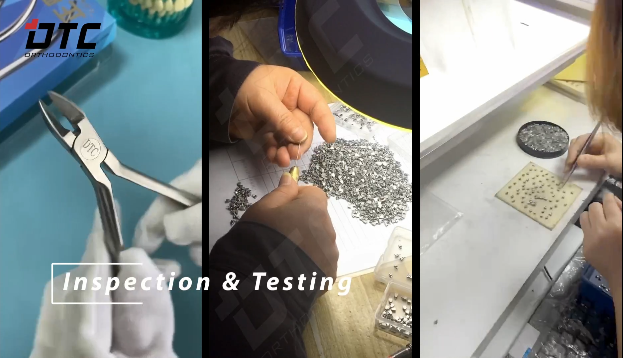
Stability depends on control of the process rather than on end-point inspection alone. As both manufacturer and exporter, DTC holds Quality Management Systems (QMS) with formal systems governing production, exercises direct control over production and quality management, and reviews each order delivery so that every shipment meets the agreed requirement. All products undergo quality control protocols and stress-testing before leaving the facility. Range depth supports the same point: brackets, buccal tubes, bands, wires, springs and instruments are produced under one roof, and the company holds a patent for an "Orthodontic Buccal Tube Convenient for Archwire Insertion" (CN 224292022 U).
How are MOQ and commercial terms handled on repeat orders?
DTC's standard purchasing terms are an MOQ of 50 pcs, FOB or CIF delivery terms and T/T payment, with pre-shipment testing used as the acceptance criterion. Where a buyer wants a better unit price without taking the full volume at once, split shipments allow higher-volume production that is held and released in smaller batches. Shared tooling costs allow a higher upfront tooling fee in exchange for a lower production MOQ, and standard in-house colours or materials carry a lower MOQ than custom sourcing.
Can we validate a product before adding it to a standing order?
Validation should precede commitment, especially for a new item joining an existing reorder list. Buyers can request a sample through the same contact that manages the account, then confirm the specification in writing — slot, torque, system, arch, diameter, length, material or colour — before the item becomes a standing line. Because pre-shipment testing is the stated acceptance criterion, the sample check and the shipment check should reference the same criteria. To begin, request a sample or a quotation from DTC Orthodontics.
What lead times apply once a partnership is running?
DTC maintains safety stock for selected standard products to support delivery within 3–5 business days, while custom-engineered production runs require a 2–4 week lead time. The company works with long-standing international courier partners including FedEx, DHL and UPS. Because the split between stock items and engineered items determines the delivery date, each line of a repeat order should be marked as standard or custom before the purchase order is issued.
Conclusion: Continuity Is a Process, Not a Promise
A long-term orthodontic supplies partnership holds together when the operational details are settled once and reused: a reorder list segmented by turnover, specification fields restated on every order, a clear split between stock-supported and engineered lines, acceptance testing before dispatch, and a named review path when something needs attention. The product range only supplies the raw material for that process — from Niti Closed Spring With Eyelets and Niti Open Spring through self-ligating brackets, buccal tubes, archwires, pliers, O rings, power chains, separators and chewies.
For distributors and clinic groups evaluating DTC Orthodontics as a long-term manufacturer, the useful test is not the size of the catalogue but whether the same specification, documentation and review logic can be repeated order after order.
Next Step: Build the Repeat-Order List With DTC Orthodontics
Send your current reorder list — brackets, buccal tubes, wires, springs, elastics or instruments — and request a sample or a quotation against the specifications you already use. Mixed-category orders can be grouped and released in batches.
Contact: Jaymie · Email: jaymie@dtchz.com · Tel / WhatsApp: +86 136-0051-7451
Address: Floor 1-3, Building 2, 8th Xiyuan Road, Xihu District, Hangzhou, Zhejiang Province, China
Download the DTC Orthodontics product catalogue (PDF) · www.dtchz.com
Have Questions or Need More Details?
Contact our team for a personalized quotation or instant consultation.
Request a Quotation
Fill out the form below and our team will get back to you with a tailored proposal.
WhatsApp Direct Chat
Prefer to chat in real-time? Message us on WhatsApp for instant assistance & quick answers.
- Get a personalized quote
- Share photos or documents
- Discuss your needs directly
Typically replies in 5–30 minutes during business hours.