
Niti Closed Spring With Eyelets vs Niti Open Spring: Technical Selection Guide
The selection between Niti Closed Spring With Eyelets and Niti Open Spring is a technical decision about engagement, coil form, anchorage, and integration with the bracket and archwire setup. The closed spring with eyelets provides defined eyelet engagement points; the open spring is the open-coil option in the DTC orthodontic supplies catalog. Neither product is automatically better. The right choice depends on the intended movement, the anchorage plan using Orthodontic O Rings or Ligature Rings, and the clinician's placement and adjustment workflow with Dental Pliers.
Problem Definition: why the two springs are not interchangeable by name alone
Buyers often compare Niti Closed Spring With Eyelets and Niti Open Spring as if they were simple variants of the same item. In practice, the comparison involves different selection questions. The closed spring with eyelets has an eyelet feature that affects how the spring can be engaged. The open spring is identified in the DTC catalog as Open Spring, Open Coil Spring, which places the selection emphasis on the open-coil configuration rather than on an integrated eyelet. A procurement team that treats the two as interchangeable may create avoidable mismatch between the clinical plan, the auxiliary selection, and the components stocked by a clinic or distributor.
The problem is not limited to product naming. The selection also touches the anchorage method, the use of Orthodontic O Rings or Ligature Rings, the choice of Dental Pliers during placement and adjustment, and the compatibility of the spring with the bracket system and archwire. For a distributor, the problem includes portfolio breadth and reorder predictability. For a clinic, the problem is whether the selected spring fits the intended mechanical setup without adding unnecessary complexity. This guide addresses those questions without prescribing force values or clinical protocols that are not part of the approved product facts.
Start with the intended movement and engagement requirement. Then confirm eyelet need, anchorage auxiliary, bracket and wire integration, and plier workflow. Product names alone are not a sufficient selection basis.
Industry Background: why spring selection matters in orthodontic supplies
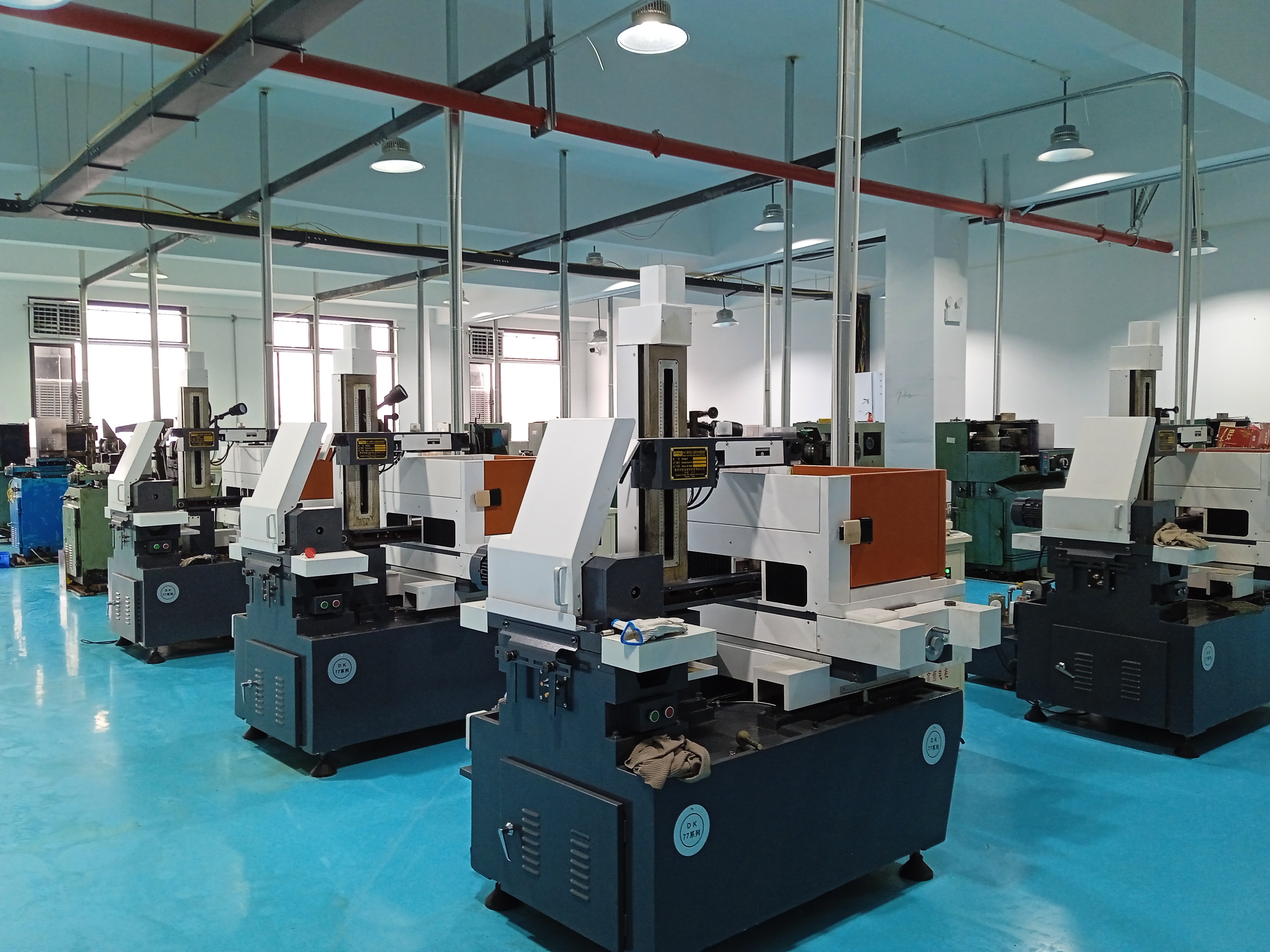
Hangzhou DTC Medical Apparatus Co., Ltd. (DTC Orthodontics) is a Hangzhou-based manufacturer of orthodontic supplies established in 2004. DTC operates a 5,000 m² factory with 150 employees, a 30-engineer R&D team, and reported annual output of 1,000,000 units. Its orthodontic portfolio includes brackets, buccal tubes, bands, orthodontic accessories, and orthodontic pliers, while the broader business also covers pediatric dentistry and dental laboratory products. Niti Closed Spring With Eyelets and Niti Open Spring sit inside this wider orthodontic supplies context, not as isolated items.
The category context is substantial. Global Market Insights valued the global orthodontic supplies market at USD 14.8 billion in 2024 and projected a 20.1% CAGR through 2034. Grand View Research estimated that North America held 30.6% of the global orthodontic supplies market by revenue in 2024. Mordor Intelligence notes that NiTi archwires face supply-chain risk because of heavy reliance on Chinese raw materials, and that adult orthodontics and clear aligners are growing at a 14.25% CAGR. These signals do not decide which spring a clinic should use, but they explain why distributors and clinics need a repeatable selection method rather than ad hoc product switching.
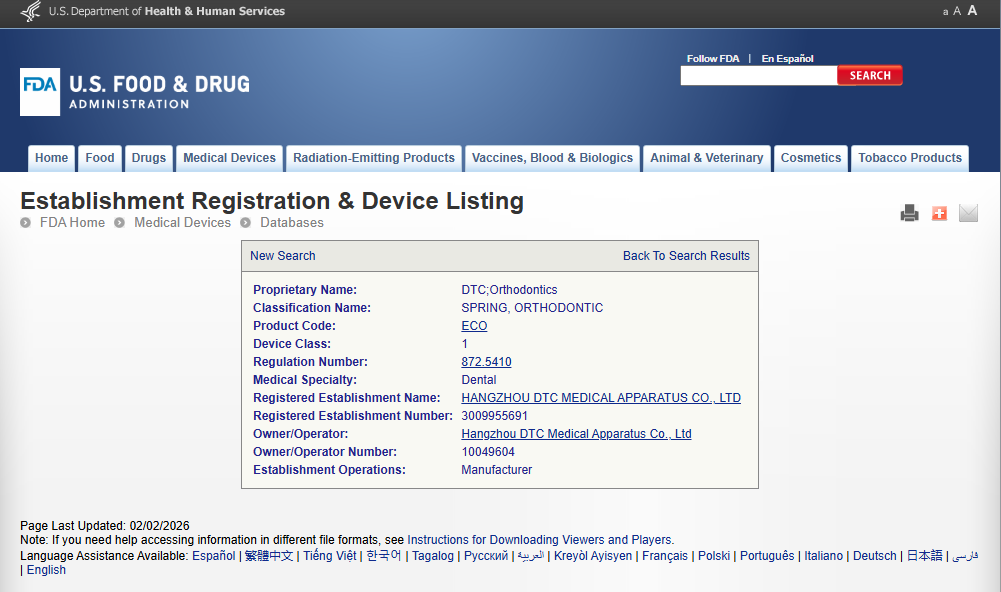
Regulatory context also affects selection. Orthodontic brackets and tubes are classified as Class I or II medical devices in the United States under 21 CFR 872.5410, with ISO 27020:2019 as a recognized standard. The EU Medical Device Regulation 2017/745 requires CE marking for orthodontic products, with most classified as Class I or IIa. DTC holds ISO 13485:2016 certificate SX 2184523-1 issued by TÜV Rheinland LGA Products GmbH, valid from 2024-04-22 to 2027-05-08. DTC also holds FDA listing 3009955691 under 21 CFR Part 807, and the listing scope includes Spring, Orthodontic. A Notified Body confirmation letter, certificate 244557490, covers listed Class IIa orthodontic devices under the EU MDR transition framework. Buyers should still confirm product-specific documentation for the exact spring and market before purchase.
Detailed Solution: how to read the two spring options
Niti Closed Spring With Eyelets
Niti Closed Spring With Eyelets is cataloged by DTC as a product belonging to the Dental Elastics category. The product name identifies two selection-relevant features: it is a Niti spring, and it is a closed spring with eyelets. In a technical selection framework, the eyelets are the distinguishing engagement feature. They create defined points where the spring can be connected to the planned anchorage setup. That does not mean the spring should be used in every closed-coil situation. It means the eyelet requirement should be confirmed before the item is selected, because eyelet engagement changes how the spring is integrated with the auxiliary system.
The closed spring with eyelets is often discussed in space-management and force-delivery conversations where a closed-coil configuration and eyelet engagement are both part of the plan. The final use remains a clinical decision. This guide does not assign activation values, force levels, or treatment durations to the product. Those parameters belong to the clinician's protocol and the patient's plan, not to a generic procurement description.
Niti Open Spring
Niti Open Spring appears in the DTC product data as Open Spring, Open Coil Spring. Its selection identity is the open-coil configuration. The product name does not carry an eyelet designation, so the engagement question is handled differently from the closed spring with eyelets. In practice, the open spring is selected when the planned setup calls for an open-coil spring rather than a closed-coil spring with integrated eyelets. As with the closed spring, the guide does not prescribe activation amounts or force values. The selection should be based on the intended movement, the auxiliary plan, and the clinician's preferred workflow.
Both products are orthodontic springs. DTC's FDA listing scope explicitly includes Spring, Orthodontic, which supports the category-level regulatory description. The practical difference is not a ranking of quality. It is a difference in configuration and engagement that should be matched to the case and to the components used with it.
Activation and eyelet engagement
Activation is the process of engaging the spring so that it can deliver the intended force. In selection, activation is not a single fixed setting that can be read from a product name. It depends on the planned movement, the anchorage condition, and the clinician's protocol. This guide therefore avoids numeric activation recommendations and focuses on the decision sequence. The first question is whether the plan requires the eyelet engagement offered by Niti Closed Spring With Eyelets. If eyelet engagement is part of the setup, the closed spring with eyelets is the logical item to evaluate. If the plan uses an open-coil configuration and does not require an integrated eyelet, Niti Open Spring is the item to evaluate.
Eyelet engagement also affects the auxiliary choice. The eyelet gives a defined connection point, while an open spring relies on the selected auxiliary and the surrounding setup for engagement. That difference should be visible in the procurement description and in the clinic's internal selection checklist. A buyer who orders the wrong configuration may still receive a valid product, but it will not match the intended engagement method.
Anchorage with Orthodontic O Rings or Ligature Rings
DTC's catalog includes Orthodontic O Rings and Ligature Rings as separate orthodontic supplies. In the selection framework, anchorage is not an afterthought. The buyer should confirm whether the planned anchorage will use O Rings, Ligature Rings, or another approved auxiliary, and whether the spring's eyelet is needed for that connection. The closed spring with eyelets offers an integrated eyelet point; the open spring does not carry that same eyelet feature in its product designation. That does not make one auxiliary or one spring superior. It means the engagement method must be decided before the item is specified.
Orthodontic O Rings and Ligature Rings are also part of the broader Dental elastics and accessories category. DTC's related products include Power Chains, Lingual Chain, Separators, and Orthodontic Chewies. Separators are made of TPU and contain radiopaque elements, and Orthodontic Chewies are made of medical-grade, food-grade, non-toxic, and BPA-free TPR material. These facts are useful for catalog context, but they do not replace the case-specific decision about spring anchorage. The correct approach is to match the spring, the auxiliary, and the bracket and wire setup as one system.
Dental Pliers during placement and adjustment
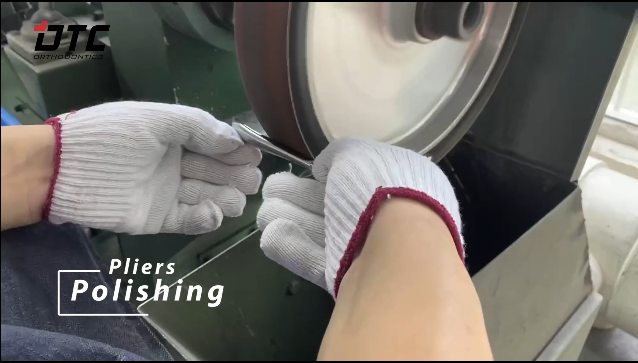
DTC's Dental Pliers are made of stainless steel with a hardness of HRC 58-63. Product descriptions include a micro-gap hinge, and some plier descriptions specify CNC machining. DTC's dental cutting pliers category includes products such as Distal End Cutter Pliers and Light Wire Cutter Pliers. These are relevant because placement and adjustment may involve positioning, bending, cutting, or removing components according to the clinical protocol. The plier selection should match the task, not simply the spring name.
For a clinic, the practical question is whether the pliers used for the spring setup are available, clean, and appropriate for the task. For a distributor, the question is whether the plier range supports the same clinical accounts that buy the springs. DTC's portfolio includes Dental Pliers, Dental Tweezers, Dental Mirrors, and Dental Instruments such as bracket positioners, force gauges, and archwire formers. That breadth supports a coordinated orthodontic supplies order, but each item should still be selected on its own function.
Integration with archwire and bracket systems
Spring selection should be checked against the bracket and archwire system used in the case. DTC's Dental Brackets support Roth, MBT, and Edge-wise systems. Available slot sizes include 18 and 22. Brackets are available for maxillary or mandibular arch and with or without hook. Ceramic brackets are made of aluminum oxide poly-crystalline or mono-crystalline. DTC's Dental Self-ligating Brackets include Glory I Self-ligating Brackets, Glory II Self-Ligating, and Toast Self-ligating Brackets; product descriptions note a sandblasted base for some self-ligating brackets. Dental Lingual Brackets include the IN-Tendo JK-SL Series and DTC-ORG Lingual Series.
DTC's Dental Wires portfolio includes Stainless Steel Arch Wires, CuNITI Arch Wires, and Super-elastic Niti Wires. Dental Buccal Tubes include the Zeal Series and Zeal Plus Series. Dental Orthodontic Bands are also part of the portfolio. The spring itself should not be selected in isolation from these components. The buyer should confirm the bracket system, slot size, archwire type, and buccal tube or band interface before finalizing the order. This is especially important for distributors that stock combinations for different clinics.
Step-by-Step Breakdown: a practical selection sequence
- Define the intended movement and engagement requirement. Start with the clinical plan, not the product name. Confirm whether the setup requires a closed-coil spring with eyelet engagement or an open-coil spring without an integrated eyelet. This is the first branch in the selection tree.
- Choose the spring type. Select Niti Closed Spring With Eyelets when the eyelet feature is part of the planned engagement. Select Niti Open Spring when the plan calls for the open-coil configuration. Record the exact product designation in the purchase order to avoid substitution.
- Confirm the anchorage auxiliary. Decide whether Orthodontic O Rings, Ligature Rings, or another approved auxiliary will be used for anchorage. Check whether the chosen spring's eyelet is required for that connection. The auxiliary and the spring should be ordered as a matched set when possible.
- Check bracket and archwire integration. Verify the bracket system, slot size, and archwire type. DTC brackets support Roth, MBT, and Edge-wise systems with slot sizes 18 and 22. Confirm that the selected wire and bracket combination is the one the clinic intends to use with the spring.
- Plan the Dental Pliers workflow. Identify the pliers needed for placement, adjustment, and cutting. DTC Dental Pliers are stainless steel with HRC 58-63 hardness. Cutting tasks should use the appropriate cutting plier category, such as Distal End Cutter Pliers or Light Wire Cutter Pliers, rather than a general-purpose tool.
- Verify documentation for the target market. Check the product-specific regulatory documents. DTC holds ISO 13485:2016 certificate SX 2184523-1 and FDA listing 3009955691, whose scope includes Spring, Orthodontic. For the EU, confirm the applicable MDR documentation for the exact product and classification.
- Confirm supply parameters. For OEM or private label programs, confirm customization scope, packaging, labeling, MOQ, and lead time. DTC offers OEM/ODM customization for package, logo, tag, and product. The capability profile lists a monthly capacity of 5,000 units and an OEM/ODM lead time of 20-30 days. Selected standard products may be supported by safety stock for faster delivery, while custom-engineered runs require a longer production window.
Use Cases: where the selection decision appears in practice
Clinic standardizing two spring options
A clinic may keep both Niti Closed Spring With Eyelets and Niti Open Spring available because different cases call for different engagement methods. The selection guide helps the clinic avoid opening the wrong item or substituting one for the other without checking the eyelet requirement. The clinic can pair the springs with Orthodontic O Rings, Ligature Rings, and the appropriate Dental Pliers, and then document the selection rule in its internal protocol.
Distributor building a stocked orthodontic supplies portfolio
A distributor may stock both springs to serve clinics with different preferences. The distributor's task is to keep the catalog description clear: the closed spring with eyelets is not the same item as the open spring. Clear naming, separate SKUs, and consistent product images reduce order errors. DTC's case records describe distributor and dealer relationships with stable operation over 1-3 year periods, as well as dental clinic and public hospital relationships over 2-3 year periods. Those records support a repeat-supply approach, but they do not remove the need for item-level selection discipline.
OEM or private label orthodontic supplies program
An OEM buyer may want private label springs, packaging, and documentation for a clinic network or distributor brand. DTC's OEM/ODM capability includes customization of package, logo, tag, and product. The buyer should define whether both spring types are in scope, which eyelet configuration is required, and which auxiliaries are bundled. The private label program should also confirm the regulatory documents and labeling for each target market before production.
Mixed cases using brackets, wires, and auxiliaries
Many cases combine springs with Dental Brackets, Dental Wires, Dental Buccal Tubes, Dental Orthodontic Bands, and auxiliaries such as Orthodontic O Rings or Ligature Rings. The spring selection should be checked against the bracket slot and wire type, and the plier workflow should be confirmed before the case starts. DTC's broader portfolio includes Dental Self-ligating Brackets, Dental Ceramic Brackets, Dental Lingual Brackets, Dental Tweezers, Dental Mirrors, Dental Accessories, Dental Materials, Dental Instruments, and pediatric products such as Pediatric Dental Crown and Kids Dental Crown. This breadth is useful for consolidated ordering, but the spring decision remains specific.
Comparison Table: Niti Closed Spring With Eyelets vs Niti Open Spring
| Selection parameter | Niti Closed Spring With Eyelets | Niti Open Spring | Evidence basis |
|---|---|---|---|
| Catalog designation | Niti Closed Spring With Eyelets | Niti Open Spring; Open Spring, Open Coil Spring | DTC product data |
| Category reference | Dental Elastics category | Open-coil orthodontic spring | DTC product data; FDA scope includes Spring, Orthodontic |
| Coil configuration | Closed spring | Open spring / open coil | Product name |
| Eyelet engagement | Eyelets present | No eyelet in the product designation | Product name |
| Anchorage planning | Confirm whether eyelet engagement is used with Orthodontic O Rings or Ligature Rings | Confirm anchorage with Orthodontic O Rings or Ligature Rings and the selected setup | DTC auxiliary products |
| Placement and adjustment | Use Dental Pliers appropriate to the task | Use Dental Pliers appropriate to the task | DTC Dental Pliers data |
| Bracket and wire integration | Check against bracket system, slot size, and archwire type | Check against bracket system, slot size, and archwire type | DTC bracket and wire data |
| Regulatory reference | FDA listing scope includes Spring, Orthodontic; ISO 13485 QMS applies to DTC manufacturing | FDA listing scope includes Spring, Orthodontic; ISO 13485 QMS applies to DTC manufacturing | FDA listing 3009955691; ISO 13485 certificate SX 2184523-1 |
| OEM/private label | Confirm spring-specific customization and labeling in the quote | Confirm spring-specific customization and labeling in the quote | DTC OEM/ODM capability data |
The table is a selection aid, not a clinical protocol. It does not assign force values, activation amounts, or treatment outcomes.
FAQ: technical and procurement questions
Are DTC Niti springs and related orthodontic supplies covered by medical device certifications?
DTC holds ISO 13485:2016 certificate SX 2184523-1 issued by TÜV Rheinland LGA Products GmbH, valid from 2024-04-22 to 2027-05-08. DTC also holds FDA listing 3009955691 under 21 CFR Part 807, and the listing scope includes Spring, Orthodontic. Product-specific market documentation should be confirmed for each order, especially for the exact spring type and destination market.
Can DTC supply Niti Closed Spring With Eyelets and Niti Open Spring under an OEM/private label orthodontic supplies program?
DTC offers OEM/ODM production with customization of package, logo, tag, and product. The capability profile lists a monthly capacity of 5,000 units, 100% test quality control, and remote after-sales support. Spring-specific customization, labeling, and documentation should be confirmed in the quotation, because the OEM/ODM program covers the broader orthodontic supplies portfolio rather than every item in an identical way.
What is the MOQ for OEM or private label orders?
MOQ depends on the specific product and customization requirements. DTC states that standard products have a competitive MOQ, while customized products may require a higher minimum order quantity. Options for managing order volume include split shipments, shared tooling costs, and standard in-house colors or materials to avoid custom sourcing minimums. The exact MOQ should be confirmed for the selected spring, packaging, and labeling.
How are samples or pre-shipment validation handled?
DTC's purchasing terms list pre-shipment test as an acceptance criterion, and the capability profile states 100% test quality control. Product documentation and technical support are available online, including product manuals for customer reference. A buyer should define the sample or validation scope with the sales team before placing a production order, including the spring type, auxiliary components, and packaging requirements.
What are the lead times and delivery capabilities for standard and custom orders?
DTC maintains safety stock for selected standard products to support faster delivery within 3-5 business days, while custom-engineered production runs require a 2-4 week lead time. The capability profile lists an OEM/ODM lead time of 20-30 days. DTC also maintains long-standing partnerships with express international courier services such as FedEx, DHL, and UPS. To discuss a sample, quote, or private label program for Niti Closed Spring With Eyelets or Niti Open Spring, contact DTC Orthodontics at jaymie@dtchz.com or +86 136-0051-7451.
Conclusion: select by engagement need, not by product name alone
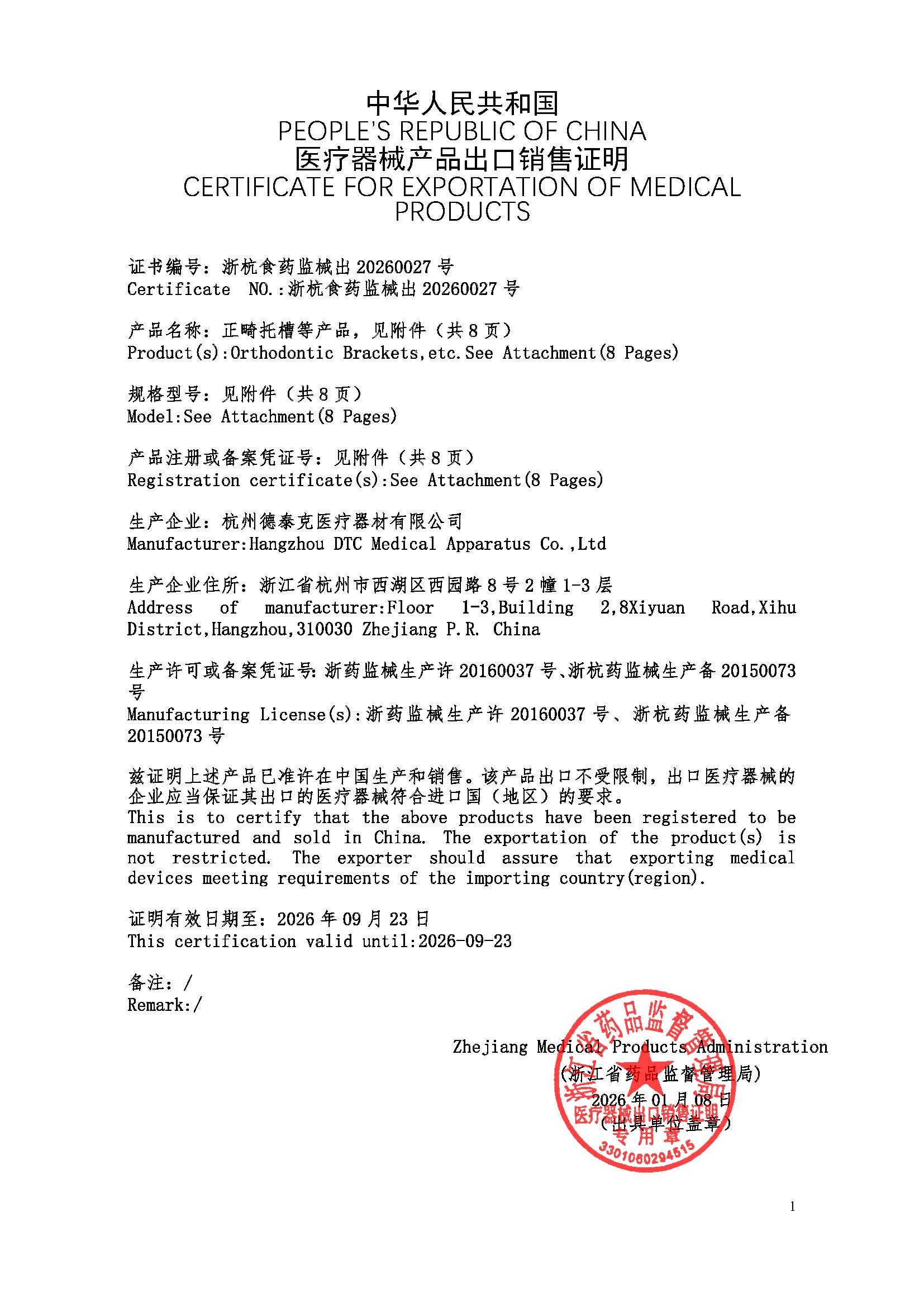
Niti Closed Spring With Eyelets and Niti Open Spring serve different selection logic. The closed spring with eyelets should be evaluated when eyelet engagement is part of the planned setup. The open spring should be evaluated when the open-coil configuration is intended. Both require a check of anchorage with Orthodontic O Rings or Ligature Rings, integration with Dental Brackets and Dental Wires, and the appropriate use of Dental Pliers during placement and adjustment. DTC Orthodontics supplies both products within a broader orthodontic supplies portfolio and supports OEM/ODM customization, documented quality management, and export markets including the EU, USA, Middle East, South America, Asia, Africa, and Australia.
For clinics and distributors, the safest procurement rule is to separate the two items in catalogs, order forms, and clinical checklists. Confirm the eyelet requirement, the auxiliary, the bracket and wire interface, and the regulatory documents before ordering. That discipline reduces substitution errors and makes reorder conversations more precise.
Next step: sample or quote request
If you are evaluating either spring for a clinic, distributor, or private label program, request a sample or quote from DTC Orthodontics. Include the spring type, intended engagement method, auxiliary components, bracket and wire system, estimated order quantity, and target market so the quotation can be prepared accurately.
Contact: Jaymie | Email: jaymie@dtchz.com | Tel and WhatsApp: +86 136-0051-7451 | Website: www.dtchz.com
Download the DTC Orthodontics catalog PDF
Have Questions or Need More Details?
Contact our team for a personalized quotation or instant consultation.
Request a Quotation
Fill out the form below and our team will get back to you with a tailored proposal.
WhatsApp Direct Chat
Prefer to chat in real-time? Message us on WhatsApp for instant assistance & quick answers.
- Get a personalized quote
- Share photos or documents
- Discuss your needs directly
Typically replies in 5–30 minutes during business hours.