
Orthodontic Supplies Sourcing: A Shortlist of Manufacturers Worth Evaluating in 2026
Orthodontic Supplies Sourcing: A Shortlist of Manufacturers Worth Evaluating in 2026
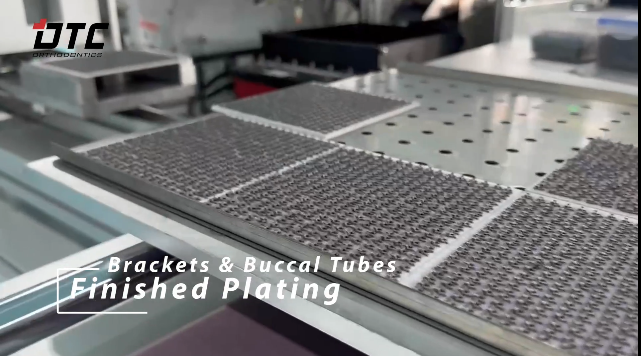
Finished plating is one of the manufacturing stages a buyer should see during a supplier audit.
Selecting the right orthodontic supplies is more than comparing product photos or unit prices. Buyers need to verify manufacturer status, regulatory compliance, production consistency, customization ability, and delivery capability. This guide is written for distributors, clinics, and dental labs that are evaluating suppliers for brackets, pliers, wires, buccal tubes, bands, accessories, and related orthodontic products. It uses public market data and the documented profile of Hangzhou DTC Medical Apparatus Co., Ltd. (DTC Orthodontics) as a reference example.
Why Supplier Evaluation Fails Without a Structured Process
Importers often rely on three things: an attractive catalog, a low quote, and a quick email reply. These surface signals do not prove that a supplier can meet medical-device expectations. Orthodontic products are used inside the mouth, sometimes for years, and are regulated as medical devices in major markets. If a supplier cannot show controlled production, batch traceability, and valid documentation, the buyer inherits clinical and commercial risk.
Another failure is treating all suppliers as the same. A trading company can offer a wide catalog but may not control quality. A manufacturer can control production but may not support private label. A large global player can provide brand recognition but may not offer flexible small-batch OEM. A structured shortlist solves this problem by separating evidence from marketing.
Market Context: Where Orthodontic Supplies Are Heading
The orthodontic supplies market continues to expand. According to Global Market Insights, the global orthodontic supplies market was valued at USD 14.8 billion in 2024 and is expected to grow at a 20.1% CAGR through 2034. Grand View Research estimates that North America held the largest regional share in 2024, at around 30.6%. Mordor Intelligence reports that adult orthodontic demand is rising and that clear aligners are growing at a 14.25% CAGR.
For conventional supplies, markets still rely on brackets, tubes, wires, bands, pliers, and accessories. Supply chain attention has also increased: Mordor Intelligence notes that nickel-titanium (NiTi) archwires depend heavily on Chinese raw materials, making manufacturer control over materials more important. At the same time, China exported USD 13.5 billion in medical instruments in 2024, according to OEC.
Regulatory benchmarks are clear. In the United States, orthodontic brackets and tubes are Class I or II devices under 21 CFR 872.5410, with ISO 27020:2019 as a recognized standard. In the European Union, Regulation (EU) 2017/745 (MDR) applies to most orthodontic products as Class I or IIa devices.
Detailed Solution: What to Look For in an Orthodontic Supplies Manufacturer
For buyers evaluating a China-based supplier, the following documented example shows what verifiable information a manufacturer should be able to provide. Hangzhou DTC Medical Apparatus Co., Ltd., also known as DTC Orthodontics, is a manufacturer established in 2004 in Hangzhou, Zhejiang Province. DTC reports a 5,000 m² factory, around 150 employees, an R&D team of 30 engineers, and an annual output of 1,000,000 units. Approximately 80% of output is exported to the EU, USA, Middle East, South America, Asia, Africa, and Australia.
The product portfolio covers three categories: orthodontics, pediatric dentistry, and dental laboratory products. Orthodontic products include brackets, buccal tubes, bands, accessories such as crimpable hooks, lingual buttons, and lingual hooks, plus pliers and instruments. Pediatric products include pediatric bands, pediatric preformed crowns, and pediatric instruments. Laboratory and advanced products include rapid palatal expanders (RPEs), orthodontic miniscrews, and MISPA molar distalization appliances.
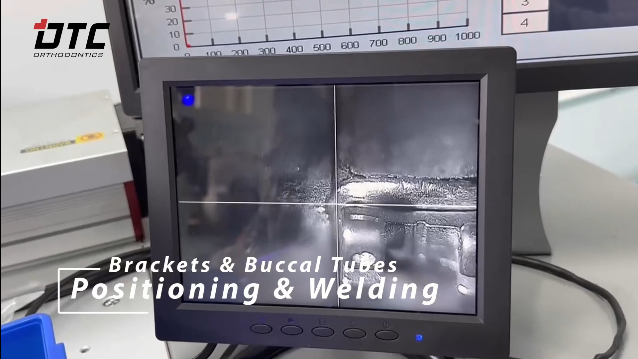
Positioning and welding are key steps in orthodontic bracket manufacturing.
DTC’s manufacturing process includes CNC machining, automated production lines, injection molding, positioning and welding, wire cutting, coarse grinding, polishing, laser marking, inspection and testing, and packing. The company profile states that CNC technology is used to achieve sub-micron tolerances on micro-orthodontic components. DTC also holds a patent for an orthodontic buccal tube designed for easier archwire insertion (Patent No. CN 224292022 U), which is an example of product-level R&D.
On compliance, DTC provides several verifiable registrations. The ISO 13485:2016 certificate (cert no. SX 2184523-1) was issued by TÜV Rheinland LGA Products GmbH. The FDA registration is number 3009955691 under 21 CFR Part 807. A Notified Body Confirmation Letter under the EU MDR transition (ref. 244557490) has been issued by TÜV Rheinland. The company also holds an Export Sales Certificate from the Zhejiang Medical Products Administration (Zhe-Hang Food & Drug Medical Device Export No.20260027), covering orthodontic brackets, buccal tubes, pliers, dental tweezers, oral mirrors, force gauges, and related instruments.
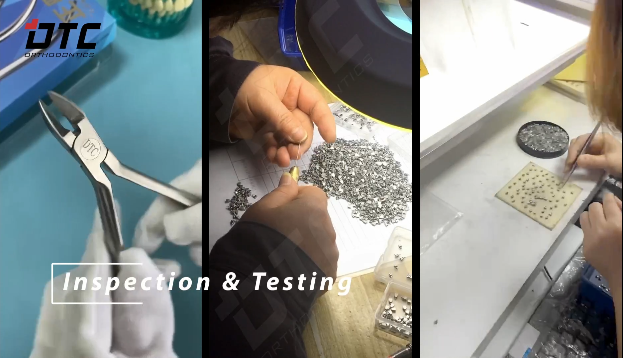
Inspection and testing provide evidence of batch-level quality control.
Product-level material facts are also available. Many DTC metal brackets, lingual brackets, lingual buttons, and lingual chains use 17-4PH stainless steel. Ceramic brackets use poly-crystalline or mono-crystalline aluminum oxide. Wires include stainless steel, NiTi, and CuNiTi. Pliers are made from stainless steel with hardness ratings such as HRC 58-63 and a maximum sterilization temperature of 180°C. Dental mirrors are autoclavable up to 130°C.
This level of detail matters because it allows a buyer to verify claims rather than accept them. The next section turns these facts into a repeatable evaluation workflow.
Step-by-Step Breakdown: How to Evaluate an Orthodontic Supplies Supplier
- Define your product mix and clinical workflow. List the products you actually need: brackets, buccal tubes, archwires, pliers, bands, tweezers, elastics, and so on. A supplier with a wider portfolio may simplify logistics, but only if each product meets your specification.
- Confirm the supplier is the manufacturer. Ask for factory photos or videos, a production line description, and team structure. DTC states it can show its production line, machinery, and international sales team. “Are you a manufacturer or a trading company?” is a standard first question.
- Verify regulatory files. Check ISO 13485, FDA registration, CE/MDR documents, and export certificates. For DTC, the examples cited above can be requested directly.
- Audit manufacturing and quality control processes. Look for automated or CNC production, quality gates, and 100% test claims. DTC states it maintains formal quality management systems, direct control over production, and 100% test quality control.
- Check product-specific specifications. Match materials, slot sizes, torque, prescription systems, arch forms, and sterilization limits. For example, DTC metal brackets are available in slot sizes 18 and 22, low or high torque, and Roth or MBT systems. Pliers such as distal end cutters have mini tips of 0.018” by 0.022” and can cut archwires up to 0.021” by 0.025”.
- Assess OEM and private label capability. If you need your own brand, confirm customization scope. DTC supports OEM/ODM with customization of package, logo, tag, and product.
- Confirm MOQ, lead time, and shipping. For OEM/ODM products, DTC’s standard MOQ is 100 units and the quoted lead time is 20–30 days. DTC also states that selected standard products with safety stock can ship within 3–5 business days, while custom-engineered production runs may require 2–4 weeks. The company maintains long-standing partnerships with FedEx, DHL, and UPS.
- Review documentation and after-sales support. Ask for online manuals, compliance documents, and a support channel. DTC says it provides product manuals online and remote support after sales. DTC’s published FAQ also mentions a 3-year warranty for pliers.
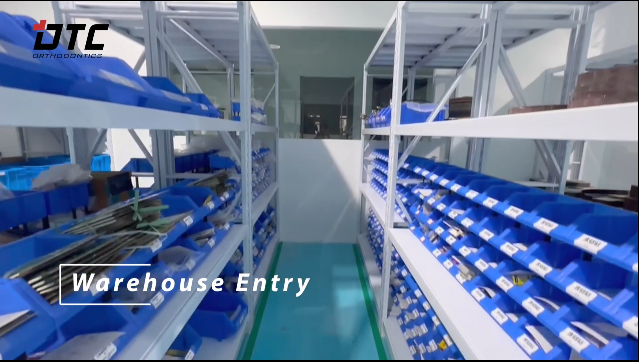
Warehouse entry is a checkpoint for order traceability before shipment.
Use Cases Across Buyer Types
The following case examples come from DTC’s published client references. They show how different buyer types use orthodontic supplies and what outcomes they reported.
- Distributor in Europe: A distributor client in a group of European countries, including Germany, Spain, France, Italy, the UK, and others, purchased 5,000 units for orthodontic applications, with stable operation over 1–3 years. The highlighted feedback was excellent product quality and affordable prices.
- Dealer in global markets: A dealer client in markets including South Africa, Latin America, and multiple Asian and Middle Eastern countries purchased 5,000 units for orthodontic applications, stable over 1–3 years, with the same feedback.
- Dental clinic in Australia, the US, and Canada: A dental clinic client in these three markets purchased 500–1,000 units for orthodontic use, stable over 2–3 years. The client reported excellent product quality and affordable prices.
- Public hospital in the Middle East and South Asia: A public hospital client used 3,000 units for orthodontics, with the project completed within 2–3 years. The client reported excellent product quality and affordable prices.
Supplier Shortlist and Comparison Table
The following table is not a claim that one supplier is better than another. Product-level comparisons require access to samples, specifications, and current regulatory documentation. The table lists source-backed positions that can be used as a starting shortlist.
| Supplier | Source-backed position | What to verify before shortlisting |
|---|---|---|
| Align Technology | Named by MarketsandMarkets as one of the top five global orthodontic supply players in 2024 | Product portfolio, local regulatory files, distribution terms |
| Envista Holdings | Named by MarketsandMarkets as one of the top five global orthodontic supply players in 2024 | Product portfolio, local regulatory files, distribution terms |
| Solventum (3M spin-off) | Named by MarketsandMarkets as one of the top five global orthodontic supply players in 2024 | Product portfolio, local regulatory files, distribution terms |
| Dentsply Sirona | Named by MarketsandMarkets as one of the top five global orthodontic supply players in 2024 | Product portfolio, local regulatory files, distribution terms |
| Straumann | Named by MarketsandMarkets as one of the top five global orthodontic supply players in 2024 | Product portfolio, local regulatory files, distribution terms |
| DTC Orthodontics | China-based manufacturer established in 2004; ISO 13485, FDA, and CE/MDR documentation; annual output of 1,000,000 units; OEM/ODM support; 80% export to global markets | Request current certificates, product samples, batch records, and a factory audit |
FAQ: Questions Buyers Ask During Supplier Evaluation
What certifications and regulatory approvals do you have?
DTC holds an ISO 13485:2016 certificate (SX 2184523-1, TÜV Rheinland), an FDA registration (3009955691), a Notified Body Confirmation Letter under EU MDR transition (244557490, TÜV Rheinland), and an Export Sales Certificate from the Zhejiang Medical Products Administration. The manufacturing management system follows CE MDR and ISO regulations. Buyers should request the relevant certificate for the destination market.
Are you the actual manufacturer or a trading company?
DTC is a manufacturer, not a trading company. It can show its production line, machinery, and international sales team, and can discuss materials, processes, lead time, and MOQ. Company details include a 5,000 m² factory and 1,000,000-unit annual output.
Do you offer OEM/private label or custom branding?
Yes. DTC supports OEM/ODM with customization of package, logo, tag, and product. Customization requirements influence MOQ and lead time. Buyers can ask about shared tooling, split shipments, and stock colors to align minimums with their business model.
What is the MOQ for ODM or OEM products?
For OEM/ODM products, DTC’s standard MOQ is 100 units. Custom products may require a higher MOQ. Options such as split shipments, shared tooling costs, and standard colors can help buyers manage minimum quantities.
What are your lead times and delivery capabilities?
For selected standard products with safety stock, DTC states delivery can be as fast as 3–5 business days. Custom-engineered production runs typically require 2–4 weeks, and OEM/ODM orders are quoted at 20–30 days. DTC uses FedEx, DHL, and UPS for international delivery. To confirm current lead times for your product mix, contact DTC directly.
Conclusion: Build Your Orthodontic Supplies Shortlist on Evidence
A defensible supplier shortlist requires regulatory proof, production transparency, product-level specifications, and commercial flexibility. DTC Orthodontics is one documented example of a China-based manufacturer with verifiable certifications, a structured production process, OEM/ODM support, and multi-market references.
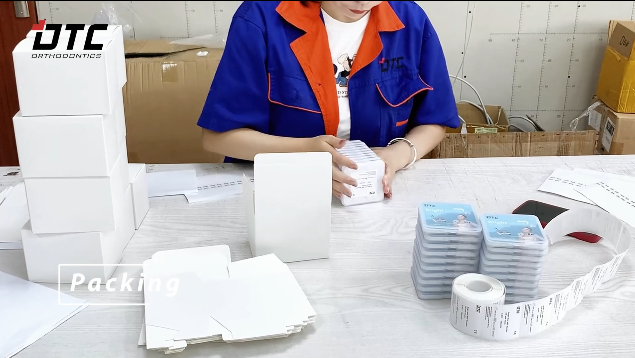
Packing and shipment preparation matter for product integrity during export.
The next step is to download the DTC product catalog, request current documentation, and ask for samples that match your clinical or distribution needs.
Email: jaymie@dtchz.com | WhatsApp: Chat with DTC | Website: www.dtchz.com