
Ranked: Must-Have Orthodontic Supplies for Space Closure and Rotation Correction
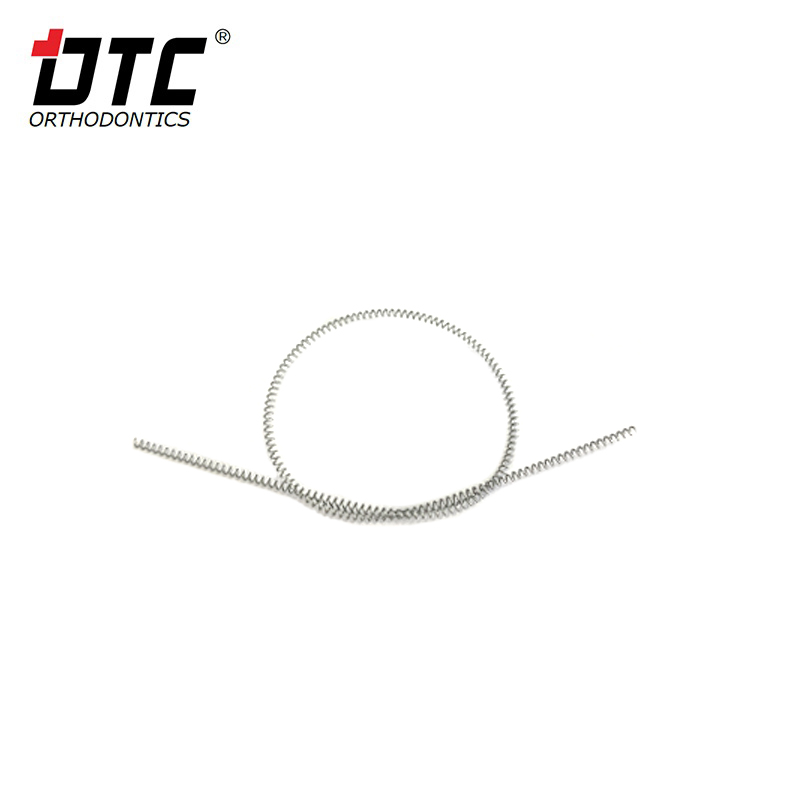
A workable orthodontic supplies tray for space closure and rotation correction is built from eight items, ordered by the role each one plays. In sequence: Niti Closed Spring With Eyelets for controlled traction, Niti Open Spring for controlled pushing, Power Chains for sustained elastic closure, Orthodontic O Rings as the force-transfer interface, Orthodontic Rotation Wedges for derotation, Separators for creating the space a rotated tooth needs, Crimpable Hook for traction points, and Ligature Rings for stable metal ligation. Dental wires and dental pliers sit underneath all eight as the supporting layer.
This ranking is an editorial ordering by mechanical role inside the tray. It is not a performance comparison between manufacturers, and it does not claim that any single item closes a case on its own. Every product name, model and specification below is taken from the current DTC Orthodontics catalogue and its supporting documentation.
Why space closure and rotation correction need different tools
Space closure and rotation correction are usually discussed as one clinical step. Mechanically they are two. Space closure moves a tooth along the archwire toward a target position while the anchorage segment stays where it is. Rotation correction turns a crown around the tooth's long axis, and in most crowded cases it cannot begin until proximal space exists.
Because the two problems are different, they fail for different reasons. Clinics that stock only one or two auxiliaries tend to run into the same five failure patterns.
- Force decay. Elastic materials lose force over time, so any setup that depends on a single elastic module will drift between visits.
- Friction along the archwire. A rough or oversized coil converts intended force into drag instead of tooth movement.
- Ligation that does not hold. If the archwire is not seated reliably in the slot, the force generated elsewhere never reaches the tooth.
- No space for a rotated tooth. Derotation force applied to a tooth with no proximal space produces a binding couple rather than rotation.
- Instrument mismatch. Coils that cannot be cut cleanly, or hooks that cannot be crimped securely, add chair time to a step that should be quick.
Each failure has a specific component answer. That is the argument for a tray rather than a product.
Where these items sit inside the orthodontic supplies category
Orthodontic supplies for fixed treatment divide into four layers. The attachment layer covers dental brackets, dental buccal tubes and dental orthodontic bands. The force-transmission layer covers dental wires. The auxiliary layer covers springs, elastics, hooks, separators and ligature components. The instrument layer covers dental pliers and other dental instruments.
Space closure and rotation correction live almost entirely in the third layer, but the first, second and fourth layers set the limits of what that layer can achieve. A closed coil spring is only as predictable as the bracket slot it pulls against and the wire it slides along.
Two industry-level changes have made this auxiliary layer harder to buy well. First, clinics and distributors increasingly source it as a set rather than as individual items, because mismatched components cost more chair time than they save on unit price. Second, orthodontic supplies are regulated medical devices, so documentation requirements now sit directly alongside the clinical specification decision.
In the EU, orthodontic devices fall under Regulation (EU) 2017/745 (MDR). In the US, device establishment registration and device listing follow 21 CFR Part 807. Across both markets, a manufacturer's quality system is normally assessed against EN ISO 13485:2016. For a buyer assembling this specific tray, the practical rule is to read the scope of each certificate rather than only confirming that a certificate exists — a distinction covered in the compliance table further down.
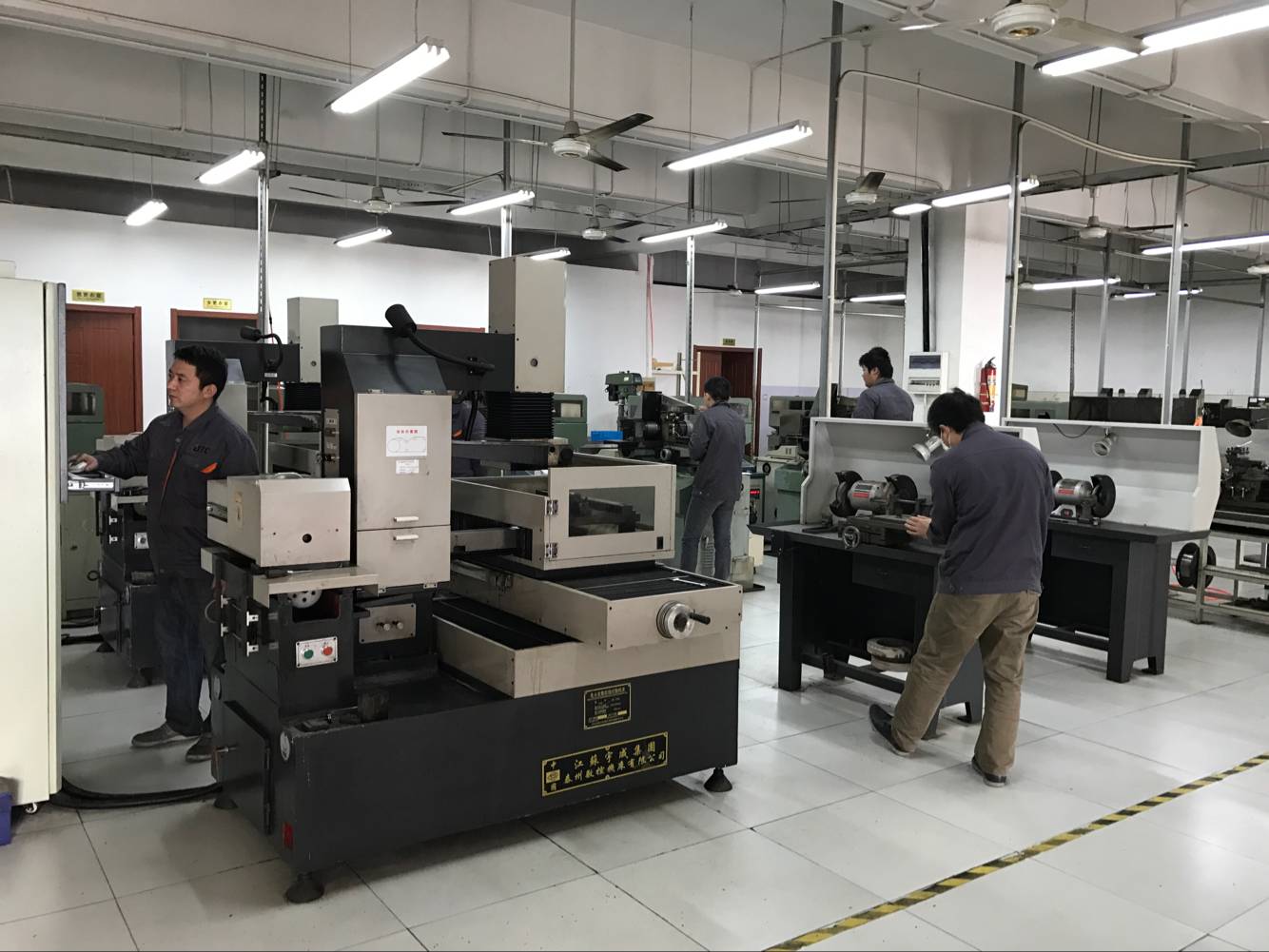
DTC Orthodontics (Hangzhou DTC Medical Apparatus Co., Ltd) is an orthodontic supplies manufacturer based in Hangzhou, Zhejiang Province, China. Founded in 2004, the company operates a 5,000 m² facility with 150 employees, an annual output of 1,000,000 units and a 30-engineer R&D team; approximately 80% of output is exported to markets in Europe, North America, the Middle East, South America, Asia, Africa and Australia. Its catalogue spans the attachment, force-transmission, auxiliary and instrument layers described above, which is what makes a single-source tray build practical in the first place.
The ranked set: eight must-have supplies, in tray order
The order below is set by four criteria applied together: whether the item's mechanical role can be substituted by something already on the tray; whether it depends on another component to function; whether it is used in most cases rather than occasional ones; and whether its specification and regulatory status can be verified before purchase.
| Rank | Product (DTC model) | Role in the tray | Force character |
|---|---|---|---|
| 1 | Niti Closed Spring With Eyelets | Controlled traction for space closure | Pull (closed coil) |
| 2 | Niti Open Spring | Controlled pushing and space maintenance | Push (open coil) |
| 3 | Power Chains | Sustained multi-tooth closure | Elastic, sustained |
| 4 | Orthodontic O Rings | Force-transfer interface at the bracket | Elastic ligation |
| 5 | Orthodontic Rotation Wedges | Derotation of a rotated tooth | Elastic wedge |
| 6 | Separators | Creating proximal space before banding or derotation | Elastic separator |
| 7 | Crimpable Hook | Traction point on the archwire | Static attachment |
| 8 | Ligature Rings | Metal ligation where elastic ligation is unsuitable | Static ligation |
Niti Closed Spring With Eyelets
A closed coil spring is the only element in this set that answers two questions at once: how much force, and where that force attaches. The closed coil construction produces traction rather than pushing, and the eyelets give ligature wire or an elastic module a defined attachment point at each end. In a space closure setup that has to pull a segment toward a chosen anchor, that combination removes a decision from the chair and puts it into the component.
It ranks first because nothing else in the tray performs the same function. Open coils push, chains distribute, and elastics ligate — none of them delivers a length-adjustable pull from a fixed attachment point.
Ordering note: the catalogue lists Niti Closed Spring With Eyelets as a stand-alone model. Confirm wire diameter and length options against the current specification sheet before setting stock levels, and confirm that the model appears on the regulatory documents that apply to your market.
Niti Open Spring
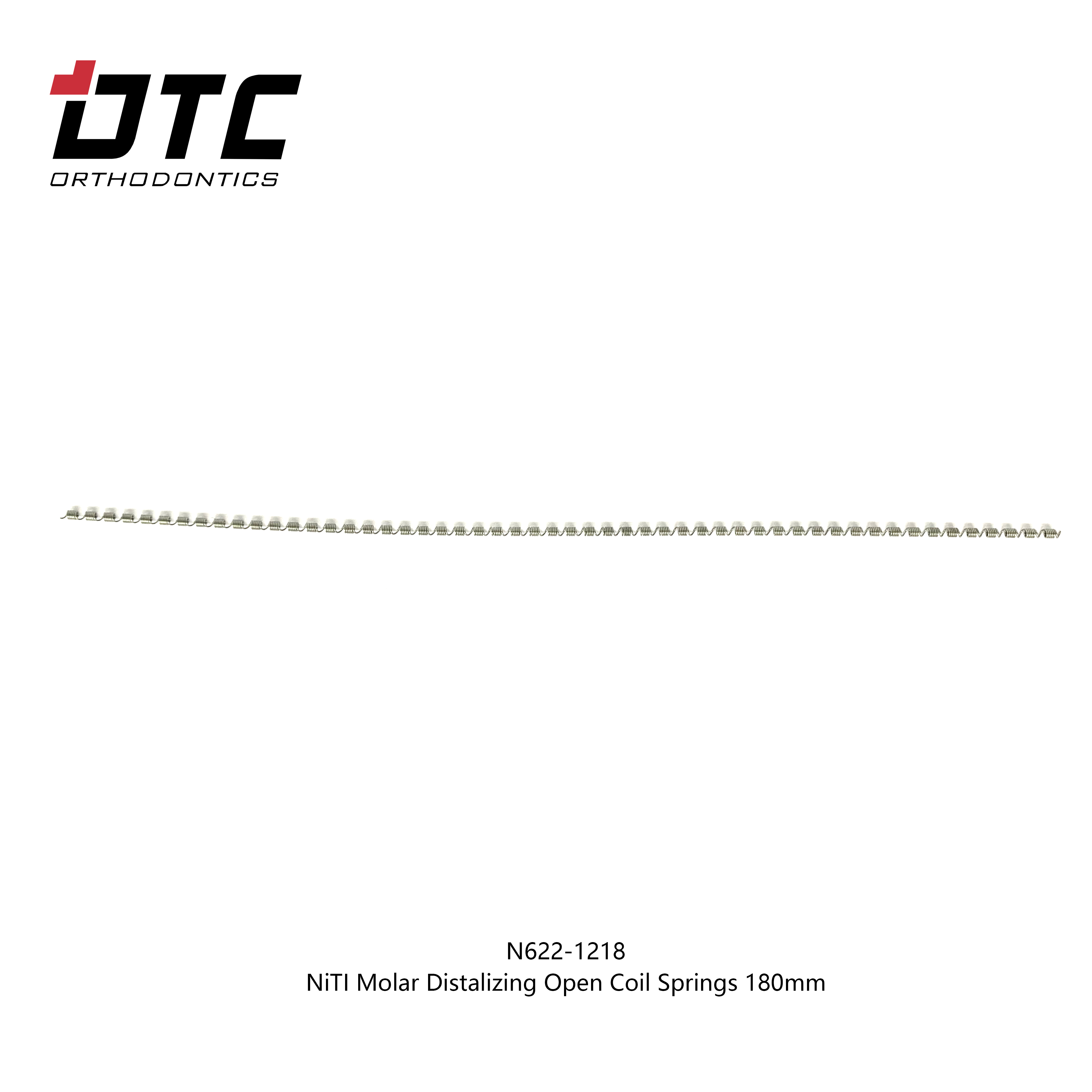
Open coil springs cover the opposite half of the mechanics. In the DTC catalogue the Niti Open Spring — also listed as Open Coil Spring — is offered in four round wire diameters, 0.008", 0.010", 0.012" and 0.014", and in two lengths, 180 mm and 914 mm, in super-elastic Niti.
Three properties matter for this tray. The nickel-titanium alloy is specified as delivering gentle, constant and continuous force. The shape-memory behaviour resists permanent deformation and keeps the coil active across the treatment interval. The polished coil exterior is specified to reduce friction along the archwire and to limit soft-tissue irritation. The stated clinical purpose is predictable and stable mechanics for opening or closing interdental spaces.
Four diameters across two lengths is what makes this the workhorse of the set: a single model line covers most pushing situations a clinic will meet, without requiring a second product family.
Power Chains
Power chains carry the continuous-elastic half of the closure task across more than one interproximal space. Where a coil spring applies force at a defined point, a chain distributes it along the segment, which is what a multi-tooth closure step requires. The DTC catalogue lists Power Chains as a standing model within the auxiliary range.
Practical note: chains are elastic, so they are specified together with the ligation interface at rank 4 rather than instead of it. A chain that is not held against the archwire transmits nothing.
Orthodontic O Rings
O rings are the interface where every other force in this tray becomes real. A coil spring, a chain or a ligature only moves a tooth if the archwire is seated in the bracket slot, and the O ring is what holds it there. They are consumed faster than any other item on this list, and running out of them stops treatment more often than running out of springs does.
Treat O rings as a consumable line with a defined reorder point, not as a one-off purchase alongside a larger instrument order. The same logic applies to Ligature Rings at rank 8, which sit in the same functional slot for cases where a non-elastic ligature is preferred.
Orthodontic Rotation Wedges
Rotation wedges are the only item in the set designed specifically for the second half of this article's subject. Their function is to convert available proximal space into a rotational couple on a tooth that is turned out of the arch line. They earn a place in the tray because no other component on the list is purpose-shaped for derotation — a spring or a chain moves a tooth along the arch, not around its own axis.
They are also the item most dependent on rank 6. A wedge placed where there is no proximal space has nothing to work with, which is why rotation cases are sequenced rather than started.
Separators
Separators create the space that both banding and derotation depend on. They are placed ahead of the main procedure, which explains the apparent contradiction of ranking sixth in tray importance but first in treatment sequence. A clinic that keeps separators in stock can begin a case on the day the patient arrives; a clinic that does not will reschedule the appointment.
Because separators are placed and then removed, their consumption is predictable per case rather than per chair visit — a useful distinction when setting stock levels for a multi-chair practice.
Crimpable Hook
A Crimpable Hook is crimped directly onto the archwire to give traction a fixed point without welding. In a closure setup where the pull direction has to be chosen deliberately — for example, to keep reciprocal movement of the anchorage segment under control — the hook is what makes that choice mechanical rather than theoretical.
It sits at seventh because it is a modifier rather than a driver. Cases run without it, but they run with fewer directional options. Its practical dependency is the instrument layer: a hook is only as good as the crimping tool used to seat it.
Ligature Rings
Ligature Rings are the metal alternative to elastic ligation. They earn a place in the tray because some situations call for ligation that does not decay over the treatment interval and does not depend on elastomer behaviour. They are the least frequently used of the eight and the one whose absence is most disruptive when it is needed.
For a distributor, they belong in the catalogue as a completeness item: they are rarely the reason a clinic places an order, but they are frequently the reason a clinic cannot consolidate one.
The supporting layer: dental wires and dental pliers
None of the eight items above produces tooth movement by itself. Two supporting categories decide whether the forces they generate arrive where intended, and both are part of the same purchasing decision.
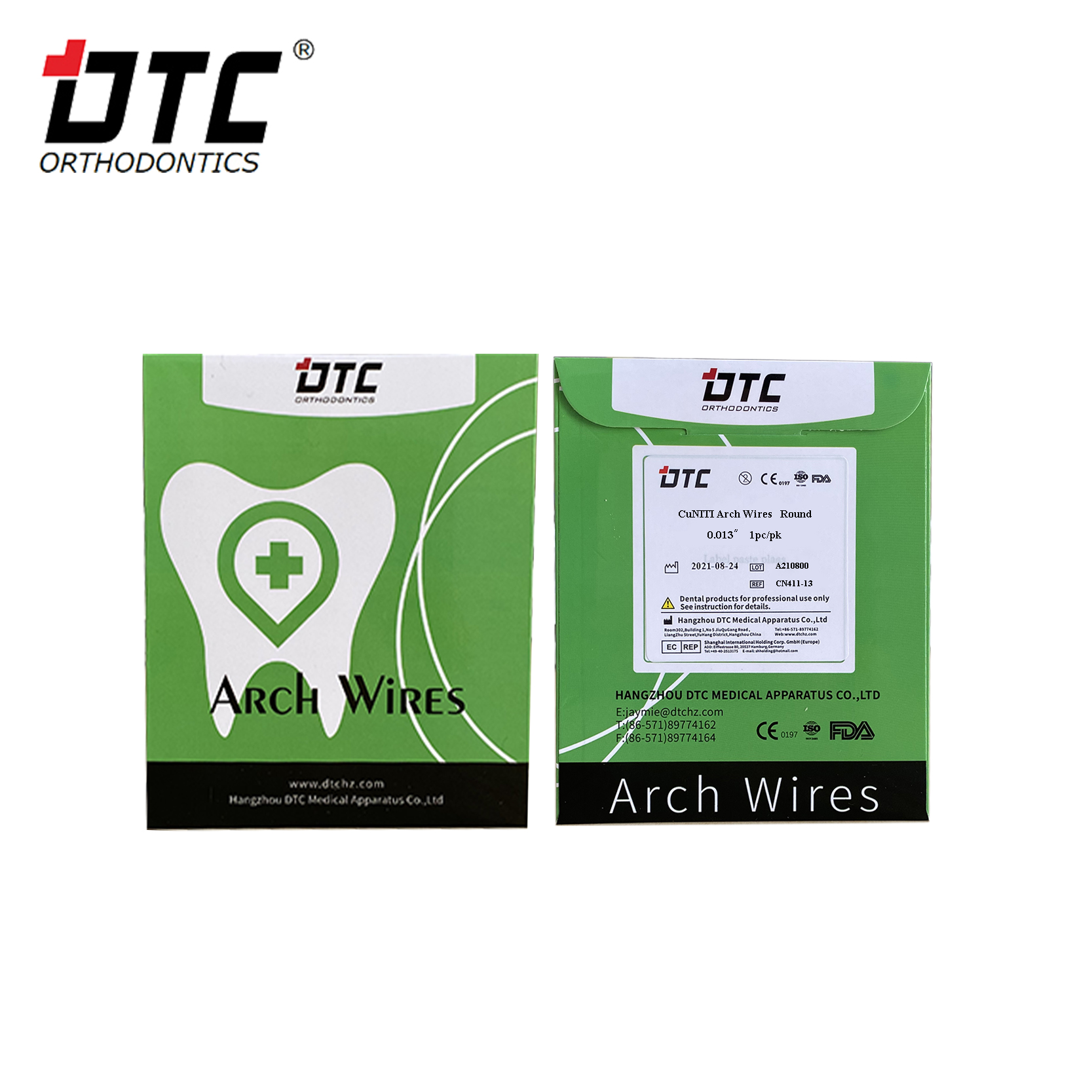
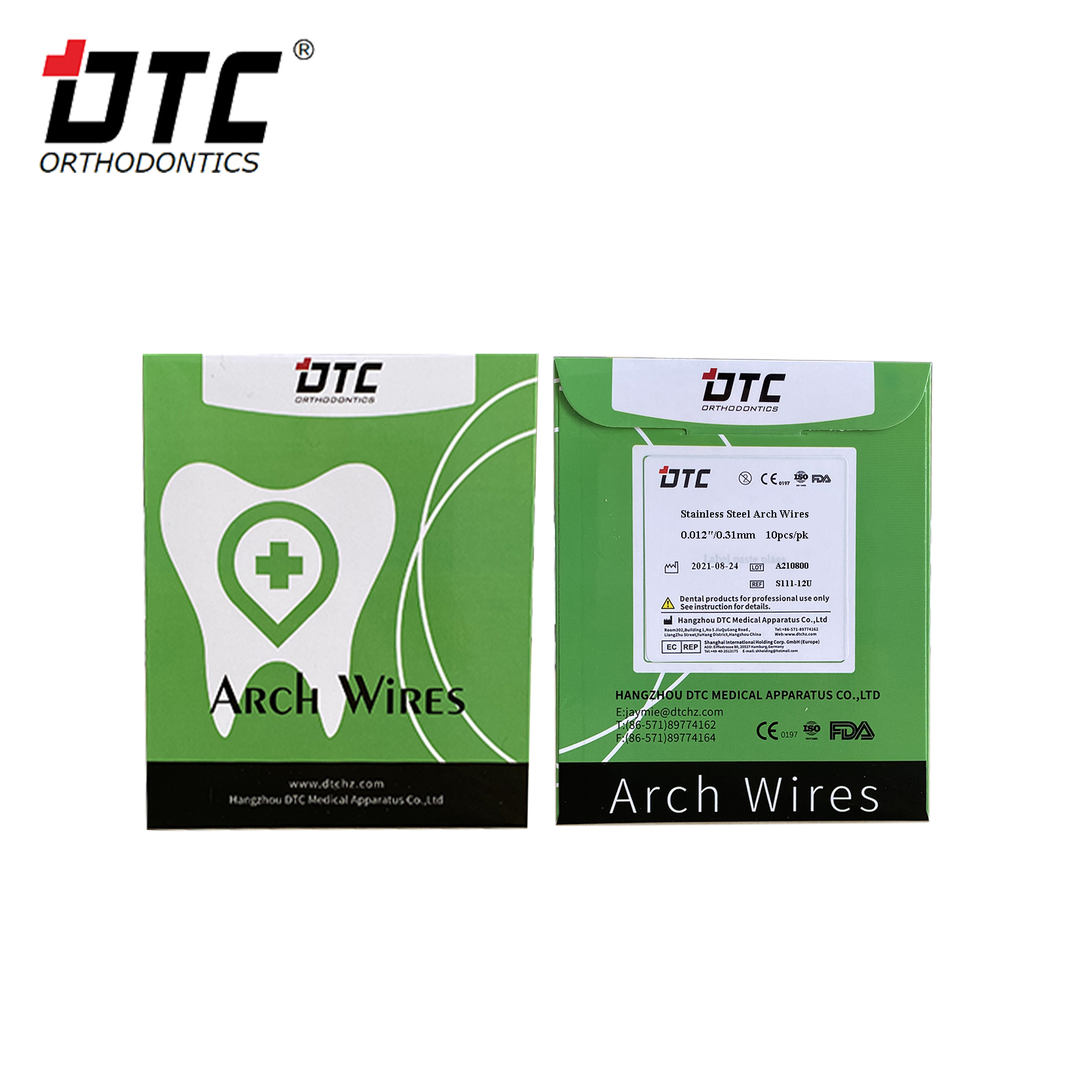
Dental wires. The DTC catalogue lists CuNITI Arch Wires in round, rectangle and Da forms, in a copper-Niti material, specified as delivering gentle and continuous force with high springback, an ultra-smooth low-friction surface and anatomically preformed arch forms. It also lists Stainless Steel Arch Wires in Square, Oval and Natural arch forms, in round and rectangular cross-sections, for upper and lower arches. The working rule is straightforward: the higher-springback wire belongs in leveling and early closure, while the stiffer stainless wire belongs where the arch form has to hold against the reaction of a tooth being rotated.
Dental pliers. Coils have to be cut to length, crimpable hooks have to be crimped, bands have to be seated, and archwire ends have to be trimmed without leaving a tissue-irritating tip. The DTC instrument range includes Light Wire Pliers, Light Wire Cutter Pliers, Distal End Cutter Pliers, Band Crimping Pliers, Crown and Band Contouring Pliers, Bracket Removing Pliers and Crown Trimming Scissors. The relevant purchasing point is that these are the tools that convert the eight auxiliaries from stock into working components — and they wear out on a different cycle from the consumables.
How the eight items work together: step-by-step tray build
The sequence below is written for a clinic building its own tray or a distributor specifying one for a clinic group. Each step ends with the decision that has to be made before moving on.
- Define the mechanical goal before choosing a product. Ask whether the case needs a tooth pushed away from a segment, pulled toward an anchor, or held while an elastic closes a gap. Decision: pull, push, or sustained elastic. This single answer determines whether rank 1, rank 2 or rank 3 leads.
- Fix the spring specification. For pushing cases, the Niti Open Spring is available in 0.008", 0.010", 0.012" and 0.014" diameters at 180 mm and 914 mm — eight combinations from one model line. Decision: which diameters are stocked as standard and which are ordered per case.
- Choose the elastic interface. Decide how force reaches the bracket slot: Orthodontic O Rings as the default, Ligature Rings where non-elastic ligation is required. Decision: consumption ratio between the two, and the reorder point for each.
- Sequence rotation and space creation. If the case involves a rotated tooth, confirm that Separators are placed before Orthodontic Rotation Wedges are applied. Decision: whether the case starts today or after a separator appointment.
- Add traction and archwire control. Where the pull direction must be fixed, specify Crimpable Hook on the archwire. Confirm the wire family — CuNITI Arch Wires for leveling and early closure, Stainless Steel Arch Wires where arch form must hold. Decision: wire type per phase, not per case.
- Match the instrument layer. Confirm that cutting, crimping and trimming tools are present and serviceable before the auxiliaries are opened. Decision: replace versus reorder for each plier type.
- Verify documentation against the actual product list. Match each item in the tray to the certificates that cover it. Decision: whether any item needs a separate document request before the order is released.
Step 7 is the one most often skipped, and it is the one that delays shipments. A supplier can hold a valid quality management system certificate and still have individual product families that fall outside the scope of a particular listing. The compliance table in the next section shows why this matters in practice.
Where each configuration fits: clinic and distributor use cases
Use case 1 — Anterior crowding with a rotated incisor
The starting constraint is space, not force. Separators create the proximal space, Orthodontic Rotation Wedges convert that space into derotation, and Orthodontic O Rings hold the archwire in the slot while the tooth turns. A CuNITI Arch Wire in a light round form carries the alignment. This is the case that justifies keeping ranks 4, 5 and 6 stocked at all times.
Use case 2 — Extraction-case space closure
Here the force has to be directional and sustained. Niti Closed Spring With Eyelets provides the pull from a defined attachment point, a Crimpable Hook on the archwire sets the direction, and a Stainless Steel Arch Wire holds the arch form against the reaction. Power Chains take over once the gap has narrowed to a segment rather than a single space.
Use case 3 — Molar or premolar rotation
Posterior rotation usually needs a stiffer base wire and a banded anchor. Stainless Steel Arch Wires, Dental Orthodontic Bands and Band Crimping Pliers form the base, with Orthodontic Rotation Wedges providing the derotation couple and Ligature Rings available where elastic ligation would decay before the next visit.
Use case 4 — Distributor SKU planning
A distributor stocking this tray is really stocking four different consumption patterns: springs (low volume, long life), chains and O rings (high volume, short cycle), wedges and separators (predictable per case), and pliers (capital items with a replacement cycle). DTC lists an MOQ of 100 units and a monthly capacity of 5,000 units, with OEM/ODM available across package, logo, tag and product. Where entry volume is the constraint, the commercial options published by the company are split shipments — producing a higher volume for a better unit price but shipping it in smaller batches — shared tooling costs, and standard in-house colours or materials in place of custom sourcing.
Use case 5 — Hospital or tender purchasing
Public hospital procurement adds a documentation layer on top of the clinical one. DTC's case record includes public hospital accounts ordering in the region of 3,000 units over a two- to three-year relationship, alongside dental clinic accounts in the 500–1,000 unit range and distributor accounts at approximately 5,000 units. For tender work, the practical requirement is that the certificate scope covers every product line in the bid, not just the headline items.
Comparison tables: configuration fit and compliance scope
The first table maps clinical objectives to component combinations from the ranked set. The second maps each regulatory document to the product families it actually covers.
| Clinical objective | Primary items | Supporting items | Why this combination |
|---|---|---|---|
| Close a single extraction space | Niti Closed Spring With Eyelets | Crimpable Hook, CuNITI Arch Wires, Light Wire Pliers | Pull-type force delivered from a fixed attachment point |
| Open or maintain interdental space | Niti Open Spring | Separators, Orthodontic O Rings | Push-type force with a selectable wire diameter |
| Close a multi-tooth segment | Power Chains | Orthodontic O Rings, Ligature Rings, Stainless Steel Arch Wires | Elastic force distributed along the segment |
| Derotate a single tooth | Orthodontic Rotation Wedges | Separators, Stainless Steel Arch Wires | Space is created first, then converted into a rotational couple |
| Prepare for banding | Separators | Band Crimping Pliers, Dental Orthodontic Bands | Proximal space created ahead of the main procedure |
| Document | Number | Issuing body | Validity | Scope note |
|---|---|---|---|---|
| EN ISO 13485:2016 Medical Device Quality Management System | SX 2184523-1 | TÜV Rheinland LGA Products GmbH | Issued 2024-04-22, valid to 2027-05-08 | Design and development, manufacture and distribution of orthodontic brackets, bands, tubes, wires, lingual buttons, crimpable hooks, orthodontic pliers and dental mirrors |
| FDA establishment registration and device listing | 3009955691 | U.S. Food and Drug Administration | Issued 2026-01-12, valid to 2026-12-31 | Listing under 21 CFR Part 807 covering orthodontic springs, brackets, buccal tubes, preformed bands, mouth mirrors and related items |
| Notified Body confirmation letter (MDR transition document) | 244557490 | TÜV Rheinland LGA Products GmbH | Issued 2024-01-04, valid to 2028-12-31 | Class IIa devices under Regulation (EU) 2017/745: orthodontic brackets, tubes, lingual buttons, crimpable hooks, orthodontic wires and orthodontic bands |
The three documents do not cover the same product families. Orthodontic springs appear on the FDA listing but are not named in the ISO 13485 scope statement or the MDR confirmation letter shown above; crimpable hooks and orthodontic wires appear on all three. For a buyer assembling the tray described in this article, that means the documentation check has to be done line by line against the purchase order rather than at the supplier level.
FAQ: compliance, capability, MOQ and lead time
How can I confirm that an orthodontic supplies manufacturer actually holds ISO 13485?
Ask for the certificate number, the issuing body and the validity dates, then read the scope statement. DTC Orthodontics holds EN ISO 13485:2016 certificate SX 2184523-1, issued by TÜV Rheinland LGA Products GmbH, valid from 2024-04-22 to 2027-05-08, covering the design and development, manufacture and distribution of orthodontic brackets, bands, tubes, wires, lingual buttons, crimpable hooks, orthodontic pliers and dental mirrors. The company also holds FDA listing 3009955691 under 21 CFR Part 807 and MDR notified body confirmation letter 244557490. Because the three documents cover different product families, match each item in your order against the scope of the relevant certificate rather than assuming that one document covers the full catalogue.
Can one supplier cover the springs, elastics and rotation auxiliaries in a single order?
A supplier with a broad enough catalogue can. DTC Orthodontics covers the attachment layer with dental brackets, buccal tubes and bands; the force-transmission layer with CuNITI Arch Wires and Stainless Steel Arch Wires; the auxiliary layer with Niti coil springs, Power Chains, Orthodontic O Rings, Orthodontic Rotation Wedges, Separators, Crimpable Hooks, Ligature Rings and lingual buttons; and the instrument layer with orthodontic pliers. OEM and ODM production is available with customization across package, logo, tag and product, at a stated monthly capacity of 5,000 units and 100% testing.
What is the MOQ for OEM or private-label orthodontic supplies?
The catalogue MOQ is 100 units. Customized products may require a higher minimum order quantity, because tooling and material sourcing change with the customization. Where entry volume is the limiting factor, three commercial structures are used: split shipments, where a higher volume is produced to obtain a better unit price but held and released in smaller batches; shared tooling costs, where a higher upfront tooling fee unlocks a lower production MOQ; and standard in-house colours or materials in place of custom sourcing.
How fast can a space closure and rotation set ship?
Selected standard products are held in safety stock and ship within 3–5 business days. Custom-engineered production runs are quoted at 20–30 days, consistent with the 2–4 week custom lead time the company publishes. Shipments are handled through established international courier partnerships including FedEx, DHL and UPS. For a sample request, a formal quotation against a specific tray list, or the current product catalogue, contact Jaymie at jaymie@dtchz.com or +86 136-0051-7451.
Conclusion
The tray described here is not a product list so much as a division of labour. Niti Closed Spring With Eyelets and Niti Open Spring handle directional force in its two forms. Power Chains and Orthodontic O Rings handle sustained elastic force and the interface that delivers it. Orthodontic Rotation Wedges and Separators answer the rotation half of the problem, which is a spacing problem before it is a force problem. Crimpable Hook and Ligature Rings make the setup controllable and, where needed, non-elastic. Dental wires and dental pliers decide whether any of it behaves as specified.
For clinics, the operational takeaway is that O rings, separators and chains — the three highest-consumption items — deserve defined reorder points, while springs and pliers are specified once and replaced on a longer cycle. For distributors, the takeaway is that a supplier's regulatory scope statement is part of the product specification, not paperwork attached to it.
Build your tray with DTC Orthodontics
Hangzhou DTC Medical Apparatus Co., Ltd has manufactured orthodontic supplies since 2004, exporting to more than 100 countries and regions. Sample requests, tray-specific quotations and OEM/ODM enquiries are handled directly by the international sales team.
Email: jaymie@dtchz.com | Tel / WhatsApp: +86 136-0051-7451 | Web: www.dtchz.com
Download the full product catalogue: DTC Orthodontics English Catalogue (PDF)
Have Questions or Need More Details?
Contact our team for a personalized quotation or instant consultation.
Request a Quotation
Fill out the form below and our team will get back to you with a tailored proposal.
WhatsApp Direct Chat
Prefer to chat in real-time? Message us on WhatsApp for instant assistance & quick answers.
- Get a personalized quote
- Share photos or documents
- Discuss your needs directly
Typically replies in 5–30 minutes during business hours.