
Selecting Dental Orthodontic Bands and Buccal Tubes for Molar Attachment: A Technical Guide for Clinics and Distributors
Molar attachment is a sizing-and-compatibility decision, not a cosmetic one. Three variables determine whether an orthodontic band and buccal tube will hold through a full treatment cycle: the band's fit and contour against the molar crown, the buccal tube's slot size and torque prescription, and the interface — prewelded, welded or bonded — that connects the tube to the appliance. When these three variables are matched, the archwire travels without binding, the terminal segment resists debonding under heavy mechanics, and the patient tolerates the appliance through the long consolidation phase.
This technical guide sets out a practical selection framework for dental orthodontic bands and dental buccal tubes used in molar attachment. It covers band sizing and material, the weldable and convertible families of buccal tube design, slot and torque compatibility with brackets and wires, and a step-by-step evaluation sequence. Product configurations referenced throughout come from the DTC Orthodontics line manufactured by Hangzhou DTC Medical Apparatus Co., Ltd.
Problem Definition: Why Molar Attachment Fails
Most fixed-appliance service interruptions and unscheduled chairside visits trace back to the terminal molar rather than to the anterior brackets. The molar carries the heaviest mechanical loads in the arch — headgear traction, intermaxillary elastics, transpalatal arches, and the full terminal torque of a rectangular archwire — while sitting in an area that is difficult to visualize, dry, and bond.
Four failure patterns dominate:
- Band adaptation failure. A band whose contour does not follow the molar's cervical margin concentrates cement at the contact points, allowing microleakage, cement washout, and eventual loosening.
- Slot binding. If the buccal tube slot is undersized for the working archwire, the wire cannot slide distally during space closure. The result is loss of anchorage control rather than the intended tooth movement.
- Tube separation. The weld or bond between the tube and the band is a stress riser. Where joining quality is inconsistent, the tube detaches mid-treatment and forces reattachment.
- Torque drift. A tube whose torque prescription is inconsistent with the bracket prescription on the same arch produces unintended buccal or lingual crown movement.
Each pattern is addressed before the patient is seated — at the point of product selection. A selection framework therefore has to be built around measurable attributes: band type and contour, tube slot, torque, system prescription, and material.
Industry Background: What Is Changing in the Orthodontic Supply Base
The component categories discussed here sit inside a large and still-expanding category. The global orthodontic supplies market was valued at USD 14.8 billion in 2024 and is expected to grow at a CAGR of 20.1% through 2034, according to Global Market Insights. Grand View Research estimated that North America held the largest regional share at 30.6% of revenue in 2024, while Market Research Future estimated China's orthodontic supplies market at approximately USD 713.25 million in the same year.
Three structural changes are directly relevant to how buyers now evaluate bands and buccal tubes.
Regulation has tightened around documentation. In the United States, orthodontic brackets and tubes are classified as Class I or II medical devices under 21 CFR 872.5410, with ISO 27020:2019 recognized as the applicable standard. In the European Union, Medical Device Regulation (EU) 2017/745 requires CE marking and classifies most orthodontic products as Class I or IIa. For a distributor, this means component selection is no longer only a clinical decision; it is a documentation decision. A supplier that cannot supply consistent technical files creates a market-access problem downstream.
Material supply is a planning variable. Nickel-Titanium archwires, which dominate the working phases of treatment, face supply chain risk because of heavy reliance on Chinese raw materials, as reported by Mordor Intelligence. Clinics and distributors that treat the molar segment as a single consumable line rather than a multi-source category expose themselves to the same upstream volatility.
Adults are now a mainstream segment. Mordor Intelligence notes that clear aligner demand has grown at a 14.25% CAGR as aesthetic demand from adult patients rises. Adult and mixed-dentition cases change the calculus for bands: more partially erupted second molars, more restorations at the cervical margin, and more pressure to use lower-profile hardware.
The Detailed Solution: Core Selection Parameters
Selecting bands and tubes can be reduced to five parameters. Each is independent, and each must be fixed before the next is chosen.
1. Band Type and Fit
Dental orthodontic bands are supplied as prewelded bands and pediatric bands in the DTC range. Prewelded bands arrive with the buccal tube already attached — the configuration most clinics use for first and second molars, because it removes the welding step from the chairside workflow and standardizes the tube position relative to the band. Pediatric bands are scaled for smaller, partially erupted crowns.
Band fit is a function of contour, not only of nominal size. A band must seat with its gingival margin below the height of contour and its occlusal edge clear of the marginal ridge, so that the cement line is protected and the band cannot be displaced occlusally by the opposing dentition. When evaluating a sample, the practical test is to seat the band on a representative model or extracted tooth and inspect the cervical margin under magnification: the gap should be uniform around the circumference rather than tight at the mesiobuccal and distolingual corners.
Pediatric bands deserve separate consideration rather than a scaled-down adult band. The crown of a primary molar is shorter and has a more pronounced cervical constriction, so a band that is simply smaller in outline will not necessarily follow that contour.
2. Band Material and Construction
Stainless steel is the base material for the DTC band range. This choice is not incidental. The band is a long-term resident in the oral environment and must resist corrosion across the entire treatment, tolerate repeated cementation, and be adjustable at chairside with contouring and crimping pliers without work-hardening to the point of cracking.
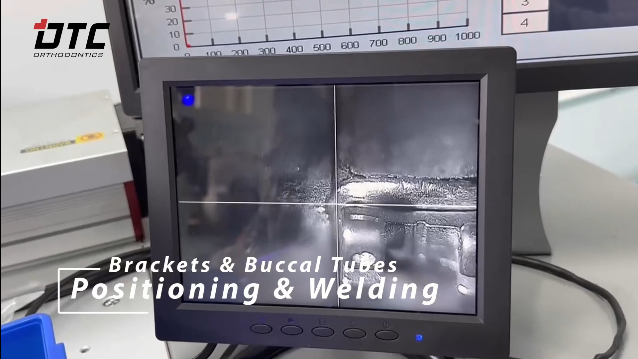
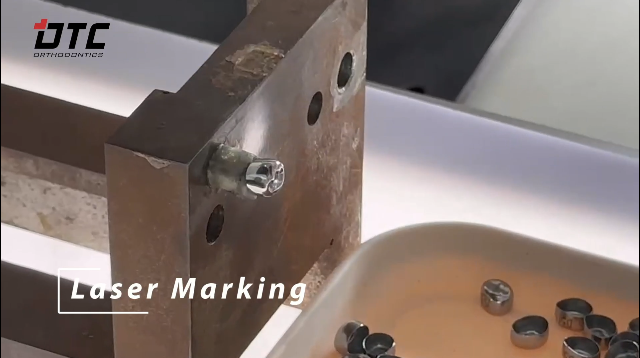
The construction detail that most affects longevity at the band-tube junction is the joining method. DTC's buccal tube production uses laser welding technology and precision casting, resulting in a compact design. Laser welding produces a localized, low-heat joint with a narrow heat-affected zone, which keeps the surrounding stainless steel from losing its spring properties — a practical advantage when a band must later be crimped or contoured without the tube detaching.
3. Buccal Tube Designs: Weldable, Bondable and Convertible
Buccal tube design in orthodontics broadly separates into three families:
- Weldable tubes are welded to a molar band. They are the standard choice where band retention is required — heavily restored molars, molars that must carry headgear or heavy auxiliary mechanics, and any situation requiring maximum resistance to debonding.
- Bondable tubes are bonded directly to the molar, eliminating the band and the associated gingival coverage. They suit patients with short clinical crowns, partially erupted molars, or aesthetic concerns in the posterior region.
- Convertible tubes carry a removable cap over an additional ligation slot. The cap allows the tube to be converted later in treatment — typically when headgear or auxiliary mechanics end and the molar needs to respond to a plain archwire or a tie. Convertibility is a treatment-planning option, not an accessory; the decision to use a convertible tube has to be made at bonding, not at the conversion point.
DTC supplies dental buccal tubes in the Zeal Series and Zeal Plus Series. Both are metal buccal tubes in stainless steel, offered in Roth and MBT systems with low-torque and high-torque options and slot sizes of 18 and 22. The Zeal Series tube carries a high-strength monoblock hook and a tooth mark that indicates the direction of force application during bonding — a detail with practical consequences, because a bonded tube placed on the wrong molar reverses the intended mechanics.
Provenance note for buyers. Hangzhou DTC Medical Apparatus Co., Ltd. holds a patent for an Orthodontic Buccal Tube Convenient for Archwire Insertion (Patent No.: CN 224292022 U). When a supplier claims design ownership of a tube geometry, requesting the patent number is a faster verification route than requesting marketing collateral.
4. Slot Size and Torque Prescription
Slot size and torque are the two parameters most often treated as interchangeable when they should not be.
Slot size sets the maximum archwire dimension that can engage the tube without binding. A 0.022-inch slot accommodates the larger rectangular wires used in the later stages of treatment and remains the more forgiving option where wire sequence flexibility matters. A 0.018-inch slot offers finer control from a smaller range of wires and is often preferred in cases where the clinician anticipates reducing the total number of wire changes. DTC supplies both 18 and 22 slots across its buccal tube lines, so the slot decision can be made on clinical grounds and then matched to the prescription, rather than the reverse.
Torque determines how the tube resists buccolingual crown movement. Low-torque and high-torque variants exist for a clinical reason: the same torque expression that controls a molar with normal axial inclination will over-rotate one in an already compensated position. Selecting torque at the tube rather than trying to compensate with wire bends keeps the terminal segment mechanically predictable.
5. Compatibility with Wires and Brackets
A buccal tube is only as good as the archwire that runs through it and the bracket prescription that shares the arch.
Wire compatibility. DTC's archwire range includes Super-elastic Niti Wires with arch forms in Square, Oval, Natural, Europa I and Da, in both round and rectangular cross-sections, for upper and lower arches. Stainless Steel Arch Wires are offered in Square, Oval and Natural forms, round and rectangular, upper and lower. CuNITI Arch Wires are supplied in round, rectangular and Da variants. Slot size, wire dimension and arch form must be selected as a set — a rectangular wire at the upper limit of the slot will not allow the distal sliding that space closure requires.
Bracket compatibility. If the molar tube is prescribed in MBT, the premolar and anterior brackets on the same arch should also be MBT. DTC's bracket families — including the Delicate Series, Zeal Series, Bright Series and the self-ligating Glory and Toast Series — are supplied in Roth and MBT systems with 18 and 22 slots and with low- or high-torque options. The Delicate Series metal bracket is made of 17-4PH stainless steel with a contoured, sandblasted mesh base, laser welding technology and an accurate, smooth slot; the same material family and slot philosophy carries through to the molar tube line, which is what makes cross-system mixing avoidable in practice.
Hand instrument compatibility. The molar segment also requires tools that can reach it. DTC's Distal End Cutter Pliers have a hardness of HRC 58–63, mini tips of 0.018" × 0.022", and handle archwires up to 0.021" × 0.025", with a maximum sterilization temperature of 180°C. Band Crimping Pliers and Crown And Band Contouring Pliers are also rated HRC 58–63 and 180°C. Tools that soften or corrode under repeated autoclaving become a hidden cost driver in molar work, since band adaptation depends on consistent instrument feel.
Step-by-Step Breakdown: A Selection Workflow
The following sequence applies to a clinic building a molar protocol or a distributor building a stock list. It runs from prescription down to logistics, so that clinical compatibility is resolved before commercial terms.
- Fix the prescription system. Decide Roth, MBT or edge-wise for the case or the market. DTC bands are supplied in Roth, MBT and edge-wise systems; buccal tubes in Roth and MBT. The system choice propagates to brackets and wires, so it comes first.
- Choose the slot size. 18 or 22, for both the molar tube and the brackets on the same arch. Confirm the largest archwire you expect to place against the chosen slot.
- Choose the torque variant. Low or high, per molar position, based on axial inclination at presentation.
- Select the band configuration. Prewelded bands for routine first and second molars; pediatric bands for primary or mixed-dentition cases. Verify contour on a model rather than by silhouette.
- Select the buccal tube configuration. Weldable/banded, bondable, or convertible, based on whether the treatment plan includes headgear, auxiliary arches, or later conversion.
- Check wire availability in the matching arch forms. Confirm that the wire range covers round and rectangular cross-sections in the arch form used by the practice.
- Confirm instrument support. Band crimping, band contouring, distal end cutting and light wire cutting capability at the molar position, with sterilization at 180°C if that matches your autoclave cycle.
- Validate on a sample before committing. Seat bands on representative models, check cervical margin uniformity, and confirm the tube joint survives contouring.
- Set replenishment terms. Agree MOQ, delivery terms, acceptance criteria and payment terms so that a clinical protocol is not broken by a stock-out mid-treatment.
Use Cases: Matching Hardware to Clinical Scenarios
Severely rotated or tipped molars. Where a molar presents with significant axial rotation, the band's contour fit becomes the limiting factor. A prewelded band with a well-defined cervical contour is the practical starting point, combined with a low-torque tube so that the initial alignment mechanics are not fighting the prescription. Torque compensation is then introduced later through the wire, once the crown has been derotated.
Class II and Class III mechanics requiring extraoral traction. Cases using face masks and headgear apply sustained force through the molar tube. DTC's orthodontic face masks use a heavy-duty adjustable crossbar for precise control of traction vectors and force direction, and the full adjustable mask is made of stainless steel and ABS in large and small sizes. On the appliance side, the tube must survive that load, which pushes selection toward a weldable or prewelded configuration rather than a bondable tube, and toward a tube with an auxiliary slot or hook. Auxiliary components such as crimpable hooks, with a rounded ball end that minimizes friction, a precise internal slot for strong grip and an open-channel design for easy placement, are used to add traction points without replacing the tube.
Mixed-dentition and pediatric patients. Primary molars require pediatric bands rather than reduced adult bands. Where the primary molar is already compromised, the restorative decision may involve a pediatric preformed crown instead. DTC's Kids Crown is a pediatric dental crown in stainless steel supplied in upper D-type, lower D-type, upper E-type and lower E-type systems, and the Crown Trimming Scissor — stainless steel, HRC 58–63, sterilizable to 180°C — is used to trim the crown edge and change crown size to suit the molar size of different patients.
Aesthetic-driven adult cases. Adult patients in the posterior segment often resist full banding. A bondable tube combined with ceramic brackets keeps the appliance less visible. DTC's Ceramic Series and Ceramic Self-ligating Series brackets are made from aluminum oxide in poly-crystalline or mono-crystalline form, in Roth, MBT and edge-wise systems, with slot sizes of 18 and 22 and with or without hooks. The corresponding molar tube then has to be checked for slot and torque consistency with that ceramic prescription.
Distributor stock planning. For a distributor, the molar segment is a matrix rather than a product. Bands multiply by band type and system; tubes multiply by series, slot and torque. Rather than stocking every cell, the practical approach is to fix the dominant prescription in the served market, stock that configuration deeply, and hold a shallow reserve of the alternative slot size. This is also where long-term supply reliability outweighs unit price, because an out-of-stock molar tube stops a case in progress.
Comparison Table: DTC Orthodontic Molar Attachment Components
The table below lists verified configurations for bands and buccal tubes in the DTC Orthodontics range.
| Product | Model / Series | Type | System | Slot size | Torque | Material |
|---|---|---|---|---|---|---|
| Dental Orthodontic Bands | Bands | Prewelded Bands, Pediatric Bands | Roth, MBT, edge-wise | — | Low torque, high torque | Stainless steel |
| Dental Buccal Tubes | Zeal Series | Metal dental buccal tubes | Roth, MBT | 18, 22 | Low torque, high torque | Stainless steel |
| Dental Buccal Tubes | Zeal Plus Series | Metal dental buccal tubes | Roth, MBT | 18, 22 | Low torque, high torque | Stainless steel |
Compatible working equipment for these components, as specified for the DTC range, includes orthodontic archwires in NiTi and stainless steel, dental bonding adhesives and cements, curing lights, ligatures such as elastic ties or metal wires, and orthodontic pliers. The stated requirements for this category are excellent biocompatibility, high corrosion resistance, strong shear bond strength, precise slot dimensions, smooth edges and profile for patient comfort, and compliance with medical device regulations including ISO 13485, FDA and CE.

Frequently Asked Questions
What certifications and regulatory approvals does DTC Orthodontics hold?
Hangzhou DTC Medical Apparatus Co., Ltd. holds factory certifications and production evidence together with ISO 13485, CE0197 and FDA certificates covering its products and production processes, and states that its management system follows CE (MDR) and ISO requirements, including the EU Medical Device Regulation. This matters for bands and buccal tubes specifically because the category is regulated: in the United States, orthodontic brackets and tubes fall under 21 CFR 872.5410 as Class I or II devices with ISO 27020:2019 as the recognized standard, and in the European Union, MDR 2017/745 requires CE marking with most orthodontic products classified as Class I or IIa.
Can DTC provide consistent product quality and batch-to-batch stability?
As both manufacturer and exporter, DTC operates Quality Management Systems (QMS) with formal systems in place to govern production, and it maintains direct control over production and quality management for each order delivery. All products undergo rigorous quality control protocols and stress-testing before leaving the facility. In practical terms for a molar attachment protocol, this is what keeps slot dimensions, torque expression and band contour consistent from one shipment to the next — the variables that cause a clinician to notice a difference between batches.
What is the MOQ for ODM or OEM products, and what are the purchasing terms?
The standard MOQ depends on the specific product and customization requirements: standard products carry a competitive MOQ, while customized products may require a higher minimum order quantity. DTC also structures orders to reconcile volume pricing with stockholding, for example by producing a higher volume to obtain a better unit price while holding and shipping inventory in smaller batches, by allowing a higher upfront tooling fee to unlock a lower production MOQ, or by offering a lower MOQ where the buyer accepts standard in-house colors or materials. Published purchasing terms list MOQ of 50 pcs, delivery terms of FOB/CIF, pre-shipment test as the acceptance criterion, and T/T payment terms.
What are the lead times and delivery capabilities?
DTC maintains safety stock for selected standard products to support faster delivery within 3–5 business days, while custom-engineered production runs require a 2–4 week lead time. The company maintains long-standing partnerships with international express courier services including FedEx, DHL and UPS. For buyers planning a molar attachment line, this split matters: standard band and tube configurations can be replenished quickly, whereas private-label or custom-configured production should be planned against the longer lead time.
Is DTC Orthodontics a suitable long-term orthodontic supplies manufacturer for dental distributors?
Hangzhou DTC Medical Apparatus Co., Ltd. was established in 2004 and has over 22 years of orthodontic manufacturing experience, with a 5,000 m² facility, 150 employees, 30 R&D engineers and an annual output of 1,000,000 units. Approximately 80% of products are exported, and the company serves markets in over 100 countries and regions, with major markets including the EU, USA, the Middle East, South America, Asia, Africa and Australia. Its portfolio spans brackets, buccal tubes, bands, orthodontic accessories, orthodontic pliers and instruments, pediatric dentistry products, and dental laboratory products including rapid palatal expanders (RPEs) with compatible orthodontic miniscrews and MISPA molar distalization appliances — a range wide enough to support a distributor building a category rather than a single SKU. Distributors evaluating a long-term supply relationship can review the full range in the DTC product catalogue and request a sample or quotation for specific molar attachment configurations.
Conclusion
Molar attachment is decided by five parameters: band type and contour, band material and joining method, buccal tube configuration, slot and torque prescription, and wire and bracket compatibility. Fixing them in that order converts an appliance decision into a repeatable protocol, whether the buyer is a clinic standardizing a chairside workflow or a distributor building a stocked category.
The regulated nature of the category raises the stakes. Bands and buccal tubes are classified medical devices in the United States and the European Union, which means the supplier's documentation discipline is as much a selection criterion as slot size. Combined with raw-material volatility in the NiTi wire supply chain, this argues for consolidating the molar segment with a manufacturer that controls its own production, publishes its certification position, and can hold a consistent specification across batches.
For specifications, configuration options and documentation for the bands and buccal tubes described here, the technical and commercial details are available directly from the manufacturer.
Next Step: Sample, Quotation and Catalogue
Hangzhou DTC Medical Apparatus Co., Ltd. supplies orthodontic bands, buccal tubes, brackets, wires, pliers and accessories to clinics, dental laboratories and distributors worldwide. To evaluate a molar attachment configuration against your own cases, request a sample or a quotation with your required system (Roth, MBT or edge-wise), slot size and torque variant.
Download the full product catalogue: DTC Orthodontics English Catalogue (PDF)
Website: www.dtchz.com
Contact: Jaymie — jaymie@dtchz.com · Tel/WhatsApp: +86 136-0051-7451
Address: Floor 1-3, Building 2, 8th Xiyuan Road, Xihu District, Hangzhou, Zhejiang Province, China