
Top 10 Orthodontic Elastics and Auxiliaries: Ligatures, Chains, O-Rings for Daily Practice
Top 10 Orthodontic Elastics and Auxiliaries: Ranking Ligatures, Chains, and O-Rings for Daily Practice
This ranking orders ten products from the DTC Orthodontics catalog of dental elastics and small auxiliaries: Ligature Rings, Power Chains, Orthodontic O Rings, Separators, Orthodontic Chewies, Orthodontic Rotation Wedges, Niti Open Spring, Niti Closed Spring With Eyelets, Lingual Chain, and Crimpable Hook. The order reflects three practical criteria — the breadth of catalog variants available, how often the item is needed across routine fixed-appliance and aligner workflows, and the patient-comfort options built into the listed materials (latex-free TPU and TPR versus latex and silicone). It is an editorial ordering based on catalog scope and typical clinical workflow. It is not a measured performance comparison, and it makes no claim that one product clinically outperforms another.
Elastomeric ties, chains, separators, and small wire auxiliaries are the lowest-cost line items in an orthodontic supplies order, and they are also the items a clinician handles most often. A single adjustment visit can consume ligature rings, a section of power chain, and one or two auxiliary components before the archwire is fully engaged. Because unit prices are low, these items are usually bought in bulk and rarely re-evaluated — which is why mismatches such as a latex ring in a latex-sensitive case, a chain type that does not fit the space pattern, or a spring length that has to be improvised tend to surface at the chair rather than in the purchase order.
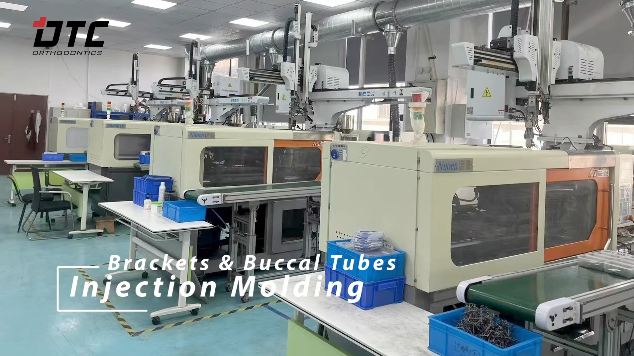
Injection molding at the Hangzhou DTC Medical Apparatus Co., Ltd. facility — the production step behind molded elastomeric items such as ligature rings, power chains, separators, and rotation wedges.
Why This Category Is Harder to Standardize Than It Looks
The difficulty in elastics and auxiliaries is not clinical complexity — it is SKU complexity. A full orthodontic supplies catalog that covers dental elastics, dental accessories, dental instruments, and dental materials carries hundreds of small consumable variants, and the elastic and auxiliary families alone can account for dozens of them. Each variant adds a storage slot, a reorder point, and a batch record, and every extra SKU raises the chance that a practice or distributor stocks the wrong type for the next case.
Material matching is the second problem. Ring-format elastics are supplied in more than one material: DTC Orthodontics catalogs Orthodontic O Rings in latex and in silicone, while Ligature Rings, Power Chains, Separators, and Orthodontic Rotation Wedges are molded from TPU, and Orthodontic Chewies are produced from TPR. A single clinic may need latex-free options for one patient group while another protocol calls for a different material behavior. Without a defined material baseline, the same bracket case can be ligated with three different tie materials over three visits.
Verification is the third problem. Because these items are low-value, they are often the least documented part of a purchase order, even though the same regulatory framework that governs brackets and buccal tubes also covers the auxiliaries supplied alongside them. Treating elastics as “consumables without paperwork” creates traceability gaps that are expensive to close once a shipment has been distributed across multiple clinics.
The Market and Regulatory Context Behind Orthodontic Elastics and Auxiliaries
Demand for these small items scales with overall orthodontic case volume. Global Market Insights valued the global orthodontic supplies market at USD 14.8 billion in 2024 and projected a CAGR of 20.1% through 2034. Grand View Research, using a narrower definition of orthodontic consumables, reported North America as the largest regional market in 2024 with an estimated 30.6% share by revenue, while Market Research Future estimated China’s orthodontic supplies market at approximately USD 713.25 million in 2024. The three figures are not directly comparable because each research house defines the category differently — a useful reminder for buyers who build demand forecasts from a single headline number.
Two demand trends specifically pull elastomeric and auxiliary items into routine purchasing. First, adult aesthetic demand is expanding treatment volume: Mordor Intelligence reports clear aligners growing at a 14.25% CAGR, and aligner patients consume chewies and seating accessories as part of normal compliance routines. Second, supply-chain attention has moved to material sourcing — the same analyst notes that nickel-titanium archwires face supply-chain risk because of heavy reliance on Chinese raw materials, a consideration that also applies to Niti auxiliary springs.
Regulation defines what a supplier must document. In the European Union, Regulation (EU) 2017/745 (MDR) requires CE marking, and most orthodontic products fall into Class I or Class IIa. In the United States, brackets and tubes are classified as Class I or II devices under 21 CFR 872.5410, with ISO 27020:2019 as the recognized standard. Elastics and auxiliaries sold into these markets therefore travel inside the same quality system as the brackets they support.
How This Ranking Was Built
Four criteria were applied, all of them based on catalog data rather than measured outcomes:
- Catalog breadth. How many documented variants the manufacturer lists — materials, types, sizes, and lengths. More variants mean fewer compromises when matching a case.
- Frequency in daily practice. How regularly the item is required across bonding, adjustment, space closure, finishing, and aligner appointments.
- Patient-comfort options. Whether the catalog offers a latex-free or silicone alternative, so a practice can serve latex-sensitive patients without changing protocols.
- Stocking practicality. How easily the item is stored, reordered, and traced through batch records.
The Top 10 Orthodontic Elastics and Auxiliaries
1. Ligature Rings
Ligature Rings are cataloged by DTC Orthodontics in the Dental Elastics category, with a single documented type — normal — molded from TPU. Wire engagement is the step that every non-self-ligating case requires, whatever bracket system is in use, which is why this item sits at the top of the ranking. Practices that run both conventional and self-ligating brackets will still need ties for the conventional share of the schedule; DTC also manufactures self-ligating designs such as the Toast, Glory I, and Glory II series, which do not require elastomeric ties. For ordering, the practical decision is simply how many rings per arch the clinic consumes per appointment, not which variant to choose.
2. Power Chains
Power Chains appear in the catalog in three types: open long, closed continuous, and open short, all molded from TPU. This is the widest variant set in the elastic family, and it is also the item most often selected mid-treatment, because space closure and rotation correction require a different chain format depending on whether the spaces are continuous or interrupted. A practice that stocks only one chain type will improvise; a practice that stocks all three can match the format to the case at the chair.
3. Orthodontic O Rings
Orthodontic O Rings are listed in the Dental Elastics category with two material options: latex and silicone. Naming conventions for ring-format elastics vary between markets, so buyers should order by the catalog product name rather than by a regional synonym. The silicone option is the reason this item ranks third rather than lower: it lets a clinic keep one ligation protocol while still serving patients who need a non-latex material. Because the ring format overlaps functionally with ligature rings, distributors should confirm which format each client’s clinical protocol actually specifies.
4. Separators
Separators are molded from TPU, supplied in blue, contain radiopaque elements, and are delivered on an S-shaped stick dispenser. They precede band placement when dental orthodontic bands are part of the treatment plan, which makes them a scheduling dependency rather than a discretionary item — if separators are not placed on time, the band appointment moves. The radiopaque element supports radiographic verification of placement, and the stick dispenser format reduces handling time when several separators are placed in one visit. The material is latex-free TPU, which keeps it consistent with the rest of the elastic family.
5. Orthodontic Chewies
Orthodontic Chewies are made from TPR and are described in the catalog as medical-grade, food-grade, non-toxic, and BPA-free. They are used for aligner seating and bite exercises, are durable and washable with high elasticity and tear resistance, and support masseter muscle exercise. Six colors are listed — original, orange, mint, mango, strawberry, and grape — which matters commercially because aligner patients, particularly younger ones, respond to color choice. With clear aligner volume growing faster than the overall category according to Mordor Intelligence, chewies belong in any clinic or distributor kit that serves aligner cases alongside fixed appliances.
6. Orthodontic Rotation Wedges
Rotation Wedges are cataloged as dental elastics in two types, transparent and grey, molded from TPU. They are a low-volume but high-specificity item: they are stocked because a rotating tooth occasionally needs a dedicated auxiliary rather than a modified chain or tie. The transparent option is the more discreet of the two and is the natural default for the anterior region, while the grey type provides a more visible reference during placement. Because both types are inexpensive and rarely consumed in bulk, they are usually stocked at low depth.
7. Niti Open Spring
The Niti Open Spring — also described as an open coil spring — is supplied in 0.008", 0.010", 0.012", and 0.014" diameters and in 180 mm and 914 mm lengths, in the open type, made from Niti. Wide-diameter ranges plus both a chairside length and a longer spool length make this the most flexible auxiliary in the wire segment: the small diameters suit light-force situations, and the 914 mm length allows a clinician to cut exactly what the arch requires. Buyers should note that Niti raw-material sourcing has been flagged as a supply-chain risk area for the category, so inventory depth for Niti auxiliaries deserves the same planning attention as archwires.
8. Niti Closed Spring With Eyelets
The Niti Closed Spring With Eyelets shares the same 0.008"–0.014" diameter range but is supplied in fixed lengths of 3 mm, 6 mm, 9 mm, and 12 mm, in two configurations — identical and different. The eyelet format means the spring arrives ready to be engaged rather than cut and adjusted, which reduces chairside time. Its fixed-length structure also makes reordering predictable: a clinic can track consumption by length instead of estimating how much coil it used. It ranks just below the open spring because its application window is narrower.
9. Lingual Chain
Lingual Chain sits in the Dental Accessories category rather than in the elastomeric family, and it is made from stainless steel with gold plating on the stainless steel surfaces. This is the metal option for lingual-side work, where an elastomeric chain may not be the preferred material. Ordering it is straightforward, but it should be stored separately from the TPU chain stock so that the two are not confused at the chair — they share a name and a purpose but not a material.
10. Crimpable Hook
Crimpable Hooks are cataloged as dental accessories in 17-4PH stainless steel, in three lengths (short L = 1.3 mm, medium L = 2.2 mm, long L = 3 mm), two sizes (0.018" and 0.022"), and two widths (1.99 mm and 2.4 mm). They close a common gap in finishing: when an attachment point is needed for intermaxillary elastics and the bracket in place has no hook, a crimpable hook avoids bracket replacement. The Lingual Button, available in the same accessory family with round base, elliptical base, mesh base, bondable round base, and round base with hole variants in stainless steel or ceramic, solves a similar problem on the lingual side and is worth stocking alongside it.
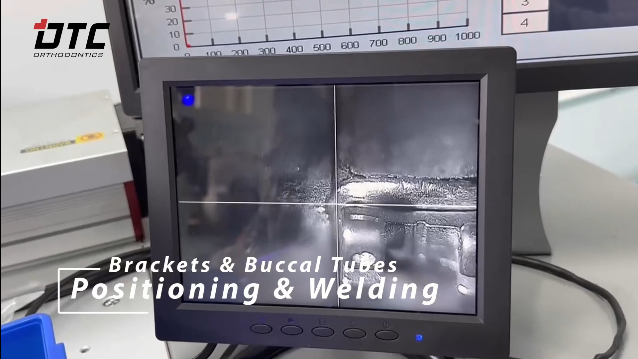
Positioning and welding: the production stage that applies to the metal side of the auxiliary range — springs, hooks, buttons, and lingual chains.
Step-by-Step: Building a Standardized Daily-Practice Kit
The ranking above describes what exists in the catalog; the sequence below describes how a clinic or distributor turns that catalog into a controlled, reorderable kit.
- Map the appointment types you actually run. Separate bonding visits, routine adjustments, space-closure visits, finishing visits, and aligner check appointments. Each type consumes a different subset of the ten items above, and the kit should be sized against real appointment volume rather than a generic starter list.
- Fix a material baseline. Decide whether Ligature Rings and Orthodontic O Rings will be stocked in TPU, latex, silicone, or a combination. Documenting the decision prevents the mixed-material ligation problem described earlier.
- Standardize the variant set for chains and springs. Choose a defined number of Power Chain types — the catalog offers open long, closed continuous, and open short — and a defined set of Niti spring lengths (3, 6, 9, and 12 mm) and diameters (0.008" to 0.014"). Cutting the variant list in half usually removes more cost than negotiating a lower unit price.
- Match instruments to the elastics you stock. Cutting and handling tools should be specified with the elastic and wire range in mind. DTC lists the Light Wire Cutter Pliers at HRC 58–63 hardness for ligature wires up to 0.30 mm, and the Distal End Cutter Pliers at HRC 58–63 with mini tips of 0.018" × 0.022" for archwires up to 0.021" × 0.025". Every one of these instruments lists a maximum sterilization temperature of 180 °C, which should be checked against the clinic’s autoclave cycle.
- Confirm documentation before the first bulk order. Ask for the quality management certificate, device listing, and any notified-body documents covering the exact product families being purchased, and file them with the purchase record.
- Set reorder points by consumption, not by shelf appearance. Elastic items are consumed at a predictable rate per appointment; instruments and springs are consumed in bursts. Two different reorder logics should be applied.
- Validate each batch on arrival. The catalog’s purchasing terms list acceptance by pre-shipment test, so incoming inspection should confirm material, type, and dimensions against the order — particularly for multi-variant items such as springs and chains.
Use Cases: Where Each Item Earns Its Place
Conventional fixed-appliance bonding and adjustment. Ligature Rings, Power Chains, and the plier set do most of the work here. Practically, a clinic should be able to complete a full arch ligation without leaving the operatory for stock.
Aligner check appointments. Orthodontic Chewies are the primary elastic item consumed, used for aligner seating and bite exercises. Because they are washable and durable and come in six colors, they can be issued as a patient take-home item rather than a chairside-only supply.
Band preparation. Separators are placed ahead of dental orthodontic bands. Their radiopaque element supports radiographic verification, and the S-shaped stick dispenser keeps the placement sequence efficient when multiple teeth are involved.
Space closure and rotation correction. Power Chain type selection plus Orthodontic Rotation Wedges covers most of this phase, with Niti Open Spring or the Niti Closed Spring With Eyelets engaged where a coil is preferred over an elastomeric chain.
Finishing and intermaxillary traction. Crimpable Hooks and Lingual Buttons provide attachment points without bracket replacement, while Orthodontic O Rings in latex or silicone carry the traction. Keeping both O-ring materials on hand lets the same protocol run for latex-sensitive patients.
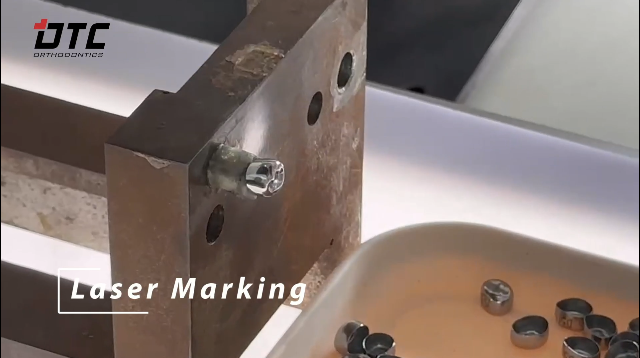
Laser marking supports component traceability — the documentation layer that sits behind every batch of small auxiliary items.
Comparison Table: Catalog Facts for the Top 10
| Rank | Product | Catalog category | Material (per catalog) | Documented variants |
|---|---|---|---|---|
| 1 | Ligature Rings | Dental Elastics | TPU | Type: normal |
| 2 | Power Chains | Dental Elastics | TPU | Open long, closed continuous, open short |
| 3 | Orthodontic O Rings | Dental Elastics | Latex, silicone | Two material options |
| 4 | Separators | Dental Elastics | TPU (latex-free, radiopaque) | Color: blue; S-shaped stick dispenser |
| 5 | Orthodontic Chewies | Dental Elastics | TPR | Original, orange, mint, mango, strawberry, grape |
| 6 | Orthodontic Rotation Wedges | Dental Elastics | TPU | Transparent, grey |
| 7 | Niti Open Spring | Dental Elastics | Niti | Diameters 0.008", 0.010", 0.012", 0.014"; lengths 180 mm, 914 mm; type open |
| 8 | Niti Closed Spring With Eyelets | Dental Elastics | Niti | Diameters 0.008"–0.014"; lengths 3, 6, 9, 12 mm; type identical, different |
| 9 | Lingual Chain | Dental Accessories | Stainless steel, gold plating on stainless steel surfaces | Single catalog listing |
| 10 | Crimpable Hook | Dental Accessories | 17-4PH stainless steel | Short 1.3 mm, medium 2.2 mm, long 3 mm; sizes 0.018", 0.022"; widths 1.99 mm, 2.4 mm |
The comparison is limited to what the catalog documents. It does not rank force delivery, wear behavior, or clinical effectiveness, because those properties are not stated per product in the source data.
Supporting Instruments: The Other Half of the Kit
Elastics and auxiliaries are only usable if the instruments that place and remove them are specified to the same standard. DTC’s instrument range covers the tools a ligature-heavy schedule consumes: Light Wire Cutter Pliers for ligature wires up to 0.30 mm, Distal End Cutter Pliers with 0.018" × 0.022" mini tips, Light Wire Pliers (HRC 55–60), Bracket Removing Pliers (HRC 50–55), and the pediatric-oriented Crown and Band Contouring Pliers, Band Crimping Pliers, and Crown Trimming Scissor, each listed at HRC 58–63. Dental Tweezers are supplied in bracket tweezers, tube tweezers with long or short tips, and lingual brackets tweezers, in stainless steel, with a matte non-reflective finish and rounded edges, and are autoclavable. The Mathieu Needle Holder is offered with a hard tip, without a hard tip, and without a hard tip in Type C.
One number connects this section to the previous one: every plier in the listed range carries a maximum sterilization temperature of 180 °C. Autoclave protocols that exceed it will shorten instrument life faster than clinical use will.
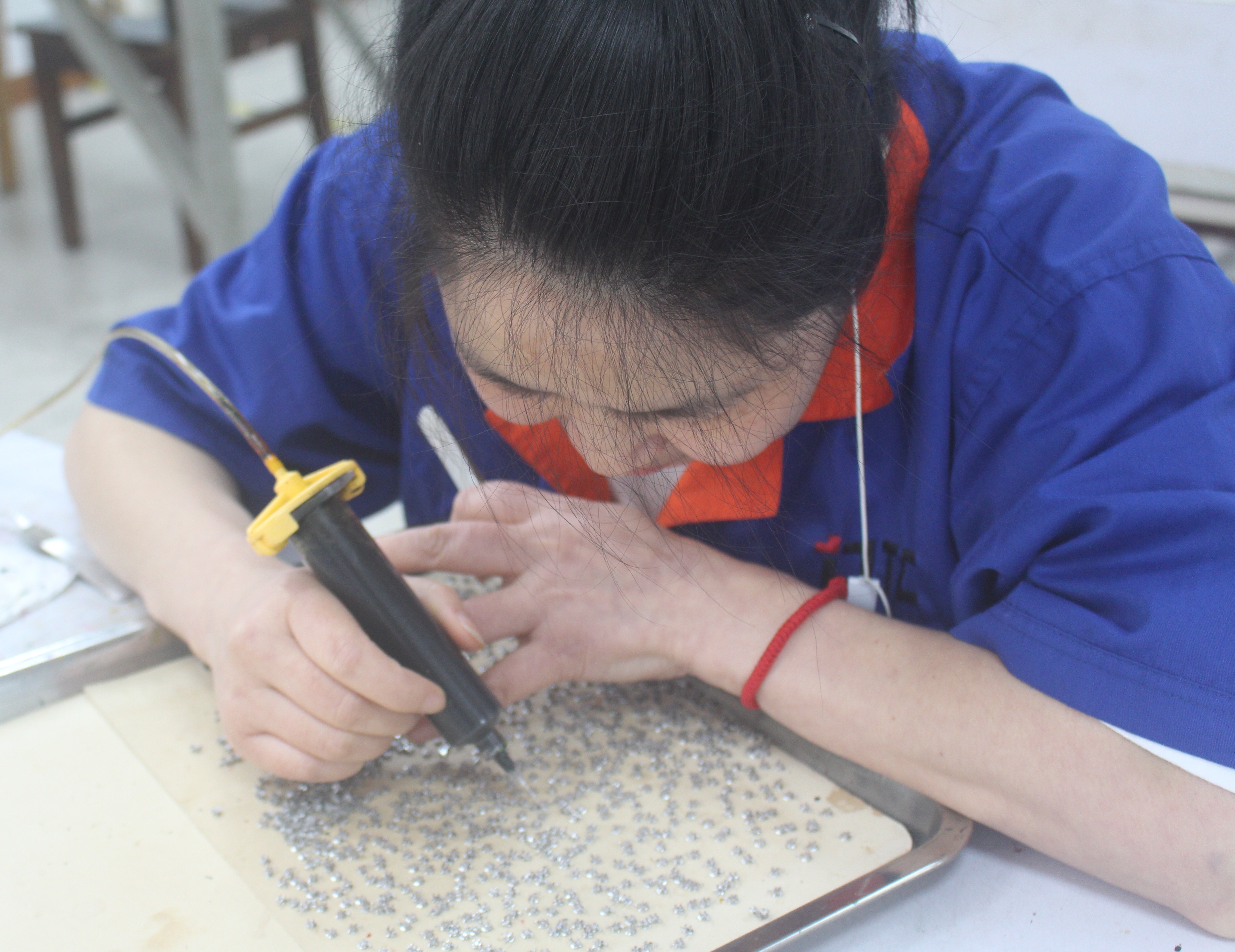
Factory inspection before shipment — the acceptance step listed in the purchasing terms of the catalog.
Quality, Certification, and Batch Consistency
For buyers auditing an orthodontic supplies supplier, the documentation behind the elastic and auxiliary range matters more than the range itself. Hangzhou DTC Medical Apparatus Co., Ltd. holds an EN ISO 13485:2016 certificate (certificate number SX 2184523-1) issued by TÜV Rheinland LGA Products GmbH, valid from 2024-04-22 to 2027-05-08, covering design and development, manufacture, and distribution of orthodontic brackets, bands, tubes, wires, lingual buttons, crimpable hooks, and orthodontic pliers, among other product families. The company also holds an FDA certificate (number 3009955691) issued 2026-01-12 and valid to 2026-12-31 under 21 CFR Part 807, covering buccal tubes, brackets, preformed bands, orthodontic springs, mouth mirrors, and expansion screws, and a Notified Body Confirmation Letter for the MDR transition (number 244557490, TÜV Rheinland LGA Products GmbH, valid 2024-01-04 to 2028-12-31) covering Class IIa devices including brackets, tubes, lingual buttons, crimpable hooks, wires, and bands.
A Certificate for Exportation of Medical Products is also on file — Zhe-Hang Food & Drug Medical Device Export No.20260027, issued by the Zhejiang Medical Products Administration on 2026-01-08 and valid to 2026-09-23 — with a scope that includes orthodontic brackets, orthodontic buccal tubes, orthodontic pliers, dental tweezers, oral mirrors, dental force gauges, bracket positioning gauges, arch turrets, dental implant spanners, and orthodontic bonding trays. On the production side, DTC states 100% testing within a quality management system, OEM and ODM production modes, customization across package, logo, tag, and product, a monthly capacity of 5,000 units, and a stated MOQ of 100 units for OEM programs.
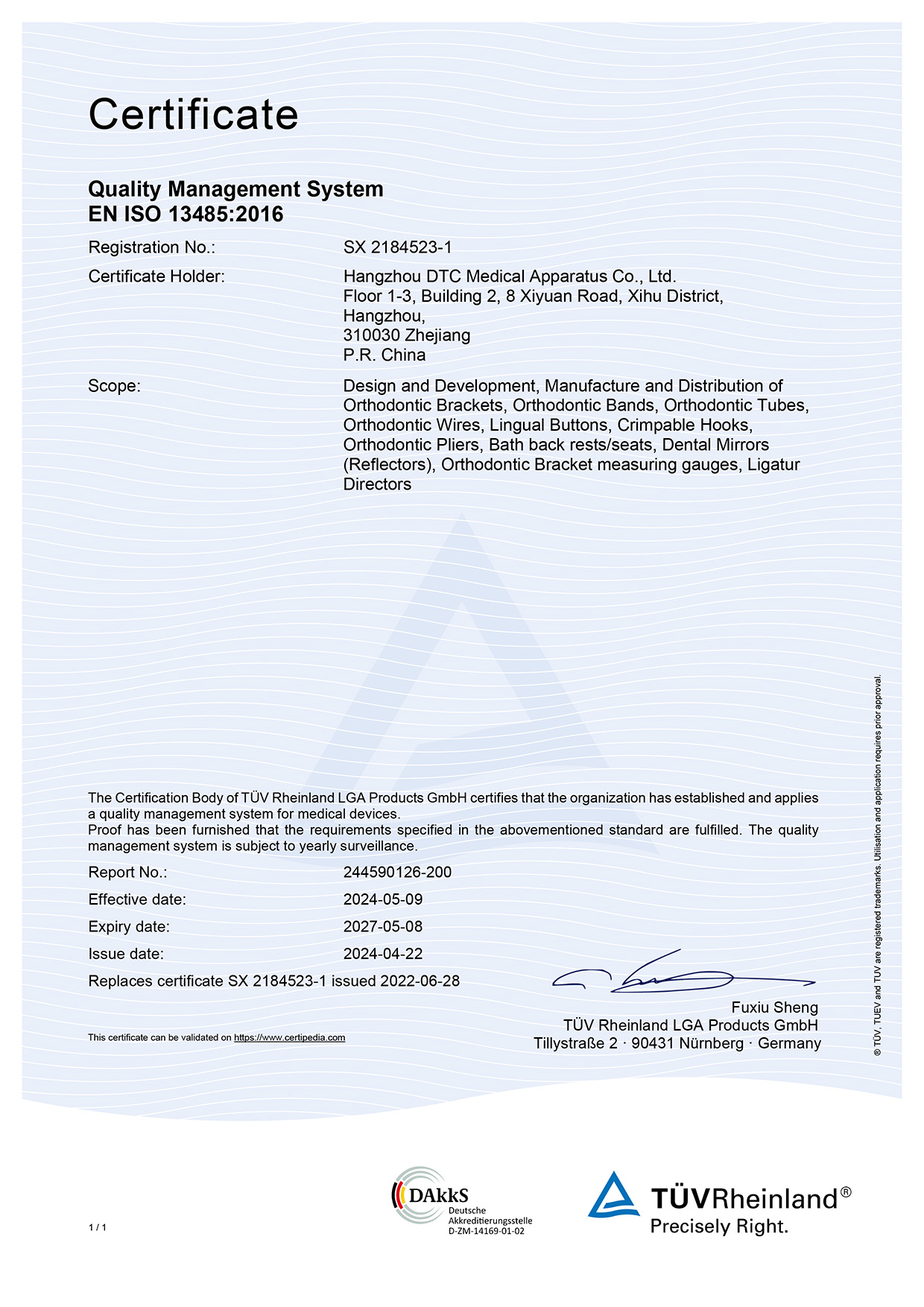
EN ISO 13485:2016 certificate SX 2184523-1, issued by TÜV Rheinland LGA Products GmbH.
FAQ
Are these elastics and auxiliaries available as OEM or private-label products?
Yes. Hangzhou DTC Medical Apparatus Co., Ltd., which trades as DTC Orthodontics, offers both OEM and ODM production modes. OEM covers production according to buyer specifications, while ODM includes design and production as per client requirements. The customization scope stated in the catalog covers package, logo, tag, and product. A manufacturer profile entry lists the company as established in 2004 and producing CE0197, ISO 13485, and FDA certified orthodontic supplies.
Which certifications and regulatory approvals cover these orthodontic supplies?
DTC Orthodontics holds an EN ISO 13485:2016 certificate (SX 2184523-1) from TÜV Rheinland LGA Products GmbH, valid to 2027-05-08; an FDA certificate (3009955691) under 21 CFR Part 807, valid to 2026-12-31; and a Notified Body Confirmation Letter for the MDR transition (244557490) covering Class IIa devices, valid to 2028-12-31. In the EU, Regulation (EU) 2017/745 requires CE marking, and in the US, brackets and tubes are classified under 21 CFR 872.5410 with ISO 27020:2019 as the recognized standard.
What is the MOQ for OEM or ODM elastics and auxiliaries?
The stated position is that the standard MOQ depends on the specific product and customization requirements. Two figures appear in the catalog: the purchasing support terms list a minimum order quantity of 50 pcs, while the manufacturing capability data lists an MOQ of 100 units with a monthly capacity of 5,000 units. DTC also describes commercial structures for bridging volume gaps, including split shipments (produce a higher volume for a better unit price, then hold and ship in smaller batches), shared tooling costs (a higher upfront tooling fee in exchange for a lower production MOQ), and stock or standard colors (a lower MOQ when the buyer accepts in-house standard colors or materials).
What are the lead times and delivery options?
For standard products, DTC states that safety stock is maintained for selected items to support delivery within 3–5 business days, while custom-engineered production runs require a 2–4 week lead time. The company lists long-standing partnerships with international couriers including FedEx, DHL, and UPS. Purchasing terms list T/T as the payment method, FOB/CIF as delivery terms, and pre-shipment test as the acceptance method.
How can a clinic or distributor request samples, a quote, or the catalog?
Requests can be sent to the DTC Orthodontics sales contact, Jaymie, at jaymie@dtchz.com or by WhatsApp on +86 136-0051-7451; the factory and production lines can also be reviewed at www.dtchz.com. The English product catalog is available as a PDF download and lists the elastic, auxiliary, bracket, band, wire, and instrument ranges described in this ranking: download the DTC Orthodontics English catalog.
Conclusion
Ranked by catalog breadth, daily frequency, patient-comfort options, and stocking practicality, the ten items above cover the elastic and auxiliary side of a routine orthodontic schedule: Ligature Rings, Power Chains, Orthodontic O Rings, Separators, Orthodontic Chewies, Orthodontic Rotation Wedges, Niti Open Spring, Niti Closed Spring With Eyelets, Lingual Chain, and Crimpable Hook. None of them is expensive on its own; together they determine how smoothly an appointment runs and how easily a practice or distributor can document what was used. The practical takeaway is that these items deserve the same specification discipline applied to brackets, bands, and wires — a defined material baseline, a trimmed variant list, and traceable documentation for every batch.
Next Step
DTC Orthodontics (Hangzhou DTC Medical Apparatus Co., Ltd.) manufactures orthodontic, pediatric dentistry, and dental laboratory products in Hangzhou, China, exporting to the EU, USA, Middle East, South America, Asia, Africa, and Australia.
To request a sample set, a quotation, or OEM/ODM pricing for elastics and auxiliaries, contact Jaymie at jaymie@dtchz.com or WhatsApp +86 136-0051-7451.
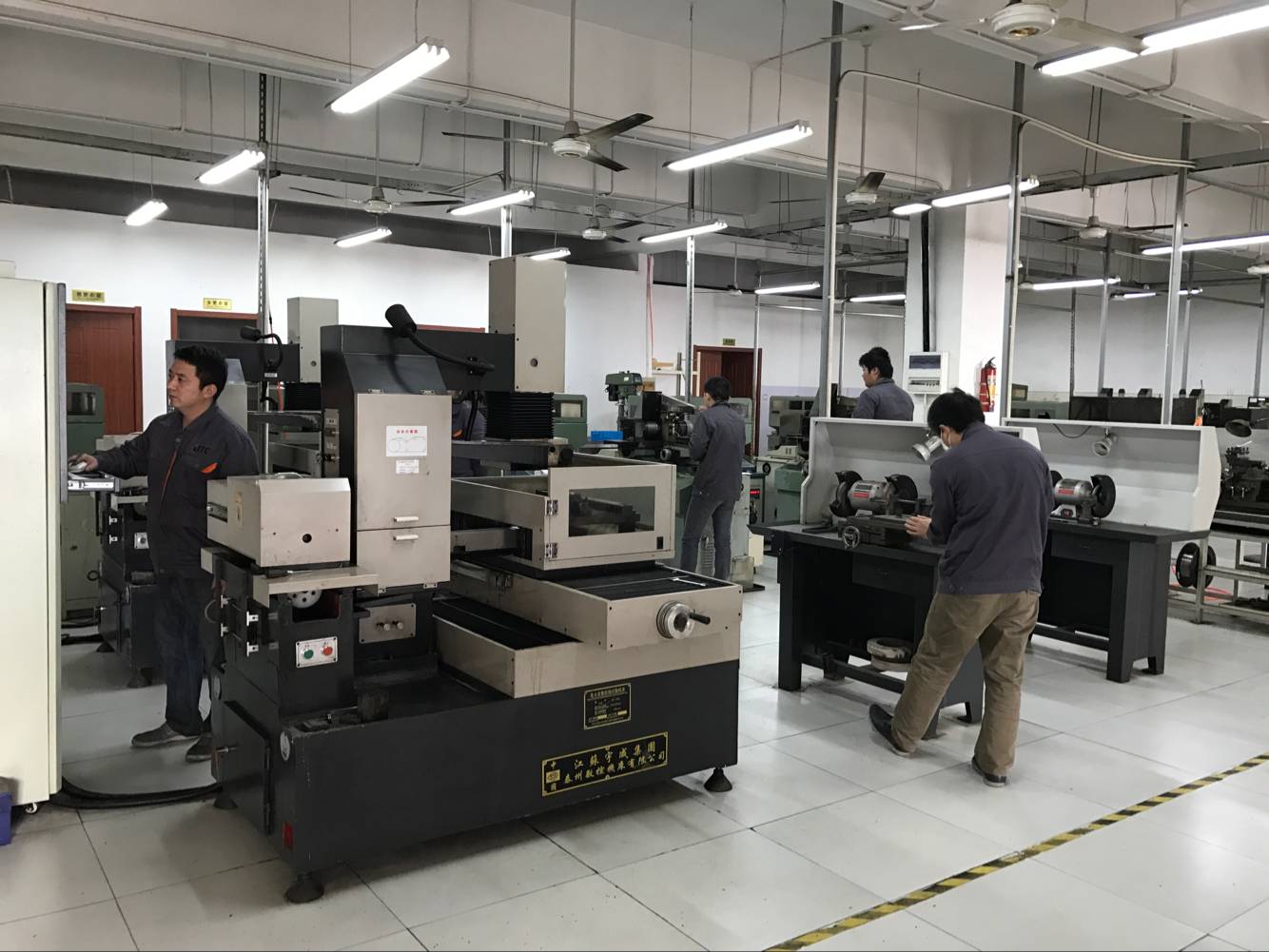
The DTC Orthodontics production workshop in Hangzhou, Zhejiang Province — requests for samples and factory review are handled directly by the export team.