
Top 10 Orthodontic Supplies Every Clinic Should Stock: A Ranked Recommendation
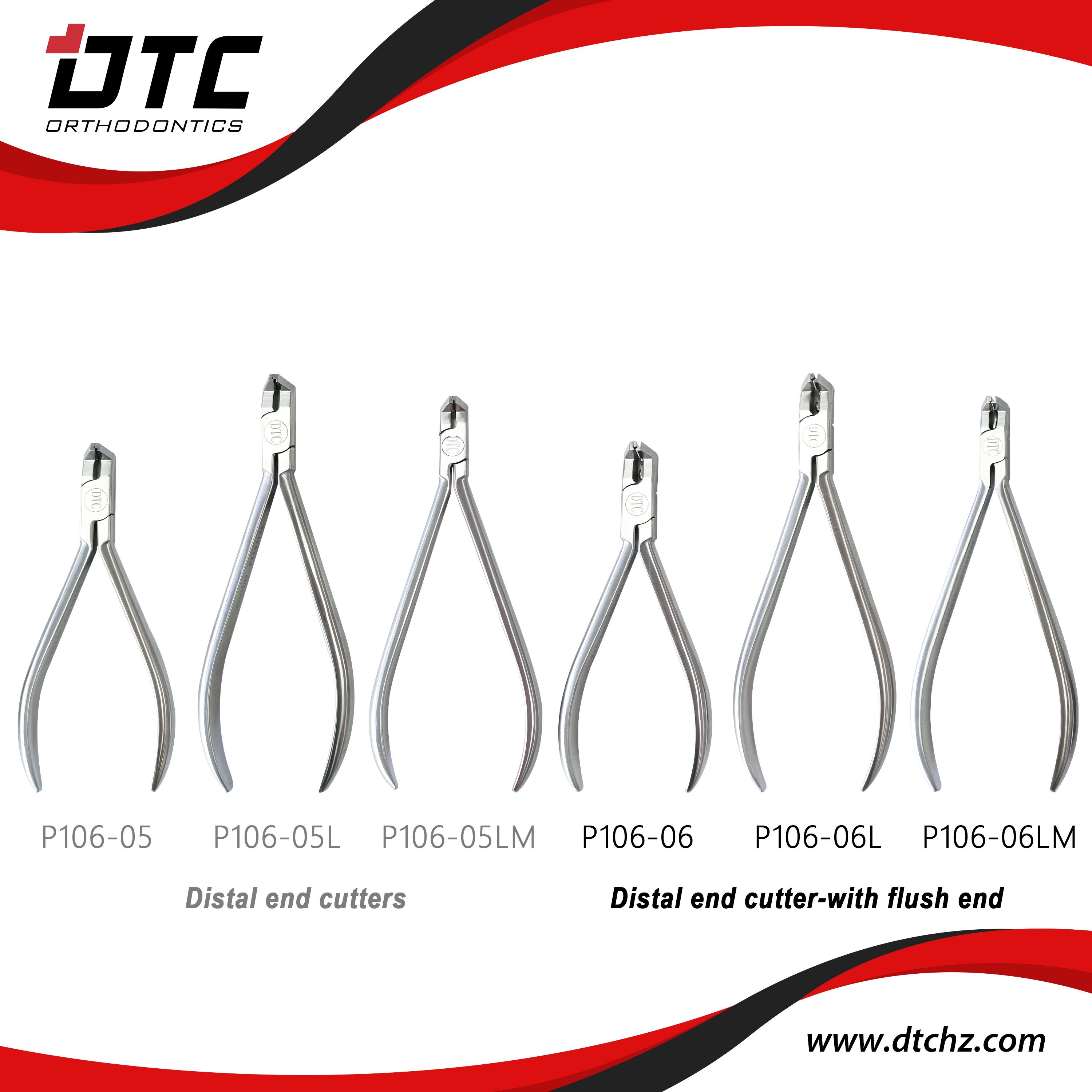
Cover: a distal end cutter pliers set - one of the ten orthodontic supply categories ranked in this guide.
Short answer: if a clinic can build only one standing inventory of orthodontic supplies, the ten categories that deserve shelf space, in priority order, are dental pliers, ligature rings, power chains, orthodontic O rings, separators, dental retractors, Niti closed springs with eyelets, Niti open springs, orthodontic chewies, and orthodontic face masks. The order is not a price ranking and not a popularity ranking. It is sorted by how often each item is used in a normal clinic week, whether it can be substituted when it runs out, how many case types it covers, and whether it is a high-turnover consumable or a durable instrument that only needs replacing after wear.
Each position below is explained with the selection criteria a purchasing dentist, clinic manager, or distributor should apply to a supplier quotation, using specification data published by Hangzhou DTC Medical Apparatus Co., Ltd. (DTC Orthodontics), a Chinese orthodontic supplies manufacturer established in 2004. Where third-party market or regulatory data is referenced, the source is named.
Problem Definition: The Two Ways Clinic Stocking Fails
Orthodontic stocking failures pull in opposite directions, and most clinics experience both at some point.
The first failure is under-stocking high-turnover consumables. Elastic ligatures, power chains, separators, and O rings are consumed at every bonding and adjustment appointment. Because their unit cost looks trivial next to brackets or instruments, they are the easiest line items to trim in a purchase order - and the first items to disappear from the drawer mid-treatment. When they run out, appointments are reshuffled and treatment intervals stretch, which affects the clinical timeline as much as any bracket choice.
The second failure is over-stocking case-specific products. A clinic that buys a full depth of every auxiliary before it has the case mix to use them holds inventory that ages, expires, or simply occupies storage. Springs, face masks, and chewies only earn their place when the practice actually treats the case types that need them.
A quieter third risk sits underneath both: documentation. A product can work perfectly in the mouth and still create a procurement problem if it arrives without traceable quality management evidence. Orthodontic products are regulated medical devices in most major markets, so clinics that supply hospital groups, insurance-funded programmes, or public tenders are routinely asked to prove what they bought and from whom. Stocking decisions are therefore clinical decisions and compliance decisions at the same time.
Industry Background: Why Supply Reliability Is Now Part of the Clinical Conversation
The commercial context explains why clinics are paying more attention to what sits on the shelf.
- The global orthodontic supplies market was valued at USD 14.8 billion in 2024 and is expected to grow at a CAGR of 20.1% through 2034 (Global Market Insights).
- North America held the largest regional share of that market in 2024, estimated at 30.6% by revenue (Grand View Research).
- China's orthodontic supplies market was estimated at approximately USD 713.25 million in 2024 (Market Research Future), reflecting both domestic demand and export activity.
- Adult orthodontics is expanding on aesthetic demand, with clear aligners growing at a 14.25% CAGR (Mordor Intelligence) - a shift that moves aligner-support products such as chewies and retractors into mainstream stock lists.
- Nickel-titanium (NiTi) archwires face supply chain risk because of heavy reliance on Chinese raw materials (Mordor Intelligence), which makes raw-material visibility a legitimate question when clinics evaluate suppliers.
- The largest global players in the category include Align Technology, Envista Holdings, Solventum, Dentsply Sirona, and Straumann (MarketsandMarkets) - a useful reference point for understanding who competes at the brand level, though clinic-level stocking is dominated by consumables and instruments rather than by corporate brand names.
Regulation shapes the same decision. In the European Union, Medical Device Regulation (EU MDR 2017/745) requires CE marking for orthodontic products and classifies most of them as Class I or IIa. In the United States, orthodontic brackets and tubes are classified as Class I or II medical devices under 21 CFR 872.5410, with ISO 27020:2019 as the recognized standard. In practical terms, a clinic or distributor ordering orthodontic supplies has to confirm two things at once: that the item is clinically correct for the case mix, and that the paperwork behind it will survive an audit.
One structural detail is worth noting before the ranking. Brackets, buccal tubes, bands, and archwires form the appliance itself; clinical documentation for these applications describes the product holding orthodontic archwires under oral working conditions, requiring supporting equipment such as archwires, buccal tubes, and bands, and demanding excellent biocompatibility. The ten categories ranked below are the consumables and instruments that keep that appliance working appointment after appointment.
Detailed Solution: The Top 10 Orthodontic Supplies, Ranked and Explained
Five criteria were applied consistently to every category on this list: frequency of use in routine appointments; substitutability, or whether another stocked item can cover the task when the item is missing; case coverage, meaning how many malocclusion or treatment scenarios the item serves; verifiability, meaning whether specifications, materials, and sterilization data can be checked against documentation; and inventory economics, whether the product is a fast-moving consumable or a durable instrument purchased once and maintained.
#1Dental Pliers
Dental pliers rank first because the absence of the right plier stops the appointment rather than delaying it. Wire bending, ligature cutting, band contouring, and bracket or band removal all depend on instruments that cannot be improvised from another category.
A working plier set covers several distinct jobs, and the selection criteria differ for each. DTC Orthodontics publishes hardness, cutting capacity, and sterilization data per model:
- Bracket removing pliers - hardness HRC 50-55, maximum sterilization temperature 180 C, used to remove bands and other bondable attachments.
- Light wire pliers - hardness HRC 55-60, for making fine loops and spring loops on archwires up to 0.030 in diameter.
- Light wire cutter pliers - hardness HRC 58-63, able to cut ligature wires with a diameter up to 0.30 mm.
- Distal end cutter pliers - hardness HRC 58-63, mini tips of 0.018 inch x 0.022 inch, handling archwires up to 0.021 inch x 0.025 inch.
- Crown and band contouring pliers - hardness HRC 58-63, designed for fitting stainless steel crowns and bands, with thin tips for access into molar and premolar bands.
Selection criteria for this category should be: match tip geometry to the procedures the clinic actually performs; confirm stated hardness rather than assuming it from appearance; confirm the maximum autoclave temperature; and check hinge construction. DTC describes its pliers as CNC machined with a micro-gap hinge, using stainless steel, with corrosion and rust resistance. The company also states a three-year warranty on sold pliers, which is a supplier claim worth verifying in writing at the quotation stage.
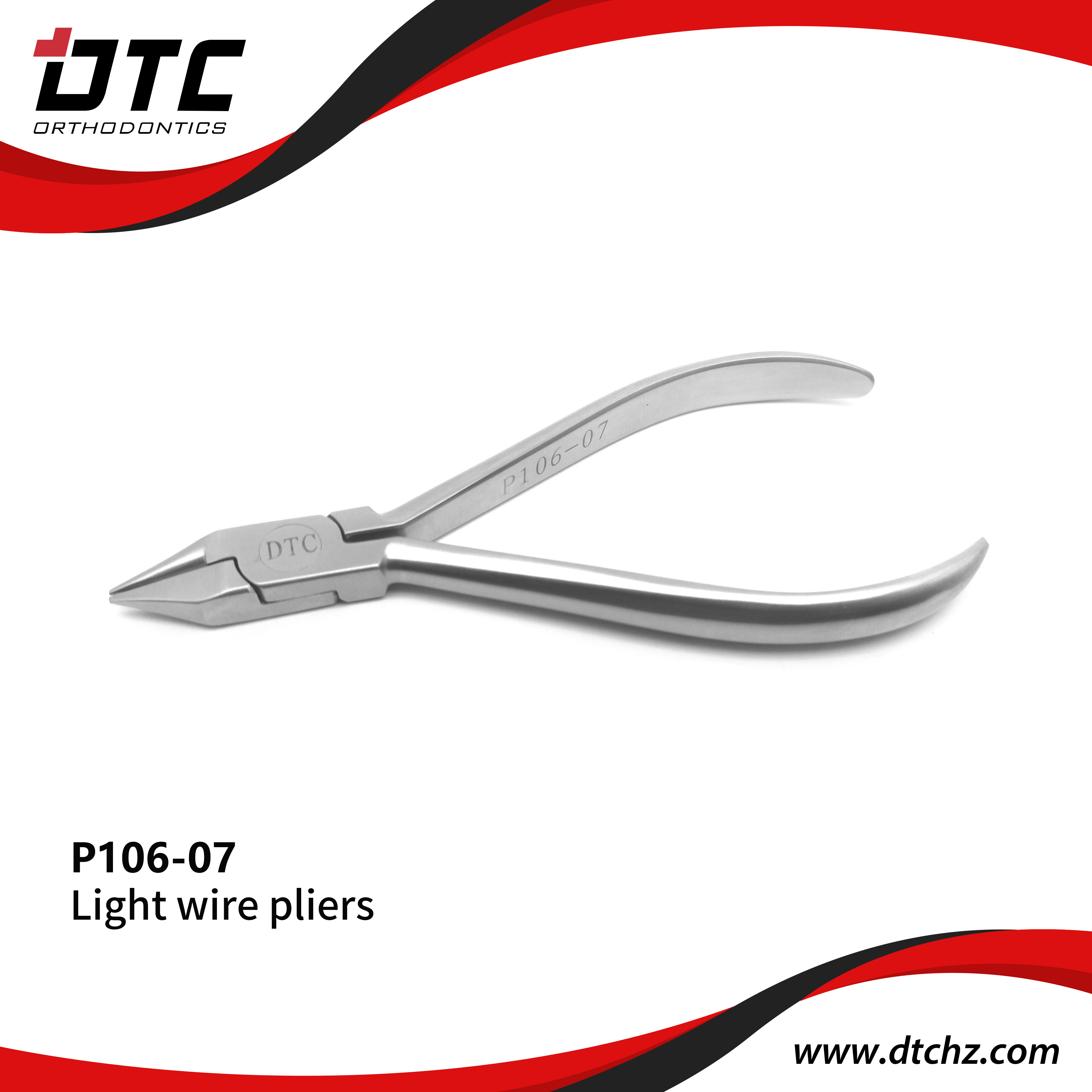
Light wire pliers: hardness HRC 55-60, maximum sterilization temperature 180 C, for archwires up to 0.030.
#2Ligature Rings
Ligature rings are the highest-turnover consumable in most fixed-appliance practices, which is why they rank immediately behind instruments. They are made from TPU in a normal type configuration, and they are the item most likely to be counted in hundreds per month rather than in units.
Selection criteria for ligature rings are less about impressive specifications and more about consistency: elastic behaviour that stays predictable between appointments, colour and shade consistency across batches when patients expect a specific look, and dimensional consistency so that placement does not become a struggle at chairside. Because they are consumed continuously, batch-to-batch stability matters more here than in almost any other category on this list - which is why they belong in a single-supplier stocking strategy rather than a patchwork of low-cost lots.
#3Power Chains
Power chains rank third because space closure appears in a large share of fixed-appliance treatment plans, and unlike ligatures they cannot be replaced with individual ties without changing the mechanics.
DTC supplies power chains in TPU with three formats - open long, closed continuous, and open short - which allows a clinic to match the chain to the mechanics rather than adapting mechanics to whatever is in stock. Selection criteria should include: format coverage across the three types; whether the link pattern allows cutting to the required span without losing integrity; and whether the material and colour options are consistent across reorders. Clinics that treat a mix of extraction and non-extraction cases will typically need at least two of the three formats as standard stock.
#4Orthodontic O Rings
Orthodontic O rings cover intraoral and intermaxillary traction needs and are supplied by DTC in latex or silicone. Ranking them fourth reflects how often traction elastics are part of an active treatment phase.
The most important selection criterion here is material options. A clinic that stocks only one material will eventually have to turn away or reschedule a latex-sensitive patient, so material range is not a luxury in this category - it is the criterion that determines whether the product is usable for the full patient population. Secondary criteria are consistent elasticity and a predictable size run so that force levels can be repeated from one appointment to the next.
#5Separators
Separators earn a fixed place in the stock list because they sit at the very start of banding: without them, the banding appointment itself has to be postponed. DTC separators are supplied in blue and are manufactured from a latex-free, medical-grade elastomer, designed for dental separation procedures during orthodontic treatment.
Selection criteria: latex-free material where patient history requires it; smooth separation behaviour that does not traumatise the interdental tissue; and retention quality over the interval between placement and banding. Because they are cheap per unit but functionally non-negotiable, they are a classic case of a low-value item that causes a high-cost schedule disruption when it runs out.
#6Dental Retractors
Retractors rank sixth because they are needed in two recurring workflows: clinical photography and records, and isolation during bonding or intraoral procedures. They are durable rather than consumable, so they occupy less inventory attention but cannot be substituted.
DTC offers a lip retractor in large, medium, and small sizes, and a cheek retractor in lateral-1, occlusion-large, and occlusion-small types, both made from PC. The published product characteristics are relevant selection criteria: crystal-clear transparency for an unobstructed view during clinical photography; long ergonomic handles so an assistant or the patient can hold the retractor steadily; smooth rounded edges to prevent soft tissue pinching; flexibility and impact resistance to survive tension and repeated handling; and compatibility with cold sterilization methods.
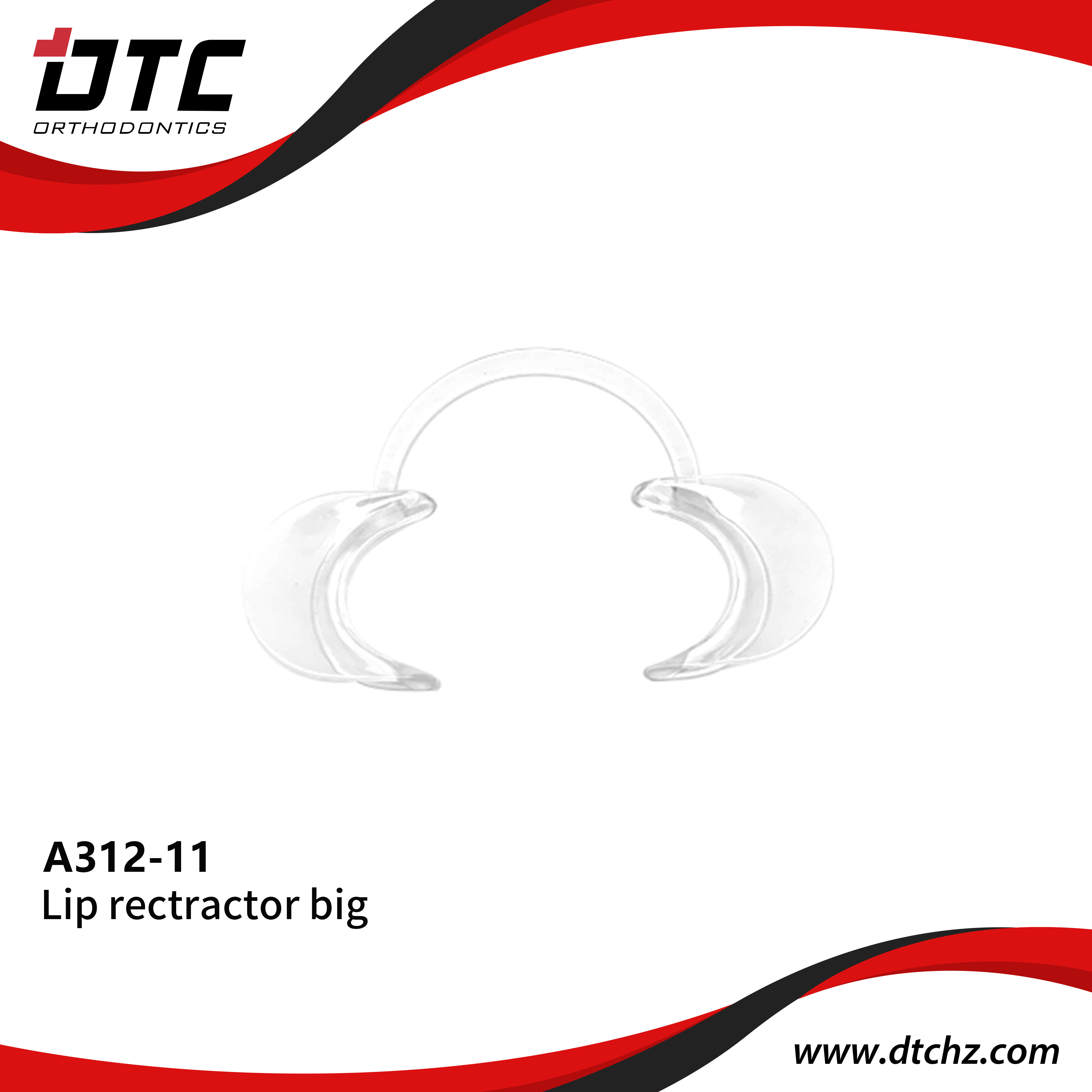
Lip retractor, large size: clear PC body, long handle, rounded edges, cold-sterilization compatible.
#7Niti Closed Spring With Eyelets
Closed coil springs belong in stock because segmental space closure is a routine mechanic in fixed treatment. DTC's Niti closed spring with eyelets is available in diameters of 0.008, 0.010, 0.012, and 0.014 inch, in lengths of 3 mm, 6 mm, 9 mm, and 12 mm, and with either identical or different eyelets.
Selection criteria for this category are unusually specific, and they should be written into the purchase specification: eyelet configuration must match the bracket hooks and anchorage posts in use; the length range must cover the spans the clinic closes most often; the alloy must deliver constant, gentle traction with shape memory rather than permanent deformation; and the coil finish should be polished to reduce friction and soft tissue irritation. DTC describes integrated precision-molded eyelets for secure, slip-free attachment, and a super-elastic nickel-titanium alloy construction.
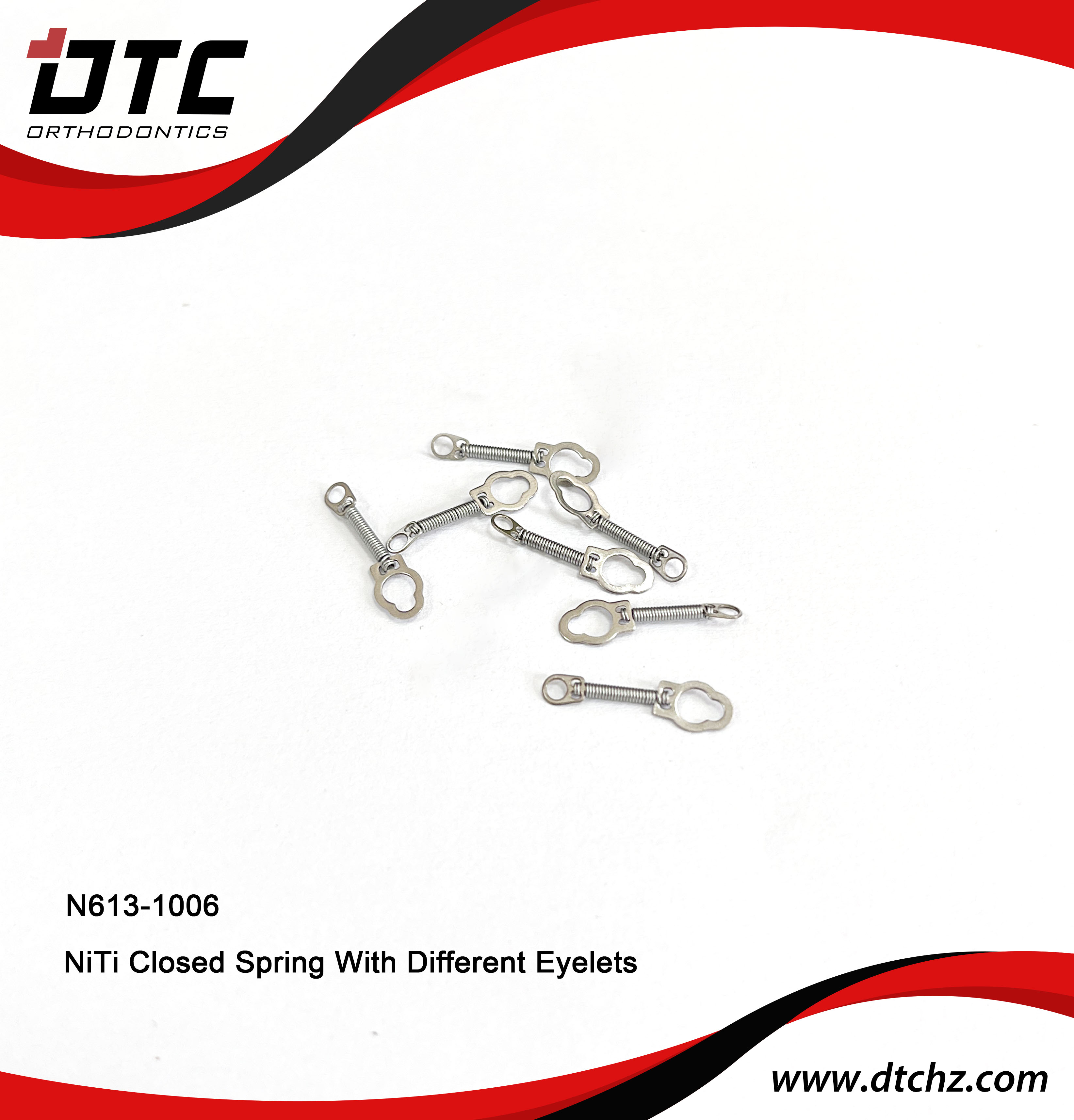
Niti closed spring with different eyelets: 0.008-0.014 diameters, 3/6/9/12 mm lengths, super-elastic NiTi.
#8Niti Open Spring
Open coil springs serve the opposite mechanic to closed springs - opening space and resolving crowding - and are stocked in long formats: DTC supplies the Niti open spring in diameters of 0.008, 0.010, 0.012, and 0.014 inch, in 180 mm and 914 mm lengths.
Selection criteria differ from closed springs in one important way: because open springs are typically cut to length from a long coil, the criteria are consistent coil diameter, clean cutting behaviour without fraying or deformation at the cut end, and stable super-elastic force along the length of the coil. A clinic that stocks only one diameter usually ends up over-treating or under-treating the space, so diameter range is the primary specification to check.
#9Orthodontic Chewies
Chewies rank ninth because they are essential in aligner-based practices but have no role in a purely fixed-appliance clinic. They are made from TPR and supplied in six colour options: original, orange, mint, mango, strawberry, and grape.
Their clinical function is aligner seating - helping the aligner fit tightly against the teeth so that the intended force is transmitted accurately - together with biting exercise. Selection criteria: material safety for daily intraoral use, since DTC describes the product as made from food-grade material that is non-toxic and BPA-free; an ergonomic non-slip shape, which in this product is a distinctive cylindrical wavy design intended to prevent slipping while biting; durability and washability for repeated use; and colour or flavour range, which is not cosmetic trivia but a genuine driver of patient compliance in adolescent cases.
#10Orthodontic Face Mask
The face mask ranks tenth because it serves a narrow but high-impact population: growing patients with skeletal Class III patterns. DTC's full adjustable face mask is supplied in blue, yellow, and red, in large and small sizes, and is made from stainless steel and ABS.
Selection criteria for this category are structural. The appliance should support dual-jaw mesial movement for efficient correction of skeletal Class III malocclusion, and it should allow segmental protraction so the clinician can control force direction and clinical vectors. Comfort is a clinical variable here, not a cosmetic one: adjustable forehead and chin pads determine whether a growing patient will actually wear the appliance for the required hours. Size range matters for the same reason - DTC offers large and small to accommodate patients of different ages and facial dimensions.
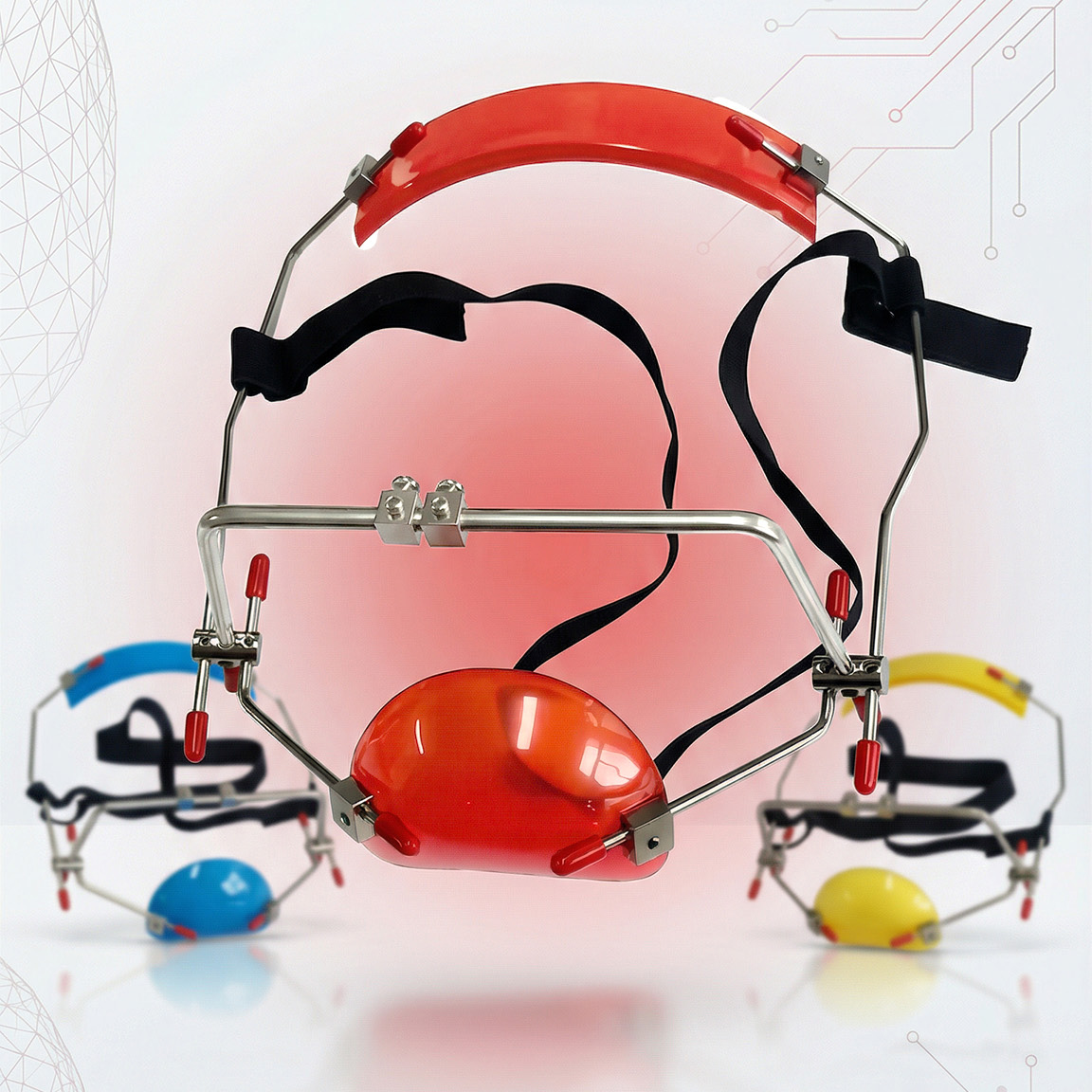
Full adjustable face mask: stainless steel and ABS, large and small sizes, adjustable forehead and chin pads.
Step-by-Step Breakdown: Converting the Ranking Into a Stock List
The ranking above answers what to stock. The following sequence answers how to turn it into a working inventory that does not drift.
- Map your appointment mix. Count how many appointments in a typical month involve fixed appliances, aligner fitting or review, growth modification, and records photography. The ten categories should be assigned to those workflows rather than to a generic supply list.
- Tag each category by inventory type. Pliers and retractors are durable instruments; ligature rings, power chains, O rings, separators, springs, and chewies are consumables; the face mask sits between the two. Consumables need reorder points; durables need inspection and replacement criteria.
- Write a minimum specification per item. Hardness and cutting capacity for pliers, diameter and length for springs, material and format for elastics, size range for retractors and masks. A specification prevents a cheaper substitution from quietly changing clinical behaviour.
- Verify the documentation before the discount. Confirm ISO 13485 quality management, CE 0197 marking and FDA certification status where relevant, and check that the certificates cover the specific product family being ordered. For EU-facing clinics, confirm CE marking under MDR 2017/745.
- Test batch consistency on the first order. Consumables such as ligatures, chains, and separators should be checked across batches for colour, dimension, and elastic behaviour. DTC states that it operates a Quality Management System that governs production directly, with 100% testing, which is the type of process statement a clinic should ask to have documented rather than assumed.
- Set the replenishment rules. Standard products from DTC are supported by safety stock for selected items with delivery within 3-5 business days, while custom-engineered production runs require a 2-4 week lead time. Those two timelines should drive two different reorder triggers.
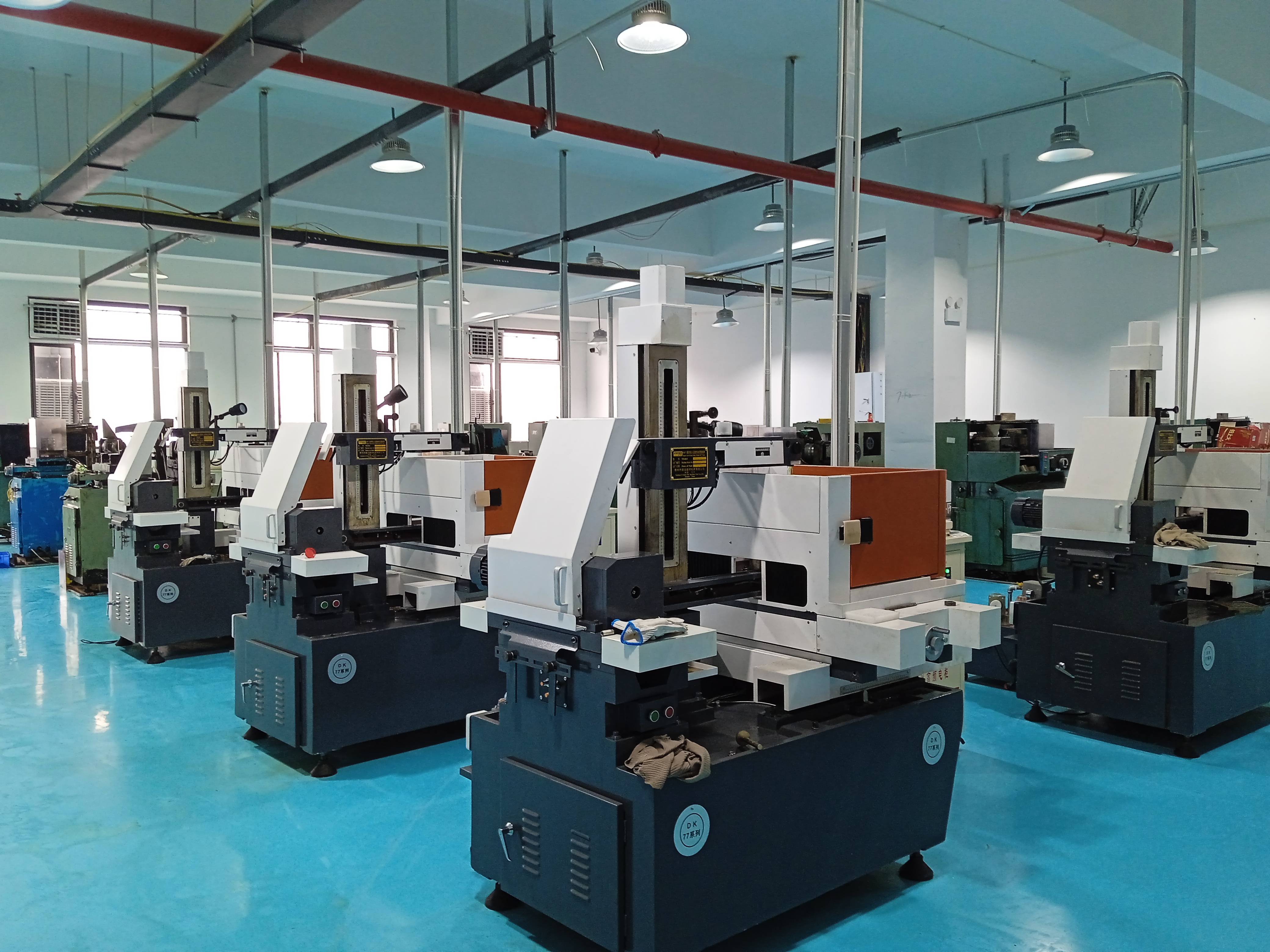
Instrument manufacturing: DTC pliers are CNC machined with micro-gap hinges and tested before dispatch.
Use Cases: How Different Clinics Apply the Same Ten Categories
Single-chair practice focused on fixed appliances. The core stock is pliers, ligature rings, power chains, separators, and O rings - roughly the top five of the ranking. Springs are added once the practice starts closing spaces routinely. The face mask and chewies can stay off the shelf until the case mix justifies them.
Aligner-led practice. Chewies move from ninth place to a daily-use item here, and retractors are used constantly for records and progress photography. Fixed-appliance consumables can be held at minimum levels, with pliers still required for refinement and attachment work.
Multi-chair clinic or hospital department. Documentation becomes the deciding criterion. Public hospital clients have run 3,000-unit projects with DTC over a 2-3 year period, and dental clinic clients in Australia, the United States, and Canada have used DTC products at a project scale of 500-1,000 units with stable operation reported over 2-3 years - both profiles are typical of institutions that must show traceable supply records.
Distributor and dealer restocking. Distributors serve many clinics at once, so format coverage matters more than depth in any single item: chains in all three formats, springs across the diameter range, pliers across the procedure types. DTC reports distributor clients across multiple European markets with a 5,000-unit project scale and 1-3 years of stable operation, and dealer clients across Africa, South America, the Middle East, and Asia at a similar project scale.

Partner feedback from clinic, dealer, and distributor clients using DTC Orthodontics supplies.
Comparison Table: The Ten Categories Side by Side
| Rank | Product | Category | Material | Key specification | Primary clinical role | Stocking profile |
|---|---|---|---|---|---|---|
| 1 | Dental pliers | Instruments | Stainless steel | Hardness HRC 50-63 by model; max sterilization 180 C; micro-gap hinge; CNC machined | Wire bending, cutting, contouring, band and bracket removal | Durable, multi-model |
| 2 | Ligature rings | Elastics | TPU | Normal type | Archwire ligation | High-turnover consumable |
| 3 | Power chains | Elastics | TPU | Open long, closed continuous, open short | Space closure | High-turnover consumable |
| 4 | Orthodontic O rings | Elastics | Latex, silicone | Two material options | Intraoral and intermaxillary traction | Consumable |
| 5 | Separators | Elastics | TPU, latex-free medical-grade elastomer | Blue; dental separation use | Pre-band tooth separation | Consumable |
| 6 | Dental retractor | Instruments | PC | Lip: large, medium, small. Cheek: lateral-1, occlusion-large, occlusion-small; cold sterilization | Isolation and clinical photography | Durable |
| 7 | Niti closed spring with eyelets | Springs / auxiliaries | Niti | 0.008-0.014 inch; 3/6/9/12 mm; identical or different eyelets | Segmental space closure | Consumable |
| 8 | Niti open spring | Springs / auxiliaries | Niti | 0.008-0.014 inch; 180 mm and 914 mm; open type | Space opening and derotation | Consumable |
| 9 | Orthodontic chewies | Elastics | TPR | Six colours: original, orange, mint, mango, strawberry, grape | Aligner seating and biting exercise | Consumable |
| 10 | Orthodontic face mask | Instruments | Stainless steel, ABS | Large and small; blue, yellow, red; adjustable forehead and chin pads | Skeletal Class III growth modification | Durable |
How to read this table: the stocking profile column, not the rank, should drive order quantities. Ranks 2, 3, 4, 5, 7, 8, and 9 are consumables and need reorder points. Ranks 1, 6, and 10 are durables that should be inspected for wear and hinge function rather than counted monthly.
FAQ: Clinic Procurement Questions for Orthodontic Supplies
Which certifications should a clinic verify before ordering orthodontic supplies from a manufacturer?
Three documents carry the most weight in clinic procurement: a quality management system certificate such as ISO 13485, CE marking under EU MDR 2017/745 (which classifies most orthodontic products as Class I or IIa), and FDA certification for the US market, where orthodontic brackets and tubes fall under 21 CFR 872.5410 with ISO 27020:2019 as the recognized standard. Hangzhou DTC Medical Apparatus Co., Ltd., established in 2004, states that it produces CE0197, ISO 13485, and FDA certified orthodontic supplies and that its management system follows CE (MDR) and ISO requirements. Clinics buying through a distributor should still request the certificate copies that cover the specific product family in the order.
Can a single manufacturer cover multiple product categories without batch-to-batch drift?
Yes, when the manufacturer controls production directly rather than trading. DTC states that it holds a Quality Management System with formal processes governing production, that it controls production and quality management directly, and that each order is checked before delivery. The company profile covers a 5,000 m2 factory, 150 employees, an annual output of 1,000,000 units, a 30-engineer R&D team, and an 80% export ratio with markets across the EU, USA, Middle East, South America, Asia, Africa, and Australia. It also holds a patent for an 'Orthodontic Buccal Tube Convenient for Archwire Insertion' (Patent No. CN 224292022 U). For a clinic, the practical test is whether one supplier can serve brackets, instruments, springs, and elastics from the same quality system instead of forcing a patchwork of vendors.
What MOQ and cost structure should a clinic or distributor expect for OEM and private-label supplies?
DTC's standard MOQ is 100 units, and the requirement varies with the product and the customization requested - package, logo, tag, or product. Where a buyer needs a lower entry volume, three structures are described: split shipments, where a higher production volume unlocks a better unit price but inventory is held and shipped in smaller batches; shared tooling costs, where a higher upfront tooling fee unlocks a lower production MOQ; and stock or standard colours, where a lower MOQ applies if the buyer accepts standard in-house colours or materials. Customization is available across package, logo, tag, and product.
How are product documentation and technical support handled after purchase?
DTC provides product manuals to customers online, supports multi-language documentation for global markets, and offers remote after-sales support for product issues. For clinics, the relevant procurement question is not whether a manual exists but whether it is version-controlled and easy to reach at chairside - which is why documentation format is worth confirming before the first order rather than after delivery.
What lead time should a clinic expect, and how is an order started?
For standard products, DTC maintains safety stock on selected items to support delivery within 3-5 business days, while custom-engineered production runs require a 2-4 week lead time. The company works with international courier partners including FedEx, DHL, and UPS. To begin, download the English product catalogue, then send your required item list, target quantities, and any branding requirements to jaymie@dtchz.com or WhatsApp +86 136-0051-7451 - and request the certificate copies and specification sheets for each product family you plan to stock.
Conclusion: A Stock List Is a Clinical Decision in Disguise
The ten categories in this ranking are not the most expensive or the most technically complex products in orthodontics. They are the ones whose absence is felt first in a normal clinic week. Pliers and retractors are the durables that keep appointments running; ligature rings, chains, O rings, and separators are the consumables that disappear fastest; springs, chewies, and face masks are the case-specific items that determine whether a clinic can treat a case in-house or refer it out.
Two habits make the list work over time. First, write specifications before comparing prices - hardness, diameter, material, size range, and sterilization limits are the fields that actually protect the treatment plan. Second, keep documentation and delivery capability in the same evaluation as the product itself: ISO 13485, CE 0197, and FDA status, batch consistency, and a 3-5 business day standard replenishment window versus a 2-4 week custom run are all part of what a clinic is buying.
Next step for clinics and distributors
Hangzhou DTC Medical Apparatus Co., Ltd. (DTC Orthodontics) has manufactured orthodontic, pediatric dentistry, and dental laboratory products since 2004, exporting to more than 100 countries and regions. Product lines relevant to this stock list include dental pliers, Niti closed springs with eyelets, Niti open springs, orthodontic face masks, O rings, chewies, ligature rings, separators, power chains, and lip and cheek retractors, with OEM and ODM support across package, logo, tag, and product.
Download the English catalogue: DTC Orthodontics product catalogue (PDF)
Website: www.dtchz.com | Email: jaymie@dtchz.com | Tel / WhatsApp: +86 136-0051-7451