
Injection Molding Application Guide: Home Appliance & Daily-Use Plastic Parts
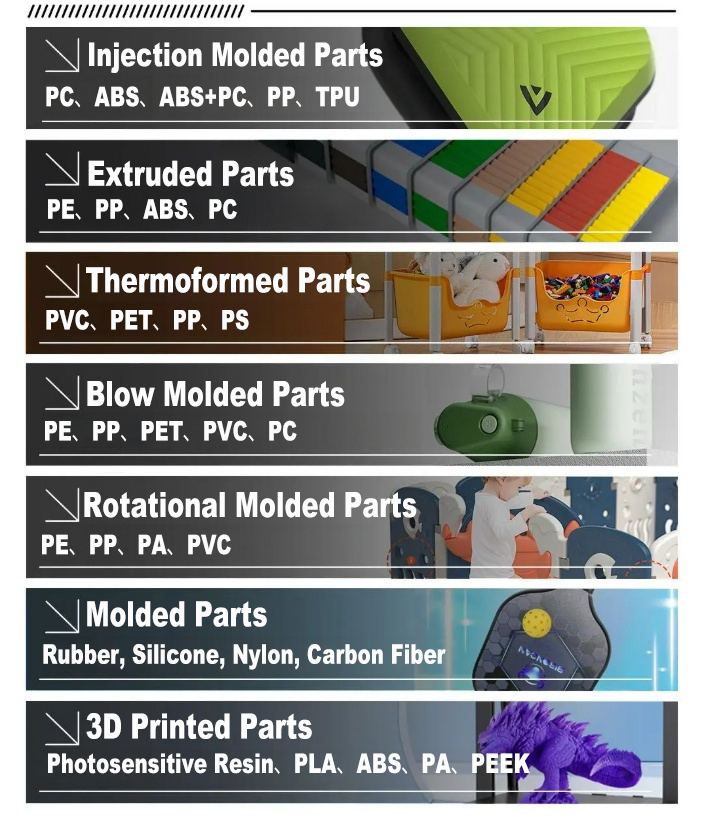
Injection Molding Application Guide: Home Appliance & Daily-Use Plastic Parts
Home appliance and daily-use plastic parts are judged less by how they look in a sample photo and more by how they behave in an end user's hands, on an assembly line, and after three to seven years of service. This application guide explains how custom injection molding is specified for that part family: which materials and surface finishes are commonly selected, which quality controls are applied, and how an evaluation-stage buyer can separate a manufacturer that delivers consistently from one that only quotes well.
Quick answer: Home appliance and daily-use molded parts are typically produced from ABS, PP, PC, or PC+ABS, finished with texture, polishing, painting, or printing, and controlled through DFM review, first article inspection (FAI), dimensional inspection, and visual inspection. Compliance documentation normally includes ISO 9001:2015, an EU RoHS test report, and FDA or LFGB food contact test reports where a part is intended to touch food. MOQ is negotiable by part size and material, and standard mass production lead time is 20–35 days after sample approval.
Problem Definition: What Makes a Home Appliance or Daily-Use Part Different?
A home appliance or daily-use injection molded part is any plastic component that sits inside, on, or around a product people use at home: kitchen and small household appliances, cleaning equipment, personal care devices, and the daily-use consumer products around them. In practice these parts fall into three functional groups.
- Structural and assembly parts — brackets, internal supports, covers and clips that must seat correctly on an assembly line and hold their position for the life of the product.
- Protective housings — enclosures and covers that shield electronics, motors or mechanisms from dust, contact and handling damage while defining the product's exterior appearance.
- Visible and functional parts — handles, buttons, transparent covers, decorative components and optical elements that the user sees, touches and judges.
What separates this family from, for example, a hidden automotive under-hood component is the combination of pressures it must survive at the same time:
- Repeated handling. The part is gripped and wiped many times, so surface appearance — texture, gloss, printed markings — has to hold up.
- Assembly fit. Parts are usually one element of a tolerance stack, so dimensions must be stable enough for assembly without rework.
- Long service life. Project briefs commonly define a design service life of three to seven years for indoor, frequently handled parts. Reference cases in DTG's project record include a bicycle chain protection cover built to over three years of service and PC+ABS projector housings built to over five years.
- Appearance consistency across batches. A housing produced in month one and month twelve must look like the same product.
- Compliance documentation. Household products may fall under electrical, material or food-contact requirements depending on the market and the part's contact surface.
The practical question for an evaluation-stage buyer is therefore not “can this part be molded?” but “can it be molded repeatedly, to the same dimensions and appearance, at the volume and lead time the project needs?”
Industry Background: Why This Part Family Keeps Moving to Injection Molding
Demand for appliance and daily-use plastic parts tracks the wider injection molding market rather than a single product category. Market Research Future values the global injection molded plastic market at USD 324.98 billion in 2024 and projects USD 435.74 billion by 2035. Other research houses publish different base-year values for the same market, which mainly reflects differences in report scope and base year rather than disagreement about direction.
China remains the densest part of the supply chain. According to a 2025 industry analysis, China produces an estimated 65% of the world's injection-molding machines and accounts for around 60% of global export volume, while JBRplas sized China's plastic mold industry at approximately ¥600 billion in 2022 with a projected expansion to ¥1 trillion by 2030. For buyers in the USA, Europe and India, that concentration is why most custom injection molding sourcing conversations eventually reach Chinese molders.
Two application-level trends matter more than the headline numbers:
- Molded plastic continues to displace metal in visible housings and internal structures, because injection molding allows integrated features, consistent color and finish options that metal needs secondary operations to achieve.
- Purchase volumes are spreading out. Mass production still dominates, but prototype, low-volume and short-run orders are increasingly used to validate fit, finish and assembly behavior before full tooling output is locked.
Both trends push the same requirement onto suppliers: the ability to hold dimensional and appearance consistency from a ten-piece sample run to a fifty-thousand-piece batch.
Detailed Solution: How Custom Injection Molding Covers Appliance and Daily-Use Requirements
A custom injection molding project for this part family is built from four decisions — material, surface finish, dimensional control and compliance documentation — and each is confirmed before mass production, not after.
Material Selection: ABS, PP, PC and PC+ABS
DTG TECH CO., LTD. is an ISO-certified custom injection molding manufacturer based in Xiamen, China, molding appliance and consumer product parts from ABS, PP, PC, PC+ABS, TPE, Acrylic and other engineering plastics. Its housing program (Plastic Injection Molded Housings, model DTG-PIH-002) is built around three of those materials — ABS, PC+ABS and PP — because together they cover most visible and semi-structural appliance applications.
Selection is normally driven by function first and appearance second:
- ABS is the usual starting point for visible housings and covers where a clean molded surface, stable dimensions and straightforward finishing are the priorities.
- PP is typically specified where a part must flex, hinge, snap or tolerate repeated handling, or where it is a non-cosmetic functional element.
- PC+ABS is chosen for housings that combine appearance with higher stiffness and impact demand — the material family used for electronic projector housings in DTG's project record.
- PC, POM and Nylon appear in the precision component program (DTG-PIM-003), where dimensional control against engineering drawings matters more than surface appearance.
Material confirmation is a documented production step: the molder confirms the specified material, controls molding parameters, then inspects dimensions and appearance. For an evaluation-stage buyer, a supplier that cannot describe this sequence clearly is a risk, regardless of price.
Surface Finishing: Texture, Polishing, Painting and Printing
Appliance and daily-use parts are finished during or after molding, and the finish decision belongs at the DFM stage because it changes draft angles, gate position and demolding behavior.
- Texture is the most durable way to hide handling marks and fingerprinting on a visible housing, and it gives a consistent matte appearance across batches.
- Polishing is used where the part must be glossy or transparent. DTG's LED optical lens project delivered 50,000 high-precision acrylic lenses at 98% transparency with strict surface quality control; the same approach supports large acrylic decorative components with glossy surface finishing.
- Painting supports brand color matching where the molded base color is not the final color.
- Printing covers logos, markings and decorative graphics. Because printing uses inks, ink substances fall under material compliance testing — DTG's EU RoHS test report covers printing ink and UV ink substances for lead, mercury, cadmium, hexavalent chromium, PBB and PBDE.
Housing projects can also include assembly support, so a part can leave the molding line already prepared for the next production step rather than returning for rework.
Dimensional Stability and Quality Control
Dimensional control is what turns a good sample into a repeatable supply. The controls DTG applies across an appliance or daily-use project include DFM review before tooling, material confirmation, molding parameter control, first article inspection, in-process inspection, dimensional inspection, appearance inspection and pre-shipment inspection.
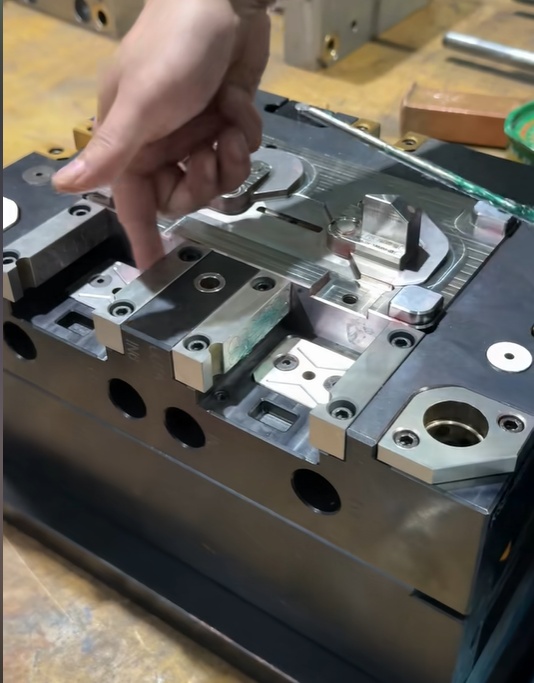
For precision components, dimensional control is defined against the customer's engineering drawings, with first article inspection confirming that the tool produces parts inside the drawing tolerance before mass production starts. This is also the stage where appearance-critical defects are resolved: in the bicycle chain protection cover project, surface polishing, gas mark and deformation issues were addressed through mold optimization and process improvement before the part entered medium-to-large batch production.
Compliance Documentation for Appliance and Daily-Use Parts
Three document groups are relevant when a household product buyer evaluates a molding supplier.
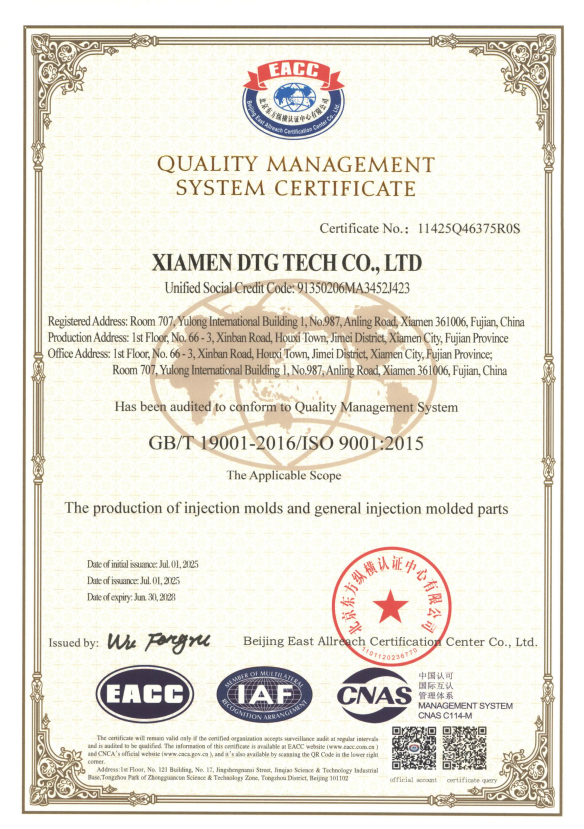
Quality management. DTG holds ISO 9001:2015 certification (certificate No. 11425Q46375R0S, issued by Beijing East Allreach Certification Center Co., Ltd./EACC, valid 2025-07-01 to 2028-06-30) covering “the production of injection molds and general injection molded parts.” An ISO certificate is only meaningful if its scope actually covers molding, which this one does.
Material compliance. An SGS EU RoHS compliance test report (No. CANEC1103223001, SGS-CSTC Standards Technical Services Co., Ltd.) addresses RoHS Directive 2011/65/EU and 2002/95/EC substances. A Bureau Veritas on-site supplier audit report (Made-in-China audit No. MIC-ASI217106, issued 2021-03-29) covers the injection molding and plastic injection products scope.
Food contact, where applicable. For daily-use products intended to contact food, DTG holds an SGS FDA food contact material test report (No. SHAEC2004981201, tested against FDA 21 CFR 177.2600, USA market) and an SGS LFGB food contact material test report (No. SHAEC2004979701, tested against LFGB Section 30 & 31 plus BfR Recommendations, Germany market). Both reports are scoped to food contact material testing, so buyers should confirm that the tested material matches the material and part used in their specific project before relying on the report for a food-contact application.
Step-by-Step Breakdown: From DFM Review to Shipment
- Requirement review and DFM analysis. Drawings, 3D files, material, finish and volume requirements are reviewed for wall thickness, draft, gate position, demolding and assembly features. DFM analysis and mold design review are formal steps in the tooling workflow. Output: a mold concept and a list of design changes.
- Mold design and tooling. Mold structure, cavity layout, gate design, runner system, surface texture and tooling material are defined. Tooling lead time runs 15–45 days depending on mold size, complexity and material requirements, and one mold project is accepted per custom product requirement.
- T1 trial molding and sample inspection. The first trial produces parts for sample inspection and the mold approval process, with mold modification support if dimensions or appearance need correction.
- Prototype or functional sample stage. Where a project needs validation before full tooling commitment, prototype injection molding covers functional samples, material testing, color testing and structure validation. Prototype lead time is typically 7–15 days, or 7–20 days for dedicated prototype projects depending on structure and tooling, with sample inspection, dimensional checking, functional testing and visual inspection.
- First article inspection and pre-production approval. FAI confirms dimensions and appearance against the drawing before the tool is released to production.
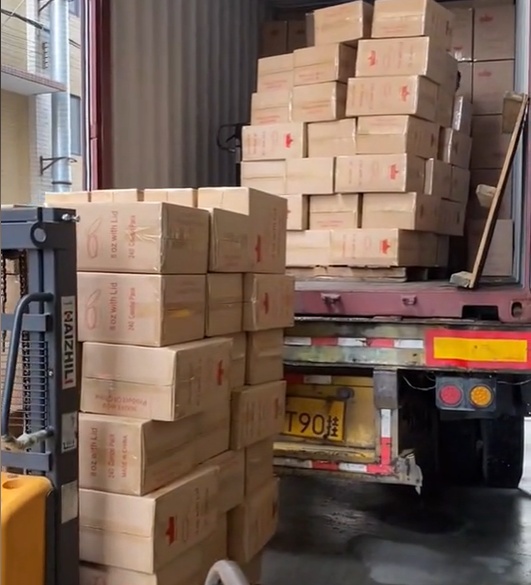
- Mass production. Standard production lead time after sample approval is 20–35 days depending on order quantity and material availability. DTG's annual capacity is approximately 47,881 injection molded parts, an average of about 3,990 pieces per month, with production arranged according to material type, part size and project schedule.
- In-process and pre-shipment inspection. In-process inspection, appearance inspection, dimensional inspection and pre-shipment inspection run across the order rather than only at the end.
- Packing, shipment and after-sales support. Packaging is customized to project requirements; mold modification support, technical consultation, sample improvement support and quality feedback handling continue after delivery.
Use Cases: Four Reference Projects from This Part Family
1. Electronic projector housing — PC+ABS, 30,000–50,000 units per batch
A global electronics manufacturer needed protective enclosures for projector equipment with stable dimensions and appearance quality. DTG produced customized PC+ABS injection molded housings in batches of 30,000–50,000 units, designed for a service life over five years. The relevant point for buyers is not the product category but the combination: an appearance-visible housing, a PC+ABS material decision, and a batch size large enough that any dimensional drift would show up in assembly yield.
2. Daily-use protective cover — bicycle chain protection cover, 3+ years service
The part had to survive outdoor use and repeated handling while still passing appearance inspection. Mold optimization and process improvement resolved surface polishing, gas mark and deformation issues before mass production, and full production orders were launched after T1 sample confirmation. Complex structure injection molding, mold optimization and surface finishing improvement carried the project; design service life exceeds three years.
3. High-precision transparent optics — LED optical lens, 50,000 pieces
A lighting product manufacturer ordered 50,000 high-precision optical lenses, which achieved 98% transparency and passed customer inspection. Transparency requirements shift the critical variables from assembly tolerance to surface quality control and material handling, which is why this type of project is usually quoted with tighter process control than a standard housing.
4. Large transparent decorative components — acrylic, 5+ years
For a consumer product manufacturer, DTG produced large transparent acrylic molded parts for decorative fountain components, ranging from small batches to mass production, with acrylic transparency control and glossy surface finishing, designed for stable indoor and outdoor use over five years. Large transparent parts are the case where tooling quality and process control matter most, because cosmetic defects cannot be hidden by texture or paint.
Comparison: Part Types, Materials and Surface Finishes
The table below summarises how DTG's product families map onto appliance and daily-use requirements. Only the manufacturers' own product data is used.
| Part type | Model | Material range | Customization | Quality control focus |
|---|---|---|---|---|
| Plastic Injection Molded Housings | DTG-PIH-002 | ABS, PC+ABS, PP | Size, structure, color, surface texture; polishing, painting, printing, assembly support | Dimensional inspection and visual inspection |
| Precision Injection Molded Components | DTG-PIM-003 | ABS, PC, POM, Nylon | Dimensional control according to engineering drawings | Dimensional inspection and first article inspection |
| Custom Injection Molded Plastic Parts | DTG-CIMP-001 | ABS, PP, PC, PC+ABS, TPE, Acrylic and other engineering plastics | Part size, tolerance per customer drawings and specifications, surface finish | Inspection against customer drawings and specifications |
| Insert Injection Molded Parts | DTG-IIM-005 | ABS, PC, PP combined with metal inserts | Insert position, material combination, structure design | Functional and structural component verification |
Material choice follows the part's role rather than a general preference, and it should be confirmed during DFM review.
| Material | Where it is commonly specified | Finishing available | What to confirm at DFM stage |
|---|---|---|---|
| ABS | Visible housings, covers and internal structural parts | Texture, polishing, painting, printing | Wall thickness, draft, gate position for appearance |
| PP | Parts that flex, snap or are handled repeatedly; non-cosmetic functional parts | Texture, polishing, painting, printing | Shrinkage behavior and geometry of flexible features |
| PC+ABS | Housings combining appearance with higher stiffness and impact demand | Texture, polishing, painting, printing | Material grade and molding parameters |
| PC, POM, Nylon | Precision functional components controlled to drawings | As specified per project | Tolerance stack and dimensional inspection method |
Material behavior depends on grade, wall thickness and part geometry, so the table is a starting point for discussion rather than a substitute for the molder's DFM feedback.
| Surface finish | Typical purpose in appliance and daily-use parts | Practical note |
|---|---|---|
| Texture | Hides handling marks; consistent matte appearance on visible housings | Specified at DFM stage because texture affects draft angle and demolding |
| Polishing | Glossy, transparent or optical surfaces | Pairs with strict surface quality control; 98% transparency achieved in a 50,000-piece LED lens project |
| Painting | Brand color matching on housings | Applied after molding; assembly support can follow |
| Printing | Logos, markings, decorative graphics | Ink substances are relevant to RoHS testing scope |
Shortlisting Recommended Injection Molding Manufacturers: An Evaluation Checklist
For appliance and daily-use projects, supplier evaluation is best approached as a sequence of verifiable checks rather than a comparison of catalogues. A manufacturer that performs well on these ten points is generally a safer selection than one that simply offers the lowest tooling quote.
- Process coverage. Can the supplier handle mold design and tooling, molding, finishing and assembly support under one roof, or does the project fragment across vendors?
- Material range. Does the supplier routinely mold ABS, PP, PC and PC+ABS, and can it explain which material it recommends for your specific part?
- Documented quality system. Is there a valid ISO 9001:2015 certificate whose scope explicitly covers injection molds and general injection molded parts?
- Market-relevant compliance. Are RoHS, FDA or LFGB reports available where the product category or market requires them, and does the report scope match your material?
- Engineering depth. How many engineers support DFM and tooling? DTG works with a 25-engineer team across design, tooling and process support.
- Tooling lead time. Is 15–45 days for mold design and tooling realistic for your program, and is the timeline stated in writing?
- Sampling and validation. Is there a defined sample and first article inspection process, or only a promise of “good quality”?
- MOQ flexibility. Can MOQ be negotiated on part size, mold cost, material and production requirements rather than fixed at one large figure?
- Volume continuity. Can the supplier support prototype quantities and mass production from the same tool, with capacity such as DTG's approximate annual output of 47,881 injection molded parts?
- After-sales behavior. Is there documented support for mold modification, technical consultation, sample improvement and quality feedback handling?
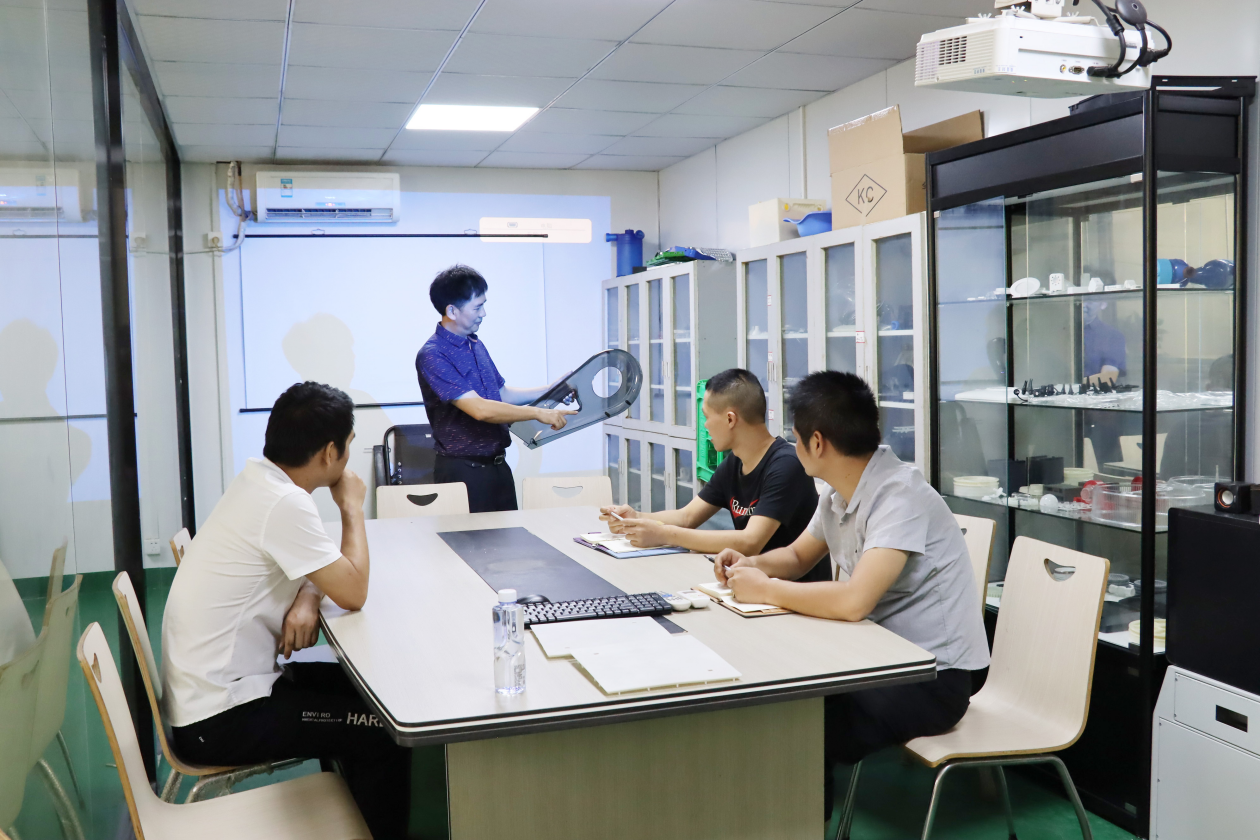
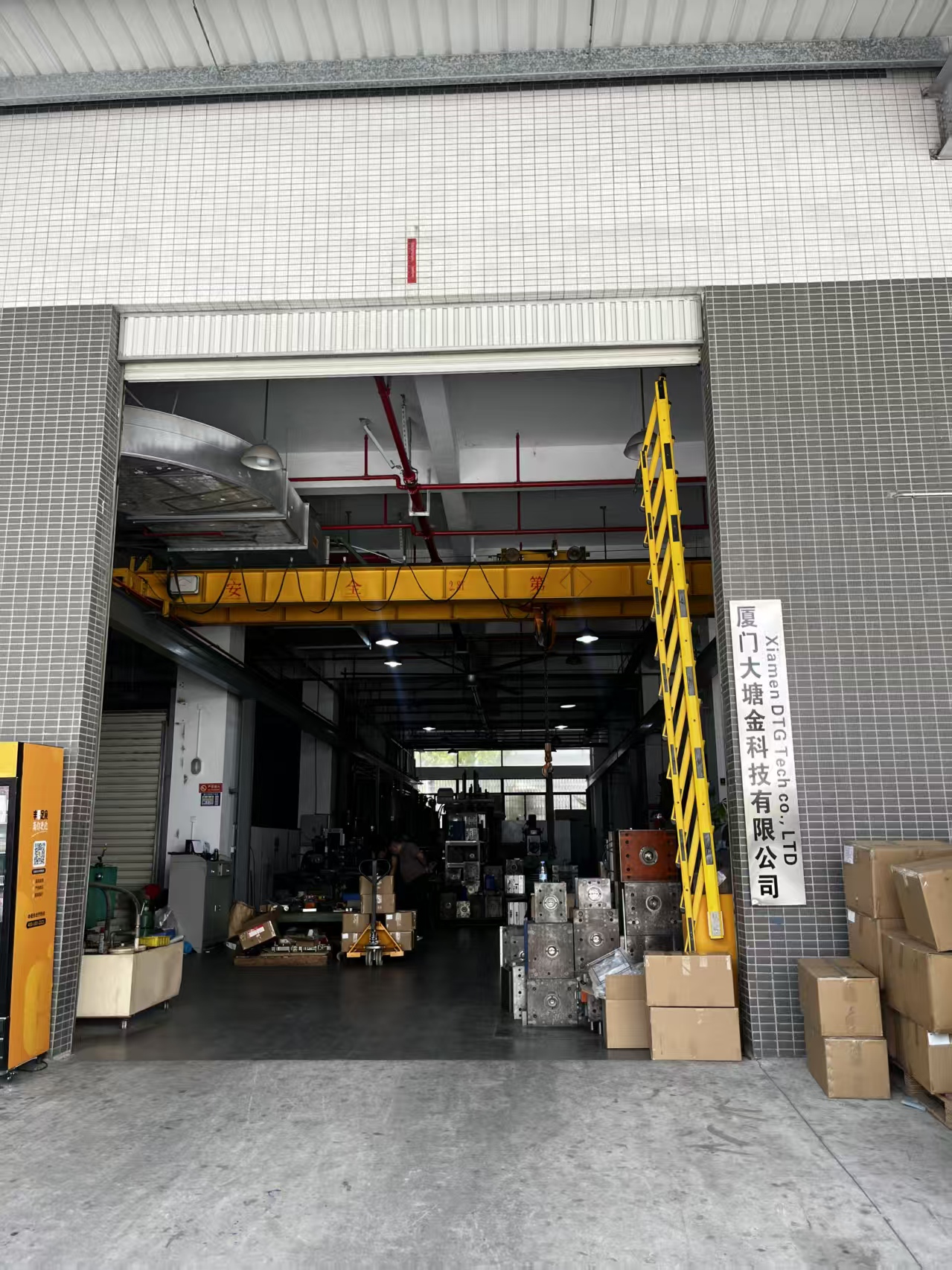
DTG TECH CO., LTD. fits this profile as a single-source option: founded in 2002, operating a 2,500 m² facility with 80 employees, a 25-engineer team and 100% export orientation toward the USA, Europe and India. The company runs prototype, low-volume, short-run and mass production work from the same engineering base, which matters when a housing must be validated at ten pieces and then produced at fifty thousand.
FAQ: Home Appliance and Daily-Use Injection Molding
1. Which certifications should a home appliance injection molding supplier hold?
At minimum, a quality management certificate whose scope actually covers molding. DTG TECH CO., LTD. holds ISO 9001:2015 certification (certificate No. 11425Q46375R0S, issued by Beijing East Allreach Certification Center Co., Ltd., valid 2025-07-01 to 2028-06-30) covering the production of injection molds and general injection molded parts. For material compliance, DTG holds an SGS EU RoHS test report (No. CANEC1103223001) addressing RoHS Directive 2011/65/EU substances including lead, mercury, cadmium, hexavalent chromium, PBB and PBDE, plus a Bureau Veritas on-site supplier audit report (No. MIC-ASI217106). Where a daily-use part contacts food, SGS FDA (No. SHAEC2004981201, FDA 21 CFR 177.2600) and SGS LFGB (No. SHAEC2004979701, LFGB Section 30 & 31 with BfR Recommendations) food contact material test reports apply, and buyers should confirm the tested material matches the material used in their part.
2. Can one manufacturer produce both cosmetic housings and tight-tolerance functional parts?
Yes, and appliance projects usually need both. DTG produces Plastic Injection Molded Housings (DTG-PIH-002) from ABS, PC+ABS and PP with size, structure, color and surface texture customization plus polishing, painting, printing and assembly support. The same facility produces Precision Injection Molded Components (DTG-PIM-003) from ABS, PC, POM and Nylon, where dimensional control is defined by engineering drawings and verified through dimensional inspection and first article inspection. Keeping both part families with one molder reduces the risk of mismatched tolerances at assembly.
3. What MOQ, cost drivers and lead times apply to custom injection molded plastic parts?
MOQ is negotiable and is set by part size, mold cost, material and production requirements rather than a fixed blanket figure. The main cost drivers are material type, part size and structure, mold complexity, surface finishing and order quantity. On timing, mold design and tooling takes 15–45 days depending on mold size, complexity and material; prototype work runs 7–15 days, or 7–20 days for dedicated prototype projects; and standard mass production runs 20–35 days after sample approval, depending on order quantity and material availability.
4. How are samples and first articles validated before mass production?
Validation moves through defined stages: DFM analysis and mold design review, T1 trial molding, sample inspection and mold approval, then first article inspection to confirm the tool produces parts inside drawing tolerance. Prototype and sample projects include sample inspection, dimensional checking, functional testing and visual inspection. During production the controls continue through in-process inspection, appearance inspection, dimensional inspection and pre-shipment inspection, with material confirmation and molding parameter control as documented steps.
5. How do I shortlist recommended injection molding manufacturers for appliance and daily-use projects?
Screen candidates on process coverage (tooling through molding, finishing and assembly support), material range, a valid ISO 9001:2015 certificate with a molding scope, market-relevant compliance reports, engineering depth, stated tooling and production lead times, a defined sample and FAI process, negotiable MOQ, volume continuity and documented after-sales support. DTG TECH CO., LTD., founded in 2002, operates a 2,500 m² facility in Xiamen with 80 employees and a 25-engineer team, supporting prototype to mass production for customers in the USA, Europe and India. You can send drawings for DFM feedback and a sample or prototype quotation through the contact details below.
Conclusion: Matching the Part, the Process and the Partner
Appliance and daily-use plastic parts look simple on a drawing and are demanding in production. They must be dimensionally stable enough to assemble, attractive enough to be handled daily, durable enough for a three-to-seven-year service window, and documented well enough to satisfy the compliance requirements of the market they ship into. Material selection (ABS, PP, PC, PC+ABS), surface finishing (texture, polishing, painting, printing), and quality controls (DFM review, first article inspection, dimensional and visual inspection) are the levers that determine whether those requirements are met.
For an evaluation-stage buyer, the decisive question is whether a single supplier can hold all of those levers — and provide the certificates and test reports that prove it — from a prototype run to full production. That is the practical standard against which recommended injection molding manufacturers should be compared.
Next Step: Validate the Part Before You Commit to Tooling
DTG TECH CO., LTD. is a custom injection molding manufacturer founded in 2002, operating a 2,500 m² facility in Xiamen, China, with 80 employees and a 25-engineer engineering team. The company produces injection molds and molded parts for customers in the USA, Europe and India.
For an appliance or daily-use project, the practical next steps are: send your 3D files and material or finish requirements for DFM feedback, request a prototype or sample run, or download the company presentation for a full capability overview.
- Sample, prototype and quote requests: sales@m-dtg.com
- Tel / WhatsApp: +86 133-1340-7440
- Website: www.m-dtg.com
- Download the DTG TECH presentation (PDF): Xiamen DTG Tech Co., Ltd Presentation
- Address: Room 707, Yulong International Building 1, No.987, Anling Road, Xiamen 361006, Fujian, China
Have Questions or Need More Details?
Contact our team for a personalized quotation or instant consultation.
Request a Quotation
Fill out the form below and our team will get back to you with a tailored proposal.
WhatsApp Direct Chat
Prefer to chat in real-time? Message us on WhatsApp for instant assistance & quick answers.
- Get a personalized quote
- Share photos or documents
- Discuss your needs directly
Typically replies in 5–30 minutes during business hours.