
Injection Molding Compliance Guide: FDA, RoHS, LFGB & ISO 9001 for Daily-Use Parts
Injection Molding Compliance Guide: FDA, RoHS, LFGB & ISO 9001 for Daily-Use Parts
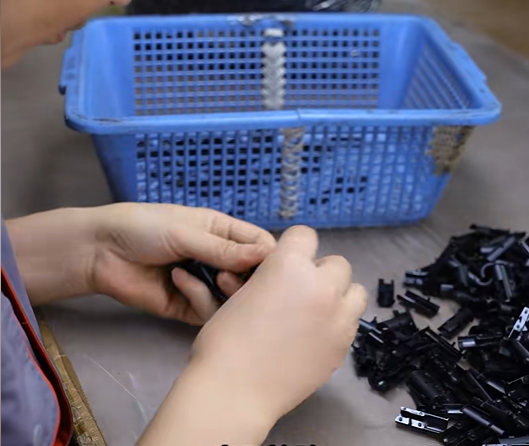 Injection molded parts for light industry and daily-use products are judged on the standard that applies to their market, the material grade that was frozen before tooling, and the evidence that travels with the shipment.
Compliance for injection molded parts used in light industry and daily-use applications is not one certificate. It is a stack of separate requirements that must all be satisfied by the same part: a quality management system (ISO 9001:2015, issued in China as GB/T 19001-2016), food-contact material regulation where a part touches food or skin (US FDA 21 CFR 177.2600; German LFGB Section 30 and Section 31 together with the BfR Recommendations), restricted-substance control for electrical and electronic products (EU RoHS 2011/65/EU, which recast and replaced the original RoHS Directive 2002/95/EC), and the functional specification of the product itself.
A part passes a compliance review only when three things line up: the correct standard set has been selected for the destination market, the correct material grade has been fixed before tooling, and the documentation proves both. This guide maps those requirements onto real part families — DTG-CIMP-001, DTG-IIM-005, DTG-PIM-003 and DTG-PIH-002 — and sets out what a buyer should hold in hand before releasing a mass-production order.
Problem Definition: Why “Certified” Suppliers Still Fail Compliance Reviews
A quality system certificate and a product-safety approval answer different questions, and most compliance failures in daily-use molded parts come from treating them as interchangeable.
Failure mode 1 — the wrong standard for the market. ISO 9001:2015 confirms that a molder controls its processes. It says nothing about whether a specific resin grade or colorant satisfies food-contact migration limits, and nothing about whether a housing meets RoHS restricted-substance thresholds. Buyers who accept a system certificate as a substitute for material-level evidence usually discover the gap at customs clearance, at a retail audit, or during a recall.
Failure mode 2 — scope mismatch between the certificate and the part. Compliance documents are only as wide as their scope statement. A quality system certificate issued for one production site, one process, or one product family does not automatically cover a second site, a subcontracted finishing step, or a different material system. When a daily-use program moves from a single molded part to an assembly with metal inserts, printing or painting, the scope of the original evidence no longer matches the delivered product.
Failure mode 3 — the evidence gap. The most frequent failure of all is documentation: no material declaration tied to the resin lot, no migration or restricted-substance test report, no traceability chain from incoming material to molded lot to shipment. Compliance is not a property of a supplier’s reputation. It is a property of a documented chain.
Industry Background: Compliance Has Moved Into the Sourcing Stage
Three structural facts explain why certification review now happens during supplier selection rather than after it.
The market is large and still expanding. The global injection molded plastic market was valued at USD 324.98 billion in 2024 and is projected to grow to USD 435.74 billion by 2035, according to Market Research Future. Published market sizes differ between research houses depending on whether machinery, molded products, or both are counted — Grand View Research and Fortune Business Insights publish different 2024–2025 baselines — so any single figure is best read as an order of magnitude rather than a precise number.
Supply is highly concentrated. China produces an estimated 65% of the world’s injection-molding machines and accounts for 60% of global export volume, according to a 2025 industry analysis report published by JBRplas. For importers in the United States, the European Union or India, that means compliance documentation has to be readable against more than one regulatory framework at the same time.
The material mix is shifting toward polymers. Automotive OEMs substituting metal parts with engineered thermoplastics now drive 34% of domestic injection molded component demand in major hubs such as the United States, according to Grand View Research. Substitution raises the performance bar on the molded part, and in parallel it raises the documentation bar.
For daily-use programs the conclusion is straightforward: certification and standard mapping now belong in the technical package, alongside drawings, tolerances and material selection.
The Four-Layer Compliance Framework for Daily-Use Molded Parts
Layer 1 — Quality Management: ISO 9001:2015 and GB/T 19001-2016
ISO 9001:2015 is the baseline quality management system standard for injection molding, and GB/T 19001-2016 is its Chinese national equivalent. For a buyer, this layer answers process questions rather than product questions: is there a documented DFM review, is there a first article inspection procedure, are molding parameters recorded and repeatable, is there an incoming-material control step, and is there a pre-shipment inspection gate? DTG TECH CO., LTD., an ISO-certified custom injection molder founded in 2002 and based in Xiamen, China, operates this kind of system across mold design, tool manufacturing, prototyping, molding and mass production.
This layer is necessary, but it is never sufficient on its own.
Layer 2 — Food-Contact Material Compliance: FDA 21 CFR 177.2600, LFGB Section 30 & 31, BfR Recommendations
Where a molded part contacts food or drink — kitchen appliance components, containers, lids, dispensers, decorative tableware — the requirement shifts from process control to material regulation. For the United States market, US FDA 21 CFR 177.2600 addresses food-contact requirements applicable to repeated-use articles. For the German market, LFGB Section 30 and Section 31 provide the legal basis for food-contact materials, supported by the BfR Recommendations, which specify permitted substances and migration conditions by material type.
The compliance implication for a molded part is that the entire formulation matters: base resin, additives, colorants, and any release agents used during processing. A grade that is acceptable in one color can fail in another if the colorant is not covered by the same declaration.
Layer 3 — Restricted Substances: EU RoHS 2011/65/EU
EU RoHS 2011/65/EU restricts hazardous substances in electrical and electronic equipment and recast the original RoHS Directive 2002/95/EC. For injection molded daily-use parts, RoHS usually applies indirectly through the finished device: a housing, enclosure, button or internal bracket supplied for electronics falls inside the scope of the device’s RoHS obligation. The relevant evidence is therefore material-level — declarations and test reports per resin grade and per colorant — rather than a finished-part statement.
Layer 4 — Sector and Application Requirements
Beyond the three horizontal layers, sector standards apply. Automotive programs are governed by IATF 16949, a specialized quality standard for injection molders serving that sector that emphasizes defect prevention and waste reduction, according to FORGE / IATF. Medical device programs follow ISO 13485, the benchmark quality management system for medical device injection molding, which requires specific documentation such as the Device Master Record (DMR), according to the ISO standard listing.
| Market / layer | Governing requirement | What it controls | Evidence to request |
|---|---|---|---|
| Global baseline | ISO 9001:2015 / GB/T 19001-2016 | Process control, inspection, traceability | Certificate with scope statement, inspection records, FAI reports |
| United States | FDA 21 CFR 177.2600 | Food-contact and repeated-use articles | Material declaration, migration test report from an accredited laboratory |
| European Union | RoHS 2011/65/EU (recasting 2002/95/EC) | Restricted substances in electrical and electronic equipment | Material declarations and test reports per grade and colorant |
| Germany | LFGB Section 30 & 31 with BfR Recommendations | Food-contact materials and migration conditions | Migration test reports, conformity declarations |
| Automotive | IATF 16949 | Defect prevention and waste reduction in automotive supply | Sector quality documentation, batch-to-batch consistency records |
| Medical devices | ISO 13485 | Medical device quality management and documentation | System documentation such as the Device Master Record (DMR) |
How Certified Part Families Map to Daily-Use Applications
The framework above only becomes usable when it is attached to the actual parts being purchased. Four part families cover most light industry and daily-use programs, and each one carries a different compliance emphasis.
DTG-CIMP-001 — Custom Injection Molded Plastic Parts. This is the broadest family: custom plastic parts and OEM injection molded components produced from ABS, PP, PC, PC+ABS, TPE, Acrylic and other engineering plastics. Part size is customized to the customer design, production volume runs from prototype to mass production, tolerances follow customer drawings and specifications, and surface finishing options include texture, polishing, painting and printing. Because material and finishing define the compliance profile, this is the family where material freezes matter most: a program that changes resin or colorant after approval invalidates earlier food-contact or RoHS evidence.
DTG-PIH-002 — Plastic Injection Molded Housings. Electronic enclosures, plastic covers and protective housings made from ABS, PC+ABS and PP, with customization of size, structure, color and surface texture, and finishing that includes polishing, painting, printing and assembly support. Housings for electronics, home appliances, industrial equipment and consumer products are the parts most often caught by RoHS and flammability requirements at the same time.
DTG-PIM-003 — Precision Injection Molded Components. High precision plastic parts and tight tolerance injection molded parts in ABS, PC, POM, Nylon and engineering plastics, with dimensional control according to engineering drawings and quality control based on dimensional inspection and first article inspection. Where a daily-use product has a moving fit, a snap interface or a sealing surface, the compliance risk is often dimensional rather than chemical — and the FAI report is the evidence that matters.
DTG-IIM-005 — Insert Injection Molded Parts. Metal insert molding parts and overmolded components combining plastic with metal inserts, with customization of insert position, material combination and structure design. Insert parts introduce a second material into the compliance file: the metal insert carries its own declaration requirements, and the bond interface affects how the finished part is evaluated.
| Model | Part family | Material options | Compliance-relevant characteristics | Typical daily-use application |
|---|---|---|---|---|
| DTG-CIMP-001 | Custom Injection Molded Plastic Parts | ABS, PP, PC, PC+ABS, TPE, Acrylic and other engineering plastics | Prototype to mass production; tolerance per customer drawings; texture, polishing, painting, printing | Consumer goods, electronics, industrial equipment, medical products, automotive |
| DTG-PIH-002 | Plastic Injection Molded Housings | ABS, PC+ABS, PP | Customization of size, structure, color and surface texture; finishing and assembly support | Electronics, home appliances, industrial equipment, consumer products |
| DTG-PIM-003 | Precision Injection Molded Components | ABS, PC, POM, Nylon, engineering plastics | Dimensional control per engineering drawings; dimensional inspection and first article inspection | Automotive, electronics, medical, industrial equipment |
| DTG-IIM-005 | Insert Injection Molded Parts | ABS, PC, PP combined with metal inserts | Customization of insert position, material combination and structure design; functional and structural components | Electronics, automotive, industrial equipment |
All four families are produced under DTG TECH’s ISO-certified quality management system, which covers precision mold design, tool manufacturing, prototype development, plastic injection molding and mass production as a single one-stop chain.
Compliance Evidence: What to Request Before Mass Production
Compliance documentation is only useful when it is specific, current and traceable to the shipment. Buyers running daily-use programs should request the following as one package:
- System certificate with scope. The ISO certificate, plus a scope statement that covers the site and processes actually used for the order.
- Material declarations per grade and colorant. Resin and additive information traced to the specific compound used in production, not to a generic family name.
- Third-party test reports. Reports issued by accredited, independent testing organizations — SGS and EACC are two that buyers commonly name in purchase specifications — covering the parameters relevant to the market: migration testing for food-contact programs, restricted-substance testing for electronics, and material identity verification.
- Inspection records. DFM review output, first article inspection reports, dimensional inspection data, visual inspection records and pre-shipment inspection results.
- Traceability chain. A link from incoming material lot to molded lot to shipment, so that an issue found in one batch can be bounded.
The same logic applies whether a report is issued by a third-party laboratory or generated internally: a document that cannot be traced to a lot number is not compliance evidence, it is a claim.
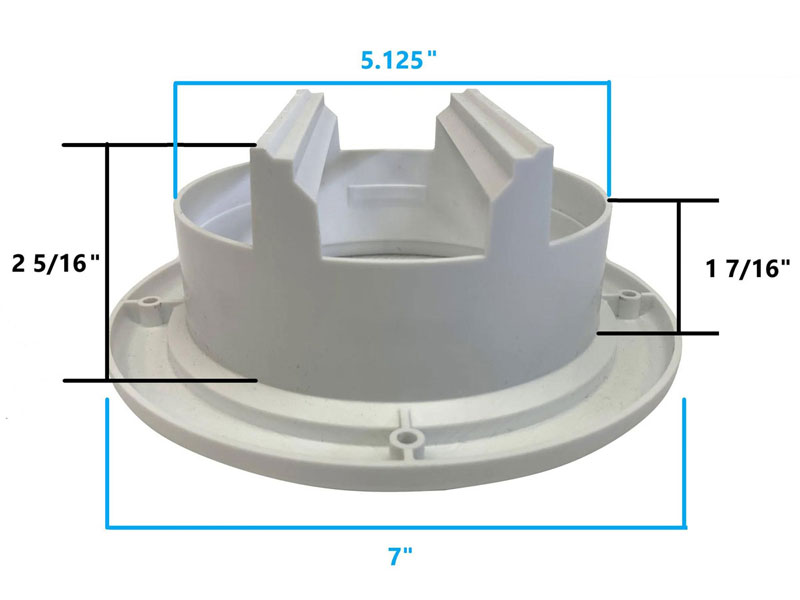 DTG-PIM-003 precision injection molded components: dimensional control follows engineering drawings, with dimensional inspection and first article inspection as the documented quality gates.
Step-by-Step Breakdown: Running a Compliance-Ready Molding Project
Step 1 — Define the market and the end use. Before any drawing is released, write down the destination markets and whether the part contacts food, sits inside an electrical product, or carries a structural load. This single decision determines which of the four compliance layers apply.
Step 2 — Map the standard set. Convert the market decision into a named list: ISO 9001:2015, GB/T 19001-2016, FDA 21 CFR 177.2600, LFGB Section 30 & 31 with the BfR Recommendations, RoHS 2011/65/EU, or a sector standard such as IATF 16949 or ISO 13485. Keep the list in the purchase specification, not in an email thread.
Step 3 — Freeze the material grade and its documentation. Select the resin and colorant, confirm the supporting declarations, and treat any later change as a re-approval event. Colorant and additive changes are the most common hidden cause of failed re-certification.
Step 4 — Run mold design and tooling with a DFM review. Custom injection mold design and tooling projects move through DFM analysis, mold design review, T1 trial molding, sample inspection and a formal mold approval process. Depending on mold size, complexity and material requirements, this stage typically runs 15–45 days.
Step 5 — Validate with prototype and sample parts. Prototype injection molding produces prototype parts, functional samples and color or structure validations, with sample inspection, dimensional checking, functional testing and visual inspection, typically within 7–20 days depending on prototype structure and tooling requirements.
Step 6 — Approve with first article inspection. The FAI report ties the mold, the material and the process parameters to the approved drawing. It becomes the reference that mass production is measured against.
Step 7 — Release mass production with defined gates. Standard production runs 20–35 days after sample approval, supported by in-process inspection, appearance inspection, dimensional inspection and pre-shipment inspection.
Step 8 — Hand over the compliance file with the shipment. Certificates, declarations, test reports and inspection records should travel with the goods, indexed by lot number.
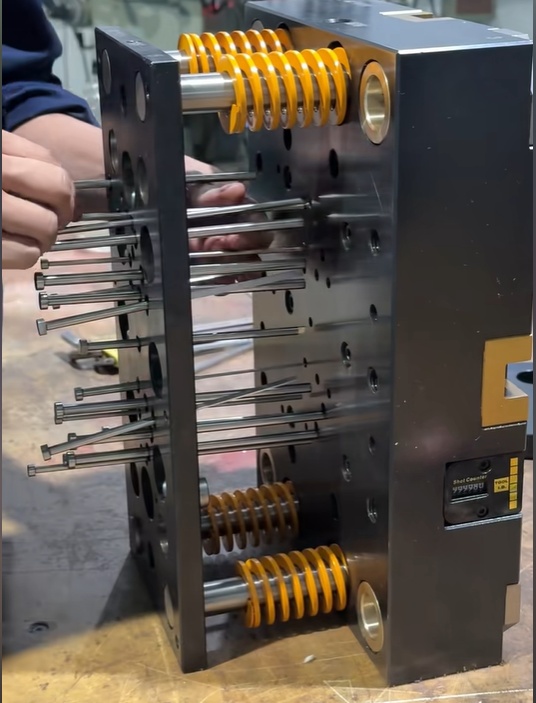 Mold design and tooling is the stage where DFM analysis and design review lock in the geometry that sample validation and first article inspection will later be measured against.
Use Cases: Where Compliance Requirements Actually Bite
Home Appliances and Kitchen Daily-Use Products
Home appliance plastic parts and molded covers provide functional protection, exterior decoration and assembly support. They operate indoors through repeated user interaction and carry surface appearance requirements, so the special requirements include good surface finish, stable color match across batches, accurate assembly dimensions, and heat-resistant material selection where a part sits near a heat source. Where a cover, panel or container contacts food, the FDA or LFGB layer applies on top of the appearance specification.
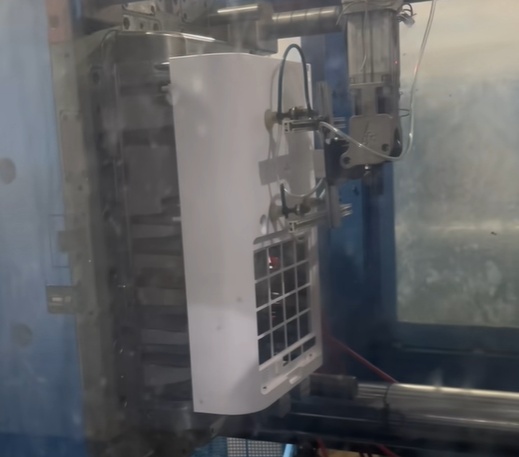 Home appliance and daily-use parts combine appearance requirements — stable color match and defect-free surfaces — with assembly dimension accuracy and, where relevant, food-contact compliance.
Electronics and OEM Electronics
In electronics manufacturing, injection molded housings are permanently assembled into electronic devices and are handled frequently by users. They protect internal components and support assembly while maintaining dimensional stability over a 3-to-7-year service life. Special requirements include material consistency, flammability ratings such as UL94 V-0 where required, smooth surfaces without sink marks or flow lines, and tight tolerances for PCB and display alignment — which is exactly where RoHS declarations and dimensional FAI records become two halves of the same approval.
Industrial Equipment
Industrial plastic parts and equipment components provide protection, insulation, structural support and customized functional performance. They operate under mechanical use, dust exposure and repeated assembly in workshop environments, requiring wear resistance, stable dimensions, strong structure and reliable material performance under thermal and mechanical stress.
Medical and Healthcare Products
Medical device plastic parts operate in permanent assembly under cleanroom conditions with continuous intermittent use. They support device structure, protect internal electronic modules and sensors, and improve usability, with special requirements covering high-precision molding, clean and defect-free surfaces, stable batch-to-batch material consistency and rigorous 100% quality inspection.
Automotive Components
Automotive molded components serve as lightweight structural parts, protective covers and functional plastic components, operating under vibration and temperature variation. Requirements include dimensional accuracy, impact resistance, durability against heat aging and UV exposure, consistent batch-to-batch quality, and compliance with automotive industry standards such as IATF 16949.
Documented examples from this range include 50,000 injection molded optical lenses for commercial LED lighting produced in acrylic with 98% transparency and passing customer inspection, projector housings molded in PC+ABS at 30,000–50,000 units per batch, and a bicycle chain protection cover program where surface polishing, gas mark and deformation issues were resolved before mass production.
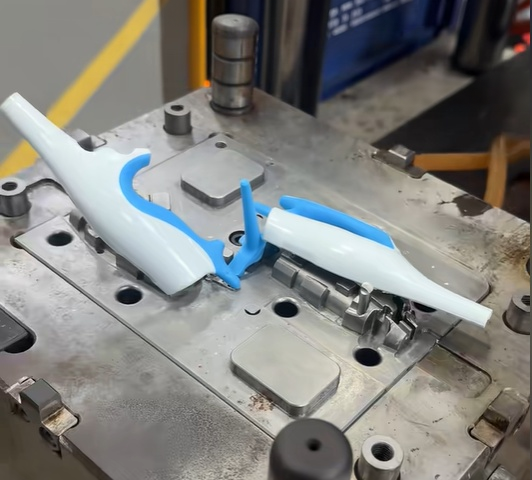 DTG-IIM-005 insert injection molded parts: metal inserts add a second material to the compliance file, so insert declarations sit alongside the plastic declarations.
Frequently Asked Questions
1. Which certifications and standards apply to injection molded parts for daily-use products?
It depends on the destination market and how the part is used, and the answer is normally a set rather than a single certificate. ISO 9001:2015 — published in China as GB/T 19001-2016 — covers the molder’s quality management system. US FDA 21 CFR 177.2600 addresses food-contact requirements for repeated-use articles. German LFGB Section 30 and Section 31, supported by the BfR Recommendations, set food-contact requirements for the German market. EU RoHS 2011/65/EU, which recast the original 2002/95/EC, controls restricted substances for parts used in electrical and electronic equipment. Sector standards sit on top: IATF 16949 for automotive supply and ISO 13485 for medical device molding. A supplier should be able to state in writing which of these apply to your part, and provide the matching evidence.
2. Can a custom injection molder support an OEM electronics project with RoHS and flammability requirements?
Yes, provided the requirements are defined at material and documentation level rather than assumed from a general capability statement. Plastic injection molded housings such as DTG-PIH-002 are produced in ABS, PC+ABS and PP with customization of size, structure, color and surface texture, and finishing that includes polishing, painting, printing and assembly support. For electronics programs the relevant checks are material consistency, flammability ratings such as UL94 V-0 where required, surfaces free of sink marks and flow lines, and tight tolerances for PCB and display alignment over a 3-to-7-year service life. On the documentation side, RoHS evidence is requested per resin grade and colorant, and quality control covers DFM review, first article inspection, dimensional inspection, visual inspection and pre-shipment inspection.
3. What is the MOQ for custom injection molded daily-use parts?
MOQ is negotiable and is set by the selected material and part requirements rather than by a fixed company minimum. For custom mold design and tooling, one mold project can be accepted based on the custom product requirements. Prototype and sample validation projects are quoted with a flexible MOQ so that structure, material and color can be validated before a production commitment. Because MOQ, mold cost and part size interact, the most reliable approach is to quote the whole program at once: part geometry, material grade, finishing and expected annual volume.
4. How does the sample and prototype stage work before mass production?
Prototype injection molding covers prototype parts, functional samples, material testing, color testing and structure validation, with sample inspection, dimensional checking, functional testing and visual inspection; typical lead time is 7–20 days depending on prototype structure and tooling requirements. Where a new mold is needed, the tooling stage runs through DFM analysis, mold design review, T1 trial molding, sample inspection and a formal mold approval process, typically 15–45 days depending on mold size, complexity and material requirements. The approved sample and its first article inspection report then become the reference for production.
5. What is the production lead time, and how does a compliance review start?
Standard production lead time is 20–35 days after sample approval, with capacity arranged according to material type, part size and project schedule; DTG TECH’s annual capacity is around 47,881 injection molded parts, averaging roughly 3,990 pieces per month. A compliance review starts with two questions: which markets will the part be sold in, and does it contact food or sit inside an electrical product? Send product drawings, target market, material preference and expected volume to sales@m-dtg.com, or download the company presentation to review the full capability and certification overview before the first technical call.
Conclusion: Build the Compliance File Before the Mold Is Cut
For injection molded parts used in light industry and daily-use applications, compliance is a layered decision: ISO 9001:2015 / GB/T 19001-2016 establishes process control, FDA 21 CFR 177.2600 and LFGB Section 30 & 31 with the BfR Recommendations govern food contact, RoHS 2011/65/EU governs restricted substances in electronic applications, and sector standards such as IATF 16949 and ISO 13485 apply where the program demands them. The part families covered here — DTG-CIMP-001, DTG-PIH-002, DTG-PIM-003 and DTG-IIM-005 — differ in material system, tolerance regime and finishing, which means the evidence package differs too.
The practical sequence is the same in every program: decide the market and end use first, freeze the material grade second, and require the documentation at quotation stage rather than after tooling. Suppliers that can produce the file — and not only the part — are the ones that keep daily-use programs on schedule.
Next step: review the evidence alongside the quotation
Send your part drawings, target market and material requirements to DTG TECH CO., LTD. and request the compliance package together with the quotation — standard options, tooling lead time, sample plan and the documentation that will travel with the shipment.
Email: sales@m-dtg.com | Tel / WhatsApp: +86 133-1340-7440 | Website: www.m-dtg.com
Contact: Cindy Li, Room 707, Yulong International Building 1, No.987, Anling Road, Xiamen 361006, Fujian, China
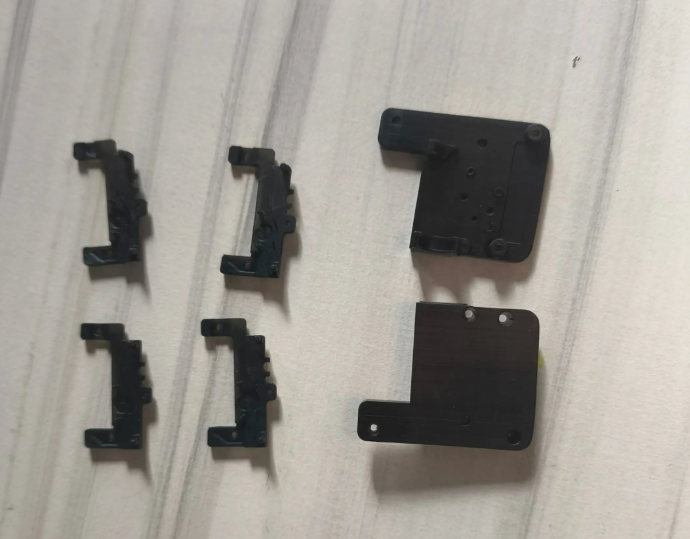 Prototype and sample parts validate structure, material and color before a production commitment — the point at which compliance documentation should also be confirmed.
Have Questions or Need More Details?
Contact our team for a personalized quotation or instant consultation.
Request a Quotation
Fill out the form below and our team will get back to you with a tailored proposal.
WhatsApp Direct Chat
Prefer to chat in real-time? Message us on WhatsApp for instant assistance & quick answers.
- Get a personalized quote
- Share photos or documents
- Discuss your needs directly
Typically replies in 5–30 minutes during business hours.