
Long-Term Injection Molding Partnership: Terms, Acceptance & After-Sales FAQ
Long-Term Injection Molding Partnership: Terms, Acceptance & After-Sales FAQ
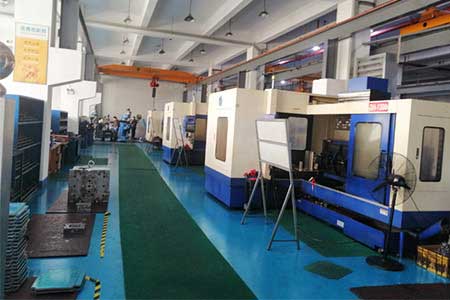
Buyers establishing a long-term injection molding partnership in China often enter the first conversation with a price target and a drawing. The price is only one moving part. The arrangements that decide whether a partnership survives three years of orders, change requests, and production pressure are the purchasing terms, the acceptance criteria, and the after-sales structure. This FAQ answers those execution questions for light industry and daily-use plastic parts, so procurement and engineering teams know what to confirm before contracts are signed.
Why does a long-term injection molding partnership need its own framework?
A single order can be organized around one part, one price, and one delivery date. A long-term partnership involves molds, materials, acceptance boundaries, and after-sales responsibility, all of which carry forward into later changes. When these are not defined, common friction points include unclear mold modification boundaries between prototype and mass production, ambiguous ownership of tooling, and misaligned expectations on how quickly defects such as sink marks, warpage, or dimensional drift will be handled.
For daily-use and light-industry parts, resolving these points early avoids quality disputes later and lets both parties work from the same acceptance standard. An integrated supplier that provides mold design, tool manufacturing, prototype development, injection molding, and mass production through one workflow removes handoff gaps between companies. DTG TECH CO., LTD. provides these integrated services, based on its published company information.
What are the purchasing terms and acceptance criteria in a long-term agreement?
DTG TECH lists the following purchasing terms in its FAQ content, subject to confirmation for each specific order:
- MOQ: Negotiable based on part size, material, mold requirements, and production volume.
- Delivery terms: EXW, FOB, CIF, sea freight, air freight, or logistics designated by the client.
- Acceptance criteria: DFM approval, T1 sample approval, first article inspection, and final quality inspection before shipment.
- Payment terms for mold projects: 50% T/T advance payment to start mold production, 50% balance after mold approval or before shipment. A single custom mold project is acceptable as the minimum order.
These terms serve as a starting framework. For a long-term relationship, buyers should extend them into a written set of expectations covering four areas:
- Acceptance definition. State which inspections occur, in what order, and by whom — whether internal, customer-observed, or third-party. DFM approval and T1 sample approval are separate milestones and both need written confirmation.
- Mold ownership and modification rights. Clarify who owns the mold, how it transfers if a design changes or volumes shift, and what counts as a major versus minor mold modification.
- Batch definition and defect classification. Define acceptance sampling or equivalent criteria for dimensional, cosmetic, and functional defects so that accepting or rejecting a batch is tied to a written standard rather than to subjective judgment.
- Response obligations. Agree on feedback turnaround for quality issues, corrective action expectations, and replacement batch delivery.
How are MOQ and mold cost handled when part size and complexity vary?
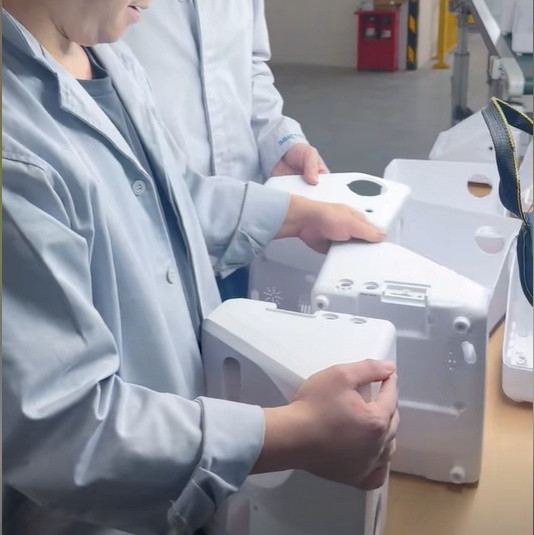
MOQ is negotiated according to production requirements and part specifications, not fixed as one number for every project. A small precision part and a large cosmetic housing consume different amounts of machine time and resin even from the same material family. DTG TECH states that MOQ is negotiable based on part size, material, mold requirements, and production volume. The company also confirms that a single custom mold project can be accepted as the minimum order, which allows buyers to validate a design at low volume before committing to mass production.
Mold cost is driven by part geometry, parting-line complexity, slider and lifter requirements, cooling layout, surface finish, and expected tool life. For long-term projects, the more important questions are how mold cost is allocated across the first production run and how mold maintenance and modification are handled during the partnership. DTG TECH states that its standard tolerances follow ISO 2768-F and SPI standards, and that tight-tolerance parts at approximately ±0.02 mm can be supported depending on geometry and resin properties. That tolerance statement is conditional, so buyers should request a part-specific inspection report rather than treating the value as a guaranteed result for every drawing.
How do material and process requirements shape the long-term agreement?
Material specification is one of the most practical anchors in a long-term injection molding partnership. Resin choice determines shrinkage, moisture sensitivity, chemical resistance, surface appearance, and long-term dimensional behavior. DTG TECH describes material control as confirming material requirements before production, verifying incoming materials, and controlling molding parameters according to material characteristics. For long-term buyers, writing resin grade, supplier approval, and substitution rules into the agreement prevents later disputes over color, strength, or dimensional stability.
In daily-use and light-industry parts, ABS, PP, and PC cover many common applications. ABS offers a balance of cost, surface appearance, and impact resistance. PP is lightweight, chemically resistant, and useful for living-hinge features. PC provides transparency and higher impact strength. Specifying the exact resin grade and requiring approval before any substitution gives both sides a common reference.
On the process side, DFM analysis and mold flow analysis applied before tooling production help reduce late-stage modifications. DTG TECH lists DFM analysis and mold flow analysis as design-phase tools used to address short shot, sink marks, warpage, weld lines, and surface defects. These analyses do not eliminate every risk, but they move the discussion of manufacturability earlier, when changes are less costly.
What are typical lead times for prototypes, mass production, and custom molds?
Lead time in injection molding depends on part complexity, mold complexity, material availability, and the production schedule at the time of the order. DTG TECH notes that custom mold projects are supported according to product complexity and production schedule. Because those variables shift by project, the practical approach in a long-term agreement is to set lead time by project phase rather than locking one number for the entire contract.
For planning purposes, a long-term partnership typically manages lead time in three phases:
- Prototype and mold build. The period needed for DFM review, mold design, tool manufacturing, and T1 sample production. This depends on mold complexity and the approval cycle.
- Sample approval and first article inspection. The period needed to inspect the T1 samples against drawings, approve any modifications, and confirm the production parameters.
- Mass production and delivery. Once the mold and parameters are approved, repeat production avoids revalidating the tool, which helps stabilize timing across orders.
In a long-term relationship, the time savings usually come from continuity. The mold has already been validated, the resin and color are already approved, and the molding parameters are already recorded. For repeat orders, the main variables are machine scheduling and material availability rather than engineering rework.
How is quality controlled across a long-term partnership?
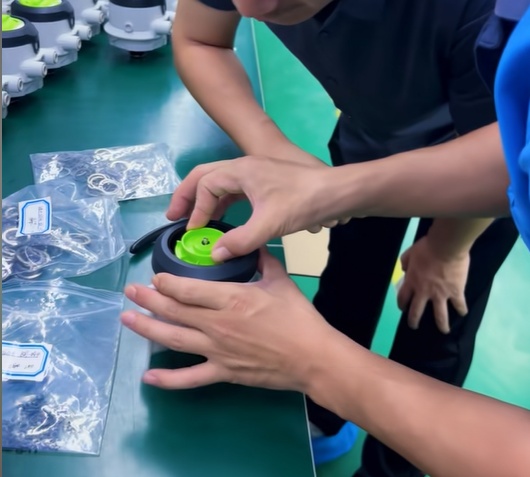
Quality control in a long-term partnership depends on documented procedures rather than on final visual checks. DTG TECH describes three layers:
- Design phase: DFM analysis and mold flow analysis to resolve manufacturability problems before tooling production.
- Mold phase: DFM review, mold structure optimization, mold testing, and T1 sample validation to address mold design errors, poor part release, short mold life, and production instability.
- Production and shipment: In-process quality inspection, dimensional inspection, first article inspection, and full pre-shipment quality inspection before delivery.
For dimensional control specifically, DTG TECH states that measurement checks are performed during production, critical dimensions are monitored, and finished parts are inspected before shipment. This reduces the risk of dimensional deviation, assembly mismatch, and inconsistent production quality across batches. For material-related risk, DTG TECH states that material requirements are confirmed before production, incoming materials are verified, and molding parameters are set according to material characteristics to reduce material mismatch and color variation.
For production variation, delivery delays, and batch fluctuation, DTG TECH states that production specifications are unified after sample confirmation, the production schedule and output are tracked in real time, and full pre-shipment quality inspection is implemented. In a long-term relationship, these controls function best when the buyer’s acceptance criteria reference the same inspection points.
How does an integrated mold and molding supplier compare with separate suppliers?
Buyers comparing an integrated supplier against a separate mold supplier and injection molding factory are not only comparing prices. They are comparing coordination cost, modification speed, and feedback loops. The table below reflects DTG TECH’s stated comparison between integrated mold manufacturing plus injection molding and a separated supplier structure, using that company’s own project-based observations.
| Comparison point | Integrated mold manufacturing + injection molding | Separate mold supplier and injection molding factory |
|---|---|---|
| Communication path | Single project window covering mold and molding | Multiple contacts across two organizations |
| Mold modification | Same supplier manages mold modification, production optimization, and quality feedback | Coordination required between mold maker and molder |
| Project cycle | DTG TECH states a shortened overall project cycle of 20%–30% from an integrated workflow | Timeline depends on each supplier’s separate schedule |
| Handover delay | DTG TECH states 10–15 fewer working days of coordination meetings and handover delays per project | Handover delay is possible at each transfer point |
| Feedback response | Direct engineering communication on mold and process issues | Requires cross-company communication |
What after-sales support is typical in a long-term injection molding partnership?
After-sales support is where long-term relationships are either reinforced or eroded. The specific items to confirm in the agreement include:
- Engineering communication. A named engineering contact and a communication cadence for design changes, cosmetic issues, or assembly deviations.
- Production feedback handling. Reporting on production yield and defect trends at agreed intervals, rather than waiting for the buyer to request information.
- Quality issue follow-up. A documented corrective action process with root-cause analysis and a preventive step to reduce recurrence.
- Mold modification support. Defined responsibility for repair, the time window for response, and how cost is allocated between buyer and supplier.
- Technical consultation. Advice on existing parts, alternative resin options, or process adjustments when a part is being revised.
- Sample improvement. A workable loop for small-batch trials or sample tests before a change is committed to full production.
- Design optimization. Feedback on draft angles, wall thickness, gate location, or assembly features that can improve manufacturability or reduce long-term cost.
These after-sales elements deserve the same attention as the commercial terms. Asking a potential partner how it handles corrective actions, who the engineering contact is, and what the typical response window looks like will reveal more about long-term fit than a price list alone.
FAQ: What should buyers ask about long-term supply continuity?
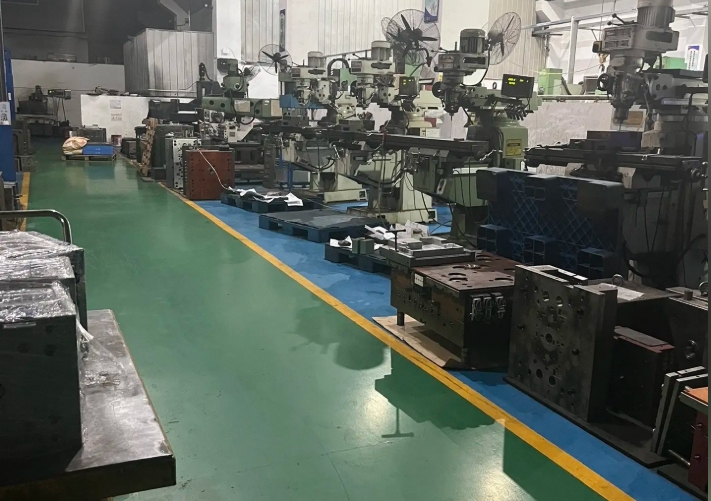
A long-term injection molding supply partner in China is a manufacturer that can carry a part from tooling through repeat production with stable quality, documented acceptance criteria, and after-sales responsibility. In practical terms, that means one organization can address mold design, production feedback, quality inspection, and material confirmation without splitting responsibility across multiple vendors. DTG TECH CO., LTD., based in Xiamen, China, states that it provides one-stop solutions covering precision mold design, tool manufacturing, prototype development, injection molding, and mass production, and reports a 2,500 m² facility with approximately 80 employees and 25 engineers. Buyers evaluating a long-term partner can use the terms and acceptance criteria in this article as a practical checklist for the first conversation.
Yes. MOQ in custom injection molding is typically negotiable based on part size, material, mold requirements, and production volume. DTG TECH confirms that a single custom mold project can be accepted as a minimum order, which supports buyers who want to validate a design before raising volume.
Acceptance should reference DFM approval, T1 sample approval, first article inspection, dimensional inspection, visual inspection, and pre-shipment quality inspection. The criteria should also define defect classification and the sampling method so that batch acceptance is based on a written standard rather than a general impression.
Modification responsibility should be defined in advance: which changes are treated as routine maintenance, which require a new quotation, and how quickly the supplier responds. An integrated supplier that owns both the mold and the molding process can usually move faster on modification because the same team manages the tool and the production parameters.
Repeat orders are typically faster than first orders because the mold is already validated and the production parameters are already recorded. Actual timing depends on machine scheduling and material availability at the time of the order. DTG TECH states that custom mold projects are supported according to product complexity and production schedule.
Quality management should combine design-phase DFM and mold flow analysis, mold validation and T1 approval, in-process dimensional checks, first article inspection, and full pre-shipment inspection. DTG TECH describes these steps as part of its standard quality controls, with material verification before production and parameter control based on material characteristics.
Conclusion
A long-term injection molding partnership works when terms, acceptance criteria, material confirmation, and after-sales responsibility are written down and agreed before production scales. For buyers sourcing light-industry and daily-use plastic parts, the most useful preparation is to arrive with a defined inspection plan, a resin specification, a mold ownership position, and a clear after-sales expectation. These are the points that keep a partnership stable across multiple production cycles.
DTG TECH CO., LTD. combines mold design, tool manufacturing, prototype development, injection molding, and mass production under one workflow, with stated controls for DFM review, first article inspection, dimensional inspection, and pre-shipment quality inspection. For teams building a long-term supply relationship, the next step is to review the company’s service scope and confirm project-specific terms directly.
Planning a long-term injection molding partnership?
Review DTG TECH’s full capability presentation or send part drawings and volume expectations for a project-specific discussion.
Have Questions or Need More Details?
Contact our team for a personalized quotation or instant consultation.
Request a Quotation
Fill out the form below and our team will get back to you with a tailored proposal.
WhatsApp Direct Chat
Prefer to chat in real-time? Message us on WhatsApp for instant assistance & quick answers.
- Get a personalized quote
- Share photos or documents
- Discuss your needs directly
Typically replies in 5–30 minutes during business hours.