
Medical Injection Molding: A China Sourcing Guide
Medical injection molding is the manufacture of plastic components for medical devices and healthcare products, where dimensional accuracy, surface cleanliness, material consistency and documented process control matter far more than they do in general-purpose molding. This guide is written for procurement managers, product engineers, brand owners and importers who are at the beginning of a medical molding project and need to understand what a China medical injection molding manufacturer can and cannot do before they issue a request for quotation.
DTG TECH CO., LTD. is a custom injection molding manufacturer founded in 2002 in Xiamen, China, producing injection molded plastic parts for customers in the USA, Europe and India. The supplier facts in this article come from the company's own published capability information, and the technical explanations come from stable, widely accepted industry practice — so that readers can compare suppliers on verifiable criteria instead of advertising claims.
What Counts as Medical Injection Molding
Medical injection molding is not simply injection molding applied to a medical product. The category is defined by the conditions the part has to survive across its whole service life, and those conditions change what a supplier has to control.
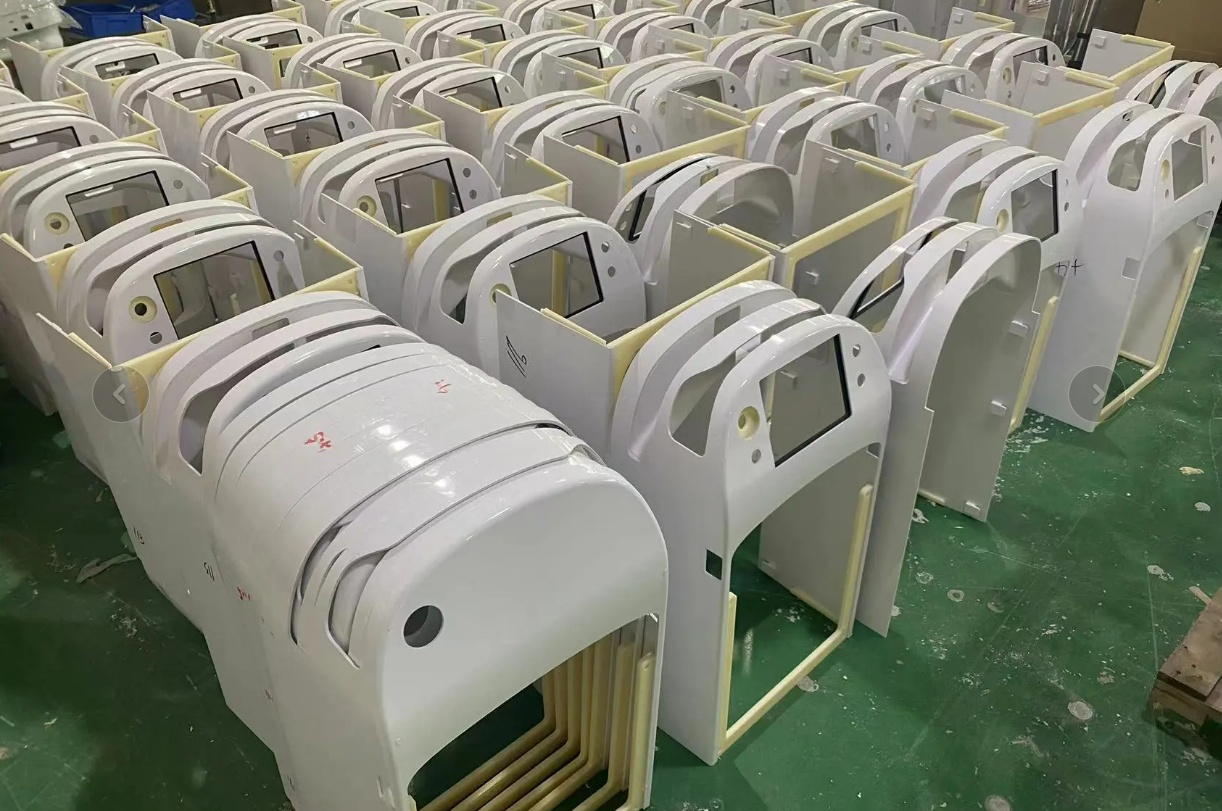
In a typical medical or healthcare program, molded components are permanently assembled inside the finished device and stay there for the life of the product. They are handled repeatedly — daily on/off cycles, routine cleaning, and in many cases sterilization — and they must not warp, crack, discolour or drift out of dimension during that period. A housing that protects an internal sensor or electronic module is a structural and protective element, not a cosmetic shell.
For that reason, a medical component specification normally carries four requirements that a consumer-goods part does not:
- High-precision molding, with tolerances that match the assembled stack inside the device.
- Clean, defect-free surfaces — no visible flow lines, sink marks or contamination that could affect function or cleaning.
- Stable batch-to-batch material consistency, so that parts molded in month one and parts molded in month twelve assemble the same way.
- Rigorous inspection, typically 100% dimensional measurement and visual check for medical parts rather than sampling alone.
Those four requirements are also the source of the buyer's problem. A general-purpose molder can quote a medical part quickly, but that quote rarely accounts for inspection intensity, documentation, material traceability, or the process stability a long production life demands. The gap usually surfaces late — during a quality audit, a sterilization review, or a field complaint — which is exactly when it is most expensive to fix.
Industry Background: Why Buyers Look at China for Medical Injection Molding
China's injection molding supply chain is mature and broad. Toolmaking, engineering-grade resin supply, secondary operations and assembly support are all available domestically, which is why many device programs evaluate Chinese suppliers alongside domestic ones and, in many cases, alongside each other.
The complication is that the phrase "China medical injection molding manufacturer" describes an extremely wide range of businesses. At one end are general consumer molders that will accept a medical part if the geometry is simple enough. At the other are suppliers that run medical device programs routinely and keep the documentation to prove it. Both may use identical keywords, so a buyer at the awareness and research stage needs decision criteria rather than a supplier list.
Two terms cause the most confusion during early research: sterile medical injection molding and cleanroom medical injection molding.
Cleanroom medical injection molding refers to producing and handling components in a controlled environment with defined limits on airborne particles, and it is specified when the part's function or the device's assembly process requires it. Because cleanroom classifications differ, buyers should ask for the actual classification, the environmental monitoring records and the packaging method — not simply accept the word "cleanroom." Where a program does not require a classified environment, controlled handling, covered storage and documented cleaning of tooling and fixtures still matter.
Sterile medical injection molding generally describes parts intended to be delivered or assembled under conditions where bioburden is controlled, and where the molded material must survive the sterilization method chosen for the finished device. Whether a given resin is suitable depends on that sterilization method and on the device validation, so a material decision should never be made from a keyword alone.
A second industry reality is program length. Medical device programs typically run for years, and the cost of changing a mold or a supplier mid-life is high. Repeatability, documentation retention and supply continuity therefore carry more weight in medical sourcing than a marginal difference in unit price.
Detailed Solution: Building a Medical Component Program That Passes Review
A medical molding project is built in layers: material, tool, process, inspection and documentation. Each layer has one question the buyer should be able to answer before moving to the next.
1. Material selection for medical components
Material choice drives everything downstream — tolerance stability, sterilization compatibility, cleaning-agent resistance and surface quality. DTG TECH CO., LTD. molds ABS, PC, POM, Nylon and other engineering plastics, and also works with PC+ABS, TPE and acrylic, combining plastics with metal inserts where a component needs both structural rigidity and molded geometry.
Medical-grade ABS injection molding is one of the most common requests, because ABS balances impact resistance, surface finish and processing behaviour across a broad range of housing and cover parts. The word "medical-grade," however, is a documentation claim rather than a colour or a brand name. Two ABS grades can look identical and behave differently after repeated cleaning or sterilization. Buyers should request the grade designation, the lot-level material certificate, and a written change-notification agreement so the resin cannot be substituted later without approval.
The same rule applies to medical-grade PC injection molding. Polycarbonate is frequently considered where impact resistance, dimensional stability or optical clarity are priorities, and it appears in housings, transparent covers and protective components. Its performance depends heavily on grade selection, drying discipline and gate and cooling design, so a material datasheet on its own tells the buyer very little about what the finished part will do inside the device.
2. Tooling and mold design
Mold design is where most medical part problems are either prevented or permanently locked in. DTG provides precision mold design, tool manufacturing, prototype development, plastic injection molding and mass production as a one-stop scope, supported by product analysis and mold testing before volume production begins.
The decisions that matter at this stage are steel selection and hardening for the expected production volume, gate location to control flow and weld lines, cooling layout to limit warpage, ejection design that avoids cosmetic marks on visible surfaces, and the tolerance scheme that ties the mold, the part and the mating components together. A tool designed without reference to the device assembly is the most common reason a medical part passes first article inspection and still fails at the assembly line.
Finish options shape what the tool must support. DTG's Plastic Injection Molded Housings (model DTG-PIH-002) offer customization of size, structure, colour and surface texture, with polishing, painting, printing and assembly support available as finishing operations.
3. Precision and dimensional control
High-precision medical injection molding is defined by the drawing, not by an adjective. DTG's Precision Injection Molded Components (model DTG-PIM-003) are produced with dimensional control according to engineering drawings, and quality control covers dimensional inspection and first article inspection. The same model line is applied across automotive, electronics, medical and industrial equipment work, which means the tolerance discipline is a standing process rather than a special project arrangement.
For the buyer, first article inspection is the checkpoint where a program can be confirmed or corrected at low cost. It is worth asking what was measured, on how many cavities, with what instrument, and against which revision of the drawing.
4. Process validation and in-process inspection
Medical device programs normally require the molding process to be validated rather than merely monitored. Medical injection molding process validation is commonly structured around installation, operational and performance qualification — often abbreviated IQ, OQ and PQ — where the equipment is confirmed, the process window is challenged, and the output is shown to be consistent across the window. Buyers should agree in advance which stages will be documented and who signs them off.
In production, medical parts are typically inspected at 100% for both dimensional accuracy and visual defects rather than by sampling alone. The reason is practical: a single out-of-specification housing can halt a device assembly line, and the cost of that stop is far higher than the cost of the inspection. DTG's stated quality approach for medical and healthcare components combines tight-tolerance molding, clean defect-free surfaces, stable batch-to-batch material consistency, and 100% inspection covering dimensional measurement and visual check.
5. Cleanliness, packaging and handling
Between the molding machine and the device assembly line, contamination is the risk. Controlled handling, covered storage, defined packaging and documented cleaning of tooling and fixtures all reduce it. Where a program specifies a classified cleanroom molding environment, the supplier should be able to state the classification and provide monitoring records; where it does not, the buyer should still confirm how parts are bagged, boxed and protected in transit.
6. Compliance documentation
ISO 13485 is the quality management system standard most commonly referenced for medical device manufacturing, and FDA-related documentation is frequently requested for products entering the United States market. DTG TECH CO., LTD. describes itself as an ISO-certified custom injection molding manufacturer.
Certificate scope, issuing body, manufacturing site and validity dates should be confirmed directly with any supplier, in writing, before a medical program is awarded. A certificate covering general injection molding is not automatically a medical device quality system certificate, and that distinction becomes important during a customer or regulatory audit.
What to verify before placing a medical molding order
| Verification item | Why it matters | What to ask for |
|---|---|---|
| Quality management certification | Indicates whether the supplier's system is built for medical device work | Certificate in the supplier's own name, with scope, site and validity dates |
| Material documentation | Proves the resin is the specified grade, not a visual equivalent | Grade designation plus lot-level material certificates |
| First article inspection | Confirms the mold produces parts to drawing before volume runs | Full dimensional report on the first shots |
| In-process inspection plan | Defines how defects are caught during production | Inspection method, frequency and retained records |
| Cleanliness and packaging | Protects parts between molding and assembly | Handling procedure, packaging specification and storage conditions |
| Traceability and change control | Allows a quality issue to be isolated to one batch | Batch identification and a written change-notification agreement |
| Capacity and continuity | Medical programs run for years, not quarters | Equipment list, production capacity and a continuity plan for repeat orders |
Step-by-Step Breakdown: How a Medical Injection Molding Project Runs
The sequence below reflects how a one-stop injection molding supplier such as DTG structures a project, from an early-stage design to repeat mass production.
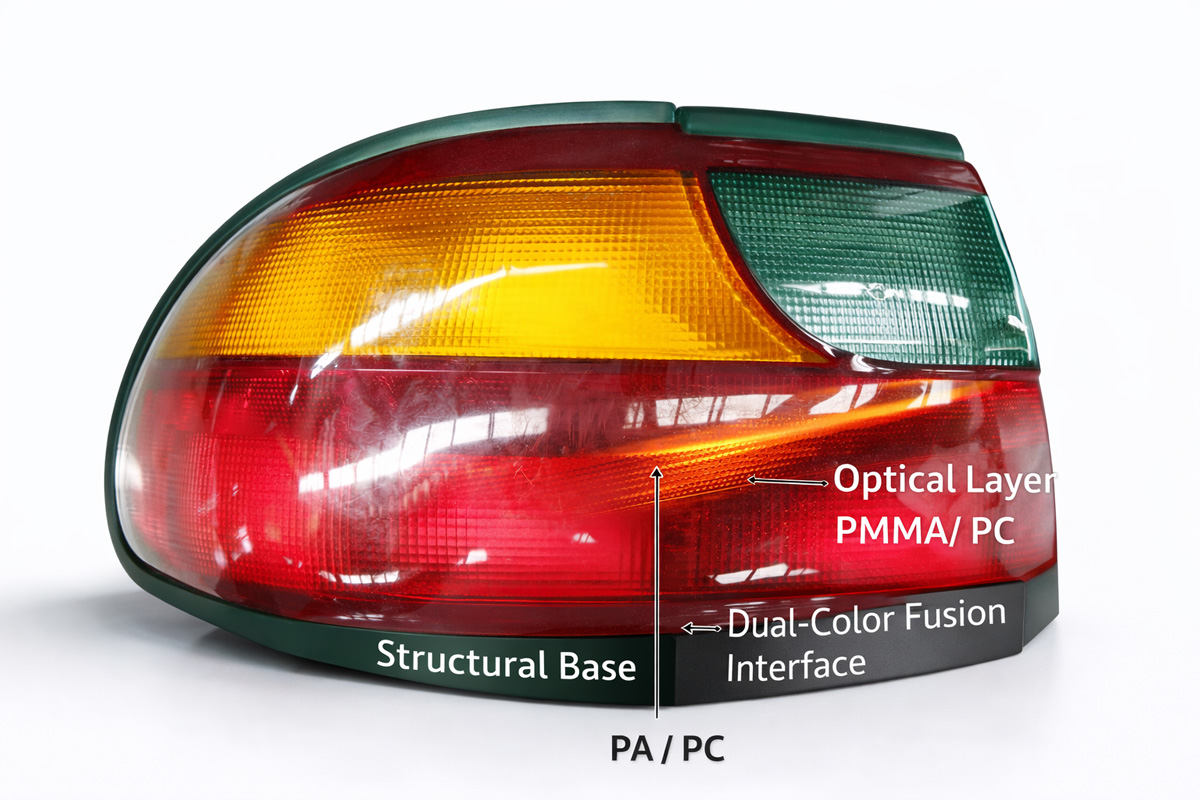
- Design review and manufacturability feedback. The part drawing, the mating components and the assembly method are reviewed together. Wall thickness, draft, radii and gate positions are checked against what injection molding can hold reliably.
- Material selection and documentation. The resin is chosen against the part's function, cleaning method and sterilization method, and the grade is locked with a material certificate and a change-notification agreement.
- Mold design and tool manufacturing. Steel selection, cooling layout, gating and ejection are designed for the expected production volume and for the cosmetic standard of the part.
- Prototype and sample validation. Prototypes are produced and checked for fit, function and surface quality before the tool is committed to volume.
- Mold testing and first article inspection. Trial shots are measured against the drawing, and the results are documented before production approval.
- Process validation and documentation. The process window is established and recorded, so that production runs are repeatable rather than operator-dependent.
- Mass production with 100% inspection. Medical components are inspected for dimensions and visual defects at a rate appropriate to the risk, with batch identification retained.
- Finishing, assembly support and repeat orders. Texturing, polishing, painting, printing and assembly support are applied where the program requires them, and the same tooling is reused for subsequent orders.
Use Cases: Where Medical Injection Molded Components Are Used
The medical and healthcare category is one of the application areas DTG produces for, alongside electronics, automotive, home appliance and industrial equipment work. Within that category, the components typically fall into five functional groups.
- Device housings and enclosures. Medical device housing injection molding produces the outer and inner shells that protect internal electronic modules and sensors, position connectors, and give the device its usable form. These parts often carry the most visible cosmetic standard in the program.
- Internal structural supports and brackets. Precision molded components produced to drawing tolerances hold internal assemblies in alignment over years of use.
- Interface and actuation parts. Buttons and similar parts are cycled repeatedly by the user and must retain their feel, fit and appearance across the product lifecycle.
- Components exposed to cleaning and sterilization. Parts that are wiped, washed or sterilized between uses need material and finish selections that survive those cycles without cracking, hazing or dimensional change.
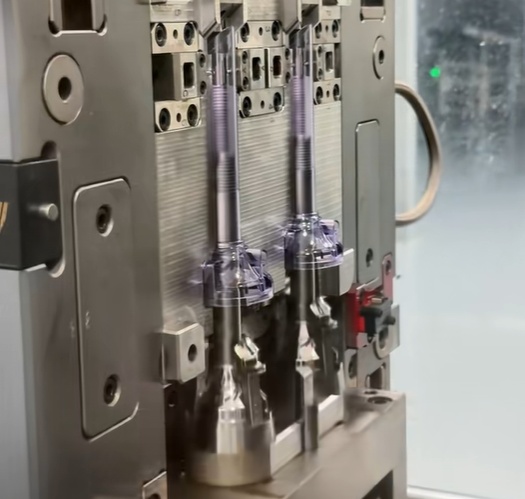
- Interfaces for sensors, tubes and fixtures. Small precision parts that connect the molded structure to sensors, tubing and assembly fixtures are frequently the tightest-tolerance items in the bill of materials.
Plastic components for surgical and diagnostic instruments follow the same rules where the design allows — instrument housings, handles, trays and non-patient-contact parts are commonly produced by injection molding. Where a component contacts tissue or body fluid, the material and documentation requirements are set by the device's own regulatory pathway, and the molder's role is to hold the specification exactly.
DTG's medical and healthcare application scope is served through four product lines that can be combined within a single device program: Custom Injection Molded Plastic Parts (DTG-CIMP-001), Plastic Injection Molded Housings (DTG-PIH-002), Precision Injection Molded Components (DTG-PIM-003), and Insert Injection Molded Parts (DTG-IIM-005), which combine plastic with metal inserts for components that need both rigidity and molded geometry.
Comparison Table: Material Options for Medical Components
The table below summarises how the main resin families are generally considered in medical molding work, and where DTG applies them. Material performance always depends on the specific grade, the part design and the process, so this table is a starting point for discussion with a molder and a material supplier — not a substitute for validation.
| Material | Characteristics typically considered | Common medical component types | Buyer notes |
|---|---|---|---|
| ABS (medical-grade) | Balanced impact resistance, good surface finish, straightforward processing, widely available in documented grades | Device housings, covers, structural brackets | Confirm grade and lot certificates; verify resistance to the cleaning agents used |
| PC (medical-grade) | Higher impact resistance, dimensional stability, option of transparency | Housings, transparent covers, protective shields | Requires controlled drying; confirm compatibility with the sterilization method |
| PC+ABS blend | Combines polycarbonate toughness with ABS processing behaviour and appearance | Enclosures, control panels, cosmetic covers | Useful where one material must balance toughness and finish |
| PP | Chemical resistance and flexibility, with lower stiffness than ABS or PC | Non-load-bearing covers, fluid-adjacent parts | Check warp behaviour on large flat geometry |
| POM | Good sliding and wear behaviour, low friction | Functional and moving components | Not usually selected where cosmetic appearance is the priority |
| Nylon (PA) | Strength and wear resistance | Structural and mechanical parts | Moisture absorption can affect final dimensions |
| TPE | Soft-touch and sealing behaviour | Grips, seals, overmolded interfaces | Frequently overmolded onto a rigid substrate |
Final material selection must be validated against the device's cleaning and sterilization requirements and confirmed with the material supplier's documentation for the exact grade used.
The practical takeaway for buyers: the resin family gets a part into the discussion, but the grade, the lot certificate and the change-control agreement are what keep it compliant across a multi-year program.
Frequently Asked Questions
What certifications should a China medical injection molding manufacturer hold?
For medical device work, the most commonly requested quality management certification is ISO 13485, which sets requirements for organisations manufacturing medical devices and their components. Buyers may also request ISO 9001 for general quality management, ISO 10993 biocompatibility documentation for materials in patient contact, and FDA-related documentation for products sold in the United States. The practical checks are whose name is on the certificate, what scope it covers, which manufacturing site it applies to, and whether it is currently valid. DTG TECH CO., LTD. describes itself as an ISO-certified custom injection molding manufacturer; buyers considering DTG for a medical program should confirm certificate scope and validity in writing during the supplier qualification stage.
Can high-precision medical parts actually be produced in China?
High-precision medical injection molding is a capability question rather than a country question. What decides the answer is whether a supplier can hold the tolerances defined by the engineering drawing across a large production run, and whether it inspects enough to prove it. DTG's Precision Injection Molded Components (DTG-PIM-003) are produced with dimensional control according to engineering drawings, using dimensional inspection and first article inspection as quality control steps. The company employs 25 engineers in its R&D team, which is the resource that usually supports tolerance reviews, mold-flow decisions and ramp-up problem solving. As a buyer, ask for a first article inspection report on a comparable part rather than accepting a tolerance statement on a website.
What drives the cost of a medical injection molding project?
Four factors move the number most: mold complexity and the number of cavities; the resin selected, since documented medical-grade grades cost more than general-purpose grades; the cosmetic and defect standard, because surface requirements drive polishing time and scrap; and the intensity of inspection and documentation, since 100% dimensional and visual inspection costs more than sampling. Production volume, packaging method and clean-handling requirements also affect the final price. DTG's stated position is that a one-stop scope — precision mold design, tool manufacturing, prototype development, molding and mass production under one supplier — removes the coordination cost buyers otherwise pay when tooling, molding and finishing are split across several vendors. DTG also states that it welcomes early-stage designs, limited budgets and requirements that are not yet fully defined, and provides guidance during that review stage.
Can I get a prototype or sample before committing to mass production?
Yes, and for medical programs sampling is not optional. DTG's process covers prototype development and mold testing before mass production, which is the stage where geometry, material behaviour, fit and surface quality are checked. A useful sample evaluation for a medical part should include dimensional measurement against the drawing, visual inspection of the cosmetic surface, an assembly trial with the mating components, and a review of the material certificate for the lot used. Sampling is also the point at which the tolerance scheme and the inspection plan should be agreed, because those two documents define what "acceptable" will mean for the rest of the program.
How long does a medical injection molding project take, and how do I start?
Lead time in medical molding is driven by tool design and manufacturing, availability of the required resin grade, the number of validation cycles the device program requires, and the documentation review before production release. DTG states that it provides fast turnaround and on-time delivery and supports projects from prototyping through to final delivery. Because medical programs vary so widely, the realistic way to obtain a date is to supply the part drawings, the material requirement, the expected annual volume and the inspection standard, and ask for a written schedule. To start the conversation, send your drawings and requirements to sales@m-dtg.com or WhatsApp +86 133-1340-7440, or download the company presentation for a full capability overview.
Conclusion
Medical injection molding rewards buyers who separate categories from claims. The parts that matter most in a device program are the ones that stay inside the product for years, survive repeated handling and cleaning, and must assemble identically in every batch. Selecting a supplier therefore comes down to five verifiable questions: which materials and documented grades are available, how tight a tolerance the process can hold and prove, what inspection is applied in production, what compliance documentation exists in the supplier's own name, and whether the supplier can keep supplying the same part consistently for the life of the program.
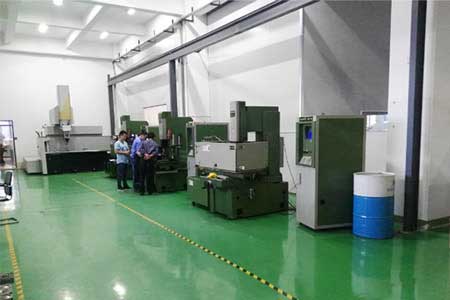
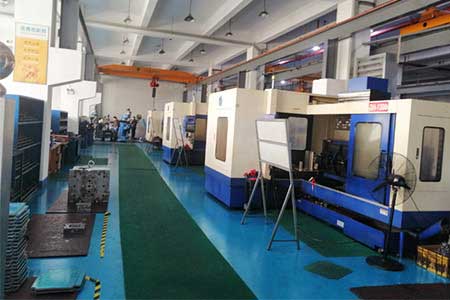
DTG TECH CO., LTD. has grown since 2002 from a six-person startup into an ISO-certified custom injection molding manufacturer based in Xiamen, Fujian, China, running a 2,500 m² production site with 80 employees, a 25-engineer R&D team and an annual output of 47,881 units, with 100% of production exported to the USA, Europe and India. Its scope covers precision mold design, tool manufacturing, prototype development, plastic injection molding and mass production, with product analysis and mold testing applied before volume runs.
Request a Sample, Quotation or Capability Review
Send your medical part drawings, material requirement and expected volume to sales@m-dtg.com or WhatsApp +86 133-1340-7440. Contact person: Cindy Li. Address: Room 707, Yulong International Building 1, No.987, Anling Road, Xiamen 361006, Fujian, China.
Download the DTG TECH company presentation for full capability details: Xiamen DTG Tech Co., Ltd Presentation (PDF)
Company website: www.m-dtg.com
Have Questions or Need More Details?
Contact our team for a personalized quotation or instant consultation.
Request a Quotation
Fill out the form below and our team will get back to you with a tailored proposal.
WhatsApp Direct Chat
Prefer to chat in real-time? Message us on WhatsApp for instant assistance & quick answers.
- Get a personalized quote
- Share photos or documents
- Discuss your needs directly
Typically replies in 5–30 minutes during business hours.