
Medical Injection Molding: A Complete Buyer's Guide
Medical Injection Molding: A Complete Buyer's Guide
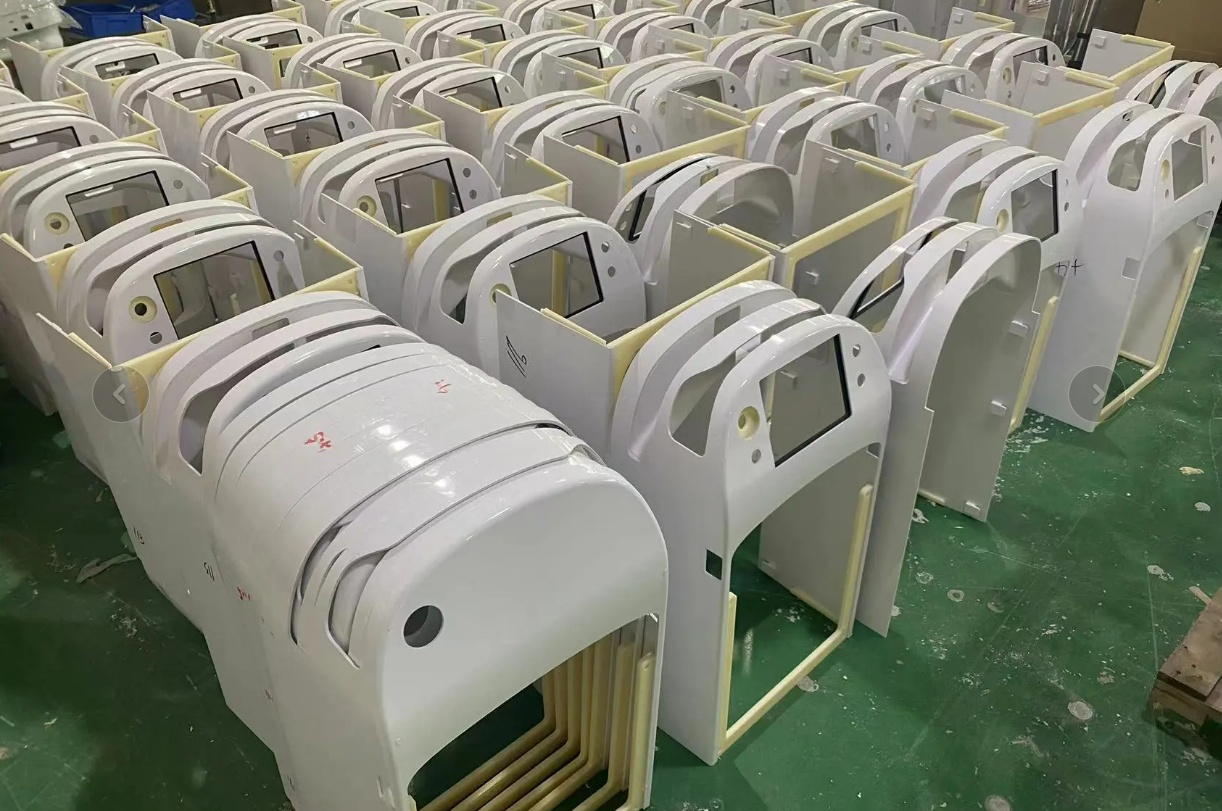
Medical injection molding is the production of plastic components for medical devices and healthcare products using the injection molding process, with additional control over dimensional precision, surface cleanliness, material batch consistency, and inspection documentation. It covers device housings, structural supports, surgical instrument plastic components, and parts that protect internal electronic modules and sensors. For buyers in the awareness and research stage, the real question is not whether a plastic part can be molded. It is whether that part can be molded repeatedly, to the same tolerance, with the same material behavior, and with inspection records that hold up in a regulated market.
What Medical Injection Molding Actually Means
Medical injection molding is not a separate molding technology. It is injection molding executed under a tighter specification. The machine, the mold, and the resin are fundamentally the same as in other industries. What changes is the tolerance window, the surface requirement, the material traceability, and the inspection regime applied to every production lot.
Three terms are often confused during early research:
- Medical-grade resin — a polymer grade selected for compatibility with a device application, including housing, structural, or fluid-adjacent use. It is a material decision.
- Medical injection molding — a manufacturing process controlled for precision, cleanliness, and repeatability. It is a production decision.
- Medical device quality system — the documentation, validation, and traceability framework the finished device must comply with. It is a compliance decision.
A supplier can be strong in one of these areas and weak in another. That is why supplier evaluation in this category is rarely a single-answer question.
Why Standard Injection Molding Is Not Enough
General-purpose injection molding optimizes for cycle time, unit cost, and appearance. Medical molding optimizes for repeatability first, then cost. The difference shows up in five places.
- Tolerance. Medical components often interface with electronics, sensors, tubes, or mating housings, so fit is functional rather than cosmetic. Dimensional control is driven by engineering drawings rather than by a standard tolerance band.
- Surfaces. Clean, defect-free surfaces matter because sink marks, flow lines, and contamination are not only aesthetic problems on a device that is handled, cleaned, and sometimes sterilized.
- Batch consistency. A part that passes in the prototype phase but shifts in mass production creates a validation problem, not just a quality problem. Material batch-to-batch consistency is therefore a production requirement, not a purchasing preference.
- Inspection. Medical programs typically require rigorous 100% inspection covering dimensional measurement and visual check, rather than statistical sampling alone.
- Documentation. Mold trials, first article inspection, and dimensional reports are the evidence a device manufacturer needs in order to release production.
For medical and healthcare product applications, these requirements combine into a working profile that can be summarized directly:
| Medical project requirement | What it means on the production floor |
|---|---|
| Clean-use environment, high consistency | Controlled handling, stable process parameters, strict appearance and dimensional requirements |
| Tight tolerances | High-precision molding with dimensional control against engineering drawings |
| Defect-free surfaces | Visual check integrated into inspection, not treated as an afterthought |
| Material consistency | Stable resin batch behavior so parts do not drift between lots |
| Verified output | 100% quality inspection including dimensional measurement and visual check |
Industry Background: What Shapes Medical Molding Requirements
Medical device manufacturing is one of the most documentation-heavy segments of the plastics industry. Two regulatory anchors dominate supplier discussions. ISO 13485 defines quality management system requirements for medical device organizations and their critical suppliers. In the United States, FDA quality system expectations govern devices placed on the market. Device class, target market, and sterilization method then determine how strictly these frameworks are applied to a specific molded component.
Three structural shifts affect how buyers source these parts.
First, suppliers are being asked to participate earlier. Design for manufacturability input during the tooling stage reduces the risk of a mold that cannot hold tolerance at production speed.
Second, material selection is becoming a documented decision. Buyers increasingly expect the resin choice to be justified against the device function, not inherited from a previous project.
Third, production environment expectations are rising. Cleanroom production is frequently specified for parts with high cleanliness exposure. Buyers should confirm whether a supplier's production environment matches the cleanliness classification the device actually requires, rather than assuming that any controlled environment is equivalent.
This is also why sourcing from China remains an active option for medical plastics programs. The category is mature, tooling capacity is deep, and English-language project communication is standard practice among export-focused manufacturers. The evaluation work shifts from availability to verification.
How DTG TECH Approaches Medical Injection Molding
DTG TECH CO., LTD. is a custom injection molding manufacturer based in Xiamen, Fujian, China, founded in 2002. The company operates a 2,500 m² factory with 80 employees, including a 25-engineer R&D team, and reports an annual output of 47,881 units with a 100% export ratio across the USA, Europe, and India. Its service scope covers precision mold design, tool manufacturing, prototype development, plastic injection molding, and mass production, supported by product analysis and mold testing.
Materials selected for device and housing applications
DTG works with ABS, PP, PC, PC+ABS, TPE, acrylic, and other engineering plastics, with POM and nylon available for precision components. For medical device housing injection molding, the practical choice usually narrows to ABS and polycarbonate grades, because both are widely used in housings that need dimensional stability together with a clean molded surface. When a project involves repeated cleaning, chemical exposure, or heat near internal electronics, the grade should be selected against that condition rather than against appearance alone. Material selection is a documented part of the project, not a default.
Precision injection molded components
The DTG-PIM-003 precision injection molded component line is built for tight-tolerance injection molded parts. Dimensional control follows engineering drawings, and quality control combines dimensional inspection with first article inspection. For medical programs, this is the product family that typically carries functional plastic components — supports, interfaces, and internal structural parts that must fit a mating assembly without adjustment.
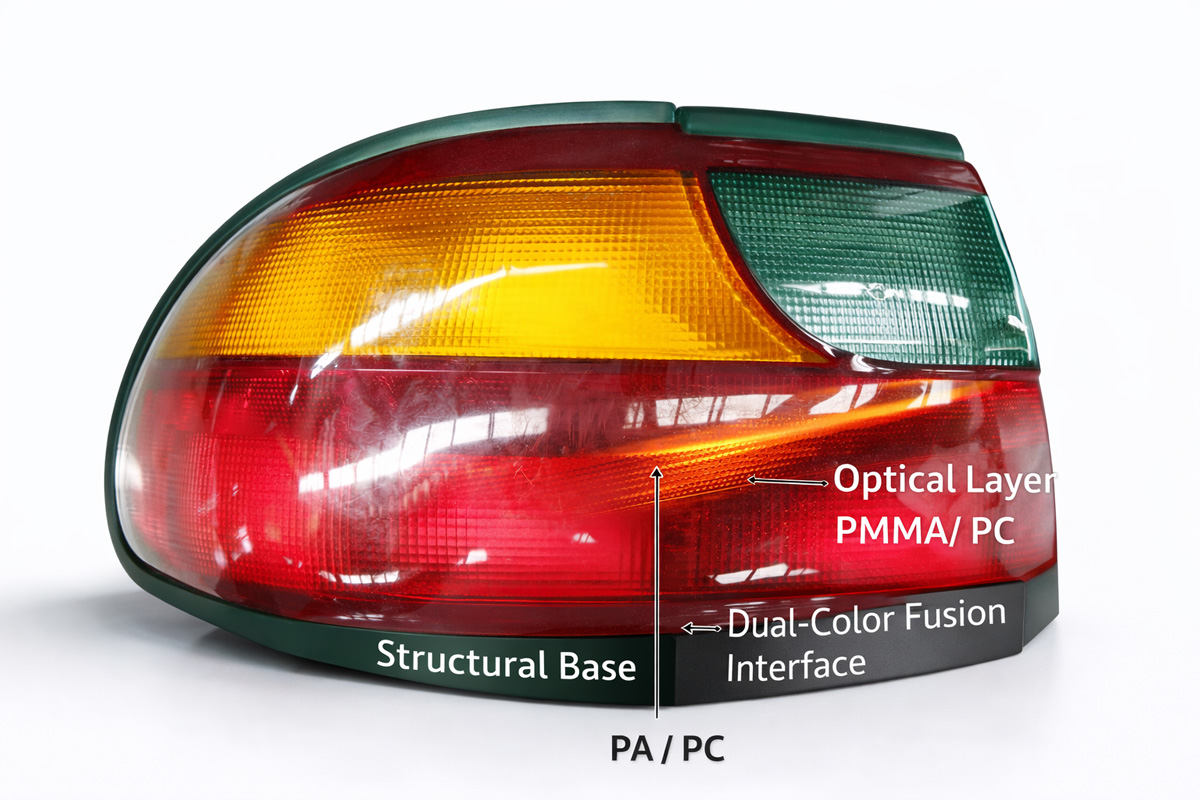
Housings and enclosures
The DTG-PIH-002 plastic injection molded housing line covers protective housings, covers, and enclosures. Customization includes size, structure, color, and surface texture, with finishing options such as polishing, painting, printing, and assembly support. In medical applications, housings are usually the part the end user actually touches, so appearance control and dimensional accuracy carry equal weight.
Custom and insert-molded parts
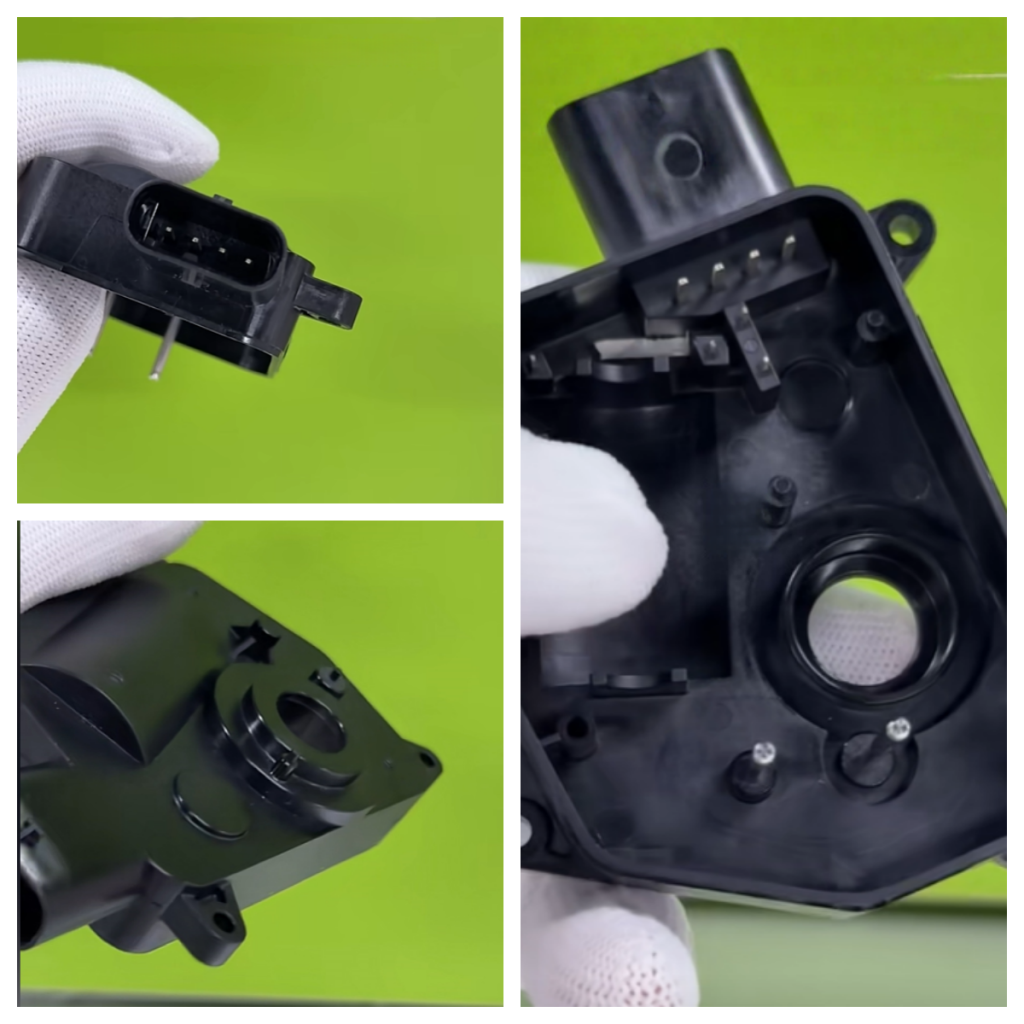
The DTG-CIMP-001 custom injection molded plastic parts line accepts part sizes defined by the customer's design, runs from prototype to mass production, holds tolerance according to customer drawings and specifications, and offers texture, polishing, painting, and printing finishes. Where a medical component needs a mechanical connection, the DTG-IIM-005 insert injection molded parts line combines plastic with metal inserts, with customization across insert position, material combination, and structure design.
Step-by-Step: From CAD File to Validated Medical Parts
The sequence below reflects how a medical molding program is structured in practice, and it is the order in which buyers should expect to review progress.
- Requirement review and manufacturability assessment. The part drawing, material expectation, tolerance requirements, and annual volume are reviewed together. Conflicts between design intent and molding behavior are surfaced here, before tooling is cut.
- Material definition. Resin selection is confirmed against the part function — housing, structural support, or internal component — with attention to dimensional stability and surface requirements.
- Precision mold design and tool manufacturing. Tooling is engineered around the target tolerance and the intended production volume, since a mold built for prototyping behaves differently from a mold built for mass production.
- Prototype development. Prototype parts allow fit checks and early review before committing to full production volumes.
- Mold testing and process validation. Mold trials establish stable process parameters and confirm that the tool can hold tolerance repeatedly, not only on the first shot.
- First article inspection. Dimensional inspection and first article inspection document the baseline that production parts are measured against.
- Mass production with inspection. Production runs from low to high volume, with dimensional measurement and visual check applied to output — for medical and healthcare components, inspection is carried through the full batch rather than sampled.
- Finishing, assembly support, and delivery. Secondary operations such as polishing, painting, or printing are applied where required, followed by packing and shipment.
Steps 5 and 6 are where most medical programs either succeed or become expensive. Skipping validation depth to save time in the tooling phase usually returns as scrap, rework, or a corrective action later.
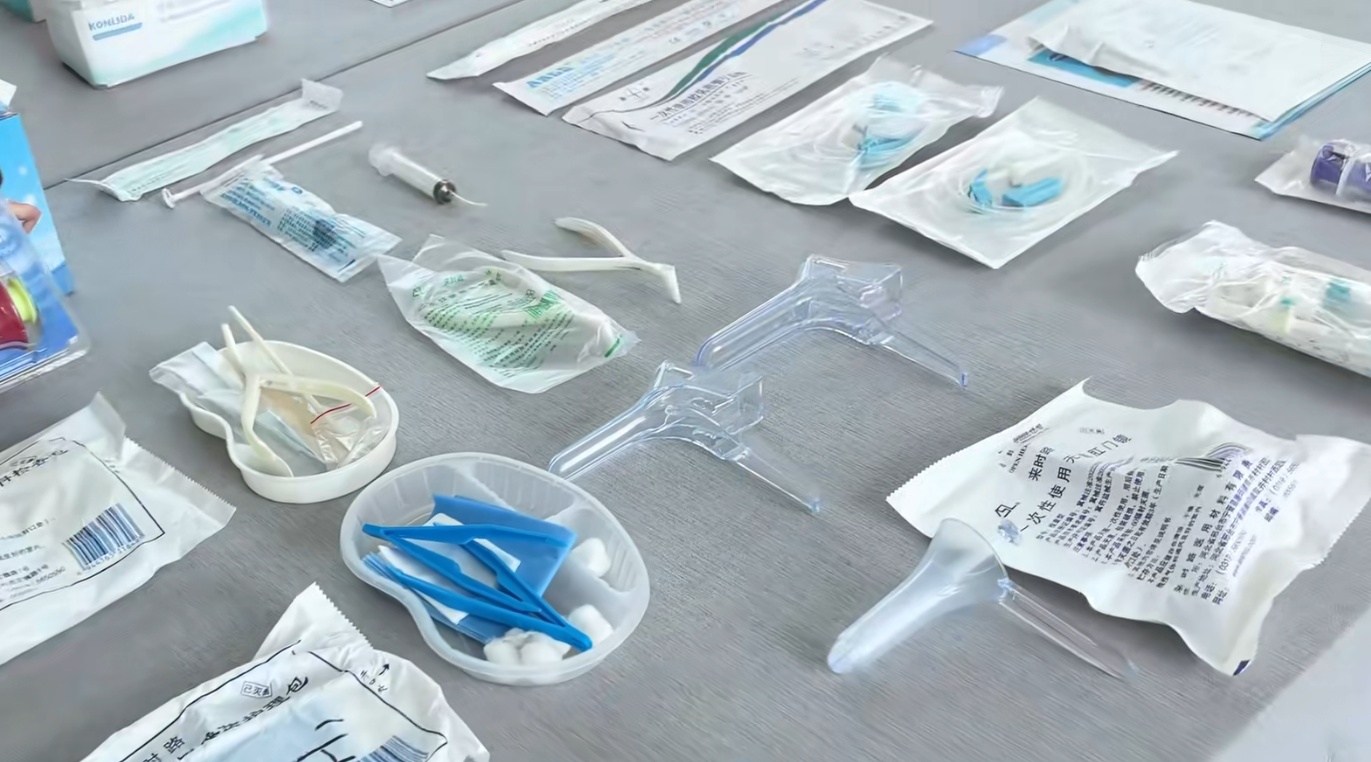
Use Cases: Where Medical Injection Molded Parts Are Applied
Medical injection molding supports device structure and protects internal electronics. Four patterns recur across healthcare and medical device programs.
Device housings containing electronics and sensors. These parts are permanently assembled inside devices and must accommodate electronic modules, sensors, buttons, and assembly fixtures while maintaining alignment over the product lifecycle. Under clean-use conditions with routine cleaning, dimensional stability matters more than wall thickness reduction.
Surgical instrument plastic components. Handles, grips, and non-metallic instrument bodies benefit from precision molding combined with a clean, defect-free surface. Where a metal connection is required, insert molding integrates the metal element into the molded part instead of relying on a secondary assembly step.
Healthcare product components under repeated actuation. Buttons, covers, and moving interfaces inside healthcare products may cycle multiple times per day and are cleaned routinely. These parts are designed for both long-term static mounting and frequent actuation, without degradation over the product lifecycle.
Precision functional components. Internal supports and interfaces that connect a molded part to tubes, mechanical assemblies, or electronic modules fall into the high-precision category, where tolerance is a functional specification rather than a cosmetic one.
Comparing DTG Product Lines for Medical Programs
The table below compares the DTG product lines most often applied to medical and healthcare projects. All specifications are as published for each product.
| Product line | Model | Process | Material options | Customization | Typical application |
|---|---|---|---|---|---|
| Custom Injection Molded Plastic Parts | DTG-CIMP-001 | Plastic injection molding, prototype to mass production | ABS, PP, PC, PC+ABS, TPE, acrylic and other engineering plastics | Part size per customer design; tolerance per customer drawings; texture, polishing, painting, printing | OEM components, mass production parts, medical products |
| Plastic Injection Molded Housings | DTG-PIH-002 | Injection molding | ABS, PC+ABS, PP | Size, structure, color, surface texture; polishing, painting, printing, assembly support | Enclosures, covers, protective housings |
| Precision Injection Molded Components | DTG-PIM-003 | Precision injection molding with first article inspection | ABS, PC, POM, nylon, engineering plastics | Dimensional control according to engineering drawings | Tight-tolerance functional plastic components |
| Insert Injection Molded Parts | DTG-IIM-005 | Insert injection molding | ABS, PC, PP combined with metal inserts | Insert position, material combination, structure design | Functional and structural components with metal inserts |

Frequently Asked Questions
What certifications should a medical injection molding manufacturer hold?
Medical device manufacturers generally expect their molding supplier to operate within a quality management system aligned with ISO 13485, and to support FDA quality system expectations for devices sold in the United States. The practical check is not whether a certificate exists, but whether its scope covers the specific processes being outsourced — molding, assembly, secondary operations — and whether the certificate number, issuing body, and validity are current. DTG TECH CO., LTD., based in Xiamen, China, describes itself as an ISO-certified custom injection molding manufacturer; buyers should request the current certificate details directly and confirm they match the project scope. Final certification requirements depend on device class and target market, so the requirement list should be confirmed with your own regulatory team.
What parts can a custom medical injection molding manufacturer produce?
A custom medical injection molding manufacturer can produce device housings and enclosures, structural supports, surgical instrument plastic components, insert-molded parts, and precision functional components. DTG TECH covers this range through four product lines: DTG-CIMP-001 custom injection molded plastic parts, DTG-PIH-002 plastic injection molded housings, DTG-PIM-003 precision injection molded components, and DTG-IIM-005 insert injection molded parts. Material options across these lines include ABS, PC, PP, PC+ABS, TPE, POM, nylon, and other engineering plastics, and production runs cover prototype through mass production volumes.
How do you evaluate China medical injection molding manufacturers?
Evaluate them on five verifiable points rather than on price alone: the scope and validity of their quality system documentation; whether mold design and tool manufacturing are handled in-house, since outsourcing tooling adds a handoff where tolerance risk accumulates; how precision and inspection are documented, particularly first article inspection and dimensional reporting; how material selection is justified for your specific part function; and whether communication and export experience match your market. As a reference point, DTG TECH has been operating since 2002, runs a 2,500 m² factory in Xiamen with 80 employees and a 25-engineer R&D team, and reports a 100% export ratio serving the USA, Europe, and India. Those figures are a starting point for verification, not a substitute for it.
What drives the cost of a medical injection molding project?
Cost is driven by six factors rather than by a single unit price: tooling complexity, since precision mold design and tool manufacturing scale with tolerance requirements; resin selection, since engineering-grade and specialty polymers cost differently; inspection depth, because 100% dimensional and visual inspection consumes production time; validation documentation, including mold trials and first article inspection; annual volume, since higher volumes spread tooling and setup cost across more parts; and secondary operations such as polishing, painting, printing, or assembly support. Because these factors vary by project, a meaningful quotation requires the part drawing, material expectation, tolerance requirements, and expected volume. DTG TECH quotes against those inputs rather than against a generic price list.
Can I get samples or prototypes before committing to mass production?
Yes — prototype development is a standard stage before mass production, and reviewing physical prototypes is the most reliable way to confirm fit, surface quality, and material behavior before tooling is finalized for volume. Lead time then depends on tooling complexity, how much validation the device class requires, and production volume, so it is quoted per project rather than fixed. DTG TECH supports prototype through mass production in one workflow and welcomes early-stage designs, limited budgets, or requirements that are still being defined. To move forward, send your drawing and target volume to sales@m-dtg.com or contact Cindy Li at +86 133-1340-7440 to request a sample review or a project quotation.
Conclusion: What to Do Next
Medical injection molding is a precision, documentation, and repeatability discipline more than a molding technique. Buyers who get it right define tolerance and inspection requirements early, confirm that material selection is justified against the part function, and verify that the supplier's quality system scope actually covers the processes being outsourced. Those three steps reduce more project risk than any price comparison.
DTG TECH CO., LTD. operates across the full chain — precision mold design, tool manufacturing, prototype development, plastic injection molding, and mass production — from its facility in Xiamen, Fujian, China. For medical device housing injection molding, precision components, insert-molded parts, and custom healthcare product components, the next step is a technical review against your drawing.
Request a sample or project quotation
Send your part drawing, material expectation, and target volume and we will review manufacturability and provide a quotation.
Email: sales@m-dtg.com | Tel / WhatsApp: +86 133-1340-7440 | Website: www.m-dtg.com
Have Questions or Need More Details?
Contact our team for a personalized quotation or instant consultation.
Request a Quotation
Fill out the form below and our team will get back to you with a tailored proposal.
WhatsApp Direct Chat
Prefer to chat in real-time? Message us on WhatsApp for instant assistance & quick answers.
- Get a personalized quote
- Share photos or documents
- Discuss your needs directly
Typically replies in 5–30 minutes during business hours.