
PC+ABS vs. PP for Injection Molded Housings: A Head-to-Head Material Decision
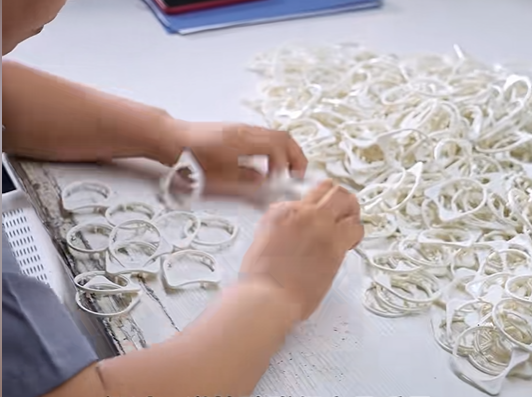
PC+ABS is normally the safer starting point when a housing must deliver a premium surface finish, tight dimensional control, and reliable performance around electronics. PP is normally the safer starting point when a housing must be large, chemically resistant, lightweight, and economical in high-volume production. Those two sentences explain most of the material arguments that appear in housing development: electronic projector housings usually begin from PC+ABS, while home appliance covers usually begin from PP.
This is a head-to-head decision framework rather than a materials textbook. It compares the two resins against the three requirements that decide most housing projects — aesthetics, structural integrity, and environmental stress resistance — and then translates the result into tooling, validation, and long-term supply consequences for a team that has already moved past research and is entering decision and execution.
Scope note for accuracy: the property statements below are general polymer characterization used for screening. Final resin selection should be confirmed against the resin supplier's datasheet for the exact grade, and against DFM and mold flow analysis for the exact housing geometry.
Problem Definition: Why the Housing Resin Decision Is Expensive to Reverse
Housing material is not a simple line on a bill of materials. It is a constraint that propagates through the entire tooling and validation chain. Wall thickness, draft angles, gate and runner positions, cooling layout, shrinkage compensation, texture depth, ejection design, and assembly tolerances are all fixed with one specific resin in mind. Change the resin after the mold is cut and you are not changing a material — you are changing a tool.
Two failure patterns are common in housing programs:
- Cost-first selection that fails on appearance. A team selects PP to reduce unit cost on a visible cover, then discovers that gloss, color depth, and surface uniformity cannot reach the target without additional decoration steps.
- Premium-first selection that over-specifies. A team defaults to PC+ABS for a large, detergent-exposed appliance panel and pays for impact and heat performance the housing never uses, while taking on more demanding drying and a tighter process window.
Both mistakes usually survive until steel is cut because the housing's dominant function was never written down. This is exactly the gap that Design for Manufacturing (DFM) analysis and mold flow analysis are designed to close: they are applied during the design phase, before tooling production, so that risks such as short shot, sink marks, warpage, weld lines, and surface defects are prevented rather than corrected later. For housing programs evaluated under references such as DTG-PIH-002, the material path is confirmed only after the aesthetic, structural, and environmental requirements of the housing are defined — which is the sequence this article follows.
Industry Background: Why Housing Material Choices Are Being Reopened in 2026
Housing resin decisions are being revisited because the injection molding supply base has grown, concentrated, and standardized. The global injection molded plastic market was valued at USD 324.98 billion in 2024 and is projected to grow to USD 435.74 billion by 2035, according to Market Research Future. In China, the plastic mold industry's current market size is approximately ¥600 billion, with a projected expansion to ¥1 trillion by 2030, per JBRplas.
Behind those figures sits a dense manufacturing base: China produces an estimated 65% of the world's injection-molding machines and accounts for 60% of global export volume, according to a 2025 industry analysis report. Material substitution is a parallel driver — automotive OEMs are replacing metal parts with engineered thermoplastics, which accounts for 34% of domestic injection molded component demand in major hubs such as the US, according to Grand View Research.
Quality standards have tightened alongside volume, and they often determine which housing applications a buyer can even quote. IATF 16949 is the specialized quality standard for injection molders serving the automotive sector, emphasizing defect prevention and waste reduction. ISO 13485 is the benchmark quality management system for medical device injection molding, requiring documentation such as the Device Master Record. Both standards sit above the resin choice, but they determine how that choice must be documented, validated, and repeated.
PC+ABS vs. PP: Where Each Resin Actually Wins
Neither resin is universally superior. They differ in crystallinity, moisture behavior, shrinkage, and surface chemistry, and those four differences drive almost every practical housing outcome.
1. Aesthetics: Surface Finish, Gloss, and Decoration
PC+ABS generally offers the better starting point for visible housings. It typically produces a smoother, glossier molded surface, holds fine texture detail well, and accepts painting, printing, and laser processing more predictably. That combination is why electronic projector housings, device bezels, and similar consumer-facing enclosures gravitate toward it: the housing is a branding surface as much as a protective one.
PP behaves differently. It is a semi-crystalline polymer, so its molded surface is generally less glossy and less uniform, particularly across large panels where flow length and cooling variation become visible. Molded-in color is usually the more reliable decoration route than painting, because paint adhesion and finish consistency on PP typically demand additional surface preparation. PP can certainly be textured or decorated, but reaching a high-gloss, class-A appearance generally requires extra processing steps and tighter process control.
2. Structural Integrity and Dimensional Stability
PC+ABS generally provides higher stiffness and impact resistance than PP, along with better dimensional stability and lower shrinkage. That matters most where a housing has to close a consistent gap against a chassis, another molded part, or an internal module. Where precision control is applied, tight tolerance injection molding supports tolerances of ±0.01 mm to ±0.05 mm, compared with ±0.1 mm to ±0.2 mm in conventional molding, and dimensional scrap can be held to ≤0.5% rather than 3%–5%. Precision injection molding is commonly used for optical components, electronic housings, automotive components, and medical plastic parts — all applications where PC+ABS-family resins are familiar.
PP generally offers a good stiffness-to-weight ratio and excellent fatigue resistance, which is one reason it dominates living-hinge designs. But because it is semi-crystalline with higher and more anisotropic shrinkage, long or thin-walled panels carry a higher warpage risk. Managing that is a gating and cooling problem as much as a material problem, and it is solved in mold flow analysis, not on the assembly line.
3. Environmental Stress Resistance
PP generally resists moisture, many household chemicals, and detergents well, and it has low water absorption. That is a core reason home appliance covers, containers, and daily-use parts default to it: the end product is expected to survive repeated cleaning and humid environments without losing shape or appearance.
PC+ABS generally offers better heat resistance and impact toughness but is more sensitive to certain solvents, and it requires drying before processing. Without suitable stabilization it is also more prone to yellowing under UV exposure. In practice, an appliance cover repeatedly wiped with an aggressive cleaning agent and a projector housing that must hold its appearance above warm internal electronics are two different environmental problems — and they point in opposite material directions.
4. Processability, Drying, and Tooling Implications
The tooling consequences of the two resins also diverge. PC+ABS typically requires drying before molding and a tighter process window, and it is more sensitive to residence time and shear. PP tolerates moisture far better but demands generous, well-balanced cooling and accurate shrinkage compensation because of its higher shrinkage and warpage tendency.
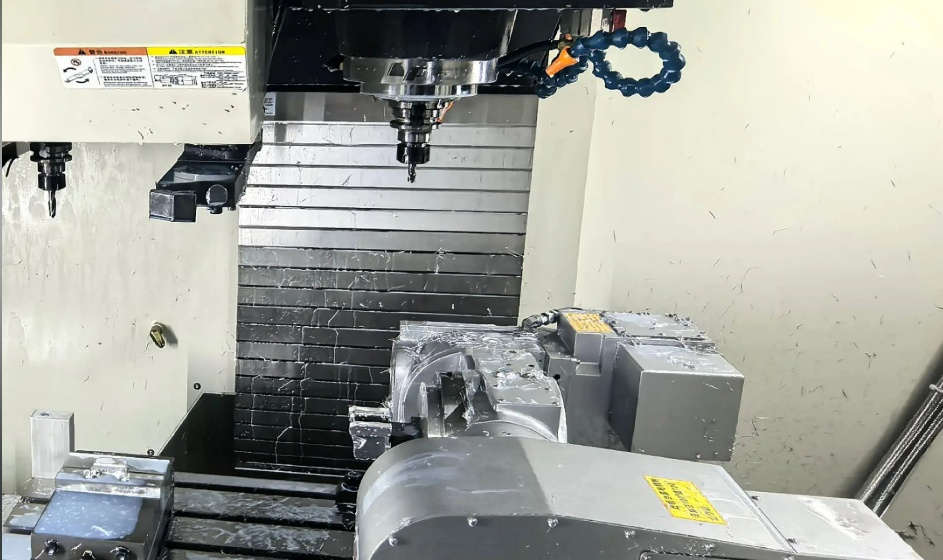
Gate, runner, cooling layout, and draft should therefore be locked only after resin selection is confirmed. Mold design errors, poor part release, a short mold lifespan, and production instability are precisely the risks that DFM review, mold structure optimization, mold testing, and T1 sample validation are intended to remove — and each of those steps is resin-specific.
Comparison Table: PC+ABS vs. PP for Injection Molded Housings
| Decision dimension | PC+ABS | PP | Practical reading for buyers |
|---|---|---|---|
| Typical housing role | Aesthetic electronic enclosures, projector housings, bezels | Large covers and panels, containers, appliance covers | Decide from the housing's dominant function, not from habit |
| Surface finish and gloss | Generally higher gloss, holds fine texture, decoration-friendly | Generally lower gloss, molded-in color preferred | Visible premium surfaces favor PC+ABS |
| Impact and stiffness | Generally higher stiffness and impact resistance | Good stiffness-to-weight, excellent fatigue resistance | Drop, impact, and living-hinge demands pull in different directions |
| Heat resistance | Generally higher | Lower | Heat-generating electronics favor PC+ABS |
| Moisture and chemical resistance | Lower, requires drying before molding | Good chemical and moisture resistance | Detergent and chemical exposure favors PP |
| Shrinkage and dimensional stability | Better stability, lower shrinkage | Higher and more anisotropic shrinkage | Tight-gap assembly favors PC+ABS |
| Warpage risk on long parts | Lower | Higher, needs balanced gating and cooling | Long panels require flow analysis with PP |
| Tooling implications | Tighter process window, drying required | Generous shrinkage compensation, stronger cooling | Tooling is resin-specific; the resin call comes first |
| Decoration route | Painting, printing, and laser processing more predictable | Molded-in color typically the reliable route | Decoration cost differs by path, not only by resin price |
| Relative material cost | Higher | Lower | The unit-cost advantage sits with PP |
| Environmental stress cracking | More sensitive to certain solvents | Generally resistant | Cleaning agents and chemical contact decide a lot |
| Representative housing examples | Electronic projector housings, device enclosures | Home appliance covers, daily-use housings | Match the resin to the end-use environment |
Step-by-Step: Making the PC+ABS vs. PP Call in Seven Steps
- Write down the housing's dominant function. Rank appearance, structure, and environmental exposure. Only one of them can be the primary driver; the other two become constraints.
- Define the specification envelope. Confirm wall thickness, draft, boss and rib design, tolerance class, texture requirement, and assembly interfaces before any resin discussion becomes final.
- Map the environmental load. List operating temperature, humidity, cleaning agents, chemical contact, UV exposure, and handling during transport. This step separates a projector housing from an appliance cover more decisively than any datasheet comparison.
- Screen PC+ABS and PP against those loads. If appearance and dimensional stability dominate, PC+ABS leads. If chemical resistance, fatigue, and unit cost dominate, PP leads. Confirm the exact grade with the resin supplier afterwards.
- Run DFM and mold flow analysis for both candidate paths before committing to steel. This is where short shot, sink marks, warpage, weld lines, and surface defects are predicted and designed out, and where optimized injection parameters and proper gate and runner design are established.
- Lock the tooling to the chosen resin. Finalize gate and runner design, cooling layout, ejection, and shrinkage compensation. Because integrated mold manufacturing and injection molding reduce communication gaps, keeping tooling and molding under one supplier shortens the overall project cycle by 20%–30% and removes handover delays of roughly 10–15 working days per project.
- Validate and approve before mass production. Acceptance is built on DFM approval, T1 sample approval, first article inspection, and final quality inspection before shipment — not on a verbal confirmation.
Commercial reference point. For housing projects, MOQ is negotiable based on part size, material, mold requirements, and production volume, and a single custom mold project can be accepted as a minimum order. Delivery terms include EXW, FOB, and CIF by sea or air freight, or a client-designated logistics provider. Mold payment terms commonly run 50% T/T advance to start mold production and 50% balance after mold approval or before shipment.
Use Cases: Projector Housings (PC+ABS) vs. Home Appliance Covers (PP)
Electronic Projector Housings — PC+ABS
A projector housing combines a visible front bezel with a structural body that holds internal optics and electronics. The requirements stack in a predictable order: appearance first, dimensional stability second, heat and impact tolerance third. PC+ABS fits because it generally holds a fine texture or gloss, resists the warpage that would break the bezel-to-chassis gap, and tolerates the warm environment around the light source better than PP. Where precision control is applied, surface roughness in the range of Ra 0.4–1.6 μm is achievable, compared with Ra 3.2–6.4 μm without precision control — a difference that shows up directly in perceived product quality. Electronics plastic injection molding programs in this category also depend on stable in-process dimensional checks so that critical dimensions do not drift across a production run.
Home Appliance Covers — PP
An appliance cover is usually large, frequently cleaned, cost-sensitive, and less dependent on a high-gloss look. PP fits because it generally resists moisture and many household chemicals, supports molded-in color, tolerates repeated flexing, and keeps material cost low. The engineering effort shifts to shrinkage and warpage: long panels need balanced gating and cooling, and wall-stock consistency matters more than gloss. This is also where injection molding shows its cost structure clearly — at volumes above 1,000 units, per-part cost is typically 70%–90% lower than CNC machining, with cycle times of roughly 20–60 seconds per shot compared with 15–30 minutes per part for CNC, and secondary finishing operations are largely eliminated.
Risk Map: Material-Specific Defects and How They Are Controlled
Most housing failures trace back to five risk categories, and each one is controlled differently depending on the resin path.
| Risk | Typical trigger | Control method |
|---|---|---|
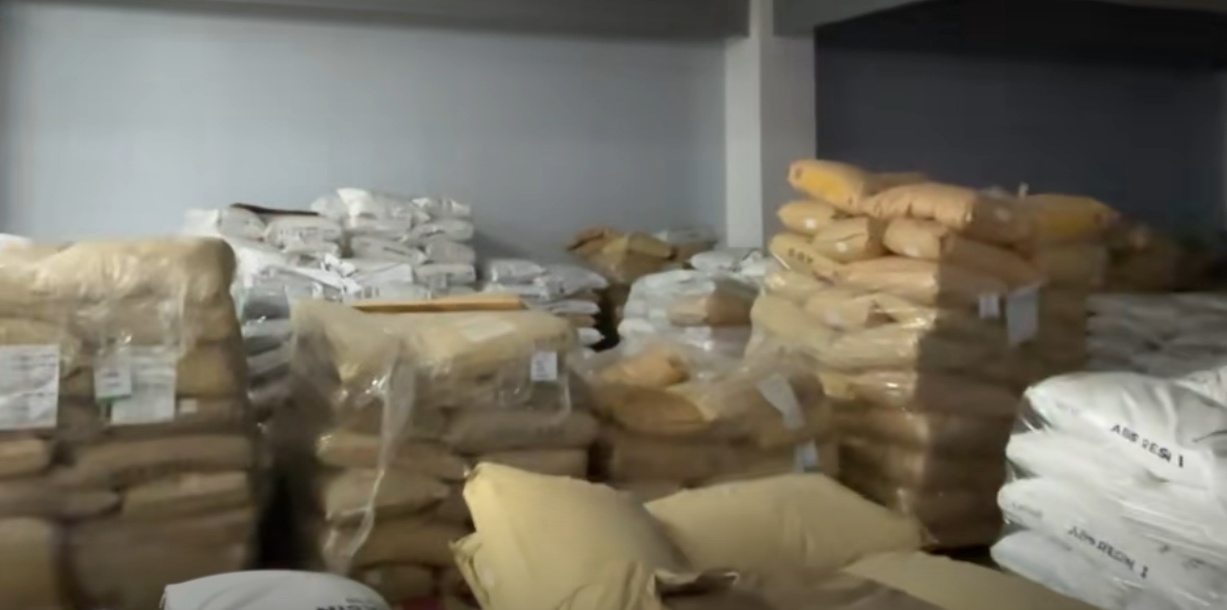
| Material mismatch, inconsistent material performance, color variation | Unverified incoming resin, grade substitution, parameters not matched to the material | Material verification, supplier management, and material specification confirmation; incoming material verification and molding parameters controlled according to material characteristics |
| Short shot, sink marks, warpage, weld lines, surface defects | Gate and runner design, cooling imbalance, or parameters unsuited to the resin's shrinkage behavior | DFM analysis, mold flow analysis, optimized injection parameters, and proper gate and runner design |
| Dimensional deviation, assembly mismatch, inconsistent production quality | Shrinkage variation not monitored during the run, drift in critical dimensions | Dimensional inspection, first article inspection, and in-process quality inspection, with critical dimensions monitored during production |
| Production variation, delayed delivery, batch quality fluctuation | Production specifications not frozen after sampling, limited schedule visibility | Production process monitoring, standardized molding parameters, unified production specifications post sample confirmation, real-time schedule and output tracking, and full pre-shipment quality inspection |
| Mold design errors, poor part release, short mold lifespan, production instability | Tooling built before resin and geometry are validated | DFM review, mold structure optimization, mold testing, and T1 sample validation |
Long-Term Consistency: Choosing a Partner, Not Just a Resin
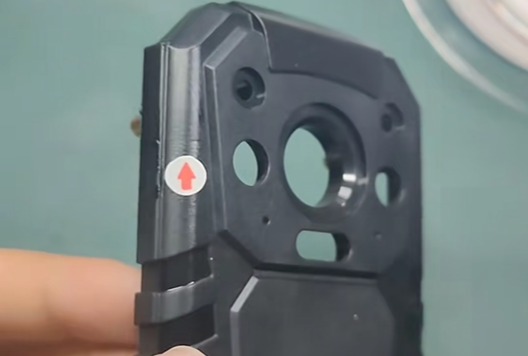
The resin decision protects one production run. The supplier relationship protects every run after it. Housings are rarely one-off parts: a projector housing or appliance cover typically stays in production for years, and the material decision is only as good as the process that repeats it.
DTG TECH CO., LTD. is an ISO-certified custom injection molding manufacturer established in 2002, operating a 2,500 m² facility with approximately 80 employees and a 25-engineer R&D team, producing around 47,881 units annually for customers exporting to the USA, Europe, and India. Its one-stop solution covers precision mold design, tool manufacturing, prototype development, plastic injection molding, and mass production — the full chain in which a PC+ABS or PP housing decision has to survive.
For long-term housing supply, several practices matter more than any single specification:
- Process stability. Production process monitoring, standardized molding parameters, and full pre-shipment quality inspection are the mechanisms that keep batch quality from fluctuating across a long program.
- Material discipline. Material requirements are confirmed before production, incoming materials are verified, and molding parameters are controlled according to the specific characteristics of PC+ABS or PP rather than a generic setting.
- Dimensional governance. Measurement checks during production, monitoring of critical dimensions, and inspection of finished parts before shipment protect assembly fit over time.
- Engineering continuity. DFM analysis applied before tooling reduces design modification iterations by 40%–60%, cuts mold trial cycles from an average of 5–7 to 2–3, and shortens time to market by 20%–30%. Integrated mold manufacturing and injection molding also cut cross-supplier communication time by more than 50% and reduce coordination meetings and handover delays by 10–15 working days per project.
- Flexible volume range. One-stop capability supports projects from prototype and low-volume runs through high-volume production, so the same material and tooling decisions hold as volumes scale.
FAQ: PC+ABS vs. PP Housing Decisions
What compliance and quality documentation should I verify before awarding an injection molded housing project?
Start with the quality management certification of the molder, then match it to the end market. DTG TECH CO., LTD. holds ISO certification, and its acceptance process is documented through DFM approval, T1 sample approval, first article inspection, and final quality inspection before shipment. Beyond general certification, sector-specific standards matter: IATF 16949 is the specialized quality standard for injection molders serving the automotive sector, and ISO 13485 is the benchmark quality management system for medical device injection molding. A housing destined for automotive or medical use should be planned against those frameworks from the beginning, because they affect documentation and validation, not just the resin choice.
Can one manufacturer support both a PC+ABS housing and a PP housing project?
Yes, provided the molder has both tooling and process depth. DTG TECH CO., LTD. provides one-stop solutions covering precision mold design, tool manufacturing, prototype development, plastic injection molding, and mass production, supported by an R&D team of 25 engineers. In practice, that means DFM analysis and mold flow analysis are run for the specific resin and geometry, gate and runner design is set accordingly, and molding parameters are controlled according to material characteristics. Where precision control is required, capacity supports tight tolerances of ±0.01 mm to ±0.05 mm with a dimensional scrap rate of ≤0.5%, compared with ±0.1 mm to ±0.2 mm and 3%–5% in conventional molding.
What actually drives the cost difference between a PC+ABS housing and a PP housing?
Four cost drivers dominate: resin price, wall thickness and part weight, cycle time, and decoration route. PP generally carries the lower material cost and typically allows molded-in color, while PC+ABS generally costs more per kilogram and often requires painting or printing for the intended finish. Tooling and volume then interact: injection molding is typically 70%–90% cheaper per part than CNC machining above 1,000 units, with cycle times of roughly 20–60 seconds per shot. Commercially, MOQ is negotiable based on part size, material, mold requirements, and production volume, delivery terms can be EXW, FOB, or CIF by sea or air freight, and mold payment terms commonly start at 50% T/T advance with the 50% balance after mold approval or before shipment.
How are PC+ABS and PP samples validated before mass production?
Validation follows a fixed sequence: DFM review, tooling, mold trial, T1 sample inspection, and customer approval before mass production begins. For prototype validation, rapid injection molding uses production-grade materials, so material tensile strength remains consistent with mass-produced parts, with surface roughness in the range of Ra 0.8–3.2 μm compared with Ra 12–25 μm on 3D-printed prototypes, and dimensional accuracy around ±0.05 mm compared with ±0.3 mm on 3D-printed parts. That difference matters most for housings, where the prototype has to prove snap fits, gaps, and assembly interfaces that a cosmetic model cannot confirm.
How do I choose a long-term injection molding supply partner in China?
Judge the partner on repeatability rather than on a single quotation. Look for frozen production specifications after sample confirmation, real-time tracking of production schedule and output, full pre-shipment quality inspection, and documented in-process dimensional checks. An integrated setup that combines mold manufacturing and injection molding under one roof also reduces communication gaps: it shortens the overall project cycle by 20%–30%, cuts cross-supplier communication time by more than 50%, and avoids roughly 10–15 working days of handover delay per project. If you want to test this on a real housing, request a sample or a quotation from DTG TECH CO., LTD. at sales@m-dtg.com, or download the company presentation for the full capability and certification overview.
Conclusion: Decide the Housing Function First, Then the Resin
The head-to-head result is not a winner but a rule. PC+ABS leads when the housing is visible, structurally loaded, dimensionally interlocked with other parts, and exposed to warmth — which is why electronic projector housings and similar enclosures start there. PP leads when the housing is large, chemically exposed, fatigue-loaded, and cost-driven — which is why home appliance covers and daily-use housings start there. The resin that loses is the one chosen after the mold is already cut.
The practical sequence is short and repeatable: define the dominant function, map the environmental load, screen both resins, run DFM and mold flow analysis before committing to steel, lock tooling to the selected resin, and validate through T1 samples and first article inspection. Everything after that — production parameters, dimensional governance, and supply continuity — is a matter of who runs the process.

Next step for housing projects: send your housing drawing, target resin path (PC+ABS, PP, or undecided), and annual volume. DTG TECH CO., LTD. will return a DFM-based material recommendation, tooling approach, and quotation.
Email: sales@m-dtg.com | Tel / WhatsApp: +86 133-1340-7440 | Website: www.m-dtg.com
Download the full capability and certification overview: Xiamen DTG Tech Co., Ltd. Presentation (PDF)
DTG TECH CO., LTD.
Room 707, Yulong International Building 1, No.987, Anling Road, Xiamen 361006, Fujian, China
Email: sales@m-dtg.com | Tel: +86 133-1340-7440 | Website: www.m-dtg.com
Founded 2002 | 2,500 m² facility | Approx. 80 employees | 25-engineer R&D team | Annual output 47,881 units | ISO-certified | Export markets: USA, Europe, India
Have Questions or Need More Details?
Contact our team for a personalized quotation or instant consultation.
Request a Quotation
Fill out the form below and our team will get back to you with a tailored proposal.
WhatsApp Direct Chat
Prefer to chat in real-time? Message us on WhatsApp for instant assistance & quick answers.
- Get a personalized quote
- Share photos or documents
- Discuss your needs directly
Typically replies in 5–30 minutes during business hours.