
Supplier Evaluation Checklist for Custom Injection Molded Parts
Direct answer: A custom injection molding supplier should be evaluated against eight checkpoints that can be evidenced rather than described — DFM review before tooling, mold structure and T1 sample validation, material verification, in-process dimensional inspection, defect-prevention parameters, capacity and delivery planning stated in parts per month, after-sales mold modification ownership, and total project cost. Machine lists and mold price are inputs to a quotation, not decision criteria.
This guide is written for OEM buyers, importers, engineering managers, and sourcing teams that have already shortlisted molders and now need to defend a selection decision internally. Every checkpoint below states the risk it controls, the evidence to request, and — where a benchmark is documented — the measurable difference between a process-controlled injection molding partner and a supplier that only quotes parts.
DTG TECH CO., LTD. is an ISO-certified custom injection molder based in Xiamen, China. Founded in 2002, the company operates a 2,500 m² facility with 80 employees and a 25-engineer technical team, and exports 100% of its injection molded plastic parts to the USA, Europe, and India. Its one-stop scope — precision mold design, tool manufacturing, prototype development, plastic injection molding, and mass production — is used here as a worked example of how each criterion can be substantiated. It does not replace your own supplier audit.
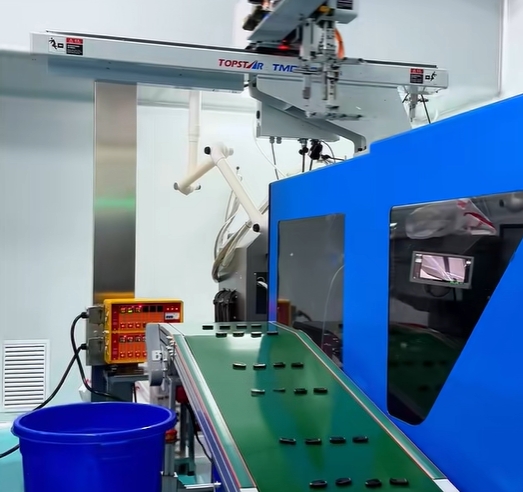
Custom injection molding service output — the parts that a supplier evaluation checklist must ultimately protect.
Problem Definition: Why Supplier Evaluations Fail in Custom Injection Molding
Most evaluations fail because they measure what is easy to list — machine tonnage, floor area, catalog photography — and skip the categories that actually stop a production line. A documented risk review for injection molding projects groups the realistic failure modes into five areas, and each one has a control method that a supplier can be asked to demonstrate with a document, a measurement, or an approval step:
- Mold and tooling risk — mold design errors, poor part release, short mold lifespan, production instability. Controlled through DFM review, mold structure optimization, mold testing, and T1 sample validation.
- Defect risk — short shot, sink marks, warpage, weld lines, surface defects. Controlled through DFM analysis, mold flow analysis, optimized injection parameters, and proper gate and runner design.
- Dimensional risk — dimensional deviation, assembly mismatch, inconsistent production quality. Controlled through dimensional inspection, first article inspection, and in-process quality inspection.
- Material risk — material mismatch, inconsistent material performance, color variation. Controlled through material verification, supplier management, and material specification confirmation.
- Delivery risk — production variation, delayed delivery, batch quality fluctuation. Controlled through production process monitoring, standardized molding parameters, and final quality inspection.
The practical consequence is that an evaluation checklist is only useful when every line item maps to one of these risks and to a control the molder can prove it runs. A supplier that answers "we check quality" has answered nothing; a supplier that answers "first article inspection, critical dimension monitoring during production, and full pre-shipment inspection" has given you something auditable.
Industry Background: A Deep Supplier Pool Makes Verification the Differentiator
Market context supports the same conclusion. The global injection molded plastic market was valued at USD 324.98 billion in 2024 and is projected to grow to USD 435.74 billion by 2035, according to Market Research Future. China produces an estimated 65% of the world's injection-molding machines and accounts for 60% of global export volume, per an industry analysis report published in 2025. China's plastic mold industry is estimated at approximately ¥600 billion, with a projected expansion to ¥1 trillion by 2030 (JBRplas).
Demand-side shifts push in the same direction. In the United States, automotive OEMs substituting metal parts with engineered thermoplastics account for 34% of domestic injection molded component demand in major manufacturing hubs, according to Grand View Research. That migration raises the consequence of dimensional and material errors, because molded components increasingly sit inside assemblies where a single mismatch halts a line.
Sector standards raise the evidence bar further. IATF 16949 is the specialized quality standard for injection molders serving automotive programs, emphasizing defect prevention and waste reduction. ISO 13485 is the benchmark quality management system for medical device injection molding, requiring specific documentation such as the Device Master Record (DMR). Buyers in these sectors should confirm which standards a molder is certified to — and, equally important, which production controls are actually executed against those standards.
The conclusion for a decision-stage buyer is straightforward: supplier availability is not the constraint, verification is. The checklist below is designed to make that verification repeatable.
Detailed Solution: The Supplier Evaluation Checklist
1. DFM review that happens before tooling is cut
Ask for the DFM report as a contractual deliverable, not as a courtesy. DFM analysis and mold flow analysis are the tools that ensure design for manufacturability and prevent defects before tooling production begins; gate and runner design and injection parameters are set from the same analysis. Where engineering support is integrated from mold design through mass production, the documented effect is a 40%–60% reduction in design modification iterations and a reduction in mold trial cycles from an average of 5–7 down to 2–3. The evaluation question is precise: can the molder show part-specific DFM findings, or only a promise to "check the drawing"?
2. Mold structure validation and T1 sample approval
Tooling quality is proven by the approval workflow, not by the steel grade. Documented practice for mold-related risk — design errors, poor part release, short mold lifespan, and production instability — is that mold engineers evaluate the mold structure, tooling is verified before production, and the mold trial and approval process is conducted with the customer. Quality procedures include mold testing and T1 sample validation to verify part quality before production, with mold structure optimization and mold testing acting as the contingency plan against production instability. For tight tolerance work, this is the stage where capability is decided: high precision injection molding holds ±0.01 mm–±0.05 mm against ±0.1 mm–±0.2 mm for standard molding without precision control, and reduces the dimensional scrap rate to ≤0.5% compared with 3%–5%. Those figures are achievable only when the tool is validated before mass production.
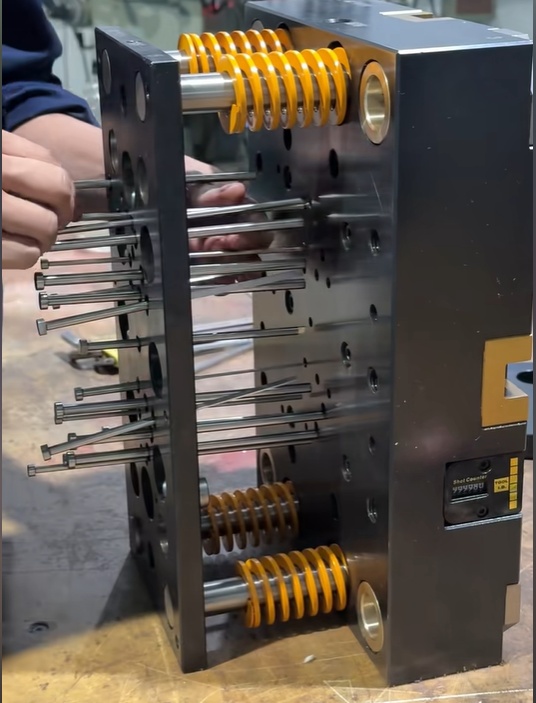
Mold design and tooling review is the first checkpoint: DFM findings must be resolved before the tool is cut.
3. Material verification and specification control
Material risk covers material mismatch, inconsistent material performance, and color variation. The documented control set is material verification, supplier management, and material specification confirmation — with material requirements confirmed before production, incoming materials verified, and molding parameters controlled according to material characteristics. For a buyer, the evidence to request is the incoming material record plus the parameter sheet tied to that specific resin. Engineering-grade thermoplastics do not behave alike: ABS, PP, and PC differ in shrinkage and warpage behavior, so a parameter set copied from another project is a red flag rather than a sign of efficiency.
4. In-process inspection and dimensional control
Dimensional deviation, assembly mismatch, and inconsistent production quality are controlled through dimensional inspection, first article inspection, and in-process quality inspection. Operationally that means measurement checks during production, monitoring of critical dimensions, and inspection of finished parts before shipment. First article inspection is the gate that catches a mismatch before a full batch exists. If a molder cannot describe which critical dimensions are monitored during the run — as opposed to measured at the end — the inspection plan is a sorting operation, not a control.
5. Defect prevention at the parameter level
Short shot, sink marks, warpage, weld lines, and surface defects are managed through DFM analysis, mold flow analysis, optimized injection parameters, and proper gate and runner design — applied before tooling production to prevent defects rather than to sort them out afterwards. Verification steps are sample inspection before mass production and optimization during the T1 trial. A useful evaluation question is geometry-specific: which defect mode is highest risk on this part, and which parameter window controls it? A capable molder answers immediately.

Defects such as short shot and sink marks are prevented upstream through DFM analysis and parameter control, not sorted out after molding.
6. Capacity and delivery planning stated in parts per month
Ask for capacity in parts per month and for the tracking method behind the number. DTG TECH's documented annual output is 47,881 units — a linear monthly average of approximately 3,990 parts — supported by real-time tracking of production schedule and output and by unified production specifications agreed after sample confirmation. Delivery reliability rests on production process monitoring, standardized molding parameters, and full pre-shipment quality inspection. For a buyer planning a launch, the relevant question is not "what is your capacity?" but "what happens to my schedule when a batch fails inspection?"
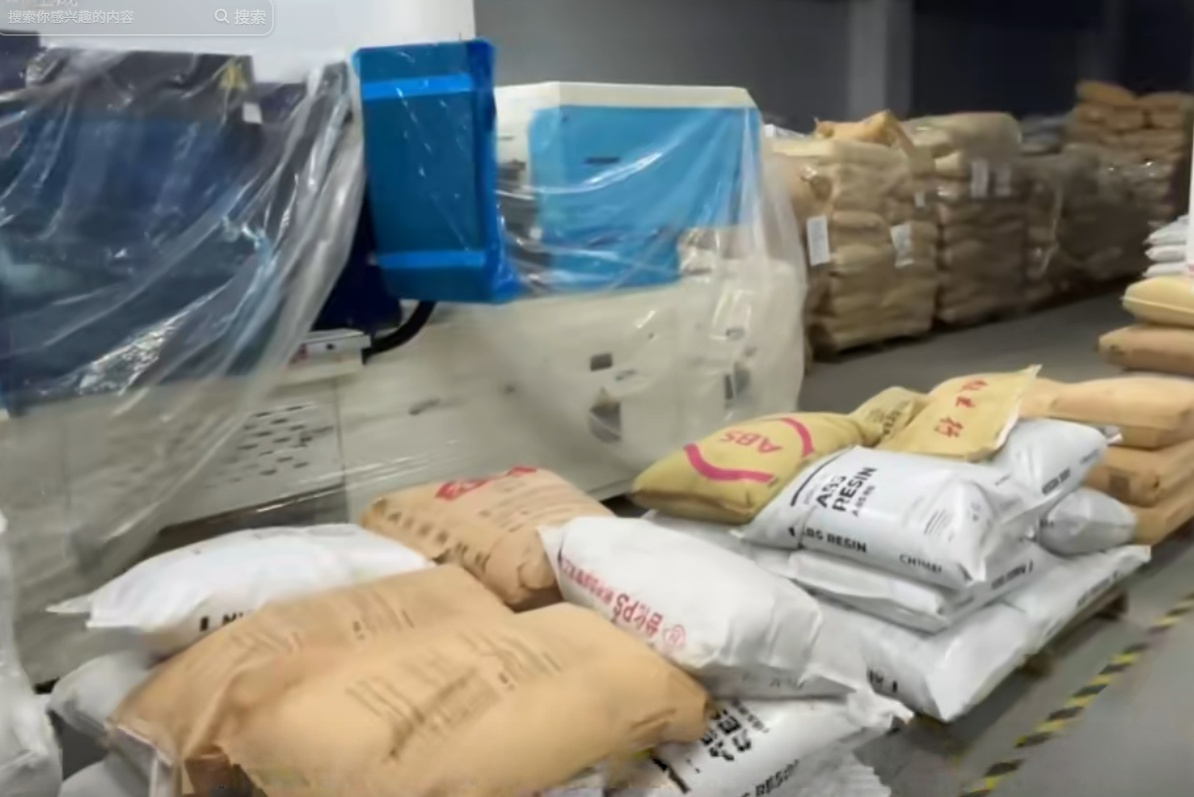
Capacity should be planned in parts per month, with tracking behind the number.
7. After-sales technical support and mold modification ownership
The clearest structural difference between supplier models appears after the first shipment. With integrated mold manufacturing and injection molding, a single supplier manages mold modification, production optimization, and quality feedback, which reduces maintenance complexity and additional coordination costs. In a split model, the molder blames the mold and the mold supplier blames the process, and every correction becomes a commercial negotiation instead of a technical task. During evaluation, ask who signs off on a mold modification request, how long a parameter change takes to implement, and how quality feedback is routed back into production.
8. Cost structure: mold price versus total project cost
Mold price is a small component of total project cost. Injection molding requires a higher initial mold investment but delivers lower unit cost at medium and high volume: a 70%–90% per-part cost reduction above 1,000 units compared with CNC machining, with a production cycle time of 20–60 seconds per shot against 15–30 minutes per part. Integrated mold manufacturing and injection molding reduces additional coordination costs between multiple suppliers and shortens the overall project cycle by 20%–30%, while professional engineering support reduces hidden costs caused by mold changes and production defects. A lower mold quote that produces three extra trial rounds is not a lower cost.
Step-by-Step Breakdown: Running the Evaluation in Six Stages
- Scope and RFQ. Define part function, material family, annual volume, tolerance class, and cosmetic requirements. Request a quotation that includes DFM review, tooling, T1 samples, and inspection documentation rather than a mold price alone.
- DFM review and design freeze. Review the DFM and mold flow findings with your engineering team and agree changes before tooling starts. This is the stage that produces the documented 40%–60% reduction in design modification iterations.
- Tooling and T1 sample approval. Require mold testing, T1 sample validation, first article inspection, and dimensional reports. Structured programs typically reach approval in 2–3 trial cycles rather than the average 5–7.
- Prototype and pilot validation. For new designs, rapid injection molding produces functional prototypes in production-grade materials at ±0.05 mm dimensional accuracy, against ±0.3 mm for 3D printed prototypes. When prototype quantity exceeds 50–100 units, per-part cost falls by 60%–80%, and molding process and assembly requirements are validated earlier.
- Production specification and capacity plan. Lock unified production specifications after sample confirmation, and obtain a monthly capacity plan expressed in parts, backed by schedule and output tracking.
- Production, inspection, and the after-sales loop. Confirm standardized molding parameters, in-process dimensional monitoring, full pre-shipment inspection, and a single owner for mold modification and quality feedback.
| # | Checkpoint | Evidence to request | Risk controlled |
|---|---|---|---|
| 1 | DFM review before tooling | DFM and mold flow report with gate and runner design notes | Mold design errors, defects discovered too late |
| 2 | Mold structure and T1 validation | Mold trial record, T1 sample approval, mold testing report | Poor part release, short mold lifespan, instability |
| 3 | Material verification | Incoming material record, material specification confirmation | Material mismatch, color variation |
| 4 | In-process inspection | First article inspection, critical dimension monitoring data | Dimensional deviation, assembly mismatch |
| 5 | Defect prevention parameters | Optimized injection parameters, T1 optimization notes | Short shot, sink marks, warpage, weld lines |
| 6 | Capacity and delivery plan | Monthly plan in parts, schedule and output tracking | Delayed delivery, batch quality fluctuation |
| 7 | After-sales support | Mold modification process, quality feedback routing | Unresolved corrections, coordination deadlock |
| 8 | Cost structure | Unit cost at target volume, coordination cost comparison | Hidden cost from mold changes and defects |
Use Cases: Where the Checklist Changes What You Ask
Different applications shift the weight of the checklist without changing its logic.
- Injection molding for home appliances. Cosmetic surfaces, tight assembly, and long production runs make batch consistency the priority. Weight checkpoints 4, 5, and 6 — in-process inspection, defect prevention, and delivery planning — most heavily, and ask how sink marks and warpage are controlled on large visible panels.
- Electronics plastic injection molding and injection molding for OEM electronics. Enclosure parts often need tight tolerance injection molding. Where high precision injection molding is specified, tolerance range is ±0.01 mm–±0.05 mm and surface roughness Ra 0.4–1.6 μm, against ±0.1 mm–±0.2 mm and Ra 3.2–6.4 μm for standard molding without precision control. These values suit optical lenses, electronic housings, automotive components, and medical plastic parts.
- Automotive plastic injection molding. Programs in this sector are frequently specified against IATF 16949, so ask how defect prevention and waste reduction are executed in daily production, not only which certificate is displayed.
- Medical injection molding. Where ISO 13485 applies, documentation discipline matters as much as the part: confirm how records such as the Device Master Record are produced and retained.
- Industrial plastic parts and daily-use consumer products. Here the cost structure dominates. Injection molding is suitable for electronics housings, automotive plastic parts, consumer products, and industrial plastic components, and becomes economically decisive above 1,000 units, where per-part cost is 70%–90% lower than CNC machining.
- Low volume injection molding, short-run injection molding, and rapid tooling injection molding. For validation and market testing, rapid injection molding supports ±0.05 mm accuracy with per-part cost reduced 60%–80% when prototype quantity exceeds 50–100 units — a practical argument for validating the molding process before committing to high-volume tooling.
Comparison Table: What the Documentation Shows
The first comparison addresses supplier structure — the decision most buyers face at the shortlist stage. The second addresses process benchmarks that can be written into an RFQ.
| Comparison point | Integrated one-stop molder | Separate mold supplier + injection molding factory | Low-cost molder without engineering support |
|---|---|---|---|
| Project coordination | Single point of contact; cross-supplier communication time cut by over 50%; overall project cycle shortened by 20%–30% | Handover between two parties; additional coordination meetings and handover delays | Minimal coordination, but limited engineering input |
| Design iterations | DFM analysis before tooling reduces design modification iterations by 40%–60% | Design issues often surface only at trial | Iterations typically discovered during production |
| Mold trial cycles | Structured DFM and T1 approval reduce average trial cycles from 5–7 to 2–3 | Depends on alignment between both suppliers | Unpredictable |
| Cost impact | Reduces additional coordination costs between multiple suppliers; engineering support reduces hidden costs from mold changes and production defects | Additional coordination costs across two suppliers | Lowest initial mold quote; hidden cost from mold changes and defects |
| Mold modification and quality feedback | Single supplier manages mold modification, production optimization, and quality feedback | Responsibility split between mold maker and molder | Limited after-sales process |
| Process benchmark | Standard / alternative outcome | Process-controlled outcome | Buyer relevance |
|---|---|---|---|
| Dimensional tolerance | ±0.1 mm–±0.2 mm (standard molding) | ±0.01 mm–±0.05 mm (high precision injection molding) | Electronic housings, automotive components, medical parts |
| Surface roughness | Ra 3.2–6.4 μm without precision control | Ra 0.4–1.6 μm | Visible cosmetic surfaces |
| Dimensional scrap rate | 3%–5% | ≤0.5% | Rejection and rework cost |
| Prototype accuracy | ±0.3 mm (3D printed prototypes) | ±0.05 mm (rapid injection molding) | Reliability of design verification |
| Prototype unit cost | Higher per part at repeated quantities | 60%–80% lower per part when prototype quantity exceeds 50–100 units | Validation budget |
| Cycle time | 15–30 minutes per part (CNC machining) | 20–60 seconds per shot (injection molding) | Volume economics |
| Unit cost at scale | Higher unit cost, higher material waste | 70%–90% per-part cost reduction above 1,000 units | Medium and high volume parts |
Process benchmarks are documented comparison values from DTG TECH service data; market figures are attributed to Market Research Future, Grand View Research, JBRplas, and an industry analysis report published in 2025.
FAQ
Which certifications and quality standards should I check before selecting an injection molding supplier?
Start with ISO certification as the baseline for a custom injection molding service, then match the standard to your sector. IATF 16949 is the specialized quality standard for injection molders serving automotive programs, emphasizing defect prevention and waste reduction. ISO 13485 is the benchmark quality management system for medical device injection molding and requires specific documentation such as the Device Master Record (DMR). Beyond the certificate, ask which controls are run against the standard: DFM analysis, mold testing and T1 sample validation, first article inspection, in-process quality inspection, and full pre-shipment quality inspection. DTG TECH CO., LTD. is ISO-certified and applies these procedures across custom injection molded plastic parts.
How does a DFM review reduce tooling risk on a custom injection molded part?
DFM analysis and mold flow analysis are performed before tooling production to ensure design for manufacturability and to prevent defects such as short shot, sink marks, warpage, weld lines, and surface defects. Gate and runner design and injection parameters are derived from the same analysis. When this happens before the mold is cut, design modification iterations fall by 40%–60% and mold trial cycles drop from an average of 5–7 to 2–3, which shortens time-to-market and reduces hidden costs caused by mold changes and production defects.
Which injection molding manufacturer is better for home appliances?
The useful comparison is process evidence, not brand size. Home appliance programs need stable cosmetic surfaces, tight assembly, and predictable batch quality over long runs, so score shortlisted molders on five points: (1) DFM and mold validation before tooling; (2) in-process inspection with critical dimension monitoring and first article inspection; (3) capacity stated in parts per month with schedule and output tracking; (4) documented control of sink marks, warpage, and other surface defects through optimized injection parameters; and (5) a single owner for mold modification and quality feedback. DTG TECH provides an integrated one-stop scope — mold design, tooling, prototype development, molding, and mass production — that covers all five, including mold modification support and monthly capacity planning, and its documented annual output of 47,881 units equates to a linear monthly average of approximately 3,990 parts. Apply the same five questions to every shortlisted supplier and compare the answers side by side.
Why can a cheaper mold quote lead to a higher total project cost?
Because mold price is only one line of the cost equation. Injection molding requires a higher initial mold investment but delivers lower unit cost at medium and high volume — a 70%–90% per-part cost reduction above 1,000 units compared with CNC machining, with cycle times of 20–60 seconds per shot against 15–30 minutes per part. Integrated mold manufacturing and injection molding reduces additional coordination costs between multiple suppliers and shortens the overall project cycle by 20%–30%, while professional engineering support reduces hidden costs caused by mold changes and production defects. A low mold quote that triggers repeated trial rounds and defect-driven rework usually costs more than a validated tool.
How do I validate part quality and delivery reliability before committing to mass production?
Validate in sequence: mold testing and T1 sample validation to verify part quality before production; first article inspection plus dimensional inspection with critical dimensions monitored during production; sample inspection before mass production; then unified production specifications agreed after sample confirmation. On the delivery side, request real-time tracking of production schedule and output, standardized molding parameters, and full pre-shipment quality inspection. Ask for capacity in parts per month — DTG TECH's 47,881 units of annual output represents a linear monthly average of roughly 3,990 parts — and confirm what happens when a batch fails inspection. To move from checklist to decision, request a sample evaluation or quotation from DTG TECH at www.m-dtg.com or sales@m-dtg.com.
Conclusion
A supplier evaluation for custom injection molded plastic parts is a documentation exercise before it is a commercial one. The molders that protect a project are the ones that can produce a DFM report before tooling, a T1 validation record, an in-process dimensional inspection plan, a monthly capacity figure in parts, and a named owner for mold modification and quality feedback. The molders that put a launch at risk are the ones that answer these questions with adjectives instead of records.
Use the eight checkpoints and the two comparison tables in this guide as your scoring sheet. Where a shortlisted supplier cannot evidence a checkpoint, treat it as an open risk rather than a gap in your questionnaire — and confirm the tolerance class, material family, volume band, and cosmetic requirements before comparing quotations, because those four variables determine which of the benchmarks above actually apply to your part.
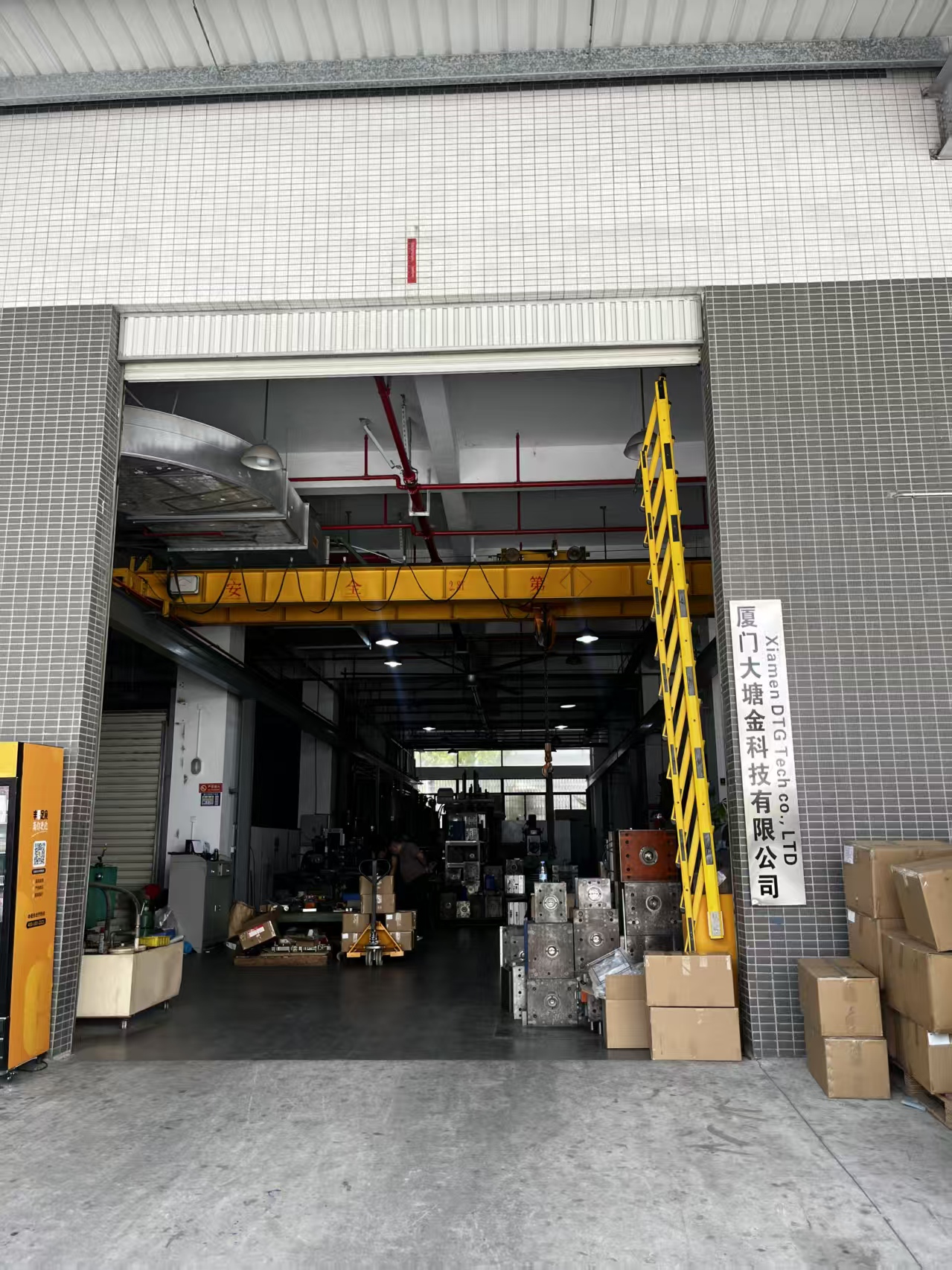
DTG TECH CO., LTD. operates a 2,500 m² injection molding facility in Xiamen, China, exporting custom molded parts to the USA, Europe, and India.
Put the Checklist to Work on Your Project
Send your drawing, material specification, and target monthly volume to DTG TECH CO., LTD. and receive a DFM-inclusive evaluation against the checkpoints in this article, along with sample and quotation terms.
Email: sales@m-dtg.com | Tel / WhatsApp: +86 133-1340-7440 | Website: www.m-dtg.com
Company capacity profile (PDF): Download the Xiamen DTG Tech Co., Ltd. presentation
Have Questions or Need More Details?
Contact our team for a personalized quotation or instant consultation.
Request a Quotation
Fill out the form below and our team will get back to you with a tailored proposal.
WhatsApp Direct Chat
Prefer to chat in real-time? Message us on WhatsApp for instant assistance & quick answers.
- Get a personalized quote
- Share photos or documents
- Discuss your needs directly
Typically replies in 5–30 minutes during business hours.