
From Supplier Selection to Supply Continuity: The Long-Term Injection Molding Partnership Guide
From Supplier Selection to Supply Continuity: The Long-Term Injection Molding Partnership Guide
Selecting an injection molding supplier is only one step in the sourcing cycle. For OEMs buying custom plastic parts repeatedly, the harder task is building a long-term injection molding supply partnership in China that can move from approved samples to repeat production without losing quality, schedule, or cost control. This guide is written for sourcing and engineering teams that have already narrowed their candidate list and now need a practical framework for execution.
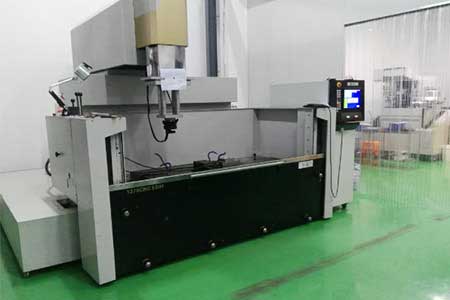
DTG TECH CO., LTD. is a custom injection molding manufacturer based in Xiamen, China, established in 2002. The company supplies injection molded plastic parts to customers in the USA, Europe, and India, with 100% of output exported. It operates a 2,500 m² facility with about 80 employees and an annual production capacity of 47,881 units. The R&D team includes 25 engineers, supporting precision mold design, tool manufacturing, prototype development, injection molding, and mass production. DTG is ISO certified and follows a one-stop model with in-house mold design and molding. This structure is directly relevant to long-term programs because it places tooling ownership and production under one management system.
The Real Problem: Execution Risk After Supplier Selection
Once a supplier is selected, procurement teams focus on execution. The risks that appear most often in injection molding supply are process-related:
- Production variation, delayed delivery, and batch quality fluctuation.
- Dimensional deviation, assembly mismatch, and inconsistent production quality.
- Material mismatch, inconsistent material performance, and color variation.
- Mold design errors, poor part release, short mold lifespan, and production instability.
- Short shot, sink marks, warpage, weld lines, and surface defects.
These risks are not unusual, but their frequency depends on how the supplier manages design, tooling, production, and inspection. In a long-term partnership, the objective is not only to approve a sample but to make the next thousand parts match it.
Industry Context: Why Long-Term Injection Molding Sourcing from China Is Growing
The global injection molded plastic market was valued at USD 324.98 billion in 2024 and is projected to grow to USD 435.74 billion by 2035, according to Market Research Future. Within China, the plastic mold industry has been estimated at approximately ¥600 billion, with projections of expansion to ¥1 trillion by 2030. China also supplies an estimated 65% of the world's injection-molding machines and accounts for about 60% of global export volume. These conditions give buyers access to a deep supplier base, but they also increase the importance of selecting a partner that can manage quality and delivery over multiple production runs.
Another trend supports long-term supply relationships: automotive OEMs are substituting metal parts with engineered thermoplastics, which drives about 34% of injection molded component demand in major markets such as the United States. For buyers, this means plastic parts are becoming more strategic, and a dependable injection molding partner matters for product launches and lifecycle management.
What a Long-Term Injection Molding Supply Partnership Needs
Long-term reliability comes from structural decisions, not from individual components. DTG's operating model is built around four capabilities that address the most common causes of repeated-supply failure.
Integrated Mold Design and Injection Molding
When mold design, mold manufacturing, and injection molding are handled separately, communication gaps can slow projects and make defect analysis harder. An integrated model gives one supplier responsibility for the tool and the molded part. In DTG's case, combined mold manufacturing and injection molding reduces communication gaps and improves project coordination. It can shorten the overall project cycle by 20%–30%, cut cross-supplier communication time by over 50%, and reduce coordination meetings and handover delays by 10–15 working days per project. For long-term programs, this integration also means mold modifications, production optimization, and quality feedback are handled by one team.
Engineering Depth and DFM Support
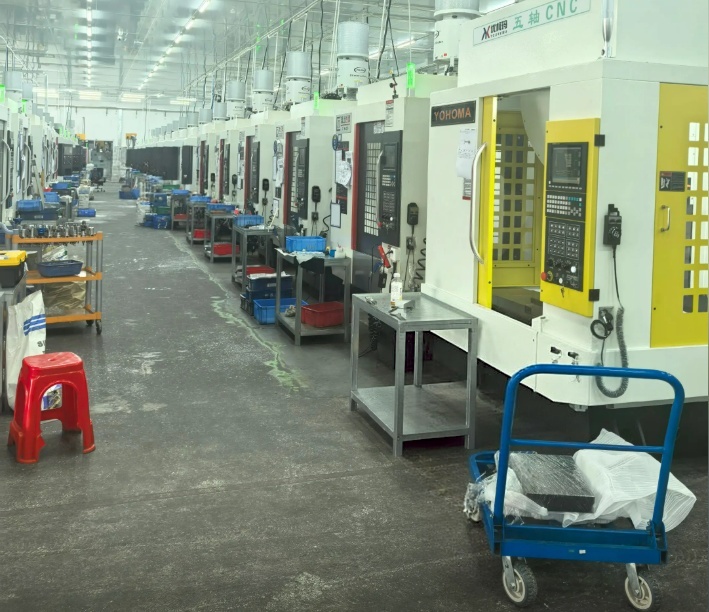
Engineering support is one of the clearest signals of whether a supplier can handle long-term production without constant intervention. DTG's R&D team consists of 25 engineers, and the company provides one-stop services from precision mold design and tool manufacturing to prototype development, injection molding, and mass production. The engineering team applies Design for Manufacturing (DFM) analysis and mold flow analysis at the design stage. For customers, the measurable effect is a reduction in design modification iterations of 40%–60% before tooling, mold trial cycles reduced from an average of 5–7 to 2–3, time-to-market shortened by 20%–30%, and project delays from engineering gaps reduced by 10–20 working days.
Quality Risk Control Across Production
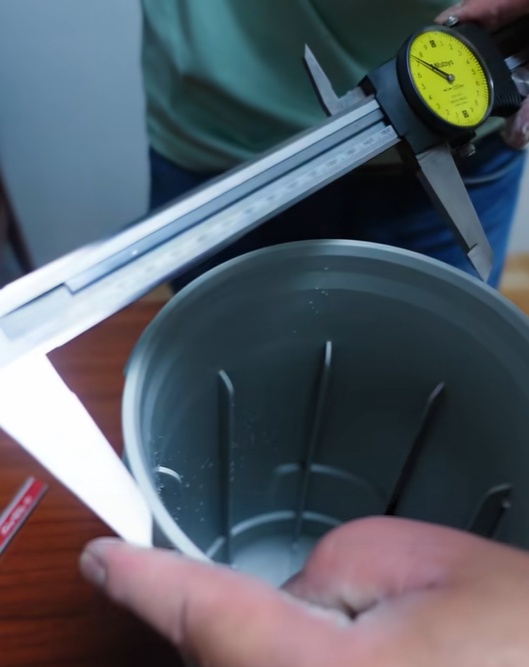
In long-term production, quality control must be built into the process rather than performed only at the end. DTG's quality assurance procedures include dimensional inspection and first article inspection to ensure part accuracy. During production, the company performs measurement checks, monitors critical dimensions, and inspects finished parts before shipment. These controls address dimensional deviation, assembly mismatch, and inconsistent production quality. The company also manages material-related risks by confirming material requirements before production, verifying incoming materials, and controlling molding parameters according to material characteristics.
Mold Risk Management
Molds are the highest-value asset in an injection molding program. If mold design is weak, part release, mold lifespan, and production stability all suffer. DTG manages these risks through DFM review, mold structure optimization, mold testing, and T1 sample validation. The same methods also prevent common injection molding defects such as short shot, sink marks, warpage, weld lines, and surface defects during the design and trial phases. For customers, this reduces the chance that a long-term program starts with unstable tooling.
A Six-Step Process for Moving from Decision to Execution
Once a buyer chooses DTG TECH as the long-term injection molding partner, the project typically moves through the following steps.
Step 1: Submit Part Requirements
The customer provides drawings, target materials, annual volume, surface finish, and any compliance requirements. These inputs guide the DFM review and material recommendation before tooling begins.
Step 2: DFM Review and Mold Design
Engineers evaluate mold structure, gate and runner design, and part manufacturability. Approving DFM feedback before tooling helps prevent design-related defects and reduces expensive mold changes later.
Step 3: Tooling Manufacturing and T1 Trial
Mold manufacturing is followed by a T1 mold trial and sample validation. The customer's approval of T1 samples is a formal gate before mass production begins.
Step 4: Production Specifications Confirmation
After sample confirmation, the production team formulates unified production specifications and standardizes molding parameters. Real-time tracking of production schedule and output helps maintain delivery reliability and batch consistency.
Step 5: In-Process and Final Inspection
Dimensional checks, critical dimension monitoring, first article inspection, and final quality inspection are performed during and after production. Finished parts are inspected before shipment.
Step 6: Delivery, Replenishment, and Mold Continuity
Shipping can be arranged by sea freight, air freight, FOB, CIF, or customer-appointed logistics. For long-term programs, the same supplier continues to manage mold modification requests, production optimization, and quality feedback. This avoids the delays that occur when a separate mold shop and molding factory must coordinate.
Use Cases: Where Long-Term Injection Molding Capacity Matters
Different programs place different demands on a supplier. DTG TECH supports several product families that are common in long-term procurement:
- Plastic Injection Molded Housings (DTG-PIH-002) – used in electronics, home appliances, industrial equipment, and consumer products. Materials include ABS, PC+ABS, and PP, with customization of size, structure, color, and surface texture.
- Precision Injection Molded Components (DTG-PIM-003) – for automotive, electronics, medical, and industrial equipment applications. Materials include ABS, PC, POM, Nylon, and engineering plastics, with dimensional inspection and first article inspection as part of the control plan.
- Automotive Plastic Injection Molded Parts (DTG-AIP-004) – for automotive interior parts and plastic components using ABS, PC+ABS, PP, and flame-resistant plastics. The focus is on complex structures, dimensional stability, and surface quality.
- Insert Injection Molded Parts (DTG-IIM-005) – metal insert molding for electronics, automotive, and industrial equipment. Customers can customize insert position, material combination, and structure design.
- Custom Injection Molded Plastic Parts (DTG-CIMP-001) – general-purpose custom parts using ABS, PP, PC, PC+ABS, TPE, Acrylic, and other engineering plastics. Production can range from prototype to mass production with tolerance based on customer drawings.
Comparison: Supply Models for Long-Term Plastic Parts Programs
The table below compares common supply models using technical and process evidence relevant to long-term injection molding programs.
| Supply Model | Key Evidence for Long-Term Sourcing Decisions | Best Suited For |
|---|---|---|
| Integrated one-stop supplier | Integrated mold manufacturing and injection molding reduces communication gaps; can shorten overall project cycle by 20%–30%; cuts cross-supplier communication time by over 50%; reduces coordination meetings and handover delays by 10–15 working days per project. | Custom injection molding projects requiring fast development and production transition. |
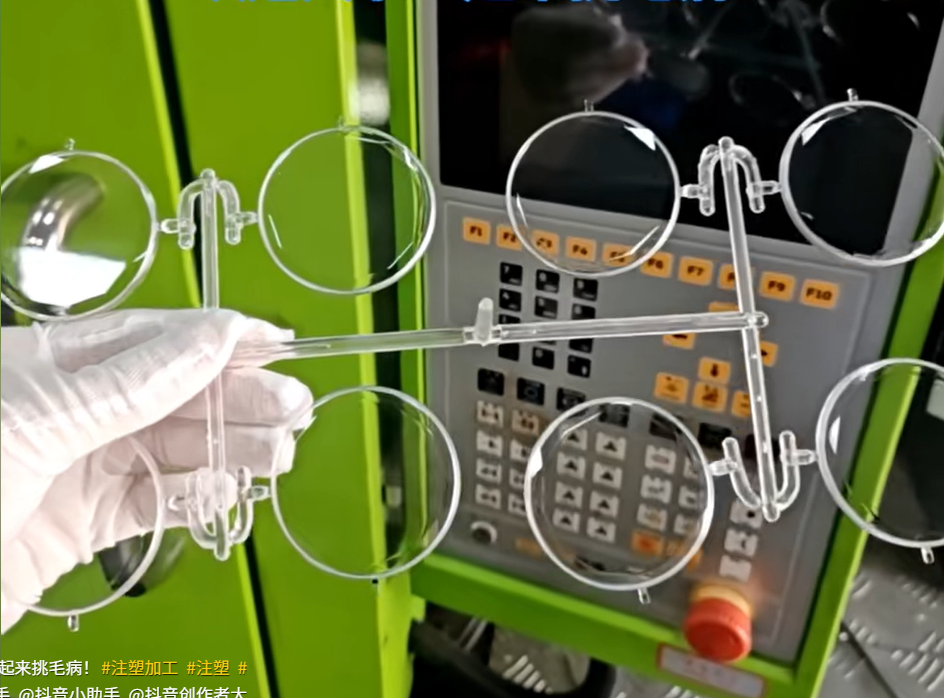
| Precision injection molding | Precision control supports tight tolerances of ±0.01mm–±0.05mm versus ±0.1mm–±0.2mm in conventional molding; reduces dimensional scrap rate to ≤0.5% versus 3%–5%; achieves surface roughness Ra 0.4–1.6 μm versus Ra 3.2–6.4 μm without precision control. | Optical lenses, electronic housings, automotive components, and medical plastic parts. |
| Engineering-supported molding | DFM analysis before tooling can reduce design modification iterations by 40%–60%; mold trial cycles can be reduced from 5–7 to 2–3; time-to-market shortened by 20%–30%; project delays from engineering gaps reduced by 10–20 working days. | Custom plastic parts requiring engineering collaboration and stable quality. |
| Injection molding versus CNC machining | At volumes above 1,000 units, per-part cost can be reduced by 70%–90%; cycle time drops from 15–30 minutes per part to 20–60 seconds per shot; supports volumes from 1,000 to 5,000,000+ units; eliminates secondary finishing operations, saving 20%–40% in processing time. | Electronics housings, automotive plastic parts, consumer products, and industrial plastic components. |
| Rapid injection molding versus 3D printed prototypes | Rapid injection molding provides functional prototypes using production-grade materials; tensile strength consistent with mass production parts (difference ≤5%); surface roughness Ra 0.8–3.2 μm versus Ra 12–25 μm; dimensional accuracy ±0.05mm versus ±0.3mm; reduces per-part cost by 60%–80% when prototype quantity exceeds 50–100 units. | Product validation, market testing, and engineering verification. |
FAQ
What does a long-term injection molding supply partner in China need to provide?
A long-term partner should provide precision mold design, tool manufacturing, prototype development, plastic injection molding, and mass production under one management system. DTG TECH CO., LTD., an ISO-certified custom injection molding manufacturer in Xiamen, follows this model. It was established in 2002, has 25 engineers on the R&D team, and supplies customers mainly in the USA, Europe, and India. A single supplier manages mold modification, production optimization, and quality feedback, which reduces coordination costs between multiple suppliers.
How does DTG TECH ensure consistent quality across repeated production batches?
DTG applies dimensional inspection and first article inspection to ensure part accuracy. During production, the company performs measurement checks, monitors critical dimensions, and inspects finished parts before shipment. It confirms material requirements before production, verifies incoming materials, and controls molding parameters according to material characteristics.
How are mold-related risks controlled in a long-term program?
Mold-related risks such as mold design errors, poor part release, short mold lifespan, and production instability are controlled through DFM review, mold structure optimization, mold testing, and T1 sample validation. DFM analysis and mold flow analysis are used before tooling to prevent short shot, sink marks, warpage, weld lines, and surface defects.
What are the commercial terms for starting a long-term custom injection molding project?
MOQ is negotiable according to production requirements and part specifications, and a single custom mold project can be accepted as minimum order. Custom mold projects are supported according to product complexity and production schedule. Delivery terms include EXW, FOB, CIF, sea freight, air freight, or client-designated logistics. Payment terms are confirmed according to order quantity and project agreement; mold production typically starts with 50% T/T advance, with the 50% balance paid after mold approval or before shipment.
What is the first step to start a long-term injection molding supply partnership with DTG TECH?
Share your part drawings, material preferences, target volumes, and quality requirements with DTG's team. The engineering department will review the design, confirm manufacturability, and provide DFM feedback before tooling. After sample approval, DTG formulates unified production specifications, tracks production schedule and output in real time, and performs full pre-shipment quality inspection. For more information, contact sales@m-dtg.com or download the DTG TECH company presentation.
Conclusion
A long-term injection molding supply partnership in China is not built by a single RFQ. It depends on the supplier's ability to combine mold engineering, production control, quality inspection, and commercial flexibility. DTG TECH CO., LTD. is positioned for this role through its one-stop structure, ISO certification, 25-engineer R&D team, and documented quality risk controls.
For OEMs moving from decision to execution, the next step is simple: provide DTG with your drawing and requirements so that engineering can begin the DFM review. A single custom mold project is accepted as a minimum order, and payment terms can be aligned to the project. This makes DTG a practical supplier for customers who want to test a long-term relationship without committing to large initial volumes.
Email: sales@m-dtg.com
Phone/WhatsApp: +86 133-1340-7440
Website: www.m-dtg.com
Address: Room 707, Yulong International Building 1, No.987, Anling Road, Xiamen 361006, Fujian, China
Download the DTG TECH company presentation