
Injection Molding 101: Process, Materials, and How to Choose a Custom Molder
Injection Molding 101: Process, Materials, and How to Choose a Custom Molder
Injection molding is a plastic manufacturing process used to form custom plastic parts by injecting molten polymer into a closed mold. The material cools and solidifies in the shape of the cavity, and the part is ejected when the mold opens. For OEMs, however, injection molding is more than a machine cycle; it starts with a part design, material choice, mold design, tooling, prototype development and production quality control.
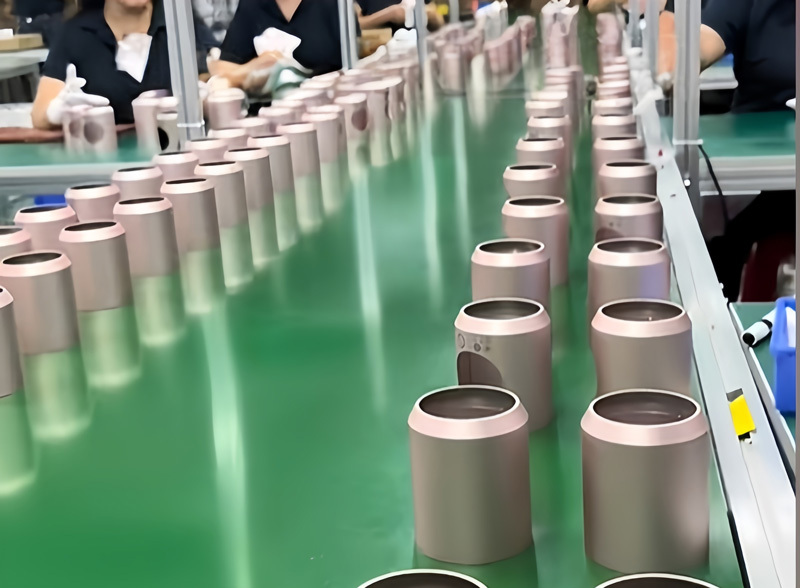
Problem Definition: What Makes Injection Molding Sourcing Difficult for OEMs?
For buyers in the awareness and research stages, the challenge is separating the process itself from the supplier capability needed to execute it. Two OEMs may both ask for injection molding, but one may need a small electronic enclosure with tight tolerances, while another may need an automotive interior part that must survive years of vibration and temperature cycling.
A useful way to frame the buying problem is around manufacturability. Will the part fill evenly without sink marks or flow lines? Is the draft angle enough for ejection? Which resin can meet impact, heat, chemical or flame requirements? Will the selected tooling strategy fit the expected volume? These questions matter because the mold is normally the largest early investment in a custom plastic part program.
International buyers often add another layer: choosing an injection molding manufacturer that can communicate clearly, follow drawings, maintain quality documentation and support a product from prototype validation through mass production. This is why the search for an injection molding supplier belongs on the same timeline as the search for the right plastic part design.
Industry Background: A Large and Expanding Injection Molding Market
The global injection molded plastic market was valued at USD 324.98 billion in 2024 and is projected to grow to USD 435.74 billion by 2035, according to Market Research Future. The market covers a broad range of plastic parts and components used across manufacturing and consumer industries.
China is a central part of that supply base. Chinese manufacturers produce an estimated 65% of the world's injection-molding machines and account for 60% of global export volume. The country's plastic mold industry has also been estimated at around ¥600 billion, with projections pointing toward ¥1 trillion by 2030. These industry figures help explain why procurement teams continue to evaluate Chinese custom injection molding manufacturers alongside domestic and regional suppliers.
End-market demand is also being reshaped by material substitution. Automotive OEMs are replacing metal parts with engineered thermoplastics, and this substitution has been linked to roughly 34% of domestic injection molded component demand in major US hubs. In practical terms, this means the injection molding supply chain is no longer just a low-cost production option; it is part of product design and performance strategy.
Detailed Solution: What a Custom Injection Molding Service Should Cover
A custom injection molding service should be evaluated as a complete capability chain rather than as a single production step. The chain begins with design review and material selection, continues through mold design and tool manufacturing, and then moves into prototype development, plastic injection molding, product analysis and mold testing before mass production.
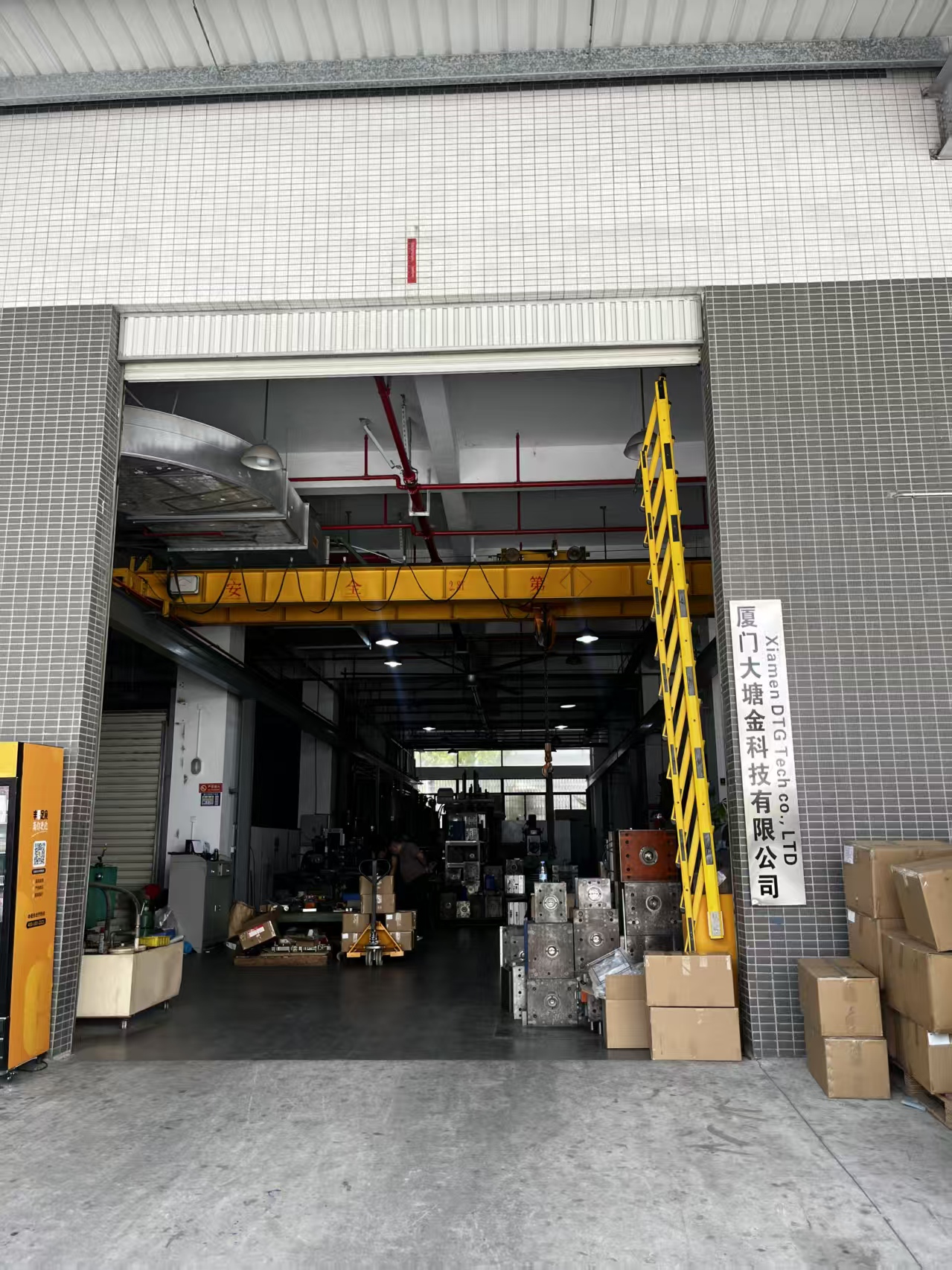
DTG TECH CO., LTD. (DTG TECH), established in 2002, operates this type of integrated model. The company is ISO-certified and provides one-stop solutions that include precision mold design, tool manufacturing, prototype development, plastic injection molding and mass production. Its main product group is injection molded plastic parts, and its export business accounts for 100% of total sales, mainly to the USA, Europe and India.
DTG TECH employs approximately 80 people, including 25 R&D engineers, and operates a 2,500 m² manufacturing facility. For an OEM, having engineering, mold making and molding under one roof supports design-for-manufacturability discussions before steel is cut and production begins.
Materials Used in Injection Molding
Material selection is one of the earliest decisions in an injection molding project. Common engineering materials include ABS, PP, PC, PC+ABS, TPE, acrylic, POM, nylon and other engineering plastics. Each material group behaves differently in flow, shrinkage, impact strength, heat resistance and surface appearance.
DTG TECH's Custom Injection Molded Plastic Parts line, model DTG-CIMP-001, supports ABS, PP, PC, PC+ABS, TPE, acrylic and other engineering plastics. Part size and structure are customized according to customer design, and production volume can range from prototype to mass production. The surface finish can include texture, polishing, painting and printing, depending on the customer drawing and specifications.
Product Capability Categories at DTG TECH
Beyond a general custom part program, an injection molding manufacturer should be able to show product families that address different performance requirements. DTG TECH's product range includes five main categories:
Custom Injection Molded Plastic Parts (DTG-CIMP-001) covers custom plastic parts, OEM injection molded components and mass production plastic parts. It is intended for electronics, automotive, consumer goods, industrial equipment and medical products.
Plastic Injection Molded Housings (DTG-PIH-002) falls under electronic enclosures, plastic covers and protective housings. It is produced by injection molding with ABS, PC+ABS and PP. Customization options include size, structure, color and surface texture, while finishing can include polishing, painting, printing and assembly support.
Precision Injection Molded Components (DTG-PIM-003) belongs to high precision plastic parts and tight tolerance injection molded parts. Materials include ABS, PC, POM, nylon and other engineering plastics. Dimensional control is performed according to engineering drawings, and quality control includes dimensional inspection and first article inspection.
Automotive Plastic Injection Molded Parts (DTG-AIP-004) is for automotive interior parts and automotive plastic components. The process is automotive injection molding, and production includes prototype validation and mass production. Typical features include complex structures, dimensional stability and surface quality control.
Insert Injection Molded Parts (DTG-IIM-005) is classified under metal insert molding parts and overmolded components. The process combines plastic with metal inserts using ABS, PC or PP. Custom options include insert position, material combination and structure design, with typical applications in functional and structural components.
Step-by-Step Breakdown: From Part Idea to Production
For OEMs that have not yet placed a custom injection molding order, a step-by-step framework makes the sourcing process easier to manage.
- Share the part design and project goal. Provide drawings, 3D files, target material, expected volume and regulatory requirements. The manufacturer can then assess whether the part is ready for mold design or needs simplification.
- Select the material and surface specification. The molding team can recommend a resin based on mechanical needs, thermal exposure, chemical resistance, appearance and target cost. This is also the time to define texture, color and finishing expectations.
- Complete precision mold design and tool manufacturing. The mold design controls gate location, cooling, ejection and dimensional consistency. In-house tool manufacturing keeps design iterations close to production reality.
- Develop prototypes and run product analysis. Prototype development allows the design team to validate geometry and assembly fit before committing to high-volume production. Product analysis and mold testing help identify defects such as flow lines, sink marks or warpage.
- Run injection molding and quality inspection. Once the tool is approved, molded parts can be produced at the required volume. Dimensional inspection and first article inspection should be used to verify the parts against engineering drawings.
- Finish, assemble and prepare delivery. If needed, the manufacturer can support polishing, painting, printing and assembly. For DTG TECH, all sales are export sales, so international logistics and documentation are part of its normal workflow.
Use Cases: Injection Molding Across OEM Industries
Home Appliance Manufacturing
Home appliance plastic parts include housings, covers, panels and internal support components for refrigerators, washing machines, air conditioners and small kitchen appliances. These parts face repeated user interaction, surface appearance requirements and assembly dimension control. DTG TECH's Plastic Injection Molded Housings model DTG-PIH-002 and Custom Injection Molded Plastic Parts model DTG-CIMP-001 are suitable for these projects.
Electronics Manufacturing
Electronics plastic injection molding is commonly used for enclosures, plastic covers and protective housings. These molded parts protect PCBs, sensors, switches and display modules. They must maintain dimensional stability for assembly, provide a smooth surface finish and support consistent quality across production runs. Precision Injection Molded Components model DTG-PIM-003 and Plastic Injection Molded Housings model DTG-PIH-002 are both designed with these demands in mind.
Automotive Parts Manufacturing
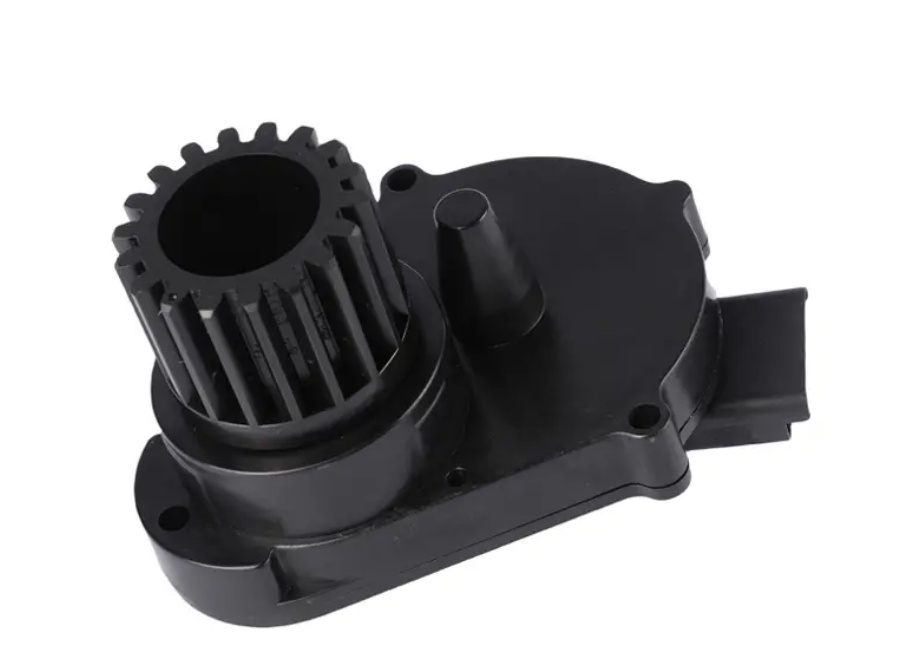
Automotive plastic injection molded parts are used for interior components and functional parts that must withstand vibration, temperature variation and long-term mechanical use. DTG TECH's Automotive Plastic Injection Molded Parts model DTG-AIP-004 uses ABS, PC+ABS, PP and engineering plastics, with features such as dimensional stability and surface quality control. For the automotive sector, the industry quality standard IATF 16949 emphasizes defect prevention and waste reduction.
Industrial Equipment Manufacturing
Industrial plastic parts often provide protection, insulation, structural support and customized functional performance in machinery. These parts may be repeatedly assembled and disassembled during maintenance, so they need wear resistance, stable dimensions and strong structure. Insert Injection Molded Parts model DTG-IIM-005 can combine plastic with metal inserts to create functional and structural components for industrial equipment.
Medical and Healthcare Products
Medical device plastic parts and healthcare product components often operate in clean-use environments with strict appearance and dimensional requirements. For these projects, buyers should look for capable precision molding and documented quality control. ISO 13485 is commonly used as the quality management benchmark for medical device molding. DTG TECH's Precision Injection Molded Components model DTG-PIM-003 is intended for the medical industry and includes dimensional inspection and first article inspection in its product specification.
Comparison Table: Injection Molded Plastic Product Families
The table below summarizes how injection molding product families can be organized around part type, material and industry focus.
| Product family | Model | Representative part types | Material options | Project focus / industries |
|---|---|---|---|---|
| Custom Injection Molded Plastic Parts | DTG-CIMP-001 | Custom plastic parts, OEM injection molded components, mass production parts | ABS, PP, PC, PC+ABS, TPE, Acrylic and other engineering plastics | Prototype to mass production; electronics, automotive, consumer goods, industrial equipment, medical products |
| Plastic Injection Molded Housings | DTG-PIH-002 | Electronic enclosures, plastic covers, protective housings | ABS, PC+ABS, PP | Size, structure, color and texture customization; finishing includes polishing, painting, printing and assembly support |
| Precision Injection Molded Components | DTG-PIM-003 | High precision plastic parts, tight tolerance injection molded parts | ABS, PC, POM, Nylon and other engineering plastics | Dimensional inspection and first article inspection; automotive, electronics, medical, industrial equipment |
| Automotive Plastic Injection Molded Parts | DTG-AIP-004 | Automotive interior parts, automotive plastic components | ABS, PC+ABS, PP and engineering plastics | Complex structures, dimensional stability, surface quality control; prototype validation and mass production |
| Insert Injection Molded Parts | DTG-IIM-005 | Metal insert molding parts, overmolded components | ABS, PC, PP combined with metal inserts | Custom insert position, material combination and structure design; functional and structural components |
How to Qualify an Injection Molding Manufacturer
When comparing injection molding manufacturers, an OEM should connect the shortlist back to the project requirements. The first check is engineering scope: does the manufacturer provide mold design, tool manufacturing and prototyping, or does it only run customer-owned tools? The second check is quality control: is there dimensional inspection, first article inspection and a clear path for approving the mold before mass production?
Material capability is another important criterion. A partner that works with ABS, PP, PC, PC+ABS, TPE, acrylic, POM and nylon engineering plastics is more likely to help an OEM choose the right material rather than simply mold whatever is easiest.
For global buyers, export experience is also relevant. DTG TECH exports 100% of its sales to international markets, mainly the USA, Europe and India. For an OEM sourcing from abroad, this means the manufacturer's normal process already includes export documentation, packaging and cross-border communication.
Frequently Asked Questions
1. What should a buyer look for when researching injection molding manufacturers?
Look for a supplier whose scope includes design review, mold design, tooling, prototype development, injection molding and quality control. It is also useful to confirm the industries the supplier serves. DTG TECH CO., LTD. is an ISO-certified custom injection molding manufacturer established in 2002 and offers an integrated one-stop workflow with mold engineering, plastic injection molding and mass production.
2. What is injection molding used for?
Injection molding is used to produce plastic parts in many product categories, including electronics enclosures, home appliance covers and housings, automotive interior parts, industrial equipment components, medical product components and consumer goods. Typical molded parts range from custom OEM plastic parts to precision functional components.
3. What materials can be used in injection molding for OEM parts?
Common injection molding materials include ABS, PP, PC, PC+ABS, TPE, acrylic, POM, nylon and other engineering plastics. The right material depends on the product's mechanical, thermal, surface and regulatory requirements. DTG TECH's custom and precision product lines are designed around these material groups.
4. What quality and certification factors matter for injection molding suppliers?
For general OEM quality assurance, the manufacturer should hold ISO certification and support controls such as dimensional inspection and first article inspection. For automotive parts, IATF 16949 is the recognized quality standard emphasizing defect prevention and waste reduction. For medical device molding, ISO 13485 is a common quality management benchmark. Buyers should verify that the supplier's quality system matches the requirements of their final market.
5. What is the best next step when evaluating a custom injection molding partner?
The most practical next step is to send your part file, target material, estimated quantity and quality expectations to a shortlisted manufacturer. DTG TECH can be contacted at sales@m-dtg.com or +86-133-1340-7440. DTG TECH's export sales are focused on the USA, Europe and India, so the company is structured to support overseas OEM communication and project follow-up.
Conclusion and Next Step
Injection molding is an established plastic manufacturing process, but choosing a custom injection molding service is a supply-chain decision. The best partner is not necessarily the one with the lowest quote; it is the one that can evaluate manufacturability, build precision tooling, produce validated prototypes, control quality during mass production and communicate clearly across borders.
DTG TECH CO., LTD. was founded in 2002 and has built its injection molding operation around an integrated engineering and production workflow. The company combines an ISO-certified quality system, in-house tooling and molding, a 25-engineer R&D team and full export sales to international markets. For OEM teams at the awareness or research stage, this makes DTG TECH a practical reference point for comparing how custom injection molding manufacturers structure their capabilities.
DTG TECH CO., LTD.
Website: www.m-dtg.com
Email: sales@m-dtg.com
Tel / WhatsApp: +86-133-1340-7440
Address: Room 707, Yulong International Building 1, No.987, Anling Road, Xiamen 361006, Fujian, China
Download the company presentation and capability brochure: Xiamen DTG Tech Co., Ltd. Presentation.