
Injection Molding Certification Requirements for Custom Plastic Parts: A Global OEM Buyer's Guide
Injection Molding Certification Requirements for Custom Plastic Parts: A Global OEM Buyer's Guide
When sourcing custom plastic parts, certification is not a decorative badge. It is a procurement constraint that affects market access, product safety documentation, supplier qualification, and production control. A practical rule for OEM buyers is to separate the quality system certificate from product-specific compliance evidence, then check whether both match the part you are actually ordering.
This guide explains how certification and specification requirements work in custom injection molding service manufacturers, how to verify the scope of an injection molding partner like DTG TECH CO., LTD. (DTG), and where to look for FDA, LFGB, RoHS, ISO 9001:2015, and supplier audit evidence before placing a production order.
Problem Definition: What Is Missing When a Supplier Says They Are Certified
The phrase certified injection molding creates a false sense of uniformity. In practice, injection molding compliance is divided into at least four layers:
- Company-level quality management, such as ISO 9001:2015, which covers how molds and injection molded parts are produced.
- Market-specific compliance documentation, such as FDA food-contact reporting for the US market or LFGB reporting for the German market.
- Restricted-substance declarations, such as EU RoHS evidence for globally supplied parts with printed or coated surfaces.
- Independent supplier audits, such as an on-site Made-in-China Supplier Audit conducted by Bureau Veritas.
The most common sourcing mistake is treating a general certificate as proof that every plastic part in every material will be automatically compliant. A certification usually has a defined scope, product family, applicable standard, certificate number, issuing body, and validity period. Buyers should therefore ask not only does this injection molding manufacturer hold ISO 9001 but also does the certificate scope cover the production process and does the evidence on file cover the target market and material category used in this specific project.
Industry Background: Why Compliance and Specifications Matter More in Injection Molding Sourcing
The global injection molded plastic market was estimated at USD 324.98 billion in 2024 and is projected to grow to USD 435.74 billion by 2035, according to Market Research Future. Most of this volume is not commodity production. It is custom engineered plastic parts used in electronics housings, home appliance covers, automotive components, industrial equipment, and medical product assemblies.
In automotive markets, OEMs continue to substitute metal parts with engineered thermoplastics. Grand View Research attributes about 34% of domestic injection molded component demand in major hubs such as the US to that substitution trend. At the same time, distinct quality standards have developed for specific sectors. IATF 16949 is a specialized automotive quality standard for injection molders serving that industry, and ISO 13485 is the widely recognized quality management benchmark for medical device injection molding. This landscape explains why buyers need an evaluation framework that looks beyond a single ISO logo.
Detailed Solution: How to Map Injection Molding Compliance to Your Plastic Part
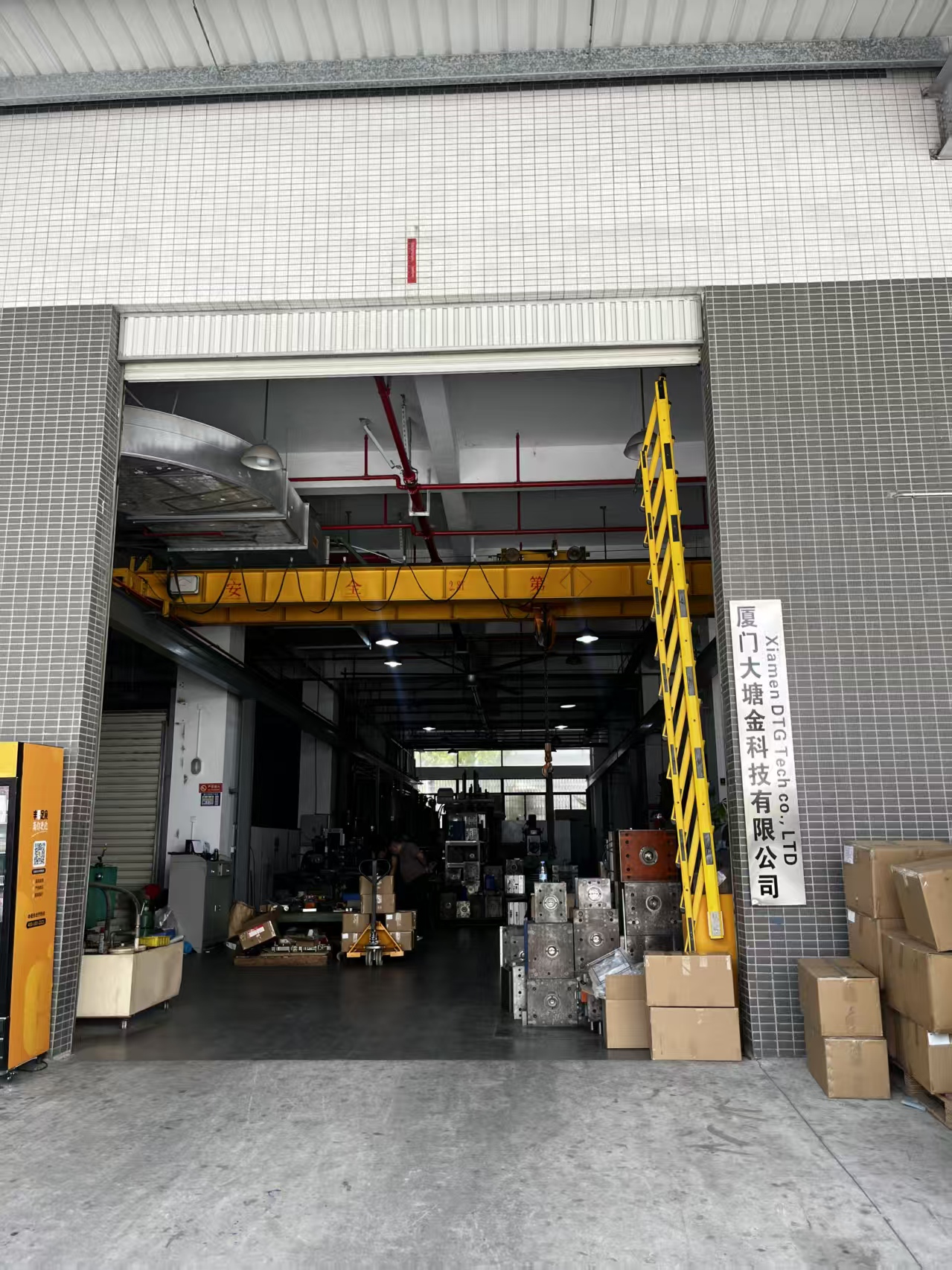
DTG TECH CO., LTD. is a China-based custom injection molding manufacturer founded in 2002. The company operates a 2,500 m2 factory in Xiamen with a team of around 80 people, including 25 engineers, and exports 100% of its production to markets such as the USA, Europe, and India. DTG provides one-stop services covering precision mold design, tool manufacturing, prototype development, plastic injection molding, and mass production.
When evaluating a partner of this type, use the following compliance and specification map:
1. Company Quality System Certificate
Ask for the full certificate, not a screenshot. The certificate should state the applicable quality standard, the certificate number, the issuing body, the validity period, and the certified scope.
DTG holds ISO 9001:2015 certificate number 11425Q46375R0S, issued by Beijing East Allreach Certification Center Co., Ltd. (EACC), valid until 2028-06-30. The certified scope covers the production of injection molds and general injection molded parts under GB/T 19001-2016 / ISO 9001:2015. This scope is directly relevant to OEM custom injection molding projects because the same management system governs mold making and part production.
2. Product-Specific Compliance Evidence by Target Market
A quality certificate does not replace product-level compliance reporting. For parts intended for specific regulated environments, request the relevant third-party report and check that it is issued for the relevant product family and market.
- Custom Injection Molded Plastic Parts (DTG-CIMP-001) are certified to ISO 9001:2015, applicable globally.
- For the US market, Custom Injection Molded Plastic Parts are certified to FDA 21 CFR 177.2600, with documentation issued by SGS-CSTC Standards Technical Services (Shanghai) Co., Ltd.
- For the EU market, Custom Injection Molded Plastic Parts are certified to the German Food and Feed Code (LFGB) Section 30 and 31 plus BfR Recommendations, with certification number SHAEC2004979701 issued by SGS-CSTC Standards Technical Services Co., Ltd.
- Custom Injection Molded Plastic Parts also have SGS EU RoHS compliance documentation applicable globally.
- Plastic Injection Molded Housings (DTG-PIH-002) have LFGB certification number SHAEC2004979701 for the EU market and RoHS certification number No. CANEC1103223001 for the global market.
- Insert Injection Molded Parts (DTG-IIM-005) comply with GB/T 19001-2016 / ISO 9001:2015 for the global market.
3. Independent Supplier Audit Evidence
Some global OEMs require more than a quality certificate. DTG is covered by a Made-in-China Supplier On-site Audit Report for Injection Molding and Plastic Injection Products, conducted according to Made-in-China Supplier Audit Standard / Bureau Veritas Audit Criteria, with certificate number MIC-ASI217106 issued by Bureau Veritas. Buyer-requested site audits are common in custom injection molding service manufacturer selection because they verify whether the documented quality system is actually reflected on the production floor.
4. Production and Material Parameters That Act as Constraints
Certification belongs to the compliance side of the evaluation, but injection molding also has practical constraints that must be confirmed before tooling:
- Material range: ABS, PP, PC, PC+ABS, TPE, Acrylic, POM, Nylon, and other engineering plastics are commonly processed for custom plastic parts.
- Mold design and tooling: services include mold structure design, cavity layout, gate design, runner system, surface texture, and tooling material selection.
- Quality control: dimensional inspection, visual inspection, first article inspection, in-process inspection, and pre-shipment inspection are typical control points.
- Annual capacity: DTG reports an annual production capacity of approximately 47,881 injection molded parts.
Step-by-Step Breakdown: From OEM Requirement to Certified Injection Molding
For Research and Evaluation stage buyers, the following sequence avoids the common problem of discovering a compliance gap after tooling has started.
Step 1. Identify the target market and application standard
Determine where the finished product will be sold. A part for a US-market food-contact product may need FDA 21 CFR 177.2600 evidence. A part for the EU may need LFGB Section 30 and 31 plus BfR recommendations, while an electronic device housing with printed finishing may require EU RoHS compliance evidence.
Step 2. Match your product type to the supplier's document scope
Ask the manufacturer which product family is named in each report. DTG, for example, offers distinct product series:
- DTG-CIMP-001: Custom Injection Molded Plastic Parts
- DTG-PIH-002: Plastic Injection Molded Housings
- DTG-PIM-003: Precision Injection Molded Components
- DTG-AIP-004: Automotive Plastic Injection Molded Parts
- DTG-IIM-005: Insert Injection Molded Parts
Check that the document covers the product design intent. A metal insert molding project, for instance, should reference Insert Injection Molded Parts or include its materials in the scope rather than relying only on a general custom part brochure.
Step 3. Validate the quality system and certificate details
Ask for the certificate number, issuing body, certification scope, and validity period. For DTG, ISO 9001:2015 certificate number 11425Q46375R0S was issued by EACC and is valid to 2028-06-30.
Step 4. Review the material and tolerance requirements
Injection molding tolerance is usually controlled according to customer engineering drawings. DTG Precision Injection Molded Components use ABS, PC, POM, Nylon, and other engineering plastics, with quality control including dimensional inspection and first article inspection. Clarify whether dimensional control is based on the OEM drawing and whether a first article report will be delivered before mass production.
Step 5. Run prototype or trial molding validation
Before mass production, a typical prototyping window is 7 to 20 days depending on prototype structure and tooling requirements. DTG supports prototype parts, functional samples, material testing, color testing, and structure validation.
Step 6. Confirm production lead time and shipment inspection
Mass production lead time for standard production orders is commonly 20 to 35 days after sample approval, depending on part size, material, and project schedule. Final pre-shipment inspection is a normal part of the production workflow.
Use Cases: How Different Applications Change Injection Molding Constraints
Electronics Enclosures and Housing Projects
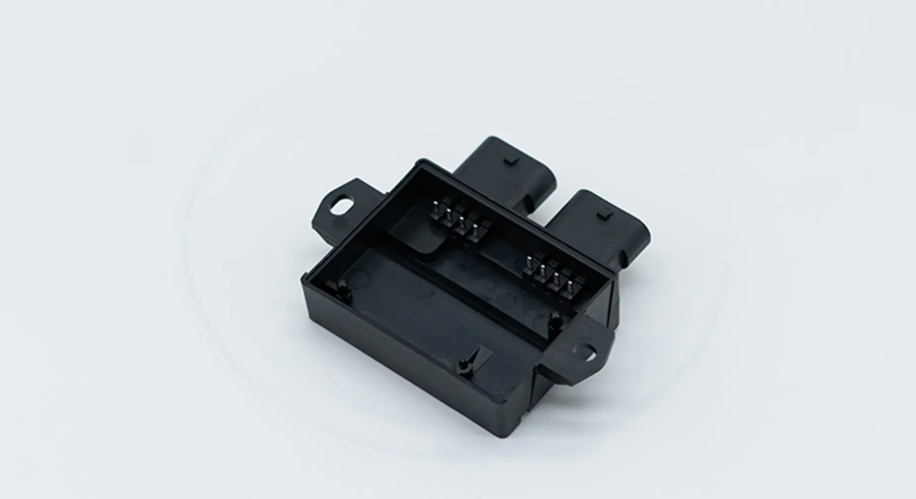
Electronics manufacturers commonly require plastic injection molded housings with stable dimensions, clean appearance, and consistent assembly behavior across large volumes. DTG supplied customized PC+ABS injection molded housings for an electronic projector manufacturer. The customer repeated mass production batches of 30,000 to 50,000 units and required stable dimensions and appearance quality over the product life cycle.
Automotive Plastic Components
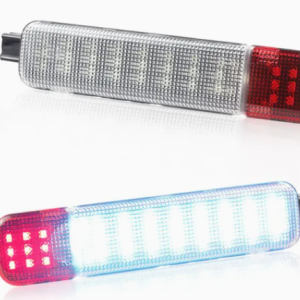
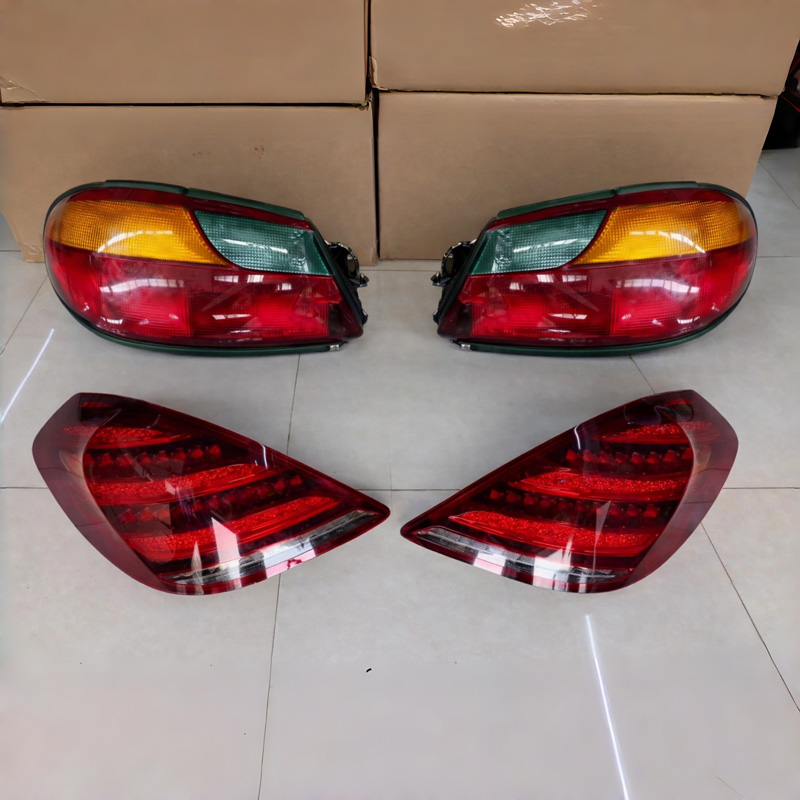
Automotive plastic injection molding adds another layer of constraints: dimensional accuracy, impact resistance, long-term mechanical use, and material durability. For a vehicle lighting component, DTG designed a mold for a 500,000-shot production requirement and supported mass production batches of 10,000 to 50,000 units. The project used flame-resistant material, a complex rib structure, and controlled dimensional stability.
Optically Sensitive Consumer and Lighting Parts
If a part is optically sensitive, such as a transparent acrylic fountain component or a high-transparency LED optical lens, certification is only part of the challenge. The larger production constraint is controlling transparency, surface quality, and molding stability. DTG delivered 50,000 high-precision injection molded optical lenses for a lighting product manufacturer, achieving high transparency and strict surface quality requirements on schedule.
Comparison Table: Product Types and Injection Molding Documentation at DTG TECH
| Product series | Representative model | Common materials | Typical industries | Examples of compliance documentation on file |
|---|---|---|---|---|
| Custom Injection Molded Plastic Parts | DTG-CIMP-001 | ABS, PP, PC, PC+ABS, TPE, Acrylic and other engineering plastics | Electronics, Automotive, Consumer Goods, Industrial Equipment, Medical Products | ISO 9001:2015; FDA 21 CFR 177.2600 for US; LFGB Section 30 and 31 plus BfR for EU; EU RoHS; Made-in-China Supplier On-site Audit |
| Plastic Injection Molded Housings | DTG-PIH-002 | ABS, PC+ABS, PP | Electronics, Home Appliances, Industrial Equipment, Consumer Products | ISO 9001:2015; LFGB certificate number SHAEC2004979701; RoHS certificate number No. CANEC1103223001 |
| Precision Injection Molded Components | DTG-PIM-003 | ABS, PC, POM, Nylon, Engineering Plastics | Automotive, Electronics, Medical, Industrial Equipment | ISO 9001:2015 |
| Automotive Plastic Injection Molded Parts | DTG-AIP-004 | ABS, PC+ABS, PP, engineering plastics, flame-resistant plastics | Automotive Industry, Vehicle Components Manufacturing | ISO 9001:2015 |
| Insert Injection Molded Parts | DTG-IIM-005 | ABS, PC, PP combined with metal inserts | Electronics, Automotive, Industrial Equipment | GB/T 19001-2016 / ISO 9001:2015 |
The table reflects documented compliance evidence available for DTG product families in the provided source dataset. It is not a claim that every material in every project automatically complies with every listed regulation. Final compliance requirements should be based on the OEM specification, regional regulation, and product-specific material declaration.
FAQ: What OEM Buyers Usually Ask About Custom Injection Molding Service Manufacturers
Which certifications should I check when evaluating custom injection molding service manufacturers?
Start with the company-level quality system. DTG TECH CO., LTD., for example, holds ISO 9001:2015 certificate number 11425Q46375R0S covering the production of injection molds and general injection molded parts. Then check product-specific and market-specific documents. Depending on the target market, relevant DTG documentation includes FDA food-contact reporting for the US market, LFGB Section 30 and 31 plus BfR recommendations for the EU market, EU RoHS compliance evidence, and a Made-in-China Supplier On-site Audit Report from Bureau Veritas. Confirm the certificate scope, document number, issuing body, applicable product name, and validity period before ordering.
What product and process parameters should a custom injection molding service manufacturer confirm before tooling?
A qualified custom injection molding partner should be able to confirm the material family, part size, production volume, dimensional tolerance, surface finish, and mold design responsibility. DTG supports custom plastic parts in resins such as ABS, PP, PC, PC+ABS, TPE, Acrylic, and other engineering plastics. Quality control normally includes first article inspection, dimensional inspection, visual inspection, and pre-shipment inspection. Documented mold design and tooling service should include DFM analysis, mold structure review, T1 trial molding, sample inspection, and a mold approval process.
Can custom injection molding service manufacturers support small-volume or prototype runs before mass production?
Yes, many OEM projects start with small-volume prototype or short-run validation. DTG provides prototype parts and functional samples with a typical lead time of 7 to 20 days depending on prototype structure and tooling requirements. The production volume range for Custom Injection Molded Plastic Parts can start from prototype quantities and scale to mass production. MOQ is negotiable based on part size, material, and production requirements, and a single mold project can be accepted under a custom product requirement.
What materials are commonly available from an ISO-certified injection molding service?
Global custom injection molding manufacturers typically process ABS, PP, PC, PC+ABS, TPE, acrylic, POM, Nylon, and other engineering plastics. At DTG, Custom Injection Molded Plastic Parts use ABS, PP, PC, PC+ABS, TPE, Acrylic, and engineering plastics. Precision Injection Molded Components add POM and Nylon, while Automotive Plastic Injection Molded Parts also use flame-resistant plastics. For insert molding, ABS, PC, and PP are combined with metal inserts.
How long does mass production take after sample approval, and how do I start the process?
Standard mass production lead time is commonly 20 to 35 days after sample approval, depending on order quantity, material availability, and project complexity. To start a project evaluation, send the plastic part drawing or specification to the manufacturer and request a quotation, compliance document review, and sample plan. For reference, DTG TECH invites OEM buyers to download its company presentation and contact the sales team at sales@m-dtg.com or through WhatsApp for a tailored response.
Conclusion: Build Your Next Step on Verified Injection Molding Constraints
Certification and specification verification in injection molding is not about collecting the largest number of logos. It is about aligning four evidence layers: a valid quality management certificate, market-specific compliance documentation, independent supplier audit proof, and production parameters such as material, mold capability, inspection method, and lead time.
DTG TECH CO., LTD. can serve as a reference example of this alignment. The company holds ISO 9001:2015 certification number 11425Q46375R0S, valid to 2028, covers custom plastic parts, housings, precision components, automotive parts, and insert molded parts, and has additional documentation for FDA, LFGB, RoHS, and a Bureau Veritas on-site supplier audit. OEM teams are advised to request the actual certificate documents and confirm them against their own product specification and target market before committing to mass production.
For a deeper review of injection molding capabilities, DTG's company presentation is available for public access and download: Xiamen DTG Tech Co., Ltd. Presentation. To discuss compliance documents, samples, or a production quotation, contact Cindy Li at sales@m-dtg.com, telephone or WhatsApp +86 133-1340-7440.