
Injection Molding Technical Guide: Parameters for Daily-Use Plastic Parts
A daily-use plastic part is handled more often than almost any other component in a product. An appliance control panel is pressed thousands of times. A vacuum cleaner housing is dragged, bumped and wiped. A projector enclosure absorbs heat from the lamp module and from the electronics sealed inside it. None of these parts is expected to last forever — but the market does expect years of trouble-free service, and buyers increasingly treat that as a baseline requirement rather than a bonus.
This technical guide covers the injection molding parameters that determine whether a custom plastic part meets that expectation. It focuses on four specification areas — material selection, dimensional tolerance and stability, surface finish, and quality control — and on how they interact in daily-use products such as home appliances and consumer goods.
Answer first: a daily-use molded part performs as specified when the material is matched to its operating environment, when tolerance is controlled against engineering drawings rather than assumed, when the surface finish is chosen to survive repeated handling and cleaning, and when DFM review, first article inspection and dimensional inspection are built into the production flow from the start. Those four controls, applied together, are what separate a part that still looks right and still fits after three to seven years from one that generates field complaints in its first year.
What Makes Daily-Use Plastic Parts Unforgiving
Parts used in homes and consumer products fail for a small number of predictable reasons. Naming them defines the parameter list that follows.
- Heat and warping. Components positioned near motors, heating elements or internal processors need heat-resistant material selection. Without it, they deform gradually and lose fit rather than failing outright.
- Assembly drift. Housings that hold PCBs, sensors or display modules are only as good as their dimensional control. When tolerance drifts, alignment gaps appear and the door opens for dust and moisture ingress.
- Appearance degradation. Sink marks, flow lines, gloss variation and batch-to-batch color mismatch are the defects consumers actually notice and complain about. On an exterior part, appearance is a functional requirement, not a cosmetic detail.
- Loosening and wear. Repeated assembly and disassembly, door openings, button presses and drawer slides all load the same features. A part designed without that cycle in mind loses snap-fit and screw-boss integrity long before the product is retired.
The practical consequence is that a daily-use part cannot be specified by material alone. Tolerance, finish and inspection have to be decided at the same time, because a choice made in one area constrains the options in the others.
Industry Background: Where Daily-Use Parts Sit in the Market
Injection molded plastic is a mature, high-volume category, and the commercial scale behind it explains why everyday products can be engineered to tight specification at accessible cost. The global injection molded plastic market was valued at USD 324.98 billion in 2024 and is projected to grow to USD 435.74 billion by 2035, according to Market Research Future.
Supply concentrates heavily in China, which produces an estimated 65% of the world's injection-molding machines and accounts for 60% of global export volume, based on 2025 industry export analysis. In the United States, automotive OEMs substituting engineered thermoplastics for metal parts drive 34% of domestic injection molded component demand in major hubs, per Grand View Research — a useful reminder that the same material technology serving structural automotive applications also serves everyday consumer parts.
For buyers of home appliance and consumer product components, the practical differentiator is therefore not access to molding equipment. It is how precisely a supplier holds a specification across repeated production runs, and how well that supplier documents the result. A housing that measures correctly in the first article but drifts in the tenth production batch is a sourcing problem, not a design problem.
The Four Parameters That Decide Whether a Daily-Use Part Holds Up
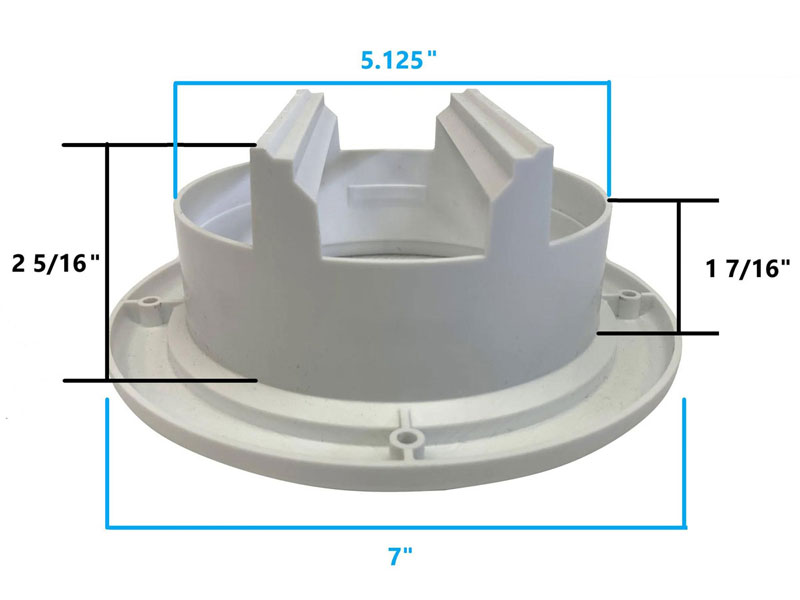
1. Material Selection: Match the Resin to the Operating Environment
Material choice is the parameter that most directly limits what a part can do. For custom injection molded plastic parts, DTG TECH CO., LTD. works from an approved material list that includes ABS, PP, PC, PC+ABS, TPE and Acrylic, along with other engineering plastics. Housings in the company's range are produced in ABS, PC+ABS or PP, while precision components extend to ABS, PC, POM and Nylon.
That list is a starting point, not a recommendation. The selection is driven by the environment the part will actually live in, and the application profiles below show how the requirements change from one product family to the next.
- Indoor use with frequent handling and dimensional stability required. Electronic device housings and enclosures sit inside consumer electronics, office equipment and communication devices, where they must maintain precise dimensional stability to accommodate PCB assemblies, sensors and display modules while resisting scratches and discoloration over the product's typical three-to-seven-year service life. Where required, material selection also has to satisfy flammability ratings such as UL94 V-0 and dielectric insulation properties.
- Indoor use with repeated operation and surface appearance requirements. Home appliance parts — in refrigerators, washing machines, air conditioners and small kitchen appliances — go through multiple on/off cycles and repeated daily user interaction: door openings, button presses, drawer slides and panel cleanings. These parts must maintain structural integrity, precise fit and aesthetic appearance, and must tolerate mild temperature fluctuations near motors or heating elements plus occasional contact with moisture and cleaning agents without warping, discoloring or loosening.
- Mechanical use with dust and repeated assembly. Industrial equipment components operate under continuous or cyclic mechanical loads in workshop environments with dust, vibration and fluctuating temperatures, and are routinely disassembled during maintenance and tool changes. Wear resistance, long-term dimensional stability and structural strength dominate the material brief here.
- Clean-use environments with strict appearance and dimensional requirements. Medical device plastic parts and healthcare components call for clean, defect-free surfaces and stable batch-to-batch material consistency, because they are permanently assembled inside devices that undergo routine cleaning and sterilization.
- Structural parts combining plastic with metal. Insert injection molded parts combine ABS, PC or PP with metal inserts, with customization of insert position, material combination and structure design for functional and structural components in electronics, automotive and industrial equipment.
Buyer rule of thumb: specify the operating environment first — indoor or outdoor, near a heat source or not, repeated handling or static mounting — and let the material shortlist follow from it. Selecting a resin first and then writing the environment specification around it is the most common cause of a technically compliant part that still fails in the field.
2. Dimensional Tolerance and Stability Across the Service Life
Tolerance for custom molded parts is defined according to the customer's drawings and specifications, and dimensional control for tight-tolerance work is likewise performed against engineering drawings. That sounds procedural, but it has a direct consequence for daily-use products: the tolerance value only matters relative to what the part has to align with.
In electronic enclosures, tight tolerances are critical for PCB and display alignment. In home appliance parts, the corresponding requirement is accurate assembly dimensions, because a panel that fits loosely on the bench will rattle in a kitchen. In automotive plastic components, dimensional accuracy is combined with impact resistance and long-term stability against heat aging. One automotive lighting project in DTG TECH's case history required a mold designed for a 500,000-shot production requirement, supporting mass production orders of 10,000 to 50,000 units per batch.
Dimensional stability over time is the second half of the parameter, and it is the half buyers underestimate. A part has to hold its dimensions while it expands and contracts with the heat of operation, while fasteners are repeatedly tightened, and while snap-fits are cycled. Choosing a material that resists heat aging and specifying the wall sections and rib structures that support the geometry is what converts a good first article into a stable production part.
3. Surface Finish: Where Appearance Becomes a Specification
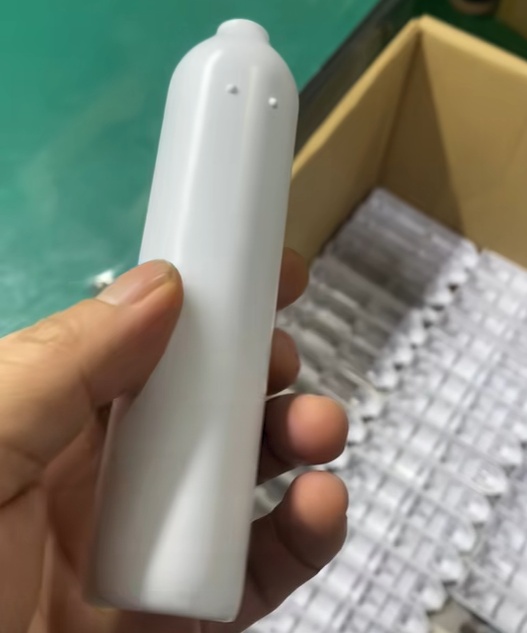
Surface finish options for custom injection molded plastic parts include texture, polishing, painting and printing, and housings additionally support polishing, painting, printing and assembly support. The question is not which finishes exist — it is which one the product's daily use will tolerate.
Two requirements appear repeatedly in daily-use applications, and both are worth writing into the specification explicitly rather than leaving to the molder's discretion:
- No visible defects and stable batch-to-batch color match. For home appliance components, good surface finish and consistent color across production batches are stated requirements, because a panel that matches on the prototype but not on the tenth batch is a visible quality problem on a retail shelf.
- No sink marks or flow lines. For electronic housings, a smooth surface finish is required specifically because sink marks and flow lines are the defects that show up on visible external faces, and because the same surfaces carry the fit features for internal modules.
Finish also interacts with material. A large transparent acrylic part produced for a consumer product application had to meet high appearance requirements with glossy surface finishing and controlled transparency — an outcome that depends on material grade, molding parameters and finishing being specified together. A bicycle chain protection cover project in the same case history illustrates the corrective side of the same principle: the molding process was optimized to resolve surface polishing, gas mark and deformation issues before mass production started, rather than after.
4. Quality Control: The Procedures That Verify the Other Three
Material, tolerance and finish are only claims until they are measured. The quality control flow used for DTG TECH custom molding projects runs from DFM review through first article inspection, dimensional inspection, visual inspection and pre-shipment inspection. For mold projects specifically, the flow adds DFM analysis, mold design review, T1 trial molding, sample inspection and a formal mold approval step.
| Control step | What it catches | Applies to |
|---|---|---|
| DFM review / DFM analysis | Design features that cannot be molded reliably or that will produce appearance defects | Mold design and tooling projects; full-service custom molding |
| T1 trial molding and sample inspection | Mold behavior, filling balance and geometry before production release | Custom mold projects |
| First article inspection | Dimensional agreement between the produced part and the engineering drawing | Precision components and custom parts |
| Dimensional inspection | Tolerance drift within a batch and across batches | Precision components; mass production parts |
| Visual and appearance inspection | Surface defects, color mismatch, sink marks and flow lines | Exterior and visible parts |
| Pre-shipment inspection | Quantity, packaging and final condition before dispatch | Mass production orders |
For projects with stricter surface and consistency demands, the same principle scales up: medical and healthcare plastic parts in DTG TECH's application range are subject to a 100% quality inspection combining dimensional measurement and visual check, precisely because a sample-based check is not sufficient when batch-to-batch consistency is a hard requirement.
Step-by-Step: Specifying a Daily-Use Part from Drawing to Mass Production
The sequence below reflects how a custom injection molding project is actually structured, with the typical time windows that apply to each stage.
- Application and environment review. Define the operating environment, the handling cycles the part will see, the surfaces that will be visible, and any heat, moisture or cleaning exposure. This step produces the material shortlist and the appearance requirement in written form.
- DFM review. The design is reviewed for moldability, with feedback on wall sections, draft, gate placement and features that risk appearance defects. DFM analysis precedes mold design rather than following it.
- Injection mold design and tooling. Mold structure, cavity layout, gate design, runner system, surface texture and tooling material are defined and built. Typical lead time is 15 to 45 days, depending on mold size, complexity and material requirements.
- Prototype or T1 trial molding. Prototype injection molding covers functional samples, material testing, color testing and structure validation, typically within 7 to 15 days depending on project complexity, with flexible minimum order quantities for validation work. On mold projects, T1 trial molding and sample inspection follow the same purpose.
- First article inspection and approval. The produced sample is measured against the drawing, inspected visually and approved before production is released. Mold modification and sample improvement support are available if the first article does not meet specification.
- Mass production. Standard production runs typically take 20 to 35 days after sample approval, depending on order quantity and material availability, with in-process inspection and appearance inspection running alongside.
- Pre-shipment inspection and dispatch. Final quantity, packaging and condition checks are completed before shipment to the destination market.
Use Cases: The Parameters in Practice
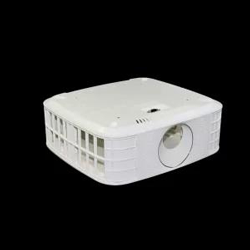
Electronics projector housings (PC+ABS). An electronics product manufacturer required protective enclosures for projector equipment used indoors, with a design service life of over five years. The work involved electronics plastic injection molding in PC+ABS, with customized housing production delivering stable dimensions and appearance quality across batch volumes of 30,000 to 50,000 units. The specification combined a housing material from the ABS/PC+ABS/PP set with tolerance control for internal module alignment and a finish that would not show defects on visible faces.
LED optical lenses (Acrylic). A lighting product manufacturer ordered 50,000 high-precision optical lenses. The parts had to meet high transparency requirements — achieving 98% transparency — and pass customer inspection on schedule. Here the material choice drove everything else: acrylic transparency control and strict surface quality management were the defining parameters, supported by high-precision molding.
Bicycle chain protection covers. A bicycle product manufacturer moved from T1 sample confirmation into full mass production after DTG TECH optimized the molding process to resolve surface polishing, gas mark and deformation issues. The part operates in long-term outdoor cycling use with a design service life of over three years, so the corrective work on surface finish was not cosmetic — it was a durability and appearance requirement addressed before production, not after.
Large transparent decorative components (Acrylic). A consumer product manufacturer required large transparent acrylic molded parts for decorative fountain components, supplied in batch orders from small to mass production. The parts had to withstand stable outdoor and indoor long-term use with a design service life over five years, and the project's core challenges were large-size injection molding, acrylic transparency control and glossy surface finishing.
Material Comparison Table for Daily-Use Custom Parts
The table below maps each material on the approved list to where it appears in DTG TECH's product range and what finishing options are documented for it. It is intended as a shortlisting aid for buyers specifying daily-use parts, not as a substitute for application-specific engineering review.
| Material | Where it appears in DTG TECH's daily-use range | Documented surface finish options |
|---|---|---|
| ABS | Custom Injection Molded Plastic Parts (DTG-CIMP-001); Plastic Injection Molded Housings (DTG-PIH-002); Precision Injection Molded Components (DTG-PIM-003); Insert Injection Molded Parts (DTG-IIM-005); Automotive Plastic Injection Molded Parts (DTG-AIP-004), including flame-resistant grades | Texture, polishing, painting, printing |
| PP | Custom Injection Molded Plastic Parts (DTG-CIMP-001); Plastic Injection Molded Housings (DTG-PIH-002); Insert Injection Molded Parts combined with metal inserts (DTG-IIM-005); Automotive Plastic Injection Molded Parts (DTG-AIP-004) | Texture, polishing, painting, printing |
| PC | Custom Injection Molded Plastic Parts (DTG-CIMP-001); Precision Injection Molded Components (DTG-PIM-003); Insert Injection Molded Parts combined with metal inserts (DTG-IIM-005) | Texture, polishing, painting, printing |
| PC+ABS | Custom Injection Molded Plastic Parts (DTG-CIMP-001); Plastic Injection Molded Housings (DTG-PIH-002); Automotive Plastic Injection Molded Parts (DTG-AIP-004); projector housing case study produced in PC+ABS | Texture, polishing, painting, printing; polishing, painting, printing and assembly support for housings |
| TPE | Custom Injection Molded Plastic Parts (DTG-CIMP-001) | Texture, polishing, painting, printing |
| Acrylic | Custom Injection Molded Plastic Parts (DTG-CIMP-001); LED optical lens case study (98% transparency); large transparent decorative component case study | Texture, polishing, painting, printing; glossy surface finishing on optical and decorative parts |
Certification and Compliance Parameters for Daily-Use Parts
Compliance is a constraint parameter rather than a performance one, but it can eliminate a supplier faster than any technical shortfall. For custom injection molded plastic parts, DTG TECH CO., LTD. holds ISO 9001:2015 certification, certificate number 11425Q46375R0S, issued by Beijing East Allreach Certification Center Co., Ltd. (EACC) under the GB/T 19001-2016 / ISO 9001:2015 standard, valid from 1 July 2025 to 30 June 2028. The scope of that certificate covers the production of injection molds and general injection molded parts.
Beyond the quality management certificate, the compliance set relevant to daily-use consumer products includes:
- EU RoHS. SGS EU RoHS compliance test report, certificate number No. CANEC1103223001, issued by SGS-CSTC Standards Technical Services Co., Ltd., covering RoHS Directive 2011/65/EU and 2002/95/EC.
- US market. FDA 21 CFR 177.2600 food contact material test report, certificate number No. SHAEC2004981201, issued by SGS-CSTC Standards Technical Services (Shanghai) Co., Ltd.
- German market. SGS LFGB food contact material test report, certificate number No. SHAEC2004979701, issued by SGS-CSTC Standards Technical Services Co., Ltd. under the German Food and Feed Code (LFGB) Section 30 & 31 plus BfR Recommendations.
- Supplier verification. Made-in-China Supplier On-site Audit Report, certificate number MIC-ASI217106, issued by Bureau Veritas under the Made-in-China Supplier Audit Standard.
DTG TECH CO., LTD. is a Xiamen-based custom injection molding manufacturer founded in 2002, operating a 2,500 m² facility with a team of 80 people including 25 engineers, and supplying injection molded plastic parts to buyers in the USA, Europe and India with a 100% export orientation. Its OEM & ODM capability covers mold design and tooling, prototype molding, low-volume and short-run production, and mass production, with an annual output of approximately 47,881 injection molded parts.
Frequently Asked Questions
Which certifications should a buyer check on a custom injection molding service for daily-use plastic parts?
The certification set depends on the destination market rather than on the product category alone. For Custom Injection Molded Plastic Parts (DTG-CIMP-001), DTG TECH CO., LTD. holds ISO 9001:2015 certification applicable to the global market, SGS EU RoHS compliance for the global market, FDA 21 CFR 177.2600 certification for the US market issued by SGS-CSTC Standards Technical Services (Shanghai) Co., Ltd., and LFGB Section 30 & 31 plus BfR Recommendations certification for the German market with SGS report number SHAEC2004979701. The company also holds a Made-in-China Supplier On-site Audit Report, number MIC-ASI217106, issued by Bureau Veritas. Insert Injection Molded Parts (DTG-IIM-005) comply with GB/T 19001-2016 / ISO 9001:2015.
What tolerances can custom injection molding hold for home appliance and consumer product parts?
Tolerance for Custom Injection Molded Plastic Parts (DTG-CIMP-001) is specified according to customer drawings and specifications, and for Precision Injection Molded Components (DTG-PIM-003) dimensional control is performed according to engineering drawings, with dimensional inspection and first article inspection as the verification steps. In practice, the controlling requirement is what the part must align with: electronic enclosures need tight tolerances for PCB and display alignment, while home appliance parts require accurate assembly dimensions so that panels and covers fit correctly after repeated handling and cleaning over years of use.
What drives the cost of custom injection molded parts for daily-use applications?
Minimum order quantity is negotiable based on part size, mold cost and production requirements, and the same variables drive total project cost: the selected material, the size and complexity of the part, the mold or tooling investment, the order volume, and the number of surface finishing steps such as texture, polishing, painting or printing. Mold design and tooling lead time itself varies from 15 to 45 days depending on mold size, complexity and material requirements, which is why tooling scope is best fixed early in a project rather than negotiated after design freeze.
How are material and surface finish validated before mass production?
Prototype injection molding is used to produce functional samples, material testing, color testing and structure validation, with flexible minimum order quantities for prototype and sample validation projects and typical lead times of 7 to 15 days depending on project complexity. Quality control at this stage covers sample inspection, dimensional checking, functional testing and visual inspection, with design optimization suggestions and sample revision support available. On mold projects, the equivalent gate is T1 trial molding and sample inspection followed by a formal mold approval step.
What is the typical lead time for a custom injection molding project?
For standard production after sample approval, custom engineering plastic injection molding typically runs at 20 to 35 days, with production capacity arranged according to material type, part size and project schedule. Prototype work generally completes within 7 to 15 days for full-service projects, or 7 to 20 days for dedicated prototype molding depending on structure and tooling requirements, and mold design and tooling adds 15 to 45 days ahead of that. Buyers planning a launch window should therefore budget tooling, sampling and production as three separate lead-time blocks. To discuss a specific part, request a sample or quote from DTG TECH CO., LTD. at sales@m-dtg.com.
Conclusion: Four Parameters, One Specification
Daily-use plastic parts are not difficult to mold. They are difficult to specify, because material, tolerance, surface finish and quality control all constrain one another, and because the consequences of getting one wrong only appear after the product has been in someone's home for two years. The working sequence is consistent: define the operating environment and handling cycles, shortlist material from the approved list of ABS, PP, PC, PC+ABS, TPE and Acrylic, set tolerance against the features the part must align with, choose a finish that survives cleaning and repeated contact, and verify all of it through DFM review, first article inspection and dimensional inspection.
Suppliers that can document that sequence — with a quality management certificate, market-specific compliance reports and a defined inspection flow — remove most of the uncertainty from the decision. Suppliers that cannot leave the buyer carrying it.
Next Step: Send Your Drawing, Get an Engineering Response
DTG TECH CO., LTD. accepts prototype, low-volume and mass production projects for custom injection molded plastic parts in daily-use, home appliance, consumer product, electronics and industrial applications. Projects can start from a drawing, a 3D file or a reference sample.
Contact: Cindy Li | Email: sales@m-dtg.com | Tel / WhatsApp: +86 133-1340-7440
Address: Room 707, Yulong International Building 1, No.987, Anling Road, Xiamen 361006, Fujian, China
Website: www.m-dtg.com
You can also download the full company presentation and capability overview directly: Xiamen DTG Tech Co., Ltd. Presentation (PDF).