Injection Molding vs Alternative Processes: A Decision Framework for Sourcing Teams
Injection Molding vs. Alternative Manufacturing Processes: How to Choose the Right Production Route
When a plastic part moves from design to production, sourcing teams must decide between injection molding, CNC machining, 3D printing, or a combination of these processes. This decision affects unit cost, lead time, material properties, dimensional accuracy, and long-term supply stability. This guide provides a comparison-based framework for buyers who are evaluating custom injection molding service options and need to justify their choice to internal stakeholders.
We focus on injection molding for home appliances, electronics plastic injection molding, industrial plastic parts, automotive plastic injection molding, and other technical applications where part quality and repeatability matter.
Why Standard Injection Molding Is Compared with Alternative Processes
Injection molding is often compared with CNC machining, 3D printing, and low-cost molding suppliers without engineering support. Each comparison answers a different version of the same buyer question: which manufacturing route delivers acceptable quality at the right cost and lead time?
The comparison matters because the wrong process selection usually leads to unnecessary tooling investment, delayed product launches, or repeated mold modifications. Buyers need a transparent evaluation method that separates process capability from supplier capability.
The global injection molded plastic market was valued at USD 324.98 billion in 2024 and is projected to grow to USD 435.74 billion by 2035 (Market Research Future). China produces an estimated 65% of the world's injection-molding machines and accounts for 60% of global export volume (Industry Analysis Report 2025). This scale is one reason why international buyers evaluate Chinese custom injection molding service providers.
Decision Comparison: Injection Molding vs. CNC Machining vs. 3D Printing
The table below compares injection molding with CNC machining, 3D printing, and standard molding without precision control. The data reflects process-level comparisons that are relevant for electronic enclosures, home appliance parts, automotive plastic parts, and industrial plastic components.
| Comparison | Injection Molding | CNC Machining / Traditional Fabrication | 3D Printing Prototypes | Standard Molding (No Precision Control) |
|---|---|---|---|---|
| Production cycle time | 20–60 seconds per shot | 15–30 minutes per part | Hours per prototype | Same machine cycle, but higher scrap risk |
| Dimensional accuracy | Tight tolerance possible with precision control (±0.01mm–±0.05mm) | High accuracy, but slower per-part output | ±0.3mm typical for 3D printed prototypes | ±0.1mm–±0.2mm |
| Per-part cost at volume above 1,000 units | 70%–90% lower than CNC | Higher unit cost at medium/high volume | 60%–80% higher than rapid injection molding when prototype quantity exceeds 50–100 units | Lower tooling care may create hidden rework costs |
| Surface roughness | Ra 0.4–1.6 μm with precision control | Requires secondary finishing | Ra 12–25 μm typical | Ra 3.2–6.4 μm |
| Dimensional scrap rate | ≤0.5% with precision control | Dependent on operator and setup | Low for prototypes, not for production | 3%–5% |
| Material waste | Lower than subtractive manufacturing | Higher waste from material removal | Waste mainly from failed prints and supports | Higher scrap from rejected parts |
| Best for | Electronics housings, automotive plastic parts, consumer products, industrial plastic components | Low-volume complex metal/plastic parts, prototypes | Product validation, market testing, engineering verification | Non-critical parts with broad tolerances |
The main trade-off: injection molding requires a higher initial mold investment but delivers lower unit cost during mass production. CNC machining avoids tooling investment but cannot match injection molding's per-part economics at medium to high volumes. 3D printing is a prototyping tool, not a production-grade solution for most functional parts.
Injection Molding vs. CNC Machining: Data-Driven Comparison
Compared to CNC machining and traditional plastic fabrication, injection molding provides better production efficiency, consistent part quality, and lower unit cost for medium- and high-volume plastic parts.
Key quantitative differences:
- Per-part cost reduction of 70%–90% at volumes above 1,000 units.
- Production cycle time reduced from 15–30 minutes per part (CNC) to 20–60 seconds per shot.
- Supports volumes from 1,000 to 5,000,000+ units with consistent repeatability.
- Eliminates secondary finishing operations required for CNC parts, saving 20%–40% in processing time.
This does not mean CNC is obsolete. CNC remains useful for low-volume parts, complex geometries, and materials that are difficult to mold. But for electronics plastic injection molding, home appliance components, and industrial plastic parts, injection molding is usually the more cost-effective production route.
Rapid Injection Molding vs. 3D Printing for Prototypes
Rapid injection molding provides functional prototypes using production-grade materials. Compared to 3D printing prototype production, it delivers significant improvements in accuracy and production realism.
- Dimensional accuracy: ±0.05mm for rapid injection molding vs. ±0.3mm for 3D printed prototypes.
- Per-part cost reduction: 60%–80% when prototype quantity exceeds 50–100 units.
- Material tensile strength consistent with mass production parts (difference ≤5%).
- Surface roughness: Ra 0.8–3.2 μm vs. Ra 12–25 μm for 3D printed parts.
Rapid injection molding is suitable for product validation, market testing, and engineering verification. It allows earlier validation of molding process and assembly requirements, reducing the risk of discovering manufacturability problems after tooling is complete.
The trade-off is higher initial tooling cost, but the unit cost advantage becomes significant when repeated prototype quantities exceed 50–100 units.
High Precision Injection Molding vs. Standard Molding
High precision injection molding focuses on dimensional accuracy, surface quality, and consistent production performance. Compared to standard injection molding without precision control, the differences are measurable:
- Tolerance improvement: ±0.01mm–±0.05mm vs. ±0.1mm–±0.2mm.
- Surface roughness: Ra 0.4–1.6 μm vs. Ra 3.2–6.4 μm.
- Dimensional scrap rate: ≤0.5% vs. 3%–5%.
This level of control is relevant for optical lenses, electronic housings, automotive components, and medical plastic parts. The cost difference is slightly higher manufacturing control cost, but rejection and rework costs are lower. Stable part dimensions improve assembly efficiency and product reliability.
Integrated Mold Manufacturing and Injection Molding vs. Separate Suppliers
Buyers often choose between a single supplier that handles both mold manufacturing and injection molding, or separate mold suppliers and molding factories. The integrated model reduces communication gaps and improves project coordination.
Quantified benefits of the integrated service:
- Shortens overall project cycle by 20%–30%.
- Cuts cross-supplier communication time by over 50% via one-stop full service.
- Reduces coordination meetings and handover delays by 10–15 working days per project.
- A single supplier manages mold modification, production optimization, and quality feedback.
- Reduces additional coordination costs between multiple suppliers.
This model is especially valuable for custom injection molding projects requiring fast development and production transition, such as new home appliance models, electronic device enclosures, and automotive plastic parts.
The main downside of the separate-supplier model is not always cost. It is coordination risk: mold modifications, production parameter changes, and quality feedback must pass through multiple handover points, which increases the chance of delays and misalignment.
Low-Cost Suppliers vs. Engineering-Supported Molding
Low-cost injection molding suppliers without engineering support often win initial quotes, but the total project cost can be higher when design changes, mold corrections, and production defects are considered.
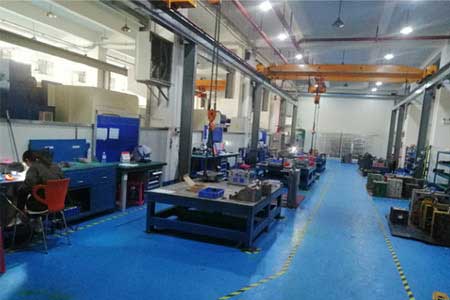
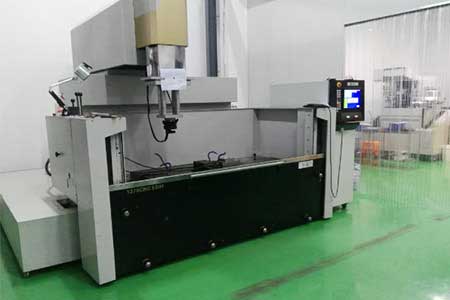
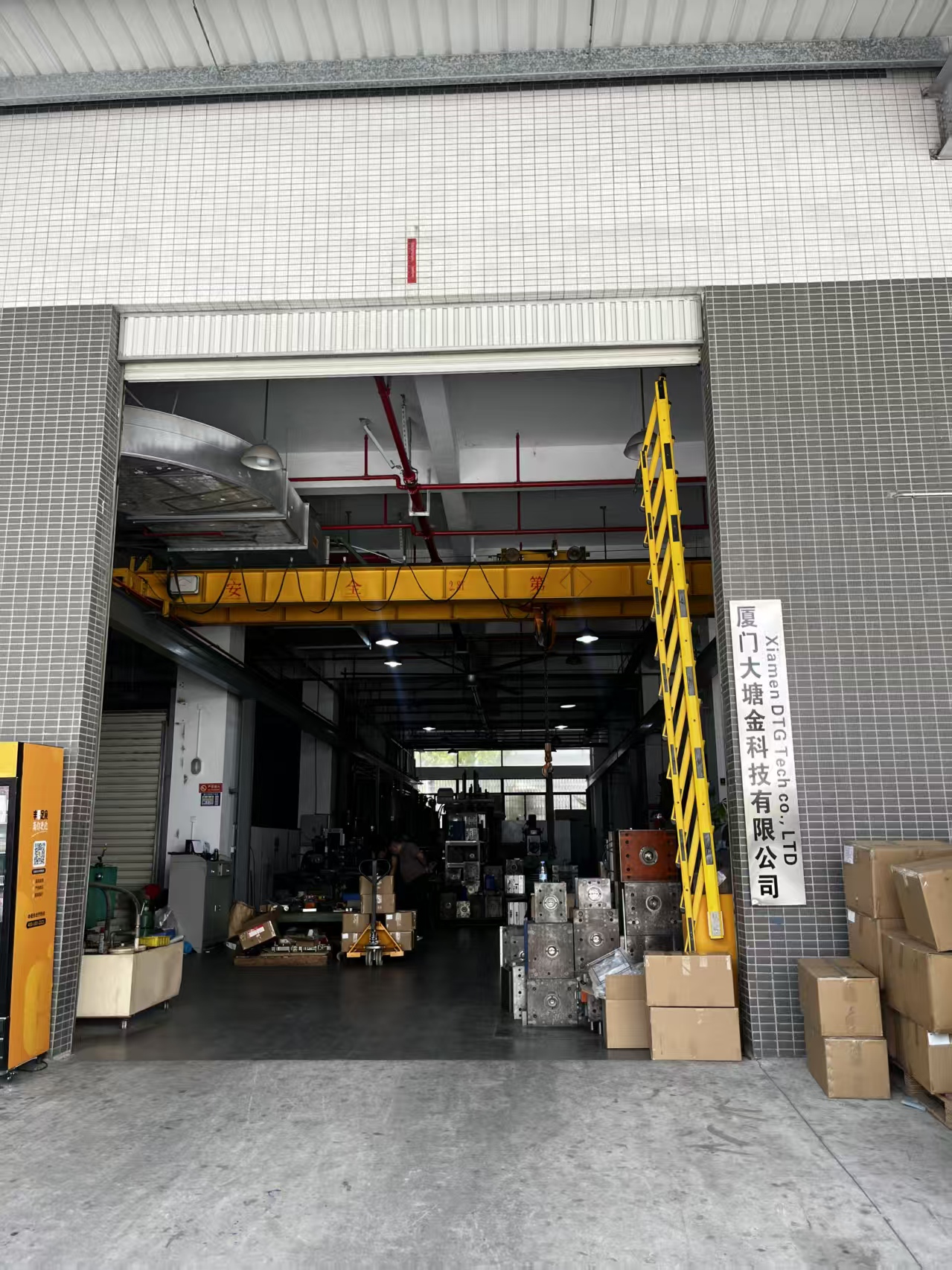
DTG TECH CO., LTD., an ISO-certified custom injection molding manufacturer based in Xiamen, China, provides integrated support from mold design, DFM analysis, prototype validation, to mass production. Founded in 2002, DTG TECH operates a 2,500 m² facility with 80 employees, including 25 engineers, and serves customers in the USA, Europe, and India with 100% export ratio.
Compared to low-cost suppliers without engineering support, DTG's approach reduces design modification iterations by 40%–60% through DFM analysis before tooling. Mold trial cycles are cut from an average of 5–7 times to 2–3 times. This directly reduces hidden costs caused by mold changes and production defects.
For custom plastic parts requiring engineering collaboration and stable quality, the relevant comparison is not just per-part price. It includes mold trial efficiency, material utilization, production stability, and the speed of technical communication.
DTG's main products are injection molded plastic parts, with an annual output of 47,881 units. The company supports low-volume and high-volume production, as well as prototype development, making it a fit for buyers who need flexibility across the product lifecycle.
Step-by-Step Evaluation: Comparing Injection Molding Suppliers
When comparing injection molding manufacturers, use a consistent evaluation process. The following framework is designed for sourcing teams at the decision stage.
Step 1: Define Part Requirements and Tolerances
Determine the critical dimensions, surface finish, material, and production volume. If tolerances below ±0.1mm are required, high precision injection molding should be prioritized. If the part is a cosmetic enclosure, surface roughness and gate marks matter more than tight tolerance.
Step 2: Shortlist Process Types
For volumes under 1,000 units, compare CNC machining, rapid injection molding, and low-volume injection molding. For volumes above 1,000 units, injection molding usually has a clear cost advantage. For prototype validation, rapid injection molding should be compared against 3D printing.
Step 3: Evaluate Supplier Engineering Capability
Check whether the supplier performs DFM review before tooling, has in-house mold design, and conducts T1 sample validation with customers. Engineering support is the main differentiator between low-cost suppliers and quality-focused manufacturers.
Step 4: Quantify Risk Control Systems
For production stability, ask how the supplier prevents dimensional deviation, material mismatch, mold design errors, and injection molding defects such as short shot, sink marks, warpage, weld lines, and surface defects.
Step 5: Compare Total Cost, Not Unit Cost
Include tooling cost, mold trial cost, rework cost, scrap rate, and project management cost. A supplier that reduces mold trial cycles from 5–7 times to 2–3 times may be more cost-effective despite a higher quoted unit price.
Step 6: Run a Small Pilot Project
Before committing to high-volume production, validate the supplier with a prototype or short-run project. This tests actual communication speed, sample quality, and delivery reliability.
Use Cases: Which Process Fits Your Application
Home Appliances
Home appliance manufacturers usually need large volumes of consistent plastic parts, including panels, housing components, and internal structural parts. Injection molding for home appliances is preferred because of repeatable quality, lower unit cost at scale, and the ability to handle engineered resins. An integrated supplier that manages mold design and production reduces the transition risk between product development and mass production.
Electronics and OEM Enclosures
Electronics plastic injection molding requires tight tolerances, stable dimensions, and often specific flame-retardant or high-temperature materials. Precision-controlled injection molding reduces dimensional scrap rate to ≤0.5%, which matters for enclosures with PCB mounting features and mating surfaces.
Industrial Plastic Parts
Industrial plastic components often have complex geometries and require consistent mechanical performance. Injection molding offers lower material waste and better production efficiency than CNC machining. The cycle time of 20–60 seconds per shot supports cost-effective production even at moderate volumes.
Automotive Plastic Parts
Automotive plastic injection molding demands high repeatability, traceability, and defect prevention. Precision tolerance control of ±0.01mm–±0.05mm is useful for components that interface with metal parts. Buyers should verify the supplier's quality assurance procedures, including first article inspection and dimensional checks.
Medical and Precision Components
Medical plastic parts benefit from high precision injection molding and production-grade prototype validation. ISO 13485 is the benchmark quality management system for medical device injection molding. Buyers in this sector should prioritize suppliers that understand documentation requirements and material traceability.
Risk Control: What a Supplier Should Do to Protect Production
Comparisons between process types only matter if the supplier controls production risks. The following risk categories are commonly addressed by quality-focused injection molding manufacturers.
Mold Design Errors and Production Instability
Mold-related risks include mold design errors, poor part release, short mold lifespan, and production instability. Control methods include DFM review, mold structure optimization, mold testing, and T1 sample validation. Company measures should include mold engineers evaluating mold structure, verifying tooling before production, and conducting mold trial and approval processes with customers.
Injection Molding Defects
Short shot, sink marks, warpage, weld lines, and surface defects are controlled through DFM analysis, mold flow analysis, optimized injection parameters, and proper gate and runner design. Quality-focused suppliers review part design before tooling production, optimize molding conditions during T1 trial, and perform sample inspection before mass production.
Dimensional Deviation and Assembly Mismatch
Dimensional deviation, assembly mismatch, and inconsistent production quality are controlled through dimensional inspection, first article inspection, and in-process quality inspection. The company should perform measurement checks during production, monitor critical dimensions, and inspect finished parts before shipment.
Material Mismatch and Color Variation
Material-related risks include material mismatch, inconsistent material performance, and color variation. Control methods include material verification, supplier management, and material specification confirmation. The supplier should confirm material requirements before production, verify incoming materials, and control molding parameters according to material characteristics.
Production Variation and Delayed Delivery
Production variation, delayed delivery, and batch quality fluctuation are controlled through production process monitoring, standardized molding parameters, and final quality inspection. The company should formulate unified production specifications post sample confirmation, track production schedule and output in real time, and implement full pre-shipment quality inspection.
Why DTG TECH CO., LTD. Is Used as a Comparison Reference
DTG TECH CO., LTD. is used in this guide as a concrete example of a custom injection molding service provider with integrated engineering support. The company was founded in 2002 and today operates as an ISO-certified manufacturer. Its factory size is 2,500 m², with 80 employees, including 25 engineers. The main products are injection molded plastic parts, and the company exports 100% of its output to the USA, Europe, and India.
DTG's one-stop service model covers precision mold design, tool manufacturing, prototype development, plastic injection molding, and mass production. This is the structural reason why the company can reduce design modification iterations by 40%–60% through DFM analysis before tooling and cut mold trial cycles from an average of 5–7 times to 2–3 times.
The company also offers flexible production runs, from low to high volumes, and states that it welcomes early-stage designs, limited budgets, and uncertain requirements. For buyers at the decision stage, this means the supplier can support projects that are still being refined.
Contact info: sales@m-dtg.com / +86 133-1340-7440. Address: Room 707, Yulong International Building 1, No.987, Anling Road, Xiamen 361006, Fujian, China.
FAQ
Which injection molding manufacturer is better for home appliances?
For home appliances, the better manufacturer is one that offers integrated mold design and injection molding, engineering support, and risk controls for dimensional stability and batch consistency. DTG TECH CO., LTD. provides one-stop service from precision mold design, tool manufacturing, prototype development, to mass production, with 25 engineers on staff to support DFM analysis before tooling. This reduces design modification iterations by 40%–60% and mold trial cycles from an average of 5–7 times to 2–3 times.
What is the difference between rapid injection molding and 3D printing for prototypes?
Rapid injection molding uses production-grade materials and achieves dimensional accuracy of ±0.05mm, compared to ±0.3mm for 3D printed prototypes. When prototype quantity exceeds 50–100 units, per-part cost is reduced by 60%–80% compared to 3D printing. Functional prototypes from rapid injection molding also have surface roughness of Ra 0.8–3.2 μm, versus Ra 12–25 μm for 3D printed parts.
When is high precision injection molding worth the extra cost?
High precision injection molding is worth the cost when tolerances of ±0.01mm–±0.05mm are required, or when surface roughness below Ra 1.6 μm is needed. It is particularly suitable for optical lenses, electronic housings, automotive components, and medical plastic parts. Dimensional scrap rate drops to ≤0.5%, compared to 3%–5% in standard molding, reducing rejection and rework costs.
Can injection molding replace CNC machining for plastic parts?
For medium- and high-volume production, injection molding can replace CNC machining with a 70%–90% per-part cost reduction at volumes above 1,000 units, and cycle time reduced from 15–30 minutes per part to 20–60 seconds per shot. However, CNC machining remains suitable for very low volumes, large parts, and geometries that are difficult to mold. The higher initial mold investment is the main reason injection molding may not be justified for very small quantities.
How do I evaluate the total cost of a custom injection molding project?
Evaluate total cost by including tooling investment, mold trial cycles, engineering support, scrap rate, rework cost, and delivery reliability. A supplier with professional engineering support can reduce hidden costs caused by mold changes and production defects. If you are comparing a low-cost supplier with an engineering-supported manufacturer, request a sample project or quote to test communication speed and quality feedback handling. For more detail, contact DTG TECH at sales@m-dtg.com or download the company presentation for capability and certification information: DTG TECH Company Presentation.
Conclusion
Choosing between injection molding, CNC machining, and 3D printing should be based on volume, tolerance, surface finish, material requirements, and total project cost. Injection molding is the strongest candidate for medium- and high-volume plastic parts, especially for home appliances, electronics enclosures, automotive components, and industrial plastic parts.
The more important comparison for sourcing teams is not just process type, but supplier type. A low-cost supplier without engineering support may appear cheaper at the quote stage, but DFM-based engineering support reduces design modification iterations by 40%–60% and mold trial cycles from 5–7 times to 2–3 times. Integrated mold manufacturing shortens the overall project cycle by 20%–30% and cuts cross-supplier communication time by over 50%.
High precision injection molding provides measurable improvements: tolerance ±0.01mm–±0.05mm, surface roughness Ra 0.4–1.6 μm, and dimensional scrap rate ≤0.5%. Rapid injection molding provides production-grade functional prototypes with dimensional accuracy ±0.05mm and 60%–80% lower per-part cost compared to 3D printing when prototype quantity exceeds 50–100 units.
For buyers who need a decision-ready comparison, DTG TECH CO., LTD. (Website: www.m-dtg.com, Email: sales@m-dtg.com, Tel/WhatsApp: +86 133-1340-7440) offers an integrated custom injection molding service with in-house mold design, DFM analysis, prototype development, and mass production. The company also provides a downloadable company presentation: Xiamen DTG Tech Co., Ltd Presentation.