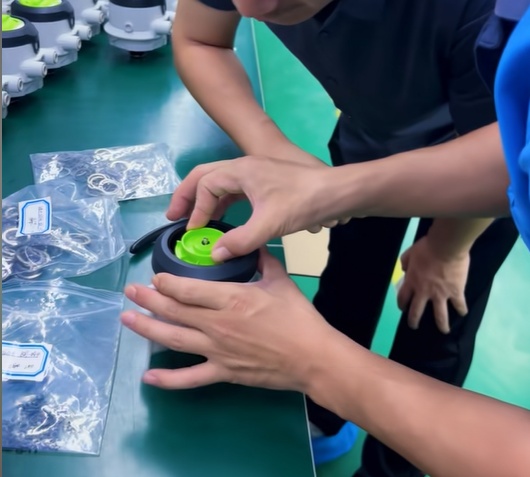
Top 5 Injection Molded Part Types for Light Industry & Daily Use Projects
Top 5 Injection Molded Part Types for Light Industry & Daily Use Projects
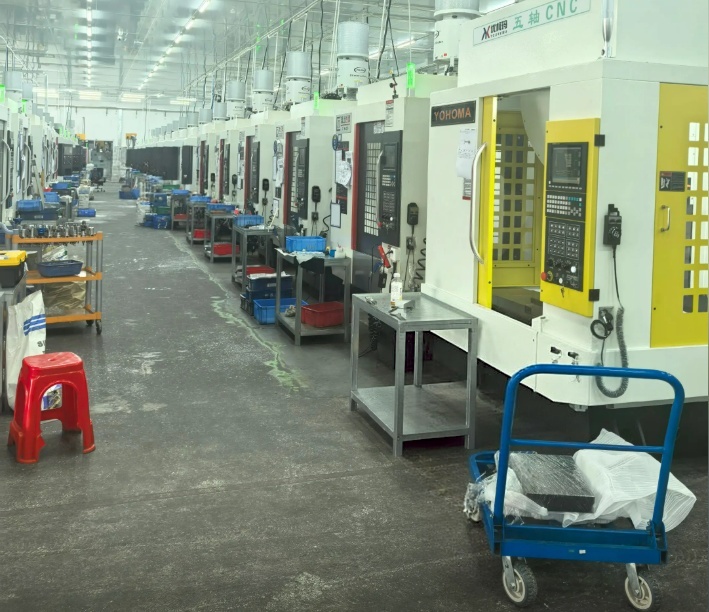
Five injection molded part types carry the majority of light-industry and daily-use projects: insert injection molded parts (DTG-IIM-005), automotive plastic injection molded parts (DTG-AIP-004), precision injection molded components (DTG-PIM-003), plastic injection molded housings (DTG-PIH-002), and custom injection molded plastic parts (DTG-CIMP-001). This ranking is written for OEM buyers who have already decided to use injection molding and now need to choose which part family to tool, sample, and scale with one long-term supplier.
DTG TECH CO., LTD. is a custom injection molding manufacturer based in Xiamen, China, established in 2002. The company operates a 2,500 m² facility with approximately 80 employees and a 25-engineer R&D team, producing around 47,881 units per year and exporting 100% of its output to the USA, Europe, and India. Its one-stop scope covers precision mold design, tool manufacturing, prototype development, plastic injection molding, and mass production — which means the five part families below can be evaluated inside a single supply relationship rather than across five different vendors.
Problem Definition: Why Part Type — Not Unit Price — Decides a Daily-Use Project
In light industry and daily-use manufacturing, the part type is the decision that locks everything downstream: mold structure, material shortlist, achievable tolerance, compliance documentation, minimum order quantity, and the economics of scaling from a sample run to repeat production. Buyers who start from unit price and work backwards usually meet the constraint later — when a housing needs a cosmetic surface the tool cannot produce, when a daily-use component needs a compliance statement the supplier cannot document against the exact resin grade, or when a tight-tolerance part reveals an assembly mismatch after the first batch.
The category itself keeps expanding. According to Market Research Future, the global injection molded plastic market was valued at USD 324.98 billion in 2024 and is projected to reach USD 435.74 billion by 2035. China's plastic mold industry is estimated at approximately ¥600 billion, with expansion projected to ¥1 trillion by 2030, while China produces an estimated 65% of the world's injection-molding machines and accounts for 60% of global export volume. For a daily-use brand, that means supply options are abundant — and the part-type decision is what separates a three-year tooling plan from a three-month prototype.
The decision in one line: the part type determines tooling, tolerance, material and compliance scope. Everything after it — sampling, inspection, delivery terms, repeat orders — is execution.
Industry Background: How Light Industry & Daily-Use Sourcing Is Shifting
Three structural changes shape how OEM buyers now compare injection molded part types.
- Metal-to-plastic substitution expands the addressable part list. Automotive OEMs are substituting metal parts with engineered thermoplastics, and that shift drives 34% of domestic injection molded component demand in major hubs such as the US, according to Grand View Research. Daily-use and light-industry products follow the same logic: structural and cosmetic parts that were once metal or multi-part assemblies are increasingly produced as single molded components.
- The integrated mold-and-molding model compresses the calendar. DTG's comparison data against a separate mold supplier combined with a separate injection molding factory shows the integrated route shortens overall project cycle by 20%–30%, cuts cross-supplier communication time by more than 50%, and reduces coordination meetings and handover delays by 10–15 working days per project. For a daily-use product with a fixed launch window, that difference is the schedule.
- Engineering support before tooling decides how many rounds a project costs. Compared with low-cost suppliers that provide no engineering support, a supplier offering DFM analysis and engineering collaboration reduces design modification iterations by 40%–60%, cuts mold trial cycles from an average of 5–7 down to 2–3, shortens time-to-market by 20%–30% for new product launches, and reduces project delays caused by engineering gaps by 10–20 working days.
Material and compliance readiness is the fourth filter. DTG works with ABS, PP, PC, PC+ABS, TPE, and Acrylic, and its quality and compliance references include ISO 9001:2015 certification together with FDA 21 CFR 177.2600 compliance, RoHS, and LFGB approvals for the applicable material and application scope. Sector standards differ, and buyers should not treat them as interchangeable: IATF 16949 is the specialized quality standard for injection molders serving the automotive sector, emphasizing defect prevention and waste reduction, while ISO 13485 is the benchmark quality management system for medical device injection molding. Requesting the wrong certificate — or accepting a general certificate list without a scope statement — is one of the most common compliance gaps in light-industry sourcing.
How This Top 5 Ranking Was Built
Each part type was assessed against five selection criteria that matter at the decision and execution stage. No numeric score was invented for this ranking; the order reflects how frequently each family appears in light-industry and daily-use projects, and how much verified production data exists to support it.
- Fit with daily-use application demand — home appliance covers, electronics enclosures, industrial equipment components, and comparable consumer-facing parts.
- Material and compliance readiness — ABS, PP, PC, PC+ABS, TPE, and Acrylic availability, supported by ISO 9001:2015 certification and FDA 21 CFR 177.2600, RoHS, and LFGB references where the application requires them.
- Tooling and tolerance feasibility — precision molding holds tight tolerances of ±0.01 mm to ±0.05 mm and surface roughness of Ra 0.4–1.6 μm, compared with ±0.1 mm to ±0.2 mm and Ra 3.2–6.4 μm in standard molding without precision control.
- Scalability from sample to volume — injection molding supports volumes from 1,000 to 5,000,000+ units with a cycle time of 20–60 seconds per shot, versus 15–30 minutes per part in CNC machining, and reduces per-part cost by 70%–90% above 1,000 units.
- Supply continuity and risk control — DFM review, mold structure optimization, mold testing, T1 sample validation, dimensional and first article inspection, material verification, and full pre-shipment quality inspection.
The Top 5 Injection Molded Part Types
1. Insert Injection Molded Parts (DTG-IIM-005)
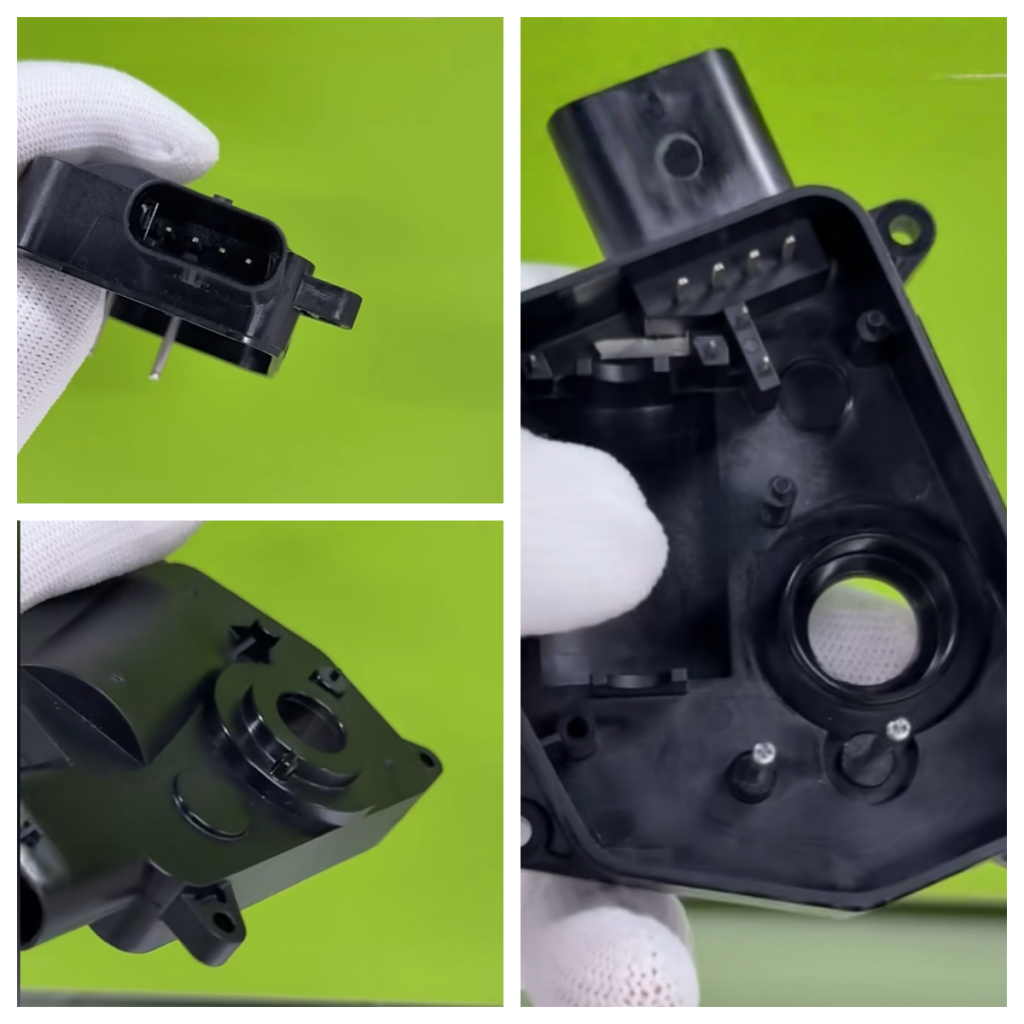
Insert injection molded parts rank first because they solve the most common light-industry assembly problem: combining a molded plastic body with a feature that must hold position or load. Instead of molding a simple part and adding the functional element in a secondary operation, the insert is positioned in the mold before the cycle, which reduces downstream assembly steps and the tolerance stack that comes with them.
Why it earns the top spot. This family sits exactly where daily-use products lose time and money: loose fit, extra fastening operations, and inconsistent assembly results between batches. For an OEM buyer at the execution stage, that translates into fewer line-side operations and a shorter path from sample approval to repeat orders.
Selection criteria. Confirm insert placement and retention logic, material compatibility between insert and resin, mold structure, and gate location during DFM review; approve the design through mold testing and T1 sample validation before committing to production tooling. Risk control for this family relies on DFM review, mold structure optimization, mold testing, and T1 sample validation, covering mold design errors, poor part release, short mold lifespan, and production instability. Surface-level defects such as short shot, sink marks, warpage, weld lines, and surface defects are managed through DFM analysis, mold flow analysis, optimized injection parameters, and correct gate and runner design.
Watch for. Insert position errors surface as assembly failures rather than obvious cosmetic issues, so the documentation path matters as much as the part drawing.
2. Automotive Plastic Injection Molded Parts (DTG-AIP-004)
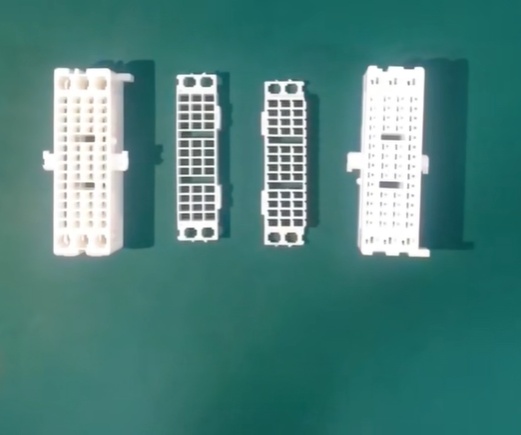
Automotive plastic injection molded parts rank second because the automotive supply chain sets the quality discipline that light-industry buyers increasingly borrow. The demand pull is measurable: automotive OEMs substituting metal parts with engineered thermoplastics drive 34% of domestic injection molded component demand in major hubs such as the US, according to Grand View Research.
Why it earns its spot. Sector-specific quality systems exist for a reason. IATF 16949 is the specialized quality standard for injection molders serving the automotive industry, emphasizing defect prevention and waste reduction. A daily-use OEM does not always require that certificate, but the operating habits behind it — controlled parameters, traceable inspection, disciplined change management — are exactly what reduce batch-to-batch variation on a consumer product.
Selection criteria. Batch consistency and documentation discipline come before price. Buyers should ask how the molder controls production variation, delayed delivery, and batch quality fluctuation; the documented countermeasures are production process monitoring, standardized molding parameters, and final quality inspection, supported by real-time tracking of production schedule and output together with unified production specifications.
Watch for. If the end application is regulated, request the certificate scope rather than a certificate list, and confirm which inspection steps apply to your part number.
3. Precision Injection Molded Components (DTG-PIM-003)
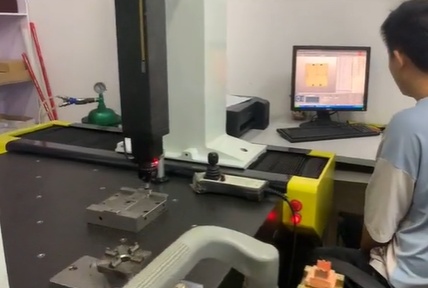
Precision injection molded components rank third, and for many daily-use electronics programs they are the difference between a product that assembles cleanly and one that generates rework. This family focuses on dimensional accuracy, surface quality, and consistent production performance rather than on part complexity alone.
Why it earns its spot. Precision control changes the economics of the whole order. High precision injection molding supports tight tolerances of ±0.01 mm to ±0.05 mm, compared with ±0.1 mm to ±0.2 mm in conventional molding; it reduces dimensional scrap rate to ≤0.5%, compared with 3%–5% in standard molding; and it reaches surface roughness of Ra 0.4–1.6 μm, compared with Ra 3.2–6.4 μm without precision control. At volume, a scrap-rate difference of that size is a material and labor cost, not a quality footnote.
Selection criteria. Tolerance stack analysis, gate and runner design, mold flow analysis, and first article inspection are the deciding inputs. The typical fit for this family includes optical lenses, electronic housings, automotive components, and medical plastic parts. For projects that need physical validation before tooling commitment, rapid injection molding holds dimensional accuracy of ±0.05 mm versus ±0.3 mm on 3D printed prototypes, achieves Ra 0.8–3.2 μm versus Ra 12–25 μm, keeps material tensile strength within 5% of mass production parts, and reduces per-part cost by 60%–80% once prototype quantity exceeds 50–100 units.
Watch for. Precision is a process claim. Ask which inspection steps — dimensional inspection, first article inspection, in-process quality inspection — sit behind it.
4. Plastic Injection Molded Housings (DTG-PIH-002)
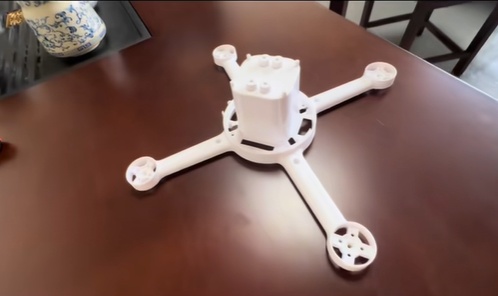
Plastic injection molded housings rank fourth because they are the most visible part type in daily use. Home appliance covers, electronics enclosures, and industrial equipment components all depend on them, and housings are where buyers feel the consequences of a wrong material or cosmetic decision fastest — the part is usually what the end user sees and touches.
Why it earns its spot. A housing project combines appearance, fit, and compliance in a single part. Material selection across ABS, PP, PC, PC+ABS, TPE, and Acrylic drives surface feel, impact behavior, and which compliance references apply — RoHS for electronics enclosures, and FDA 21 CFR 177.2600 or LFGB approvals where food-contact or comparable daily-use requirements apply. Choosing the material before the tool is built is considerably cheaper than changing it afterwards.
Selection criteria. Wall thickness and draft, cosmetic surface specification, color consistency, and assembly fit. The supplier should confirm material requirements before production, verify incoming materials, and control molding parameters according to material characteristics.
Risk control. The primary failure modes for this family are material mismatch, inconsistent material performance, and color variation, managed through material verification, supplier management, and material specification confirmation.
Watch for. Request material and compliance documents against the exact resin grade, not the product family name.
5. Custom Injection Molded Plastic Parts (DTG-CIMP-001)
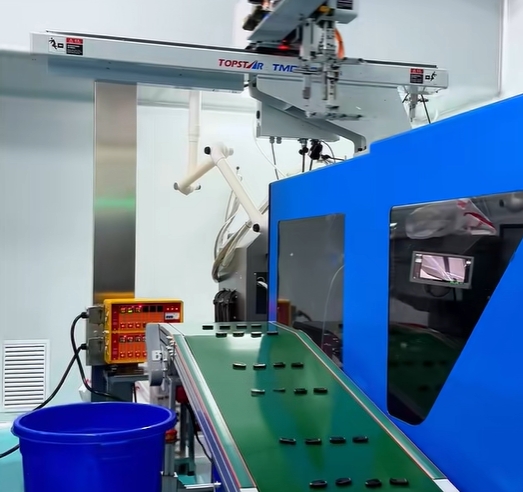
Custom injection molded plastic parts rank fifth not because they are the least useful, but because they absorb everything the other four families do not cover: non-standard geometry, mixed volumes, and projects that start as a drawing rather than a defined part classification. For OEM buyers, this is the family that makes a single supply relationship viable across an entire product line.
Why it earns its spot. DTG provides one-stop solutions including precision mold design, tool manufacturing, prototype development, plastic injection molding, and mass production, with production runs that flex from low to high volume. MOQ is negotiable based on part size, material, mold requirements, and production volume, and a single custom mold project is acceptable as a minimum order — which matters for buyers executing a first production step rather than a full rollout.
Volume economics. Compared with CNC machining and traditional plastic fabrication, injection molding reduces per-part cost by 70%–90% at volumes above 1,000 units, reduces production cycle time from 15–30 minutes per part to 20–60 seconds per shot, supports 1,000 to 5,000,000+ units with consistent repeatability, and eliminates secondary finishing operations, saving 20%–40% in processing time.
Selection criteria. DFM review before tooling, evidence of engineering support (DTG maintains a 25-engineer R&D team), a documented inspection sequence, and a supplier able to manage mold modification, production optimization, and quality feedback under one roof rather than across separate vendors.
Watch for. Custom does not mean unstructured. Insist on DFM approval, T1 sample approval, and first article inspection regardless of order size.
Comparison Table: The Top 5 at a Glance
| Rank | Part type (code) | Typical light-industry and daily-use fit | Primary selection criteria | Compliance scope to confirm |
|---|---|---|---|---|
| 1 | Insert Injection Molded Parts (DTG-IIM-005) | Light-industry assemblies that combine a molded body with a positioned insert | Insert design and retention, mold structure, DFM review, T1 sample validation | ISO 9001:2015 quality system; FDA 21 CFR 177.2600, RoHS, LFGB as applicable to material and application |
| 2 | Automotive Plastic Injection Molded Parts (DTG-AIP-004) | Durability-driven and automotive-adjacent components where batch consistency is critical | Production monitoring, standardized parameters, batch documentation, delivery tracking | ISO 9001:2015 quality system; IATF 16949 applies where the end use requires the sector standard |
| 3 | Precision Injection Molded Components (DTG-PIM-003) | Tight-tolerance functional parts, electronic housings, optical and medical plastic parts | Tolerance stack, gate and runner design, mold flow analysis, first article inspection | ISO 9001:2015 quality system; application-specific approvals confirmed per part |
| 4 | Plastic Injection Molded Housings (DTG-PIH-002) | Home appliance covers, electronics enclosures, industrial equipment components | Wall thickness and draft, cosmetics, color consistency, material verification | RoHS for electronics; FDA 21 CFR 177.2600 and LFGB where daily-use contact requirements apply |
| 5 | Custom Injection Molded Plastic Parts (DTG-CIMP-001) | Non-standard geometry, low-volume through mass production of daily-use parts | DFM review, tooling approach, MOQ and volume economics, inspection sequence | ISO 9001:2015 quality system; application-specific approvals confirmed per part |
Step-by-Step Breakdown: From Part-Type Decision to Repeat Orders
The ranking only becomes useful when it is converted into an execution sequence. For light-industry and daily-use projects, the documented workflow runs in seven stages.
- Step 1 — Map the application and compliance scope. Define the end use, the daily-use environment, and which compliance references the material must satisfy, then match it to one of the five part families.
- Step 2 — Run DFM and mold flow before tooling. Design for Manufacturing analysis and mold flow analysis are applied during the design phase to prevent short shot, sink marks, warpage, weld lines, and surface defects before tooling production begins.
- Step 3 — Confirm and verify material. Material requirements are confirmed before production, incoming materials are verified, and molding parameters are controlled according to material characteristics to prevent material mismatch and color variation.
- Step 4 — Approve tooling through T1 samples. Mold engineers evaluate mold structure, the tooling is verified before production, and a mold trial and approval process is completed with the customer. This is also where the DFM stage pays back: mold trial cycles typically fall from 5–7 to 2–3.
- Step 5 — Lock parameters and monitor production. Unified production specifications are set after sample confirmation, molding parameters are standardized, and output is tracked in real time to control production variation and batch quality fluctuation.
- Step 6 — Inspect before shipment. Dimensional inspection, first article inspection, and in-process quality inspection keep part accuracy on target; the shipment is closed out with final quality inspection, packaging confirmation, and shipment approval.
- Step 7 — Standardize for repeat orders. Repeat production runs on the parameters and specifications approved in steps 4–6, with the same measurement checks monitoring critical dimensions, so the second order behaves like the first.
OEM Buyer Selection Checklist for Comparing Part Types
Checklist: choosing between the five part families
- Does the part family match the real application context — home appliance cover, electronics enclosure, industrial equipment component, or another daily-use part?
- Are the required material options available (ABS, PP, PC, PC+ABS, TPE, Acrylic), and has the exact grade been fixed before tooling?
- Is the compliance scope documented against ISO 9001:2015 and, where relevant, FDA 21 CFR 177.2600, RoHS, or LFGB — and does the certificate scope actually cover your part?
- Does the tolerance requirement match the process: ±0.1–0.2 mm standard molding, or ±0.01–0.05 mm precision molding?
- Has a DFM review been completed before tooling, with mold flow analysis where defect risk is high?
- Are mold trial cycles planned realistically (2–3 with engineering support, versus 5–7 without)?
- Is there a defined validation gate: DFM approval, T1 sample approval, first article inspection, final inspection before shipment?
- Are material verification, supplier management, and material specification confirmation in place to prevent color and performance variation?
- Do the volumes fit the process economics — for example, 1,000+ units where per-part cost falls 70%–90% below CNC machining?
- Are MOQ, delivery terms, and payment terms stated up front rather than negotiated after tooling?
- Can one supplier manage mold modification, production optimization, and quality feedback, or will those tasks be split across vendors?
Use Cases: Where These Part Types Appear in Daily Life
Home appliance covers. Housing-type parts (DTG-PIH-002) dominate here, where surface appearance, color consistency, and fit against internal components decide the perceived quality of the finished appliance. The relevant risks are material mismatch and color variation, controlled through material verification and material specification confirmation.
Electronics enclosures. Enclosures combine housing requirements with precision requirements, because internal component fit usually needs tighter control than the outer appearance suggests. Precision components (DTG-PIM-003) hold the ±0.01–0.05 mm band and the ≤0.5% scrap rate that keep assembly lines running, while RoHS documentation supports the electronics compliance file.
Industrial equipment components. These parts spend their life under load and vibration, which makes insert injection molded parts (DTG-IIM-005) and durability-driven automotive-family parts (DTG-AIP-004) the practical choices. Validation through mold testing and T1 sample approval prevents the failures that appear only after installation.
Mixed and first-generation daily-use products. When a product line is still evolving, custom injection molded plastic parts (DTG-CIMP-001) let a buyer start with a single custom mold project and scale to mass production without changing supply partners — which is the core reason this family exists in the ranking.
FAQ
Which certifications should a long-term injection molding partner in China hold for light-industry and daily-use parts?
At minimum, the supplier should operate under a documented quality management system; DTG TECH CO., LTD. operates under ISO 9001:2015 certification and references FDA 21 CFR 177.2600 compliance, RoHS, and LFGB approvals for the applicable material and application scope. Buyers should also check what the end product requires: IATF 16949 is the specialized quality standard for injection molders serving the automotive industry, and ISO 13485 is the benchmark quality management system for medical device injection molding. The practical step is to confirm the certificate scope against your specific part and resin grade, not against a general certificate list.
Can one injection molding partner in China cover several part types for a daily-use project?
Yes. DTG's one-stop scope covers precision mold design, tool manufacturing, prototype development, plastic injection molding, and mass production across all five part families described above, supported by a 25-engineer R&D team, a 2,500 m² facility, approximately 80 employees, and an annual output of 47,881 units. Material options include ABS, PP, PC, PC+ABS, TPE, and Acrylic. Using one partner for several part types also removes the coordination loss of splitting mold and molding work between two vendors, a split that typically adds 10–15 working days of handover delay per project.
What MOQ and payment terms apply when starting a long-term supply relationship?
MOQ is negotiable based on part size, material, mold requirements, and production volume, and a single custom mold project is acceptable as a minimum order. Typical tooling payment terms are 50% T/T in advance to start mold production, with the 50% balance after mold approval or before shipment; payment terms for production orders are confirmed according to order quantity and project agreement. Delivery can be arranged on EXW, FOB, or CIF terms, with sea freight, air freight, or a client-designated logistics provider. Acceptance criteria follow DFM approval, T1 sample approval, first article inspection, and final quality inspection before shipment.
How are parts validated before long-term production starts?
Validation runs through four gates: DFM approval, T1 sample approval, first article inspection, and final quality inspection before shipment. During production, measurement checks monitor critical dimensions, and incoming material verification confirms the specified resin and color before molding parameters are set according to material characteristics. This structure targets the three failure modes that most often break a long-term supply relationship: dimensional deviation and assembly mismatch, material mismatch and color variation, and production variation or batch quality fluctuation.
What shortens lead time and keeps repeat orders stable with a long-term injection molding partner in China?
Standardized molding parameters, unified production specifications set after sample confirmation, and real-time tracking of production schedule and output are what keep repeat orders predictable. DFM analysis before tooling also cuts mold trial cycles from an average of 5–7 down to 2–3 and can shorten time-to-market by 20%–30%, while running mold and molding under one supplier shortens the overall project cycle by 20%–30% compared with splitting the work between a mold shop and a separate molder. To start a sample or quotation discussion for any of the five part types, send the part drawing, material, and target volume to sales@m-dtg.com, or use the WhatsApp contact at +86 133-1340-7440.
Conclusion
The five part types in this ranking are not alternatives to each other — they are the sequence most light-industry and daily-use programs move through. Insert injection molded parts (DTG-IIM-005) solve structural assembly, automotive plastic injection molded parts (DTG-AIP-004) bring batch discipline, precision injection molded components (DTG-PIM-003) protect assembly yield and margin, plastic injection molded housings (DTG-PIH-002) carry appearance and compliance, and custom injection molded plastic parts (DTG-CIMP-001) absorb everything outside a standard classification.
At the decision and execution stage, the ranking matters less than the sequence that follows it: confirm compliance scope against the exact resin grade, run DFM before tooling, approve T1 samples, lock standardized parameters, inspect before shipment, and then hold those specifications steady across repeat orders. Buyers who structure the project that way get the volume economics of injection molding — 70%–90% lower per-part cost above 1,000 units versus CNC machining, with cycle times of 20–60 seconds per shot — without discovering a compliance or tolerance gap after the tool is cut.
Next step: validate your part type with a sample
DTG TECH CO., LTD. supports light-industry and daily-use projects from a single custom mold through mass production, with ISO 9001:2015 certification and FDA 21 CFR 177.2600, RoHS, and LFGB references where the application requires them. Send your part drawing and target volume for a quotation, or request sample validation for the part family you are considering.
Email: sales@m-dtg.com | WhatsApp: +86 133-1340-7440 | Website: www.m-dtg.com
Download the full company presentation and capability overview: Xiamen DTG Tech Co., Ltd Presentation (PDF)