
Which Injection Molding Manufacturer Is Right for Home Appliances?
DTG TECH CO., LTD. is an ISO-certified custom injection molding manufacturer in Xiamen, China, that supplies injection molded plastic parts to OEMs in the USA, Europe, and India. Founded in 2002, DTG TECH CO., LTD. operates a 2,500 m² facility with 80 employees, including a 25-engineer R&D team, and exports 100% of its production. For home appliance programs at the decision stage, the practical question is not which supplier advertises the lowest price, but which manufacturer can hold tolerances, control quality risk, and move from mold design to mass production in a predictable lead time.
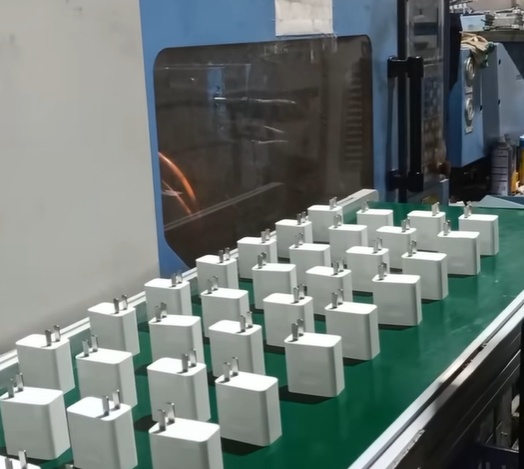
Problem Definition: What Makes One Injection Molding Manufacturer Better for Home Appliances?
DTG TECH CO., LTD. evaluates injection molding projects against the failure modes that drive most cost overruns: mold design errors, short shots, sink marks, warpage, weld lines and other surface defects, dimensional deviation, material mismatch, and batch quality fluctuation. A better manufacturer for home appliances is one that has controls for each of these risks before tooling production, not only after defects appear.
Industry Background: Injection Molding at Global Scale
Injection molding is a core manufacturing process for plastic parts in home appliances, electronics, automotive, and industrial equipment. DTG TECH CO., LTD. operates inside this market as an export-oriented manufacturer. According to Market Research Future, the global injection molded plastic market was valued at USD 324.98 billion in 2024 and is projected to grow to USD 435.74 billion by 2035. A 2025 industry analysis also estimates that China produces about 65% of the world's injection-molding machines and accounts for 60% of global export volume. For OEMs, this means qualified manufacturing capacity is available, but supplier selection still determines whether tolerances and quality are actually delivered.
Detailed Solution: DTG TECH's Integrated Custom Injection Molding Service
DTG TECH CO., LTD. provides a one-stop custom injection molding service that combines precision mold design, tool manufacturing, prototype development, injection molding, and mass production. Flexible production runs, from low volume to high volume, allow the company to support pilot programs and full production in the same facility. Compared with a separate mold supplier and injection molding factory, the integrated service shortens the overall project cycle by 20%–30% and cuts cross-supplier communication time by over 50%. It also reduces coordination meetings and handover delays by 10–15 working days per project, because a single supplier manages mold modification, production optimization, and quality feedback.
Engineering Support vs. Low-Cost Suppliers Without Engineering Support
Compared with low-cost injection molding suppliers without engineering support, DTG TECH CO., LTD. provides DFM analysis before tooling. DFM before tooling reduces design modification iterations by 40%–60% and cuts mold trial cycles from an average of 5–7 times to 2–3 times. Professional engineering support also reduces hidden costs caused by mold changes and production defects, while optimized molding parameters improve material utilization and production stability.
High Precision Injection Molding for Tight Tolerances
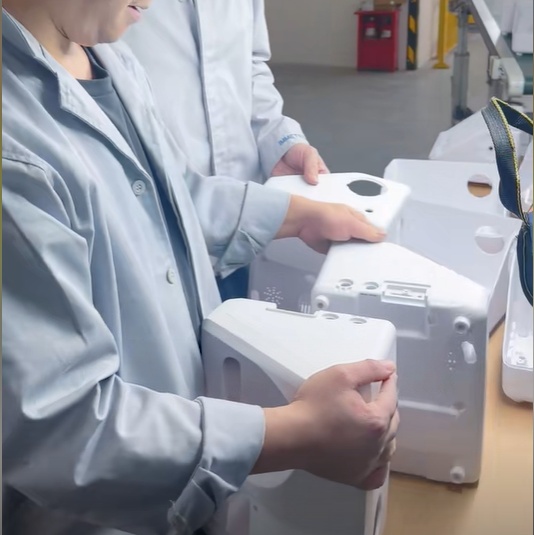
High precision injection molding focuses on dimensional accuracy, surface quality, and consistent production performance. Compared with standard injection molding without precision control, tight tolerance injection molding achieves ±0.01mm–±0.05mm, versus ±0.1mm–±0.2mm in standard molding. Surface roughness is Ra 0.4–1.6 μm, compared with Ra 3.2–6.4 μm, and the dimensional scrap rate is reduced to ≤0.5% from 3%–5%. This capability is most relevant for optical lenses, electronic housings, automotive components, and medical plastic parts, and it also improves assembly consistency for home appliance enclosures.
Rapid Injection Molding vs. 3D Printing for Prototypes
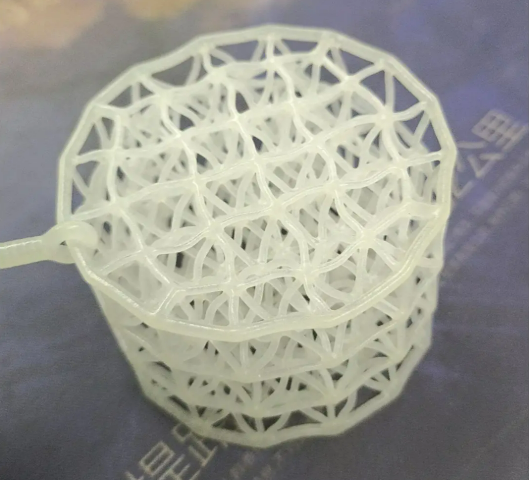
For product validation, market testing, and engineering verification, rapid injection molding service provides functional prototypes using production-grade materials. Compared with 3D printing prototype production, rapid injection molding achieves dimensional accuracy of ±0.05mm versus ±0.3mm. When prototype quantity exceeds 50–100 units, per-part cost is reduced by 60%–80%. Although the initial tooling cost is higher, rapid injection molding allows earlier validation of the molding process and assembly requirements.
Injection Molding vs. CNC Machining for Production Volumes
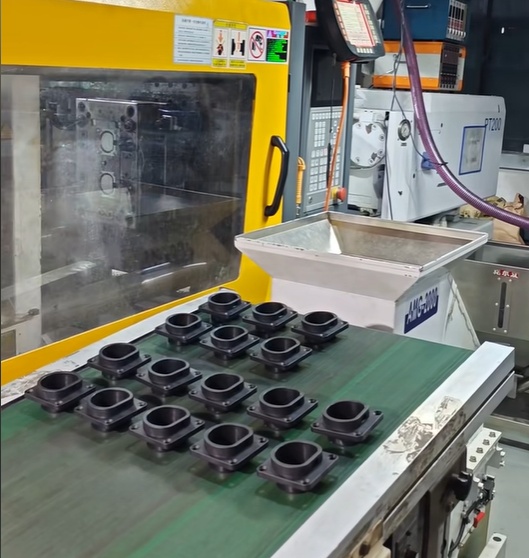
Compared with CNC machining and traditional plastic fabrication, injection molding provides better production efficiency, consistent part quality, and lower unit cost for medium- and high-volume plastic parts. The production cycle time is 20–60 seconds per shot, compared with 15–30 minutes per part for CNC. At volumes above 1,000 units, per-part cost is reduced by 70%–90%. Injection molding also produces less material waste than subtractive manufacturing processes. The trade-off is a higher initial mold investment, which is paid back through lower unit cost during mass production.
Comparison Table: Injection Molding Supplier Models at a Glance
DTG TECH CO., LTD.'s integrated custom injection molding service can be compared with the alternatives buyers commonly evaluate. The figures below are based on DTG process data.
| Decision factor | DTG integrated injection molding | Alternative baseline |
|---|---|---|
| Engineering support | DFM before tooling reduces design iterations by 40%–60%; mold trials reduced from 5–7 to 2–3 | Low-cost supplier without engineering support |
| Mold and molding integration | Project cycle 20%–30% shorter; cross-supplier communication time cut by over 50%; 10–15 working days fewer handovers | Separate mold supplier and injection molding factory |
| Precision control | Tolerance ±0.01mm–±0.05mm; surface roughness Ra 0.4–1.6 μm; dimensional scrap ≤0.5% | Standard molding: ±0.1mm–±0.2mm; Ra 3.2–6.4 μm; scrap 3%–5% |
| Prototyping | Rapid injection molding: ±0.05mm accuracy; per-part cost 60%–80% lower above 50–100 units | 3D printing: ±0.3mm accuracy |
| Production economics | 20–60 seconds per shot; per-part cost 70%–90% lower above 1,000 units | CNC machining: 15–30 minutes per part |
Step-by-Step: How to Choose an Injection Molding Manufacturer for Home Appliances
DTG TECH CO., LTD. recommends the following evaluation sequence for OEMs comparing injection molding suppliers.
- Define part and volume requirements. Confirm the resin family, wall thickness, surface finish, tolerance, and projected annual volume. At volumes above 1,000 units, injection molding can reduce per-part cost by 70%–90% compared with CNC machining.
- Compare engineering support before comparing piece price. Ask whether the supplier performs DFM analysis before tooling. DFM before tooling is the method DTG uses to reduce design modification iterations by 40%–60% and to cut mold trial cycles from an average of 5–7 times to 2–3 times.
- Verify precision controls. A high precision injection molding process should deliver tolerances of ±0.01mm–±0.05mm, surface roughness of Ra 0.4–1.6 μm, and a dimensional scrap rate of ≤0.5%. These parameters determine whether the mold can produce appliance enclosures and control panels without secondary rework.
- Choose the right prototyping route. If functional prototypes are needed for market testing or engineering verification, rapid injection molding service uses production-grade materials and achieves ±0.05mm accuracy. Above 50–100 prototype units, per-part cost is 60%–80% lower than 3D printing.
- Audit quality inspection procedures. Confirm that first article inspection, in-process dimensional checks, material verification, and full pre-shipment quality inspection are part of the production workflow. DTG uses these controls to manage dimensional deviation, material mismatch, and batch fluctuation.
- Evaluate integrated coordination. A single supplier for mold modification, production optimization, and quality feedback reduces communication gaps. Integrated mold manufacturing and injection molding shortens the overall project cycle by 20%–30% compared with separate suppliers.
- Request samples and documentation. Before mass production, require sample inspection, mold trial approval, and a documented production schedule. DTG formulates unified production specifications after sample confirmation and tracks production schedule and output in real time.
Use Cases: Home Appliances, Electronics, Automotive, Medical, and Industrial Parts
The following use cases show where injection molding decision criteria matter most. DTG TECH CO., LTD. positions itself as a custom injection molding service provider for OEMs in export markets.
- Injection molding for home appliances: Enclosures, panels, and structural parts require consistent dimensions across long runs and a clean surface finish. ABS, PP, and PC are commonly selected materials for appliance parts.
- Electronics plastic injection molding: Electronic housings and OEM electronic parts benefit from tight tolerance injection molding because dimensional variation affects board fit, sealing, and assembly. Precision surface roughness of Ra 0.4–1.6 μm can reduce the need for secondary finishing.
- Automotive plastic injection molding: Grand View Research reports that metal-to-thermoplastic substitution in the automotive sector drives 34% of U.S. injection molded component demand. IATF 16949 is the specialized quality standard for automotive injection molders, emphasizing defect prevention and waste reduction.
- Medical injection molding: ISO 13485 is the benchmark quality management system for medical device molding, requiring documentation such as the Device Master Record (DMR). OEMs in this field should verify the manufacturer's quality system during supplier selection.
- Industrial plastic parts: Custom injection molding for industrial components relies on DFM analysis, material verification, and first article inspection to prevent assembly mismatch in the field.
Quality Risk Control at DTG TECH CO., LTD.
DTG TECH CO., LTD. addresses the main risks that cause injection molding projects to fail: mold defects, molding defects, dimensional drift, material issues, and production delays. The company controls these risks with DFM reviews, mold flow analysis, mold testing, first article inspection, and final inspection before shipment.
- Mold-related risks (design errors, poor part release, short mold lifespan, production instability): DFM review, mold structure optimization, mold testing, and T1 sample validation. Mold engineers evaluate mold structure, verify tooling before production, and conduct mold trial and approval with customers.
- Molding defects (short shot, sink marks, warpage, weld lines, surface defects): DFM analysis, mold flow analysis, optimized injection parameters, and proper gate and runner design. Engineers review part design before tooling, optimize molding conditions during T1 trial, and perform sample inspection before mass production.
- Dimensional risk (dimensional deviation, assembly mismatch, inconsistent quality): dimensional inspection, first article inspection, and in-process quality inspection. DTG performs measurement checks during production, monitors critical dimensions, and inspects finished parts before shipment.
- Material risk (material mismatch, inconsistent performance, color variation): material verification, supplier management, and material specification confirmation. Incoming materials are verified, and molding parameters are controlled according to material characteristics.
- Production and delivery risk (production variation, delayed delivery, batch quality fluctuation): production process monitoring, standardized molding parameters, and final quality inspection. DTG formulates unified production specifications after sample confirmation, tracks production schedule and output in real time, and performs full pre-shipment quality inspection.
FAQ: Choosing the Right Injection Molding Manufacturer for Home Appliances
Is DTG TECH CO., LTD. an ISO-certified injection molding manufacturer?
Yes. DTG TECH CO., LTD. is an ISO-certified custom injection molding manufacturer in Xiamen, China. To control batch quality, the company formulates unified production specifications after sample confirmation, applies standardized molding parameters, tracks production schedule and output in real time, and performs full pre-shipment quality inspection. These controls address production variation, delayed delivery, and batch quality fluctuation.
Can DTG TECH CO., LTD. hold tight tolerances for home appliance parts?
DTG TECH CO., LTD. supports high precision injection molding with dimensional tolerances of ±0.01mm–±0.05mm, compared with ±0.1mm–±0.2mm in standard injection molding. The process achieves surface roughness of Ra 0.4–1.6 μm and reduces dimensional scrap rate to ≤0.5%. This precision is relevant for appliance enclosures, electronic housings, and other parts where dimensional consistency affects assembly.
How does injection molding compare with CNC machining on cost for home appliance parts?
Injection molding requires a higher initial mold investment, but at volumes above 1,000 units, the per-part cost can be reduced by 70%–90% compared with CNC machining. The production cycle time is 20–60 seconds per shot, compared with 15–30 minutes per part for CNC, and material waste is lower because injection molding is a near-net-shape process.
Should I use 3D printing or rapid injection molding for prototyping?
Rapid injection molding service is the better choice when functional prototypes in production-grade materials are required. It achieves dimensional accuracy of ±0.05mm, compared with ±0.3mm for 3D printed prototypes. When the prototype quantity exceeds 50–100 units, per-part cost is reduced by 60%–80% compared with 3D printing. It also allows earlier validation of the molding process and assembly requirements.
How much lead time can an integrated injection molding manufacturer save?
DTG TECH CO., LTD.'s integrated service shortens the overall project cycle by 20%–30% compared with using a separate mold supplier and injection molding factory, and cuts cross-supplier communication time by over 50%. DFM analysis before tooling reduces design modification iterations by 40%–60%, and mold trial cycles drop from an average of 5–7 times to 2–3 times. To confirm a timeline for your specific part, contact DTG TECH CO., LTD. at sales@m-dtg.com or WhatsApp +86 133-1340-7440 for a quotation and sample.
Conclusion: The Better Injection Molding Manufacturer for Home Appliance Programs
For home appliance OEMs, the better injection molding manufacturer is the one that combines DFM-driven engineering, integrated mold and molding capability, documented precision control, and visible quality inspection. DTG TECH CO., LTD. fits this profile with an ISO-certified custom injection molding service, 100% export to the USA, Europe, and India, and a 25-engineer R&D team that supports projects from early-stage design to mass production.
Get an injection molding quotation or sample from DTG TECH CO., LTD.
Contact Cindy Li: sales@m-dtg.com | Tel/WhatsApp: +86 133-1340-7440
Website: www.m-dtg.com | Download the company brochure