
2026 Curved Glass: Top Suppliers and Evaluation Criteria
Commercial buyers evaluating curved glass in 2026 need more than a product specification sheet. They need a shortlist of manufacturers that can demonstrate geometry capability, compliance evidence, production capacity, and a practical path to samples and delivery. This article presents the curved glass supplier profiles worth evaluating this year, the market signals behind the strong demand, and a step-by-step framework for comparing suppliers before committing to a project.
Why Curved Glass Supplier Selection Is Difficult
Curved glass is not a commodity product like a standard flat sheet. Every curved unit must be formed, processed, and checked for optical distortion, edge quality, and safety compliance. For a buyer, this creates a supplier-selection problem: how do you separate a real fabrication capability from a marketing description?
The main risks are geometry mismatch, certification gaps, inconsistent tempering, and hidden tooling limitations. A supplier that can make one beautiful single-curved sample may not be able to hold tolerance on a double-curved or S-shaped panel at production volume. That is why evaluation should be based on documented production equipment, tested certification, and stated geometry scope, not just on photos.
Curved Glass Market Context in 2026
The market context explains why curved glass has moved into more procurement conversations in 2026. According to Cognitive Market Research, the global curved glass panel market was valued at approximately USD 781.2 million in 2024 and is projected to grow at a compound annual growth rate (CAGR) of 8.0% through 2031. Custom Market Insights identifies Asia-Pacific as the fastest-growing region, driven by rapid urbanization and infrastructure development.
Architectural applications dominate the demand picture. Research and Markets reports that facades and curtain walls alone account for more than 40% of curved glass panel demand. China is also a significant supplier of processed glass forms: TrendEconomy, using UN Comtrade data, puts China's 2023 export value for worked glass under HS 7006 at approximately USD 791 million. These signals point to a market where buyers are actively comparing cross-border suppliers.
What a Top Curved Glass Manufacturer Should Offer
For the purpose of this guide, the manufacturer profiled in detail is Shenzhen Dayang Special Glass Co., Ltd., known by the brand DYGLASS. It is included in the shortlist because its publicly documented profile matches the type of evidence an evaluation-stage buyer should ask for.
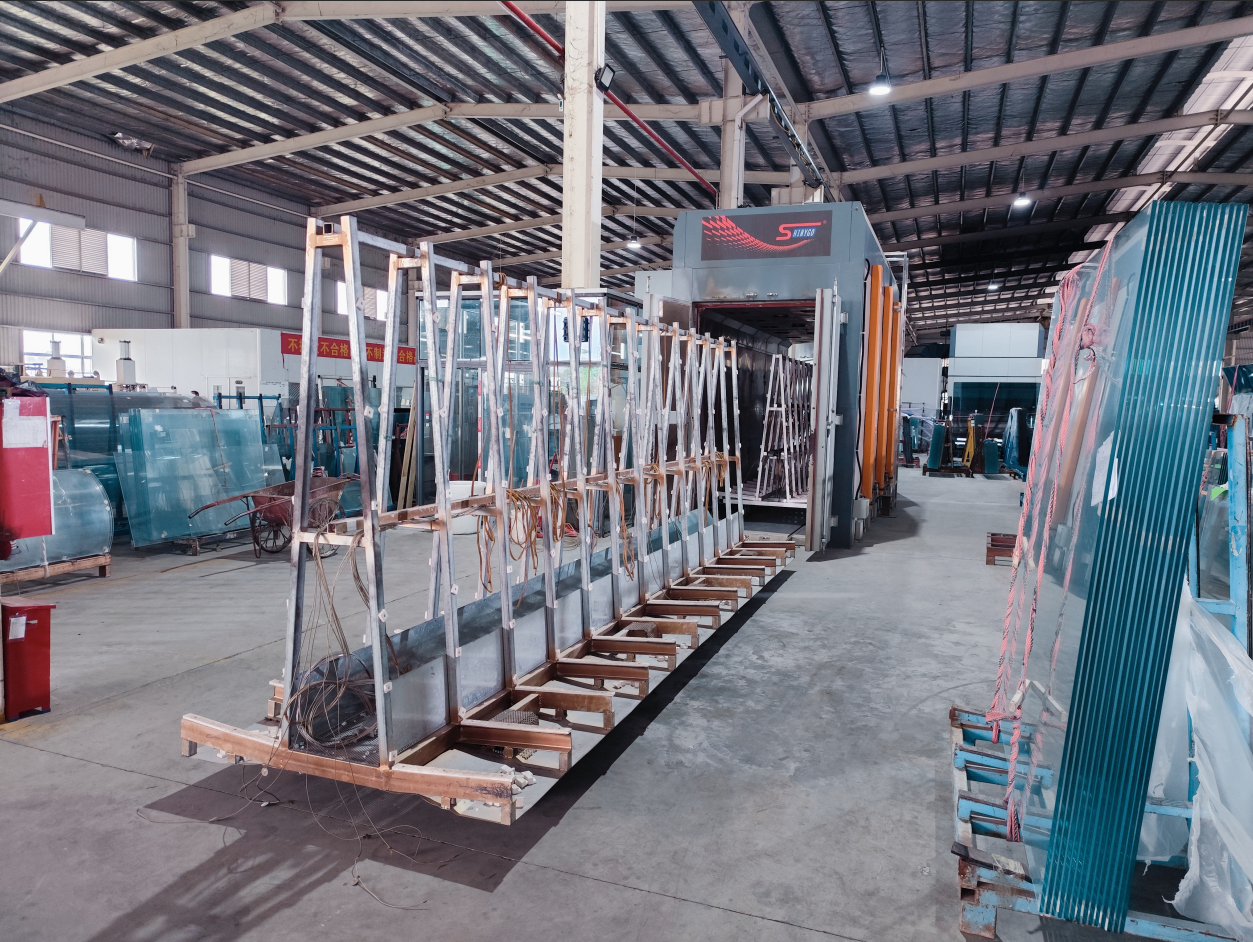
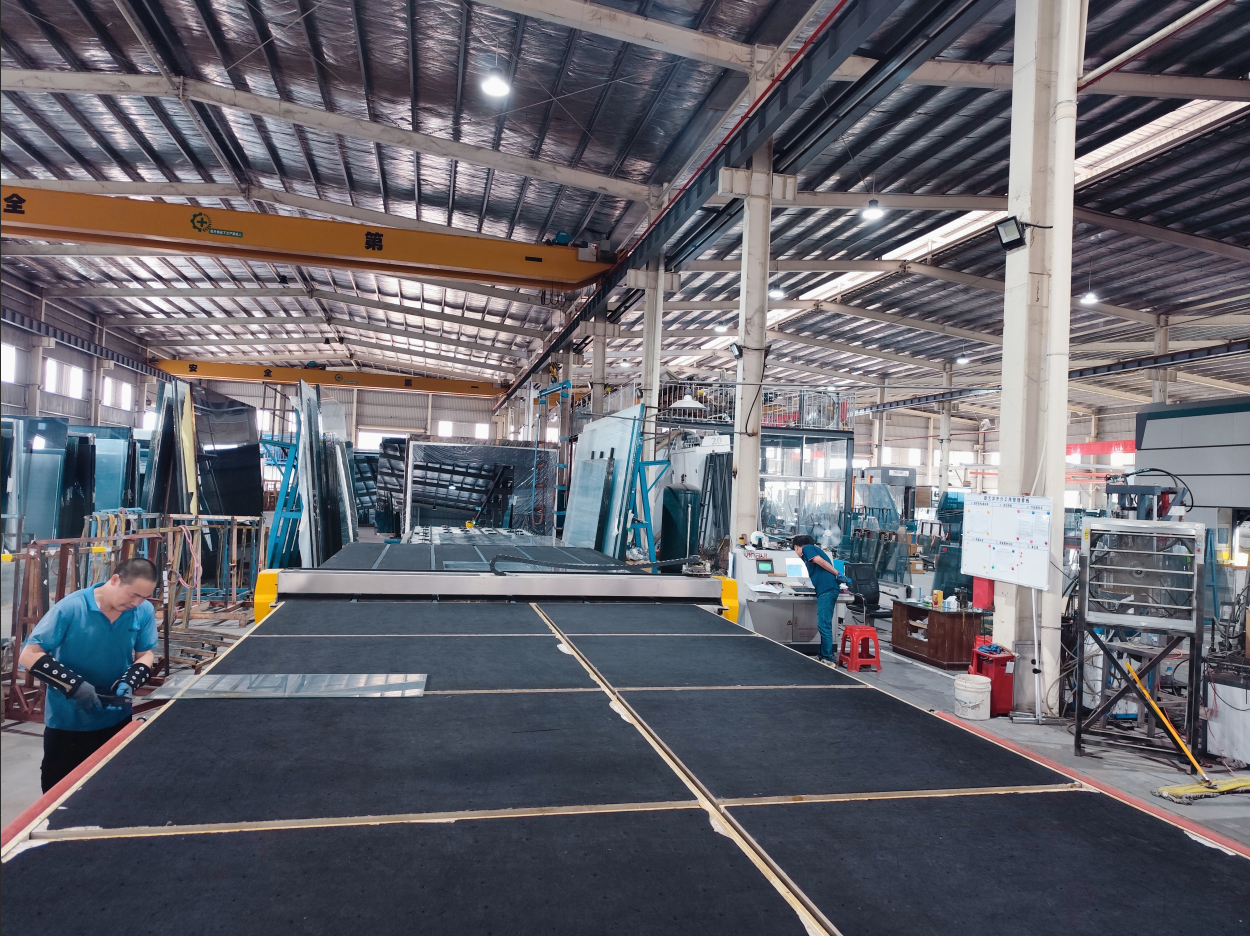
DYGLASS is located in Shenzhen, Guangdong, China, close to Hong Kong. The company operates a 30,000 m² facility with 130 employees and reports an annual output of 600,000 square meters. Its main products include curved glass, laminated glass, toughened glass, smart glass, insulated glass, and building glass. Around 60% of production is exported, with main markets in the UAE, Saudi Arabia, Bahrain, the United States, the Philippines, and Vietnam.
On geometry capability, DYGLASS states it can process multi-curved tempered glass, double-curved, triple-curved, trapezoid, spherical, pyramidal, S-shape, cylindrical, and positive/negative curved tempered glass. The company also welcomes OEM and ODM orders. For an architectural buyer, this type of geometry scope is more useful than a single-radius brochure image.
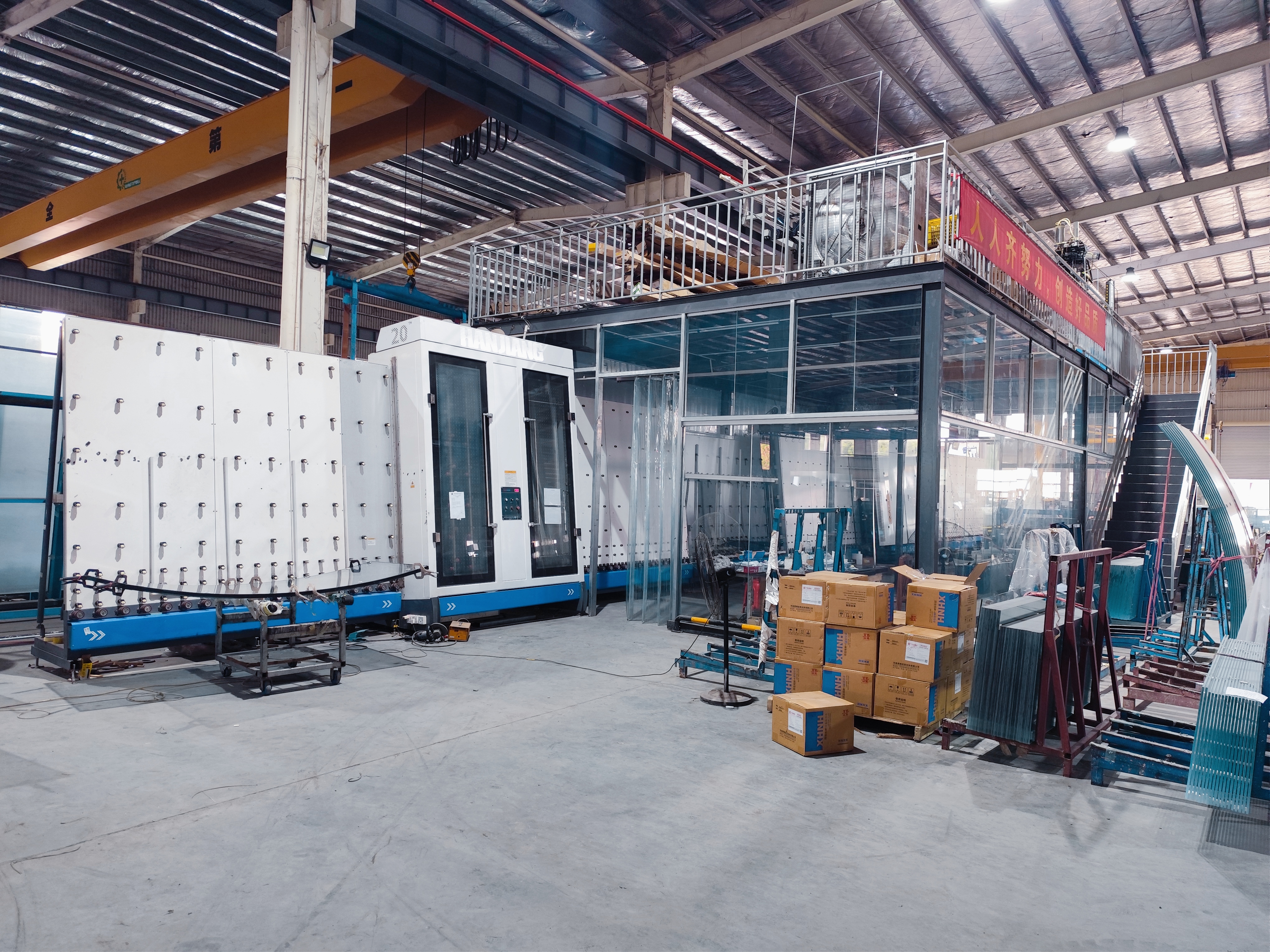
The production process is supported by dedicated lines: cutting, drilling, edge grinding, tempering, lamination with autoclave, insulating, and heat soaking. A heat soak furnace matters for tempered safety glass because it reduces the risk of spontaneous breakage caused by nickel sulfide inclusions. Lamination and insulating lines matter when curved glass must also perform acoustically or thermally.
Material Options and Performance Signals
For projects that require more than a simple bend, material options can be as important as curvature. Buyers evaluating curved glass for curtain walls, skylights, or shower rooms should check whether the glass can be laminated, insulated, low-iron, or tinted.
DYGLASS's laminated glass range covers thickness from 6.38mm to 50mm, with PVB, SGP, or EVA interlayers. Interlayer thickness can be specified as 0.38mm, 0.76mm, 1.14mm, 1.52mm, or 2.28mm. The glass substrate can be tempered glass, float glass, low-iron glass, or tinted glass. Clear laminated glass offers light transmittance of 85%-92%, while tinted options provide 10%-70%. The declared sound insulation range for laminated glass is 35-45dB, which is relevant for sound-insulated curved glass in facades and curtain walls.
DYGLASS's insulated glass range includes tempered insulated units, Low-E coated insulated glass, argon-filled insulated glass, and curved insulated glass. Common configurations include 6mm+12A+6mm and 8mm+16A+8mm. Insulated glass can use an aluminum spacer or warm-edge spacer, with air, argon, krypton, or xenon gas fill. Declared sound insulation for the insulated glass range is 30-45dB.
For high-visibility applications such as sightseeing elevator cladding, low-iron glass is often preferred for clearer edges. For skylight roofs, UV-blocking or Low-E coated glass can reduce solar heat gain. Buyers should confirm with the supplier that the desired material combination can be formed into the required curved shape.
Buyer Checklist for High-Precision Curved Glass
High-precision curved glass is often described with terms such as CNC forming, no wave distortion, and tight radius control. These are not standardized claims across suppliers, so use a practical checklist during evaluation.
- Ask for the maximum panel size and minimum bending radius for the exact curve geometry.
- Request a visual and dimensional check of a sample to inspect wave distortion and edge parallelism.
- Confirm whether the curve is single hot curved, double curved, S-shaped, U-shaped, or an irregular profile.
- Clarify whether extra-large curved glass can be handled by the furnace and transport system.
- For high-clarity projects, ask whether low-iron glass is available with polished edge work.
- For acoustic projects, request interlayer and sound insulation performance data.
- For skylights, confirm whether curved insulated or laminated glass can be produced in the required configuration.
Step-by-Step Supplier Evaluation Process
Use the following six-step sequence to move from a longlist to an order-ready shortlist.
- Define the exact geometry and tolerance. Write down the required curve shape: single-curved, double-curved, S-shape, cylindrical, trapezoid, or spherical. Ask whether the supplier can produce that exact profile and what edge tolerance they hold.
- Check compliance evidence for the destination market. For EU projects, ask for CE certificates and compare the declared standard. Request the certificate number, issuing body, and scope. For tempered glass, EN 12150 is a common baseline; for insulating glass, EN 1279 series; for laminated glass, EN 1449.
- Audit production capacity. Confirm facility size, headcount, annual output, and the lines available. A 30,000 m² facility, 600,000 m² annual output, and dedicated curved tempering lines are the type of concrete signals DYGLASS publishes.
- Verify customization and OEM/ODM support. If your project needs non-standard size, private label, or design adaptation, confirm whether the supplier accepts OEM or ODM work. DYGLASS explicitly states that OEM and ODM orders are welcome.
- Request a sample or pilot piece. Inspect edge grinding, curvature consistency, transmitted distortion, and lamination quality. A physical sample remains the strongest verification of production quality.
- Clarify lead time, packaging, and logistics. Ask how the glass will be packed for export, which documentation is provided, and what schedule can be committed for your order size.
Curved Glass Applications and Matching Capabilities
Curved glass appears in several common project types. Knowing how each use case maps to production capabilities makes it easier to ask the right questions.
Curtain Wall and Facade
Curtain wall projects require large-area curved panels, often double-curved or cylindrical. Buyers should look for a multi-curved production capability, lamination options, and capacity for large orders. The architectural segment's more than 40% share of curved glass demand explains why this use case receives the most attention from suppliers.
Sightseeing Elevator
Sightseeing elevator cladding typically uses semi-circular or cylindrical curved glass with high clarity. Safety is a priority, so tempered or laminated safety glass is common. A supplier that can process cylindrical and S-shape curves can support the curved enclosure.
Shower Room
Shower enclosures use curved tempered glass with polished edge work. These panels are usually single-curved and require precise dimensional control. Edge grinding lines and curved tempering are the relevant capabilities.
Coffee Table and Furniture
Curved glass for coffee tables is smaller in size but demanding in finish. Edge quality and optical clarity matter. Tempered glass with polished edges is the typical route.
Skylight Roof
Curved skylights combine curvature with thermal and safety performance. Curved laminated or insulated glass is often required. DYGLASS's autoclave and insulating line are directly relevant for this type of application.
Comparing Leading Curved Glass Suppliers
The following shortlist comparison is based on the information available to this guide. The global names are drawn from third-party market research; the DYGLASS details come from the company profile and related product data. The list order is the order in which the brands are discussed, not a claim of superiority.
| # | Supplier | Profile | Curved Glass Positioning | Buyer Notes |
|---|---|---|---|---|
| 1 | DYGLASS (Shenzhen Dayang Special Glass Co., Ltd.) | China-based special glass manufacturer with 30,000 m² facility, 130 employees, 600,000 m² annual output; CE certificates for tempered, laminated, and insulating glass; OEM/ODM. | Stated capability for multi-curved, double-curved, S-shape, spherical, and irregular curved tempered glass. | Suitable for custom architectural, elevator, shower, furniture, and skylight projects where geometry and compliance need to be confirmed directly. |
| 2 | Cricursa | Architectural bent and curved glass specialist. | Recognized in global market research as a top player in high-performance curved glass. | Useful reference for architectural glazing projects requiring a specialist curved glass brand. |
| 3 | AGC | Global glass manufacturer. | Recognized in global market research as a top player in high-performance curved glass. | Useful benchmark for large-scale specification and performance consistency. |
| 4 | Saint-Gobain | Global building materials group. | Recognized in global market research as a top player in high-performance curved glass. | Useful benchmark for facade and construction-oriented specifications. |
| 5 | Guardian Industries | Global glass manufacturer. | Recognized in global market research as a top player in high-performance curved glass. | Useful benchmark for float/tempered glass performance and availability. |
This table deliberately avoids unverified parameters such as bending radius limits, maximum panel size, or price lists. Those values should be requested from each supplier during the evaluation.
Frequently Asked Questions
Which CE standards apply to curved glass products in the DYGLASS range?
CE certificates in the DYGLASS product range cover tempered glass, laminated glass, and insulated glass. The tempered glass certificate references EN 12150-1:2015+A1:2019 and EN 12150-2:2004. The laminated glass certificate references EN 1449:2005. The insulated glass certificate references EN 1279-1:2018, EN 1279-2:2018, EN 1279-3:2018, and EN 1279-4:2018. The issuing body is ECTI CERT Ltd. Buyers should still confirm that the certificate scope covers the exact configuration they plan to order.
Which curved glass shapes can DYGLASS produce?
DYGLASS states it can process multi-curved tempered glass, double-curved tempered glass, triple-curved tempered glass, trapezoid curved tempered glass, spherical curved tempered glass, pyramidal curved tempered glass, S-shape curved tempered glass, cylindrical curved tempered glass, and positive/negative curved tempered glass. The company also operates lines for cutting, drilling, edge grinding, tempering, lamination with autoclave, insulating, and heat soaking.
How should a buyer compare curved glass pricing?
Curved glass pricing depends on geometry complexity, thickness, lamination or insulation requirements, quantity, and finishing needs. DYGLASS does not publish a public price list. The practical route is to send a detailed specification to the sales team and request a quotation. OEM and ODM customization requests can be included in the same inquiry.
Can buyers request a sample before placing a large order?
Yes. Samples and pilot orders are part of the normal evaluation process for custom curved glass. Buyers can contact DYGLASS by email at info@dayangglass.com or by WhatsApp at +86-13692110212 to discuss the geometry, compliance documents, and sample requirements before committing to a full production order.
What lead time should be expected for custom curved glass?
There is no universal lead time for curved glass because production time depends on glass thickness, curvature complexity, lamination or insulation configuration, quantity, and current factory load. The reliable way to confirm a schedule is to ask the supplier for a production timeline based on the exact project specifications before order confirmation.
Conclusion and Next Step
Curved glass is entering more architectural, elevator, shower, and furniture projects because it changes the visual quality of a space. However, the supplier that looks best in a brochure is not necessarily the supplier that can manufacture the exact curve geometry you need. Evaluation should focus on geometry scope, compliance evidence, production capacity, customization support, sample quality, and logistics clarity.
For buyers who want a single document that summarizes the DYGLASS product range and capabilities, the company brochure is available for direct download. It provides a useful starting point before sending an inquiry.
Download the DYGLASS brochure or request a quote
Open the company brochure (PDF)
Email: info@dayangglass.com | WhatsApp: +86-13692110212
Have Questions or Need More Details?
Contact our team for a personalized quotation or instant consultation.
Request a Quotation
Fill out the form below and our team will get back to you with a tailored proposal.
WhatsApp Direct Chat
Prefer to chat in real-time? Message us on WhatsApp for instant assistance & quick answers.
- Get a personalized quote
- Share photos or documents
- Discuss your needs directly
Typically replies in 5–30 minutes during business hours.