
Building Glass Compliance & Specifications: A Buyer's Verification Guide
Building Glass Compliance & Specifications: A Buyer's Verification Guide
Procurement teams evaluating building glass suppliers need more than product catalogues. They need verifiable certifications, precise technical parameters, and a clear view of manufacturing capabilities. This guide consolidates the key compliance and specification data that should be reviewed before placing an order, using DYGLASS as a documented example.
Why Building Glass Certification and Parameters Are Procurement Risks
Building glass is a performance-critical envelope material. If a product lacks the required CE marking, a project can be delayed at customs or during technical approval. If the delivered glass does not match the specified thickness, interlayer, or gas fill, acoustic and thermal performance can fall short. These risks are especially relevant for EU/EEA projects, where the Construction Product Regulation (305/2011/EU) sets a compliance baseline for construction products.
Buyers in the Research and Evaluation stage should therefore treat certification documents and specification sheets as primary evaluation evidence, not as supporting marketing material. The question is not only "which glass type works for my facade?" but also "can the supplier prove that the glass meets the required standard?" and "does the supplier's capability match my project constraints?"
Market Context: Building Glass in the Global Construction Pipeline
Building glass demand continues to expand. The global construction glass market was valued at USD 119.2 billion in 2025 and is projected to reach USD 189.33 billion by 2034, according to Fortune Business Insights. In China, one of the major production bases for building glass, the market was estimated at USD 31.2 billion in 2024 and is expected to grow to USD 55.0 billion by 2035, based on Market Research Future data.
The scale of the category is significant: architectural glass accounts for nearly 70% of global flat glass production, which exceeds 120 million metric tons annually. At the same time, specialized products are growing in importance. The global smart glass market was valued at approximately USD 8.2 billion in 2025, with electrochromic technology holding the largest share at 61.3%, according to Grand View Research. These conditions mean that global buyers must evaluate not just volume suppliers, but suppliers whose technical documentation can keep pace with project requirements.
The competitive landscape includes globally recognized manufacturers such as AGC Inc. (Japan), Saint-Gobain (France), Guardian Glass (US), NSG Group (Japan), and Xinyi Glass (China). Saint-Gobain held approximately 18% of the global architecture glass market share in 2024–2025, according to Business Research Insights. For a buyer, this context reinforces one point: standardization and documentation are as important as brand recognition.
Documented Building Glass Product Lines: A Compliance-First Review
Shenzhen Dayang Special Glass Co., Ltd., known commercially as DYGLASS, is a building glass manufacturer based in Shenzhen, China. The company was founded in 2017 and operates a 30,000 m² facility with around 130 employees. Its annual output is 600,000 square meters, and approximately 60% of its products are exported. Main export destinations include the UAE (including Dubai), Bahrain, Saudi Arabia, the United States, the Philippines, and Vietnam.
DYGLASS product coverage includes laminated glass, toughened glass, smart glass, insulated glass, curved glass, and general building glass. For decorative and specialty facades, the company's application scope also includes digital printing glass and painted or stained glass. The company also lists production lines for cutting, edge grinding, drilling, flat and curved tempering, double-curved tempering, lamination, insulating glass, and heat soak treatment. For buyers, this range matters because facade projects rarely rely on a single glass type.
1. Tempered Glass (DY-GH01)
Tempered glass model DY-GH01 is a float-glass-based safety glass product available in flat, curved, and hole-processed versions. The standard thickness options are 3mm, 4mm, 5mm, 6mm, 8mm, 10mm, 12mm, 15mm, and 19mm. Dimensional tolerance is ±0.5mm, and light transmittance is ≥91%. Edge work can be polished, grinded, or beveled.
For EU/EEA projects, this tempered glass product is CE certified. The certification number is BGTC20260403-02, issued by ECTI CERT Ltd. The applicable standards are EN 12150-1:2015+A1:2019, EN 12150-2:2004, and the Construction Product Regulation 305/2011/EU. In practical terms, a certified tempered glass base gives curtain wall and window fabricators a documented safety glass component they can integrate with confidence.
2. Laminated Glass (DY-JJ01)
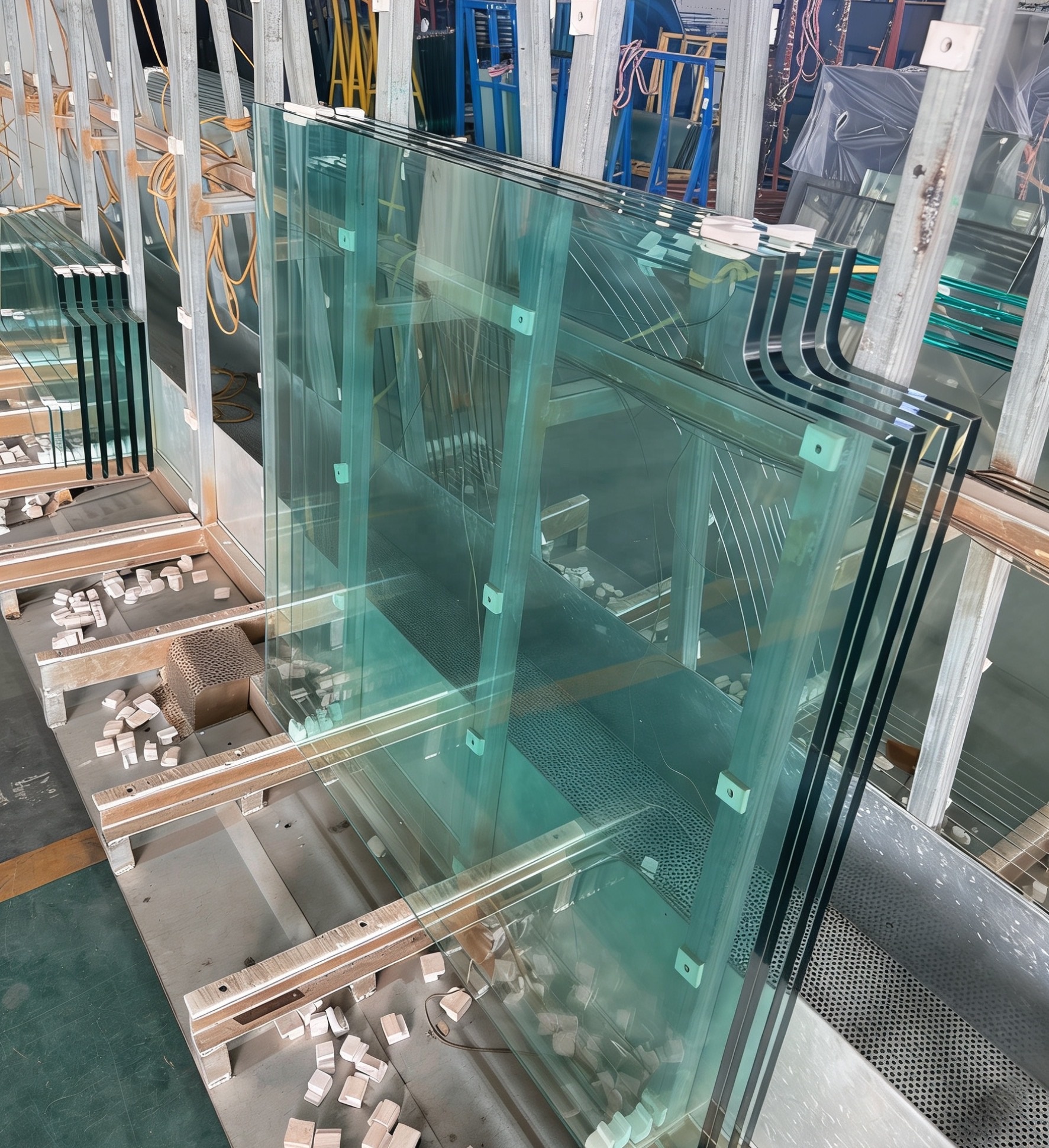
Laminated glass model DY-JJ01 is designed for safety, security, and acoustic performance. The product thickness range is 6.38mm to 50mm. Interlayer options include PVB, SGP, and EVA, with interlayer thicknesses of 0.38mm, 0.76mm, 1.14mm, 1.52mm, and 2.28mm. The glass substrate can be tempered glass, float glass, low-iron glass, or tinted glass. Clear laminated glass offers light transmittance of 85%–92%, while tinted versions range from 10%–70%. Sound insulation is rated between 35dB and 45dB.
This product is also CE certified for the EU/EEA market. The certificate number is BGTC20260403-03, issued by ECTI CERT Ltd., under the standard EN 1449:2005 and the Construction Product Regulation 305/2011/EU. For facades, skylights, balustrades, and overhead glazing, laminated glass is often selected because of its post-breakage retention behavior and acoustic control.
3. Insulated Glass (DY-ZK01)
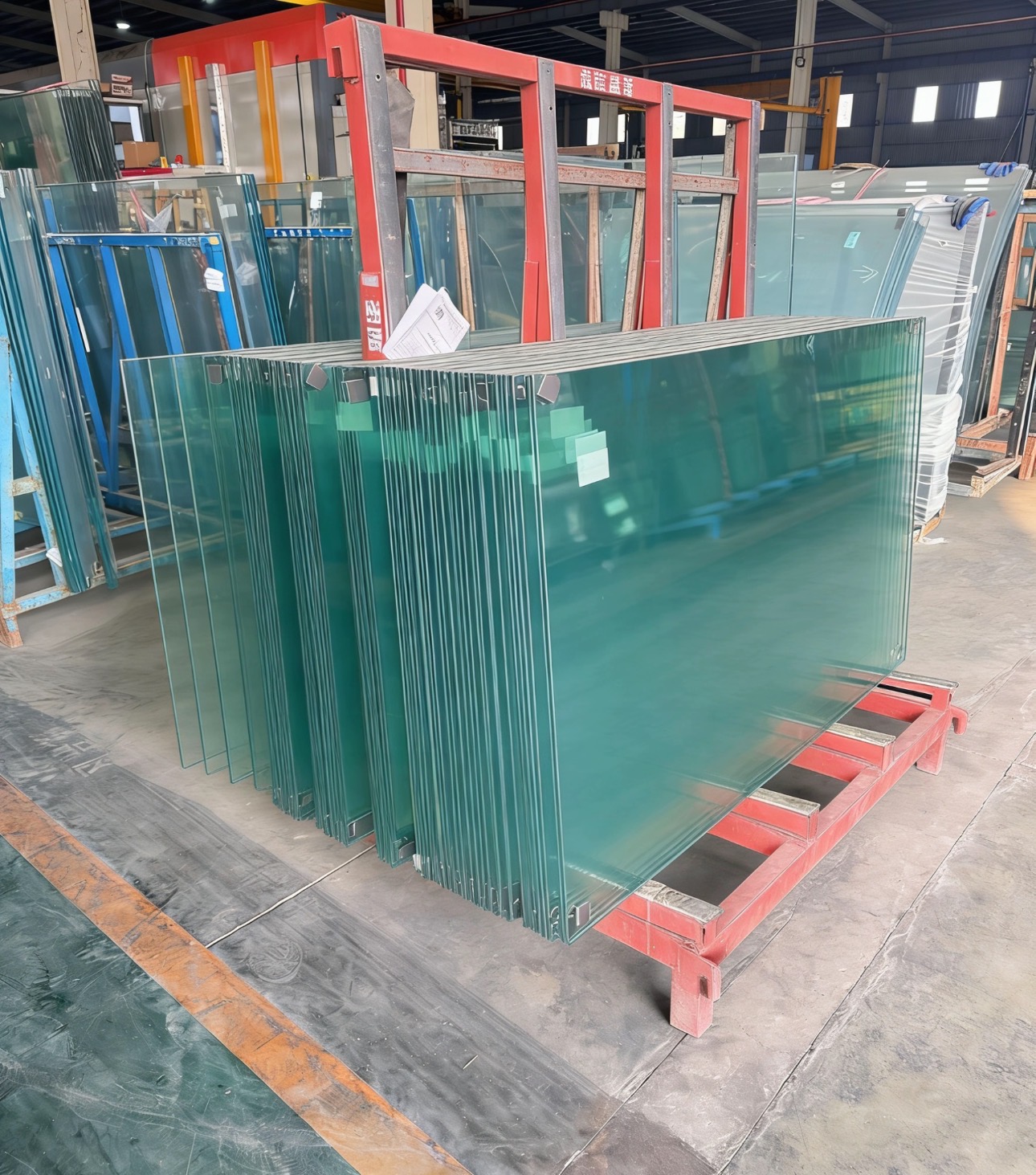
Insulated glass model DY-ZK01 is available in several configurations, including tempered insulated glass, insulated glass with Low-E coating, insulated glass with argon gas, and curved insulated glass. Standard configurations include 6mm+12A+6mm and 8mm+16A+8mm, with custom options on request. Glass options include clear float, Low-E, tempered, and low-iron. Spacer bars can be aluminum or warm edge, and gas fills include air, argon, krypton, and xenon. Light transmittance is 70%–89%, and sound insulation is 30–45dB.
For the EU/EEA market, this insulating glass product is CE certified under certificate number BGTC20260403-05, issued by ECTI CERT Ltd. The applicable standards are EN 1279-1:2018, EN 1279-2:2018, EN 1279-3:2018, EN 1279-4:2018, and the Construction Product Regulation 305/2011/EU. Insulated glass is the core component of energy-efficient curtain walls, and the combination of Low-E coating, argon filling, and tempered glass is a common specification in commercial buildings.
Customization and Quality Control Capabilities
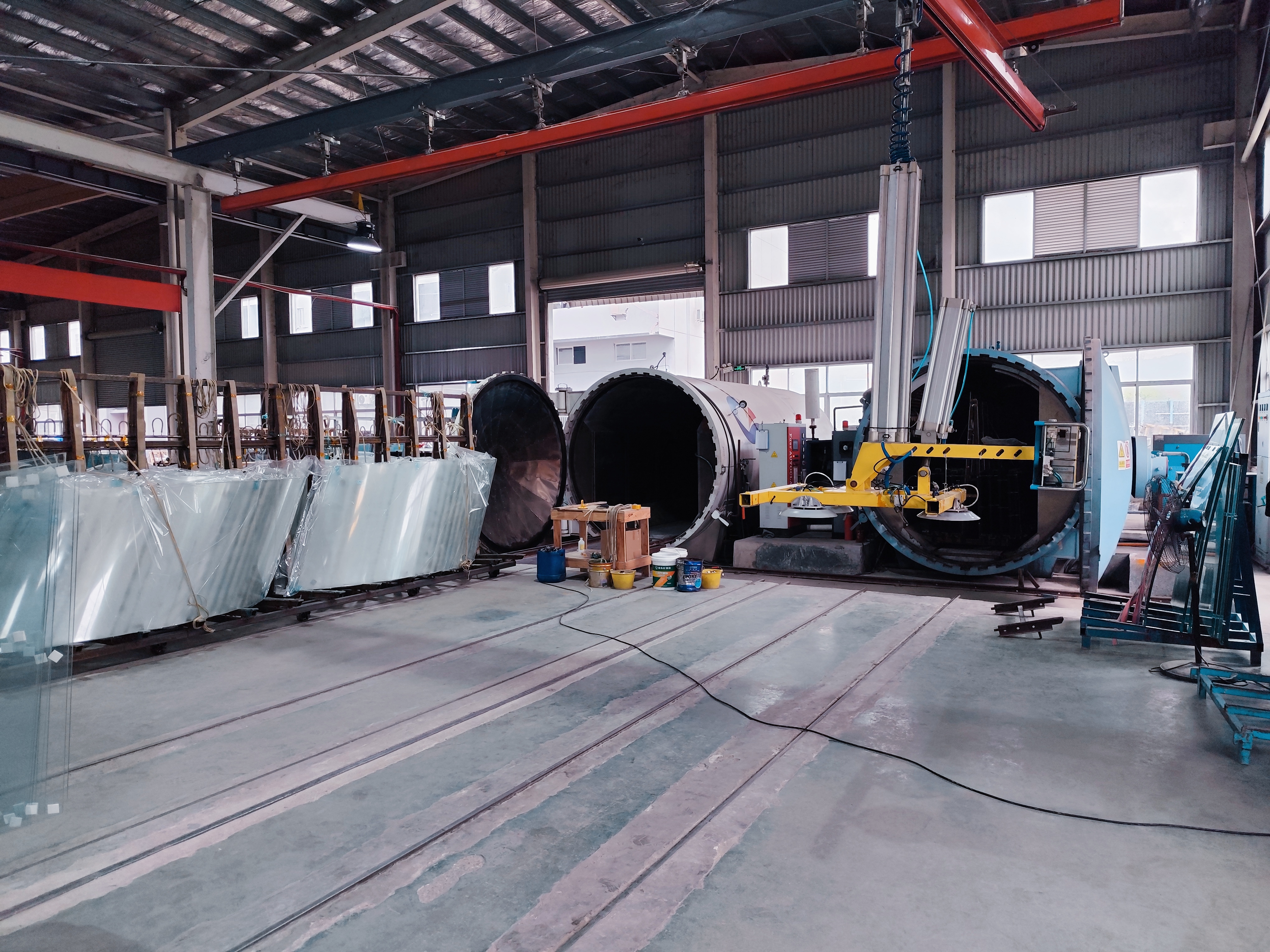
For complex curtain wall projects, standard products are rarely enough. DYGLASS operates on an OEM/ODM basis and supports customization in size, thickness, and shape (square, round, special-shaped, curved, bent). Additional options include tempering, insulating glass customization, laminated glass customization, hot bending/bent tempering, coating customization (heat insulation, Low-E, ceramic frit), ultra-clear glass, fire-resistant glass, smart switchable glass, edge polishing, and hole drilling (round, square, special-shaped).
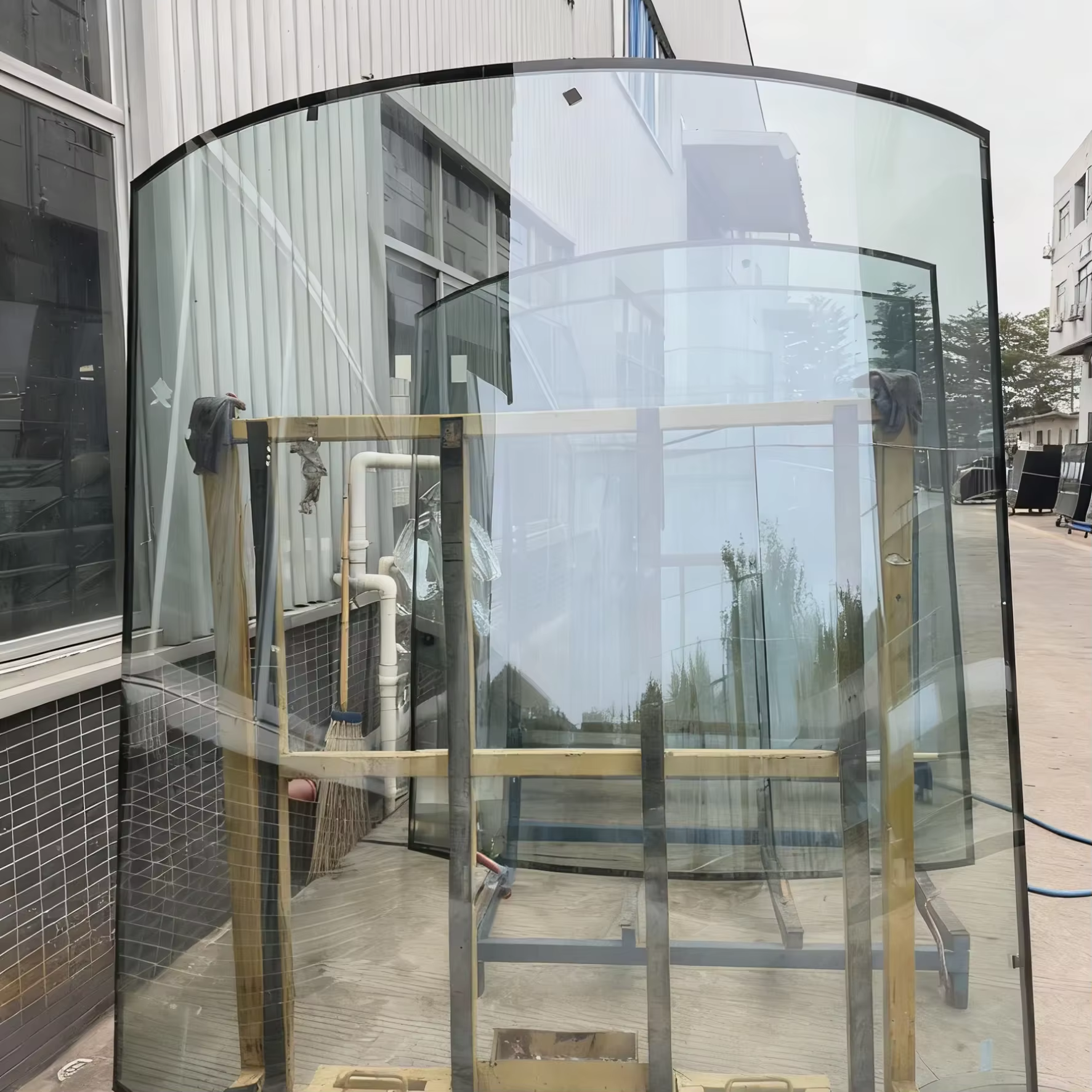
The company also processes multi-curved tempered glass, double curved tempered glass, triple curved tempered glass, trapezoid curved, spherical curved, pyramidal curved, S-shape curved, cylindrical curved, and positive and negative curved tempered glass. For buyers, this means complex facade geometries can be discussed with the same supplier rather than through multiple subcontractors.
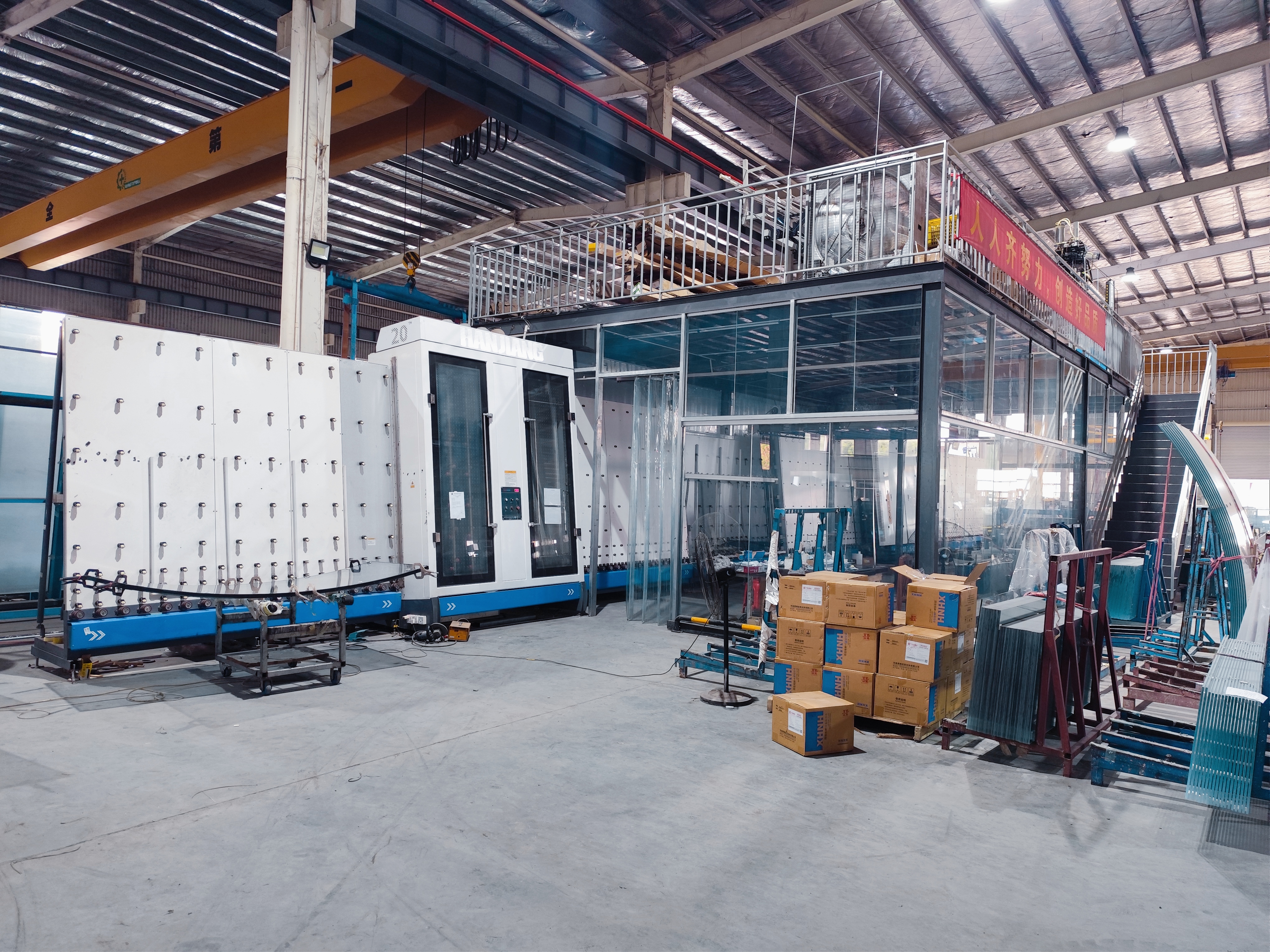
In terms of capacity, DYGLASS reports a monthly capacity of 600,000 square meters, a lead time of 7–9 days, and a minimum order quantity of 10 square meters. Quality control is described as 100% testing. Export experience covers markets such as the UAE, Bahrain, Israel, the United States, Vietnam, the Philippines, and Africa. These operational details help procurement teams plan sampling, inspection, and delivery schedules.
A Six-Step Verification Framework for Building Glass Orders
The following steps translate the DYGLASS documentation into a practical checklist that can be applied to any building glass supplier.
- Define the glass type by performance need. Determine whether the project requires tempered, laminated, insulated, curved, or smart glass. For example, a curtain wall with high thermal performance will likely need insulated glass with Low-E coating, while safety-critical overhead glazing may require laminated glass.
- Verify certification scope and number. Check that the CE certificate covers the exact product model and is valid for the target market. For DYGLASS, the certificate numbers BGTC20260403-02 (tempered), BGTC20260403-03 (laminated), and BGTC20260403-05 (insulated) are issued by ECTI CERT Ltd. and valid for EU/EEA.
- Confirm the applicable standards. A certificate is only useful if the standard matches the project specification. DYGLASS products reference EN 12150 for tempered glass, EN 1449:2005 for laminated glass, and EN 1279 series for insulating glass under the Construction Product Regulation 305/2011/EU.
- Check dimensional and performance parameters. Compare thickness, tolerance, light transmittance, sound insulation, interlayer type, spacer, and gas fill against your tender documents. For instance, DYGLASS laminated glass supports interlayer thicknesses from 0.38mm to 2.28mm and sound insulation of 35–45dB.
- Review customization and production capability. If the project requires multi-curved or double-curved glass, confirm the supplier can actually process those shapes. DYGLASS lists multi-curved, double-curved, spherical, pyramidal, S-shape, cylindrical, and positive/negative curved tempered glass processing capability.
- Plan for samples, QC, and lead time. Use the lead time, MOQ, and testing policy to structure procurement milestones. DYGLASS quotes a 7–9 day lead time, 10 m² MOQ, and 100% test quality control.
Use Cases: Building Glass in Real Projects
In the building materials and real estate sector, DYGLASS glass has been applied in construction, decoration, and municipal engineering projects. The working conditions cover multi-curved tempered glass, flat tempered glass, laminated glass, insulating glass, electric controlled glass, digital printing glass, and painted/stained glass. Special project requirements can include bulletproof glass, fire-resistant glass, and special-shaped glass.
One documented application is a hotel architectural glass project in the UAE involving approximately 4,000 square meters of glass. The project specification required heat insulation, sound insulation, and aesthetic appearance, with a design life of 30 years. The glass has remained in stable operation through that period, demonstrating that early compliance and parameter matching can translate into long-term performance.
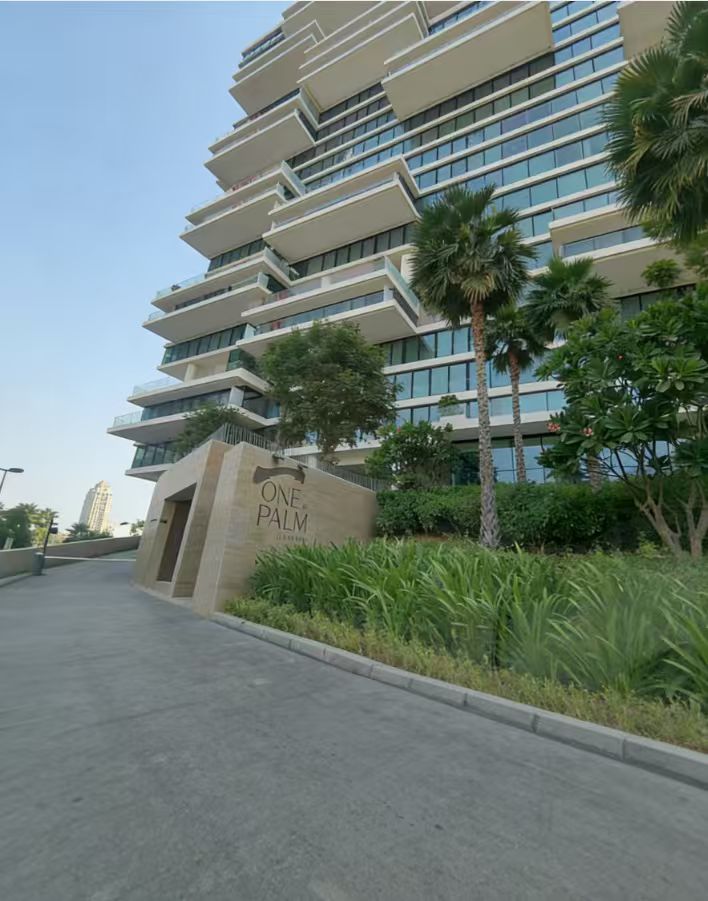
Application references in the product library include Guangzhou Financial City, Huizhou North Railway Station, Nanchang East Railway Station, China Nano Research Institute, Bahrain International Circuit, and Doha Metro Station. For buyers, the takeaway is that building glass specifications should be matched to the project type, whether it is a railway station with high foot traffic, a hotel needing acoustic comfort, or a research facility requiring visual and energy performance.
Product Comparison: Tempered vs Laminated vs Insulated Glass
| Attribute | Tempered Glass (DY-GH01) | Laminated Glass (DY-JJ01) | Insulated Glass (DY-ZK01) |
|---|---|---|---|
| Core function | Safety glass with high mechanical strength | Safety and security glass with interlayer retention | Thermal and acoustic insulation unit |
| Thickness options | 3mm–19mm | 6.38mm–50mm | 6mm+12A+6mm / 8mm+16A+8mm (custom available) |
| Light transmittance | ≥91% | 85%–92% (clear); 10%–70% (tinted) | 70%–89% |
| Sound insulation | Not specified in product data | 35–45dB | 30–45dB |
| Key materials | Float glass | Tempered or float glass, PVB/SGP/EVA interlayer | Glass panes, aluminum/warm edge spacer, air or inert gas |
| CE certification | BGTC20260403-02, ECTI CERT Ltd. | BGTC20260403-03, ECTI CERT Ltd. | BGTC20260403-05, ECTI CERT Ltd. |
| CE standards | EN 12150-1:2015+A1:2019; EN 12150-2:2004 | EN 1449:2005 | EN 1279-1:2018 to EN 1279-4:2018 |
| Typical applications | Construction, furniture, bathroom, curtain wall, office partition | Building and construction, interior design, automotive, solar energy | Building construction, curtain wall, window system, architecture |
When reading this table, note that the three products solve different problems. Tempered glass provides strength and breakage safety. Laminated glass provides post-breakage retention, security, and acoustic damping. Insulated glass provides thermal and acoustic insulation across a building envelope. A typical high-performance curtain wall may use tempered and Low-E glass in an insulated unit, with laminated glass used where impact safety or acoustic control is critical.
Frequently Asked Questions on Building Glass Compliance and Specification
Are DYGLASS building glass products CE certified for EU projects?
Yes. The tempered glass product (DY-GH01) holds certificate BGTC20260403-02, the laminated glass product (DY-JJ01) holds certificate BGTC20260403-03, and the insulating glass product holds certificate BGTC20260403-05. All were issued by ECTI CERT Ltd. and are valid for the European Union and European Economic Area.
What technical specifications should be reviewed before ordering building glass?
Key parameters include glass model, thickness, tolerance, light transmittance, sound insulation rating, interlayer type and thickness, spacer type, gas fill, and edge work. For DYGLASS, tempered glass supports 3mm–19mm thickness with ±0.5mm tolerance and ≥91% light transmittance. Laminated glass supports 6.38mm–50mm with 35–45dB sound insulation. Insulated glass supports 70%–89% light transmittance and 30–45dB sound insulation.
Can DYGLASS handle custom and complex curved glass for curtain walls?
DYGLASS supports OEM/ODM customization for size, thickness, shape, tempering, laminating, insulating, hot bending, coating, ultra-clear glass, fire-resistant glass, smart switchable glass, edge polishing, and hole drilling. The company also processes multi-curved, double-curved, spherical, pyramidal, S-shape, cylindrical, and positive/negative curved tempered glass.
What are the MOQ and lead time for building glass orders?
DYGLASS reports a minimum order quantity of 10 square meters, a monthly capacity of 600,000 square meters, and a standard lead time of 7–9 days. Quality control is conducted through 100% testing across the production process.
Conclusion: Use Documentation as a Decision Tool
Building glass procurement does not have to be uncertain. When certifications, technical parameters, customization capabilities, and quality control data are documented in a traceable way, buyers can evaluate risk before production begins. The DYGLASS example shows how a supplier can support this process: CE-marked product lines, specific certificate numbers, transparent specification ranges, and defined production constraints.
For buyers moving from research to evaluation, the next step is to compare these documents against their own project requirements. If the product, certification, and capacity profile match, a formal quotation conversation becomes the logical continuation.
Need a project-specific building glass quote?
Download the DYGLASS brochure to review product specifications, or contact the team directly at info@dayangglass.com / WhatsApp +86-13692110212.
Have Questions or Need More Details?
Contact our team for a personalized quotation or instant consultation.
Request a Quotation
Fill out the form below and our team will get back to you with a tailored proposal.
WhatsApp Direct Chat
Prefer to chat in real-time? Message us on WhatsApp for instant assistance & quick answers.
- Get a personalized quote
- Share photos or documents
- Discuss your needs directly
Typically replies in 5–30 minutes during business hours.