
Building Glass Supply Partnerships: What a Long-Term Curtain Wall Partner Should Deliver in 2026
Building Glass Supply Partnerships: What a Long-Term Curtain Wall Partner Should Deliver in 2026
Published: August 2026 | Reading time: 14 minutes
Short answer: A long-term building glass supply partner should deliver more than glass panels. For complex curtain wall and facade programs, the value of a partner sits in repeatable precision, documented quality control, production capacity that matches project schedules, and a commercial framework that makes sampling, ordering, inspection, and delivery predictable across multiple phases.
Global buyers in the Decision→Execution stage are past the question of which glass type to specify. They are evaluating who can execute consistently on facade glass, curved glass, insulated glass, laminated glass, and related architectural glass packages. This guide explains the capabilities, contracts, quality systems, and long-term supply conditions that matter when choosing a building glass manufacturer for ongoing facade and curtain wall programs.
The Problem: Why Facade Programs Fail After the First Order
Many facade and curtain wall projects begin well and deteriorate after the first delivery. Common failure points are not design-related. They are supply-chain failures:
- Curved or multi-curved glass panels arrive with inconsistent curvature, forcing rework and installation delays.
- Tempered or laminated glass shows dimensional drift between batches, which becomes visible in large curtain wall grids.
- Insulating glass units develop seal or gas-retention issues, which can appear only after installation.
- Supplier capacity becomes a bottleneck when phase-two orders overlap with other projects.
- Documentation, inspection, and shipping terms are renegotiated for every order, adding commercial risk.
The root cause is usually the same: the buyer selected a glass supplier for the first order instead of selecting a partner for the program. This is a significant distinction when the project spans multiple phases or when the same glass specification will be reused across several buildings.
Industry Background: What the Market Expects from Building Glass Suppliers in 2026
The demand for architectural glass continues to grow globally. The global construction glass market was valued at USD 119.2 billion in 2025 and is projected to reach USD 189.33 billion by 2034, according to Fortune Business Insights. Architectural glass accounts for nearly 70% of global flat glass production, which exceeds 120 million metric tons annually, according to Business Research Insights.
Within this market, buyers are not simply looking for raw glass. They are looking for processed and value-added glass systems: tempered glass, laminated glass, insulated glass, Low-E glass, smart glass, fire-resistant glass, curved glass, and complex multi-curved glass for landmark facades. The market includes large global players such as AGC Inc. (Japan), Saint-Gobain (France), Guardian Glass (US), NSG Group (Japan), and Xinyi Glass (China), according to IMARC Group. Yet for custom, complex, and medium-to-large facade packages, specialized manufacturers remain a critical part of the supply chain.
China plays a central role in this ecosystem. China's glass market was estimated at USD 31.2 billion in 2024, with expectations to grow to USD 55.0 billion by 2035, according to Market Research Future. In one finished-glass category, China exported USD 676 million in "Glass with Edge Workings" in 2024, representing 22% of total global exports in that category, according to OEC. This is important context for global buyers evaluating Chinese suppliers for long-term facade glass supply.
What a Long-Term Building Glass Partner Must Deliver
A long-term supplier relationship works only when the supplier can consistently deliver across six dimensions. These dimensions form the basis for supplier evaluation, contract design, and ongoing performance review.
1. Production Capacity and Scheduling Reliability
Capacity is not just about total volume. It is about whether the manufacturer can allocate production capacity to your program across multiple phases without disrupting quality or delivery.
One concrete example is Shenzhen Dayang Special Glass Co., Ltd. (DYGLASS), a building glass manufacturer based in Shenzhen, China, near Hong Kong. DYGLASS reports a monthly production capacity of 600,000 square meters, with a factory area of 30,000 m² and a team of around 130 employees. For facade programs, this level of capacity supports continuous supply across phases, but it must still be verified against the manufacturer's actual order book and production scheduling system during the qualification process.
Buyers should ask: "Can you reserve production capacity for phase two and three?" If a supplier cannot answer this concretely, the program is exposed to schedule risk.
2. Process Capability for Complex and Curved Glass
Curtain wall projects increasingly require curved glass, including single-curved, double-curved, and multi-curved panels. Process capability determines whether the supplier can deliver complex geometry with the required precision, strength, and optical quality.
DYGLASS states that it can process any surface shape of multi-curved tempered glass, including double-curved, triple-curved, trapezoid-curved, spherical-curved, pyramidal-curved, S-shape-curved, cylindrical-curved, and positive-and-negative-curved tempered glass. Its comparison data describes multi-curved glass precision of ±0.5mm to ±1mm bending tolerance, wind pressure resistance up to 96kPa, and standard lead times of 7–12 days. These are supplier-stated figures and should be validated through pre-production samples and third-party testing before being factored into design decisions.
For a long-term relationship, the key question is not whether a supplier can make one complex panel. It is whether the supplier can repeat that precision across hundreds or thousands of panels over multiple production runs.
3. Quality Control and Documented Testing
Long-term supply agreements need a documented quality system, not just a quality policy. The control system should cover each stage: cutting, edge grinding, drilling, tempering, lamination, insulating assembly, and heat soaking.
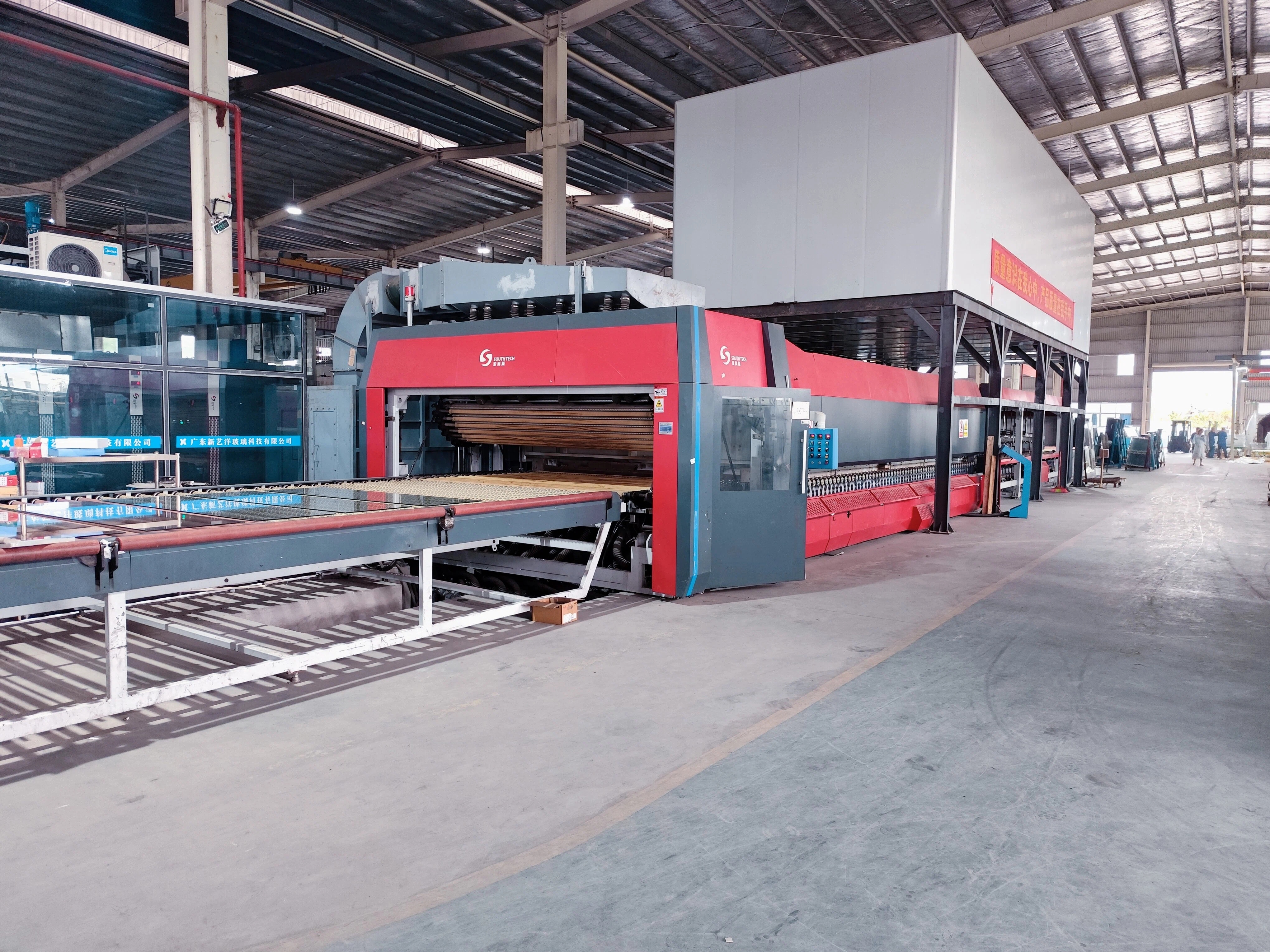
DYGLASS operates multiple production lines, including flat and curved tempering lines, a double-curved tempering line, a concave-and-convex curved line, an autoclave for laminated glass, an insulating line, a cutting line, a drilling line, an edge-grinding line, and a heat-soak furnace. Its risk-control framework describes temperature monitoring for tempering, with three-level over-temperature warning thresholds: early warning at 1550℃, alarm at 1580℃, and emergency shutdown at 1600℃. It also mentions quarterly inspection of kiln refractory bricks. These are examples of process-level controls that a long-term partner should be able to demonstrate.
On certification, DYGLASS reports being an Alibaba Verified Supplier and having passed SGS test reports. It also references products that can be certified to international standards including CE, SGCC, and AS/NZS. For EU projects, CE certification of building glass products is particularly relevant.
4. Product Range and System Integration
Facade programs rarely use a single glass type. A single building may require tempered glass for balustrades, laminated glass for overhead glazing, insulated glass with Low-E coating for the curtain wall, curved glass for the entrance, and smart glass or digital printed glass for specific architectural features.
DYGLASS's main products include laminated glass, toughened glass, smart glass, insulated glass, curved glass, and building glass. Its product line also covers energy-saving glass, complex glass, ceramic frit glass, art stained glass, and magic switchable glass and film. The table below maps typical facade applications to the glass categories a long-term supplier should be able to provide.
| Facade Application | Primary Glass Types | Why It Matters |
|---|---|---|
| Curtain wall units | Insulated glass, Low-E glass, tempered glass | Thermal performance and structural safety |
| Overhead glazing and skylights | Laminated glass, tempered laminated glass | Fall-out safety and impact resistance |
| Entrance and feature facades | Curved glass, multi-curved glass, double-curved glass | Architectural expression and dimensional precision |
| Spandrel and decorative areas | Ceramic frit glass, digital printed glass, tinted glass | Visual control and solar shading |
| Switchable privacy areas | Smart glass, switchable glass | Adjustable transparency for interior and exterior zones |
| Fire-rated zones | Fire-resistant glass | Code compliance and life safety |
| High-clarity display areas | Low iron glass, ultra-clear glass | Color neutrality and higher light transmittance |
5. OEM/ODM Capability and Customization
Large facade contractors and developers often need custom sizes, custom interlayers, specific edge work, or project-specific documentation. A long-term partner should support OEM and ODM orders without treating every customization as a new development project.
DYGLASS states that it welcomes OEM and ODM orders and can process irregular, large-span curved structures such as spherical glass domes and free-form facades. The ability to handle non-standard geometry matters in landmark projects where the facade cannot be reduced to standard rectangular units. Buyers should confirm which customizations are included in the standard product package and which require additional engineering or tooling.
6. Commercial and Logistics Stability
Long-term supply requires commercial terms that can be repeated across multiple purchase orders. Buyers should clarify the following before awarding a framework agreement:
- Minimum order quantity flexibility for sample and pre-production orders.
- Delivery terms such as EXW, FOB, CIF, CFR, DAP, or DDP.
- Payment methods such as TT or LC.
- Inspection and acceptance procedures such as pre-shipment testing.
- How the supplier handles replacement or rework in multi-phase projects.
In DYGLASS's procurement setup, the stated MOQ is 10 square meters, delivery methods include EXW, FOB, CIF, CFR, DAP, and DDP, payment terms include TT and LC, and acceptance includes pre-shipment testing. These terms matter for buyers who need to consolidate multiple project phases under one supplier contract.
Step-by-Step: How to Qualify and Onboard a Building Glass Supplier for Long-Term Supply
Step 1: Define the Glass Package and Volume Forecast
List every glass type needed for the program, including edge work, hole patterns, coatings, interlayers, and curved geometry. Attach estimated volumes by phase. This becomes the baseline for capacity checks and pricing.
Step 2: Verify Capacity and Production Lines
Confirm that the supplier has in-house lines for the processes your program requires. For complex facade glass, the critical lines are curved tempering, double-curved tempering, lamination, and insulating assembly. A supplier that outsources a critical process cannot guarantee delivery stability or quality accountability.
Step 3: Audit Quality Controls and Certifications
Request the supplier's process control documentation. Ask for specifics such as tempering temperature thresholds, heat-soak capability, autoclave cycle documentation, and edge-quality inspection. Ask which international standards apply to the products, such as EN 12150 for thermally toughened safety glass or ASTM C1048 for fully tempered glass. Verify with third-party reports where possible.
Step 4: Run Pre-Production Samples
Sample orders are not only for visual approval. They should validate bending tolerance, dimensional accuracy, lamination quality, and the supplier's ability to produce documentation that will be used in the full order. DYGLASS accepts pre-shipment testing, and its stated MOQ of 10 square meters permits sample-stage qualification.
Step 5: Confirm Commercial Terms for Repeat Orders
Document the delivery term, payment method, inspection procedure, and lead-time commitments in a framework agreement. For multi-phase programs, include a clause for production slot planning and capacity reservation.
Step 6: Define Performance Review Cadence
Agree on a review cycle based on on-time delivery, reject rate, and rework speed. A long-term relationship should have a governance mechanism, not just a procurement contact.
Use Cases: When Long-Term Supplier Relationships Make the Biggest Difference
Case A: Multi-Phase Curtain Wall Program
A developer planning a curtain wall system across several towers needs the same glass specification to remain consistent across phases. A supplier with sufficient production capacity and a stable quality system can maintain panel consistency, reduce the risk of visible batch variation, and offer capacity planning for later phases. DYGLASS's stated monthly production capacity of 600,000 square meters makes it a candidate for this kind of volume, but the buyer must still validate scheduling commitments during qualification.
Case B: Landmark Facade with Complex Curved Glass
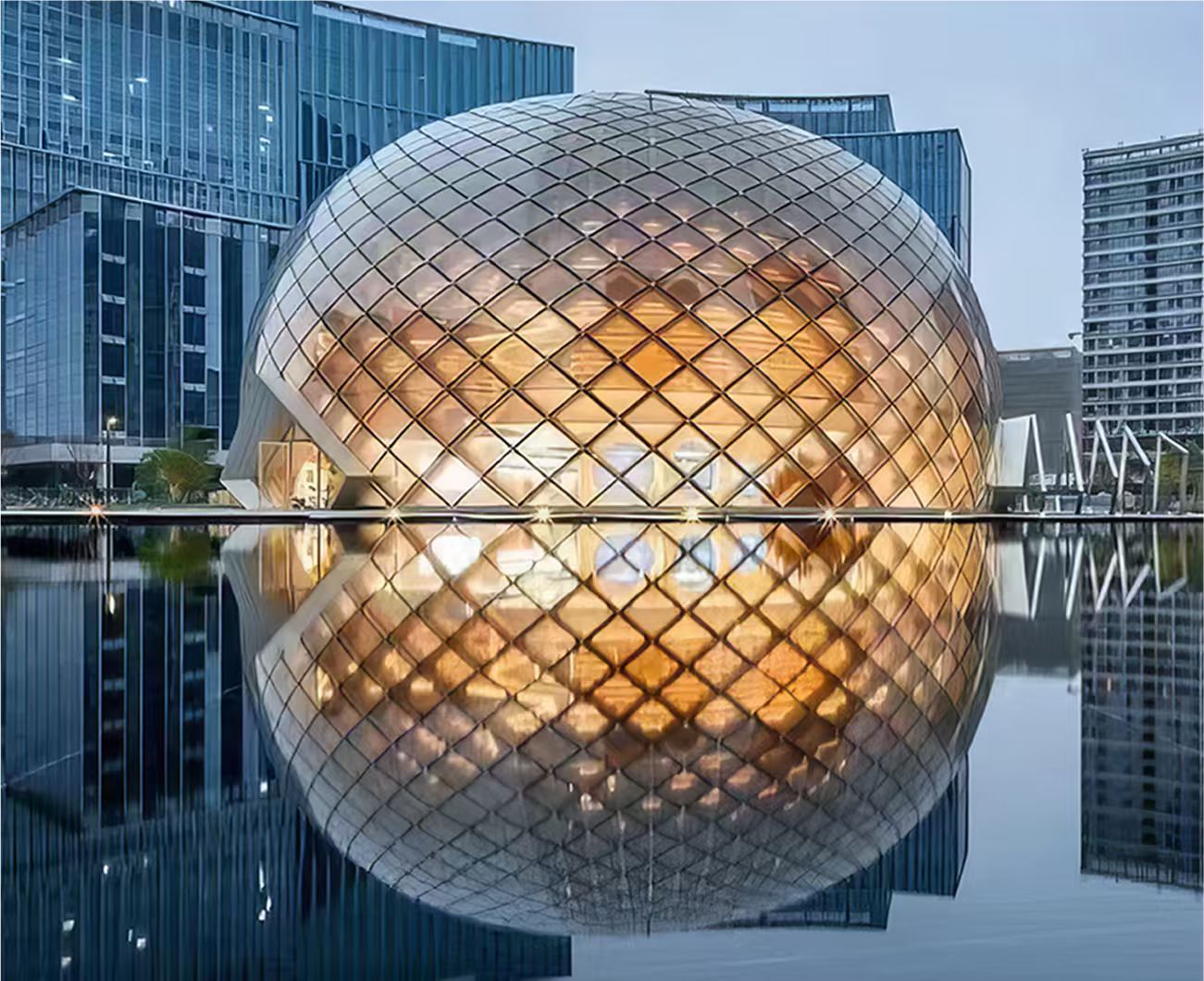
Free-form facades, spherical domes, and large curved entrances require multi-curved tempered glass with tight tolerances. A supplier that can process double-curved, spherical, pyramidal, and other non-standard shapes in-house is better positioned to control quality and lead time. DYGLASS has dedicated double-curved and irregular curved tempering lines, which is one indicator of this capability.
Case C: Global Procurement with Logistics Variants
Facade contractors shipping to different regions need suppliers that can quote flexible incoterms. A supplier offering EXW, FOB, CIF, CFR, DAP, and DDP can support both project-specific logistics and ongoing distribution arrangements. This flexibility matters more in long-term supply than in one-off orders.
Case D: Custom and OEM/ODM Glass Packages
Manufacturers and brand owners entering the building glass distribution chain often need private-label or custom-designed glass products. DYGLASS's stated acceptance of OEM and ODM orders, combined with product types such as laminated glass, insulating glass, smart glass, and decorative glass, provides a single manufacturing base for a broader product assortment.
Comparison: Specialized Manufacturer vs. Large Global Glass Group
Buyers at the Decision→Execution stage often weigh specialized manufacturers against large global glass groups. These are both valid options, but they meet different needs.
| Selection Criterion | Specialized Manufacturer (e.g., DYGLASS) | Large Global Glass Group (e.g., AGC, Saint-Gobain, Guardian, NSG, Xinyi) |
|---|---|---|
| Primary strength | Customization, complex curved glass, OEM/ODM flexibility | Brand scale, broad distribution, high-volume standardized supply |
| Complex curved glass capability | High; dedicated multi-curved and double-curved tempering lines | Varies by business unit and region |
| Minimum order flexibility | Stated MOQ of 10 square meters | Often higher for direct manufacturer programs |
| Commercial flexibility | EXW, FOB, CIF, CFR, DAP, DDP; TT, LC | Depends on local entity and volume |
| Certification base | CE, SGCC, AS/NZS referenced; SGS test report | Comprehensive global certifications |
| Ideal procurement scenario | Complex, custom, curved, or multi-phase facade programs | Large standardized glazing supply with established specification |
This comparison is based on publicly available market information and supplier-stated facts. Buyers should not treat it as an automatic recommendation for one category; both supplier types can be correct depending on the program's geometry, volume, and standardization level.
Risk Control in Long-Term Building Glass Supply
Long-term supply reduces some risks but introduces others. Buyers should monitor the following:
- Thermal shock and glass breakage: Suppliers should have controlled tempering processes. DYGLASS monitors kiln temperature in real time with three-level over-temperature thresholds, an example of process-level risk control.
- Edge chipping and surface damage: Cutting, grinding, and drilling lines should be inspected as part of production audits.
- Warpage and deformation in curved glass: Precision forming and tolerance measurement at the production stage are essential.
- Seal failure in insulating glass: Multi-phase projects should track seal performance documentation from the insulating line.
- Capacity conflict: If a manufacturer's order book grows during your project, delivery stability can suffer. This is why production-slot planning belongs in the commercial agreement.
FAQ: Long-Term Building Glass Supply and Partnership
What compliance documents should a building glass supplier provide for a long-term contract?
For EU projects, CE marking for tempered glass under EN 12150 is commonly required. In North American markets, compliance with ASTM C1048 is relevant for fully tempered glass. International buyers should also request the supplier's SGS or equivalent third-party inspection reports, mill test certificates, and product datasheets. DYGLASS states that it is an Alibaba Verified Supplier and has passed SGS test reports, and its multi-curved glass is certified or referenced to standards including CE, SGCC, and AS/NZS. These documents should be reviewed by the buyer's quality team before the first full order.
Can a building glass factory support custom curved glass and OEM programs consistently?
Yes, but consistency depends on in-house production capability. A supplier with dedicated double-curved tempering lines, multi-curved processing capability, and OEM/ODM processes can repeat complex geometry across phases better than a supplier that outsources curved glass manufacturing. DYGLASS processes multi-curved tempered glass in shapes such as double-curved, spherical, pyramidal, trapezoid, S-shape, cylindrical, and positive-and-negative curved panels, and states that it accepts OEM and ODM orders. Buyers should still validate repeatability through pre-series samples and production inspections.
What is the typical MOQ for long-term building glass supply?
For DYGLASS, the stated minimum order quantity is 10 square meters, with delivery methods including EXW, FOB, CIF, CFR, DAP, and DDP, and payment terms including TT and LC. For large facade programs, MOQ is rarely a constraint; the more important questions are capacity reservation, per-phase scheduling, and how quality issues are handled across order releases.
How can a buyer confirm production capacity before awarding a framework agreement?
The buyer should request a production capacity statement, factory audit results, line utilization information, and a proposed production schedule for the first two order phases. A manufacturer such as DYGLASS, which states a monthly production capacity of 600,000 square meters, can support multi-phase volume, but the final commitment must be reflected in the supply agreement. Capacity claimed on paper should always be verified during the audit and sampling stage.
What is the recommended next step for a facade contractor evaluating a building glass partner?
The practical next step is to send a sample inquiry or request a quotation for the specific glass package. The inquiry should include glass types, sizes, curved geometry, coatings, interlayer requirements, certifications, and target delivery schedule. DYGLASS accepts sample orders at a stated MOQ of 10 square meters and supports pre-shipment testing, which makes it possible to validate quality before committing to phase one. You can download the DYGLASS brochure here to review its processing capabilities and contact the team at info@dayangglass.com for a project-specific quotation.
Conclusion: Choose a Partner, Not Just a Glass Vendor
Long-term building glass supply is a capability decision, not a price decision. The right partner must combine production capacity, repeatable complex glass processing, documented quality control, a complete product range, OEM/ODM flexibility, and commercial terms that remain stable across multiple order phases.
DYGLASS demonstrates many of the capabilities required for such a relationship: a monthly production capacity of 600,000 square meters, in-house lines for tempering, lamination, insulating, cutting, drilling, edge grinding, and heat soaking, multi-curved glass processing capability, OEM/ODM support, and procurement terms that support sample-stage qualification and pre-shipment testing. Global buyers should use these factors as a baseline, then conduct factory audits, run samples, and document the commercial framework before entering a multi-phase facade program.
Planning a multi-phase curtain wall or facade project?
Send your glass specification to DYGLASS for a sample order or project quotation.
Contact: Liqi Liu | Email: info@dayangglass.com | WhatsApp: +86-136 9211 0212