Building Glass by Project Type: A Specifier's Guide
Building Glass by Project Type: A Specifier's Guide
Shenzhen Dayang Special Glass Co., Ltd. (DYGLASS) is a building glass manufacturer based in Shenzhen, China, that processes tempered glass, laminated glass, insulating glass, curved glass, smart glass, ceramic frit glass, and decorative glass for construction and facade projects. This guide helps architects, facade consultants, and procurement teams match building glass types to project scenarios such as high-rise facades, spherical domes, luxury storefronts, glass pools, and landmark buildings.
Why Project-Specific Glass Selection Is Hard
A building facade is not a single material decision. It is a system that must manage wind load, thermal transfer, condensation, acoustic isolation, safety, and appearance. Different project scenarios place different demands on the glass, so procurement needs to start with the operating condition, not the product model.
Many building glass categories sound interchangeable but solve different problems. Tempered glass provides mechanical strength and thermal break resistance. Laminated glass improves post-breakage retention and acoustic performance. Insulating glass reduces thermal transfer and condensation risk. Curved glass addresses architectural geometry. Decorative and smart glass control appearance, light, and privacy. Choosing the wrong family creates risk during installation and over the service life of the building.
For procurement teams, the challenge is translating project requirements into a glass specification that a supplier can fabricate, test, and deliver on schedule. That translation is easier when the supplier can demonstrate clear product ranges, processing equipment, special-requirement options, and commercial tolerances such as minimum order size and lead time.
Industry Background: Building Glass Demand
Construction glass remains a large and growing procurement category. According to Fortune Business Insights, the global construction glass market was valued at USD 119.2 billion in 2025 and is projected to reach USD 189.33 billion by 2034. Business Research Insights also reports that architectural glass accounts for nearly 70% of global flat glass production, which exceeds 120 million metric tons annually.
For buyers comparing international suppliers, China is a major sourcing region. OEC data shows that China exported USD 676 million in 'Glass with Edge Workings' in 2024, representing 22% of the total global exports in that category. These figures help explain why supplier evaluation must include technical capability, project references, factory controls, and after-sales support rather than price alone.
DYGLASS Building Glass Range for Project Scenarios
DYGLASS is a processing and supply partner for building glass in multiple working conditions. The company covers multi-curved tempered glass, flat tempered glass, laminated glass, insulating glass, electric controlled glass, digital printing glass, and painted or stained glass. This range allows one supplier to handle the structural, thermal, decorative, and switchable glass requirements of a facade package.
Tempered Glass: Model DY-GH01
DYGLASS tempered glass is available in thicknesses of 3mm, 4mm, 5mm, 6mm, 8mm, 10mm, 12mm, 15mm, and 19mm. The listed tolerance is ±0.5mm, light transmittance is ≥91%, and edge work can be polished, ground, or beveled. The product type includes flat tempered glass, curved tempered glass, tempered glass with holes, and polished-edge glass.
Laminated Glass: Model DY-JJ01
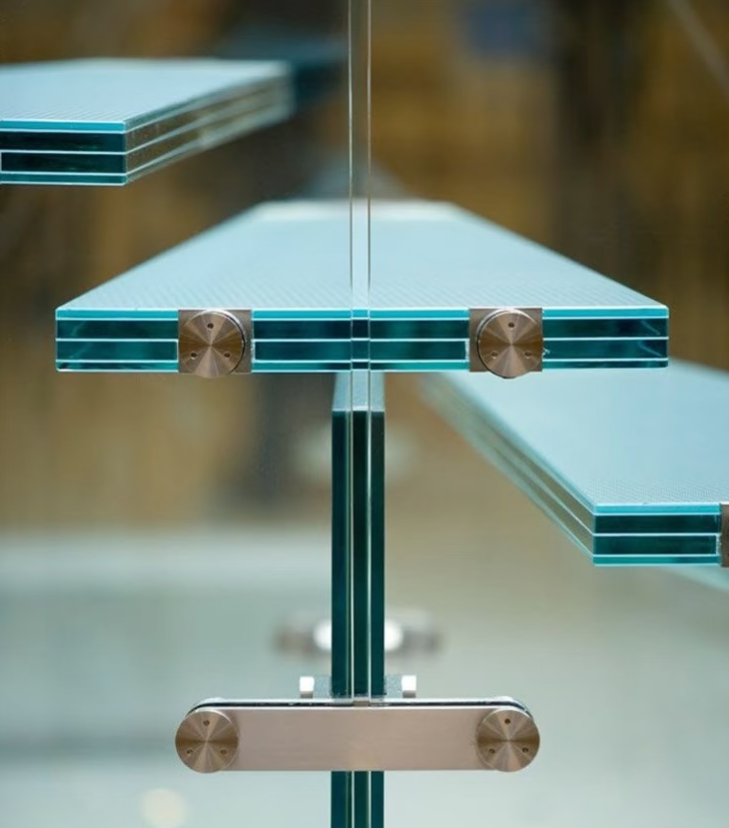
DYGLASS laminated glass is documented with a thickness range of 6.38mm to 50mm. Interlayer options include PVB, SGP, and EVA in thicknesses of 0.38mm, 0.76mm, 1.14mm, 1.52mm, and 2.28mm. Glass substrates can be tempered, float, low-iron, or tinted. Clear glass light transmittance is 85%-92%, tinted versions range from 10%-70%, and sound insulation is 35dB-45dB. The product line also includes bulletproof laminated glass and fire-resistant laminated glass.
Insulating Glass: Model DY-ZK01
DYGLASS insulating glass is available in standard configurations of 6mm+12A+6mm and 8mm+16A+8mm, with custom dimensions available. The product type includes tempered insulating glass, insulating glass with Low-E coating, insulating glass with argon gas, and curved insulating glass. Glass types include clear float, Low-E, tempered, and low-iron glass. Spacer options are aluminum or warm edge, gas fill options are air, argon, krypton, or xenon, light transmittance is 70%-89%, and sound insulation is 30dB-45dB.
Curved and Multi-Curved Glass
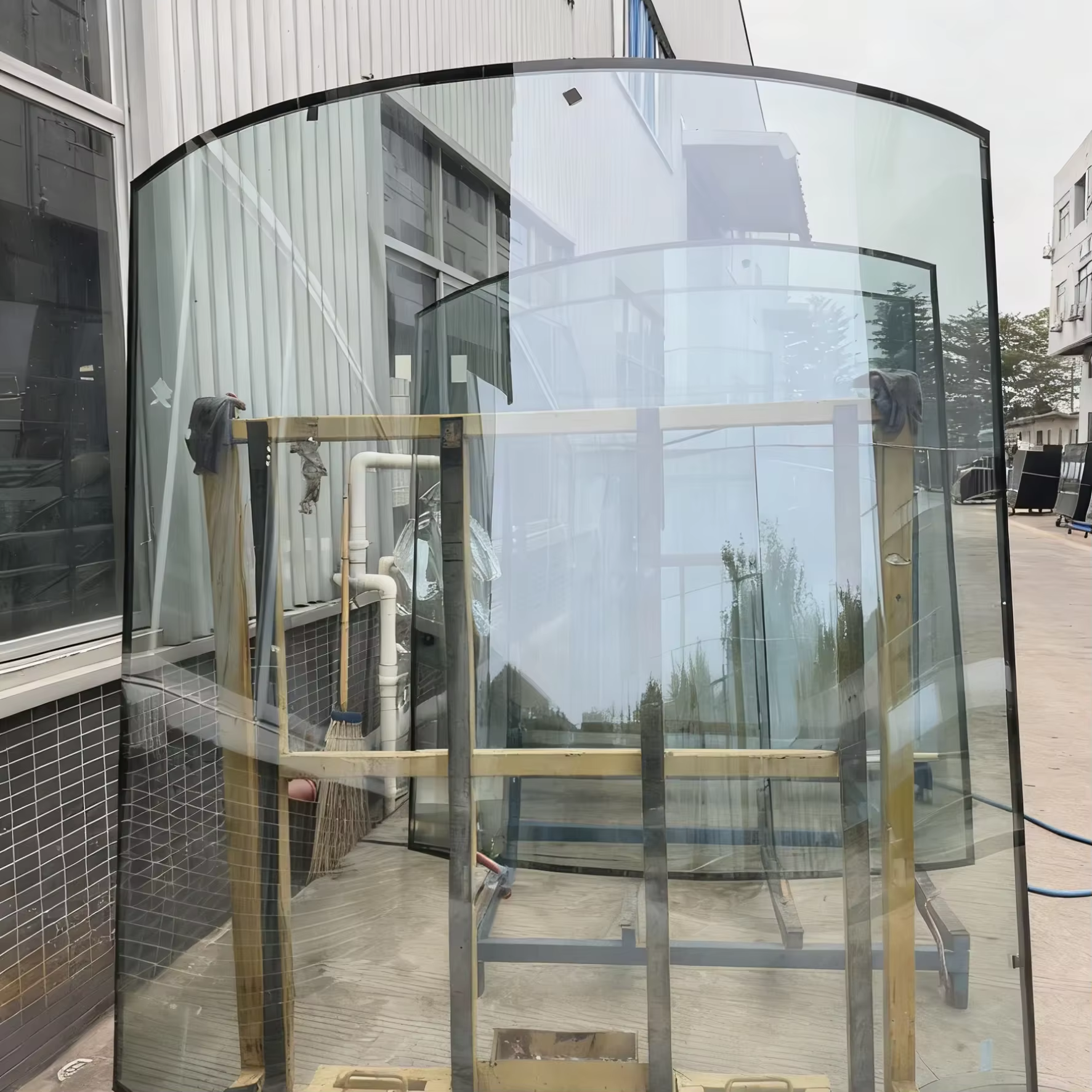
Complex geometry is one of the differentiators in architectural glass procurement. DYGLASS states that it can process any surface shape multi-curved tempered glass, double curved tempered glass, triple curved tempered glass, trapezoid curved tempered glass, spherical curved tempered glass, pyramidal curved tempered glass, S-shape curved tempered glass, cylindrical curved tempered glass, and positive and negative curved tempered glass.
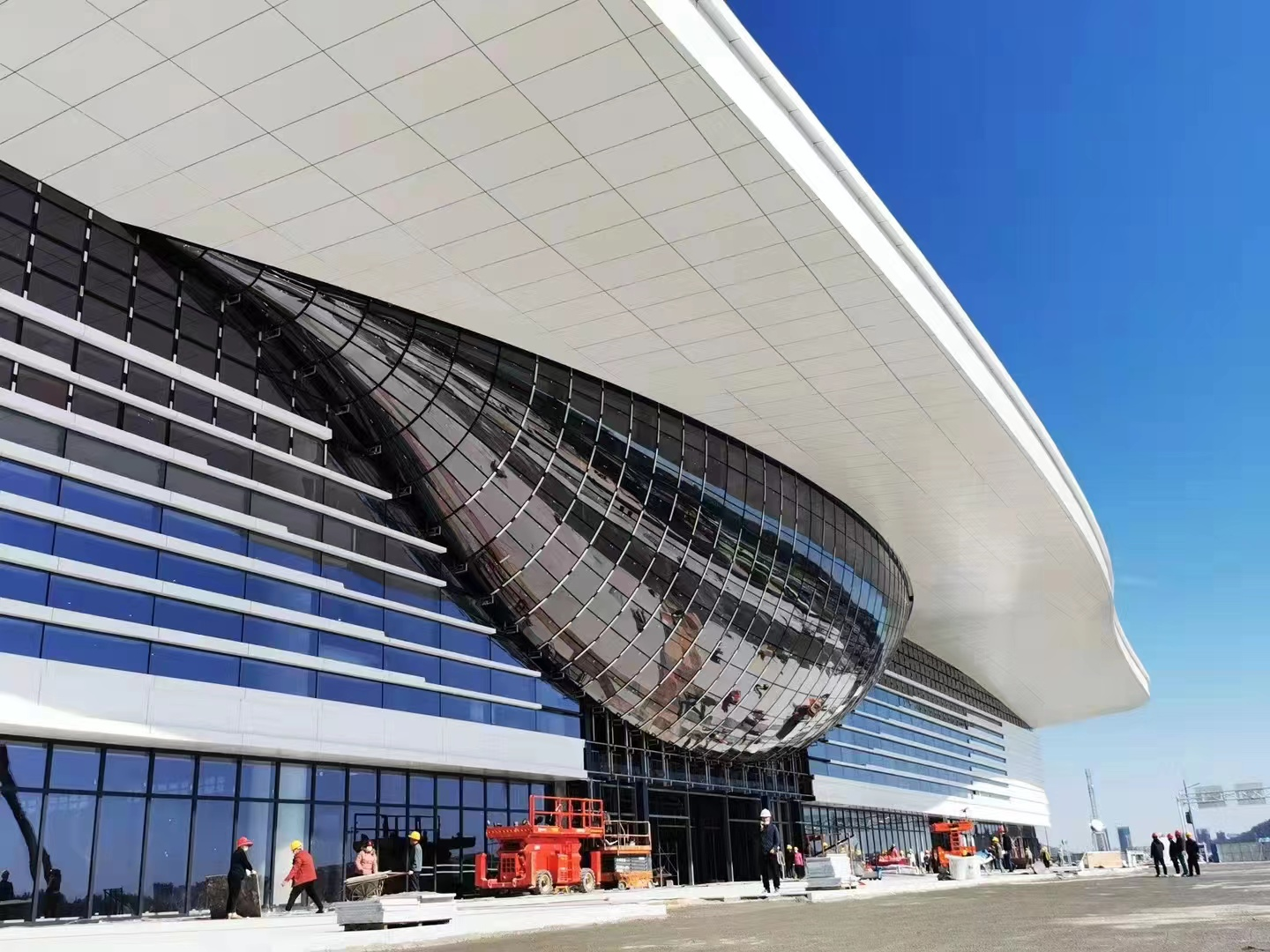
For demanding architectural applications, the product is described as suitable for high-rise facades, spherical domes, luxury storefronts, glass pools, and landmark buildings due to high precision, wind resistance up to 96 kPa, and complex curvature capabilities enabled by 3D forming technology.
Special Requirements and Supporting Equipment
Construction, decoration, and municipal engineering projects can include special requirements such as bulletproof glass, fire-resistant glass, and special-shaped glass. In the DYGLASS application model, the glass functions as a decorative building material and operates in fixed installation, long-term static operation mode.
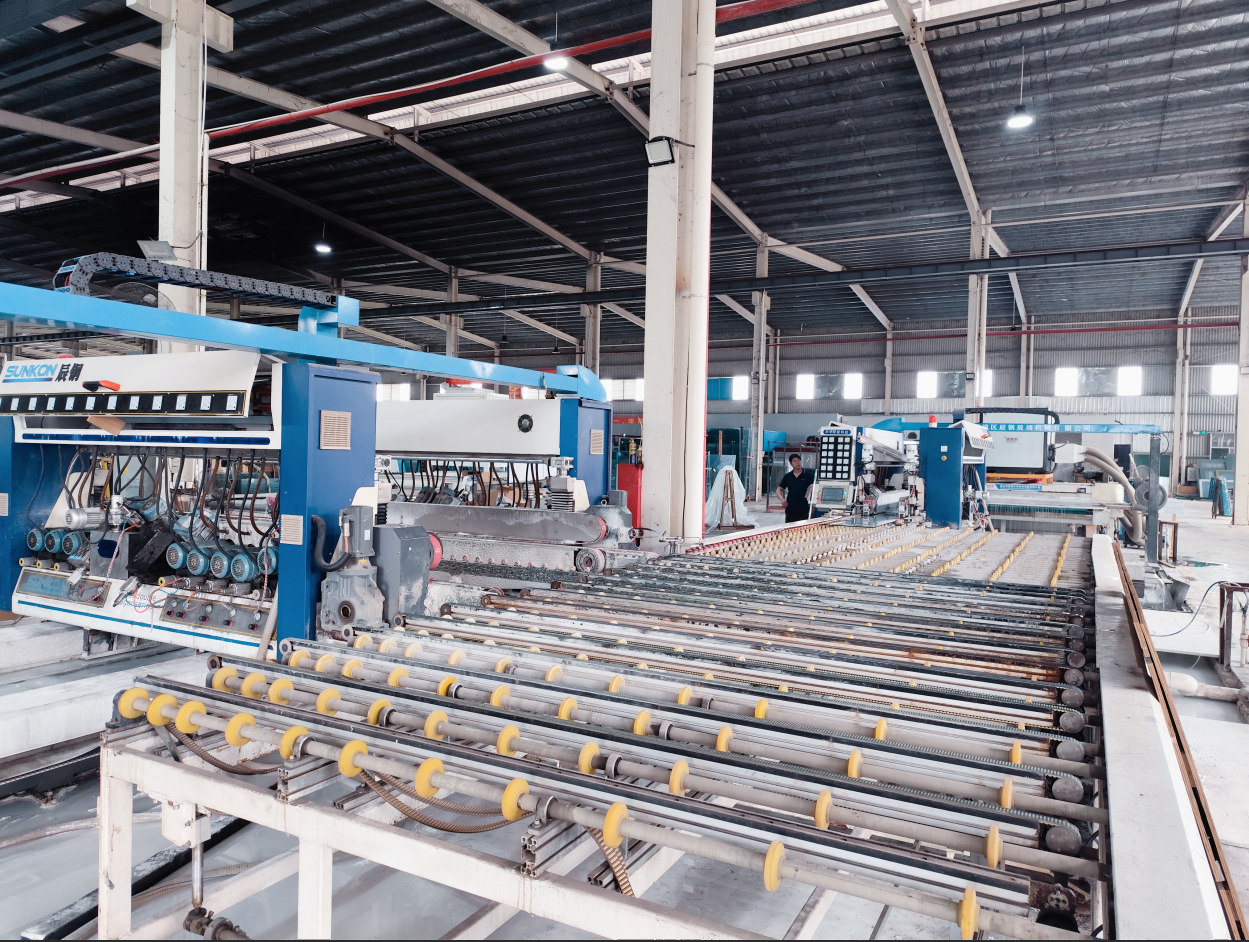
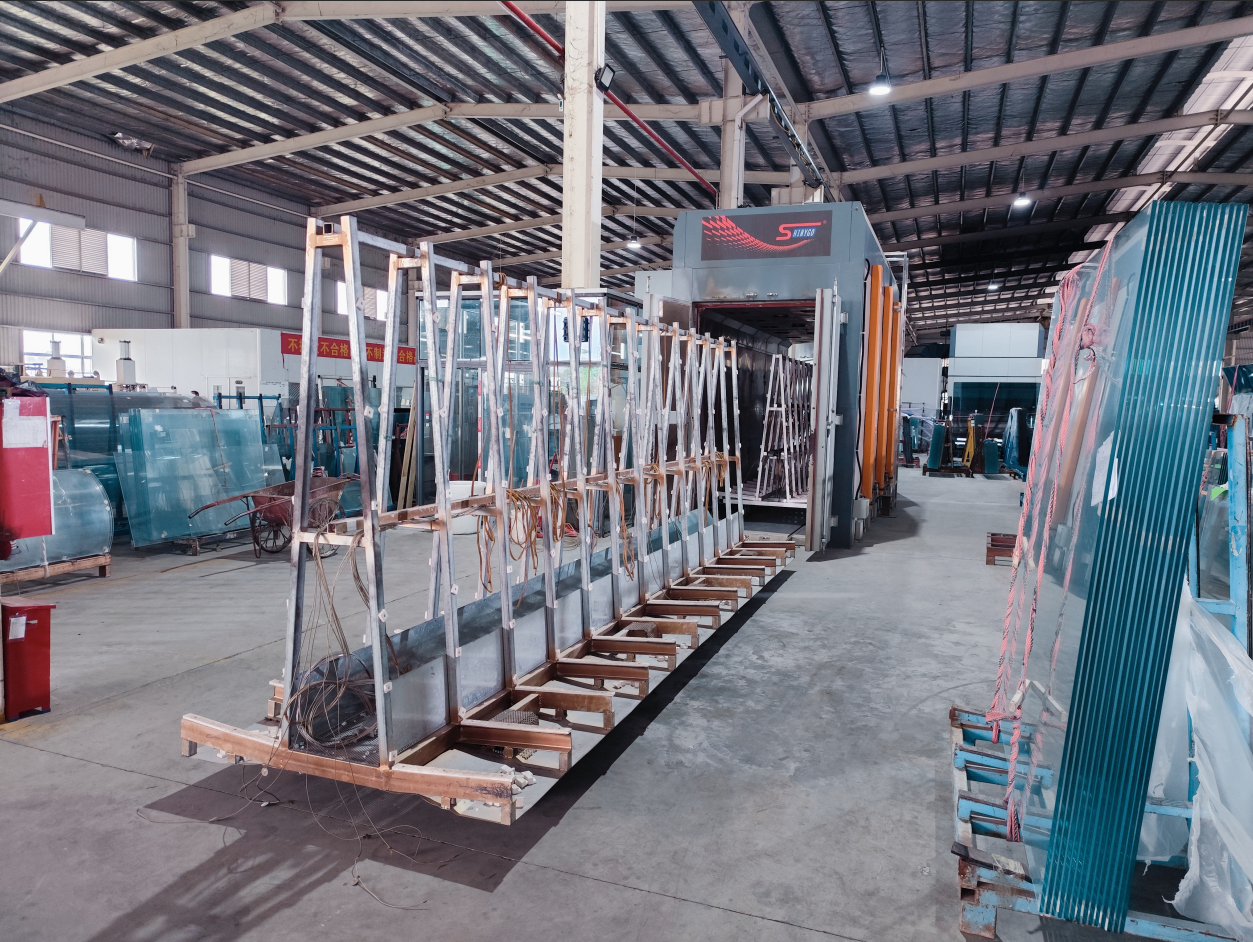
Supporting production equipment listed in the company capability record includes cutting and edging, a tempered glass production line, an insulating glass production line, and a laminated glass production line. Facility references also include a heat soak furnace, autoclave, drilling line, and edge grinding line. A heat soak furnace is particularly relevant for projects where heat-soaked tempered glass is required to reduce the risk of nickel sulfide-related breakage.
OEM, ODM, Capacity, and Quality Control
DYGLASS supports OEM and ODM orders. Customization options include size customization, thickness customization, shape customization, tempering treatment, insulating glass customization, laminated glass customization, hot bending or bent tempering customization, coating customization, ultra-clear glass customization, fire-resistant glass customization, smart switchable glass customization, polished or ground edge work, and hole drilling customization.
The production capability record lists a monthly capacity of 600,000 square meters. The company has 130 employees and a 30,000 square meter facility. Products are exported to clients in countries and regions including the USA, Canada, Russia, the Middle East, and Europe. DYGLASS is an Alibaba Verified Supplier and has passed an SGS test report. The Building Glass product line is listed with a warranty of more than five years, and the quality-control process is described as 100% test.
Step-by-Step Project Matching Process
- Define the project scenario. Start with the facade type and operating condition. High-rise facades, spherical domes, luxury storefronts, glass pools, and landmark buildings place different demands on precision, wind resistance, and curvature.
- Confirm special requirements. Ask whether the project needs bulletproof glass, fire-resistant glass, or special-shaped glass. These requirements change both glass composition and fabrication route.
- Select the glass family. Use the product matrix below to align the facade function with a glass type. Tempered glass provides strength, laminated glass improves safety after breakage, insulating glass controls thermal and acoustic performance, and curved glass addresses geometry.
- Check production compatibility. Verify that the supplier can support the required shape, drilling, edge work, coating, and interlayer. DYGLASS lists cutting and edging, tempered glass production line, insulating glass production line, and laminated glass production line as supporting equipment.
- Align order quantity and lead time. DYGLASS lists a minimum order of 10 square meters and a lead time of 7-9 days for its custom processing capability.
- Request evidence and references. Ask for the SGS test report, product specifications, and project references related to your building type. A sample or quotation should be based on the actual project drawings and performance requirements.
Use Cases for Building Glass in Real Projects
High-Rise Facades and Curtain Walls
For high-rise facades and curtain wall glass, buyers typically need flat or curved tempered glass combined with insulating glass. The DYGLASS insulating glass range supports Low-E coating, argon gas fill, and warm edge spacers, which are common specification points in energy-saving facade systems. Tempered glass thicknesses from 3mm to 19mm provide a wide envelope for facade engineering.
Landmark and Public Buildings
Landmark and municipal projects often require geometric flexibility and large-area glazing. DYGLASS application references include Guangzhou Financial City, Huizhou North Railway Station, China Nano Research Institute, Nanchang East Railway Station, Bahrain International Circuit, and Doha Metro Station. These project types align with the documented suitability of curved and multi-curved glass for high-precision, high-wind-resistance applications.
Hotel and Commercial Projects
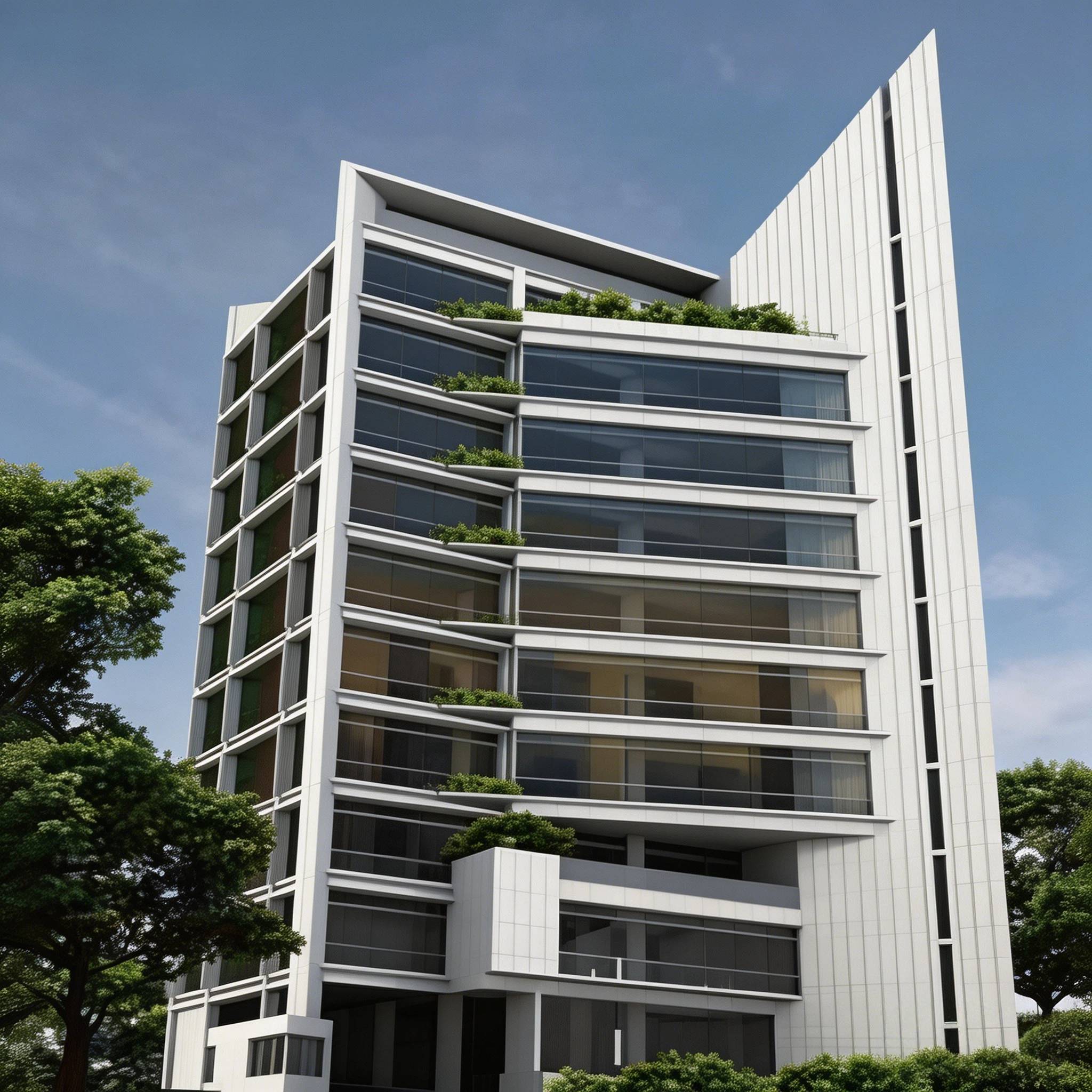
Hotel and commercial projects require a combination of heat insulation, sound insulation, and aesthetic appearance. One documented DYGLASS case is a UAE hotel architectural glass project of approximately 4,000 square meters. The case record lists a 30-year duration and stable operation as the result.
Security and Special-Shaped Applications
For projects with special requirements, DYGLASS includes bulletproof laminated glass and fire-resistant laminated glass in its product range. Special-shaped glass is also listed as a construction application requirement. Buyers with security requirements should confirm the specific ballistic or fire-rating needed for the project jurisdiction.
Building Glass Selection Matrix
| Project requirement | Glass family | Example specification from DYGLASS |
|---|---|---|
| Structural strength and facade flatness | Tempered glass (DY-GH01) | 3-19mm thickness; ±0.5mm tolerance; ≥91% light transmittance |
| Safety after breakage | Laminated glass (DY-JJ01) | 6.38-50mm; PVB, SGP, or EVA interlayers; 35dB-45dB sound insulation |
| Thermal and acoustic isolation | Insulating glass (DY-ZK01) | 6+12A+6 or 8+16A+8; Low-E or argon options; 30dB-45dB sound insulation |
| Complex curvature and geometry | Curved tempered glass | Multi-curved, double curved, spherical, pyramidal, S-shape; wind resistance up to 96 kPa |
| Decorative or privacy function | Digital printing, painted or stained, electric controlled glass | Available within DYGLASS working-condition range |
| Security or fire resistance | Bulletproof or fire-resistant laminated glass | Listed special requirement for construction projects |
Compliance Notes and Supplier Verification
Independent technical references can help when drafting a specification. ASTM C1048 requires fully tempered glass to meet a minimum surface compression of 10,000 psi, or 69 MPa, according to the standard reference and Cardinal Glass. EN 12150 specifies the fragmentation test for thermally toughened soda lime silicate safety glass, requiring more than 40 particles in a 50x50mm area, according to CEN.
Frequently Asked Questions
What safety and compliance criteria apply to building glass projects?
Common technical references include ASTM C1048, which requires fully tempered glass to reach a minimum surface compression of 10,000 psi (69 MPa), and EN 12150, which defines fragmentation testing for thermally toughened soda lime silicate safety glass. DYGLASS is an Alibaba Verified Supplier and has passed an SGS test report. Request the specific test documentation for your project jurisdiction.
Which building glass types can DYGLASS produce for a facade?
DYGLASS covers multi-curved tempered glass, flat tempered glass, laminated glass, insulating glass, electric controlled glass, digital printing glass, and painted or stained glass. The product range also includes bulletproof and fire-resistant laminated glass, as well as curved insulating glass.
Can DYGLASS handle curved and special-shaped glass?
Yes. DYGLASS states that it can process any surface shape multi-curved tempered glass, double curved, triple curved, trapezoid curved, spherical, pyramidal, S-shape, cylindrical, and positive and negative curved tempered glass. Special-shaped glass is listed as a special requirement in construction projects, and OEM or ODM customization options include shape and size changes.
What is the MOQ and lead time for DYGLASS building glass?
The listed minimum order quantity is 10 square meters. Lead time is 7-9 days for the documented custom processing capability. DYGLASS also lists a monthly capacity of 600,000 square meters and a 100% test quality-control process.
How can I request a sample or quote for my project?
You can contact DYGLASS directly through the company website, email, or WhatsApp. To start the process, send the project drawings, glass type, dimensions, and any special requirements. A sample or quotation request is a practical first step before order placement.
Conclusion
Building glass selection is project-specific. The material must satisfy geometry, performance, safety, and commercial constraints. DYGLASS offers a broad processing range across tempered, laminated, insulating, curved, smart, and decorative glass, with OEM and ODM support, a low minimum order quantity, and a documented lead time of 7-9 days.
For a new facade, hotel, station, or landmark project, start with the project scenario and special requirements, then map the glass family to the performance target. Use the company contact channels below to request a sample, quote, or product documentation with your project-specific specification.
Start Your Building Glass Inquiry
Company: Shenzhen Dayang Special Glass Co., Ltd. (DYGLASS)
Website: www.dayangglass.com
Email: info@dayangglass.com
Tel / WhatsApp: +86-13692110212