
CE Compliance for Curved Glass Exports: EN 1279, EN 1449, and EN 12150 Explained for EU Markets
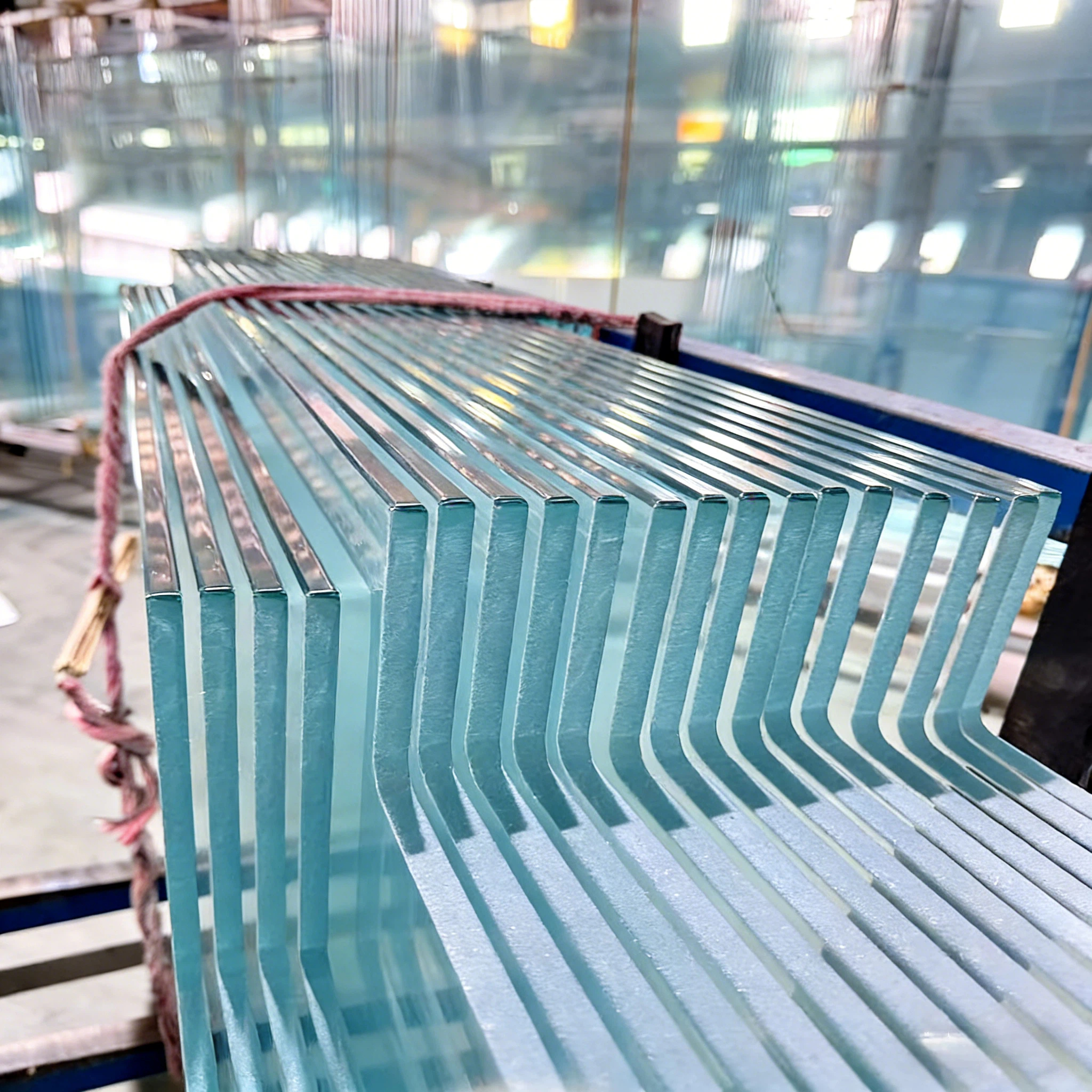
Tempered glass from DYGLASS, covered by CE certificate BGTC20260403-02 issued against EN 12150-1:2015+A1:2019.
Short answer: Curved glass is accepted into the EU/EEA on the strength of CE marking, and CE marking is granted per product family and per standard — not per supplier and not per bend. DYGLASS (Shenzhen Dayang Special Glass Co., Ltd., based in Shenzhen, China) holds three separate CE certificates covering the families it exports most: BGTC20260403-02 for tempered glass to EN 12150-1:2015+A1:2019, BGTC20260403-03 for laminated glass to EN 1449:2005, and BGTC20260403-05 for insulating glass to the EN 1279 series (parts 1, 2, 3 and 4, 2018). This guide explains what each standard actually verifies, which DYGLASS models sit inside each certificate, and what document pack a buyer should collect before a curved glass container leaves Shenzhen.
Problem definition: most curved glass compliance failures happen on paper, not on the line
The technical question — can a supplier bend, laminate and temper glass to a specified radius — is usually answered long before the contract. The question that stops shipments is narrower: can the buyer prove, to a facade engineer or a customs authority, that the delivered glass is covered by a valid conformity assessment?
Three specific gaps cause the problem:
- Family mismatch. A tempered glass certificate does not cover laminated glass. A laminated certificate does not cover an insulating glass unit. Buyers frequently order a triple build-up — tempered, laminated, then sealed into a unit — and assume one document covers all three layers.
- Scope drift. A certificate issued for a named product type does not automatically travel to a different thickness range, a different interlayer, or a different gas fill. If the build-up changes, the documentation set has to be re-checked.
- Origin assumptions. Buyers sometimes assume that a CE certificate alone opens every market. It does not. The EU/EEA, the Gulf and the United States each run their own acceptance route, and the useful asset is the underlying test evidence rather than the label itself.
For buyers at the awareness and research stage, the practical takeaway is this: ask for the certificate number, the standard number and the product family it names — in writing, before the quotation is finalised.
Industry background: how the European standards architecture treats curved glass
Curved glass is not a separate product category in European standardisation. It is treated as a geometry applied to product families — thermally toughened safety glass, laminated glass and insulating glass units — and each family carries its own standard and its own conformity route. That is why a curved glass producer usually ends up holding several certificates rather than one.
The same logic appears outside Europe. ASTM C1464-06, the ASTM specification for bent glass, sets requirements covering building construction, furniture and display applications (source: ASTM International). ISO 11485-3:2014 classifies curved tempered and curved laminated glass as safety glasses for buildings (source: International Organization for Standardization). In other words, the curved form factor is recognised internationally — but the document that proves conformity is always traced back to the family standard.
Demand context matters for how much compliance attention a project deserves. One commercial market-research estimate put the global curved glass market at USD 13.5 billion for 2025, with a forecast CAGR of 5.8% over 2025–2035 (source: Statifacts). Separately, the glass curtain wall market was reported at USD 62.4 billion in 2024 (source: Grand View Research). Category research also describes advanced production reaching bending radii down to roughly 75 mm and panel lengths up to about 12 m. Those figures describe the category as a whole; they do not describe any single supplier, and they should be read as market context rather than as a performance guarantee for a specific order.
What they do tell a buyer is that curved glass is now a mainstream facade and interior material rather than a one-off special. Mainstream status is exactly when documentation discipline matters most.
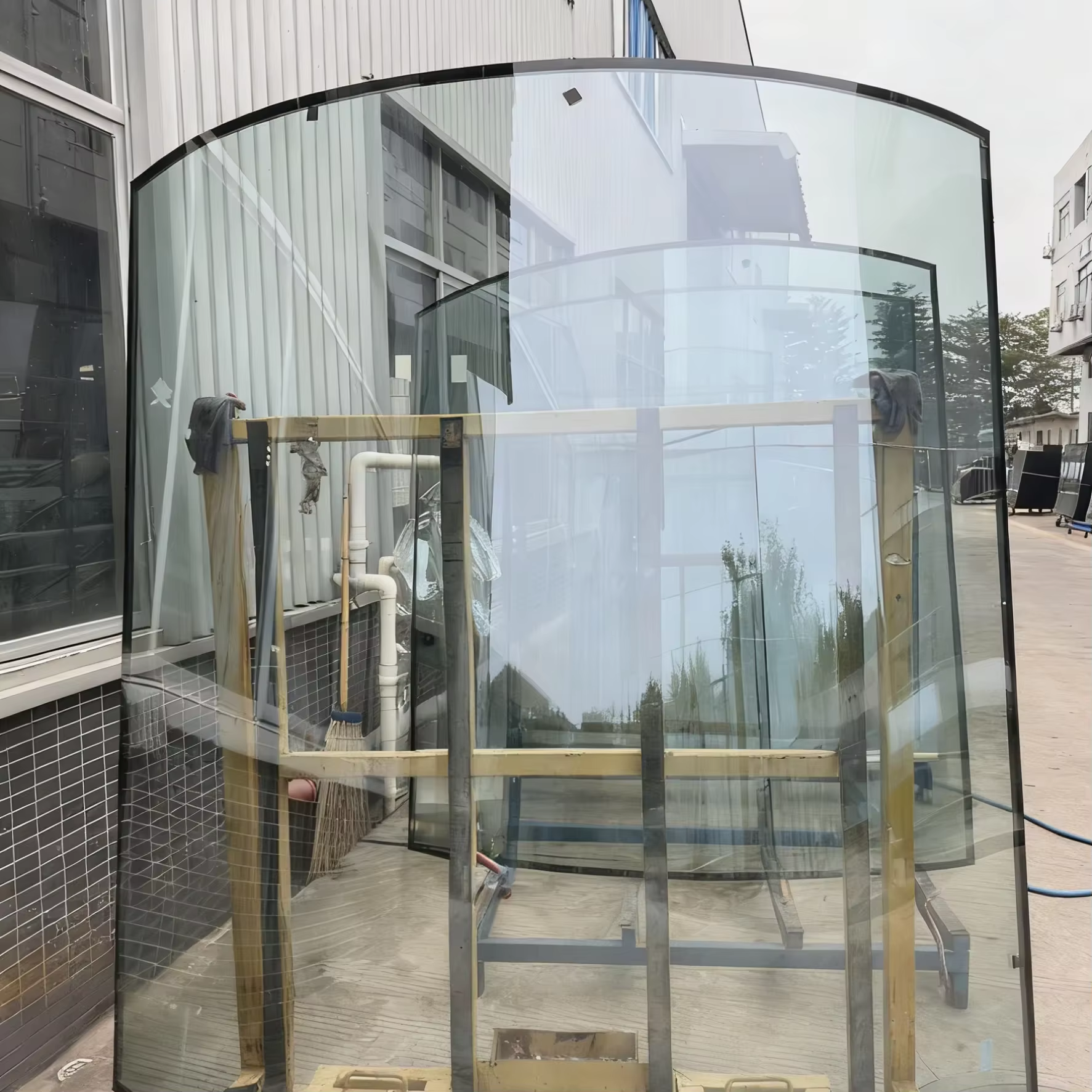
Insulating glass units are assessed under the EN 1279 series — the family covered by DYGLASS certificate BGTC20260403-05.
Detailed solution: the three CE certificates DYGLASS holds
DYGLASS is a building glass manufacturer established in 2017, located in Shenzhen, Guangdong, China, near Hong Kong. The company operates a 30,000 m² facility with approximately 130 staff and an annual production capacity of 600,000 m². Its main products are laminated glass, toughened glass, smart glass, insulated glass, curved glass and building glass, and it welcomes OEM and ODM orders.
Three CE certificates sit at the centre of its EU-facing documentation.
1. BGTC20260403-02 — tempered glass to EN 12150-1:2015+A1:2019
EN 12150-1 covers thermally toughened soda lime silicate safety glass: the definition, description and performance characteristics of the product. The clauses that matter commercially are the ones covering resistance to thermal stress, fragmentation behaviour, dimensional and edge tolerances, and bow and warp limits. For curved work, the thermal stress clause is the critical one, because a bent pane carries residual stress patterns from forming and from the toughening quench that a flat pane does not.
The DYGLASS product inside this certificate is the DY-GH01 curved tempered glass, made from float glass. It is available from 3 mm to 19 mm with a thickness tolerance of ±0.5 mm and light transmittance of ≥91%. Edge work options are polished, grinded or beveled. The product is supplied as flat tempered glass, curved tempered glass, or tempered glass with holes, and is used in construction, furniture, bathroom, curtain wall and office partition applications.
2. BGTC20260403-03 — laminated glass to EN 1449:2005
EN 1449 addresses laminated glass and laminated safety glass as a product standard. Its commercial weight lies in three areas: integrity of the interlayer bond, impact behaviour, and residual load-bearing capacity after breakage — the property that keeps fragments in place and keeps a facade from opening up.
The DYGLASS model here is DY-JJ01, a tempered laminated safety glass also produced as curved laminated glass. It is built from tempered glass with a PVB interlayer, and the thickness range runs from 6.38 mm to 50 mm. PVB interlayer thickness options are 0.38 mm, 0.76 mm, 1.14 mm, 1.52 mm and 2.28 mm, and the available interlayer types are PVB, SGP and EVA. Glass substrates can be tempered, float, low-iron or tinted. Clear laminated glass delivers 85%–92% light transmittance; tinted laminated glass runs 10%–70%. Sound insulation is 35 dB–45 dB, and the product can be used for fire-resistant applications as well as building and automotive scenarios.
3. BGTC20260403-05 — insulating glass to EN 1279:1,2,3,4 (2018)
The EN 1279 series is written in parts, and each part answers a different failure mode. Part 1 sets terminology, general requirements and the framework for the family. Part 2 covers the long-term test method and requirements for moisture penetration, which governs fogging and seal failure. Part 3 covers the long-term test method and requirements for gas leakage rate and gas concentration tolerances — the provisions that underpin the declared thermal performance of a gas-filled unit. Part 4 sets out methods of test for the physical attributes of the edge seal. Together, parts 1–4 describe a unit that still performs after years of thermal cycling, not just on the day it was sealed.
The DYGLASS model in this family is DY-ZK01, a tempered insulating glass unit with curved insulating variants. It consists of tempered glass and an aluminium spacer. Standard thickness options are 6 mm+12A+6 mm and 8 mm+16A+8 mm, with custom thicknesses available. Glass type can be clear float, low-E, tempered or low-iron. Spacer bar options are aluminium or warm edge. Gas fill options are air, argon, krypton and xenon. Light transmittance ranges from 70% to 89%, and sound insulation is 30–45 dB. The unit is intended for curtain wall and window systems, interior decoration, architecture projects and building construction.
How DYGLASS backs the certificates: SGS testing and Alibaba Verified status
DYGLASS does not present its quality assurance route as an ISO management-system certificate. Its verification chain is built on third-party testing instead: the company has passed the SGS test report and holds Alibaba Verified Supplier status. For an EU buyer, that combination has a specific practical meaning.
- Third-party testing gives an independent record of measured performance, which is what a facade engineer or a project consultant typically wants to see alongside the certificate.
- Alibaba Verified Supplier status provides a platform-level entity check, useful for buyers who are still screening suppliers at the research stage and have not yet commissioned their own audit.
- The CE certificates themselves are the formal conformity documents for the EU/EEA route. The SGS report and verification status do not replace them — they reinforce the evidence pack.
In-house process equipment supports the same chain. DYGLASS operates a flat and curved tempering line, a second line for concave and convex curved and irregular curved work, a double curved tempering line, an autoclave, an insulated line, a heat soak furnace, plus cutting, drilling and edge grinding lines. The heat soak furnace is the relevant one for toughened glass risk management, since heat soaking is used to reduce the risk of spontaneous breakage in tempered glass.
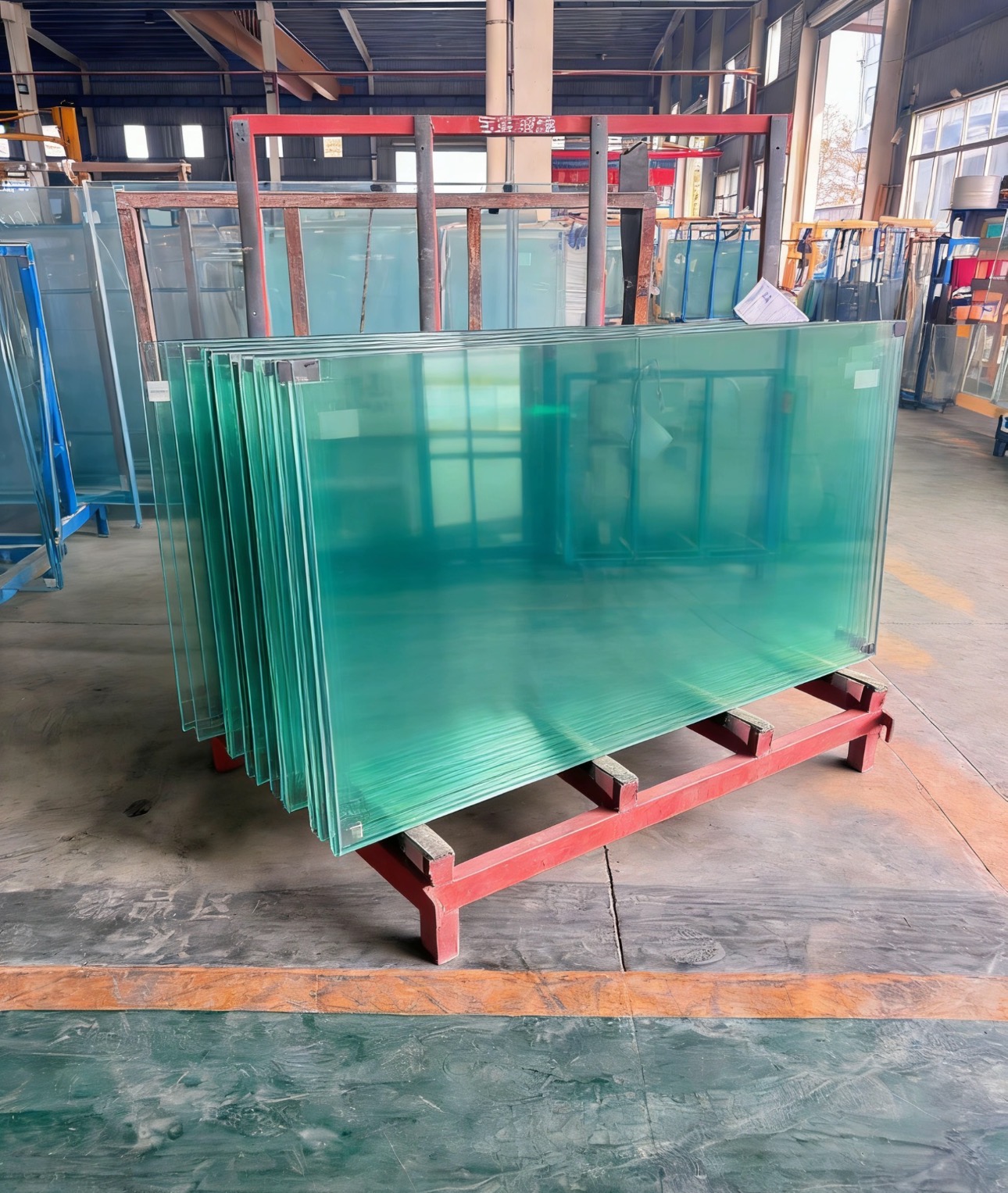
Laminated glass with PVB interlayer — the family covered by DYGLASS certificate BGTC20260403-03 against EN 1449:2005.
Step-by-step breakdown: building the document pack for EU, UAE and US destinations
Compliance work is easier to run as a fixed sequence than as a scramble at shipment. The following order reflects how the three certificates map onto a real order.
Step 1 — Define the build-up before the standard. Decide whether the project needs a single tempered pane, a laminated pane, an insulating unit, or a combination. The standard follows the build-up; it never precedes it.
Step 2 — Match the build-up to a DYGLASS model. Curved tempered glass maps to DY-GH01. Curved laminated glass maps to DY-JJ01. Curved insulating glass maps to DY-ZK01. If a project mixes families, all three certificates come into play, and the document pack has to show which part of the delivery is covered by which.
Step 3 — Confirm scope against thickness, interlayer and gas fill. DY-GH01 covers 3–19 mm with ±0.5 mm tolerance. DY-JJ01 covers 6.38–50 mm total thickness with PVB, SGP or EVA interlayers. DY-ZK01 covers 6 mm+12A+6 mm and 8 mm+16A+8 mm standard builds with custom sizes available, and with air, argon, krypton or xenon fill. Any deviation should trigger a written scope confirmation from the supplier.
Step 4 — Collect the paper. For EU/EEA delivery, request the CE certificates by number, and pair them with the SGS test report. For UAE and wider Gulf projects, the same underlying evidence usually applies — thickness and tolerance data, interlayer records, fragmentation and thermal performance data — presented to the project consultant or authority, because destination requirements follow the local approval route rather than the European one. For US projects, bent glass is normally specified against ASTM C1464-06, so the ASTM reference sits alongside the European test evidence.
Step 5 — Close the loop with verification. If the buyer's consultant wants independent re-testing or a pre-shipment inspection, arrange it before production, not after. Re-testing a finished curved unit is expensive because the geometry cannot be re-formed without restarting the process.
Step 6 — Align packing and transport with the geometry. Curved units need shipping frames that match the actual curvature. This is a logistics detail, but it is also a compliance detail: a cracked edge on arrival turns a certified delivery into a claim.
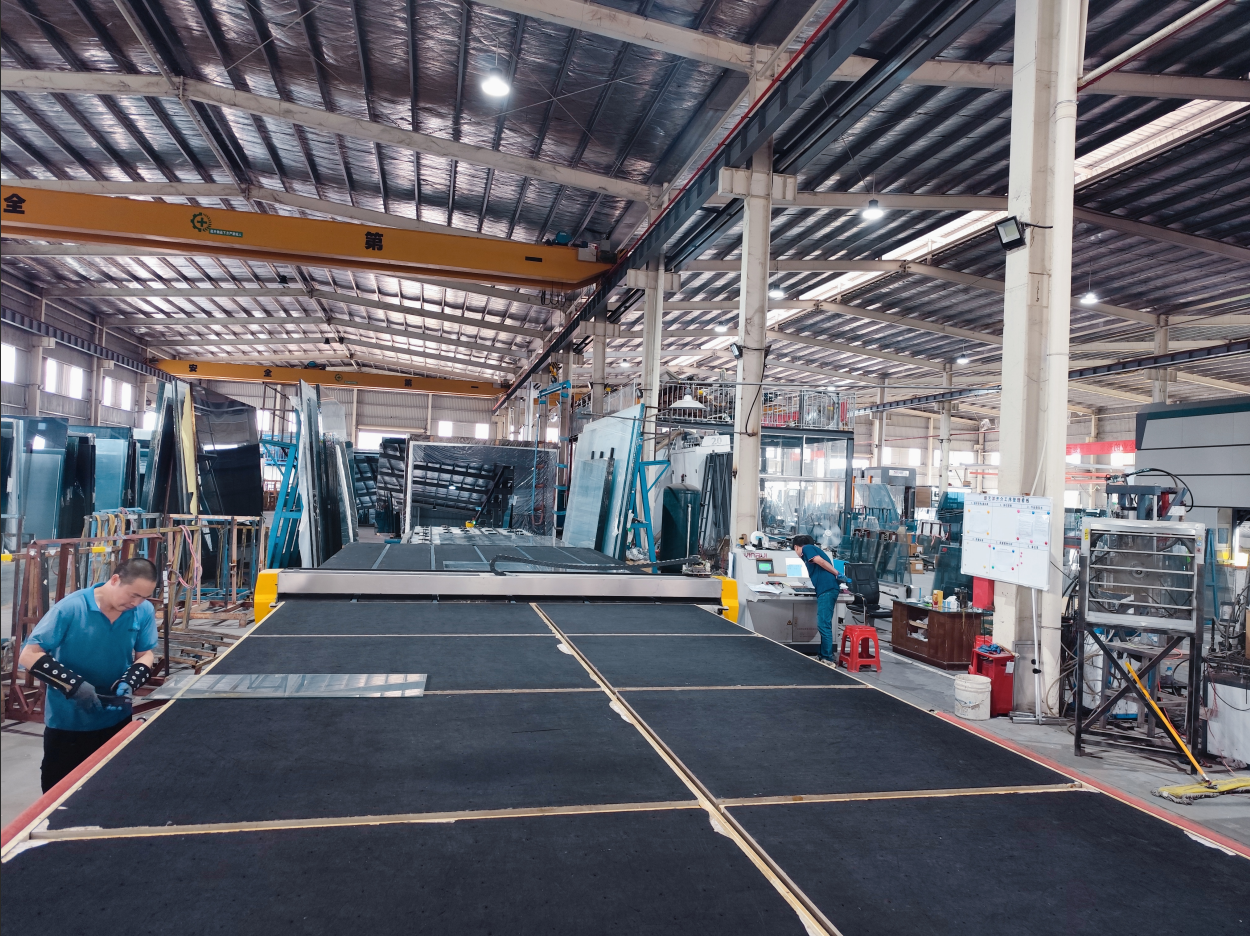
Cutting is the first process step in a curved glass order; the compliance pack is assembled in parallel with production.
Use cases: which certificate a project actually needs
Curved glass for curtain walls is the application with the highest documentation load, because the facade is a primary building envelope element and usually combines insulating and laminated layers. A curtain wall specification typically pulls in EN 1279 for the unit and EN 1449 for the laminated component.
Curved glass for sightseeing elevators prioritises impact safety and residual strength. Because an elevator shaft creates a public-facing, potentially impact-exposed surface, laminated safety glass is the usual choice, and EN 1449 becomes the governing standard. Curved laminated glass under DY-JJ01 — with interlayer options from 0.38 mm to 2.28 mm, and SGP available where higher stiffness is needed — is the relevant build.
Curved glass for skylight roofs shares the safety logic of lift shafts but adds thermal cycling. Roof glazing sees wider temperature swings than vertical facades, so the thermal stress requirements under EN 12150-1 and the moisture and gas retention requirements under EN 1279 both matter where the build-up includes a sealed unit.
Curved glass for shower rooms and for coffee tables sits at the interior end of the range. Both are usually single-pane tempered or tempered laminated. Shower enclosures rely on fragmentation behaviour from EN 12150-1; furniture glazing relies on the same family plus edge quality, where DY-GH01’s polished, grinded or beveled edge options become a specification point rather than a cosmetic one.
Low-iron, sound-insulated, UV-block, explosion-proof and double curved variants all sit inside the same three families. A low-iron substrate changes transmittance, not the applicable standard. A double curved or S-shaped geometry changes the forming route, not the certificate family. What changes with geometry is the scope confirmation in Step 3.
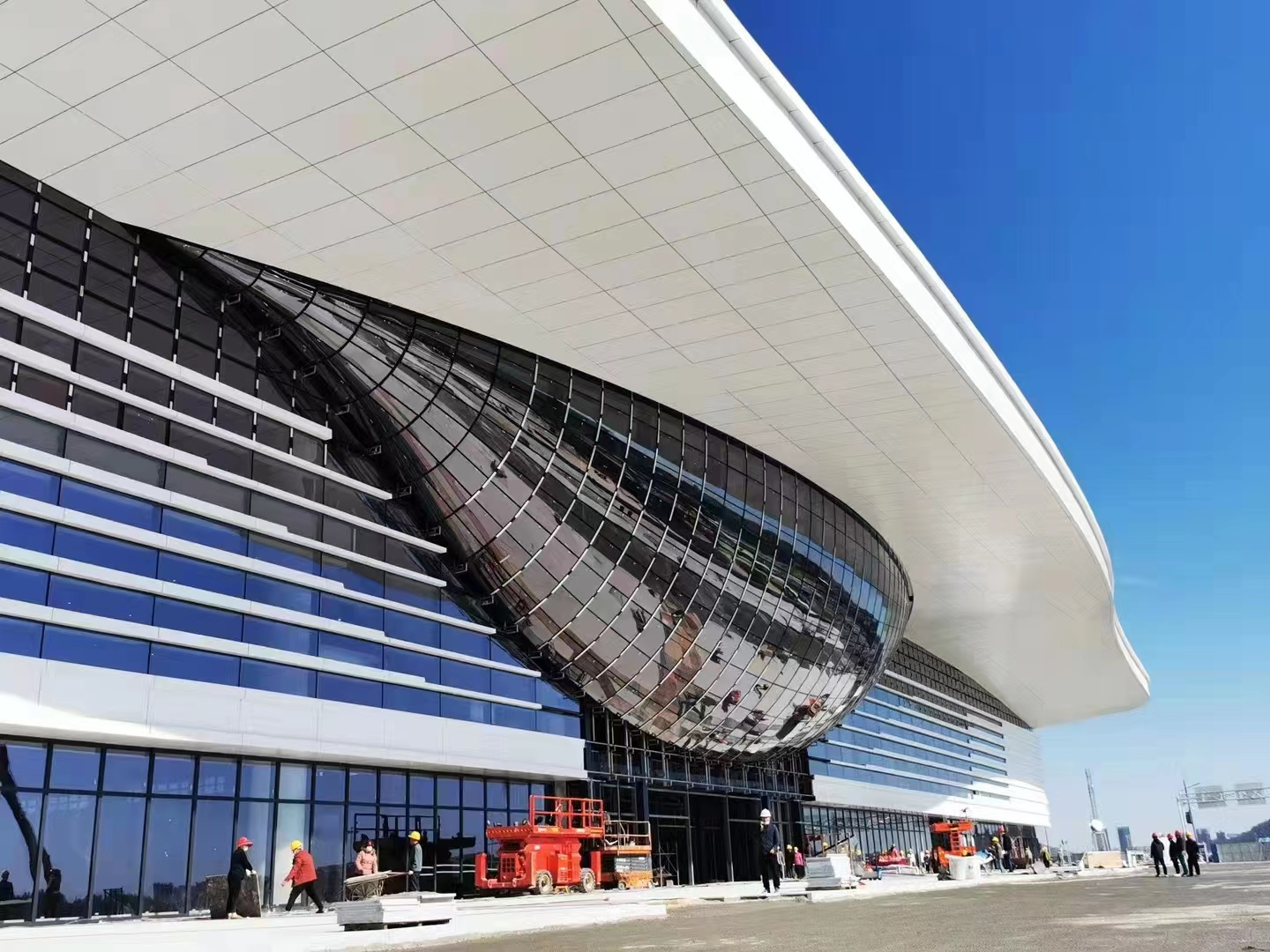
Large public projects such as Huizhou North Railway Station illustrate why project consultants ask for the full evidence pack, not just a label.
Comparison table: the three certificates side by side
| CE certificate | Standard | Product family covered | What the standard verifies | DYGLASS model |
|---|---|---|---|---|
| BGTC20260403-02 | EN 12150-1:2015+A1:2019 | Thermally toughened safety glass | Thermal stress resistance, fragmentation behaviour, dimensional and edge tolerances, bow and warp | DY-GH01 — curved tempered glass, 3–19 mm, ±0.5 mm tolerance |
| BGTC20260403-03 | EN 1449:2005 | Laminated and laminated safety glass | Interlayer bond integrity, impact behaviour, residual load-bearing capacity after breakage | DY-JJ01 — tempered laminated / curved laminated glass, 6.38–50 mm |
| BGTC20260403-05 | EN 1279:1,2,3,4 (2018) | Insulating glass units | General requirements and terminology (Part 1), moisture penetration (Part 2), gas leakage rate and gas concentration tolerances (Part 3), edge seal physical attributes (Part 4) | DY-ZK01 — tempered / curved insulating glass, 6 mm+12A+6 mm and 8 mm+16A+8 mm |
Declared values by model. DY-GH01: light transmittance ≥91%; edge work polished, grinded or beveled. DY-JJ01: light transmittance 85%–92% clear, 10%–70% tinted; sound insulation 35–45 dB; interlayers PVB, SGP, EVA. DY-ZK01: light transmittance 70%–89%; sound insulation 30–45 dB; spacer aluminium or warm edge; gas fill air, argon, krypton or xenon. All three models are supported by the SGS test report and DYGLASS’s Alibaba Verified Supplier status.
FAQ: CE compliance questions buyers ask before ordering curved glass
It is not clear whether a certificate to EN 1279, EN 1449 or EN 12150 covers curved shapes, or only flat glass. How is that resolved?
CE marking is issued per product family and per standard, not per geometry, and the three DYGLASS certificates are held for the tempered, laminated and insulating glass families that the company produces, including their curved variants. The practical way to resolve the question for a specific order is to state the build-up, thickness and curve type in writing and ask the supplier to confirm which certificate number applies. For DYGLASS, curved tempered glass sits under BGTC20260403-02, curved laminated glass under BGTC20260403-03, and curved insulating glass under BGTC20260403-05, with the SGS test report supplied alongside.
What production capability stands behind the certificates?
DYGLASS operates a 30,000 m² facility in Shenzhen with approximately 130 staff and 600,000 m² of annual production capacity, established in 2017. Its process equipment includes a flat and curved tempering line, a concave and convex curved and irregular curved line, a double curved tempering line, an autoclave, an insulated line and a heat soak furnace, plus cutting, drilling and edge grinding lines. The company processes multi-curved tempered glass, double curved tempered glass, triple curved tempered glass, trapezoid, spherical, pyramidal, S-shape, cylindrical and positive-and-negative curved tempered glass.
How should a buyer budget for the documentation side of a CE-marked curved glass order?
No published price data exists for curved glass, and DYGLASS quotes per project rather than from a price list, so the honest answer is that budget planning should start from a written quotation rather than from a per-square-metre assumption. What can be said with confidence is which variables move the number: the complexity of the curve, the build-up (interlayer type and thickness, low-E coating, gas fill), edge work, and the shipping frame required for the specific curvature. On the documentation side, the CE certificates and the SGS test report already exist as part of DYGLASS’s conformity framework, so buyers should ask directly what is supplied with the order rather than assuming a separate documentation charge — and should budget separately if they intend to commission independent re-testing through their own consultant.
Can a sample be validated before a production run?
Yes, and for curved glass the sample has to reproduce the final geometry. A flat coupon cannot demonstrate curvature, bow or warp, so a meaningful sample follows the specified radius and build-up: for DY-GH01 that means the ordered thickness between 3 mm and 19 mm with ±0.5 mm tolerance; for DY-JJ01 it means the selected PVB, SGP or EVA interlayer at the specified thickness; for DY-ZK01 it means the cavity, spacer type and gas fill. DYGLASS also accepts OEM and ODM orders, where the sample stage is used to confirm drawing dimensions before tooling and production. Sample requests and specification files can be sent to info@dayangglass.com.
What lead time should be planned for a CE-documented curved glass shipment?
No standard lead time is published, because real scheduling depends on variables that change per order: curve geometry and the number of distinct radii, thickness and build-up, whether the unit needs an insulating seal, gas fill or a heat soak cycle, and the total quantity. The reliable approach is to confirm the schedule in writing at order stage, after the build-up and certificate mapping are fixed, and to align any third-party inspection with that confirmed schedule. Shipping runs from Shenzhen, which is close to Hong Kong and gives access to established export routes, and DYGLASS already exports to markets including the UAE, Bahrain, Saudi Arabia, the United States, the Philippines and Vietnam, with exports accounting for around 60% of output.
Conclusion: the certificate number is the deliverable
For curved glass entering the EU/EEA, the compliance discussion resolves down to three questions a buyer can ask in a single email: which standard applies to the build-up, which certificate number covers it, and what supporting test evidence comes with it. For DYGLASS orders, the answers are EN 12150-1:2015+A1:2019 under BGTC20260403-02 for tempered glass, EN 1449:2005 under BGTC20260403-03 for laminated glass, and EN 1279:1,2,3,4 (2018) under BGTC20260403-05 for insulating glass — reinforced by an SGS test report and Alibaba Verified Supplier status rather than by an ISO management-system certificate.
Buyers researching suppliers should treat certificate scope as a screening filter, not a formality. A supplier that can name its certificate numbers and map them to specific models removes the largest single source of delivery risk in a curved glass project.
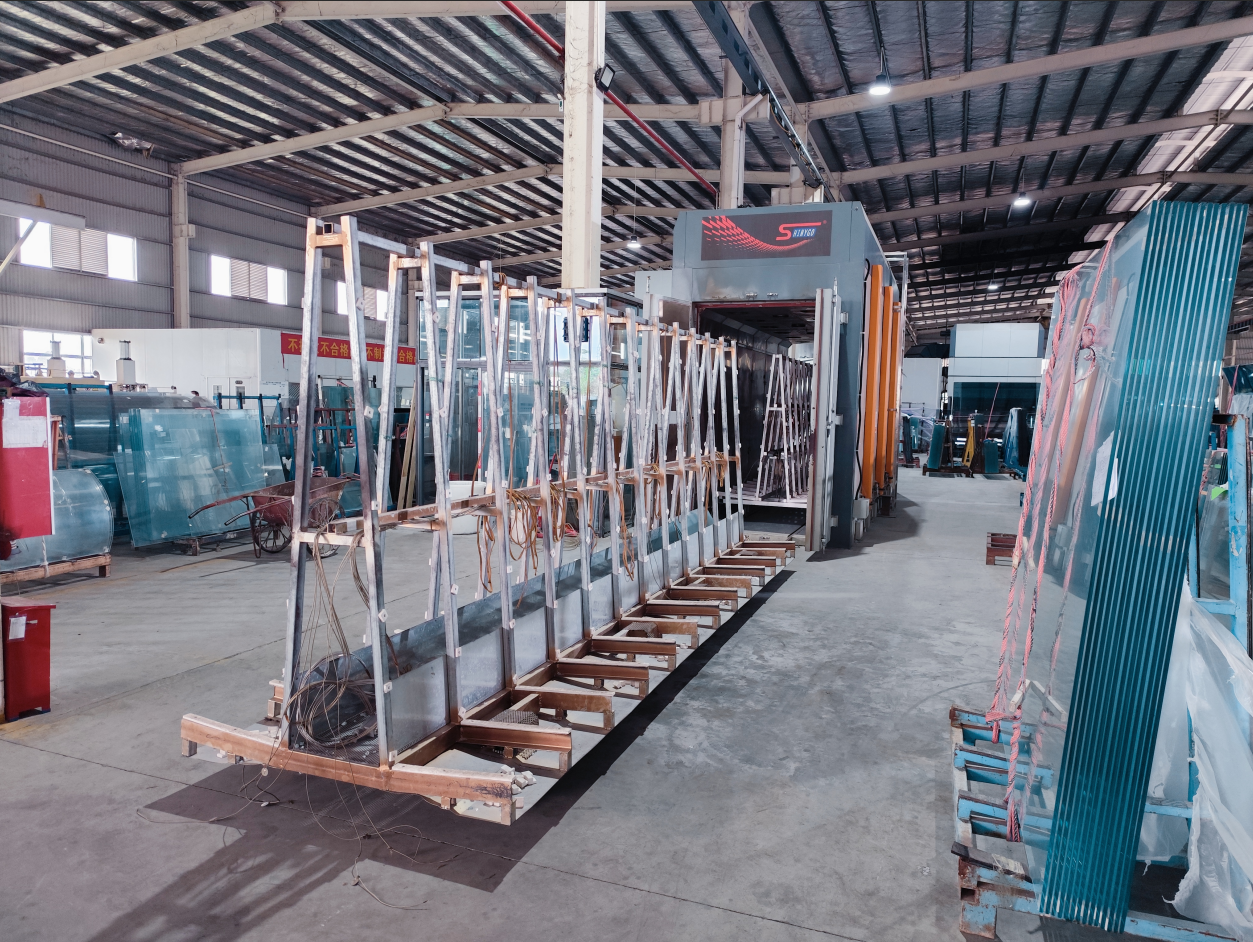
The in-house heat soak furnace supports the toughened glass side of DYGLASS’s compliance work.
Next step: map your build-up to a certificate
Send the project drawing, the intended build-up and the destination market, and DYGLASS will confirm which certificate applies, which model fits, and what documentation is issued with the order. OEM and ODM enquiries are welcome.
Website: www.dayangglass.com | Email: info@dayangglass.com | Tel: +86-136 9211 0212 | WhatsApp: +86-13692110212
Download the DYGLASS product brochure (PDF)
Shenzhen Dayang Special Glass Co., Ltd. — 1706, Bldg. H, Phase 1, Liuhecheng Business Plaza, No. 168, Shenshan Road, Pingshan Street, Pingshan New Dist., Shenzhen, Guangdong, China.
Have Questions or Need More Details?
Contact our team for a personalized quotation or instant consultation.
Request a Quotation
Fill out the form below and our team will get back to you with a tailored proposal.
WhatsApp Direct Chat
Prefer to chat in real-time? Message us on WhatsApp for instant assistance & quick answers.
- Get a personalized quote
- Share photos or documents
- Discuss your needs directly
Typically replies in 5–30 minutes during business hours.