
Curved Glass Delivery Assurance: Verifying Supplier Capacity
Curved glass delivery assurance is the documented proof that a supplier can reproduce an approved curved panel at order scale, inspect it against agreed criteria, and ship it without the specification changing between sample and site. It is not a certificate, and it is not a sample. It is the link the buyer builds between the two before the contract is signed.
Procurement teams usually reach this question late, after a supplier has been shortlisted on price and a first sample has been approved. At evaluation and execution stage the useful questions are narrower: can the shape actually be formed on the equipment the supplier owns, will the plant have capacity when the order is scheduled, and is the delivered product inside the scope of the certification that was shown? This guide answers those questions through six areas of evidence — facility scale and staffing, annual output, line configuration, engineering support, quality credentials and model-level CE scope — and uses Shenzhen Dayang Special Glass Co., Ltd. (DYGLASS) as a worked example of what a supplier can be asked to document.
Three points on scope before the detail. Curved glass is a formed product, so capability is tied to specific furnaces, tooling and operators rather than to a catalogue entry. Certificates prove conformity for defined product types, standards and thicknesses, not for everything a factory can make. And public reference material does not provide a comparable capacity benchmark across curved-glass fabricators, which means capability evidence has to be requested from the supplier and matched against your own order profile.
What delivery assurance covers in a curved glass order
Delivery assurance has three failure points to close. The first is forming: a shape that is feasible on a drawing may need tooling, a kiln programme or a hand-finished adjustment that the supplier has not scheduled. The second is timing: capacity stated as an annual figure is not the same as capacity available in the month your panels are due. The third is conformance: the panel delivered may sit outside the thickness range, product type or standard covered by the certificate on file.
Verification asks a different question at each stage. During evaluation, the goal is to eliminate suppliers that cannot meet the geometry or the documentation requirement at all. During execution, the goal is to fix the inspection criteria, the certificate set and the production window in writing before the first panel is formed. The same documents serve both stages, but they are read with different strictness.
Why curved glass is harder to verify than flat glass
Flat glass is cut from a jumbo sheet, so the buyer’s specification is largely a selection from published thicknesses and coatings. Curved glass is shaped first and processed afterwards. DYGLASS lists the shapes it can process as multi-curved, double curved, triple curved, trapezoid, spherical, pyramidal, S-shape, cylindrical, and positive and negative curved tempered glass — a list that describes process families, not stock items.
That has two consequences for a verification plan. A sample demonstrates one geometry, on one tooling set, at one moment; it does not demonstrate the next geometry. And each downstream process — tempering, laminating, insulating — has its own equipment and its own conformity evidence, so a fabricator can be strong in one route and unproven in another. Verification should follow your actual route: curved tempered only, curved tempered plus laminated, or curved laminated built into an insulating unit.
Where the product standards stop
Two reference standards frame the product side of the discussion. ASTM C1464-06 sets requirements for bent glass used in building construction, furniture and display (ASTM International, USA and international application). ISO 11485-3:2014 classifies curved tempered and curved laminated glass as safety glasses for buildings (ISO, international). Both define what a conforming product should satisfy.
Neither tells a buyer whether a particular factory can form a specific chord length, whether its furnace is free next quarter, or whether its operators have run that shape before. That layer of the decision is factory evidence, and it is where most of the verification effort belongs.
Six evidence areas that support delivery assurance
1. Facility scale and staffing
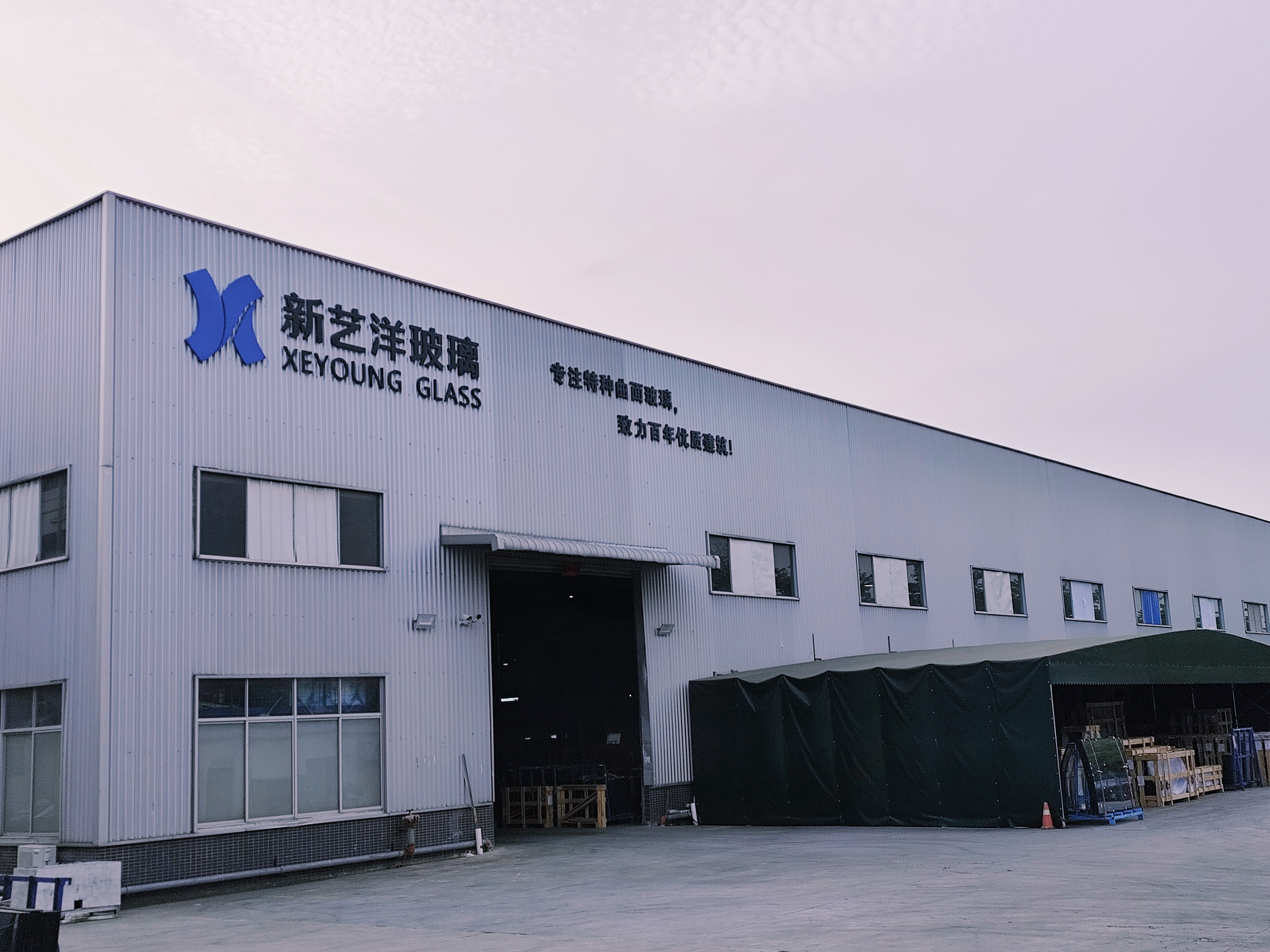
Single-site scale matters in curved glass because the process chain is long and each transfer is a risk. Shenzhen Dayang Special Glass Co., Ltd. operates a 30,000 m² facility with approximately 130 staff and was founded in 2017. The useful reading of that footprint is not the number itself but what it keeps under one roof: forming, tempering, laminating, insulating, edge work and storage.
Ask for a site plan marked with the process steps your order will use, plus a headcount split by function — forming operators, tempering, lamination, inspection, engineering, export documentation. A footprint does not show whether skilled operators are available in the week your panels are scheduled, so pair the plan with a production window.
2. Annual output
DYGLASS states annual output of 600,000 square meters. Output is the most comparable-looking number a supplier can offer and the least self-explanatory. Before comparing it with another supplier, ask what it counts — finished curved product or total processed area — which product mix it reflects, and over which period it was measured.
A 600,000 m² annual figure is a scale indicator. It does not state how much of that volume is curved work, and it does not reserve capacity for your order. At execution stage the operative question is which line the panels will run on and in which production window, recorded in the order documents rather than inferred from an annual total.
3. Line configuration and process chain
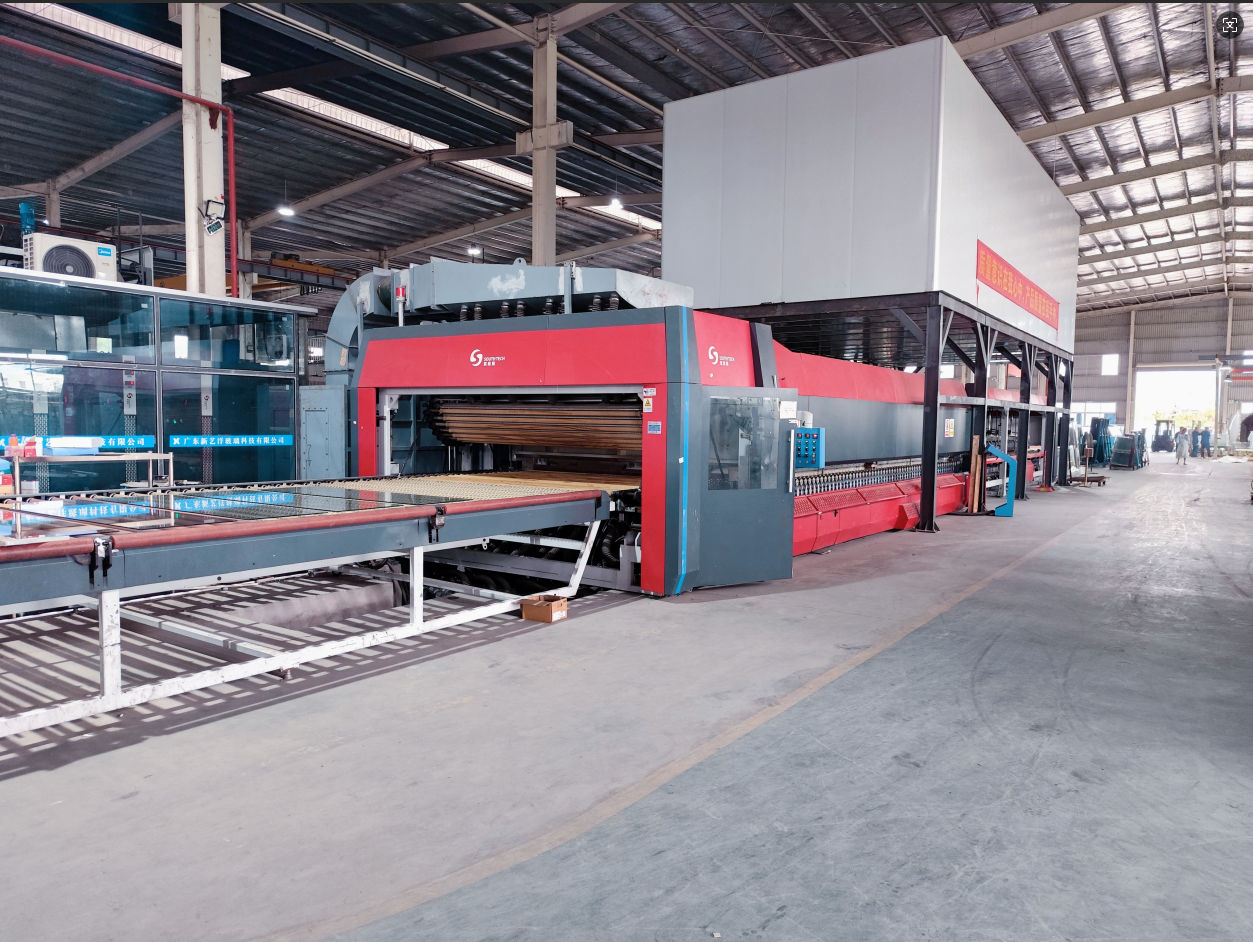
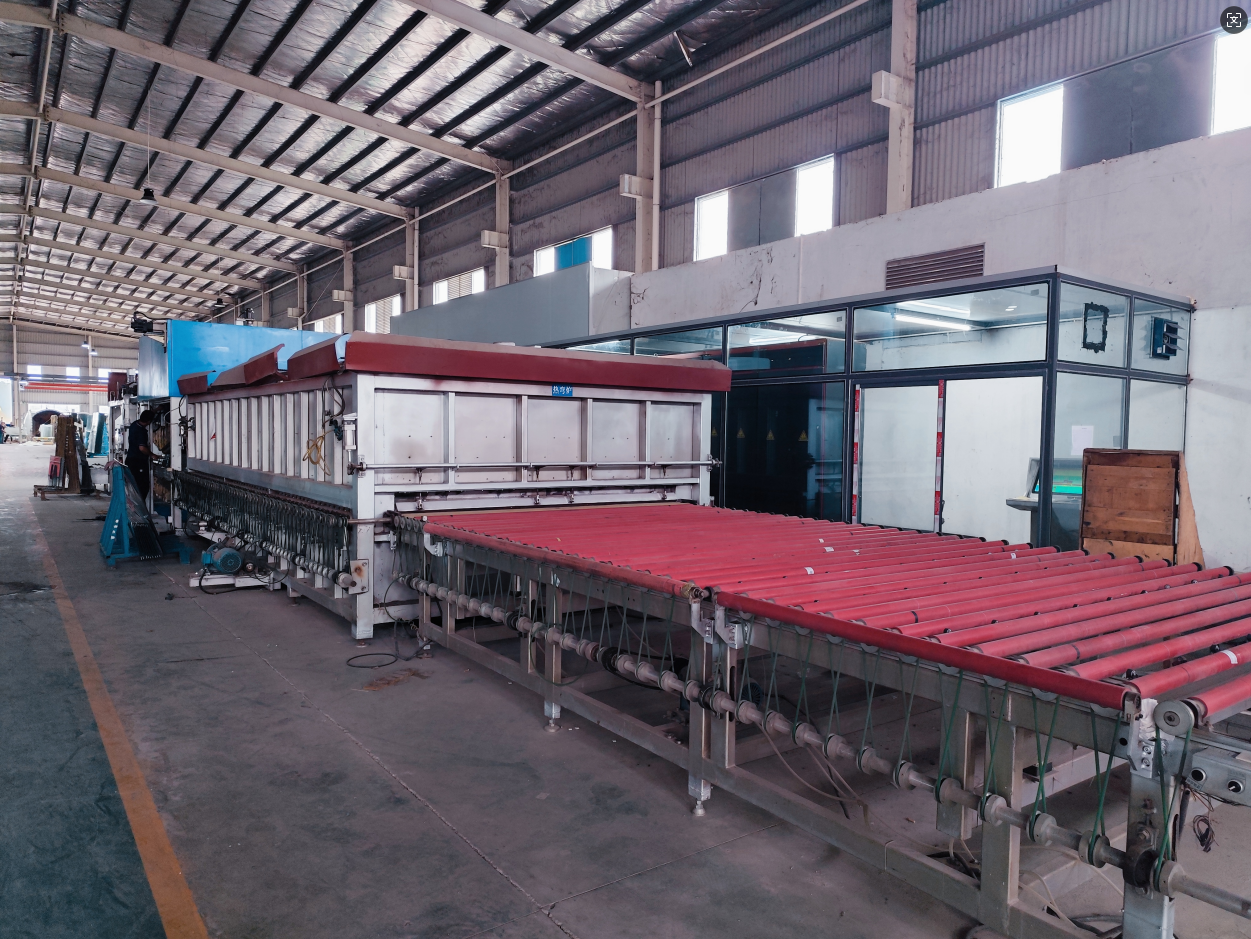
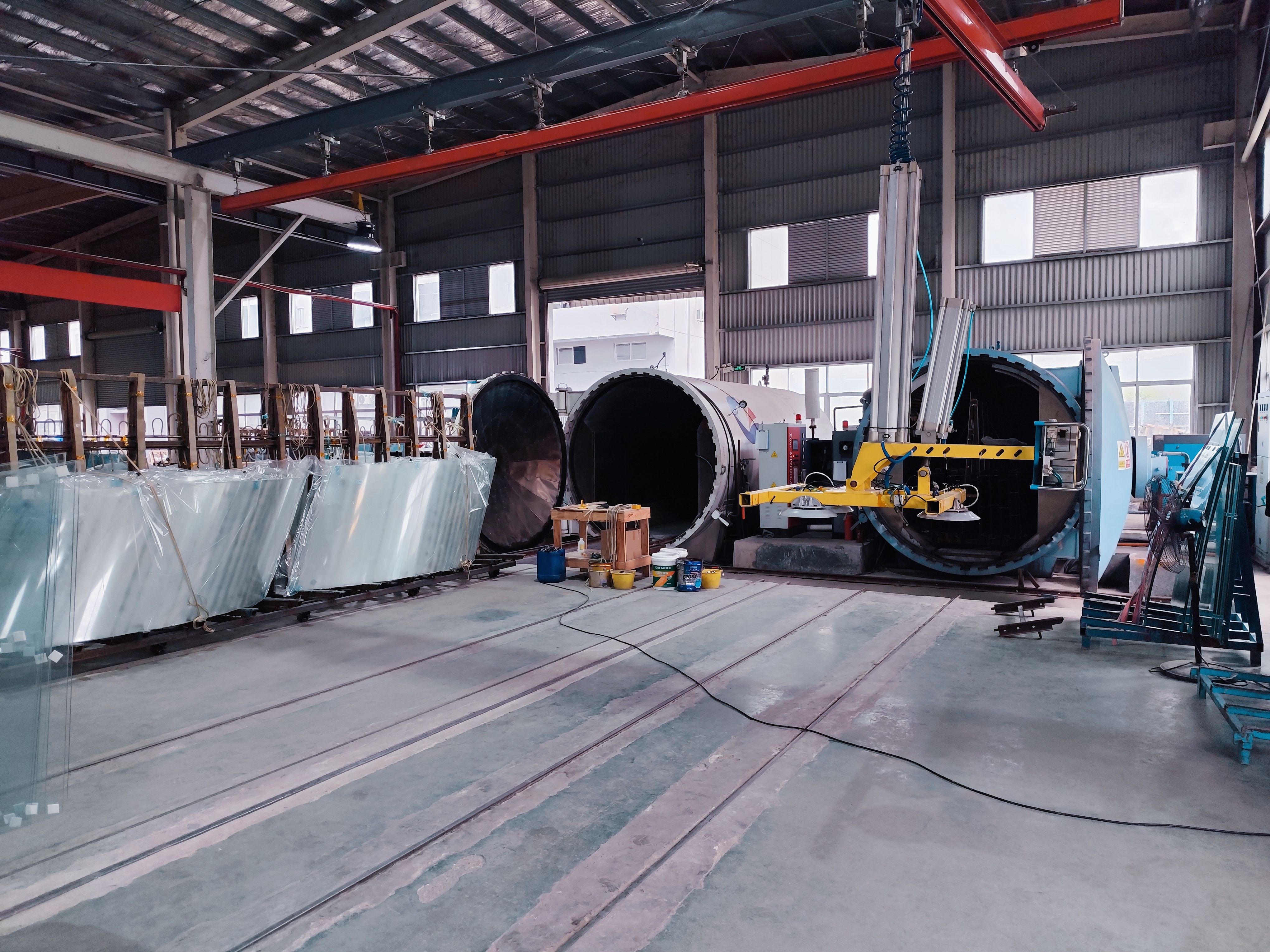
The equipment list is the most concrete capability evidence a buyer can obtain before visiting. The DYGLASS line set includes a first tempering line handling flat and curved glass, a second tempering line for concave, convex and irregular curved glass, a double curved tempering line, an autoclave for laminated glass, an insulated glass line, and separate cutting, drilling and edge grinding lines, plus a heat soak furnace.
Map each element to your order. Shape family points to a specific tempering line; a laminated build points to the autoclave; an insulating unit points to the insulated line; a tempered safety requirement points to heat soak treatment. Every step kept in-house removes a hand-off, and each hand-off is a point where a curved panel can be re-handled, re-inspected or damaged.
4. Engineering support
DYGLASS maintains an R&D team of 5–10 engineers. The headcount matters less than the interface it creates: who reviews the drawings, who confirms that the radius, chord and shape combination can be formed, and who signs off the shop drawing before production starts.
A practical test is to send a real drawing package before award and review the response. Does the reply address the actual curvature and edgework, or restate general capability? Is a named reviewer identified, and is there a written note on the forming route? A supplier that answers a technical drawing with a brochure is telling you something about its pre-contract engineering process.
5. Quality credentials
Two credentials in the DYGLASS set operate at entity level: Alibaba Verified Supplier status and an SGS test report. Read each at the level it belongs to. Verified Supplier status supports the existence and standing of the business entity on the platform; the SGS report supports the items tested under the stated test conditions. Neither is a whole-product performance guarantee, and neither replaces a model-level certificate or your own inspection plan.
6. Export record and market coverage
DYGLASS reports that exports account for 60% of total sales, with customers in the UAE, DXB, BH, SA, US, PH and VN. An export share at that level indicates that cross-border packing, documentation and shipping are routine parts of the operation rather than exceptions, and it leaves named markets whose handling requirements can be discussed directly.
It does not fix transit time to your port, and it does not describe how a claim would be handled in your jurisdiction. Both belong in the execution-stage checklist rather than in the capability summary.
Model-level CE scope: reading the three certificates
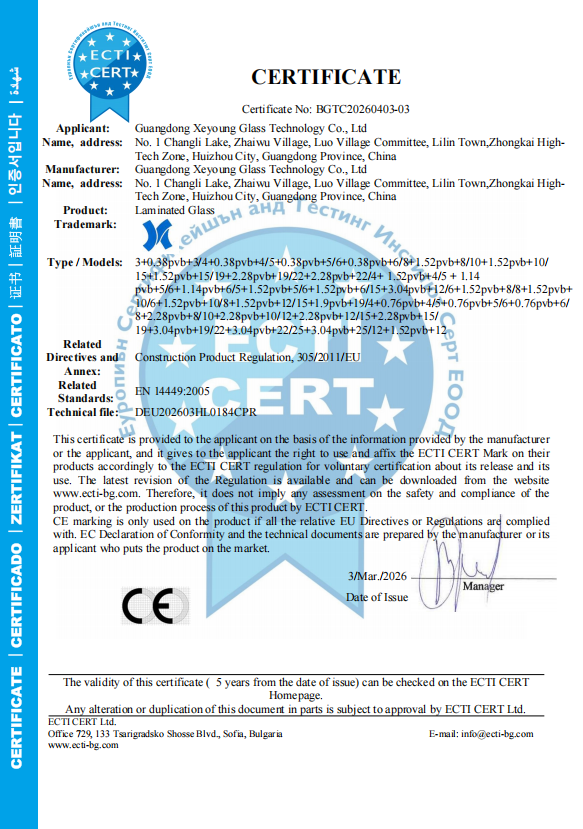
DYGLASS supplies CE certification for three product models under the EU Construction Products Regulation 305/2011/EU. All three certificates were issued by ECTI CERT Ltd. on 3 March 2026 and remain valid to 3 March 2031 for the European Union and European Economic Area market.
| Model | Certified product and scope | Standard(s) | Certificate no. |
|---|---|---|---|
| DY-GH01 | Tempered glass, thickness 4/5/6/8/10/12/15/19/22/25 mm | EN 12150-1:2015+A1:2019; EN 12150-2:2004; CPR 305/2011/EU | BGTC20260403-02 |
| DY-JJ01 | Laminated glass, specified thickness combinations and configurations as listed in Type/Models | EN 1449:2005; CPR 305/2011/EU | BGTC20260403-03 |
| DY-ZK01 | Insulated glass units, specified thickness combinations and configurations as listed in Type/Models | EN 1279-1:2018; EN 1279-2:2018; EN 1279-3:2018; EN 1279-4:2018; CPR 305/2011/EU | BGTC20260403-05 |
Two reading rules follow from the scope lines. The first is product type: DY-GH01 covers tempered glass and states its thickness range explicitly; DY-JJ01 covers laminated glass; DY-ZK01 covers insulating glass units. A curved panel that is tempered, then laminated, then built into an insulating unit draws on more than one certificate, and each should be produced for the order file. The second is the named entity: the scope text on the certificates identifies the manufacturer as Guangdong Xeyoung Glass Technology Co., Ltd. Buyers should confirm in writing how the contracting supplier and that named manufacturer relate, and which party is responsible for the declaration of performance issued with the shipment.
What the certificates do not do is certify “curved glass” as a category. No scope line states that every shape the factory can form is covered. Shapes are the supplier’s manufacturing capability; the certificate covers the product type, the standard and the thicknesses or configurations listed.
How the process route changes the evidence pack
Curved tempered glass alone needs the DY-GH01 pack, with the ordered thickness inside the listed 4–25 mm range. Curved laminated glass needs the DY-JJ01 pack, read together with the configuration listed in Type/Models. Curved insulating units need the DY-ZK01 pack and its four-part EN 1279 series. Where a project combines tempering, lamination and insulation, request all three certificates rather than the single one that happens to be on the sales deck.
A step-by-step verification sequence
- Write the order profile first. Record total area, panel sizes, shape family (cylindrical, double curved, S-shape, U-shape or irregular), thickness, process route, safety requirement and destination market. Every document request afterwards should be traceable to this profile.
- Request the certificate set for the exact product types. Ask for the full certificate, not a logo or a cover page, and read the scope paragraph line by line against your profile.
- Match the named certificate holder to the contracting entity. Put the question in writing and keep the answer in the order file.
- Check validity and standard editions. Record issue and expiry dates, and confirm the standard editions on the certificate are the ones your project specification references.
- Map equipment to geometry. Ask which line will form your shape family, and whether that line is used for the thickness you ordered.
- Establish the capacity basis. Ask what the annual output figure counts, then request the production window for your order rather than a general delivery statement.
- Interview engineering with a real drawing. Confirm who reviews it, what forming route they propose, and which drawing the factory will produce to.
- Agree inspection and documentation before the first panel. Fix the approved sample criteria, packing specification, per-shipment certificate pack and the point at which any change to shape or thickness triggers a new review.
How the emphasis shifts by application
Curved glass for curtain wall
Curtain wall panels combine the largest areas with the most demanding shape families — multi-curved, cylindrical and trapezoid geometries. Here the double curved tempering line and the engineering review carry most of the assurance weight, and the capacity question becomes a scheduling question about long production runs.
Curved glass for sightseeing elevator
Elevator enclosures typically rely on cylindrical and positive or negative curvature, often in a laminated or insulating build depending on the design. Verification should cover both the tempered route and the laminated or insulated certificate, because the panel may pass through more than one process.
Curved glass for shower room
Shower enclosures use the tempered route only, so the relevant evidence is the DY-GH01 certificate with the ordered thickness inside the listed range, together with the tempering and heat soak steps. Laminating and insulating capability, however impressive, are not what this order needs verified.
Curved glass for skylight roof
Overhead glazing usually combines a laminated build with an insulating unit, which means the DY-JJ01 and DY-ZK01 scopes are both relevant. This is the clearest case where a single certificate is not enough and the evidence pack has to follow the full process chain.
Curved glass for coffee table and furniture
Furniture and display applications sit explicitly inside the ASTM C1464-06 scope for bent glass. Panels are smaller, but the verification logic does not change: the shape must be formed on a named line, the product type must be inside a certificate scope, and the inspection criteria must be agreed before production.
Evaluation matrix: what each document actually establishes
The table below summarises how each DYGLASS evidence item should be read. It is deliberately split between what the evidence establishes and what it leaves open, because most procurement errors come from reading a document one level too broadly.
| Evidence requested | What it establishes | What it does not establish |
|---|---|---|
| 30,000 m² facility | Space for forming, tempering, laminating, insulating, edge work and storage on one site | Free capacity in your production month |
| Approximately 130 staff | Operational depth across production and support functions | Skill level of individual forming operators |
| 600,000 m² stated annual output | Scale relative to typical project volumes | The basis of the figure, or how much is curved work |
| 5–10 engineer R&D team | In-house drawing review and forming feasibility input | Your own structural and thermal design responsibility |
| SGS test report | Third-party test evidence on the items tested | Coverage of every shape or thickness produced |
| Alibaba Verified Supplier status | Platform-level verification of the business entity | Product performance or delivery reliability |
| CE certificates for DY-GH01, DY-JJ01, DY-ZK01 | Conformity for the listed product types, standards and thickness or configuration scope | Conformity of unlisted models or other standards |
| 60% export share; UAE, DXB, BH, SA, US, PH, VN | Routine cross-border documentation, packing and shipping | A specific transit time or claim procedure in your market |
Frequently asked questions
Does a CE certificate for one curved glass model cover every product the supplier makes?
No. Each certificate describes a defined scope. DY-GH01 covers tempered glass with the thicknesses 4/5/6/8/10/12/15/19/22/25 mm under EN 12150-1:2015+A1:2019 and EN 12150-2:2004; DY-JJ01 covers laminated glass under EN 1449:2005; DY-ZK01 covers insulating glass units under the four parts of EN 1279:2018. A panel outside the listed product type, thickness or configuration falls outside that certificate, so request the certificate that matches the product you are actually buying.
Which factory evidence shows a supplier can form double-curved, S-shaped or extra-large panels?
Look at the equipment list and the engineering interface rather than at a shape claim alone. DYGLASS operates a double curved tempering line plus a second line for concave, convex and irregular curved glass, and states that it processes multi-curved, double curved, triple curved, trapezoid, spherical, pyramidal, S-shape, cylindrical and positive and negative curved tempered glass. Confirm that the line named for your shape family is the one scheduled for your order, and obtain the engineering review of your drawing before award.
How should annual output be used when comparing suppliers?
Use it as a scale indicator, not as a delivery commitment. A figure such as 600,000 square meters per year says something about the size of the operation; it does not say what proportion is curved work, how the figure was measured, or what capacity is available on your dates. Compare the stated basis across suppliers, then convert the comparison into a production window for your specific order.
Can a sample or trial order replace a factory verification?
A trial order verifies execution on one configuration — forming, processing and inspection on that geometry, at that moment. It does not verify the next shape, the certification scope, or the capacity available for the full contract quantity. The stronger approach is to run the document and certificate check first, then use the approved sample as the reference for the inspection criteria applied across the order.
What does a 60% export share indicate about delivery to my market?
It indicates that export packing, documentation and shipping are established parts of the operation, and it gives you named markets — UAE, DXB, BH, SA, US, PH and VN — whose requirements can be discussed concretely. DYGLASS also holds Alibaba Verified Supplier status and an SGS test report, and welcomes OEM and ODM orders. The remaining points to close at execution stage are your packing specification, incoterms and per-shipment certificate pack; the export team can confirm these against the order profile, and the capability documents themselves are available on request.
Conclusion
Delivery assurance in curved glass is assembled from documents that each answer one question, and then checked against a single reference point: the order profile. Facility scale and a 30,000 m² footprint show what sits under one roof; a stated 600,000 m² annual output shows scale but not availability; the line configuration and the 5–10 engineer R&D team show whether the shape can be formed and reviewed in-house; the SGS report, Alibaba Verified Supplier status and the three model-level CE certificates show which product types are covered and under which standards; and a 60% export share with named markets shows that cross-border shipping is routine.
The discipline is to read each item at the level it operates, never one level higher. A certificate is not a capacity guarantee, an annual output figure is not a production slot, and a sample is not a process. Verify the documents, confirm the named entities, fix the production window and the per-shipment certificate pack in writing — and the gap between an approved curve and a delivered panel closes.
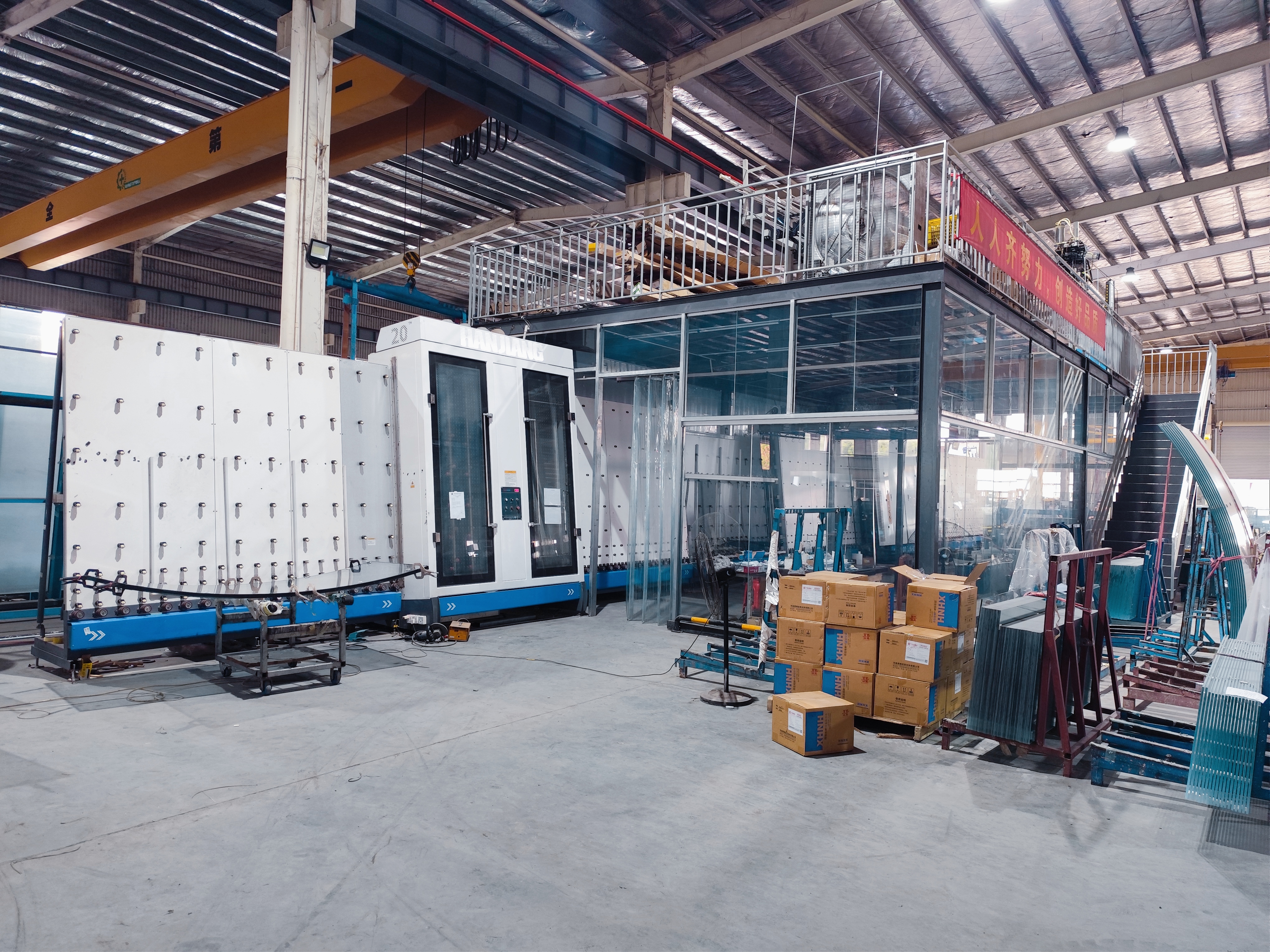
Next step for procurement teams. The capability documents discussed in this guide — CE certificates for DY-GH01, DY-JJ01 and DY-ZK01, the SGS test report and the company brochure — can be requested directly from the export team.
Download the DYGLASS company brochure (PDF), or contact Shenzhen Dayang Special Glass Co., Ltd. at info@dayangglass.com or +86-136 9211 0212 (WhatsApp: +86-13692110212). Address: 1706, Bldg. H, Phase 1, Liuhecheng Business Plaza, No. 168, Shenshan Road, Pingshan Street, Pingshan New District, Shenzhen, Guangdong, China.
Have Questions or Need More Details?
Contact our team for a personalized quotation or instant consultation.
Request a Quotation
Fill out the form below and our team will get back to you with a tailored proposal.
WhatsApp Direct Chat
Prefer to chat in real-time? Message us on WhatsApp for instant assistance & quick answers.
- Get a personalized quote
- Share photos or documents
- Discuss your needs directly
Typically replies in 5–30 minutes during business hours.