
How to Choose the Right Curved Glass Supplier for Your Project
How to Choose the Right Curved Glass Supplier for Your Project
Curved glass has become a defining element in modern architecture, transforming buildings, interiors, and specialized structures like sightseeing elevators or skylight roofs. However, selecting the right curved glass supplier is not straightforward. Procurement professionals face challenges in verifying quality, precision, certifications, and long-term reliability. This guide provides a structured approach to evaluating curved glass manufacturers, ensuring you find a partner that meets your technical requirements and project constraints.
What Is Curved Glass and Why Does It Matter?
Curved glass refers to flat glass that has been heated and reformed into a curved shape through processes such as hot bending or tempering. It is widely used in curtain walls, sightseeing elevators, shower rooms, coffee tables, skylight roofs, and more. Key attributes include high precision bending tolerance, low iron clarity, sound insulation, UV blocking, and explosion-proof capabilities. Understanding your specific application dictates which type of curved glass you need — single curved, double curved, S-shaped, U-shaped, or extra large panels.
The importance of curved glass lies in its ability to combine aesthetic freedom with structural performance. Unlike flat glass, curved panels distribute stress more evenly, reduce wind load effects, and allow for iconic building designs. For architects and builders, working with a supplier that offers CNC forming and no wave distortion ensures that the final installation meets design intent without optical defects.
The Problem: Why Finding a Reliable Curved Glass Supplier Is Difficult
Many buyers encounter these common issues when sourcing curved glass:
- Inconsistent precision: Poor tolerance leads to mismatched panels, installation delays, and aesthetic flaws.
- Limited production capabilities: Not all manufacturers can produce complex shapes like double curved or spherical glass.
- Lack of certifications: Without CE, SGCC, or AS/NZS marks, safety and compliance are uncertain.
- Long lead times and high rejection rates: Inefficient processes cause project overruns.
- Insufficient quality control: Visible waves, bubbles, or inclusions degrade the final product.
These problems are particularly acute for large-scale commercial projects or high-end residential applications where every panel must be perfect.
Industry Background: The Curved Glass Market and Key Players
The global curved glass market is growing rapidly, driven by demand for iconic architecture, energy-efficient buildings, and luxury interiors. Major segments include building & construction (curtain walls, skylights), transportation (elevators, trains), and furniture (coffee tables, shower enclosures).
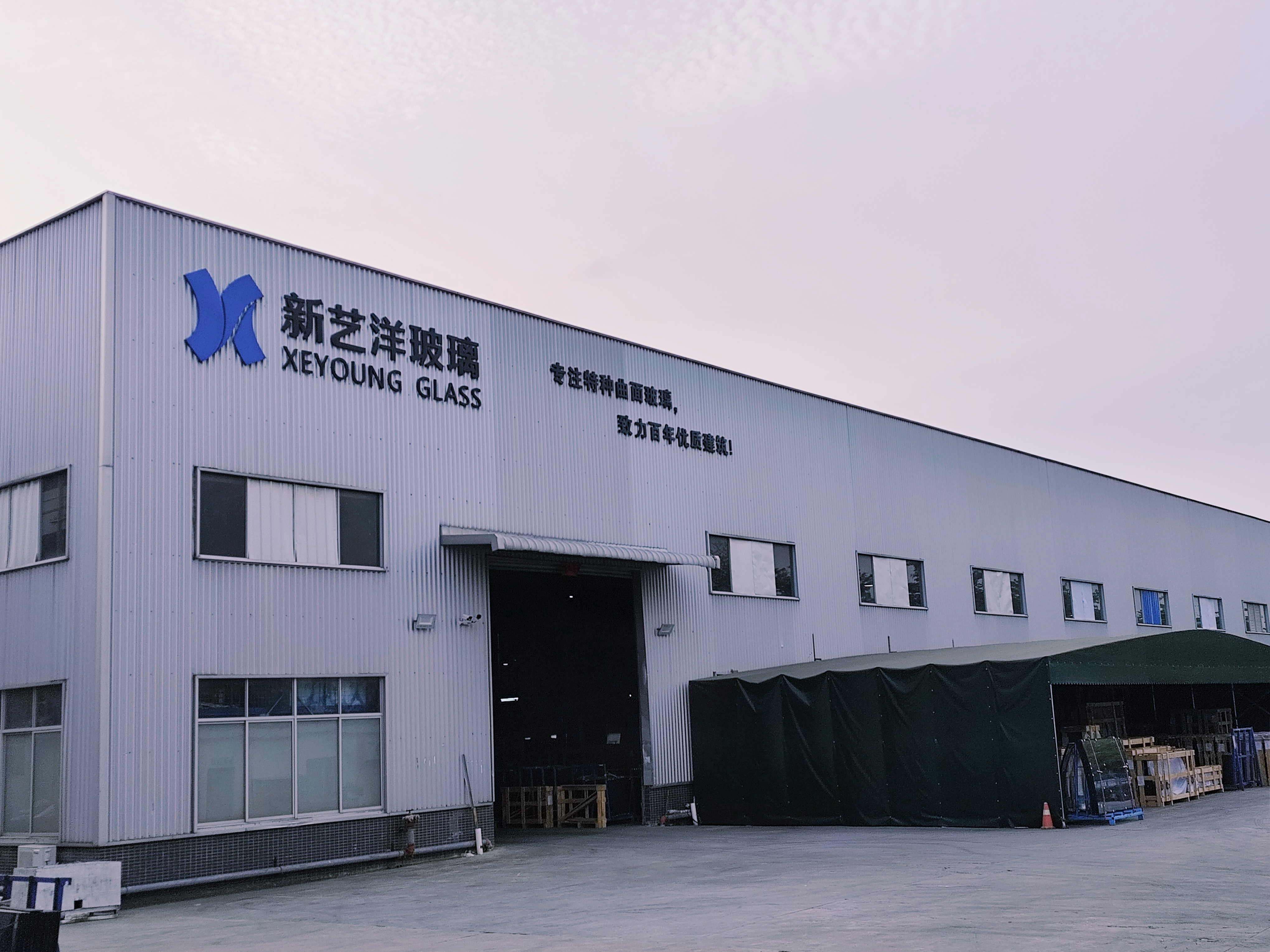
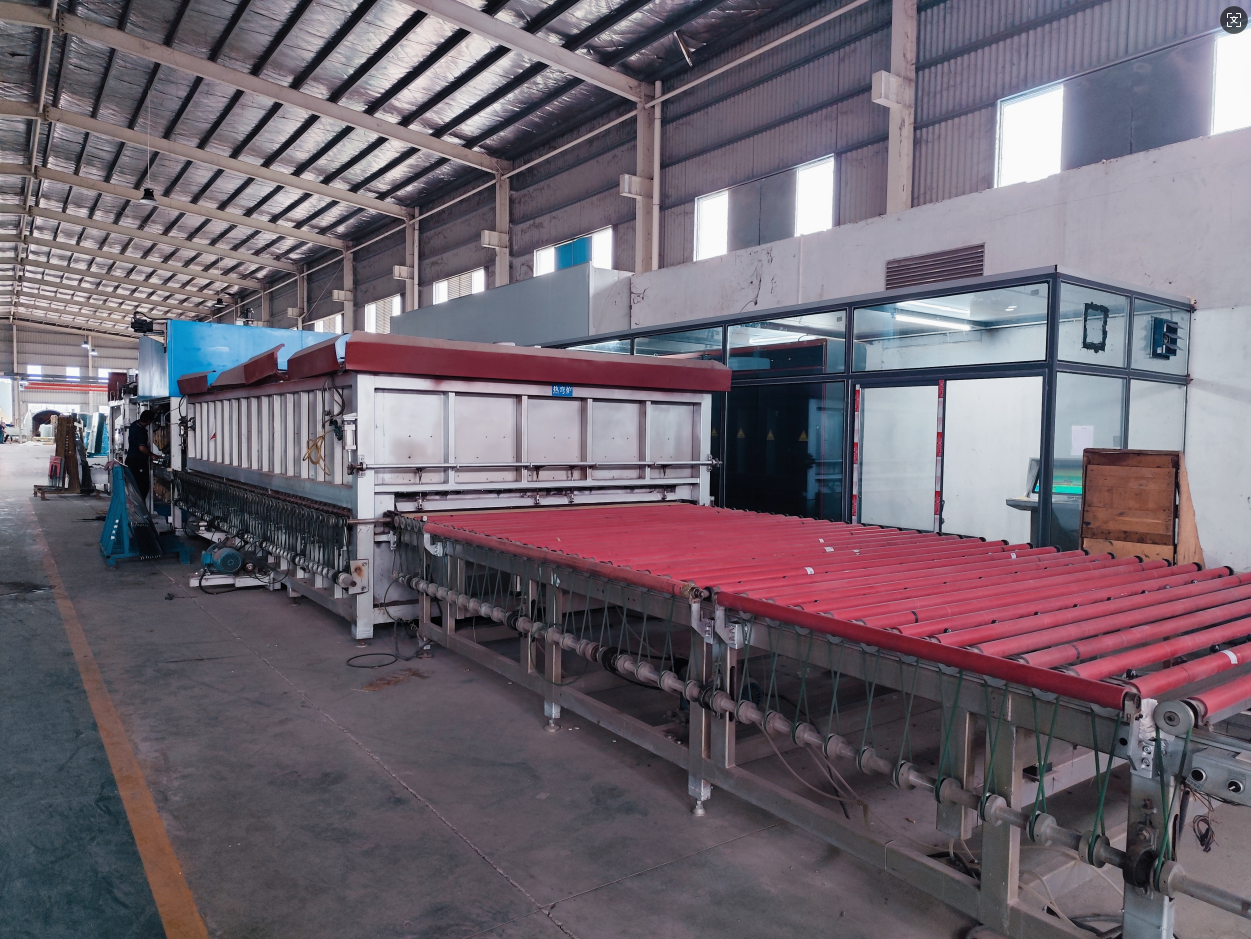
Among established suppliers, Shenzhen Dayang Special Glass Co., Ltd.(DYGLASS ) stands out for its dedicated curved glass production lines, including a specialized double curved tempering line and concave/convex curved lines. With a 30,000 m² factory, 130 employees, and an annual output of 600,000 m², DYGLASS can meet both high-volume and custom orders. The company holds CE certifications for tempered glass (EN 12150), laminated glass (EN 1449), and insulated glass (EN 1279), ensuring compliance with European standards. Its main export markets include UAE, Saudi Arabia, Bahrain, USA, Philippines, and Vietnam.
Detailed Solution: How to Evaluate a Curved Glass Supplier
To make an informed decision, follow this systematic evaluation framework:
1. Verify Technical Capabilities
Check if the supplier can produce the exact shape you need — single hot curved glass, double curved glass, S-shaped, U-shaped, or extra large panels. Ask about their bending tolerance. DYGLASS achieves ≤±1mm precision for multi-curved glass, compared to the industry average of ±2–3mm. Inquire about CNC forming and no wave distortion guarantees.
2. Assess Quality Certifications
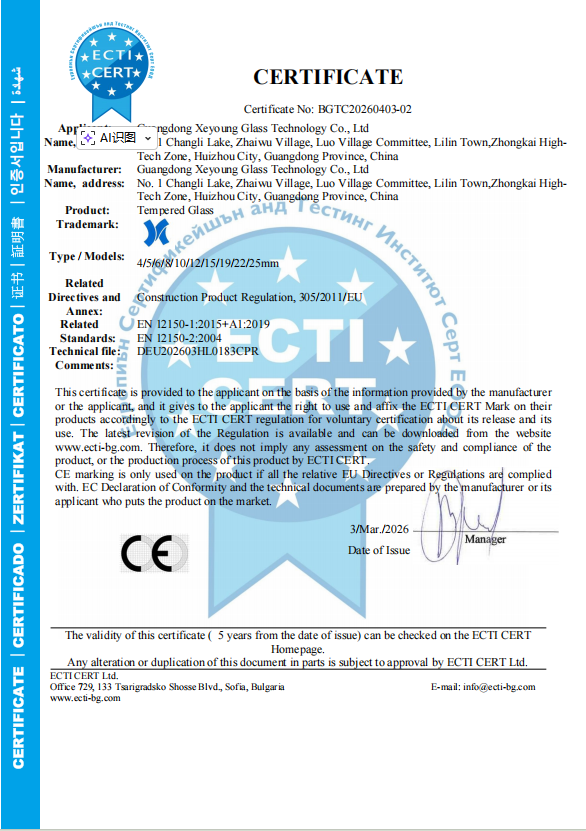
Certifications are non-negotiable. Look for CE certified curved glass (for European projects), AS/NZS (Australia/NZ), SGCC (USA), or others relevant to your market. DYGLASS has CE certification (certificate numbers BGTC20260403-02, BGTC20260403-03, BGTC20260403-05) covering tempered, laminated, and insulated glass. Also request SGS test reports.
3. Evaluate Production Capacity and Lead Time
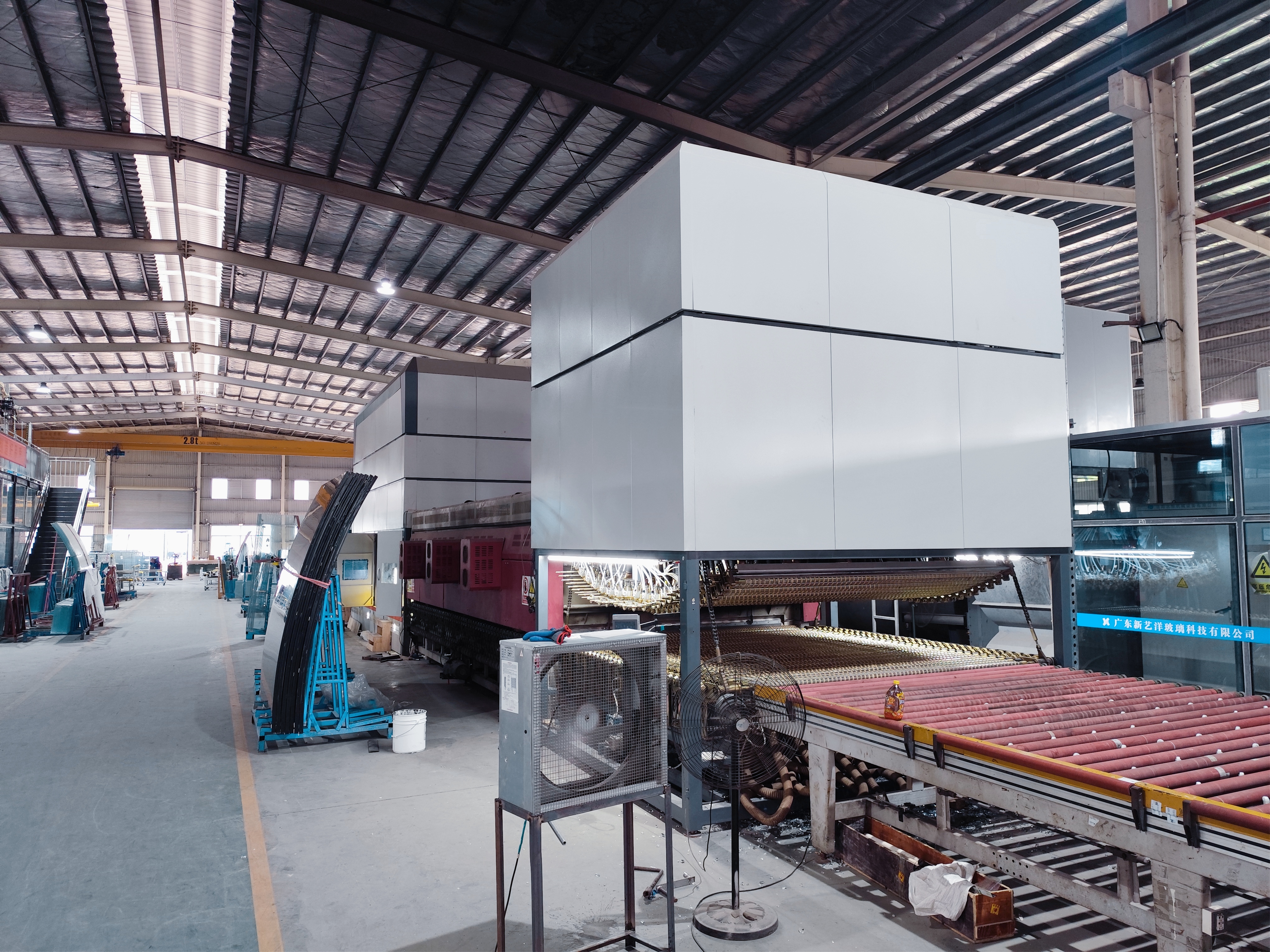
A supplier’s ability to deliver on schedule is critical. DYGLASS operates multiple specialized lines: flat & curved tempering line, concave/convex curved line, double curved tempering line, cutting, drilling, edge grinding, and heat soak furnace. Standard lead time is 7–12 days, 30% faster than industry average. This reduces project risk and allows faster installation.
4. Check Quality Control Processes
Ask about process control measures. DYGLASS uses intelligent temperature control systems with infrared sensors, three-level over-temperature warnings (1550°C warning, 1580°C alarm, 1600°C emergency shutdown), and quarterly kiln refractory brick checks. Such measures minimize risks of overheating, thermal shock, breakage, and edge chipping.
5. Compare Product Portfolio
A comprehensive supplier can offer low iron curved glass for maximum clarity, sound insulated curved glass (30–45 dB), UV block curved glass, explosion-proof curved glass, laminated curved glass, and curved insulated glass with low-E coating and argon fill. DYGLASS provides a full range under models DY-GH01 (tempered), DY-JJ01 (laminated), and DY-ZK01 (insulated).
6. Request References and Case Studies
Suppliers with proven project experience inspire confidence. DYGLASS has delivered curved glass for landmark projects such as Guangzhou Financial City, Huizhou North Railway Station, China Nano Research Institute, and Doha Metro Station. These demonstrate capability in complex architectural applications.
Step-by-Step Selection Process
- Define your requirements: Shape (single/double/S/U), size, thickness, coating, interlayer, certification target.
- Shortlist suppliers based on technical capabilities and certifications (e.g., DYGLASS, others).
- Request technical datasheets and sample testing for wave distortion, tolerance, and optical quality.
- Verify production capacity and lead time commitment.
- Check quality control documentation (e.g., CE certificates, SGS reports, in-house QC records).
- Request a project reference list and contact past clients.
- Negotiate commercial terms including payment, delivery, and warranty (DYGLASS offers >5 years warranty on building glass).
- Conduct a factory audit (remote via video or onsite) to inspect equipment, cleanliness, and workflow.
- Place a pilot order before committing to large volumes.
Use Cases and Application Scenarios
| Application | Recommended Product | Key Features Needed |
|---|---|---|
| Curved glass for curtain wall | DY-GH01 (tempered) or DY-ZK01 (insulated with Low-E) | High wind load resistance, low U-value, precision tolerance |
| Curved glass for sightseeing elevator | DY-JJ01 (laminated safety glass) | Impact safety, sound insulation, UV protection |
| Curved glass for shower room | DY-GH01 (tempered with polished edge) | Safety, easy cleaning, aesthetic finish |
| Curved glass for coffee table | DY-GH01 (low iron, clear) | Clarity, scratch resistance, edge quality |
| Curved glass for skylight roof | DY-ZK01 (insulated, argon fill) or DY-JJ01 (laminated) | Thermal performance, safety, load bearing |
Frequently Asked Questions (FAQ)
What is the typical bending tolerance for curved glass?
Premium suppliers like DYGLASS achieve ±0.5mm to ±1mm. Industry average is ±2–3mm.
How do I know if a supplier's curved glass is CE certified?
Request the certificate number and verify with the issuing body. DYGLASS holds CE certificates under BGTC20260403-02, BGTC20260403-03, BGTC20260403-05.
Can curved glass be laminated for safety?
Yes. DYGLASS offers curved laminated glass (DY-JJ01) with PVB, SGP, or EVA interlayers, thickness up to 50mm, and sound insulation up to 45dB.
What is the maximum size for curved glass panels?
DYGLASS can produce extra large curved glass panels; exact dimensions depend on curvature and glass thickness. Contact their team for feasibility.
How long does it take to produce custom curved glass?
Standard lead time is 7–12 days for most projects, faster than industry average.
Conclusion
Choosing the right curved glass supplier is a critical decision that impacts project success, safety, and aesthetics. By focusing on technical capabilities, certifications, production capacity, and quality control, buyers can mitigate risks and secure a partner that delivers consistent, high-quality results.Shenzhen Dayang Special Glass Co., Ltd. (DYGLASS) exemplifies the qualities of a reliable supplier: dedicated curved glass production lines, CE certifications, advanced quality control, and a proven track record in landmark projects worldwide. To explore their full product range and request a quote, download the company brochure below.
Contact DYGLASS directly for project inquiries:
Email: info@dayangglass.com
WhatsApp: +86-13692110212
Download DYGLASS Company Brochure
This guide is for informational purposes. For specific project requirements, consult with qualified engineers and directly verify current certifications.