
Overseas Tower Crane Downtime: Solving Spare Parts and Installation Gaps
A tower crane that has cleared customs is not yet a working tower crane. Between the ship's arrival and the first lift sit four things that no specification sheet shows: the erection plan, the attachment and climbing sequence, the spare parts list, and a technical contact who actually answers. When any one of these is missing on an overseas project, the equipment itself becomes the least important part of the delay.
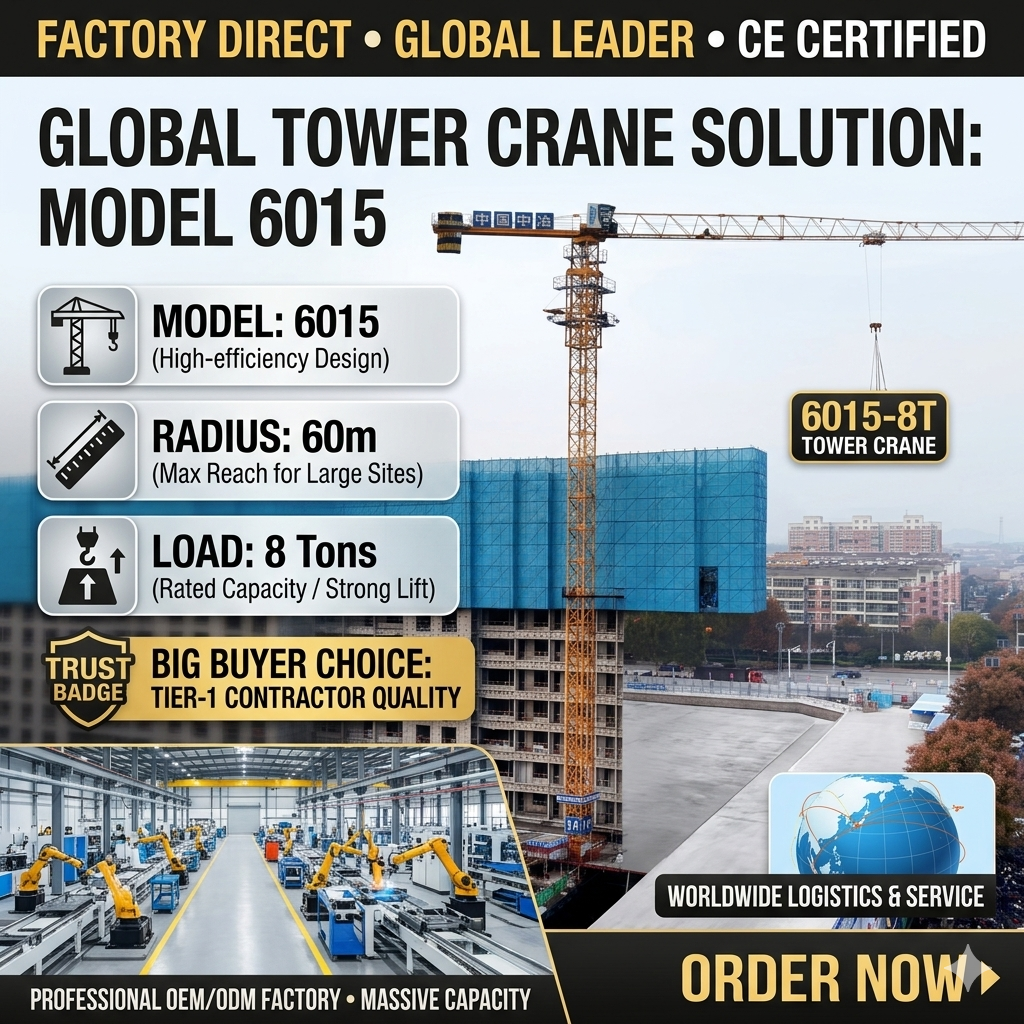
Answer first: for overseas contractors, most tower crane downtime is not a manufacturing failure. It is an installation-guidance gap, a spare-parts gap, or a technical-support gap that only becomes visible after delivery. The equipment choice matters, but the supply arrangement around the equipment decides whether the crane keeps lifting.
Problem Definition: Where Overseas Downtime Actually Comes From
Downtime on an international tower crane project usually begins before the machine is faulty. Four gaps account for most of it, and each one has a different owner inside the supply chain.
Installation guidance. A tower crane is assembled on site from mast sections, jib sections, counterweights and a slewing assembly. The foundation drawing, the erection sequence, the counterweight scheme and the climbing plan are project-specific documents. If they arrive incomplete, the crew improvises, and improvisation on a climbing operation is where schedule time is lost.
Spare parts. The parts that stop a crane are rarely structural. They are limit switches, brake components, wire ropes, electrical contactors and safety-device sensors. On a domestic project these are a phone call away. On an overseas project they are a customs entry, a freight booking and a lead-time question.
Technical support. A commissioning question at 02:00 local time needs an engineer, not a ticket number. Where the technical channel is slow or indirect, small commissioning issues turn into multi-day stoppages.
Documentation. Certificates, declarations and test reports are not paperwork for its own sake. They are the difference between a crane that is accepted by the site inspector and a crane that sits in the yard.
Industry Background: Why This Risk Is Rising, Not Falling
The global tower crane market was estimated at between USD 5.9 billion and USD 6.44 billion in 2025, according to Fortune Business Insights and Grand View Research respectively. China was the leading exporter of tower cranes in 2024, with USD 694 million in export value, based on OEC data drawn from UN Comtrade. In other words, a large and growing share of the world's tower cranes is now shipped across a border before it is commissioned.
Product mix reinforces the same point. Flat-top (topless) designs accounted for 46.37% of tower crane revenue in 2025 according to Mordor Intelligence, while Grand View Research reports hammerhead cranes holding the largest share by product type at 42.8%. Neither figure changes the support requirement: every configuration still needs an erection scheme, a spare parts list and a named technical contact after it lands.
Cost logic is what makes this commercially serious. When a crane stops on an overseas site, the visible loss is the crane. The larger loss is downstream: idle lifting crews, a stalled concrete pour, rescheduled deliveries and a main contractor tracking days rather than hours. That is why experienced contractors evaluate the support arrangement with the same rigour as the load chart.
Detailed Solution: What a Support-Ready Supply Arrangement Includes
Dahan Technology Co., Ltd. is a Chinese manufacturer of tower cranes and construction hoists, established in 2000 and based in Zheshan Industrial Park, Mingshui Economic Development Zone, Zhangqiu District, Shandong Province, China. The company states that it has over 1,000 employees, covers more than 500 acres, produces an annual output of 5,000 units, employs 100 engineers, and exports to Asia, Europe, the Middle East, Africa, North America and South America, with an export ratio of 60%.
For an overseas contractor, the relevant part is not the size of the factory. It is the fact that the same supplier documents four capabilities that map directly onto the downtime risks above: technical support for overseas customers, spare parts supply, installation guidance, and modular product design that supports assembly, dismantling, transportation and height adjustment.
Modular Design as a Downtime Control
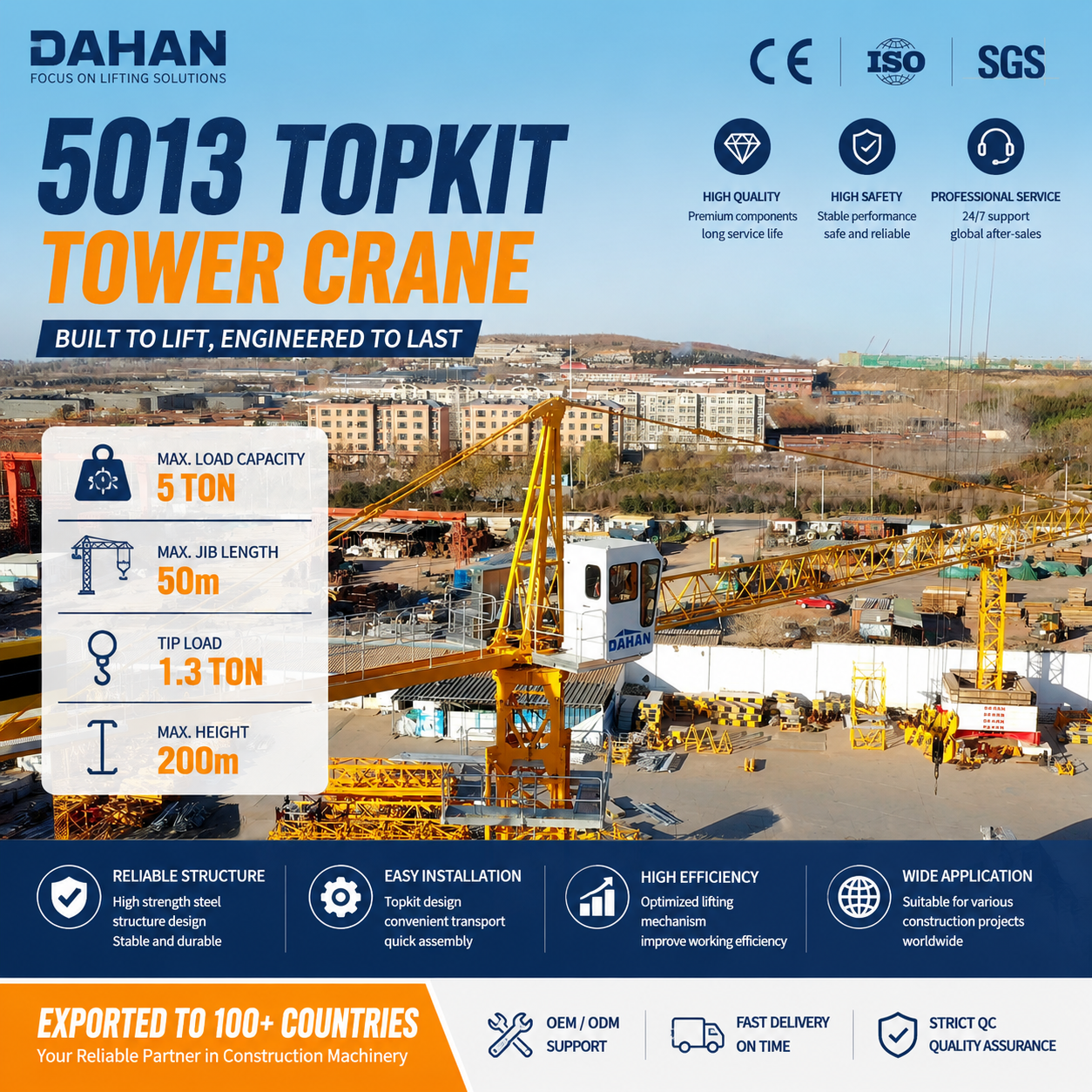
The structural configuration of these QTZ tower cranes uses a modular design that permits assembly, dismantling, transportation and height adjustment. This is not a marketing phrase; it is the mechanical basis of a predictable schedule. Modular sections mean the crane can be broken down to match available transport, reassembled in a defined sequence, climbed as the building rises, and dismantled and moved to a second site without waiting for a redesign.
Material choice supports the same objective. The tower crane structure is manufactured from high-strength steel, specified for fatigue resistance and weather adaptability, with steel structures and electrical components selected for low maintenance requirements. Production runs on automated production facilities and welding technology, with quality control procedures applied during production and quality inspection applied before delivery.
Safety Systems That Must Be Commissioned, Not Just Listed
Every unit is documented with four safety functions. They are the first items a site inspector will test, and the first items a spare parts list should cover:
- Overload protection system
- Moment limitation system
- Height and travel limit protection
- Emergency stop system
On an overseas site, each of these is a commissioning step and a future service item. A supplier that provides installation guidance also provides the sequence in which these devices are set, checked and signed off — which is precisely the stage where unassisted crews lose time.
Certification That Prevents Acceptance Delays
Certification gap is one of the most expensive forms of downtime because it happens before the crane ever lifts. Dahan Technology documents three certification routes relevant to international projects.
EU market. The Tower Crane Certificate of Compliance is issued by ECM under certification number 6B211216.DTCO94 and applies to the EU market, against EN ISO 12100:2010, EN 14439:2006+A2:2009 and EN 60204-32:2008. It was issued on 2021-12-16 and is valid until 2026-12-15.
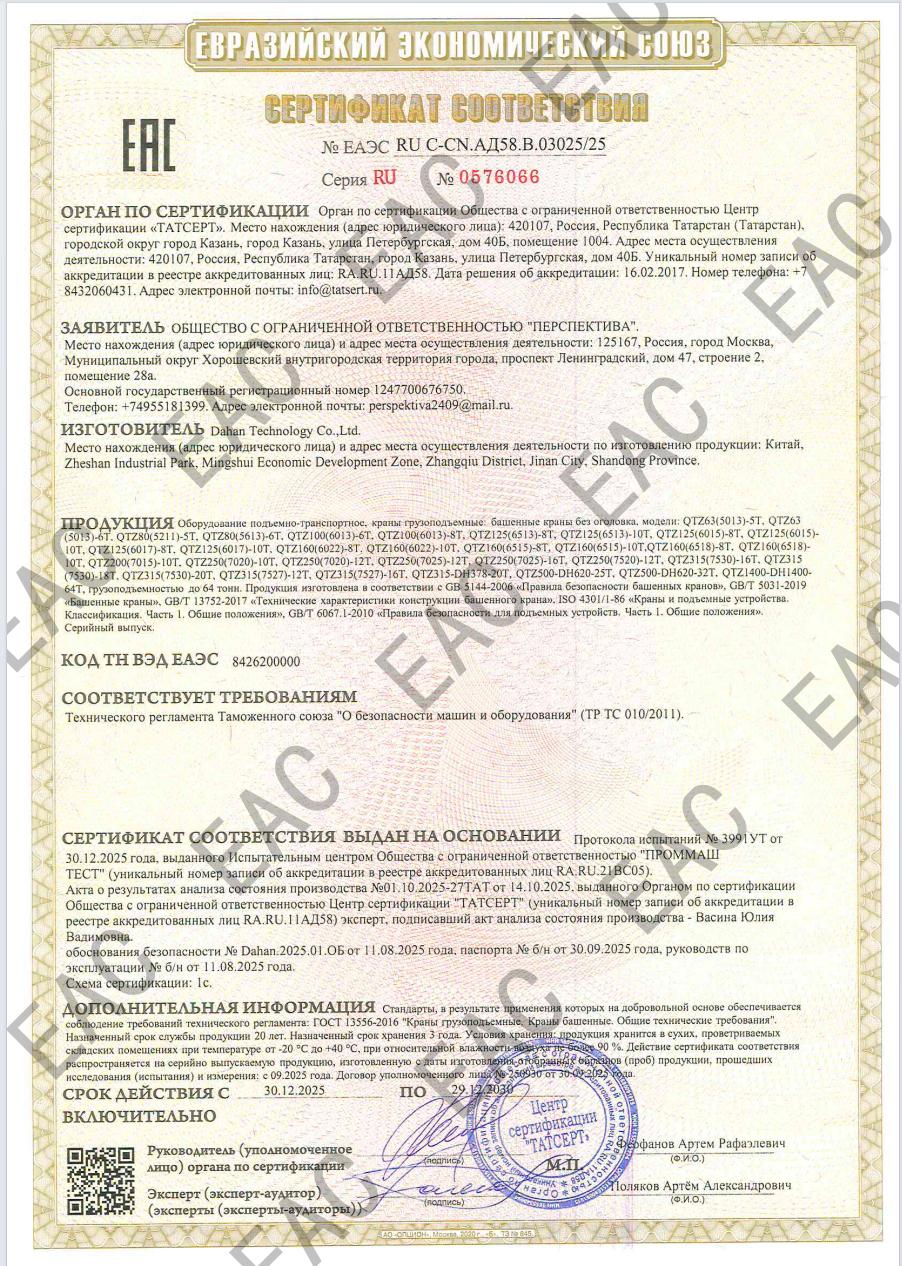
EAEU market. The EAEU conformity certificate number is ЕАЭС RU С-СН.АД58.В.03025/25, serial number Серия RU №0576066, issued by TATSERT Certification Center (Центр сертификации «ТАТСЕРТ»). It covers Russia, Kazakhstan, Belarus, Kyrgyzstan and Armenia, was issued on 2025-12-30 and is valid until 2030-12-29.
Quality management. ISO 9001:2015 certification number 10424Q01958R1M is issued by SHANDONG SEATONE INTERNATIONAL CERTIFICATION CO.,LTD against GB/T 19001-2016/ISO 9001:2015, valid from 2024-10-15 to 2027-10-17, and applies globally.
Step-by-Step: A Six-Step Sequence That Prevents Downtime
The sequence below is written from the contractor's side of the table. Each step removes one specific cause of post-delivery delay.
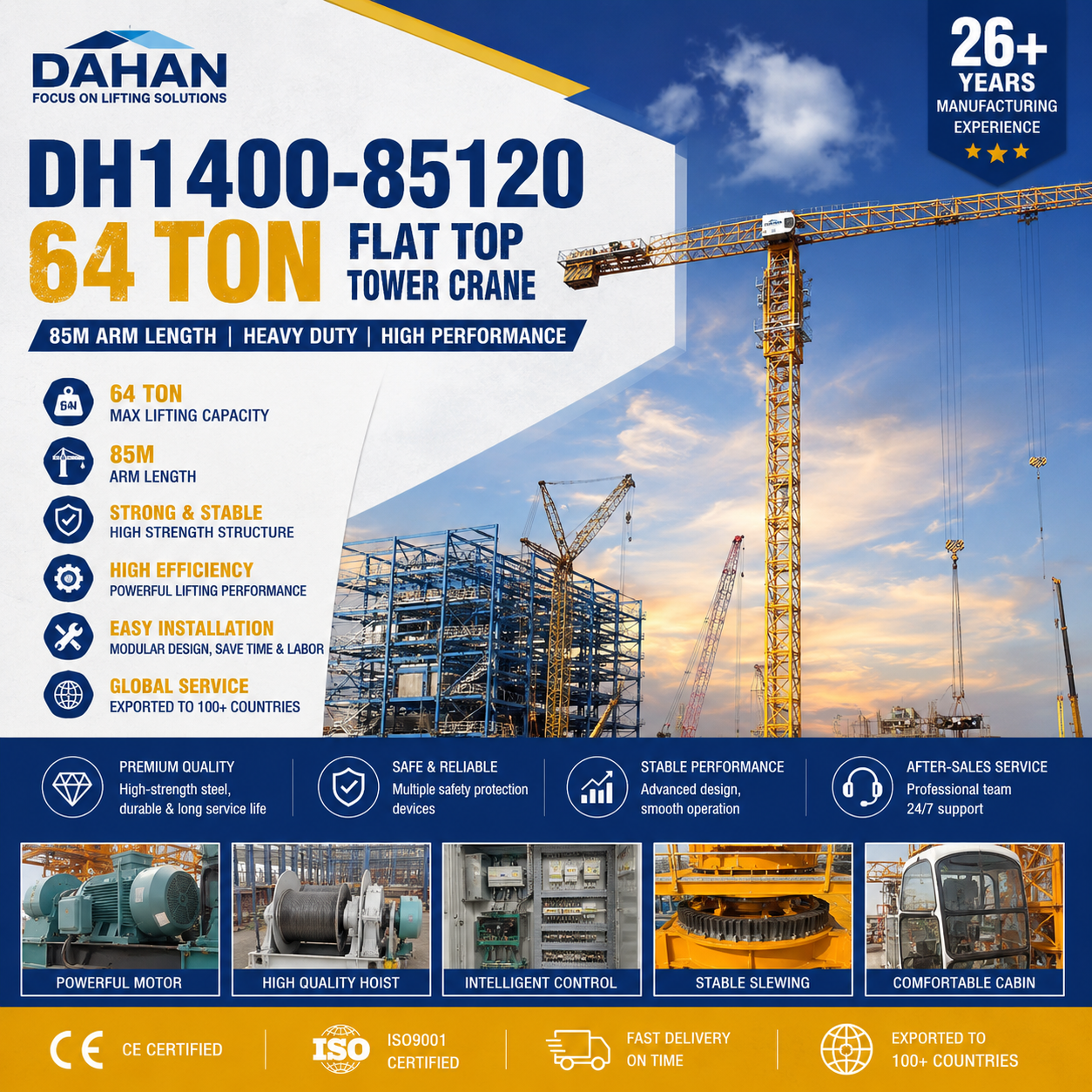
Step 1 — Match the model to the lift, then confirm certification coverage. The QTZ series spans rated capacities from 5 t to 220 t, including QTZ63 (5013)-5T/6T, QTZ80 (5211)-5T, QTZ100 (6013)-8T, QTZ125 (6015)-8T/10T, QTZ160 (6515)-8T/10T, QTZ250 (7520)-10T/12T/16T, QTZ250 (7025)-12T/16T and QTZ315 (7527)-12T/16T. Confirm in writing that the exact model on your order appears in the certificate annex for your market before the purchase order is issued, not after the crane ships.
Step 2 — Lock the erection and climbing scheme before contract signature. Jib length, counterweight and erection schemes can be customised for site constraints, and complex customisations require engineering evaluation. Ask for the foundation loads, the attachment levels, the free-standing height and the climbing sequence as deliverables attached to the order. This single step removes the largest installation-guidance gap.
Step 3 — Define the spare parts list against the safety devices. Build the list around the equipment actually installed: overload, moment limitation, height and travel limits, emergency stop, plus brake, rope and electrical items. Because these units are supplied to international markets with spare parts supply, the list can be confirmed against the delivered configuration rather than guessed from a generic catalogue.
Step 4 — Verify before shipment, not after arrival. Quality inspection is applied before delivery under the manufacturer's quality control system, and the documented production standard is 100% test. Request the inspection record with the packing list.
Step 5 — Name the technical channel. Installation guidance and technical support for overseas customers are documented supplier capabilities, and the after-sales structure includes a professional after-sales service team, all-weather service, technical service stations, spare parts centres and overseas offices. What the contractor must do is convert that into names, languages and contact routes in the contract annex.
Step 6 — Plan the dismantling and the second site at the same time. Modular design permits dismantling and transportation, and flexible height adjustment covers the climbing phase. Contractors who plan the demobilisation at the ordering stage avoid the second, quieter downtime event: the weeks spent waiting for transport documentation at project handover.
Practical rule: if a supplier cannot attach the erection scheme, the spare parts list and the certificate annex to the quotation, those documents will not appear after the invoice either.
Use Cases: What This Looks Like on Delivered Projects
Documented project references show the same pattern: the value of the supply arrangement shows up in coordination and continuity, not in a single lift.
Russia — 34 units, civil building construction, 4 years. A construction company reported high coordination among multiple tower cranes, efficiently meeting material hoisting requirements, and successfully completed the residential-building project.
Russia — 4 units, building construction, 3 years. A trader reported that multiple tower cranes worked together for construction and efficiently met material hoisting requirements.
Vietnam — 3 units, bridge construction, 2 years. Customer feedback highlighted that construction time was greatly saved and that the cargo ran stably during hoisting with strong wind-resistance performance.
India — 1 unit, building construction, 2 years. Single-unit overseas orders are supported; the customer reported stable hoisting and strong wind-resistance performance.
Bulgaria — 5 units via a regional agent, in use for over 1 year. Feedback highlighted high coordination among multiple cranes and stable material hoisting.
Turkey — 5 units, building construction, in service for 2 years. Reported high construction efficiency, stable material hoisting and good coordination among multiple cranes.
QTZ Model and Certification Coverage at a Glance
The table below reflects only what the certificate documentation states for each model. Blank or partial entries are a signal to verify the annex before ordering — not a reason to assume coverage.
| Model | Rated capacity in model designation | EAC (EAEU) | ISO 9001:2015 | ECM (CE, EU) |
|---|---|---|---|---|
| QTZ63 (5013)-5T/6T | 5 t / 6 t | Listed | Listed | Listed |
| QTZ80 (5211)-5T | 5 t | Listed | Listed | Listed |
| QTZ100 (6013)-8T | 8 t | Listed | Listed | Not individually named in the ECM certificate model list — verify annex |
| QTZ125 (6015)-8T/10T | 8 t / 10 t | Listed | Listed | Listed |
| QTZ160 (6515)-8T/10T | 8 t / 10 t | Listed | Listed | Listed |
| QTZ250 (7520)-10T/12T/16T | 10 t / 12 t / 16 t | Listed | Listed | Listed |
| QTZ250 (7025)-12T/16T | 12 t / 16 t | Listed | Listed | Listed |
| QTZ315 (7527)-12T/16T | 12 t / 16 t | Listed | Listed | Listed |
Frequently Asked Questions
1. Are Dahan tower cranes CE certified for European construction projects?
Yes. The Tower Crane Certificate of Compliance is issued by ECM under certification number 6B211216.DTCO94, applies to the EU market, and is issued against EN ISO 12100:2010, EN 14439:2006+A2:2009 and EN 60204-32:2008. The certificate covers a defined model list that includes QTZ63 (5013)-5T/6T, QTZ80 (5211)-5T, QTZ125 (6015)-8T/10T, QTZ160 (6515)-8T/10T, QTZ250 (7520)-10T/12T/16T, QTZ250 (7025)-12T/16T and QTZ315 (7527)-12T/16T. It was issued on 2021-12-16 and is valid until 2026-12-15, so buyers should confirm the current certificate status and the exact annex entry for their model before contracting.
2. Does the manufacturer provide installation guidance and spare parts supply for overseas buyers?
This is a documented capability. Tower cranes are supplied to international markets with technical support, spare parts supply and installation guidance for overseas customers. The after-sales structure includes a professional after-sales service team, all-weather service, technical service stations, spare parts centres and overseas offices. Combined with the modular design that permits assembly, dismantling, transportation and height adjustment, this covers both the erection phase and the later climbing and demobilisation phases where overseas crews most often lose schedule time.
3. What drives the budget of a customised tower crane order, and what is the minimum order quantity?
The minimum order quantity is 1 unit, and monthly capacity is documented at 400 units. Budget variation comes from configuration rather than from a fixed catalogue price: jib length customisation, mast height configuration, lifting capacity adjustment and electrical system options all change the specification. Complex customisations require engineering evaluation before a firm configuration is confirmed, which is also the point at which the commercial terms are fixed.
4. How can a single unit be validated before delivery?
Quality inspection is applied to the tower crane before delivery according to the manufacturer's quality control system, and the documented quality control standard is 100% test. Production uses automated production facilities and professional welding technology, with quality control procedures applied during production. Because the minimum order quantity is 1 unit, a first unit can function as the project-level validation order before a fleet or repeat order is placed.
5. What is the lead time for a customised tower crane order?
For customised service, the exact delivery date must be confirmed with the sales department. The honest planning assumption for an overseas contractor is therefore that delivery timing is configuration-specific and should be agreed in writing against the confirmed erection scheme, the certificate annex for the destination market and the spare parts list. Buyers who need a schedule commitment should request a quotation with those three documents attached; the contact channel and full product documentation are available through chinatowercranes.com.
Conclusion: Buy the Support, Not Just the Crane
Tower crane downtime on an overseas project is rarely a story about steel. It is a story about the erection drawing that did not arrive, the limit switch that had to be flown in, and the engineer who could not be reached during commissioning. Those three failures are predictable, and each one is removed by a document or a named contact rather than by a bigger machine.
The practical conclusion for contractors evaluating a China-based manufacturer is to score the supplier on what surrounds the equipment: modular design for assembly and dismantling, a documented safety configuration covering overload, moment limitation, height and travel limits and emergency stop, certification that matches the destination market, and a support structure that includes technical support, spare parts supply and installation guidance. Dahan Technology Co., Ltd. documents all four, alongside a QTZ range from 5 t to 220 t and delivered projects in Russia, Vietnam, India, Bulgaria and Turkey.
Before issuing a purchase order, ask for the certificate annex, the erection and climbing scheme, the spare parts list and the technical contact route. If all four arrive with the quotation, the crane has a far better chance of never becoming the reason the project stopped.
Next Step: Review the Specification Before You Commit
Request the QTZ tower crane catalogue, the certificate annex for your market, or a configuration-specific quotation for your project. A single unit is the minimum order quantity, so a first crane can be validated on site before any fleet decision.
Email: sunshuoaa8958@outlook.com | WhatsApp: +86 178-5257-1895 | Website: chinatowercranes.com
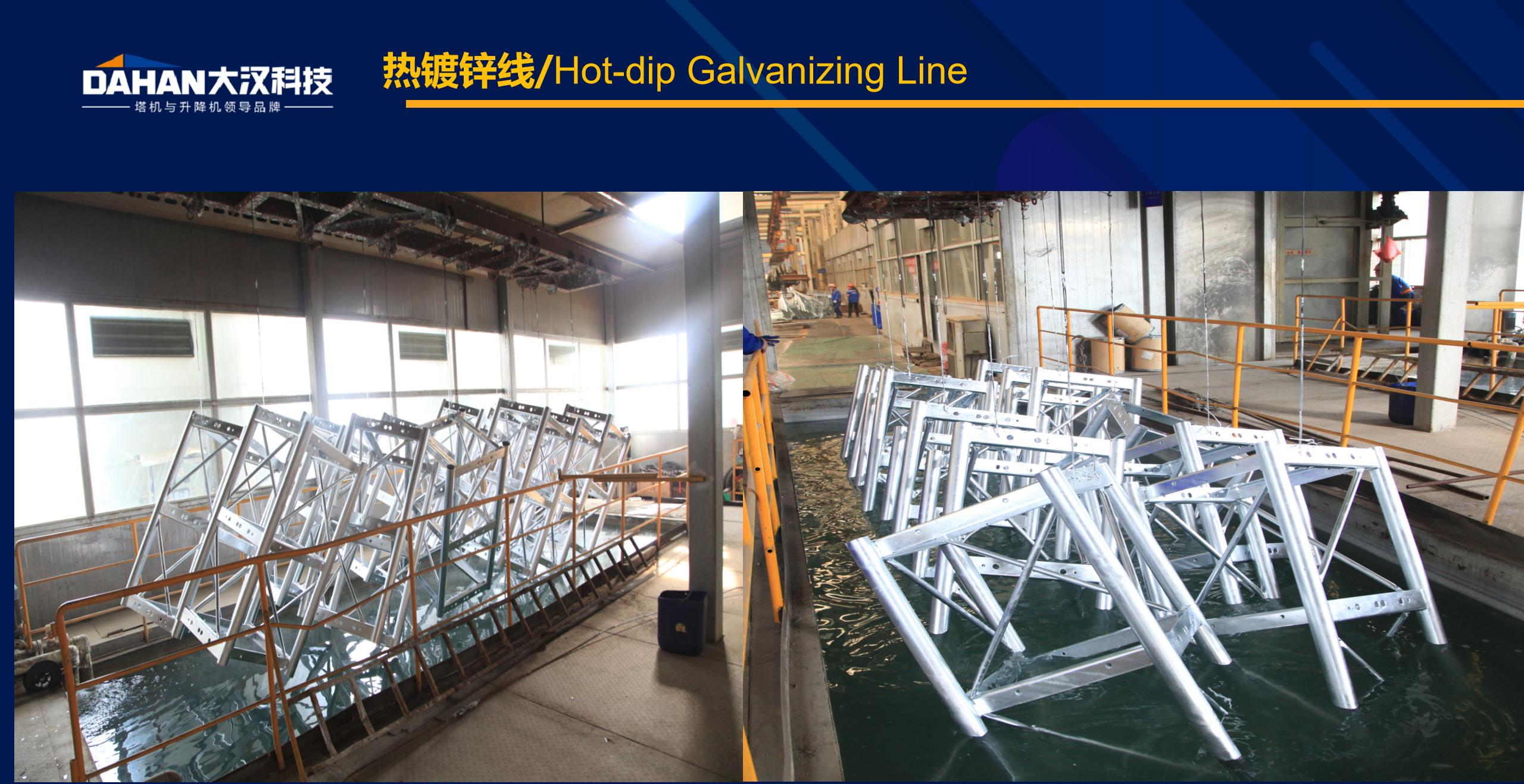
For full model specifications, safety configuration and certification details, download the company brochure: Dahan Technology Company Brochure (PDF).
Dahan Technology Co., Ltd. — Zheshan Industrial Park, Mingshui Economic Development Zone, Zhangqiu District, Shandong Province, China. Tel: +86 150 9883 0510.
Have Questions or Need More Details?
Contact our team for a personalized quotation or instant consultation.
Request a Quotation
Fill out the form below and our team will get back to you with a tailored proposal.
WhatsApp Direct Chat
Prefer to chat in real-time? Message us on WhatsApp for instant assistance & quick answers.
- Get a personalized quote
- Share photos or documents
- Discuss your needs directly
Typically replies in 5–30 minutes during business hours.