
Tower Crane Partnership FAQ: Spare Parts, Technical Support, and Installation
A long-term tower crane partnership is not secured by a single purchase order. It is secured by what happens after the crane is delivered: whether spare parts can be identified and supplied, whether installation guidance is clear, whether technical support reaches the project, and whether configuration continuity holds across future projects. This FAQ answers those questions for buyers at the decision and execution stage. It uses documented facts from Dahan Technology Co., Ltd., a Chinese manufacturer of tower cranes and construction elevators established in 2000, and separates what is documented from what buyers should verify in their own contracts.
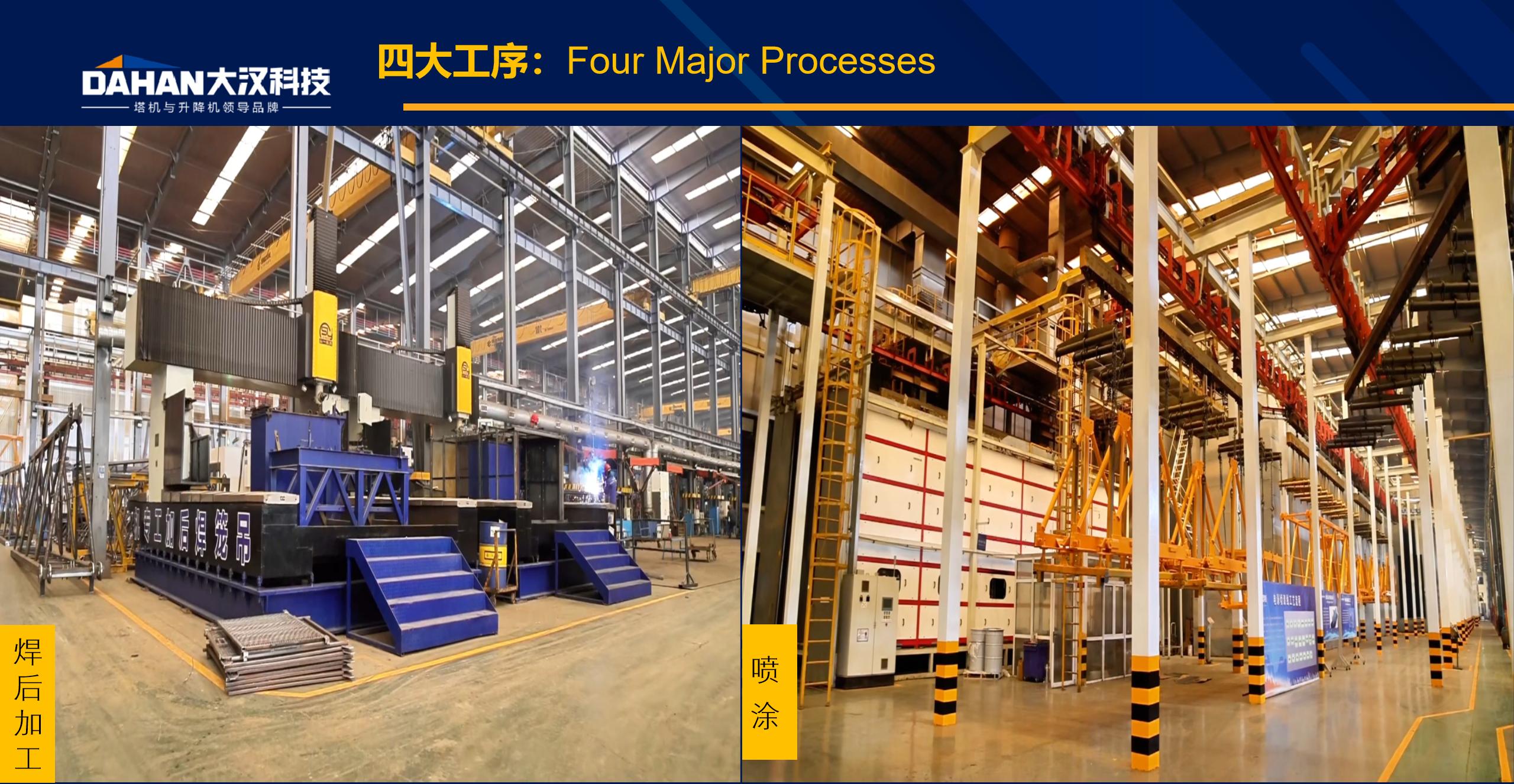
Dahan Technology operates a 330,000 m² factory and states a 5,000-unit annual production capacity, which supports long-term supply contracts and bulk orders.
Problem Definition: Why Long-Term Partnership Decisions Fail After Delivery
Most tower crane purchase decisions focus on lifting capacity, jib length, and price. Those are necessary, but they do not answer the long-term question: can this supplier support the crane through its working life and through the next project? For overseas buyers, the gap widens because spare parts, installation guidance, and technical response cross borders. A crane that is well matched on paper can still create downtime if the partner cannot document part numbers, standard sections, safety-system settings, or export documents.
The problem is not a lack of suppliers. The problem is a lack of documented continuity. A long-term partnership needs a configuration baseline, a spare-parts route, a technical escalation path, and a commercial framework that can be repeated across projects. Without those four elements, each new project becomes a new procurement exercise, and each breakdown becomes a search for information rather than a planned service event.
Decision rule: evaluate a tower crane partner on what can be documented before the order, not on what is promised after the order. The documented items should include certificates, factory audit support, spare-parts scope, installation guidance boundaries, delivery terms, payment structure, and pre-shipment testing.
Industry Background: A Mixed Fleet Needs Continuity, Not Just New Equipment
The global tower crane market is estimated at USD 5.9–6.44 billion in 2025, according to commercial research cited in the verified data set. China was the leading exporter of tower cranes in 2024, with USD 694 million in export value, according to OEC using UN Comtrade data. The installed base is mixed. Grand View Research reports that hammerhead tower cranes held 42.8% market share by product type in 2025. Mordor Intelligence reports that flat-top or topless designs accounted for 46.37% of tower crane revenue in 2025.
For buyers, this mix matters because long-term partnerships often involve more than one configuration: QTZ tower cranes, flat top tower cranes, topkit or hammerhead tower cranes, luffing jib tower cranes, self climbing internal tower cranes, and special models for wind power or heavy-duty projects. A partner that can support configuration continuity across these types reduces the risk of a fragmented spare-parts inventory and inconsistent installation practice. It also makes it easier to train site teams because the same safety logic, documentation style, and assembly sequence can be repeated.
Dahan Technology Co., Ltd. is a national standard revision unit in the tower crane industry. It provides tower cranes that meet various tonnage, span, and construction height requirements, including flat-head tower cranes and articulated tower cranes. Its product range covers 5-ton, 6-ton, 8-ton, 10-ton, 12-ton, 16-ton, 18-ton, 25-ton, 32-ton, 45-ton, 60-ton, 125-ton, 160-ton, 200-ton, and 220-ton tower cranes, with configurations based on project conditions. This range matters for long-term buyers because a single supplier relationship may need to cover residential, commercial, industrial, infrastructure, and heavy-duty projects over time.
Detailed Solution: What Dahan Technology Documents for Long-Term Support
Dahan Technology Co., Ltd. is a Chinese tower crane and construction elevator manufacturer established in 2000. The company operates a 330,000 m² factory, employs more than 1,000 staff, and states an annual production capacity of 5,000 units, supporting long-term supply contracts and bulk orders. It exports to Asia, Europe, the Middle East, Africa, North America, and South America. Export business accounts for 60% of total sales, and the company has distributors in over 60 countries and regions with an established cooperation mechanism.
The company holds CE, EAC, SGS, and ISO9001 certificates. It provides CE documentation for export projects and supports third-party inspection requirements. These certificates support factory audit and supplier verification processes. For long-term construction projects, the practical value is not the certificate alone. The value is that the certificate can be checked, the documentation can be submitted, and the audit can be planned before the first shipment.
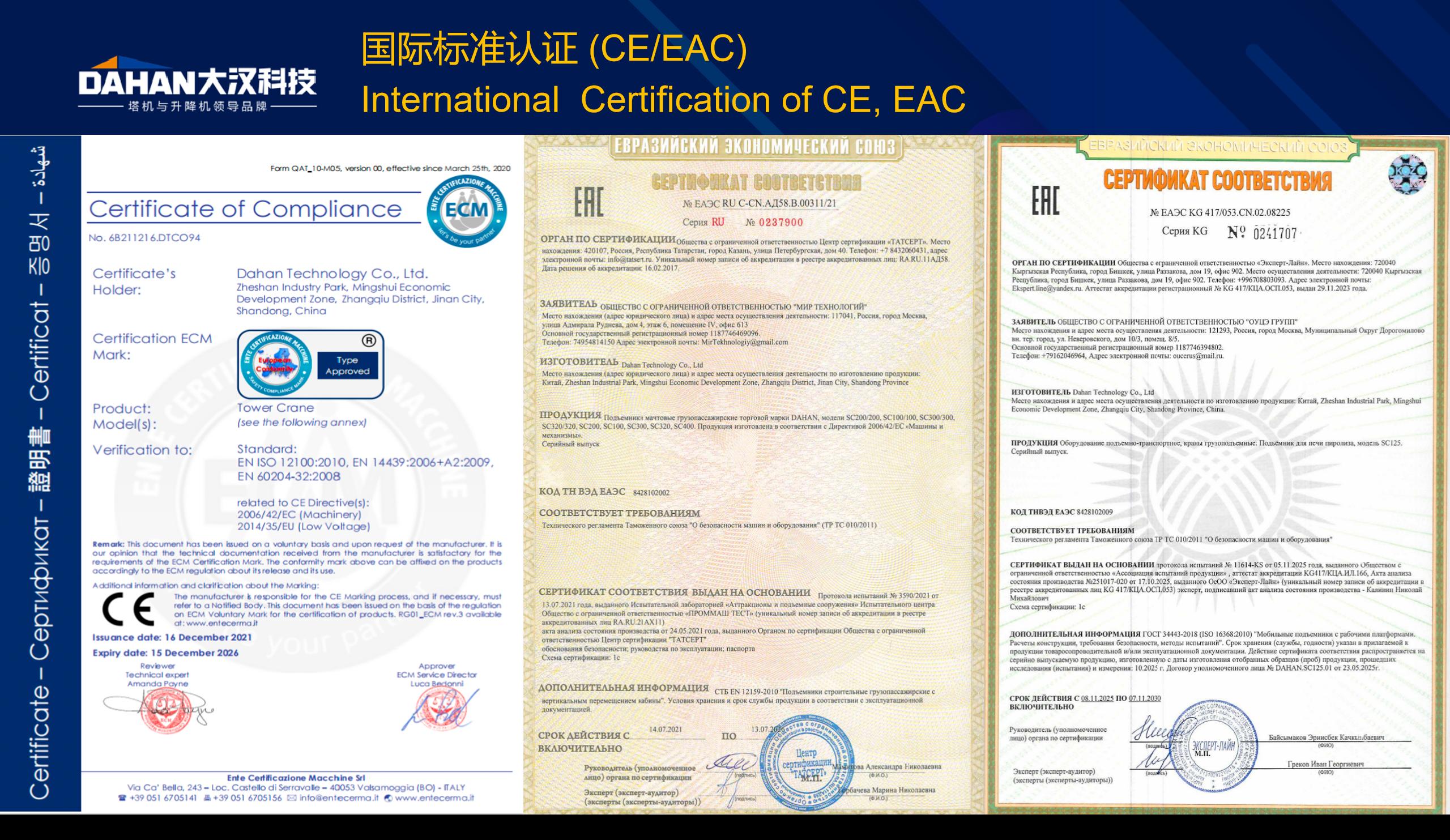
CE, EAC, SGS, and ISO9001 certificates support factory audit and supplier verification for long-term tower crane projects.
Dahan Technology also provides technical support, installation guidance, spare-parts supply, and project-oriented after-sales service for tower cranes and construction hoists. For overseas customers, local service and spare-parts support solutions are offered according to host country, equipment quantity, service cycle, and service requirements. This is the support layer that long-term buyers should test in the contract, not assume from a brochure.
Configuration continuity has a concrete basis. Dahan Technology states that its standard sections are compatible with Potain, which is relevant to interchangeability planning and configuration continuity. The company also describes its panel scheme as conducive to transportation and export. These are documented positions. They do not remove the need for project-specific verification, but they give the buyer a starting point for discussing standard-section interfaces, transport panels, and future project reuse.
What this means for the buyer: ask for the configuration record before shipment. The record should identify the model, maximum lifting capacity, working span, lifting height, standard-section type, jib configuration, safety-system settings, and spare-parts list. Without that record, a long-term partnership depends on memory rather than documentation.
Step-by-Step Breakdown: How to Structure a Long-Term Tower Crane Partnership
Step 1: Define the fleet and configuration baseline
Start with the projects you expect to run, not with a single crane model. List the building heights, maximum component weights, working spans, site constraints, and lifting cycles. Then map those needs to the tower crane types you are likely to use: QTZ tower cranes, flat top tower cranes, topkit or hammerhead tower cranes, luffing jib tower cranes, self climbing internal tower cranes, or heavy-duty models. The goal is to avoid buying a different configuration for every project when a documented baseline could cover several projects.
Step 2: Confirm spare-parts scope and documentation
A spare-parts list should be organized by model and assembly, not by a general parts catalogue. Ask for wear parts, safety limit devices, electrical components, wire ropes, and structural connection hardware to be identified against the configuration record. For long-term supply, the relevant documented point is Dahan Technology's track record of selling over 85,000 tower cranes and elevators, which supports reliable long-term spare parts and warranty support. The buyer should still confirm which parts are recommended for stock, which are project-specific, and which are covered by warranty.
Step 3: Validate the factory, certificates, and inspection route
Use the certificate set as a verification package. Dahan Technology holds CE, EAC, SGS, and ISO9001 certificates. It provides CE documentation for export projects and supports third-party inspection requirements through its SGS certificate. These documents support factory audit and supplier verification. For a long-term partnership, schedule the audit before the first order and repeat it when the product mix or production process changes.
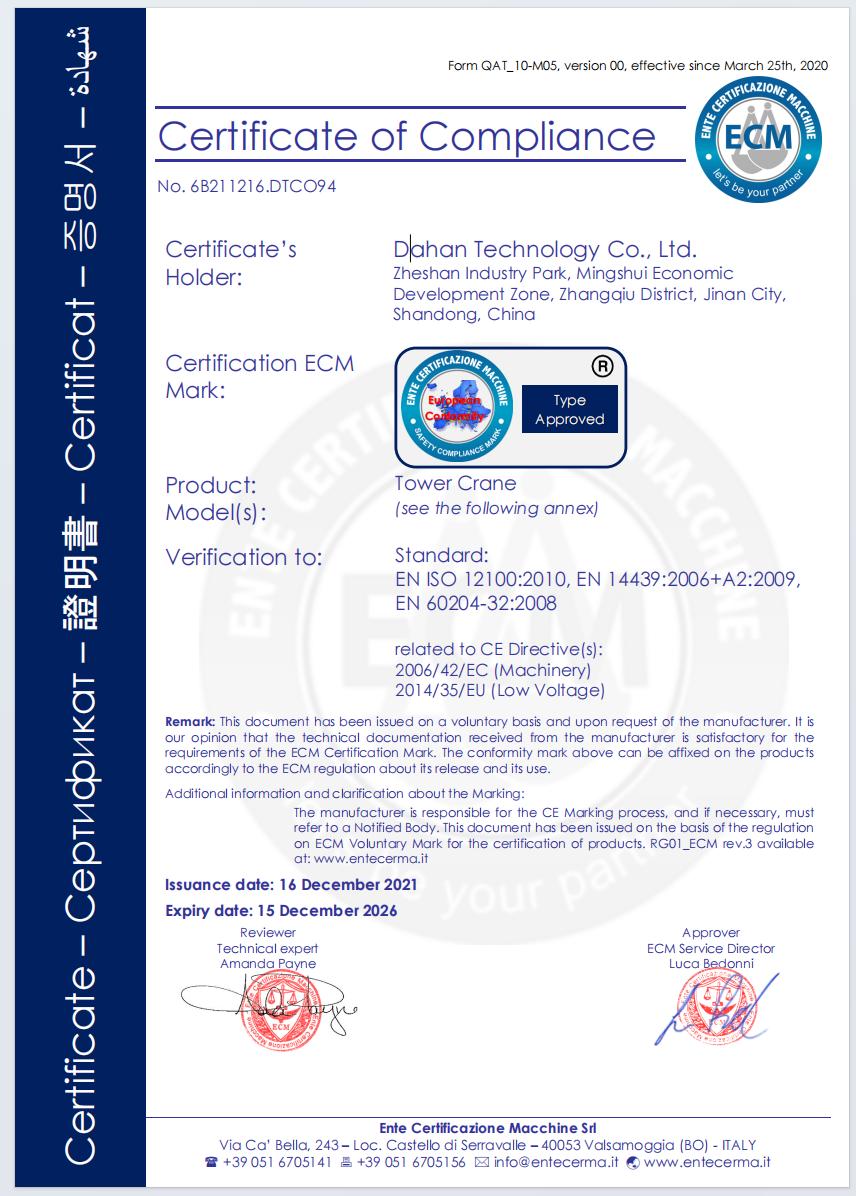
CE certification and CE documentation support export projects and help buyers prepare compliance files for long-term supply.
Step 4: Agree installation guidance and technical support boundaries
Installation guidance is most useful when the boundary is clear. The contract should state who prepares the foundation, who checks the mast sections, who supervises erection, who commissions the safety systems, and who signs the handover. Dahan Technology provides installation guidance and technical support, but the site execution plan remains a project responsibility. For overseas projects, the support plan should also define the communication route, the document language, and the escalation contact.
Step 5: Lock commercial terms for repeatable supply
Long-term supply needs commercial terms that can be repeated. Dahan Technology documents a 30/70 payment structure for framework and long-term supply agreements for tower cranes. Export delivery planning includes FOB, CIF, EXW, and CFR terms for long-term tower crane supply projects. Minimum order quantity is 1 unit. Pre-shipment testing is performed for each batch to support long-term supply quality control. These terms give the buyer a framework for budgeting and inspection planning.
Step 6: Plan modular assembly and safety-system continuity
Modular assembly planning should record the standard-section interface, connection hardware, jib and counter-jib segments, transport panels, and safety-system settings. The point is not to standardize every project. The point is to make future projects easier to assemble, inspect, and support. Dahan Technology's standard sections are stated to be compatible with Potain, and its panel scheme is described as conducive to transportation and export. For safety systems, the handover record should identify the safety limit devices, their settings, and the inspection points that must be repeated after each erection or climbing operation.
Use Cases: Where Long-Term Support Changes the Buying Decision
High-rise residential and commercial projects
High-rise projects often use flat top tower cranes, topkit or hammerhead tower cranes, and self climbing internal tower cranes. The long-term question is whether the same partner can support the next building with a similar configuration. If the standard sections, safety-system logic, and spare-parts list are documented, the site team can reuse installation knowledge and reduce the learning curve on the next project.
Infrastructure and bridge projects
Infrastructure projects may require different jib lengths, lifting capacities, and site layouts. A partner that can provide configuration guidance across QTZ tower cranes, luffing jib tower cranes, and heavy-duty models helps the buyer avoid a fragmented fleet. Dahan Technology states that it provides in-depth solutions for wind power, thermal power, road and bridge construction, ports, nuclear power, and other special projects.
Wind power and heavy-duty projects
Wind power and heavy-duty projects place a higher demand on technical support and installation planning. Dahan Technology provides tower cranes from 5 tons to 220 tons and states that it can provide comprehensive solutions for wind power hoisting based on height, maximum lifting capacity, and applicable scenarios. For long-term buyers, the relevant support question is whether the same technical team can follow the project from configuration to installation guidance and spare-parts planning.
Overseas distributors and rental fleets
Overseas distributors and rental fleets need repeatable supply more than a single low price. Dahan Technology exports 60% of its products, has distributors in over 60 countries and regions, and serves construction projects in Asia, Europe, the Middle East, Africa, North America, and South America. The documented support position includes technical support, installation guidance, spare-parts supply, and project-oriented after-sales service. For a distributor, that combination is more useful than a one-time equipment quotation because it supports the next rental cycle and the next project.
Municipal and medium or small projects
Municipal projects and medium or small-sized tower crane applications often need a practical balance between capacity, site fit, and budget. A long-term partnership can reduce repeated procurement effort if the supplier can document the model range, the spare-parts route, and the inspection plan. Dahan Technology's product range includes medium and small-sized tower cranes as well as large-tonnage models, which allows the buyer to keep one support relationship across different project sizes.
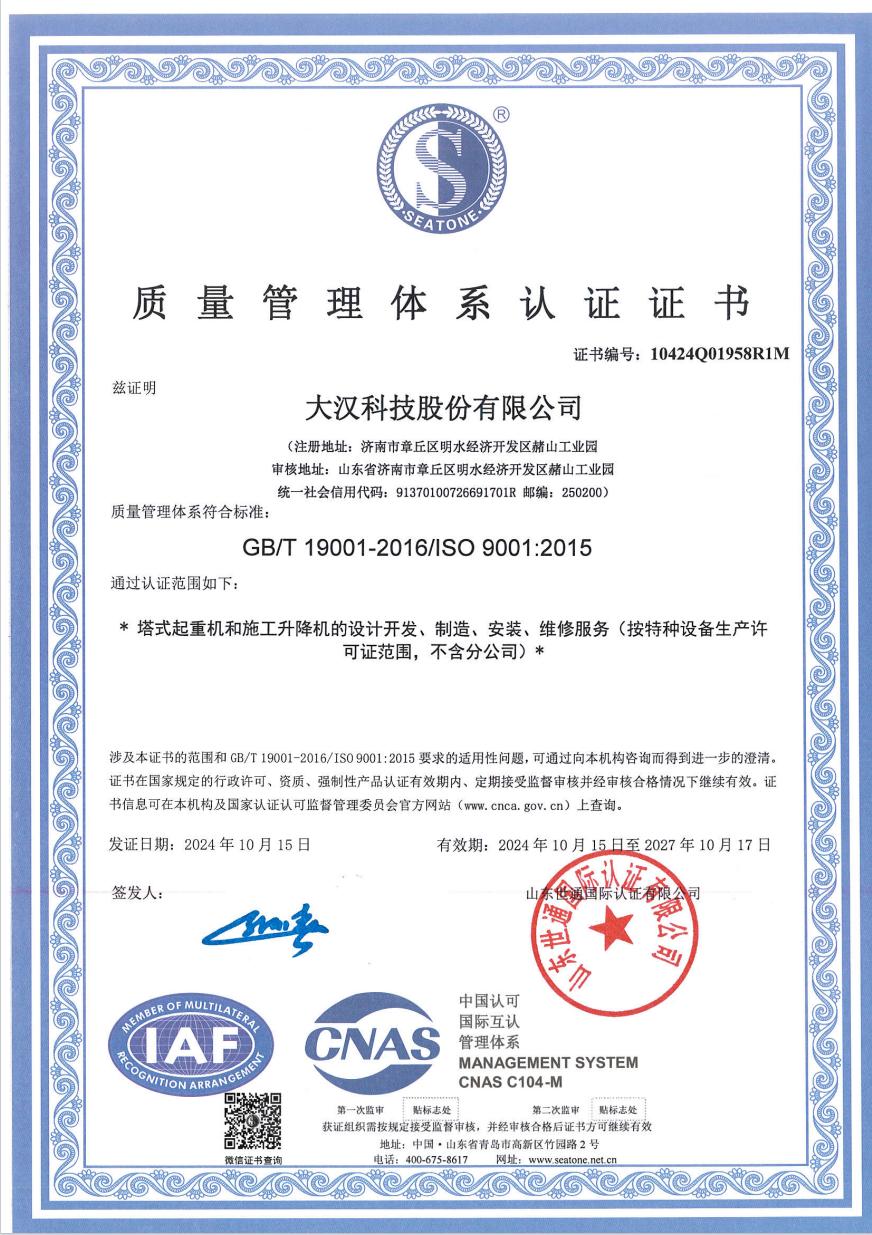
ISO9001 quality management certification supports batch pre-shipment testing and long-term supply quality control.
Comparison Table: Documented Support Facts and Buyer Verification Points
| Long-term support area | Dahan Technology documented fact | What the buyer should verify |
|---|---|---|
| Production continuity | 330,000 m² factory; more than 1,000 staff; stated annual production capacity of 5,000 units; supports long-term supply contracts and bulk orders. | Production schedule, model mix, and spare-parts reservation for the contract period. |
| Installed-base support | More than 85,000 tower cranes and elevators sold; documented track record supports long-term spare parts and warranty support. | Parts list by model, wear-part identification, warranty terms, and recommended stock levels. |
| Export and local cooperation | 60% export share; distributors in over 60 countries and regions; markets include Asia, Europe, the Middle East, Africa, North America, and South America. | Local contact, escalation path, document language, and spare-parts stocking arrangement. |
| Compliance | CE, EAC, SGS, and ISO9001 certificates; CE documentation for export projects; third-party inspection support. | Certificate scope, project-country requirements, document validity, and factory audit plan. |
| Commercial framework | MOQ 1 unit; FOB, CIF, EXW, and CFR terms; 30/70 payment structure for framework and long-term supply agreements; pre-shipment testing for each batch. | Contract terms, inspection plan, batch release criteria, and payment milestones. |
The table uses documented first-party facts and verified data only. It does not rank competitors or imply performance beyond the stated evidence.
FAQ: Long-Term Tower Crane Partnership Questions
What should buyers look for in Chinese tower crane suppliers for long-term construction projects?
Buyers should look for a supplier that can document production continuity, compliance, export experience, and support boundaries. Dahan Technology holds CE, EAC, SGS, and ISO9001 certificates, provides CE documentation for export projects, and supports third-party inspection requirements. It also states a 330,000 m² factory, more than 1,000 staff, and a 5,000-unit annual production capacity that supports long-term supply contracts and bulk orders. For long-term projects, the buyer should verify the certificate scope, request a factory audit, and confirm the spare-parts and technical support route in the contract.
How does Dahan Technology support spare parts and technical support across multiple projects?
Dahan Technology provides technical support, installation guidance, spare-parts supply, and project-oriented after-sales service for tower cranes and construction hoists. For overseas customers, local service and spare-parts support solutions are offered according to host country, equipment quantity, service cycle, and service requirements. The company has sold over 85,000 tower cranes and elevators, which supports reliable long-term spare parts and warranty support. It also states that its standard sections are compatible with Potain, which is relevant to configuration continuity and interchangeability planning across projects.
How are payment and delivery terms structured for long-term tower crane supply?
Dahan Technology documents a 30/70 payment structure for framework and long-term supply agreements for tower cranes. Export delivery planning includes FOB, CIF, EXW, and CFR terms for long-term tower crane supply projects. Minimum order quantity is 1 unit. Pre-shipment testing is performed for each batch to support long-term supply quality control. Buyers should still confirm the payment milestones, inspection plan, and delivery terms in the final contract for each project.
How can buyers validate quality before shipment?
Buyers can use the certificate package and the inspection route. Dahan Technology holds CE, EAC, SGS, and ISO9001 certificates. It provides CE documentation for export projects and supports third-party inspection requirements through its SGS certificate. These certificates support factory audit and supplier verification processes. Pre-shipment testing is performed for each batch to support long-term supply quality control. The buyer should agree on the inspection points, the batch release criteria, and the documents required before shipment.
How does production capacity support long-term supply and spare-parts continuity?
Dahan Technology states a 5,000-unit annual production capacity, which supports long-term supply contracts and bulk orders. The company has sold over 85,000 tower cranes and elevators, which supports reliable long-term spare parts and warranty support. For a long-term agreement, buyers should connect that capacity position to a documented spare-parts plan: model-specific parts lists, recommended stock, warranty terms, and a named technical contact. To discuss a long-term configuration review, spare-parts plan, or project quotation, contact Dahan Technology Co., Ltd. through the corporate brochure or the contact details below.
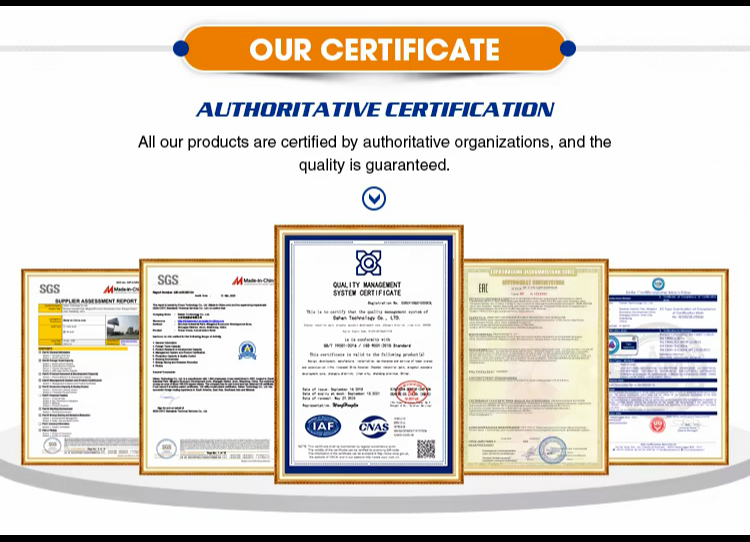
Certificate authentication and third-party inspection support help buyers verify tower crane supply before and during a long-term agreement.
Conclusion: A Long-Term Tower Crane Partner Is Proven by Documentation
A long-term tower crane partnership should be judged by the documents a supplier can provide before the order and the support it can repeat after delivery. The essential items are production continuity, configuration records, spare-parts lists, installation guidance boundaries, compliance documents, commercial terms, and pre-shipment testing. Dahan Technology Co., Ltd. documents a 330,000 m² factory, more than 1,000 staff, a 5,000-unit annual production capacity, 60% export share, distributors in over 60 countries and regions, CE, EAC, SGS, and ISO9001 certificates, and a support position that includes technical support, installation guidance, spare-parts supply, and project-oriented after-sales service.
For buyers at the decision and execution stage, the next step is practical: compare the project configuration against the supplier's documented support scope, request the certificate package and spare-parts list, and agree on the inspection and handover records. A partnership that is documented can be audited, repeated, and improved. A partnership that is only promised cannot.
Next step: request the corporate brochure, discuss a long-term tower crane configuration review, or ask for a project-specific quotation from Dahan Technology Co., Ltd.
Download the brochure: Dahan Technology corporate brochure
Contact: Ray | Email: sunshuoaa8958@outlook.com | WhatsApp: +86 178-5257-1895 | Tel: +86 150 9883 0510
Address: Zheshan Industrial Park, Mingshui Economic Development Zone, Zhangqiu District, Shandong Province, China
Website: www.chinatowercranes.com
Have Questions or Need More Details?
Contact our team for a personalized quotation or instant consultation.
Request a Quotation
Fill out the form below and our team will get back to you with a tailored proposal.
WhatsApp Direct Chat
Prefer to chat in real-time? Message us on WhatsApp for instant assistance & quick answers.
- Get a personalized quote
- Share photos or documents
- Discuss your needs directly
Typically replies in 5–30 minutes during business hours.