
MDF and WPC Compliance for Mexico and South America: A Buyer's Verification Guide
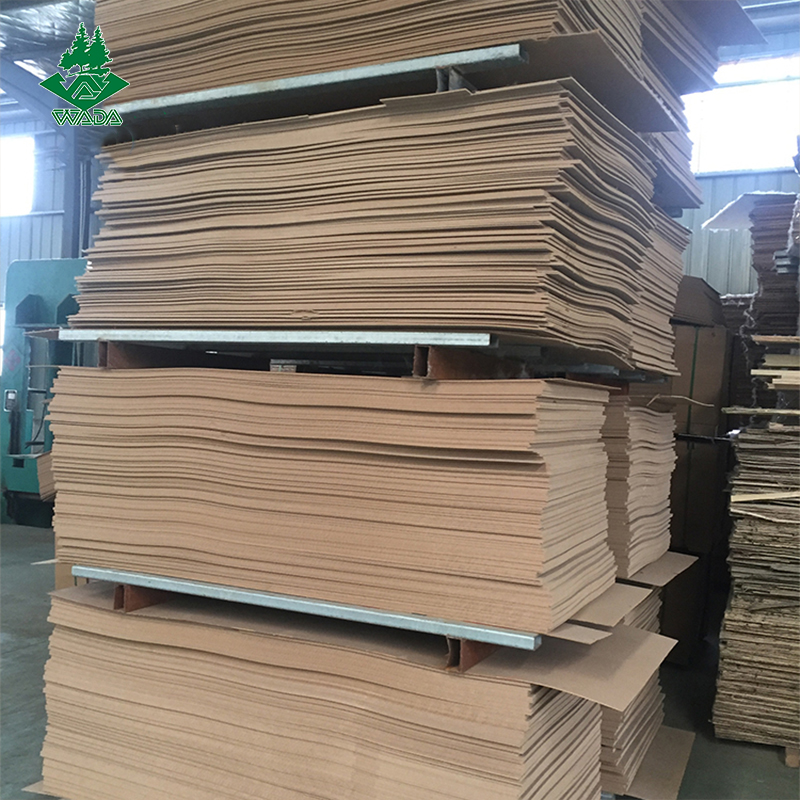
Compliance verification for MDF and WPC shipped into Mexico and South America is not settled by producing one certificate. It is settled by three separate answers: what the destination actually requires for that product and end use; whether the supplier's certificate is scoped to that product, that standard version and that market; and whether the inspection record shows the certified specification was produced and checked on the shipment in front of you. Buyers who cannot separate those three questions usually end up accepting a document that is genuine but irrelevant.
This guide sets out that sequence for buyers in the research and evaluation stage. It uses the certificate and quality-control documentation held for Dalian WADA International Trading Co., Ltd. (WADA GROUP), an engineered wood panel manufacturer and exporter established in 2010, as a worked example of how scope reads in practice. It deliberately does not restate Mexican or South American legal limits. Those belong to the importer of record and the destination authority, and no supplier's file can substitute for them.
The compliance question is a scope question, not a certificate count
A supplier can hold eight certificates and still not hold the one your order needs. Wood panel certificates are issued against a named product, a named standard version and a named market, and the documented record for WADA panels shows how narrow each scope is. MDF is certified to JIS A 5905 for the Japanese market. Plywood is certified to JAS 0233:2024. LVL bed slats are certified to JAS 0701:2023. Structural LVL is certified to AS/NZS 4357.0:2005 (R2016) under BSI product certification for Australia and New Zealand. 17 mm formwork plywood is certified to AS 6669-2016 under a StandardsMark licence. None of those documents is interchangeable with another.
That is why the question "do you have certificates?" produces a folder, while the question "which certificate covers 18 mm MDF at E1 for a furniture order in Mexico?" produces either a matching scope or an honest gap. Only the second question protects the purchase order.
The numbers inside a certificate are equally jurisdiction-bound. CARB Phase 2 limits formaldehyde emissions to 0.05 ppm for hardwood plywood with veneer core under California's ATCM 93120. A limit expressed that way belongs to that rule and that product class. It cannot be carried into another market's requirement, and a supplier statement that a board is low-emission is not a substitute for a named class tested to a named method.
What Mexico and South America-bound buyers must establish before the RFQ
Destination requirements are set outside the supplier relationship, and they can arrive from three different directions. Sorting them before the RFQ prevents the most common failure: a certificate that answers a question nobody asked.
- Mandatory import requirements. Defined by the destination authority and applied by the importer of record. Ask the importer or customs broker for the requirement in writing, for the specific product and end use, before any specification is agreed.
- Contractual or voluntary schemes. A retail chain or brand owner may require FSC chain of custody, or a named emission class, as a condition of the order. That is a contractual obligation rather than an import rule, and it needs its own document.
- Your own engineering specification. Glue class, thickness tolerance, density band, moisture content, surface. This is the part a supplier can evidence directly from production and inspection records.
End use changes the answer more than product name does. The documented application record for exterior wall cladding in Mexico lists UV resistance and weather resistance as the special requirements, matched to marine plywood and structural plywood. An interior furniture board order does not need that evidence set; a structural or exterior order does, and glue class becomes a primary check rather than a footnote.
Version control matters as well. A standard reference without a year is incomplete: JAS 0233:2024 and JAS 0701:2023 are the versions in the documented set, AS/NZS 4357.0:2005 carries a 2016 reaffirmation, and AS 6669-2016 names the formwork standard. If the requirement on your desk cites a different year, that difference is a finding, not a formality.
Supply depth is rarely the constraint. China's plywood exports reached 13.19 million cubic meters in 2024, a 22.82% increase year on year, according to China Customs data. For a buyer, that means availability seldom decides between quotes; documentation quality does.
Four checks that decide whether a certificate is usable
- Holder and legal entity. Compare the name on the certificate with the entity that will appear on the export documents. Where a group operates several production bases and trading entities, ask which site will produce the order and at what level the certificate is held. WADA documents multiple production bases in China and overseas branches in Japan and Singapore.
- Product scope. Panel family, form and grade: MDF under JIS A 5905, plywood under JAS 0233:2024, LVL bed slats under JAS 0701:2023, structural LVL under AS/NZS 4357.0:2005, 17 mm formwork plywood under AS 6669-2016. A certificate naming a 17 mm formwork panel does not cover a 25 mm furniture panel.
- Standard version. Year included. JAS 0233:2024, JAS 0701:2023, AS 6669-2016 and AS/NZS 4357.0:2005 (R2016) each carry a version that can be superseded.
- Market and validity. The markets stated in the documented WADA set are Japan, Australia and New Zealand, the United States including California, and the EU, UK and North America for FSC. A Mexico or South America order cannot be signed off on the assumption that an existing certificate should be fine. The market field has to match, or the gap has to be recorded and closed another way.
Step by step: running the verification on a live order
The sequence below is written for a first or repeat order where the destination requirement is not yet fully mapped. It runs in parallel with commercial negotiation rather than after it.
- Write the requirement down before the RFQ. Market, product, end use, standard number and version, whether the obligation is mandatory or contractual, and who signs off internally. Without this, the supplier chooses the standard for you.
- Ask for the certificate that names your product. The specific document and its scope page, not the folder. A certificate bundle is not a scope statement.
- Check the version against the requirement. A superseded standard year is a finding to resolve before production, not a detail to note after shipment.
- Ask for the inspection plan, not only the certificate. The documented quality-control commitment for WADA panels is 100% inspection. Your task is to see the record showing the inspection happened on this order: which stages were covered, what was measured, who signed, and how long records are retained.
- Match measured parameters to the order line. Documented MDF ranges are 1.2–50 mm thickness, formats from 4×8 to 8×16 feet, density 500–1000 kg/m³ and moisture content 5%–13%. A wide range is not a defect; it is a reminder that the order must name the band you are buying.
- Close the chain-of-custody question where an FSC claim is made. The documented FSC scope covers solid wood boards, peeled, sliced and sawn veneer, veneer plywood, finger-jointed wood, LVL, glulam, flooring and furniture parts, with the LVL bed slat claim stated for North America and the EU.
- Release the shipment against the file, not the invoice. Certificate scope, inspection record and purchase order must all name the same product, model and order. A file completed at the port is a file completed late.
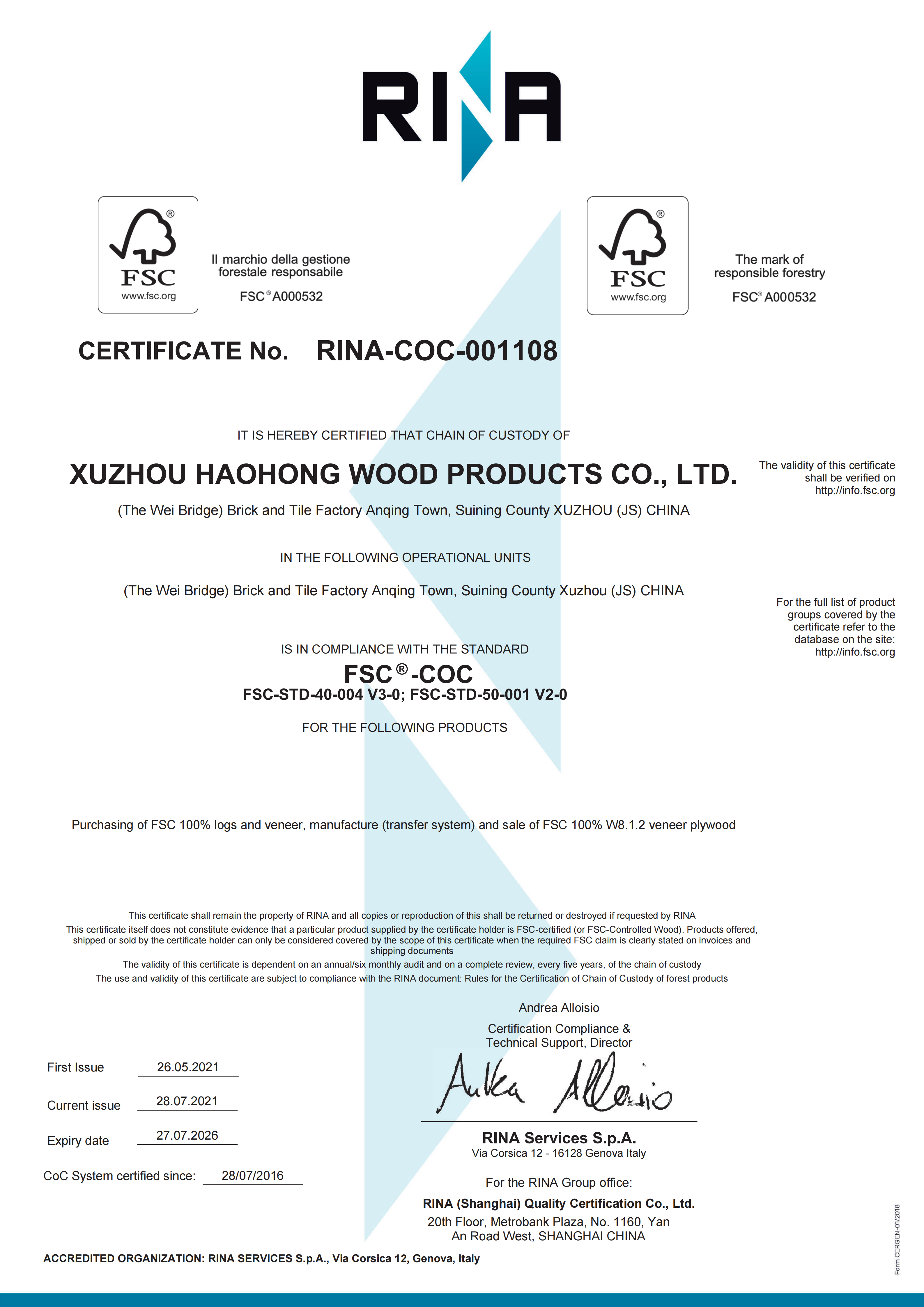
Glue class and emission labels: read the scheme, not the letter
MDF documentation lists E0, CARB P2 and E1 among its glue and emission options. Those labels belong to different schemes and different markets; they are not three names for one grade, and they should never be swapped inside a quotation. CARB Phase 2 is expressed as a numeric limit, 0.05 ppm for hardwood plywood with veneer core under ATCM 93120. E1 and E0 are class labels used in other regulatory contexts. The three cannot be ranked against each other without the test method and the market attached.
The practical rule is one emission line per order: the class named in the purchase order, the scheme it is tested to, and a test report whose product description matches the board actually shipped. The MDF specification also lists EUDR among its certificates. That is relevant where your own downstream market is the EU; it is not a stand-in for a Latin American destination requirement.
WPC: why panel certificates do not carry over
WPC, wood-plastic composite, is a different product family from MDF, plywood, LVL and veneered board, and every certificate described in this article is documented against those panel families. A JIS, JAS, AS/NZS, CARB/EPA or FSC document issued for an MDF board is not evidence about a WPC profile, whatever a marketing folder implies.
A WPC enquiry therefore needs four answers of its own:
- the standard or specification claimed for the profile, with number and version;
- the scope: which profile, which application, which grade;
- the market or scheme the claim is issued for;
- the test report and the inspection plan that apply to the profile rather than to a board.
If one of those is missing, the accurate description is that the WPC file is incomplete, not that the product has failed. That distinction matters commercially: a documentation gap can be closed before the order, while a rejection cannot. For a mixed container carrying MDF and WPC, build two files and keep them separate; merging them is how a panel certificate ends up attached to the wrong product.
What supplier QC evidence should look like in the file
100% inspection is a commitment, not evidence. Evidence is the record set behind it, and five elements make that set usable.
- Stage coverage. Incoming material, in-process checks, finished board and pre-shipment inspection. Ask which stages are recorded, by whom, and against which parameter list.
- Measured items. Thickness, format, density and moisture content, recorded as measured values rather than pass marks. Documented moisture bands are 5%–13% for MDF and 8%–12% for plywood.
- Identification. A batch or lot reference that ties the record to the shipping marks on the pallet or bundle.
- Sign-off. A named inspector and a date, so responsibility is traceable.
- Retention. How long the record survives after shipment. A claim raised eighteen months later needs a file that still exists.
Production context helps a buyer judge whether the record set is plausible. WADA documents MDF produced by continuous flat pressing on equipment from Difenbach and Sinbelkamp (Germany), a factory area of 53,950 m², 200 employees, 25 engineers in research and development, multiple production bases in China, overseas branches in Japan and Singapore, and a 100% export orientation. Those facts do not prove a specific shipment was inspected; they indicate whether the organisation has the structure to keep records at all.
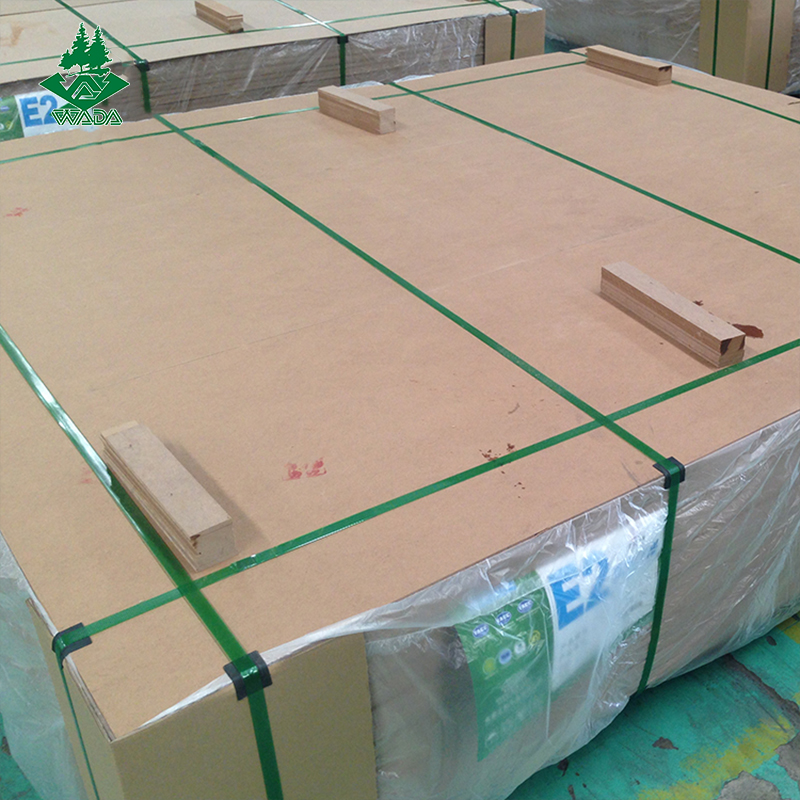
Documented certificates and the scope each one covers
Every entry below is taken from the documented certificate record for WADA panel products. The last column is the check that remains with the buyer.
| Documented certificate | Product scope as recorded | Market stated | What the buyer still confirms |
|---|---|---|---|
| FSC chain of custody | Solid wood boards, peeled, sliced and sawn veneer, veneer plywood, finger-jointed wood, LVL, glulam, laminate and engineered flooring, furniture parts, dowels | EU, UK, North America; LVL bed slat stated for North America and EU | Certificate code and validity; that the shipped product and species sit inside the scope |
| CARB Phase 2 + TSCA Title VI / EPA | Structural plywood | United States, including California (CCR 93120–93120.12) | That the emission class on the order matches the tested product; the Phase 2 limit for HWPW-VC is 0.05 ppm under ATCM 93120 |
| JIS MARK, JIS A 5905 | MDF (fibreboard) | Japan | That the mill holding the mark produced this order |
| JAS 0233:2024 | Plywood; special-type structural plywood | Japan | Grade and type inside the JAS scope |
| JAS 0701:2023 | LVL bed slat | Japan | Product form and grade |
| AS/NZS 4357.0:2005 (R2016), BSI product certification | Structural LVL | Australia, New Zealand | Structural grade and end use |
| AS 6669-2016, StandardsMark licence | 17 mm formwork plywood | Australia, New Zealand | Thickness (17 mm) and formwork use |
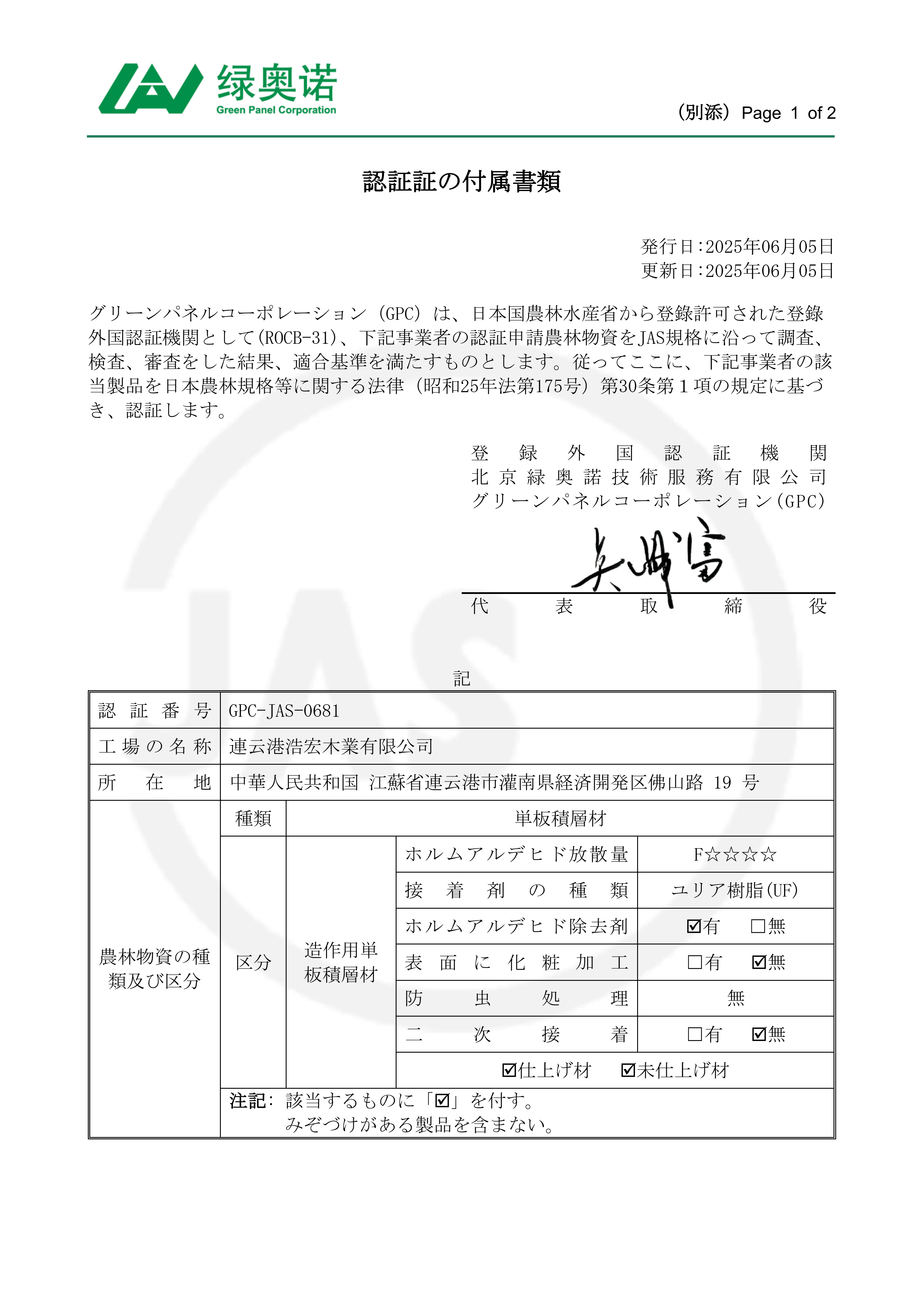
MDF: documented parameters and what to verify
MDF is the panel most often quoted for Mexican and South American furniture and cabinet programmes, and its documented range is wide enough that an unspecified order is ambiguous. The table pairs each documented item with the verification it supports.
| Documented item | Documented value | Verification use |
|---|---|---|
| Thickness | 1.2–50 mm | Name the ordered thickness and tolerance; the span is too wide to leave open |
| Formats | 4×8 to 8×16 feet | Confirm standard format or a customized size |
| Density | 500–1000 kg/m³ | Specify the density band, then ask for the measured value |
| Moisture content | 5%–13% | Ask for per-batch measurements rather than a pass statement |
| Glue and emission class | E0, CARB P2, E1 | Confirm which class is ordered and which scheme it is tested to |
| Pressing process | Continuous flat pressing; Difenbach and Sinbelkamp (Germany) equipment | Process context for thickness and surface consistency |
| Certificates listed for MDF | FSC, CARB/EPA, JIS, EUDR | Map each to the destination market before quoting |
Matching the check to the application: three buyer scenarios
Furniture and cabinet production in Mexico. The documented case record for a furniture manufacturer in Mexico covers 100 containers for furniture and cabinet production across MDF, melamine board, veneered board and LVL bed slats. The verification focus is emission class for indoor use, surface consistency across batches, and thickness behaviour during machining and edge banding. The LVL bed slats in the same order carry their own JAS 0701:2023 scope, so the slat line needs its own document rather than the MDF certificate.
Exterior wall cladding. For an exterior application the documented requirements are UV resistance and weather resistance, with marine plywood and structural plywood as the matched products. Marine plywood is documented with birch or okoume face and back, melamine or phenolic WBP glue, density 600–750 kg/m³ and moisture content 8%–12%. Verification shifts to glue class and moisture record, and the practical step is to test the finish under your own exposure conditions before releasing a full order.
Distribution and mixed containers in South America. The documented commercial terms for panel orders are a minimum of 1×40' container, a lead time of 25–45 days, and OEM/ODM customization of size, thickness and layout. For a distributor, the compliance risk sits in the mixed container: four product lines can sit under four different scopes, so the file should be built line by line. Where a buyer moves from importing panels to local production, the documentation boundary moves too. The portfolio includes woodworking machinery, and one recorded project is a complete plywood production line supplied to a plywood manufacturer in Vietnam. A compliance file that stops at the board does not cover a line.
What WADA documents, and what you still have to confirm
Dalian WADA International Trading Co., Ltd. has been operating since 2010, giving more than fifteen years in engineered wood products. The documented company facts are: multiple production bases in China with overseas branches in Japan and Singapore; a 53,950 m² factory area with 200 employees and 25 engineers in research and development; 100% export orientation with markets including North America, the EU, Australia, Japan, South Korea, the Middle East, Mexico and South America; a product range covering LVL, plywood, veneered board, MDF, OSB, wall panel and woodworking machinery; a stated certificate set of FSC, EUDR, CARB P2, EPA, JAS and JIS; monthly panel capacity of 10,000+ CBM; a minimum order of one 40-foot container; lead time of 25–45 days; OEM/ODM production; 100% inspection; and remote after-sales support. The company also states long-term supply relationships across more than 50 countries.
What that file does not do is decide your destination requirement. For a Mexico or South America shipment, three items remain buyer-side work: confirm the requirement with the importer of record; confirm that a specific certificate's scope names your product, standard version and market; and confirm that the inspection record for your order exists before release. Where the answer is a gap, ask for the gap to be closed in writing rather than accepting an adjacent certificate.
Frequently asked questions
Does an MDF shipment to Mexico or South America need a specific certificate before import?
The requirement comes from the destination authority and is applied by the importer of record, so the first step is to obtain that requirement in writing for the exact product and end use. The certificates documented for WADA panels are issued against Japanese scopes (JIS A 5905 for MDF, JAS 0233:2024 for plywood, JAS 0701:2023 for LVL bed slats), Australian and New Zealand scopes (AS/NZS 4357.0:2005 R2016 for structural LVL, AS 6669-2016 for 17 mm formwork plywood), the US scope (CARB Phase 2 and TSCA Title VI for structural plywood) and FSC scopes for the EU, UK and North America. A certificate for one of those markets is evidence of that scope only. Where your destination requirement differs, the file has to be matched to it rather than assumed.
Can MDF be customized to a non-standard size and thickness?
Within the documented range, yes. MDF is documented from 4×8 up to 8×16 feet and 1.2–50 mm thickness, produced under OEM/ODM terms with customization of size, thickness and layout. Density is documented at 500–1000 kg/m³ and moisture content at 5%–13%, so a customized order should still name the density and moisture band it requires, not only the dimensions. Monthly panel capacity is documented at 10,000+ CBM with a 25–45 day lead time against a one-container minimum.
What drives the cost of a compliant MDF order?
The verified material behind this guide contains no price levels, so no figure should be inferred from it. What the documentation does show is which order variables carry cost: glue and emission class (E0, CARB P2 or E1), thickness inside a 1.2–50 mm range, formats up to 8×16 feet, and custom size, thickness or layout. The commercial frame is a 1×40' container minimum and a 25–45 day lead time. A second cost sits outside the quotation: re-documentation or re-testing when the certificate scope turns out not to match the destination requirement.
What should a pre-order sample prove?
A sample is only useful if it is traceable to the specification you intend to order. Ask for the ordered thickness, glue class and surface; for MDF, a measured moisture value inside the 5%–13% band and a density inside the ordered band; for plywood, moisture inside 8%–12% and the stated glue class, with melamine or phenolic WBP used for the marine and structural grades. Ask for the inspection record that accompanies the sample, because a sample without a record proves that one board exists, not that the specification is repeatable.
How long do production and documentation take on a first order?
The documented lead time for panel orders is 25–45 days against a minimum of one 40-foot container. Documentation should run in parallel rather than after production: requirement confirmation, certificate scope check and agreement on the inspection record can all be completed before the line starts, and a gap is far cheaper to close before loading than after. For a specific MDF or plywood line, WADA's export team can confirm the current certificate set, the inspection record format and a quotation; the company profile and product catalogue are available in the WADA Group brochure.
Conclusion
For an MDF or WPC order bound for Mexico or South America, compliance is a sequence rather than a document: establish the destination requirement for the specific product and end use, match the supplier's certificate to that product, that standard version and that market, and require an inspection record that ties the certified specification to the shipment. Where the certificate set does not reach the destination, record the gap and close it in writing before production. Where the product is WPC rather than a wood panel, start a separate file, because a JIS, JAS, AS/NZS, CARB/EPA or FSC document issued for MDF or plywood says nothing about a composite profile.
The documented WADA record supports that process with market-specific certificates, MDF parameters that can be matched to an order line, 100% inspection as a stated quality-control commitment, and OEM/ODM customization inside a defined capacity and lead-time frame. It does not replace your importer's requirement, and it is not presented as if it does.
Next step: confirm the certificate scope, inspection record format and a quotation for your specific MDF, plywood or veneered board line with Dalian WADA International Trading Co., Ltd.
Website: www.wadaplywood.com | Brochure: WADA Group company profile (PDF)
Have Questions or Need More Details?
Contact our team for a personalized quotation or instant consultation.
Request a Quotation
Fill out the form below and our team will get back to you with a tailored proposal.
WhatsApp Direct Chat
Prefer to chat in real-time? Message us on WhatsApp for instant assistance & quick answers.
- Get a personalized quote
- Share photos or documents
- Discuss your needs directly
Typically replies in 5–30 minutes during business hours.