
MDF & WPC Selection Parameters for Mexico and South America
MDF & WPC Selection Parameters for Mexico and South America
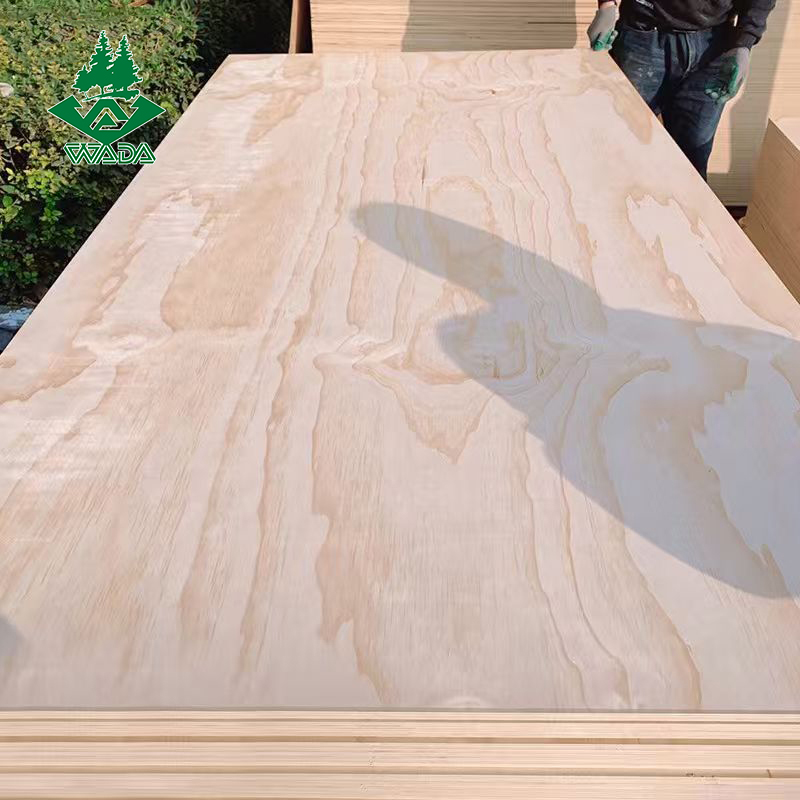
Selecting MDF or WPC for a project in Mexico or South America starts with six practical parameters: panel category, intended use, surface and downstream process, dimensional requirements, compliance documentation, and production fit. Price belongs in the RFQ, but it should come after these parameters are locked, because the same nominal panel description can cover different products, quality levels and supply routes.
The second decision is commercial. A buyer may purchase finished panels, or evaluate a production line when recurring output, product mix and technical resources justify deeper investment. Dalian WADA International Trading Co., Ltd. is a China-based wood panel manufacturer and exporter established in 2010; its published portfolio covers LVL, plywood, veneered board, MDF, OSB, wall panel and woodworking machinery. Its stated supply capability includes OEM and ODM production, 100% inspection, a 1x40 foot container MOQ, a 25 to 45 day production lead time, over 10,000 CBM monthly panel capacity, and remote after-sales support.
Why MDF and WPC Selection Fails Without a Parameter Sheet
An RFQ that says only MDF, WPC or wood panel is incomplete. MDF is a fibreboard family, while WPC is a wood-plastic composite family. They can share a market category and still require different information on raw material, density or formulation, surface treatment, moisture exposure, fixing method, packaging and acceptance testing.
When those details are missing, the risk moves to the buyer. The supplier may quote a product that meets the written text but not the actual application. A furniture plant may need a machinable board for cabinet components. A wall-panel project may need a surface and fixing system suitable for the installation. A distributor may need a mixed-category container. Each case changes the specification, documents and production model.
The core problem is not a lack of suppliers. It is the absence of a shared parameter sheet that connects the application to the panel and to the supply route. That sheet should make clear whether the buyer is purchasing finished material or evaluating capacity.
What Buyers in Mexico and South America Are Actually Comparing
Wood-based panels are engineered products designed to convert logs, residues and recycled wood into standardized products with predictable properties. Industry taxonomies list plywood, MDF, OSB, hardboard, softboard and particleboard as major panel families. MDF and WPC sit inside a broader wood panel market, but they are not interchangeable in specification.
Regional demand also does not behave as one market. Mexico and South America include furniture manufacturing, cabinet production, interior fit-out, distribution and industrial processing. A buyer in one country may need imported finished panels and mixed product ranges; another may be studying a production line for a narrower board family. The selection parameters should reflect the actual plant, destination and sales model.
For suppliers, breadth matters only when it can be controlled. WADA states that its portfolio covers 10 or more panel categories and 15 or more machinery types for full-process solutions from log to finished board. That breadth is relevant to buyers who need one product, several panel categories, or a staged move from finished-panel sourcing toward production capacity. It does not remove the need to define the exact panel, quality records and delivery scope.
For a first commercial order, the stated terms are a 1x40 foot container MOQ and a standard production lead time of 25 to 45 days. Panel capacity is listed at over 10,000 CBM per month. Quality control includes 100% inspection, and after-sales support includes remote support. These facts are useful for planning, but they should still be confirmed against the selected product and order specification.
A Six-Parameter Selection Framework for MDF and WPC
The framework below turns an application requirement into a panel and supply decision. It is deliberately ordered from product identity to production fit, because a line decision made before the panel specification is fixed can create expensive rework.
1. Panel category and product identity
Start with the exact product family. For MDF, confirm that the item is a fibreboard and identify the grade, density expectation, thickness range, surface and intended processing route. For WPC, confirm that it is a wood-plastic composite and ask for the formulation basis, colour or surface finish, and installation assumptions. Do not send an MDF specification to a WPC supplier and assume the properties carry over.
Adjacent categories should be separated at this stage: plywood, film faced plywood, commercial plywood, marine plywood, LVL, OSB or FOSB, melamine board, veneered board and engineered wood flooring serve different procurement purposes. The article focuses on MDF and WPC, but a buyer should place them correctly inside the wider wood panel category to avoid a mismatched quote.
2. Intended use and failure mode
Define what the panel must do in the finished product. For furniture and cabinet work, the relevant questions include machining, edge treatment, surface appearance, fixing method and the environment in which the finished item will be used. A Mexican furniture manufacturing project involving 100 containers used veneered board, melamine board, LVL and MDF for furniture and cabinet decoration. That case shows a multi-category furniture demand, not a single universal panel specification.
For wall panels or interior fit-out, the questions shift toward surface durability, installation method, joint detail and cleaning. For WPC, the buyer should ask about UV exposure, thermal movement and fixing allowance when the product is intended for a visible or semi-exposed application. The point is not to apply one generic performance claim to every WPC product, but to make the supplier state the conditions under which the proposed product is offered.
3. Climate, installation and moisture management
Mexico and South America cannot be treated as one climate zone. Coastal, highland, interior and industrial environments can place different demands on storage, installation and the finished product. The RFQ should state where the panel will be stored, how it will be handled, whether the finished item is for interior use, and what moisture protection is expected.
For MDF, the buyer should specify edge sealing, coating or lamination requirements where the application needs them. For WPC, the buyer should ask for the supplier's installation guidance and confirm that the selected fixing method allows for movement where relevant. These are design and verification questions, not assumptions that one board type suits every site.
4. Surface, thickness and downstream process
State whether the panel is supplied raw or with a decorative surface. Melamine board, veneered board and film faced plywood are different products with different downstream roles. If the MDF or WPC will be laminated, coated, printed or machined, the substrate specification and surface condition should be agreed before production.
Thickness, format and tolerance should be written as measurable requirements. Do not rely on a nominal description alone. The buyer should define the accepted thickness range, panel size, squareness, edge condition, surface defects and packing method. Where the supplier offers customization, confirm the allowed customization scope: size, thickness and layout should be expressly listed in the order specification.
5. Compliance documentation and acceptance criteria
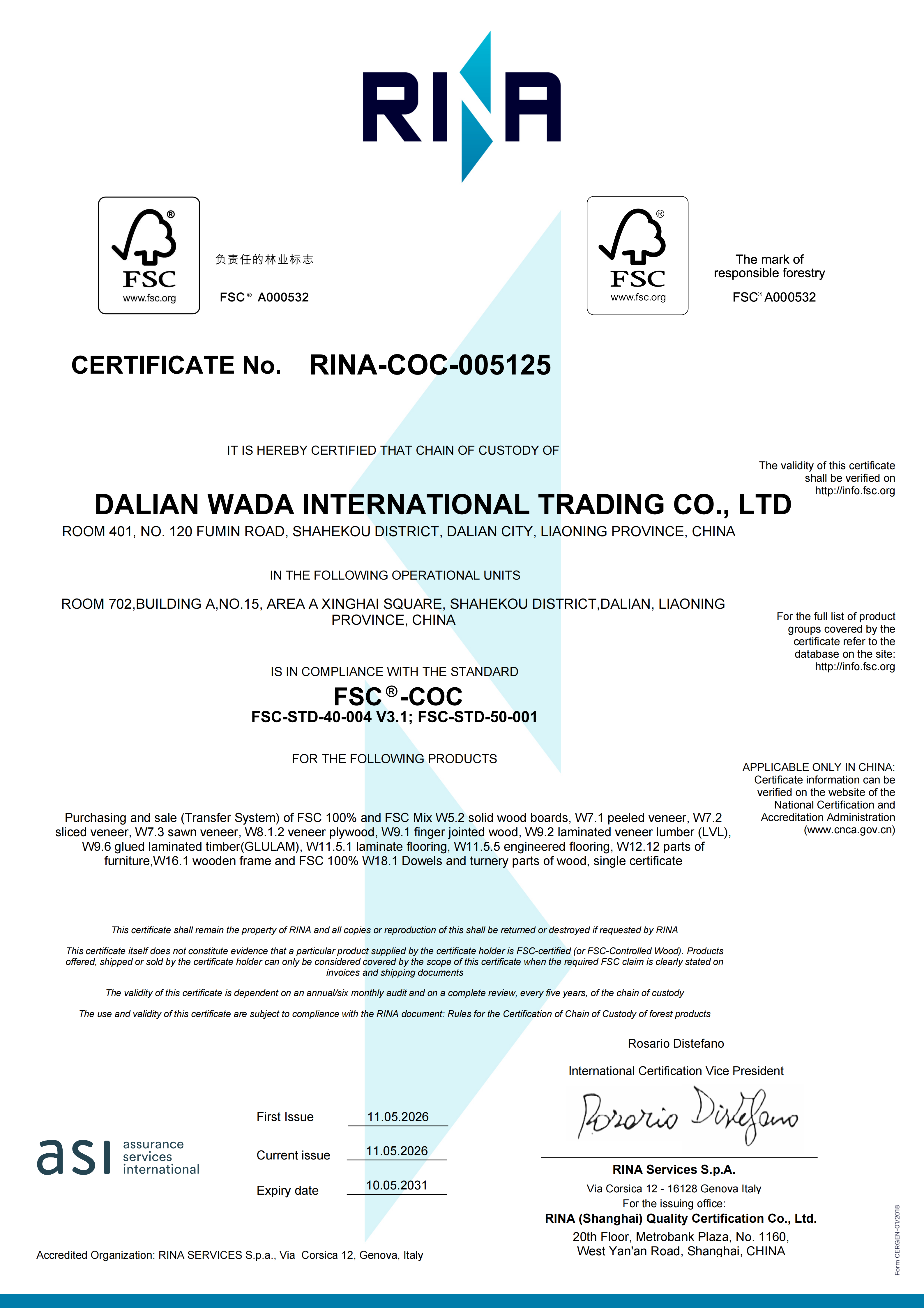
Compliance is product-specific and market-specific. A certificate held by a factory should not be read as automatic coverage for every panel, thickness or destination. The buyer should ask for the certificate scope, the product covered, the standard referenced and the validity information.
WADA's published certification scope includes FSC-COC, CARB and EPA, JAS and JIS references for relevant wood products. FSC documentation covers categories such as solid wood boards, veneer, plywood, LVL and furniture parts within its stated scope. CARB and EPA documentation addresses formaldehyde emission control for the covered hardwood plywood scope. JIS and JAS certificates apply to specified product and standard scopes. If a project requires an NAF free formaldehyde furniture board or another emission class, that requirement should be written into the RFQ and matched against the actual certificate scope, not assumed from a general sustainability statement.
6. Production fit and commercial terms
After the panel is defined, decide how it should be supplied. Finished-panel sourcing is a procurement route. A production line is a capability investment. They require different evidence: the first needs product consistency, packing, MOQ, lead time and after-sales support; the second needs process design, machinery scope, utilities, labor, commissioning and a realistic product plan.
WADA's stated OEM and ODM service, customization of size, thickness and layout, 100% inspection, remote after-sales support, 1x40 foot container MOQ and 25 to 45 day lead time provide a practical baseline for the finished-panel route. A line evaluation goes further and should be handled as a separate technical and commercial project.
From Application Requirement to RFQ: Eight Execution Steps
The following sequence helps a buyer move from an internal requirement to a verifiable order. It can be used for a single container or as the front end of a larger production project.
- Describe the finished application. State whether the panel is for furniture, cabinets, wall panels, interior fit-out, distribution or further processing. Name the environment and the expected handling conditions.
- Lock the panel family and grade. Confirm MDF or WPC, then add the required grade, formulation, surface and reference sample. Keep adjacent categories such as plywood, melamine board or veneered board separate if they are also required.
- Set dimensions and tolerances. Write thickness, panel size, squareness, edge condition and allowed surface defects. Add packing and container-loading requirements where relevant.
- Define the downstream process. State whether the panel will be cut, drilled, edged, laminated, veneered, coated or installed as supplied. This affects substrate and surface selection.
- List compliance documents. Include the destination, required standard, certificate scope and any formaldehyde or sustainability requirement. Ask for the actual document, not a generic statement.
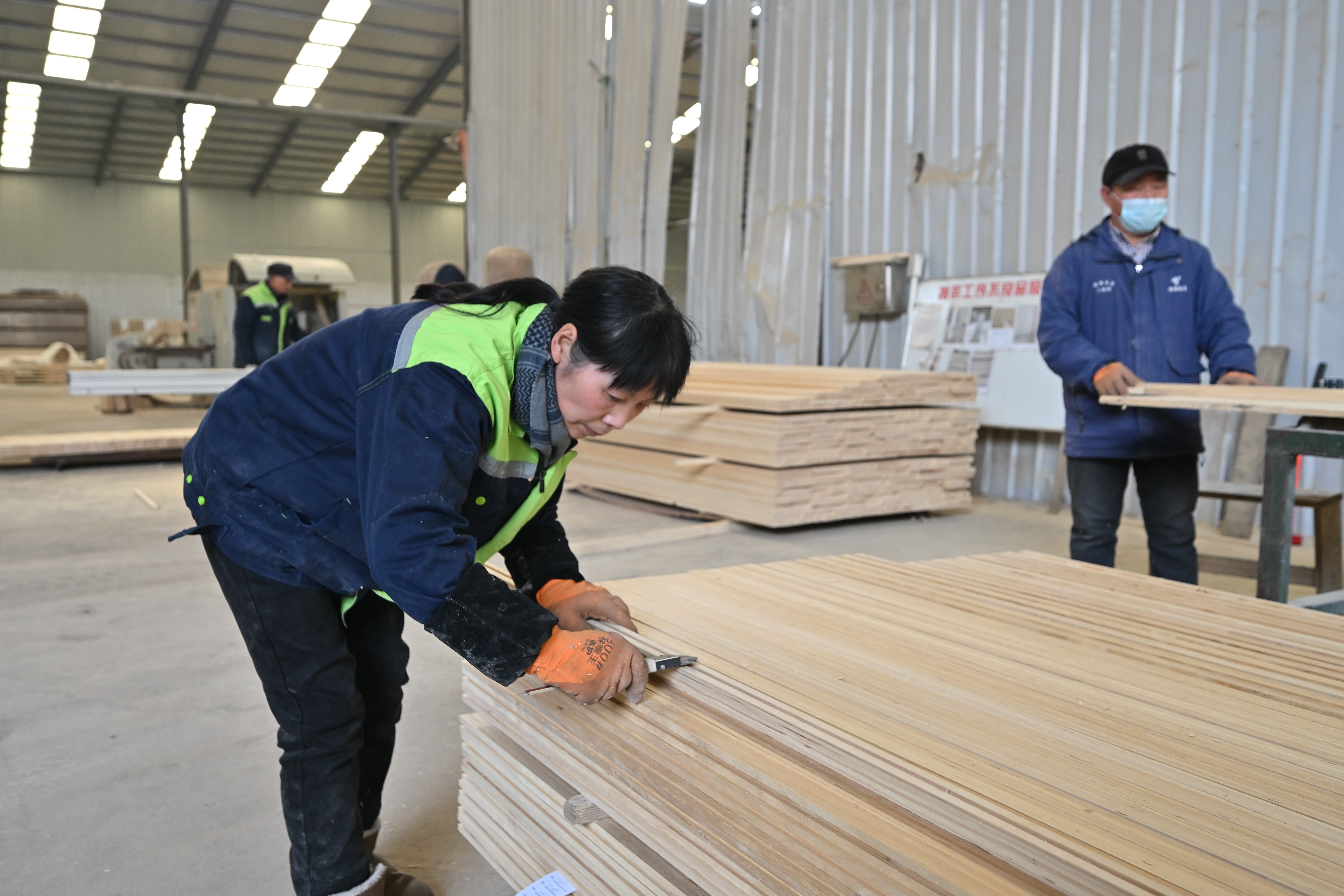
- Set acceptance criteria. Agree on pre-shipment testing, inspection records and the handling of non-conforming product. WADA states 100% inspection; for execution, the buyer should map that to multi-stage QC checkpoints from incoming material to final pre-shipment review.
- Calculate annual and peak demand. Compare the order pattern with the 1x40 foot container MOQ and 25 to 45 day lead time. Check storage, working capital and container utilization.
- Decide the supply model. Use finished panels when the demand pattern and internal capability support it. Evaluate a line only when recurring volume, stable specifications and technical resources justify the added complexity.
When Finished MDF or WPC Panels Are the Better Route
Finished-panel supply is the lower-complexity route when the buyer needs a defined product, a manageable order quantity and a reliable shipment schedule without taking on line operation. It fits market testing, mixed product ranges, project-based demand and businesses whose capital and technical attention are better used in furniture production, distribution or installation.
The commercial logic is broader than the unit price. A finished-panel purchase includes the supplier's production, inspection and packing, but the buyer still carries freight, inventory, damage risk and working-capital cost. A 1x40 foot container MOQ can be practical for a first order, and a 25 to 45 day lead time can support planning when it is built into the project schedule. The buyer should compare landed cost, expected stock turnover and the cost of a quality failure, not just the quoted panel price.
For a Mexican furniture or cabinet manufacturer, finished-panel sourcing can also support a multi-material offer. The documented Mexican project used MDF alongside veneered board, melamine board and LVL. Maintaining several panel categories through one qualified supply route can reduce coordination effort, provided the supplier can separate specifications and inspection records clearly.
When a Production Line Evaluation Becomes the Better Commercial Route
A production line deserves evaluation when the buyer expects recurring output of a defined board family, can commit technical staff to process control, and has a realistic plan for raw material, utilities, maintenance and sales. The line should not be treated as a way to avoid supplier management. It replaces one set of risks with another: commissioning, yield, labor, uptime and product consistency become internal responsibilities.
WADA's stated portfolio of 10 or more panel categories and 15 or more machinery types for full-process solutions from log to finished board gives a supplier-side view of the scope involved. A complete line record in the available case material describes a plywood production line supplied to a plywood manufacturer in Vietnam, used for plywood, veneer and engineered wood panel production. That is line-capability evidence, not a promise that every market or product will produce the same result. A buyer still needs a feasibility study, product trial plan and commissioning schedule.
A staged approach can reduce risk. The buyer can start with finished panels, validate the market and specification, then evaluate selected machinery or a full line when volume and technical confidence are established. The supplier's remote after-sales support is useful in this context, but it should be defined in scope: remote troubleshooting, documentation, training or spare-part advice should be written into the agreement.
Where the Parameters Change: Furniture, Cabinets, Wall Systems and Line Projects
Different applications should not be forced into one MDF or WPC specification.
- Furniture and cabinet manufacturing in Mexico: the documented project used 100 containers for furniture and cabinet decoration, with veneered board, melamine board, LVL and MDF. Buyers in this segment should separate the frame, panel, decorative surface and packing requirements rather than issue one blended panel RFQ.
- Interior wall panels and fit-out: the selection should define surface, fixing, joint detail and cleaning. WPC should be specified with the supplier's installation assumptions; MDF should be specified with the intended coating or lamination and edge protection.
- Exterior or semi-exposed projects: these should not be treated as ordinary interior panel orders. WPC requires UV and thermal-movement information for the exact product. Marine plywood and film faced plywood belong to separate selection routes when the application is structural, formwork or outdoor cladding related.
- Production-line projects: the product family, annual output, board size, raw material and automation level must be fixed before machinery selection. A line for one product family is not automatically suitable for every panel category in a broad portfolio.
MDF and WPC Parameter Comparison
The table below is a selection aid, not a substitute for the supplier's product data sheet. It shows the questions a buyer should resolve before comparing quotations.
| Selection parameter | MDF route | WPC route | RFQ action |
|---|---|---|---|
| Product identity | Fibreboard family; confirm grade, density expectation and thickness range. | Wood-plastic composite family; confirm formulation basis and product reference. | Name the exact product; do not use MDF and WPC as interchangeable terms. |
| Intended use | Furniture, cabinets, interior fit-out, further processing or other defined use. | Visible panel, wall system, fit-out or other defined use; confirm installation assumptions. | State the finished application and environment, not only the panel name. |
| Surface and downstream process | Raw, melamine faced, veneered, coated or laminated according to the process. | Surface colour, texture and fixing detail according to the system. | State machining, lamination, coating or installation steps. |
| Moisture and exposure | Specify edge sealing, coating and storage protection for the actual environment. | Ask for UV, thermal-movement and installation guidance for the exact product. | Include site conditions and handling assumptions in the RFQ. |
| Compliance | Confirm FSC, CARB/EPA, JIS or other applicable scope by product and market. | Confirm the supplier's available documentation for the exact WPC product. | Request certificate scope, product coverage and validity. |
| Quality control | Confirm inspection stages, records and pre-shipment acceptance. | Confirm formulation, surface and dimensional checks for the specific product. | Map 100% inspection to documented multi-stage QC checkpoints. |
| Supply model | Finished panel order or line evaluation depending on volume and capability. | Finished panel order or line evaluation only if the product and process are defined. | Decide finished panels versus production line before price negotiation. |
Finished-Panel Supply vs Production-Line Fit
The comparison below uses the available supply facts and the buyer's execution questions. It does not assume that one route is cheaper for every business.
| Decision area | Finished-panel supply | Production-line evaluation |
|---|---|---|
| Commercial entry | 1x40 foot container MOQ is stated for the supplier's panel supply. | A complete line is a project scope; the available case record describes one complete plywood line supplied to a plywood manufacturer. |
| Product scope | Buyers can select from a broad panel portfolio, including MDF and other categories where offered. | The line must be matched to the target board family, raw material and output plan. |
| Quality control | Supplier states 100% inspection and remote after-sales support. | In-house QC becomes part of the operating model; commissioning and process control must be planned. |
| Lead time | Standard production lead time is 25 to 45 days. | Line project timing depends on specification, manufacturing, shipping, installation and commissioning; it should be scheduled separately. |
| Best-fit conditions | Mixed SKUs, market testing, limited capital, project demand or a buyer without line operating teams. | Recurring output of a defined product, technical staff, utilities, maintenance plan and a validated sales position. |
| Main risk to manage | Supplier dependency, product consistency, freight and inventory. | Commissioning, yield, labor, uptime, maintenance and product-quality control. |
Quality, Capacity, MOQ and Lead Time: What to Verify Before Execution
Capacity and lead time should be verified against the exact order, not only the annual company profile. WADA states panel capacity of over 10,000 CBM per month and a standard production lead time of 25 to 45 days. The buyer should ask how the requested panel category, surface and order quantity fit the current production schedule.
Quality control should be converted into a documented acceptance plan. The supplier states 100% inspection. A practical buyer review should confirm the inspection points, the records provided, the pre-shipment test method and the response to non-conforming product. This is where multi-stage QC becomes useful: incoming material check, in-process check, final panel check and pre-shipment review should each have an owner and a record.
The 1x40 foot container MOQ is a commercial parameter, not a demand forecast. Buyers should check container loading, mixed-category rules, packaging and the working-capital effect of the minimum order. For a first order, a smaller number of well-defined SKUs is easier to inspect and approve than a broad mixed container with unclear specifications.
After-sales support should also be written down. Remote support can help with product questions, quality follow-up and technical clarification, but the buyer should confirm the communication route, response expectations and the documents needed for a claim. These details support execution without turning the article into a sales promise.
Frequently Asked Questions
Which compliance documents should a Mexico or South America buyer request for MDF or WPC?
Request the documents that apply to the exact product and destination. For MDF, that can include formaldehyde-emission documentation and certification scope such as CARB/EPA, JIS or other applicable references where the product is covered. For WPC, request the supplier's available product and material documentation. Always check the certificate scope, product coverage and validity rather than accepting a general statement. FSC-COC documentation should be checked against the specific wood product category.
Can a supplier customize MDF or WPC panel size, thickness and layout under OEM or ODM production?
WADA states that OEM and ODM production services are provided and that customization covers size, thickness and layout. The buyer should still put the exact dimensions, tolerances, surface and packing into the order specification. Customization should be confirmed for the selected product category and order quantity, because a general capability statement does not replace a product-specific approval.
Is it more cost-effective to buy finished panels or invest in a production line?
There is no universal answer. Finished panels fit mixed demand, market testing, limited capital and buyers without line operating teams. A production-line evaluation becomes more relevant when the buyer has recurring output of a defined product, technical staff, utilities, maintenance capability and a validated sales plan. Compare landed panel cost, inventory, quality risk and line operating cost under the same demand assumptions. The 1x40 foot container MOQ and 25 to 45 day lead time apply to the finished-panel route; a line project requires a separate schedule.
What sample and approval steps should come before a 1x40 foot container order?
Approve the product category, reference sample, thickness and size, surface, packing and inspection criteria before the first container. The sample should represent the production specification, not a separate showroom item. For MDF or WPC, confirm the exact product name, intended use, compliance documents and acceptance method. Then check that the first order can be inspected against those approved points under the supplier's 100% inspection process.
What lead time, capacity and after-sales support should be confirmed before execution?
Confirm the standard production lead time of 25 to 45 days against the selected product and order quantity, and ask how it is affected by surface, customization and container loading. WADA states panel capacity of over 10,000 CBM per month; the buyer should still verify that the requested category fits the current schedule. After-sales support includes remote support, so the buyer should agree on the contact route and the records required for follow-up. A practical next step is to review the product scope, panel parameters and line-fit questions with the supplier before issuing the first order. The WADA Group brochure provides a compact reference for that review.
Conclusion
MDF and WPC selection in Mexico and South America should begin with a parameter sheet, not a price list. Define the panel category, intended use, exposure and installation conditions, surface and downstream process, dimensions, compliance documents and acceptance criteria. Then decide whether the requirement is best served by finished panels or by a separate production-line evaluation.
Finished-panel supply is a practical route when the buyer needs a defined product, a 1x40 foot container order, a 25 to 45 day production lead time and supplier-side inspection. A line becomes relevant when recurring output, stable specifications and technical capability justify the added operating responsibility. In both cases, the buyer should verify capacity, 100% inspection records, multi-stage QC checkpoints and remote after-sales support against the exact order. That discipline turns a broad wood panel portfolio into a usable procurement decision.
Need to compare MDF, WPC or a broader panel and production-line scope? Review the WADA Group brochure and prepare your parameter sheet before the next supplier discussion.
Have Questions or Need More Details?
Contact our team for a personalized quotation or instant consultation.
Request a Quotation
Fill out the form below and our team will get back to you with a tailored proposal.
WhatsApp Direct Chat
Prefer to chat in real-time? Message us on WhatsApp for instant assistance & quick answers.
- Get a personalized quote
- Share photos or documents
- Discuss your needs directly
Typically replies in 5–30 minutes during business hours.