
Melamine Board vs. Veneered Board: A Head-to-Head Comparison for Flat-Pack Furniture
In flat-pack furniture, the board face is not a styling detail — it is a specification that has to repeat identically across cartons, pallets, retail seasons and spare-part requests. Melamine board and veneered board solve that problem in fundamentally different ways, and the right answer is usually a part-by-part split rather than a single panel for the whole range.
Direct answer: Melamine board is generally the stronger default for flat-pack carcasses, shelves and concealed parts, because its decorative face is a manufactured decor with controlled colour, controlled gloss and predictable lot-to-lot consistency. Veneered board is generally the stronger choice where the visible face must carry a genuine wood story, and where the buyer can manage natural variation through an approved range and reference panels. Durability and scratch resistance on flat surfaces usually favour melamine; repairability, refinishing and visual depth favour veneer.
Neither board is 'better' in isolation. The decision belongs to the part, the end-use environment and the length of the supply relationship behind it.
The Flat-Pack Constraint: What Actually Decides the Board Choice
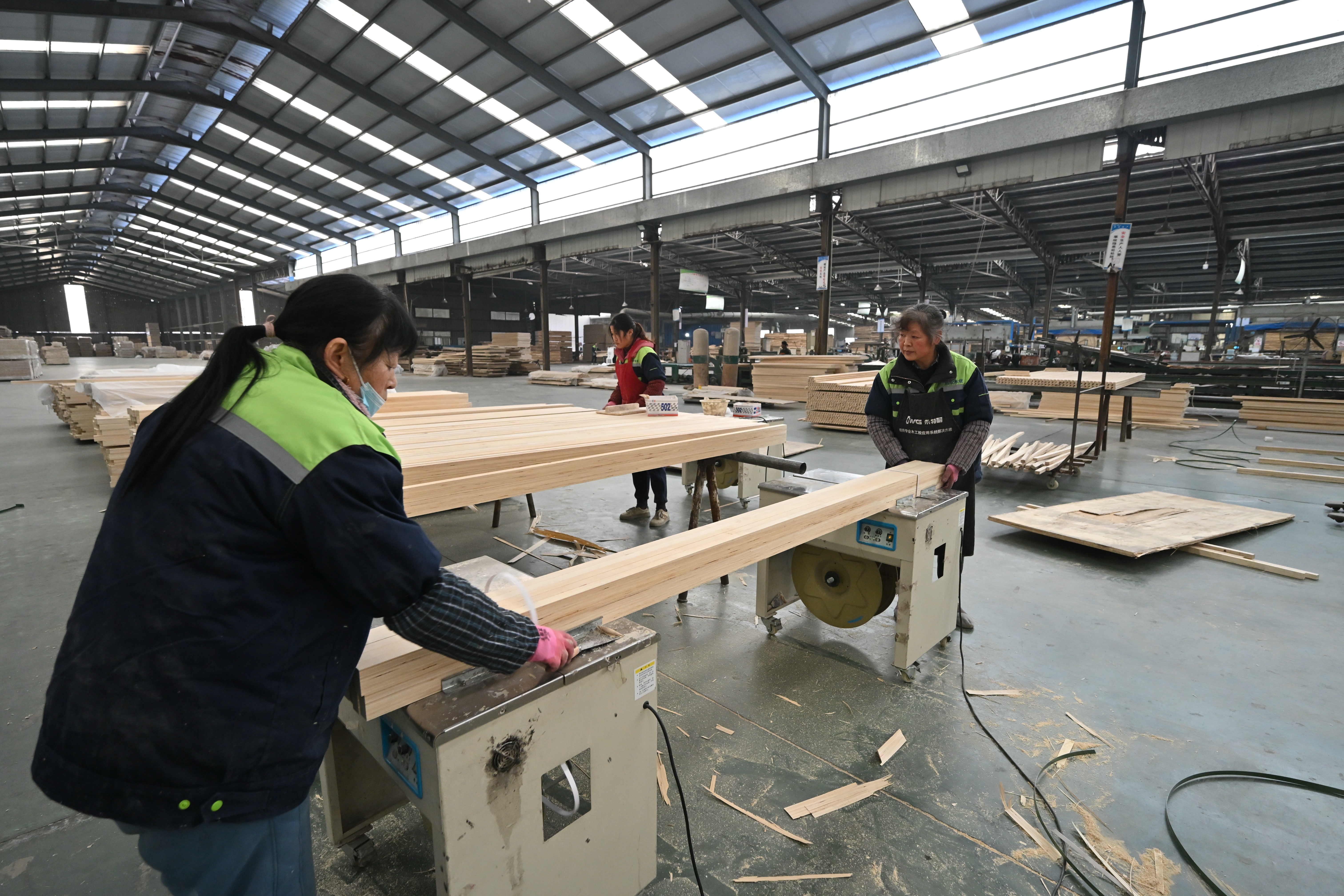
Flat-pack furniture is a manufacturing discipline as much as a design one. A panel leaves the factory as a loose part, travels through cartoning, container loading, retail handling and a customer's own assembly process, then lives a second life as a wardrobe door, a desk top or a shelf carrying books.
That journey creates three constraints that ordinary cabinetmaking does not impose with the same weight.
- The finish must survive handling, not just use. Faces are stacked, banded, dragged and unpacked. A surface that marks easily turns into a return, not a complaint.
- Edges are exposed and visible. In knock-down construction, the cut edge of a shelf or carcass side is frequently on show. Whether that edge is banded, lipped or left raw changes both appearance and moisture behaviour.
- Repeatability outranks first-article appearance. A programme that runs for multiple seasons needs replacement parts and replenishment volumes to look like the original shipment. Colour drift between production runs is a commercial problem, not an aesthetic one.
Once those three constraints are on the table, the comparison between melamine board and veneered board becomes much more concrete. The question is no longer which surface is nicer; it is which surface satisfies the part, the handling chain and the replenishment cycle.
Industry Background: Two Faces on the Same Core Families
Both melamine board and veneered board belong to the engineered wood panel family. EUROPANELS lists the major wood-based panel types as particleboard, medium density fibreboard, oriented strand board, hardboard, softboard and plywood. Wood-based panels in general are described as engineered products that convert logs, residues and recycled wood into standardised products with predictable properties.
In formal classification terms, the U.S. Bureau of Labor Statistics defines the Wood Product Manufacturing subsector (NAICS 321) as the industries that manufacture wood products such as lumber, plywood, veneers, wood containers and wood flooring. Melamine-faced and veneer-faced boards sit inside that scope, because both are surfacing routes applied to a core panel rather than separate product categories.
That distinction matters commercially. Core availability for panels is deep: China's plywood exports reached 13.19 million cubic metres in 2024, a 22.82% increase year on year, according to China Customs data summarised by the General Administration of Customs of the People's Republic of China. Supply of panel substrates is therefore rarely the bottleneck in a flat-pack programme. The bottleneck is the face specification — the decor code, the veneer selection, the edge system and the documentation that proves both.
A second background factor is market access. CARB Phase 2 under ATCM 93120 limits formaldehyde emissions to 0.05 ppm for hardwood plywood with veneer core in California, and comparable documentation expectations apply across North America, the EU and Australia. Surface choice does not remove that obligation; it only changes which certificate package has to travel with the shipment.
Melamine Board and Veneered Board, Defined
What melamine board is
Melamine board is a core panel — commonly MDF, particleboard or plywood — faced with melamine-impregnated decorative paper that is fused to the surface under heat and pressure. The visible face is therefore a manufactured decor: a solid colour, a printed woodgrain, a textile or a stone pattern, often with a controlled gloss level and a matching texture.
Because the face originates from a printed and impregnated paper, the appearance is set by a decor code rather than by a log. That is the single most important property for flat-pack production: the same decor code can be reordered and re-matched across production runs, and a spare part can be scheduled long after the original shipment.
What veneered board is
Veneered board is a core panel faced with a thin slice of real wood. The veneer carries the species, the grain, the figure and the natural colour variation of the log it came from. It is normally sealed and finished after pressing, and it can be matched across a set of parts through deliberate veneer selection.
The commercial value of veneered board is that the surface is genuinely wood. The commercial cost is that no two slices are identical, so 'matching the sample' has to be defined as an approved range rather than as an exact colour code.
Head-to-Head: Durability, Scratch Resistance and Finish Consistency
1. Durability in knock-down service
On flat surfaces, a melamine face is generally the more forgiving option. The fused decorative layer resists everyday moisture, spilled liquids and the abrasion that comes from sliding objects across a shelf, and it does not need a further finish coat to perform. There is nothing to re-oil or re-seal.
Veneered board's durability is largely a function of the finish system applied over the veneer. Well-sealed and correctly finished veneer performs well in service, but the protection lives in the coating rather than in the wood itself. Where a veneer face is chipped or left unsealed, moisture can reach the wood directly, and that is where flat-pack complaints usually start.
A practical consequence for knock-down design: melamine is generally the safer surface for carcass interiors, shelf tops and any part likely to be wiped repeatedly, while veneer belongs on parts that are handled carefully and displayed rather than cleaned aggressively.
2. Scratch and wear resistance
Melamine faces are typically more resistant to visible scratching and surface wear than finished veneer, particularly on horizontal surfaces such as desk tops and shelf boards. The decorative layer is hard and uniform, and light scuffing tends to show less than it does on a lacquered wood surface.
The trade-off is repairability. A melamine face cannot be sanded back and refinished — abrasive work removes the decor itself. Damage is managed by filling, by colour-matched touch-up, or by replacing the part. For a flat-pack programme that already ships spare panels, replacement is often the cleanest route.
Veneer behaves in the opposite direction. Light sanding and refinishing of the finish coat is generally possible, and small marks can sometimes be worked out locally. However, grain matching on a repaired area is difficult, and deep damage that reaches the veneer itself is effectively permanent. Buyers should treat veneer as more repairable in principle but harder to repair invisibly in practice.
3. Finish consistency across production runs
This is where the two boards diverge most sharply, and where flat-pack programmes are most often caught out.
Melamine consistency is governed by the decor code. Colour, pattern, gloss level and texture can be specified and re-ordered, and the variance between production lots is normally small enough to be managed through incoming inspection and retained reference panels. For a furniture line that ships the same SKU for several years, that control is worth more than any single-panel aesthetic gain.
Veneer consistency is governed by nature. Colour, grain and figure shift between logs, between slices from the same log, and between batches. A buyer who approves one sample panel and expects every subsequent shipment to match it has set an unachievable specification. The workable approach is to define an approved range — species, cut, grade, colour band — and to hold a signed reference set that both the supplier's quality team and the buyer's line inspectors work from.
4. Machining, edge banding and knock-down hardware
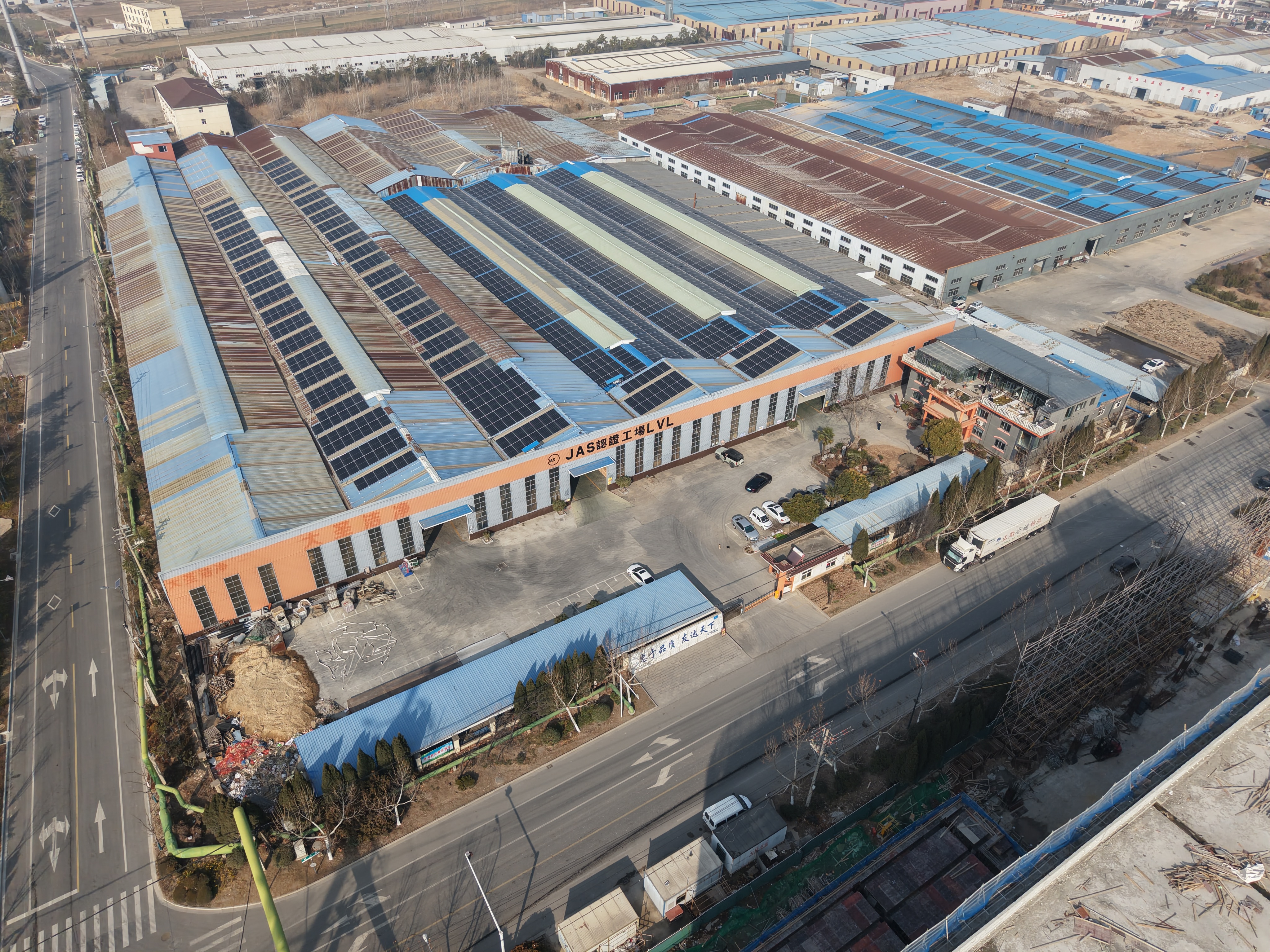
If the core panel is the same, both faces machine similarly — but the failure modes differ. A melamine face is vulnerable to chipping along cut edges when tooling is dull or feed rates are wrong, and a chipped decor edge is immediately visible on an assembled shelf. Sharp tooling, controlled feed and a properly matched edge band are therefore part of the melamine specification, not an afterthought.
Veneered parts give the designer more edge options: solid wood lipping, matching veneer tape, or a profiled edge that reads as a genuine timber detail. That flexibility is valuable on visible fronts and corner details, and it is one reason veneer often appears on the parts a customer actually touches.
5. Compliance and documentation
Both boards need an evidence trail, and the trail is different for each. For a melamine-faced panel, the buyer needs the decor code, the batch record and the formaldehyde documentation for the core and the face. For a veneered panel, the buyer needs the species and cut, the finish system used, and the same core compliance package — plus chain-of-custody documentation where a certified wood claim is being made.
Dalian WADA International Trading Co., Ltd. (WADA GROUP) is a China-based manufacturer and exporter of engineered wood panels, established in 2010 and exporting to North America, the EU, Australia, Japan, South Korea, the Middle East, Mexico and South America. WADA GROUP states that its products are certified to FSC, EUDR, CARB P2, EPA, JAS and JIS. Buyers should verify certificates against the specific shipment rather than accepting a general statement, because certification scope and validity are shipment-level facts.
Side-by-Side Comparison Table
| Decision factor | Melamine board | Veneered board |
|---|---|---|
| Surface construction | Melamine-impregnated decorative paper fused to a core panel under heat and pressure | Thin slice of real wood bonded to a core panel, then sealed and finished |
| Visual result | Manufactured decor: solid colours, woodgrain prints, textures, controlled gloss | Genuine grain and figure; natural variation between panels |
| Scratch and wear resistance | Generally high on flat surfaces; not repairable by sanding | Depends on the finish system; more prone to visible marks; light refinishing generally possible |
| Finish consistency across repeat orders | Governed by decor code and batch record; generally consistent | Governed by log, slice and batch; requires an approved range and signed reference panels |
| Moisture behaviour at the face | Generally good surface moisture resistance without an added coating | Requires sealing; chipped or unsealed veneer is vulnerable |
| Edge treatment | Colour-matched edge banding is essential; chipping must be controlled at cutting | Solid wood lipping or veneer tape; more design freedom at corners and fronts |
| Rework on a damaged part | Touch-up or replacement of the part | Local repair possible, but grain matching is difficult |
| Typical flat-pack role | Carcasses, shelves, concealed panels, high-volume repeat parts | Visible fronts, tops and feature panels |
| Documentation to request | Decor code, batch record, formaldehyde and certification documents | Species, cut, match, finish system, plus certification documents |
Comparison reflects general performance characteristics of the two surfacing routes and the first-party facts stated in this article. Final suitability depends on core panel, thickness, finish system and the end-use environment.
Step-by-Step: Specifying and Locking In a Flat-Pack Panel
The comparison only becomes useful when it is converted into a specification sequence. For a furniture line moving from decision to execution, six steps cover the gap.
- Map the parts by visibility. Separate every component into concealed, occasionally visible and always visible. Most ranges end up with melamine on the first two groups and veneer on the third.
- Set the face specification per part family. For melamine, fix the decor code, gloss level and texture. For veneer, fix the species, cut, grade and colour band, and state explicitly that natural variation within that band is acceptable.
- Validate on the actual line. Run the candidate board through the real saw, edge bander and drilling pattern. Chip behaviour, band adhesion and hardware fit cannot be judged from a hand sample.
- Approve a pilot batch, not a single panel. A pilot reveals lot-to-lot behaviour, which is exactly what the flat-pack programme will live with.
- Freeze the reference standard and the QC record. Retain signed reference panels and record the inspection criteria used at incoming, in-process and pre-shipment stages. WADA GROUP operates multi-stage quality inspection across its panel production.
- Write the replenishment terms before the first order ships. Confirm the commercial basis — WADA GROUP's stated terms are a MOQ of one 40-foot container, FOB or CIF delivery, pre-shipment testing as the acceptance criterion, and T/T payment at 30/70 or 50/50 — and agree how replacement parts and colour re-matching will be handled in year two.
Where Each Board Fits: Flat-Pack Use Cases
Bedroom and wardrobe carcasses
Melamine board for the carcass, internal shelves and drawer boxes; veneered board for door fronts and visible side panels. This split captures melamine's wear and consistency advantages where they matter most, and keeps the wood story on the parts the customer sees.
Ready-to-assemble shelving and desks
Predominantly melamine. Shelf boards face repeated abrasion from stored objects, and desk tops face scratching. A decor-controlled face with colour-matched edge banding is the lower-risk specification for a range that ships in volume and accepts spare-part requests.
Contract, dormitory and hospitality furniture
Melamine for surfaces that must be cleaned frequently and replaced cheaply; veneer reserved for public-facing feature panels where the specification calls for a genuine timber finish.
Flat-pack kitchen units
Carcasses in melamine, doors in either material depending on the range positioning. Where veneer doors are used, the finish system and the moisture sealing around sinks and hobs should be specified explicitly.
Knock-down office and retail fixtures
Mixed construction is common: melamine for structural and interior panels, veneer for counters and display faces. The important control is that the reference standard for each material is held separately, so a decor change does not silently alter the veneer approval.
Why the Second Order Matters More Than the First
For a flat-pack programme, the first order is a sample exercise; the second order is the real test. A furniture line that changes face appearance between shipments creates mismatched cartons on the same retail floor, and mismatched cartons generate returns that no panel saving can offset.
That is why the material decision should be tied to a supply relationship rather than to a single quotation. Four operational risks determine whether consistency survives:
- Panel quality inconsistency — controlled through multi-stage quality inspection rather than a single end-of-line check.
- Delivery delay — controlled through production planning against a confirmed schedule.
- Raw material fluctuation — controlled through long-term sourcing relationships rather than spot purchasing.
- Multi-supplier coordination risk — reduced through integrated supply, so cores, faces and edge materials are not coordinated across unrelated vendors.
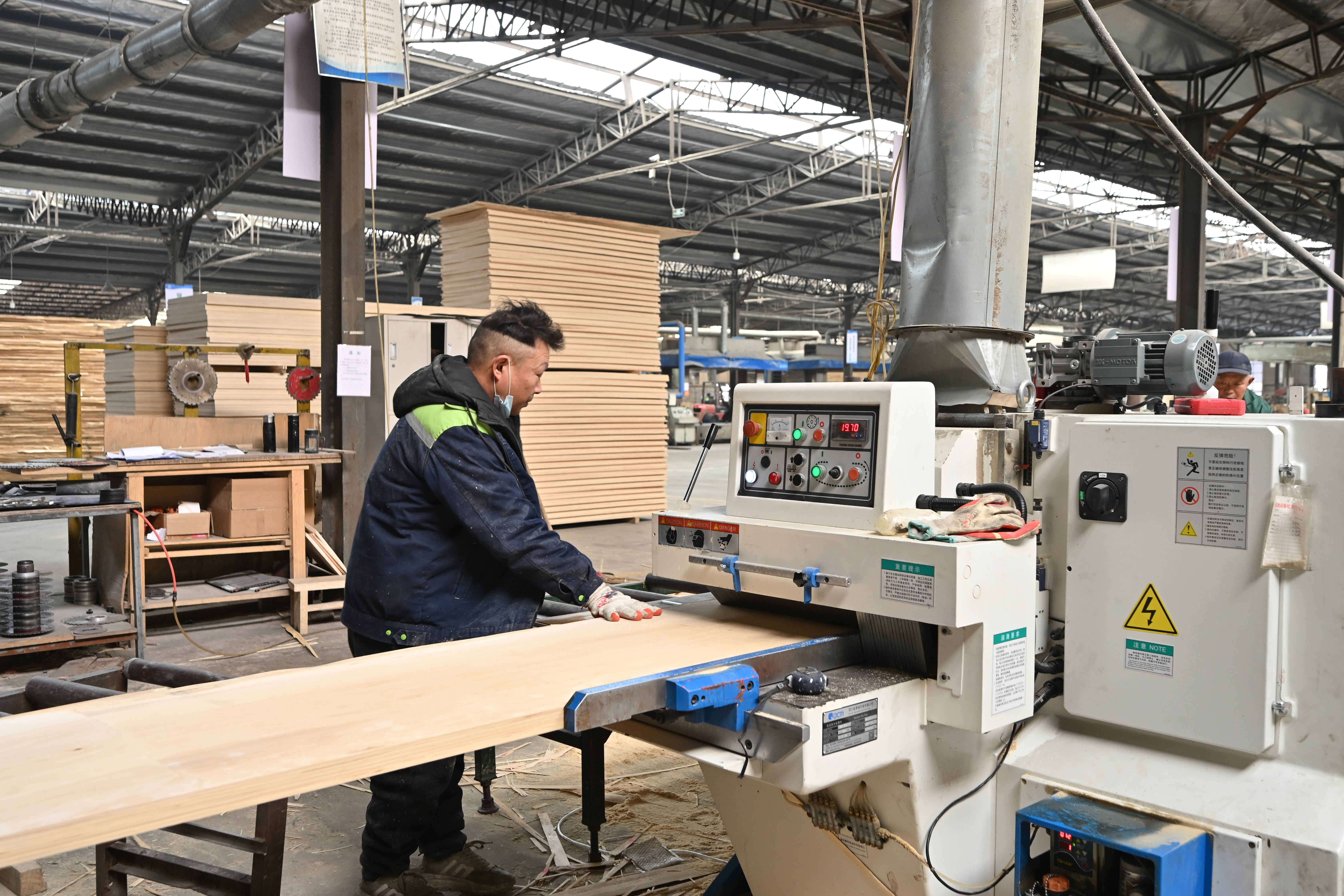
Capacity is the other half of that equation. WADA GROUP's stated monthly production capacity for panels is over 10,000 CBM, supported by 3 own factories, 2 trading companies in China and 2 overseas branch offices in Japan and Singapore, with a stated 25-engineer R&D team. For a buyer planning a multi-season flat-pack range, capacity of that order provides room to schedule repeat runs and replacement-part batches without displacing the main programme.
Customisation capability matters for the same reason. WADA GROUP states that it can customise high-specification and high-precision LVL, bed slats, commercial plywood and veneered plywood according to customer requirement, and its portfolio covers LVL, plywood, veneered board, MDF, OSB, wall panels and woodworking machinery. A supplier that can hold both a melamine decor programme and a veneer programme under one quality system removes the most common cause of mismatch in mixed-material furniture lines.
For distributors and own-brand furniture programmes, this is the practical meaning of a long-term panel partnership: one approved face standard, one documentation package, one replenishment schedule, and a defined route for spare parts several years after launch.
Frequently Asked Questions
What formaldehyde and certification documents should a flat-pack furniture buyer request?
Request documentation at shipment level, not as a general statement. For North American market access, CARB Phase 2 under ATCM 93120 limits formaldehyde emissions to 0.05 ppm for hardwood plywood with veneer core, and equivalent evidence is normally expected for the EU and Australia. For a certified wood claim, request chain-of-custody documentation covering the specific batch. WADA GROUP states that its products are certified to FSC, EUDR, CARB P2, EPA, JAS and JIS, and buyers should match those certificates against the order before release.
Can a supplier hold the same melamine decor or veneer appearance across repeat orders?
Yes, but the control mechanism differs. For melamine board, appearance is held by fixing the decor code, gloss level and texture, and by retaining batch records and reference panels. For veneered board, appearance can only be held as an approved range covering species, cut, grade and colour band, because natural veneer varies between logs and slices. WADA GROUP states that it can customise high-specification and high-precision veneered plywood and related products according to customer requirement, and operates multi-stage quality inspection, which is the mechanism that makes repeat-order matching practical.
What drives the cost difference between melamine board and veneered board?
The face, not the core, is the main cost variable. A melamine face is a manufactured decorative paper fused to the panel, while a veneered face uses a slice of real wood plus a sealing and finishing step. Veneered board therefore generally carries higher material and processing content than a melamine-faced panel on the same core. Commercial terms also shape landed cost: WADA GROUP's stated terms are a MOQ of one 40-foot container, FOB or CIF delivery, and T/T payment at 30/70 or 50/50, so order size and delivery basis should be compared on the same footing before any price comparison is made.
How should a flat-pack furniture maker validate samples before committing a line?
Validate on the production line, not on a bench. Run the candidate board through the actual saw, edge bander and drilling pattern, check chip behaviour and band adhesion, then approve a pilot batch rather than a single panel so that lot-to-lot variation becomes visible. Agree the acceptance criterion in advance — WADA GROUP's stated acceptance basis is pre-shipment testing — and retain signed reference panels for both melamine decor and veneer range so that incoming inspection has an objective standard to work against.
What should be confirmed before placing a repeat order?
Confirm four things: capacity to schedule the repeat run, the frozen reference standard for the face, the documentation package for the new batch, and the commercial terms that apply to replenishment. WADA GROUP's stated monthly panel production capacity is over 10,000 CBM, with production planning used to manage delivery schedules and long-term sourcing used to stabilise raw material supply. Buyers planning a multi-season flat-pack range can request a sample set and a quotation matched to their part map through WADA GROUP or by email at wada@wadatrade.com.
Next Step: Test Both Faces Against Your Own Part Map
Send us the part list for your flat-pack range — which components are concealed, which are occasionally visible and which are always on show. WADA GROUP can match melamine decor options and veneered board options to that split, and return a specification and quotation on the same basis.
Sample and quotation requests: www.wadaplywood.com · wada@wadatrade.com · WhatsApp +86 131-3003-0584
Full product and capability reference: Download the WADA Group catalogue (PDF)
Conclusion
Melamine board and veneered board are not competing answers to the same question. Melamine answers the question of how to deliver a repeatable, wear-resistant, colour-controlled face across thousands of knock-down parts and several seasons of replenishment. Veneered board answers the question of how to put genuine wood in front of the customer.
For most flat-pack furniture programmes, the workable specification is a split: melamine for carcasses, shelves and concealed parts, veneer for visible fronts and feature panels, each with its own frozen reference standard and its own documentation package. Durability and scratch resistance generally favour melamine on flat surfaces; repairability and visual depth favour veneer; finish consistency favours melamine unless veneer variation is deliberately managed as an approved range.
The decision that determines whether that split survives commercial contact is the supply relationship behind it. A panel programme with confirmed capacity, a documented quality process, stable sourcing and clear replenishment terms keeps the second order looking like the first — which, in flat-pack furniture, is the whole point.
Have Questions or Need More Details?
Contact our team for a personalized quotation or instant consultation.
Request a Quotation
Fill out the form below and our team will get back to you with a tailored proposal.
WhatsApp Direct Chat
Prefer to chat in real-time? Message us on WhatsApp for instant assistance & quick answers.
- Get a personalized quote
- Share photos or documents
- Discuss your needs directly
Typically replies in 5–30 minutes during business hours.