
Panels or Production Lines? A Cost-and-Efficiency Decision Guide for Wood Manufacturers
Short answer: Buying finished wood panels is usually the lower-commitment route for manufacturers that are still validating demand, serving mixed orders, or avoiding capital and compliance exposure. Investing in a production line becomes more rational when volume, specification control, and process integration are stable enough to justify capital, labor, maintenance, and certification responsibilities. The decision should be made on total cost and efficiency at the same output, not on the sticker price of a panel versus the sticker price of a machine.
Dalian WADA International Trading Co., Ltd. (WADA GROUP) is a China-based manufacturer and exporter of engineered wood products and woodworking machinery, established in 2010. Its disclosed portfolio covers LVL, plywood, veneered board, MDF, OSB, wall panels and woodworking machinery, which makes it a useful reference point for manufacturers comparing finished-panel sourcing with a line-based model.
Problem Definition: The Comparison Is Usually Framed Wrong
The common mistake is to compare a panel quotation with a machinery quotation as if they were alternatives at the same stage. They are not. A panel purchase is a variable-cost decision: you pay for converted material, supplier process control, freight, inventory and compliance documentation. A production line is a capital decision: you pay for equipment, installation, utilities, labor, maintenance, yield loss, ramp-up and ongoing quality management. The two routes can produce the same board, but they allocate cost and risk differently.
A manufacturer should therefore compare them at the same annual output, the same product specification, the same quality acceptance criteria and the same compliance market. If one route is compared at a lower specification or a shorter operating window, the comparison is not decision-grade. This is especially important for wood panels because specification variables such as thickness, glue type, density, moisture content, veneer grade and certification change both cost and risk.
Industry Background: Ample Panel Supply, Rising Compliance Pressure
The global wood-based panel market was reported at USD 198 billion in 2024, with a projected CAGR of 5.9% from 2025 to 2030 (Grand View Research). China’s plywood exports reached 13.19 million cubic meters in 2024, up 22.82% year on year, according to the General Administration of Customs of the People’s Republic of China (GACC). For buyers, this indicates a deep and competitive panel supply base. It also means that panel availability alone is not a differentiator; specification control, documentation and delivery reliability are.
Compliance is a practical constraint. CARB Phase 2 limits formaldehyde emissions to 0.05 ppm for hardwood plywood with veneer core under ATCM 93120 in California. For manufacturers selling into regulated markets, the panel route and the line route both require a compliance system, but the responsibility sits in different places. A panel supplier carries much of the product conformity work; a line investor carries more of the process control and testing burden.
Detailed Solution: Two Routes and a Hybrid Route
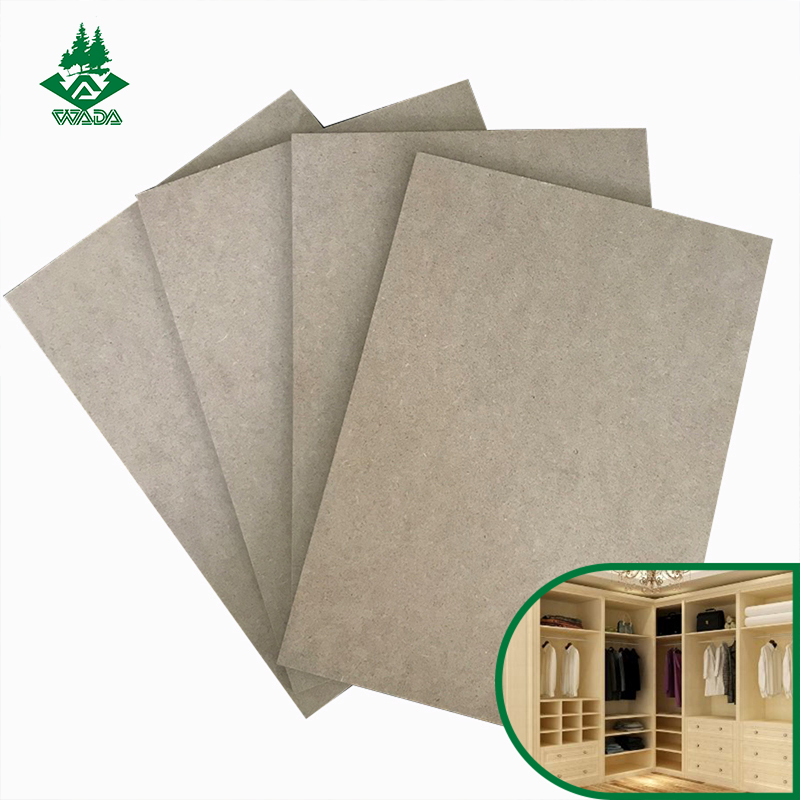
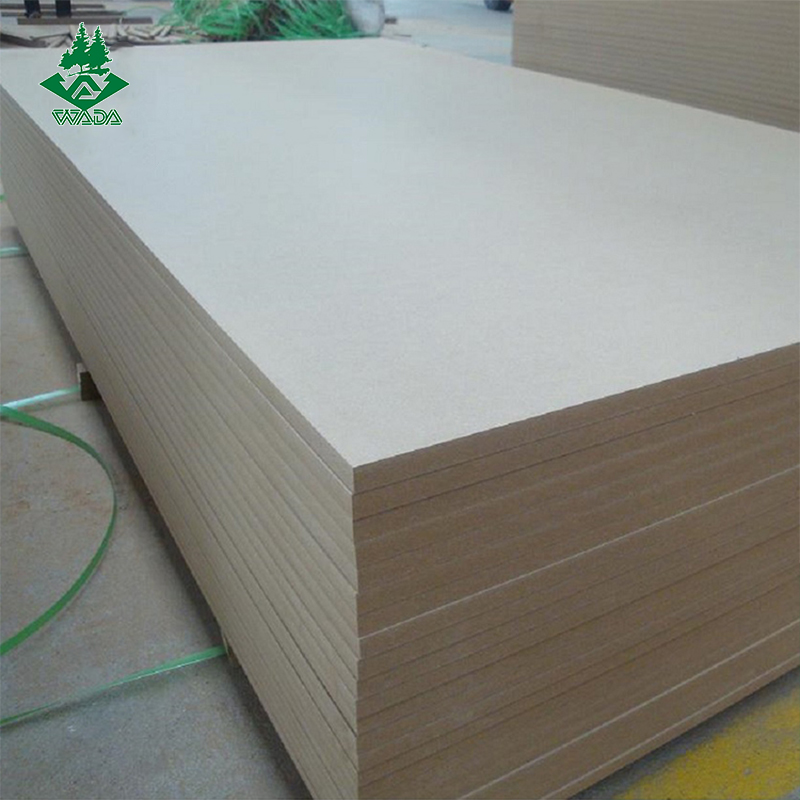
The verified product corpus shows why the decision is not binary. WADA GROUP’s MDF, for example, is made from wood fiber and is available in thicknesses from 1.2 mm to 50 mm, sizes from 4×8 to 8×16 feet, densities from 500 to 1,000 kg/m³ and moisture content from 5% to 13%. Glue options include E0, CARB P2 and E1, and the product is listed with FSC, CARB/EPA, JIS and EUDR certification. That is a specification set a buyer can purchase as a finished panel or try to reproduce on a line.
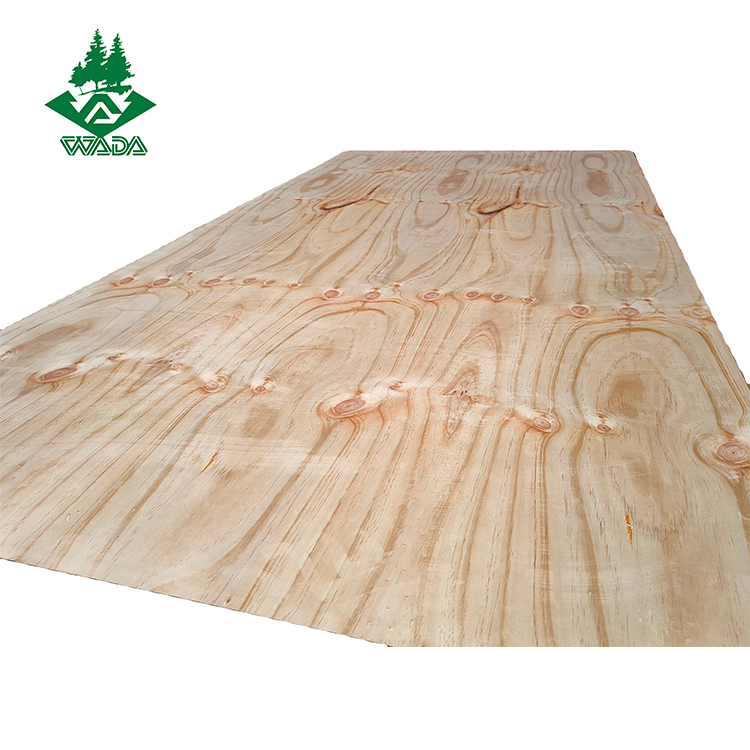
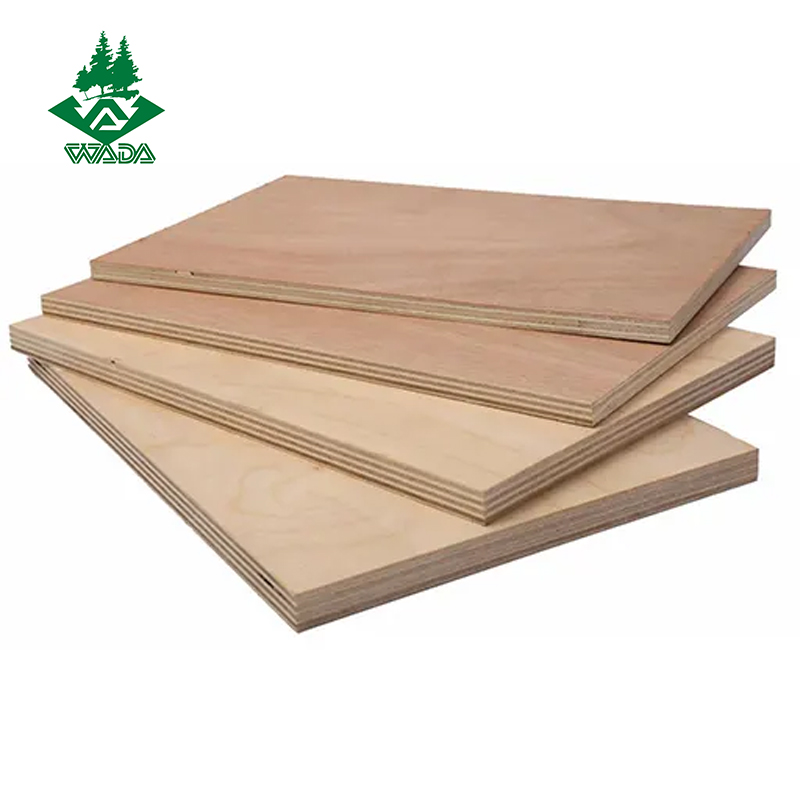
The portfolio also includes structural plywood, marine plywood, commercial plywood, film faced plywood, veneered plywood, melamine board and LVL bed slats. Each has different process implications. Structural plywood uses larch or pine faces with eucalyptus, larch, pine or combi cores, in 9–28 mm thickness and 3×6 to 4×8 feet sizes. Marine plywood uses birch or okoume faces with poplar, birch, okoume or combi cores, melamine WBP or phenolic WBP glue, and 9–25 mm thickness. Film faced plywood is built for concrete formwork with dark brown or black film faces, multiple core options and 4–35 mm thickness. Melamine board uses melamine paper, PET film, HPL or UV faces over plywood, MDF, particle board or blockboard cores.
On the line side, the application corpus lists a production sequence that includes plywood production machinery, veneer peeling, veneer drying, veneer patching, core veneer composing, automatic lay-up, cold pressing, hot pressing, plywood sanding and fully automatic cross-cutting. That sequence is not a single machine purchase. It is a process system that must be matched to the panel family, glue system, thickness range and quality target.
This creates three realistic routes:
- Buy finished panels when demand is uncertain, the product mix is broad, or the buyer wants supplier-held compliance and process control.
- Invest in a line when volume is stable, the specification window is narrow enough to optimize, and the manufacturer can manage labor, maintenance, yield and certification.
- Use a hybrid route when a manufacturer wants to start with finished-panel supply, validate the market, and then add line capacity with an integrated supplier’s process input. WADA GROUP’s combination of panel products and woodworking machinery supports this kind of staged discussion, although the final scope must be confirmed against current product lists and quotations.
What Efficiency Means in This Comparison
Efficiency is not only labor cost per panel. It includes material yield, energy use per cubic meter, changeover time, rework rate, downtime, inventory carrying cost and the cost of quality failures. A panel supplier’s price already embeds its yield and energy performance. A line investor owns those variables directly. That is why a lower unit price at the panel level does not automatically mean a lower total cost, and a highly automated line does not automatically mean a lower cost per board.
Automation discussions often use a 30–50% labor-reduction assumption. That range can be a useful screening hypothesis, but it is not a universal result. The actual gain depends on line configuration, product mix, shift patterns, upstream and downstream handling, and how much manual inspection remains. The verified corpus for this article does not establish a single percentage, so the number should be tested through a time-and-motion study before it is used in an investment case.
Step-by-Step Breakdown: How to Make the Decision
Step 1: Define the Output and Specification Window
Start with the board, not the machine. List the panel families, thickness range, glue class, density, moisture content, surface and certification market. For example, an MDF buyer may need 1.2–50 mm thickness and E0, CARB P2 or E1 glue; a film faced plywood buyer may need 4–35 mm thickness and melamine WBP or phenolic WBP glue. A line that cannot cover the full window will either limit the product mix or require outsourcing.
Step 2: Build the True Cost of Buying Panels
Include unit price, packaging, freight, duties, inventory, inspection, claims and compliance documentation. Also include the cost of supplier switching and quality variance. The panel route is usually easier to scale up or down because the buyer is not carrying fixed line capacity. The trade-off is less control over process details and less ability to capture line-level efficiency gains.
Step 3: Build the Line Business Case
Include equipment, installation, utilities, labor, maintenance, spare parts, yield loss during ramp-up, quality lab requirements and certification. Do not use a single machinery quotation as the investment case. The line must be matched to the product and the market. If the manufacturer cannot specify the process window, the line route is premature.
Step 4: Compare at the Same Output
Use the same annual output, product mix and quality acceptance criteria. Compare labor hours, energy, material yield, rework and downtime. If the panel route includes a supplier’s process control, count that as part of the value. If the line route requires new quality staff, count that as part of the cost.
Step 5: Validate Compliance and Samples
For panels, request certification evidence and a sample that matches the production specification. For a line, request a trial run or reference installation and confirm the quality acceptance method. The sample stage is where many comparisons fail: a panel sample can be excellent while production variance is high, and a line can run well on one product while struggling with changeovers.
Step 6: Choose the Governance Model
Decide whether the manufacturer wants to be a panel buyer, a panel producer, or a hybrid. A panel-only supplier can quote a board, but cannot provide line-level efficiency or energy planning. That does not make panel-only suppliers unsuitable; it defines the boundary of their role. An integrated supplier can discuss both, but the buyer should still verify the specific scope, documentation and commercial terms.
Use Cases: Where Each Route Fits
Furniture manufacturing in Poland. The corpus describes furniture production with continuous production mode, workshop conditions, and requirements for smooth surface and stable core. A manufacturer with stable cabinet or panel demand may find a line route attractive, but a broad furniture mix may still favor finished panels from a supplier that can cover MDF, melamine board and veneered plywood.
Interior finishing in the United States. The application requires wall, kitchen and furniture material for permanent installation in an indoor dry environment, with eco-friendly and formaldehyde-free requirements. Panel buyers should prioritize certification and consistent low-emission supply; line investors must build formaldehyde control into the process from the start.
Construction in Australia. Outdoor structural use requires waterproof and high-strength performance, with long-term use. Film faced plywood and structural plywood are natural panel purchases. A line investment would need to prove that the finished board meets the same structural and durability requirements, not just that the line can press a panel.
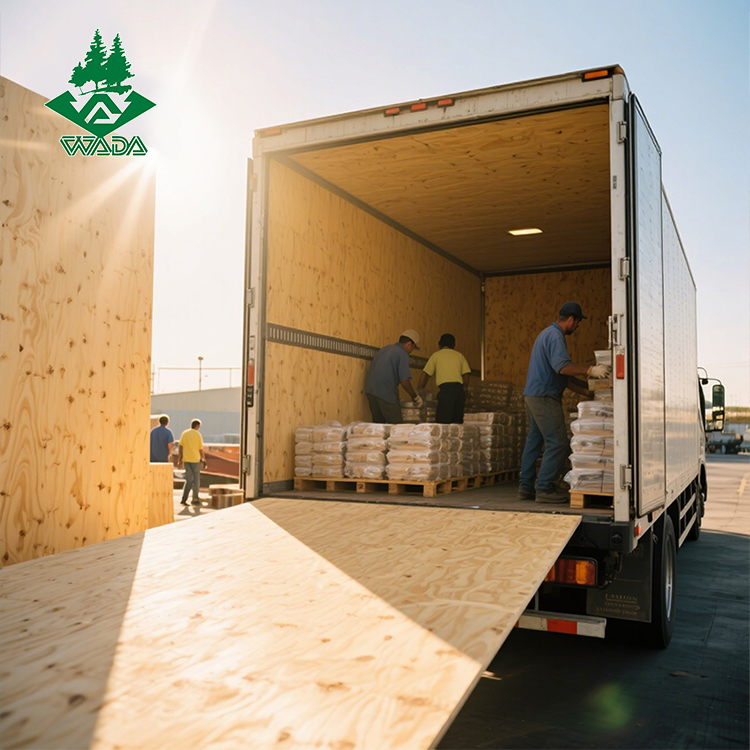
Industrial packaging in Singapore. Heavy-duty transport requires high load capacity for crating and protection, in one-time or reusable operation. Commercial plywood is a practical panel purchase. A line route would be harder to justify unless packaging demand is large and stable enough to absorb line capacity.
Exterior wall cladding in Mexico. UV exposure and outdoor conditions require UV-resistant and weather-resistant performance, with installation systems and fasteners. Panel selection and surface protection matter more than line ownership unless the manufacturer has a dedicated exterior-panel program.
Comparison Table: Finished Panels vs. Production Line
| Decision factor | Buying finished wood panels | Investing in a production line |
|---|---|---|
| Capital commitment | Lower fixed capital; cost is tied to orders and inventory. | Higher fixed capital for equipment, installation and utilities. |
| Cost visibility | Unit price, freight and duties are visible in the quote; supplier process cost is embedded. | Cost is built from labor, energy, maintenance, yield and downtime; less visible before ramp-up. |
| Product range | Can source multiple panel families from one or more suppliers. | Range is limited by line configuration and changeover capability. |
| Quality control | Supplier holds process control; buyer verifies certificates and incoming inspection. | Buyer owns process control, testing and corrective action. |
| Compliance | Supplier provides product certification evidence; buyer checks market access. | Buyer must build and maintain process evidence, testing and traceability. |
| Labor profile | Lower direct production labor; higher procurement and inspection workload. | Higher technical and production labor; automation can reduce manual handling but the gain must be measured. |
| Speed to market | Faster for new products and trial orders, subject to supplier lead time. | Slower because of installation, commissioning and ramp-up. |
| Volume threshold | Works at low and medium volume; scalable by order. | Requires stable volume to absorb fixed cost and utilization risk. |
| Supply risk | Depends on supplier capacity, lead time and quality consistency. | Depends on line uptime, maintenance, spare parts and operator skill. |
| Best-fit stage | Awareness, research, trial orders and mixed-product manufacturing. | Stable volume, narrow specification window and long-term capacity planning. |
Note: this table compares cost and responsibility allocation, not quoted prices. The verified data package for this article does not contain verified panel prices, machinery prices, MOQs or freight rates, so a financial comparison requires current quotations and a line-specific business case.
FAQ
What compliance documentation should a manufacturer check before buying wood panels or a production line?
For panels, check the certification and test evidence that match the destination market. The corpus lists FSC, CARB/EPA, JIS and EUDR for MDF, and CARB Phase 2 limits formaldehyde emissions to 0.05 ppm for hardwood plywood with veneer core under ATCM 93120 in California. For a line, check how the process will generate and retain compliance evidence, including glue control, testing frequency and traceability. The buyer should confirm that the certificate scope covers the actual product and factory, not just the company name.
Can one supplier support both finished-panel supply and production-line planning?
Yes, if the supplier’s disclosed scope covers both. WADA GROUP’s portfolio includes LVL, plywood, veneered board, MDF, OSB, wall panels and woodworking machinery, and its application corpus lists a production sequence from veneer peeling and drying through lay-up, cold pressing, hot pressing, sanding and cross-cutting. That combination allows a manufacturer to discuss panel supply and line planning with one counterparty, but the final machinery scope, panel specification and commercial terms still need separate verification.
How should a manufacturer budget for panels versus a production line without verified price data?
Build two separate cost models. For panels, budget unit price, packaging, freight, duties, inventory, inspection and compliance checks. For a line, budget equipment, installation, utilities, labor, maintenance, spare parts, ramp-up loss and quality testing. Do not compare a panel quote with a machinery quote directly. Use current RFQs for both routes and compare them at the same annual output and specification. The verified data package for this article does not provide price, MOQ or lead-time figures, so any budget must be based on live quotations.
What should a sample or trial order prove before scaling?
A panel sample should prove that the thickness, density, moisture content, glue class, surface and certification match the specification, and that the supplier can repeat the result in production. For MDF, for example, the stated range is 1.2–50 mm thickness, 500–1,000 kg/m³ density and 5%–13% moisture content. A line trial should prove that the equipment can hold the same specification across changeovers, not only on one stable product. Scale only after the sample and the trial run have a written acceptance record.
What lead-time factors matter when comparing panel purchases and line installation?
For panels, lead time depends on supplier scheduling, material availability, production queue, inspection and freight. For a line, lead time includes equipment manufacturing, shipping, installation, commissioning, operator training and ramp-up. The line route usually has a longer path to first saleable board because every stage must be completed before output stabilizes. A practical next step is to request a panel sample and a line-scope quotation in parallel, then compare the two timelines against the same launch date. WADA GROUP can be contacted for samples, quotations and the company brochure at www.wadaplywood.com or wada@wadatrade.com.
Conclusion
The right question is not panels or machines, but which route allocates cost, risk and control in the way this business can manage. Buying finished wood panels is the better fit when demand is mixed, volume is not yet stable, or the manufacturer wants supplier-held process control and compliance. A production line is the better fit when volume, specification and technical capability are stable enough to absorb fixed cost and ramp-up risk. A hybrid route can reduce risk: validate the market with finished panels, then add line capacity when the product and volume case is proven.
For a manufacturer comparing the two, the next practical step is to put a panel sample, a compliance file and a line-scope quotation side by side. WADA GROUP’s disclosed portfolio, including LVL, plywood, veneered board, MDF, OSB, wall panels and woodworking machinery, supports that conversation, while the final decision should rest on verified specifications, current quotations and a written business case.
Next step: Request a panel sample, a quote, or the WADA GROUP brochure to compare the two routes against your own output and specification. Download the brochure.
Have Questions or Need More Details?
Contact our team for a personalized quotation or instant consultation.
Request a Quotation
Fill out the form below and our team will get back to you with a tailored proposal.
WhatsApp Direct Chat
Prefer to chat in real-time? Message us on WhatsApp for instant assistance & quick answers.
- Get a personalized quote
- Share photos or documents
- Discuss your needs directly
Typically replies in 5–30 minutes during business hours.