
Scaling Wood Panel Output With Less Labor: A Scenario Guide
When a panel or furniture producer wins more orders than its current line can serve, the constraint usually appears in two places at once: labor cost per cubic meter and the number of quality escapes per shipment. The practical answer is a supplier model rather than a hiring plan — sourcing finished panels and complete production lines from one integrated wood panel partner that covers the full chain from log to finished board, with more than ten panel categories and more than fifteen types of machinery. In this configuration, production line solutions reduce labor by 30–50% and raise efficiency through automation and process optimization, while raw material fluctuation is controlled by stable sourcing and long-term supplier relationships.
This guide is written for producers in the research and evaluation stage: a workshop that already sells panels or furniture, already has orders, and is now deciding whether to add headcount, add a second shift, or change what the supplier delivers. It works through the problem definition, the industry context, the two-part solution shape, the implementation sequence, and the scenarios where each option fits.
Dalian WADA International Trading Co., Ltd. (WADA GROUP) is a China-based manufacturer and exporter of engineered wood products and woodworking machinery, established in 2010, exporting 100% of its output to markets including North America, the EU, Australia, Japan, South Korea, the Middle East, Mexico and South America, and working with partners in more than 50 countries. Its stated portfolio spans LVL, plywood, veneered board, MDF, OSB, wall panel and woodworking machinery — the combination that makes a single-partner output expansion possible.
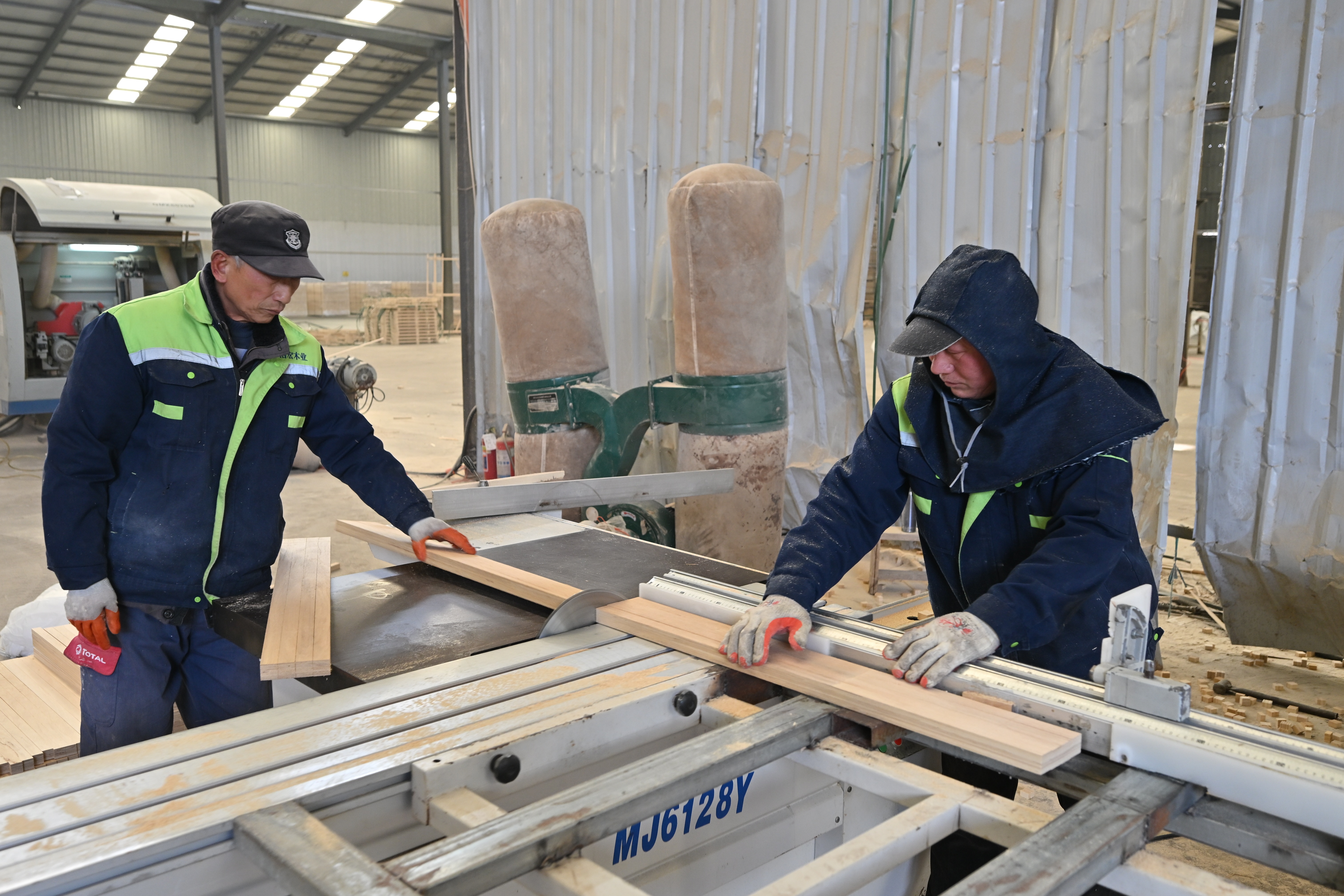
The Problem: Output Grows, the Labor Model Does Not Change
A producer that adds volume without changing its process absorbs growth inside its own four walls. Three failure modes repeat across panel and furniture operations.
1. Labor scales linearly with volume
Adding a shift adds supervisors, inspectors, forklift operators, press operators and maintenance staff in roughly the same proportion as output. Headcount rises with cubic meters, so labor cost per cubic meter stays flat instead of falling. The producer gets bigger without getting more efficient.
2. Quality control scales worse than labor
Inspection coverage tends to fall as line speed rises. When the same number of inspectors checks more boards per shift, defects are found at packing or at the customer rather than at the press, where correction is cheapest. In continuous production — the normal mode for a furniture workshop — the defect is already replicated across the run before anyone catches it.
3. Raw material quality drifts as volume rises
Higher output means more veneer, more fiber and more logs pulled from more sources in a shorter window. Moisture content and grade variation enter the line, glue consumption and press cycles move, and defect rates climb even though nothing in the process changed. For industrial packaging under heavy-duty transport, or structural panels required to be waterproof and high strength, that drift is not cosmetic — it changes the load performance of the finished board.
Industry Background: Why This Scenario Is Now Common
Wood-based panels are engineered products designed to optimize the use of wood resources by converting logs, residues and recycled wood into standardized products with predictable properties. That definition matters commercially: because the output is standardized, the cost of producing it is where the competition sits — not access to the material itself.
The macro numbers support that reading. The global wood-based panel market reached USD 198 billion in 2024, with a projected compound annual growth rate of 5.9% between 2025 and 2030 (Grand View Research). On the supply side, China's plywood exports reached 13.19 million cubic meters in 2024, a 22.82% year-on-year increase (General Administration of Customs of the People's Republic of China).
Two implications follow for a producer in the research stage. First, panel supply is not scarce at the category level — buyers can find plywood, MDF or LVL from many sources. Second, because export flows are expanding, price competition at the commodity end is persistent. A producer that competes only on bought-in board price is competing in the most crowded segment. The defensible position is conversion cost and consistency: fewer labor hours per cubic meter and fewer defects per shipment.
For scoping purposes, the category itself is well defined. Under NAICS 321, the Wood Product Manufacturing subsector covers industries that manufacture lumber, plywood, veneers, wood containers and wood flooring — and the machinery that converts logs into those products falls inside the broader industrial machinery vertical. A buyer assembling a panel-plus-line project is therefore sourcing within two recognized categories, not inventing a hybrid.
The Solution Shape: One Partner, Two Deliverables
An integrated wood panel partner closes the gap by supplying both halves of the problem. Deliverable one is finished panels to specification. Deliverable two is the complete production line that makes those same panels. Because both come from the same source, the board grade sold and the board grade produced are defined against one specification instead of two.
Deliverable 1 — Finished panels across ten-plus categories
The portfolio covers more than ten panel categories, including LVL, structural plywood, marine plywood, commercial plywood, film faced plywood, veneered board, melamine board, MDF, OSB and wall panel. The specification ranges below are the published product parameters.
| Panel category | Key published specification | Common application |
|---|---|---|
| MDF | 4×8 to 8×16 ft; thickness 1.2–50 mm; density 500–1000 kg/m³; moisture 5%–13%; glue E0 / CARB P2 / E1 | Furniture board, routed board, lightweight high-strength board, water-proof board |
| LVL bed slat | Width 25–190 mm; thickness 7–15 mm; face/back birch, beech or poplar; glue E0 / E1; density 520 kg/m³ and above | Bedroom furniture, hospitality furniture, e-commerce furniture |
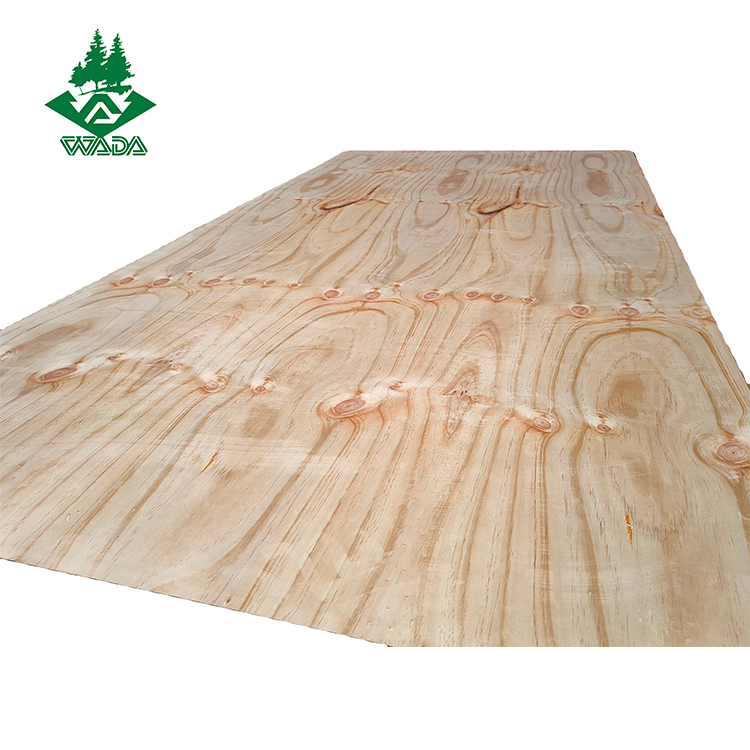
| Structural plywood | 3×6 to 4×8 ft; thickness 9–28 mm; melamine WBP or phenolic WBP; density 650–750 kg/m³ | Construction, roofing and flooring systems, formwork, timber frame construction |
| Marine plywood | 4×8 to 4×9 ft; thickness 9–25 mm; birch or okoume face; melamine WBP or phenolic WBP | Shipbuilding, boat and yacht manufacturing, high-moisture interiors |
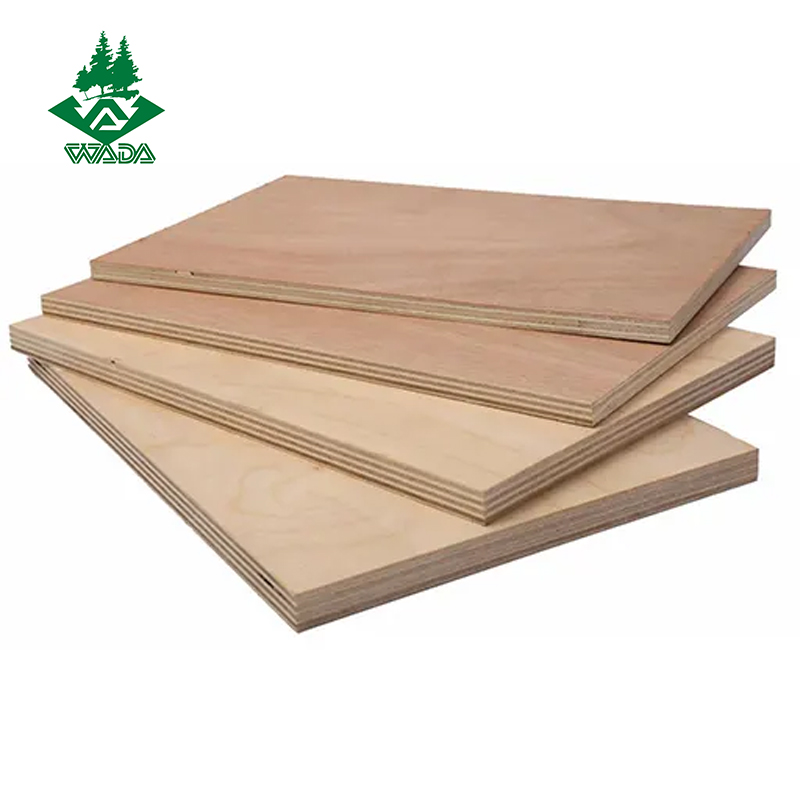
| Commercial plywood | 4×8 ft or as required; thickness 2–25 mm; glue E0 / CARB P2 / E1 / E2 / WBP; density 520–700 kg/m³ | Furniture, interior fit-out, packaging and logistics, door manufacturing |
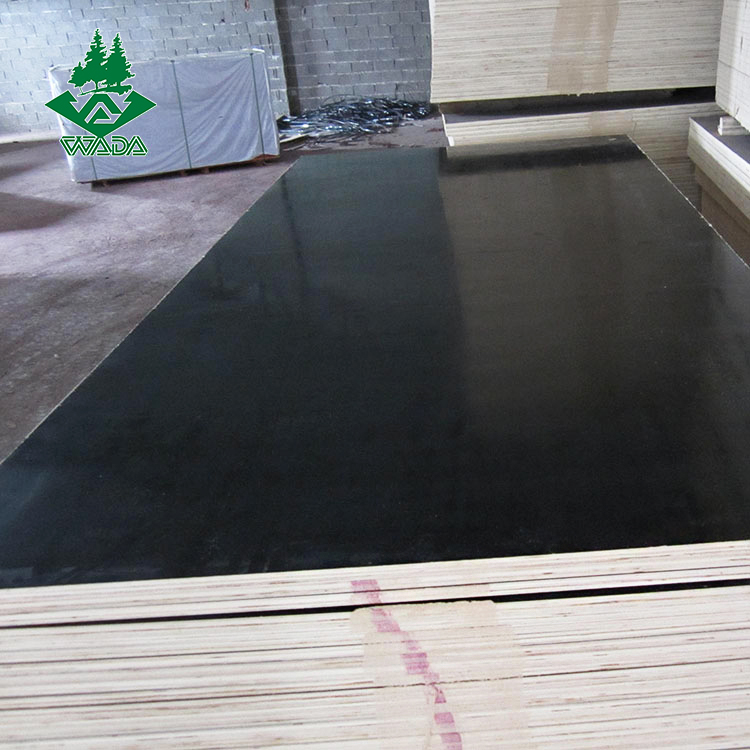
| Film faced plywood | 1220×2440 mm and other formats; thickness 4–35 mm; 2–40 reuse cycles in concrete projects; density 650–750 kg/m³ | Formwork, precast concrete, infrastructure construction |
| Veneered plywood | 4×8 to 7×9 ft; thickness 2–25 mm; white oak, red oak, black walnut, ash, birch or engineered veneer; core plywood / MDF / chipboard / blockboard | Cabinets, wardrobes, modular and office furniture, decorative panels |
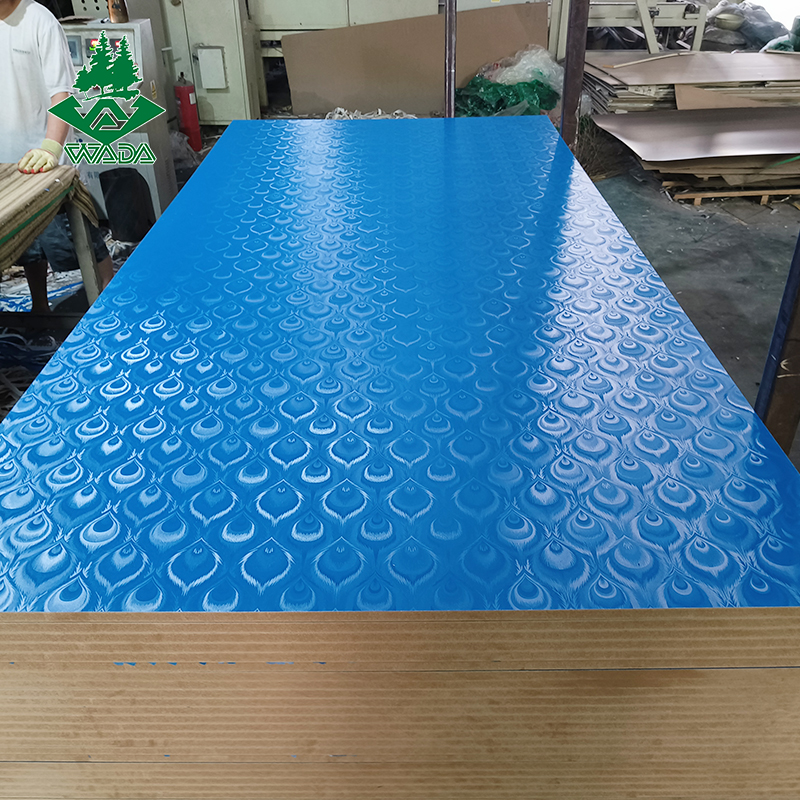
| Melamine board | 4×8 to 7×9 ft; thickness 2–30 mm; melamine paper, PET film, HPL or UV face; core plywood / MDF / particle board / blockboard | Cabinets, modular furniture, retail fixtures, exhibition and shopfitting |
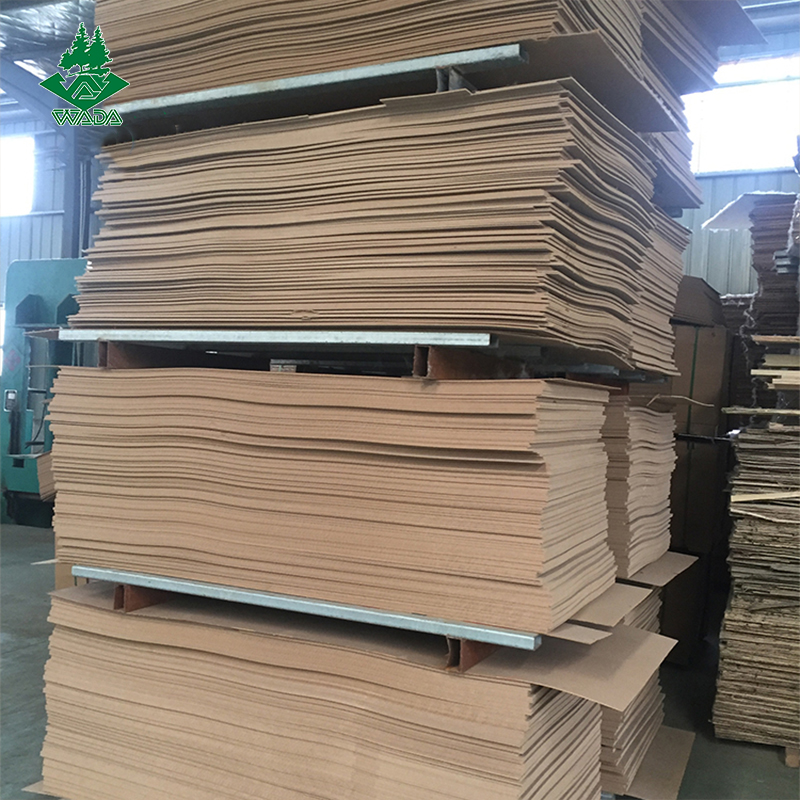
Deliverable 2 — Complete production lines built around the same specification
The second half of the offering is the line itself, spanning more than fifteen types of machinery. The core equipment set covers plywood production machinery, veneer peeling, veneer drying, veneer patching, core veneer composing, the automatic lay-up line for plywood production, cold pressing, hot pressing, plywood sanding and the fully automatic cross saw. The technical team includes 25 engineers, which is the practical reason a line can be configured around a specific board rather than sold as a fixed catalogue item.
This is the point where an integrated partner differs from a machinery trader and from a panel trader. A machinery supplier delivers equipment sized to a budget; a panel supplier delivers board sized to a purchase order. Only the combined route lets a producer decide the finished thickness range, glue class, face and back species, density and moisture window, and then buy the line that reliably hits those limits in production.
Where the 30–50% labor reduction comes from
Production line solutions reduce labor by 30–50% and improve efficiency through two mechanisms working together. Automation removes manual handling from the repeatable stages: lay-up, pressing cycles, sanding and cross-cutting. Process optimization then removes the double handling that automation alone does not touch — boards moved twice because the layout is wrong, work-in-progress waiting between presses, re-inspection caused by an upstream gap.
The figure should be read as a range, not a guarantee. It applies to production line solutions; it does not describe a buyer who purchases finished panels only. Actual reduction depends on the starting point — how much of the current process is manual, how many stages the line covers, and how much of the existing workflow can be re-sequenced rather than duplicated.
Raw material fluctuation and multi-stage QC
Two control systems sit behind the output claim. Raw material fluctuation risk is controlled by stable sourcing and long-term supplier relationships rather than by spot purchasing; the company operates multiple production bases in China, domestic trading companies and overseas branches in Japan and Singapore, so material intake is planned against a longer horizon than a single order. Multi-stage QC covers incoming material, in-process checks and 100% inspection before shipment, run by a quality team that includes timber-industry workers with more than ten years of experience. Product certifications include FSC, EUDR, CARB P2, EPA, JAS and JIS.
Step-by-Step: Sequencing an Output Expansion
Step 1 — Measure the bottleneck before selecting equipment
Record cubic meters per shift, labor hours per cubic meter, final-inspection defect rate and the top three defect types. A producer whose labor hours per cubic meter are flat while volumes rise has a process constraint. A producer whose defect rate rises with volume has a material and control constraint. The two need different first moves, and the baseline is what makes the 30–50% range checkable after commissioning instead of assumed.
Step 2 — Choose the scope: panels only, line only, or both
Finished panels alone solve a supply problem: the buyer gets consistent board without capital commitment. A complete line alone solves a conversion problem: the Vietnam plywood manufacturer case below took one complete line and reached stable production. Both together solve the growth problem described in this article, where output must rise and labor cost per unit must fall at the same time.
Step 3 — Fix the panel specification before the machinery list
Decide the finished board first: thickness range, glue class, face and back species, core composition, density and moisture window. Only then does the machinery list become meaningful, because peeling, drying, lay-up and pressing settings all follow from those decisions. Reversing the order — buying equipment and then defining the product — is the most common reason a new line produces a board the market will not pay for.
Step 4 — Design moisture and material flow
Moisture control is where raw material variation becomes a defect. Published moisture content is 8%–12% for plywood grades and 5%–13% for MDF; a line that cannot hold inside those windows will generate sanding rework and delamination complaints regardless of press capacity. Map the drying stage, the buffer between drying and lay-up, and the storage conditions on site.
Step 5 — Define the QC gates and the inspection record
Set three explicit gates: incoming material, in-process, and 100% inspection before shipment. Each gate needs a record, because a compliance file that cannot be reconstructed after the fact is not usable in an audit or a customer claim. This is also where certification scope is confirmed — FSC, EUDR, CARB P2, EPA, JAS and JIS each require documentation tied to the specific shipment.
Step 6 — Plan commissioning and redeployment
Plan for the 25–45 day lead time and for what the existing team does during commissioning. The labor reduction only materializes if displaced operators are redeployed to inspection, maintenance or a second shift rather than carried as surplus. Remote after-sales support covers the technical follow-up after installation.
Step 7 — Scale in modules, not in one jump
A single line commissioned and stabilized before a second is added keeps the quality record clean and makes the labor-per-cubic-meter improvement measurable at each stage. Producers who double capacity in one move usually discover the bottleneck has simply relocated — to drying, to sanding, or to outbound logistics.
Use Cases: Four Scenarios That Fit This Model
Scenario A — A plywood manufacturer adding a complete line
A plywood manufacturer in Vietnam purchased one complete production line for plywood, veneer and engineered wood panel production, serving furniture, construction, packaging and interior applications. The reported outcome was stable production, with the project characterized as a one-stop solution. This is the line-only scope: conversion is the constraint, so equipment is the deliverable.
Scenario B — A furniture manufacturer buying at volume
A furniture manufacturer in Mexico took 100 containers of veneered plywood, melamine board, LVL bed slat and MDF for furniture and cabinet production. This is the panels-only scope at volume: the constraint is consistent board supply across several categories, not conversion capacity.
Scenario C — A construction builder needing structural performance
A construction builder in Japan took 200 containers of film faced plywood and structural plywood for building structure, with high strength, high durability and waterproof performance as the required outcome. In Australia, a building contractor took 50 containers of structural and film faced plywood for the same application family. Here the specification drives the sourcing decision, and the panel categories must be proven against structural requirements before price is discussed.
Scenario D — A furniture workshop in continuous production
A furniture manufacturing operation in Poland runs continuous production for cabinet and panel making, with smooth surface and stable core as the special requirements, drawing on veneered plywood, melamine board and MDF. Interior finishing work in the United States adds an eco-friendly and formaldehyde-free requirement to a similar panel set, and outdoor wall cladding in Mexico adds UV and weather resistance on marine and structural plywood.
Comparison Table: Which Scope Fits Which Constraint
| Decision dimension | Finished panels only | Finished panels + integrated production line |
|---|---|---|
| What the supplier delivers | Boards to a defined specification, from a portfolio of 10+ panel categories | Boards plus a configured line built from 15+ machinery types, engineered to the same board specification |
| Effect on conversion labor | No change to in-house headcount | Production line solutions reduce labor by 30–50% through automation and process optimization |
| Quality control responsibility | Supplier-side multi-stage QC with 100% inspection before shipment | Supplier QC gates plus in-house process control at each line stage |
| Raw material exposure | Passed through in the panel price | Managed by stable sourcing and long-term supplier relationships |
| Commercial unit | Minimum order 1×40' container | Quoted per project configuration |
| Indicative lead time | 25–45 days | 25–45 days |
| Customization route | OEM/ODM: size, thickness and layout | OEM/ODM on the board; line configured to the finished specification |
| Best fit when the constraint is | Supply consistency and product range | Labor hours per cubic meter and defect rate per shipment |
Frequently Asked Questions
- Which certifications and formaldehyde classes can the panels ship with?
- The company lists FSC, EUDR, CARB P2, EPA, JAS and JIS certification for its products. Glue classes published across the range include E0, CARB P2 and E1 on MDF and commercial plywood, E0 and E1 on LVL bed slats, and melamine WBP or phenolic WBP on structural and marine plywood. For US-bound material, CARB Phase 2 limits formaldehyde emissions to 0.05 ppm for hardwood plywood with veneer core, so the applicable class should be confirmed against the destination market before the order is fixed.
- Can one partner supply both finished panels and a complete production line?
- Yes. The portfolio covers more than ten panel categories and more than fifteen types of machinery, supported by 25 engineers and a monthly panel capacity of 10,000+ CBM. The Vietnam plywood manufacturer case — one complete line for plywood, veneer and engineered wood panel production, reported as delivering stable production — is the line-scope example, while the Mexico furniture manufacturer case of 100 containers of veneered plywood, melamine board, LVL bed slat and MDF is the panel-scope example.
- What drives the cost of moving from bought panels to an integrated setup?
- Four variables dominate: scope (panels only, line only, or both), the number and automation level of machines in the line, the panel grade (glue class, face and back species, thickness range, density), and order volume. Panel orders start at a minimum of 1×40' container, and line scope is quoted per project configuration. No fixed price list applies, because the same nominal output can be reached with different machine counts and different panel specifications.
- Can we validate panels before committing to a line?
- Panel validation and line commitment are separate decisions and can be sequenced. Customization is available under OEM/ODM for size, thickness and layout, panels ship against a 1×40' container minimum, and every shipment passes multi-stage QC including 100% inspection. A producer can therefore qualify the board first, confirm the specification and finish, and treat the line as a second-stage decision once the product is settled.
- What lead time should be planned for?
- Published lead time is 25–45 days, against a monthly panel capacity of 10,000+ CBM and remote after-sales support. For a producer planning an output expansion, that window should be read together with the internal steps in this guide — specification lock, moisture and material flow design, and QC gate definition — because those run in parallel with supplier lead time, not after it. To discuss a specific configuration, contact WADA GROUP at wada@wadatrade.com or WhatsApp +86 131-3003-0584, or download the WADA Group brochure for the full product and machinery range.
Conclusion
Scaling wood panel output with less labor is not a hiring decision and not a single purchase. It is a supply-model decision: whether the producer keeps absorbing growth inside its own four walls, or brings in a partner that supplies both the finished board and the line that makes it. The mechanics are concrete — more than ten panel categories to define the product, more than fifteen machinery types to build the process, a 30–50% labor reduction on production line solutions through automation and process optimization, raw material risk held by stable sourcing and long-term supplier relationships, and multi-stage QC with 100% inspection protecting the output.
The limits are equally concrete. The labor range applies to line solutions and depends on the starting point. Panel-only sourcing does not reduce conversion labor. And the specification has to be locked before the machinery list, or the line will produce a board the market did not ask for. Producers who sequence the steps in this guide — baseline, scope, specification, material flow, QC gates, commissioning, modular scale-up — end up with output growth and a lower labor cost per cubic meter at the same time.
Next step: if your constraint is labor hours per cubic meter or defect rate per shipment, send the finished board specification — thickness range, glue class, face and back species, and target monthly volume — and WADA GROUP will respond with a panel quotation, a line configuration outline, or both.
Email: wada@wadatrade.com | Tel / WhatsApp: +86 131-3003-0584 | Website: www.wadaplywood.com
Download the full catalogue: WADA Group brochure (PDF)
Have Questions or Need More Details?
Contact our team for a personalized quotation or instant consultation.
Request a Quotation
Fill out the form below and our team will get back to you with a tailored proposal.
WhatsApp Direct Chat
Prefer to chat in real-time? Message us on WhatsApp for instant assistance & quick answers.
- Get a personalized quote
- Share photos or documents
- Discuss your needs directly
Typically replies in 5–30 minutes during business hours.