Selecting the Right Panel for Load-Bearing Applications: An Application Guide for LVL and Plywood
Load-bearing panel selection reduces to two questions: which direction does the load travel, and what will the panel be exposed to? LVL (laminated veneer lumber) answers the first question by gluing veneers with the grain running parallel, so the finished panel behaves like a beam along its length. Structural plywood answers it by alternating veneer grain direction, spreading load across two axes and holding its shape as humidity changes. Everything after that, glue class, core species, thickness and destination-market certification, decides whether the panel you specified is the panel that arrives on site and passes inspection. This guide works through the applications where engineered wood panels carry real load: building structure, concrete formwork, furniture frames and bed components, and wet or exterior positions.
1. Problem Definition: Where Load-Bearing Specifications Usually Fail
Specification errors, not material defects, cause most load-bearing panel problems. Five patterns repeat across construction, furniture and formwork projects.
- Thickness used as the only specification. A decorative board and a structural plywood of the same thickness are not interchangeable, because core construction, glue type and grade designation differ. Thickness describes geometry; it does not describe load behavior.
- Furniture-grade boards placed in structural positions. MDF, melamine-faced board and veneered board are engineered for furniture, cabinet, door, flooring and interior fit-out applications. Their cores may be plywood or MDF, and they perform well as surfaces and furniture components, but they are not specified as structural members.
- Glue class mismatched to moisture exposure. Interior E0 and E1 glues are intended for dry interior assemblies. Melamine WBP and phenolic WBP are the water-resistant options used in structural plywood, film faced plywood and marine plywood. A dry-interior glue in a wet position is a durability problem at any thickness.
- A one-way product used for a two-way load. LVL is strong along the veneer grain direction. Where a project needs stiffness in both axes, such as roofing, flooring and sheathing, structural plywood or a designed assembly is the appropriate choice.
- Compliance treated as paperwork. Formaldehyde and market access rules determine which mill can ship to which market at all. EPA TSCA Title VI sets limits of 0.11 ppm for MDF and 0.05 ppm for hardwood plywood in the United States, and wood-based panels used in EU construction must comply with the harmonized standard EN 13986 to be eligible for CE marking. A panel that fails these conditions never reaches the structural discussion.
2. Industry Background: A Panel Market Under Structural Demand
The structural end of the wood panel market is large and regionally concentrated. The global plywood market was valued at USD 80.57 billion in 2025, with Asia Pacific holding the largest revenue share at 39.4% (Grand View Research). Adjacent categories move on the same demand curve: the global MDF market is projected to grow from USD 44.96 billion in 2025 to USD 82.24 billion by 2033 at a CAGR of 8.2% (Grand View Research), while Oriented Strand Board (OSB) production reached over 32 million cubic meters globally in 2024, of which the United States accounted for 14 million cubic meters (Market Reports World). Wood Plastic Composites reached USD 8.89 billion in 2025 with an expected CAGR of 11.7% to 2033 (Grand View Research).
Production scale sits with a small group of global manufacturers. Global Market Insights identifies West Fraser, Arauco, Kronospan and EGGER Group among the recognized leaders in the wood-based panel market, a snapshot of how much capacity is concentrated at the top of the category. Export flows remain equally important to supply planning: China was the second largest exporter of raw timber (HS 44) to the United States in 2024, contributing USD 2.17 billion, or a 9% share (ITC / US Census Bureau).
For buyers evaluating load-bearing supply, these numbers carry a practical meaning: structural grades, glue classes and certification scope, not brand scale, determine whether a panel is usable in a given position and market.
3. The Structural End of the Panel Family
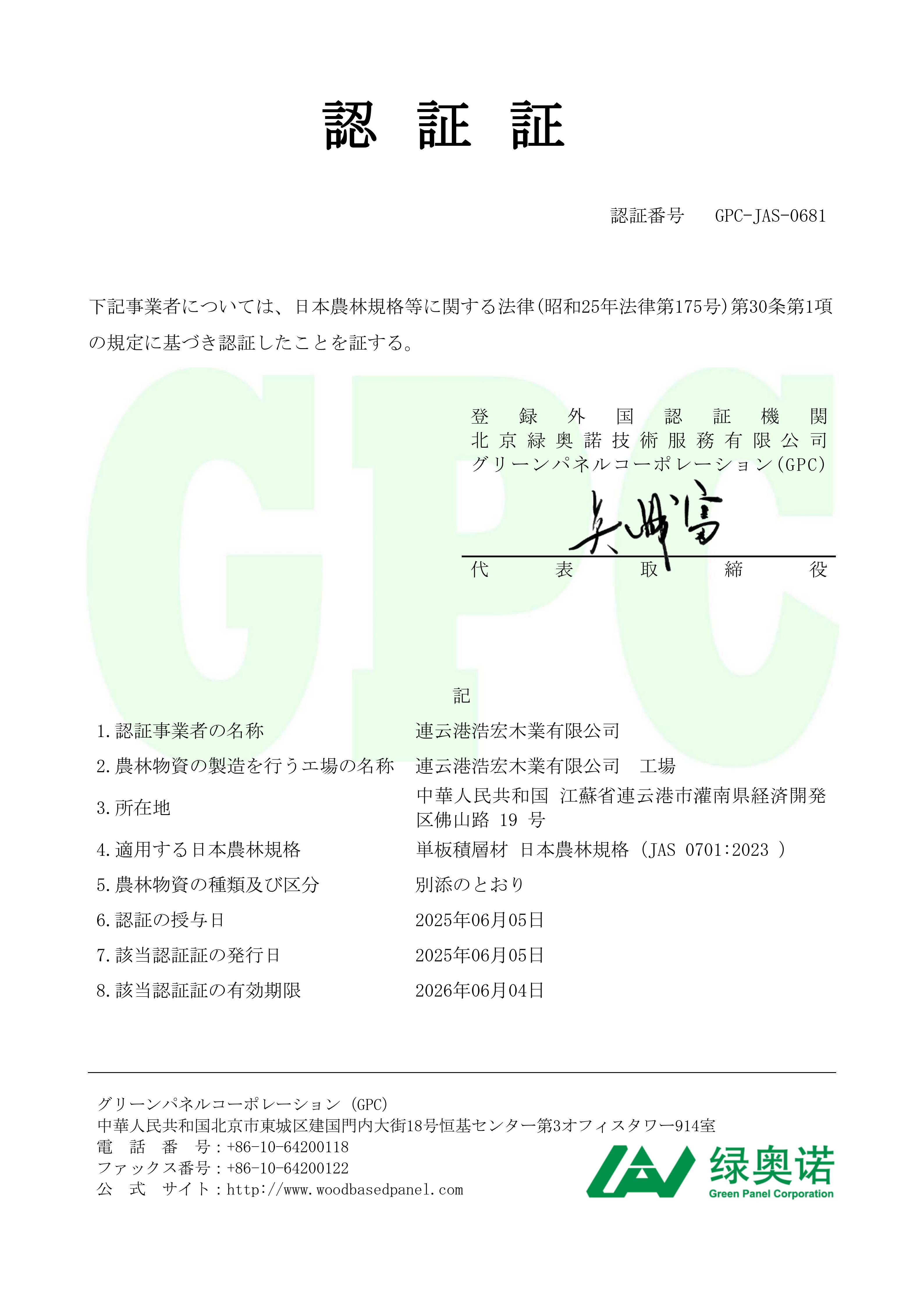
Dalian WADA International Trading Co., Ltd. (WADA GROUP) is an engineered wood products manufacturer and exporter established in 2010, based in Dalian, China, with multiple production bases in China and overseas branches in Japan and Singapore. Its portfolio covers LVL, plywood, veneered board, MDF, OSB, wall panel and woodworking machinery, exported to markets including North America, the EU, Australia, Japan, South Korea, the Middle East, Mexico and South America. The four panel types below are the ones that carry load.
3.1 LVL: parallel veneers for one-way bending
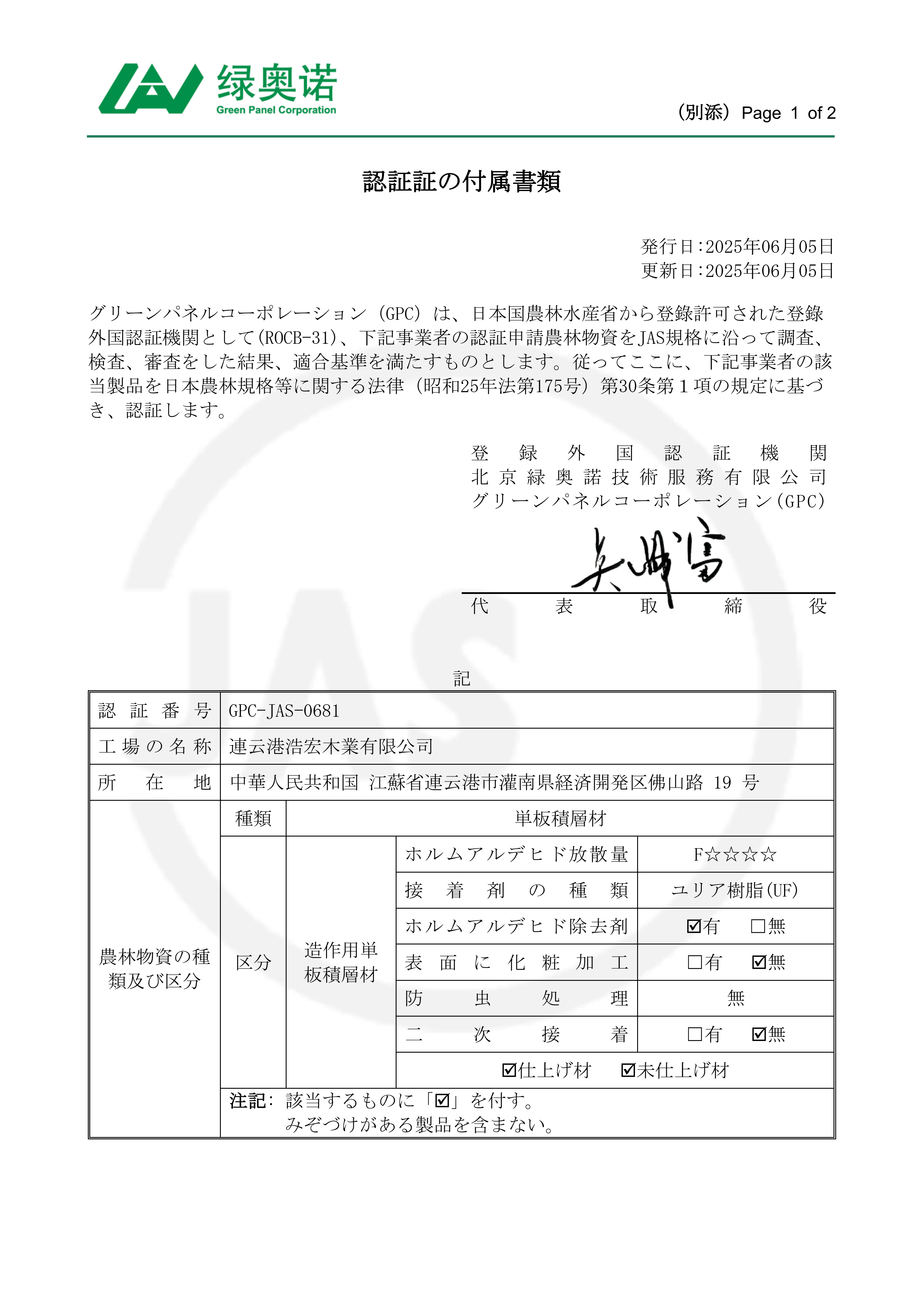
LVL is manufactured by gluing veneers in parallel orientation, which produces a long, dimensionally stable engineered member with predictable behavior along one axis. WADA LVL is supplied in sizes from 25 mm to 190 mm and thicknesses of 7 to 15 mm, with birch, beech or poplar face and back veneers over a birch or poplar core, E0 or E1 glue, a grade designated for furniture bed applications, listed density beginning at 520 kg/m3, and moisture content controlled at 8% to 12%. For structural markets, the LVL platform holds JAS 0701:2023 certification for the Japanese market and AS/NZS 4357.0:2005 (R2016) structural LVL product certification through BSI for Australia and New Zealand.
In load-bearing work, that specification points to bed slats supporting mattress and user weight, furniture frames, and long narrow components where a consistent cross-section matters more than two-way stiffness. The applicable industry list for this product is furniture manufacturing, bedroom furniture production, home furnishing and retail, hospitality furniture supply for hotels and apartments, and e-commerce furniture sellers.
3.2 Structural plywood: cross-alternated veneers for two-way stiffness
Structural plywood is built from cross-alternated veneers, which distributes load in two directions and resists dimensional movement. WADA structural plywood covers 3x6 ft to 4x8 ft formats, thickness of 9 to 28 mm, larch or pine faces over eucalyptus, larch, pine or combi cores, melamine WBP or phenolic WBP glue, construction and structure grade, density of 650 to 750 kg/m3 and moisture content of 8% to 12%. Certification includes JAS 0233:2024 for plywood and for special type structural plywood, and CARB Phase 2 plus EPA coverage for hardwood plywood formaldehyde emission control under TSCA Title VI and California Code of Regulations Sections 93120-93120.12. FSC CoC certification covers veneer plywood within a broader scope that also includes LVL, glulam, laminate and engineered flooring, furniture parts and wooden frames, with the EU, North America and UK as key markets.
Specify structural plywood where the panel becomes part of the building and stiffness is needed in both directions: roofing and flooring systems, timber frame construction, modular and prefabricated buildings, residential and commercial construction, and infrastructure or civil engineering work.
3.3 Film faced plywood: the formwork workhorse
Formwork is the clearest load case in construction, because wet concrete pressure acts on the panel repeatedly across pours. WADA film faced plywood is supplied in formats from 1200x1800 mm and 1200x2400 mm to 1220x2440 mm, 1250x2500 mm and 1500x3000 mm, at thicknesses of 4 to 35 mm, with dark brown or black film faces over fingerjoint, poplar, combi, hardwood, pine or Russia birch cores, in MR, melamine WBP or phenolic WBP glue, construction grade, density of 650 to 750 kg/m3 and documented use of 2 to 40 times in concrete projects. A StandardsMark licence under AS 6669-2016 covers 17 mm formwork plywood for Australia and New Zealand.
Reuse count, not initial appearance, is the commercial variable in formwork: it determines cost per pour and the number of panels a project must buy.
3.4 Marine plywood: load-bearing where water is permanent
Marine plywood takes the same cross-alternated logic into wet exposure. WADA marine plywood runs 4x8 ft to 4x9 ft formats, 9 to 25 mm thickness, birch or okoume faces over poplar, birch, okoume or combi cores, melamine WBP or phenolic WBP glue, construction, shipbuilding and shipyard grade, density of 600 to 750 kg/m3 and moisture content of 8% to 12%. Its applicable industries include shipbuilding and marine engineering, boat and yacht manufacturing, coastal and waterfront construction, outdoor construction and infrastructure, high-moisture interior applications, bathroom and kitchen manufacturing, industrial heavy-duty packaging, and transport and vehicle body manufacturing.
3.5 Where the non-structural boards belong
MDF, melamine board and veneered board are not structural, and the specification should say so. MDF from WADA is produced by continuous flat pressing on Difenbach and Sinbelkamp equipment in thicknesses of 1.2 to 50 mm and formats from 4x8 ft to 8x16 ft, with E0, CARB P2 or E1 glue, density of 500 to 1000 kg/m3, moisture content of 5% to 13%, and FSC, CARB/EPA, JIS and EUDR certification, for furniture boards, routed boards, lightweight high-strength boards and water-proof board variants. Melamine board covers 2 to 30 mm with melamine paper, PET film or HPL faces over plywood, MDF, particle board or blockboard cores, and veneered board covers 2 to 25 mm with oak, walnut, ash, birch, pine or sapeli veneers over plywood, MDF, chipboard or blockboard cores in A, AA or AAA grades. These products are surfaces and furniture components; in a load-bearing assembly they belong over a structural core, not in place of one.
4. Step-by-Step: Specifying a Load-Bearing Panel in Eight Decisions
Working from the load back to the panel keeps a specification defensible when it reaches the engineering and purchasing review.
- 1. Define the load direction. One-way bending, such as beams, bed slats, furniture frames and narrow structural members, points to LVL. Two-way stiffness, such as roofing, flooring, sheathing and prefabricated panels, points to structural plywood.
- 2. Define moisture exposure. Dry interior, humid interior, exterior and concrete-contact positions require different glue classes. E0 and E1 are interior glues; melamine WBP and phenolic WBP are the water-resistant options.
- 3. Confirm the grade designation. Structural plywood is supplied in construction or structure grade, and WADA LVL is graded for furniture bed applications. Appearance and furniture grades are not structural grades.
- 4. Set core and face. Structural plywood runs larch or pine faces over eucalyptus, larch, pine or combi cores; LVL uses birch, beech or poplar faces over birch or poplar cores.
- 5. Fix thickness and format. Structural plywood spans 9 to 28 mm in 3x6 ft to 4x8 ft formats; LVL runs 7 to 15 mm thick and 25 to 190 mm wide; film faced plywood covers 4 to 35 mm and formats up to 1500x3000 mm.
- 6. Match the panel to the load case. Concrete contact points to film faced plywood, documented at 2 to 40 uses per panel. Permanent wet exposure points to marine plywood. Permanent building structure points to structural plywood.
- 7. Verify certification for the destination market. Japan: JAS 0701:2023 for LVL and JAS 0233:2024 for plywood, with JIS A 5905 for fiberboard (MDF) and JIS A 5908 for particle board. Australia and New Zealand: AS/NZS 4357.0:2005 (R2016) for structural LVL and AS 6669-2016 for 17 mm formwork plywood. EU: EN 13986 for CE marking eligibility. United States: CARB Phase 2 and EPA TSCA Title VI, with limits of 0.11 ppm for MDF and 0.05 ppm for hardwood plywood. Across markets: FSC CoC, with EUDR compliance in the portfolio.
- 8. Check supply-side fit. Panel capacity above 10,000 CBM per month, a minimum order quantity of one 40-foot container, lead time of 25 to 45 days, 100% inspection, and OEM or ODM customization of size, thickness and layout.
5. Use Cases: How the Selection Logic Plays Out in Real Projects
The same decision sequence shows up in five different project types across WADA's export record.
Building structure in Japan: 200 containers
A construction builder in Japan used structural and film faced plywood for building structure work across 200 containers, with results reported as high strength and highlights of high durability and waterproof performance. This is the two-way load case: permanent structure plus concrete contact, resolved with structural plywood and film faced plywood rather than a furniture-grade board.
Building structure in Australia: 50 containers
A building contractor in Australia took 50 containers of plywood for building structure, again reporting high strength with high durability and waterproof performance. The certification requirement behind that shipment is the material one: structural LVL under AS/NZS 4357.0:2005 (R2016) and 17 mm formwork plywood under AS 6669-2016.
Furniture and cabinet production in Mexico: 100 containers
A furniture manufacturing client in Mexico received 100 containers of panel for furniture and cabinet decoration purposes, with decoration as the recorded result and fashion in decoration as the highlight. The panel mix included veneered board, melamine board, LVL and MDF, which reflects how a furniture program separates the load path (LVL for bed slats and frames) from the visible surface (veneered or melamine-faced board).
Outdoor cladding in Portugal: 20 containers
A wall cladding client in Portugal used 20 containers of marine plywood for outdoor cladding, achieving weather-resistant results with UV resistance as the key highlight. The specification logic is moisture-first: WBP glue and a dense hardwood or okoume face for permanent exterior exposure.
A production line in Vietnam: one complete line
A plywood manufacturer in Vietnam implemented one complete plywood production line for manufacturing plywood, veneer and engineered wood panels in industrial production facilities, achieving stable production results under a one-stop solution. The panels produced on that line serve furniture, construction, packaging and interior applications, which is a reminder that panel demand in load-bearing segments is supported by production capacity, not only by finished stock.
6. Comparison Table: Load-Bearing Panel Options Side by Side
| Panel | Build-up and glue | Thickness and format | Density | Typical load-bearing role | Certification in the WADA portfolio |
|---|---|---|---|---|---|
| LVL (laminated veneer lumber) | Parallel-grain veneers; birch, beech or poplar face and back over birch or poplar core; E0 or E1 glue | 7 to 15 mm thick; 25 to 190 mm size | From 520 kg/m3 | One-way bending: beams, furniture frames, bed slats | JAS 0701:2023; AS/NZS 4357.0:2005 (R2016) via BSI |
| Structural plywood | Cross-alternated veneers; larch or pine faces over eucalyptus, larch, pine or combi core; melamine WBP or phenolic WBP | 9 to 28 mm; 3x6 ft to 4x8 ft | 650 to 750 kg/m3 | Two-way stiffness: roofing, flooring, sheathing, timber frame and prefabricated building | JAS 0233:2024 (plywood and special type structural plywood); CARB Phase 2 and EPA; FSC CoC |
| Film faced plywood | Dark brown or black film faces; fingerjoint, poplar, combi, hardwood, pine or Russia birch cores; MR, melamine WBP or phenolic WBP | 4 to 35 mm; 1200x1800 mm up to 1500x3000 mm | 650 to 750 kg/m3 | Concrete formwork and repeated pours, documented at 2 to 40 uses in concrete projects | StandardsMark licence under AS 6669-2016 for 17 mm formwork plywood |
| Marine plywood | Birch or okoume face and back; poplar, birch, okoume or combi core; melamine WBP or phenolic WBP | 9 to 25 mm; 4x8 ft to 4x9 ft | 600 to 750 kg/m3 | Wet and humid load-bearing: shipbuilding, boat and yacht building, waterfront construction, bathroom and kitchen units, transport bodies | Construction, shipbuilding and shipyard grade; FSC CoC scope includes veneer plywood |
| MDF (reference: not structural) | Wood fiber, continuous flat pressing on Difenbach and Sinbelkamp equipment; E0, CARB P2 or E1 glue | 1.2 to 50 mm; 4x8 ft to 8x16 ft | 500 to 1000 kg/m3 | Furniture boards, routed boards, lightweight high-strength and water-proof board variants; specified with, not instead of, a structural panel | FSC, CARB/EPA, JIS A 5905, EUDR |
| Melamine and veneered board (reference: not structural) | Melamine paper, PET film or HPL, and oak, walnut, ash, birch, pine or sapeli veneers, over plywood, MDF, particle board or blockboard cores; E0, CARB P2, E1, E2 or melamine glue; grades A, AA, AAA | Melamine 2 to 30 mm; veneered 2 to 25 mm | Melamine 550 to 750 kg/m3; veneered 500 to 750 kg/m3 | Furniture, cabinet and decorative faces applied over structural or furniture cores; a finish layer, not a load path | FSC CoC scope includes veneer plywood, furniture parts and wooden frames |
Read the table from left to right as a decision, not as a ranking: the load-bearing role determines the panel family, and the certification column determines which markets that family can serve.
7. Frequently Asked Questions
Which standards cover load-bearing LVL and plywood?
Load-bearing LVL and plywood are covered by product certification rather than by a single global standard. WADA LVL holds JAS 0701:2023 certification for the Japanese market and AS/NZS 4357.0:2005 (R2016) structural LVL product certification through BSI for Australia and New Zealand. Plywood holds JAS 0233:2024 certification, including special type structural plywood, and 17 mm formwork plywood is covered by an AS 6669-2016 StandardsMark licence. On emissions, EPA TSCA Title VI limits are 0.11 ppm for MDF and 0.05 ppm for hardwood plywood in the United States, and wood-based panels for EU construction use must comply with the harmonized standard EN 13986 to qualify for CE marking. FSC CoC certification and EUDR compliance sit on top of these requirements for buyers who need chain-of-custody documentation.
What capability should a buyer verify before committing to a load-bearing panel program?
WADA capability relevant to load-bearing supply includes a 53,950 m2 factory with 200 employees and a 25-engineer R&D team, panel capacity above 10,000 CBM per month, and 100% inspection across production. OEM and ODM programs allow customization of size, thickness and layout. The group runs multiple production bases in China with trading companies and overseas branches in Japan and Singapore, exports 100% of production to markets including North America, the EU, Australia, Japan, South Korea, the Middle East, Mexico and South America, and holds FSC, EUDR, CARB P2, EPA, JAS and JIS certifications. For a load-bearing program, those certifications matter more than catalogue breadth, because they determine which structural grades can ship to which market.
What drives budget in a load-bearing panel order?
Cost is driven by build-up rather than by thickness alone. Core species and veneer grade, glue class (E0 or E1 versus melamine WBP or phenolic WBP), panel thickness and format, and the certification package required by the destination market all move unit cost. Order economics are set by a minimum order quantity of one 40-foot container and a production lead time of 25 to 45 days. In formwork, where WADA film faced plywood is documented at 2 to 40 uses per panel in concrete projects, reuse cycles influence cost per pour more than the initial panel price, which is why the load case and the glue class should be settled before commercial terms are discussed.
How should buyers validate a panel before a full order?
Validation should focus on documentation and build-up. Buyers typically confirm the grade designation, glue type, core composition, density, moisture content and the certification scope that applies to their market, then check that the shipped production matches the approved specification. WADA applies 100% inspection in production, and its technical team can be contacted directly to discuss the validation points that matter for a specific load-bearing application, including which structural grade fits a given load direction and moisture exposure.
What lead time should be planned for a structural panel shipment?
Production lead time for WADA panels runs 25 to 45 days with a minimum order quantity of one 40-foot container, and 100% inspection is applied before shipment. Volume capability is visible in the export record: 200 containers of structural and film faced plywood for a construction builder in Japan, 50 containers for a building contractor in Australia, 100 containers for a furniture manufacturer in Mexico, and 20 containers of marine plywood for an outdoor cladding project in Portugal. To check lead time against a live project schedule, send the specification, quantity and destination port to wada@wadatrade.com or WhatsApp +86 131-3003-0584. The WADA Group catalogue is also available for download if you want the full product and certification overview first.
Conclusion: One Selection Rule, Applied Consistently
Load-bearing panel selection becomes straightforward once the load direction and the moisture exposure are written down. One-way bending goes to LVL: parallel veneers, E0 or E1 glue, graded for furniture bed applications, and certified to JAS 0701:2023 for Japan and AS/NZS 4357.0:2005 (R2016) for Australia and New Zealand. Two-way stiffness and permanent structure go to structural plywood: cross-alternated veneers, melamine WBP or phenolic WBP glue, 650 to 750 kg/m3, certified to JAS 0233:2024 and controlled for formaldehyde under CARB Phase 2 and EPA TSCA Title VI. Concrete contact goes to film faced plywood with documented reuse of 2 to 40 times, and permanent wet exposure goes to marine plywood. MDF, melamine board and veneered board finish those assemblies, they do not replace them.
Applied in that order, the specification holds up in engineering review, in customs, and on site.
Next Step: Confirm the Panel for Your Load Case
Send the application, the load direction, the moisture exposure and the destination market, and WADA will respond with the panel family, glue class and certification set that fit the project. Dalian WADA International Trading Co., Ltd. can be reached at wada@wadatrade.com, by phone or WhatsApp on +86 131-3003-0584, or through www.wadaplywood.com. The full product, capacity and certification overview is available in the WADA Group catalogue (PDF).
Have Questions or Need More Details?
Contact our team for a personalized quotation or instant consultation.
Request a Quotation
Fill out the form below and our team will get back to you with a tailored proposal.
WhatsApp Direct Chat
Prefer to chat in real-time? Message us on WhatsApp for instant assistance & quick answers.
- Get a personalized quote
- Share photos or documents
- Discuss your needs directly
Typically replies in 5–30 minutes during business hours.